This California Coastal Aquarium Just Opened A Dreamlike Exhibit With More Than 40 Species Of Jellyfish
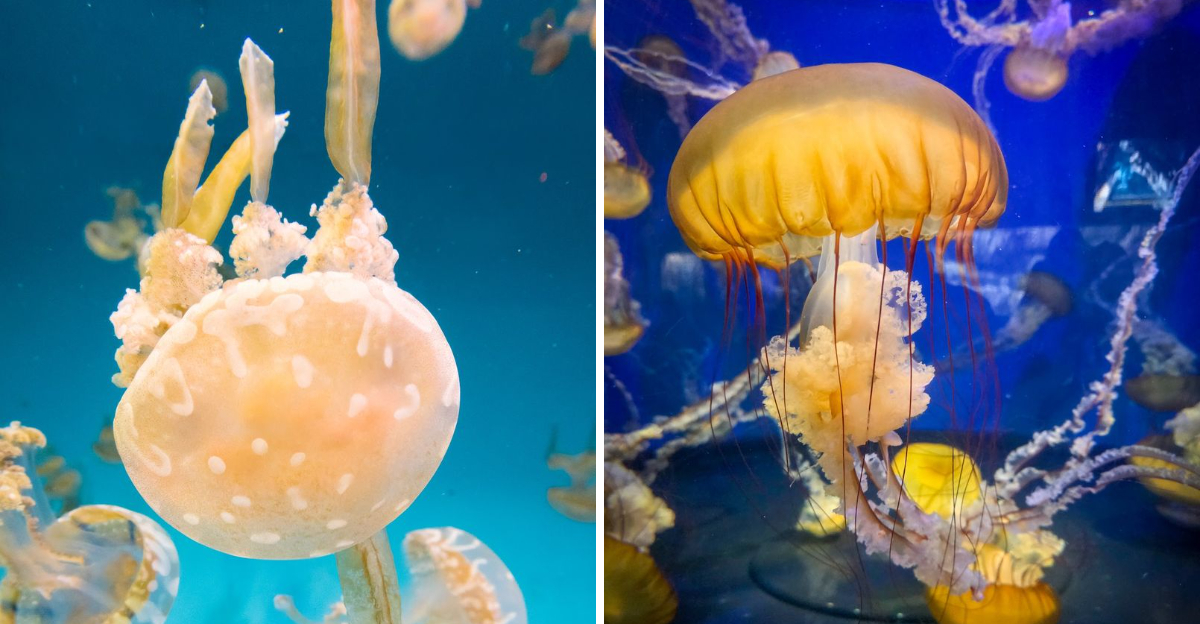
The room glows before you fully understand what you are looking at. Then something translucent drifts past the glass.
Another pulses slowly behind it. Colors shift. Tentacles float like ribbons.
Give yourself a minute and the whole space starts feeling less like somebody turned an underwater dream into a place you can wander through.
A newly opened California exhibit is putting sea jellies under the spotlight in spectacular fashion.
Do not hurry from tank to tank. Pick one creature and watch how it moves.
Find the strangest shape. Decide which one looks elegant and which one looks like it came from another planet.
The collection rotates throughout the year and is expected to showcase more than 40 species, so repeat visits may not look exactly the same. Just try leaving without choosing a favorite.
Step Into The Aquarium’s Biggest Jelly Exhibit Yet
Nothing quite prepares a visitor for the moment they walk through the entrance of Jelly Dreamscapes for the first time.
The room shifts from ordinary aquarium corridor to something closer to an underwater dream, with tanks glowing softly in every direction.
The Aquarium of the Pacific describes this as the largest and most diverse jelly exhibit in its entire history, and the scale of the space backs that claim up completely.
More than 7,700 gallons of saltwater habitats stretch across 25 individual tanks, each housing a different collection of sea jellies.
Animal care staff rotate over 40 distinct species through these tanks over the course of the exhibit’s run, which means returning visitors could encounter entirely different animals with each trip.
The exhibit is scheduled to continue through April 30, 2027, offering a generous window for planning.
The reimagined Pacific Visions gallery provides the physical home for all of this, and the space has been thoughtfully redesigned to prioritize immersion over information overload.
Overhead lighting, holographic elements, and ambient projections work together to create a mood that feels genuinely unlike any other gallery in the building.
See Hundreds Of Jellies In One Gallery
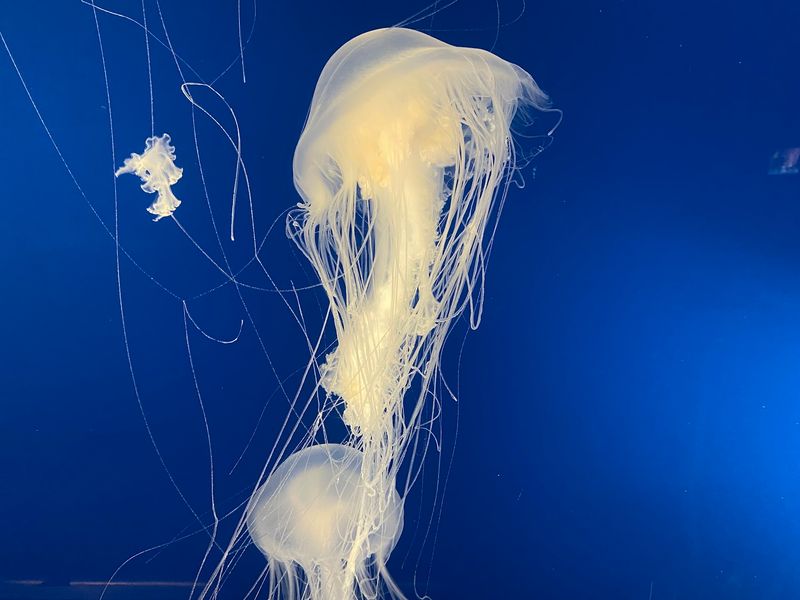
Stepping into the Pacific Visions gallery during Jelly Dreamscapes feels a bit like pressing pause on the rest of the world.
Hundreds of sea jellies drift through tanks arranged across both wall-mounted and freestanding displays, each offering a slightly different vantage point on the animals inside.
The collection represents one of the most diverse groupings of sea jellies found anywhere in the United States.
Ambient lighting shifts subtly between tanks, and large-scale projections cover portions of the walls and floor, adding depth to the already layered visual experience.
A massive end-to-end projection near one section of the gallery creates the sensation of being submerged beneath open ocean.
Educational displays and interactive elements are woven throughout the space, providing context without interrupting the flow of the visit.
The variety on display is genuinely striking because jellies come in an enormous range of sizes, shapes, and behaviors that most people have never had a chance to compare side by side.
Some pulse slowly and deliberately while others move in quick, rhythmic bursts.
Spending time moving between each tank at a relaxed pace tends to reveal details that a faster walkthrough would easily miss, making unhurried exploration the most rewarding approach here.
Watch Sea Nettles Drift Through The Water
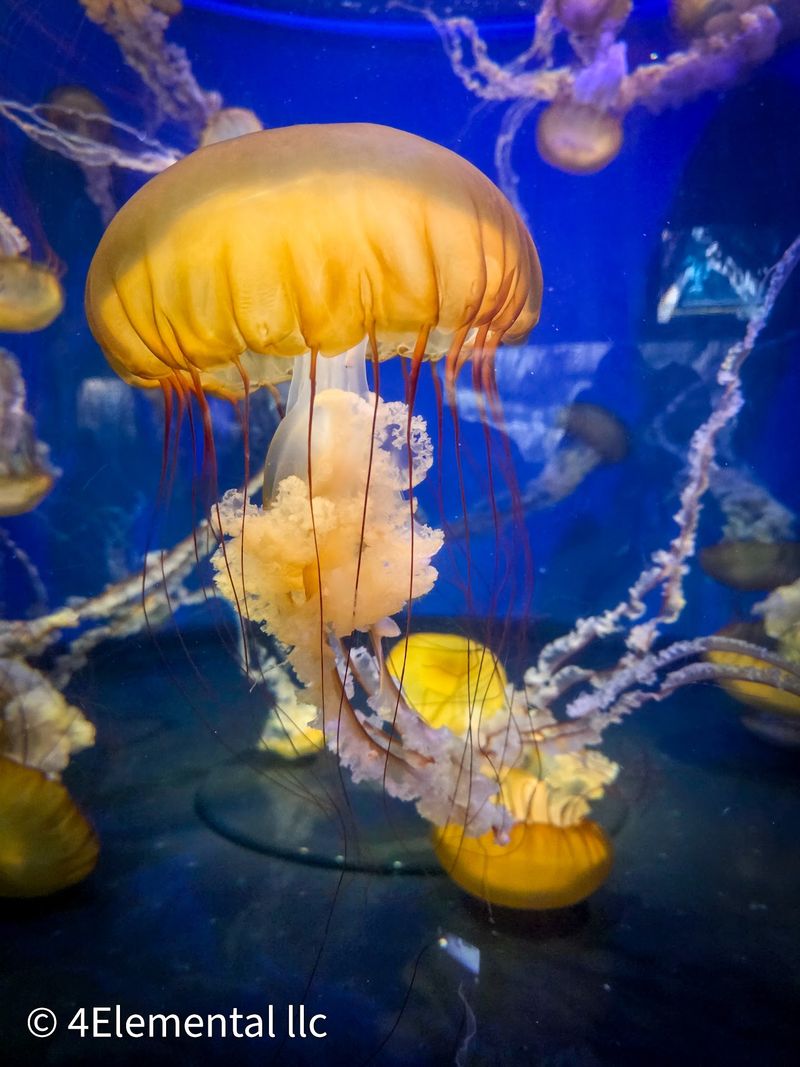
There is something almost hypnotic about watching sea nettles move through water, and the Jelly Dreamscapes exhibit gives visitors plenty of time to experience exactly that.
Pacific sea nettles carry a distinctive golden-brown bell edged with a reddish tint that can grow larger than three feet in diameter in the wild.
Their long, ribbon-like tentacles trail behind them and can extend as far as 15 feet, creating sweeping visual trails as the animals pulse gently forward.
A mirrored sea nettle tank stands out as one of the most photographed spots within the gallery.
The reflective walls multiply the image of each jelly, turning a single tank into what looks like an endless procession of drifting forms.
The lighting used in this section is particularly well-suited to bringing out the warm amber tones in the nettles’ bells.
Sea nettles are carnivores that capture prey by paralyzing it with stinging cells located along their tentacles. Watching them move, it is easy to understand how effective that strategy must be in open water.
The combination of effortless motion and striking color makes the sea nettle tank one of the most compelling stops in the entire exhibit, and visitors often linger here longer than they initially planned.
Look For Quick-Pulsing Blubber Jellies
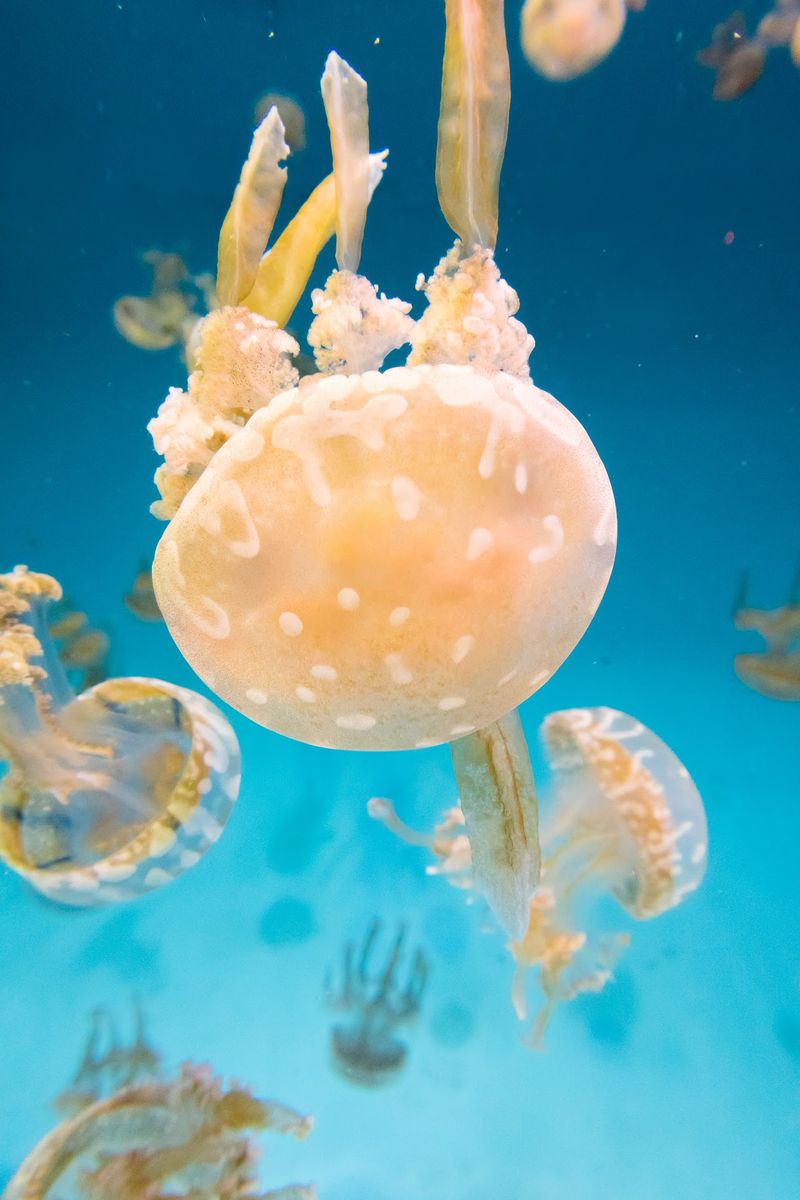
Not every jelly in the Dreamscapes gallery moves with the slow, trailing grace of a sea nettle, and blubber jellies make that contrast immediately obvious.
Also known as barrel jellies, these animals have a compact, rounded bell that typically measures about 10 inches in diameter and can weigh approximately 5.5 pounds.
Their body colors range from cream and off-white to blue-white or brown, often marked with reddish or purple-brown grooves running along the bell’s surface.
The pulsing motion of blubber jellies is noticeably quicker and more mechanical-looking than many of their gallery neighbors.
Thick appendages hang from each tentacle, giving them a sturdier, more substantial appearance than the delicate, trailing forms of other species nearby.
Watching them move back to back with something like a sea nettle makes the sheer diversity of jelly body plans much easier to appreciate.
Blubber jellies sustain themselves primarily by feeding on zooplankton, which places them at an important position in marine food webs.
Their role as zooplankton consumers connects them to broader ocean health in ways the exhibit’s educational panels explain clearly and accessibly.
Slow Down For The Dreamlike Lighting
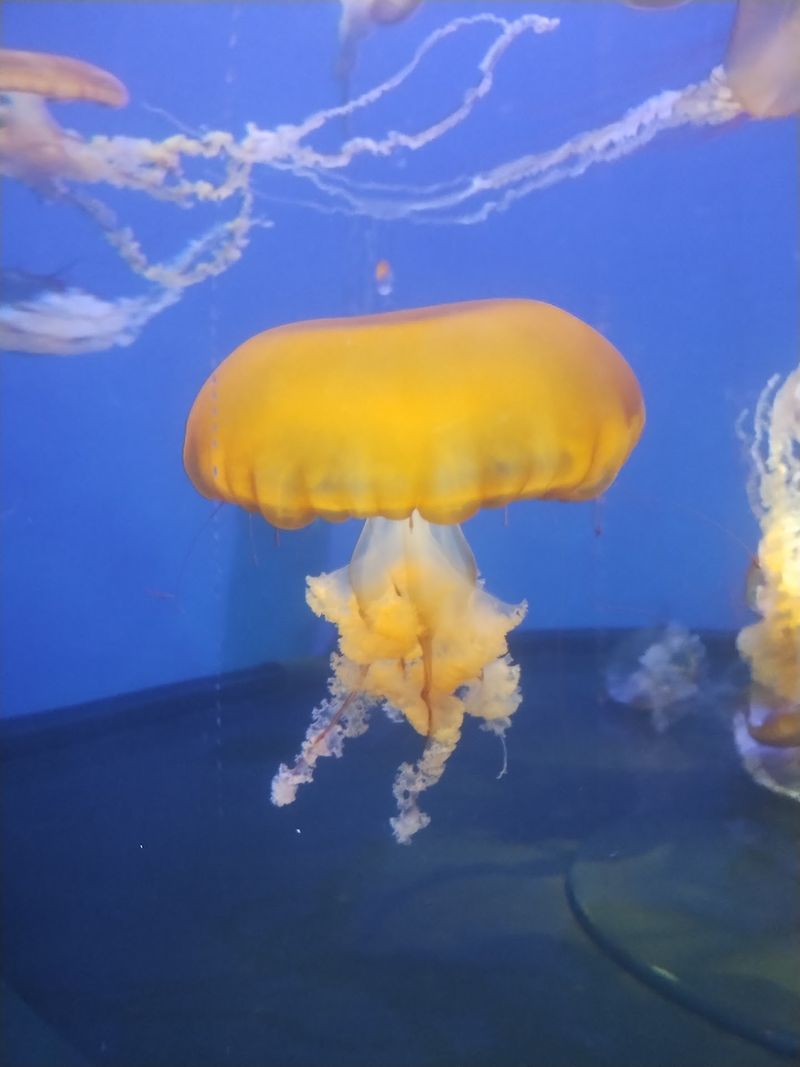
The lighting design inside Jelly Dreamscapes is not an afterthought. It is arguably the single element that transforms a collection of tanks into something that feels genuinely immersive and transportive.
The gallery operates in deliberate darkness, with light coming from the tanks themselves, starlike points overhead, kaleidoscopic projections, and holographic elements placed throughout the space.
That combination shifts the visual weight of the room entirely toward the animals on display.
Each tank’s lighting is calibrated to complement the specific species inside it, bringing out the warm amber of sea nettle bells or the cool translucence of moon jellies depending on the habitat.
The overall effect encourages slower movement through the gallery because there is always something shifting or pulsing at the edge of vision that draws attention back to one display or another.
Visitors who try to rush through the space tend to miss the quieter, more subtle details that the lighting reveals.
The Pacific Visions gallery was reimagined specifically to support this kind of multi-sensory presentation, and the architectural decisions made during that renovation are visible in how seamlessly the lighting integrates.
There are no harsh transitions between bright corridors and dark display areas.
Listen To The Gallery’s Underwater-Inspired Soundscape
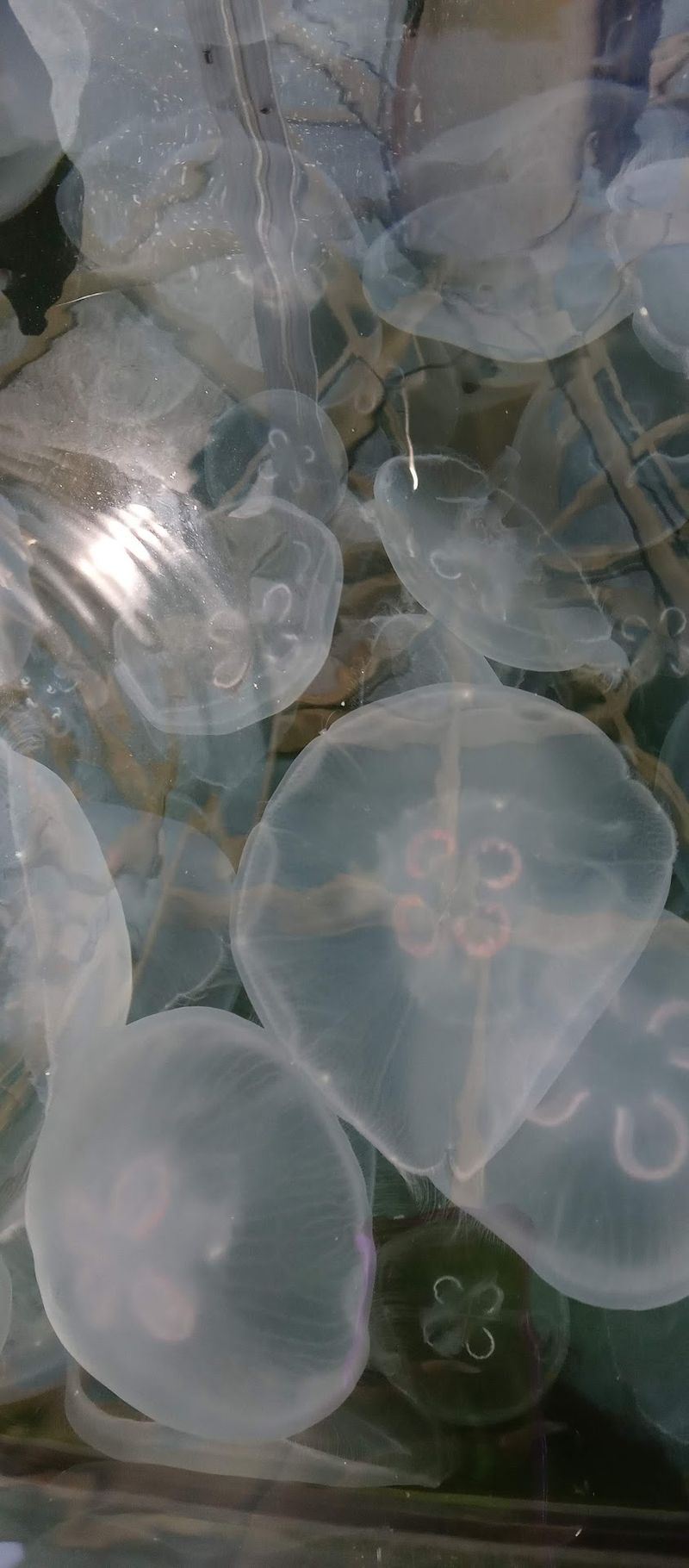
Sound is one of the less obvious but surprisingly effective layers of the Jelly Dreamscapes experience.
A carefully curated audio environment plays continuously throughout the gallery, drawing on tones and textures that evoke the deep ocean without becoming distracting or overwhelming.
The soundscape works alongside the lighting and visual elements to create a multi-sensory atmosphere that feels genuinely cohesive rather than assembled from separate parts.
Gentle, low-frequency tones and subtle ambient sounds fill the space in a way that dampens the noise of other visitors and creates a sense of acoustic separation from the rest of the aquarium building.
That quality makes the gallery feel quieter and more contained than its physical size might suggest.
Families with younger children often find that the calming audio environment has a noticeably settling effect on even the most energetic visitors.
The decision to include a thoughtfully designed soundscape reflects a broader curatorial philosophy behind Jelly Dreamscapes, which treats the exhibit as an environment to inhabit rather than a display to move past quickly.
Pausing near a tank and simply listening while watching the jellies drift can shift the experience from observation to something closer to genuine stillness.
Head Outside To Touch A Moon Jelly
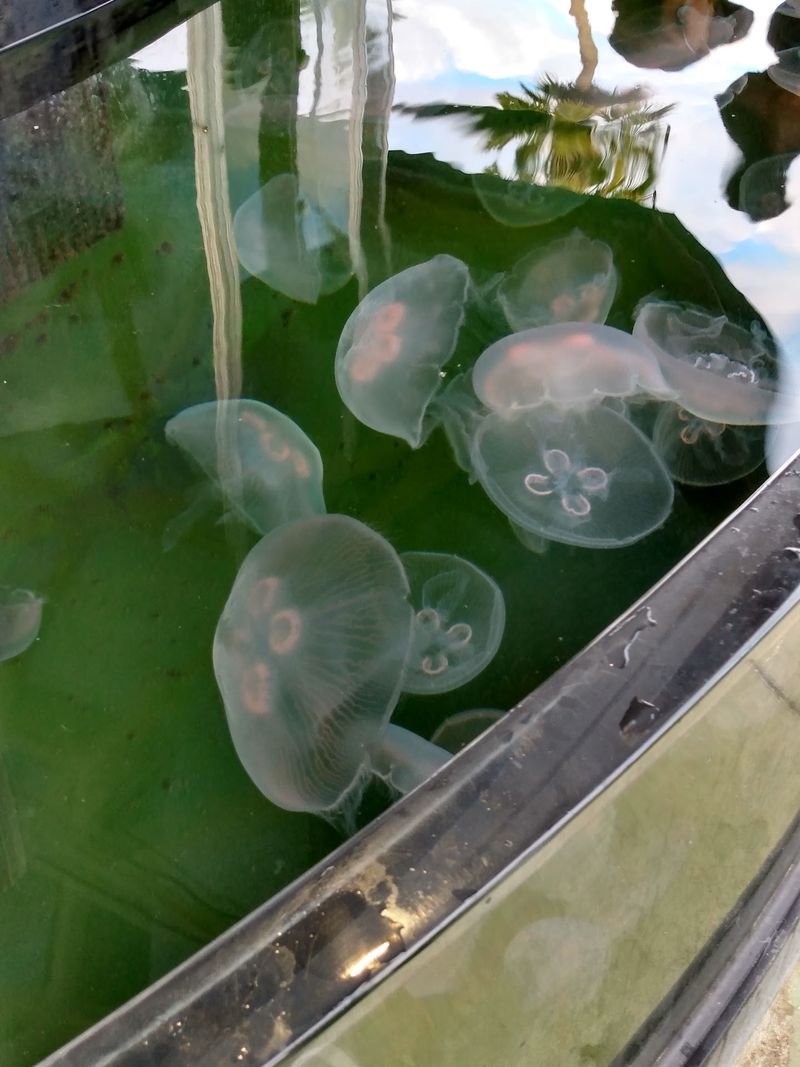
After moving through the dim, meditative interior of the Jelly Dreamscapes gallery, stepping out onto Harbor Terrace introduces a completely different kind of jelly encounter.
The outdoor space overlooks Rainbow Harbor and houses the Aquarium’s Moon Jelly Touch Lab, where visitors can interact directly with live moon jellies in a supervised setting.
The touch tank is large and curved, designed to accommodate multiple visitors at the same time without feeling crowded.
Education department staff are present throughout the touch lab experience to guide visitors on how to interact safely and respectfully with the animals.
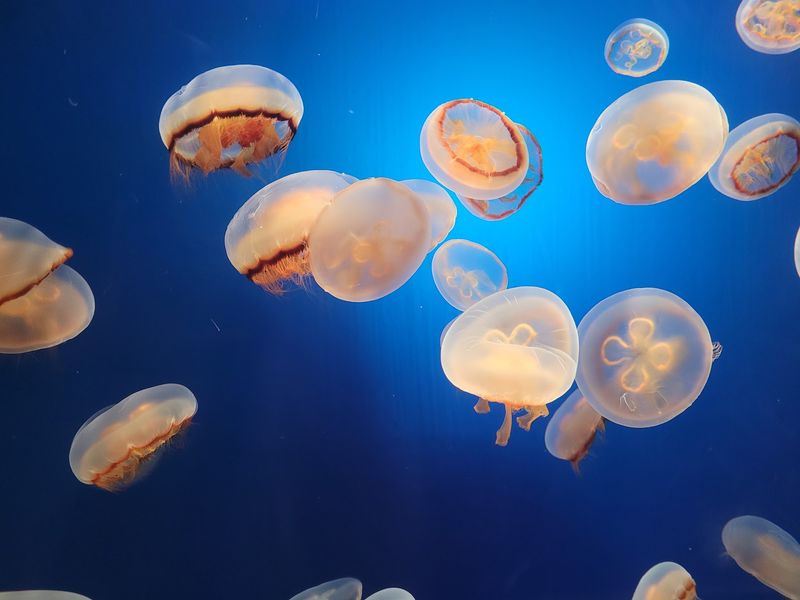
Moon jellies are one of the few sea jelly species whose sting is generally not strong enough to penetrate human skin, which makes them well-suited for hands-on encounters of this kind.
The distinctive half-circle markings visible through the bell are the jelly’s reproductive tissues, and staff members often use these as a starting point for explaining moon jelly biology to curious visitors.
The physical sensation of touching a moon jelly tends to be the detail visitors describe most vividly afterward.
The texture is firm but yielding, cooler than expected, and unlike most other animals encountered in everyday life.
Harbor Terrace also provides a pleasant outdoor break from the interior gallery, with views of the harbor that add a sense of place to the overall aquarium experience on clear days.
Feed The Moon Jellies On Select Days
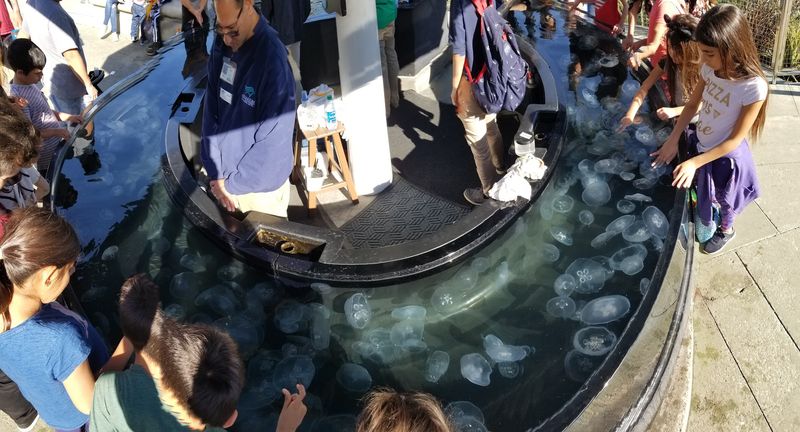
The Moon Jelly Touch Lab offers an additional activity on weekends that takes the interactive experience a step further than simple observation.
On Saturdays and Sundays, visitors can purchase small portions of brine shrimp directly at the touch exhibit for three dollars per cup or two cups for five dollars.
Once they have their food, guests can gently pour the shrimp over the moon jellies and watch the animals respond in real time.
Moon jellies collect food using their tentacles and oral arms, and the feeding process is slow and deliberate enough to follow with the naked eye.
Seeing a jelly actively gather brine shrimp makes the mechanics of how these animals eat much more concrete than any diagram or written description could.
Weekend feeding times run from 10:30 a.m. to 1:30 p.m. and again from 2:30 p.m. to 4:30 p.m., giving families flexibility in planning around the rest of their aquarium visit.
Arriving a few minutes before a feeding window opens tends to secure a good spot at the tank, particularly on busy weekend mornings when the terrace fills up quickly.
The activity works well for visitors of nearly any age, and the low cost makes it an easy addition to the day without requiring much advance planning.