This California Desert Trail Reveals An Abandoned Gold Mine Frozen In Time And Is Best Explored In Spring
The trail looks quiet at first. Then you notice what’s waiting at the end.
Dust kicks up with every step. The sun hits differently out here. The landscape feels raw, open, almost untouched.
You keep walking. Rocks, silence, wide sky. It starts to feel like you’re heading somewhere people forgot about.
Then it appears. Not a viewpoint. Not a typical desert stop. Something far more unexpected. This is the kind of hidden experience in California that feels like stepping into another time.
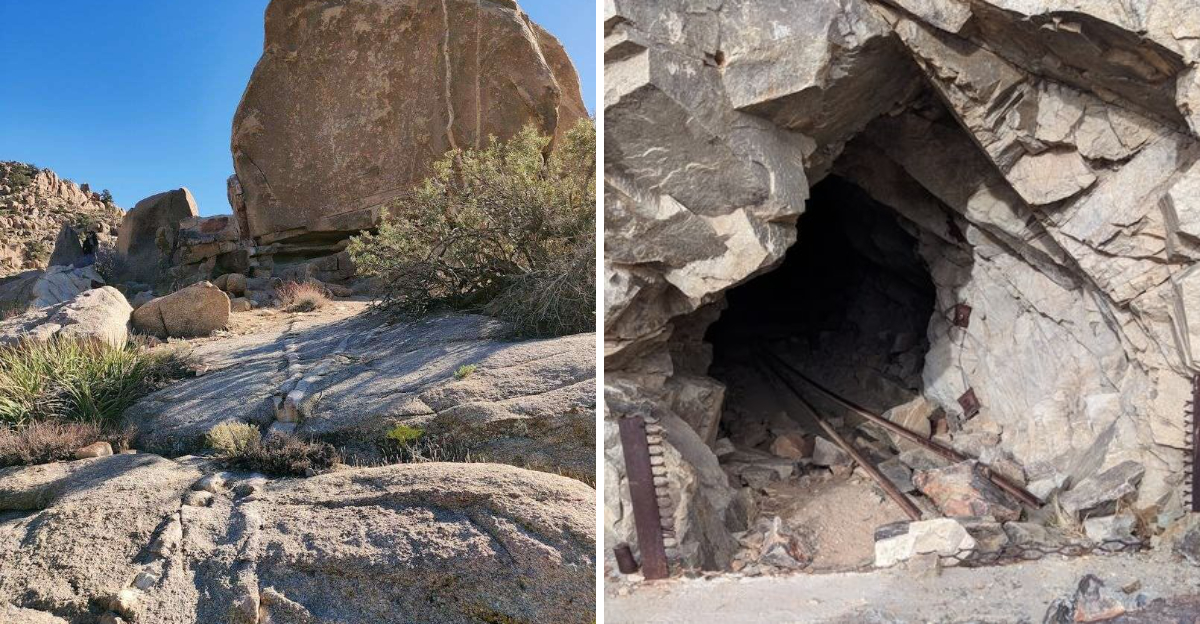
Old wood. Rusted metal. Open mine shafts. Everything sits exactly where it was left, slowly being reclaimed by the desert. It doesn’t feel staged. It feels real.
Spring changes everything. The heat eases off. The air feels lighter. Small bursts of color appear against the dry earth, making the whole place feel more alive.
It’s not just a hike. It’s a walk into history you can actually see, touch, and stand inside.
Out in Joshua Tree, the Desert Queen Mine Trail turns a simple desert hike into something you won’t forget anytime soon.
1. A Gold Mine With Deep Historical Roots
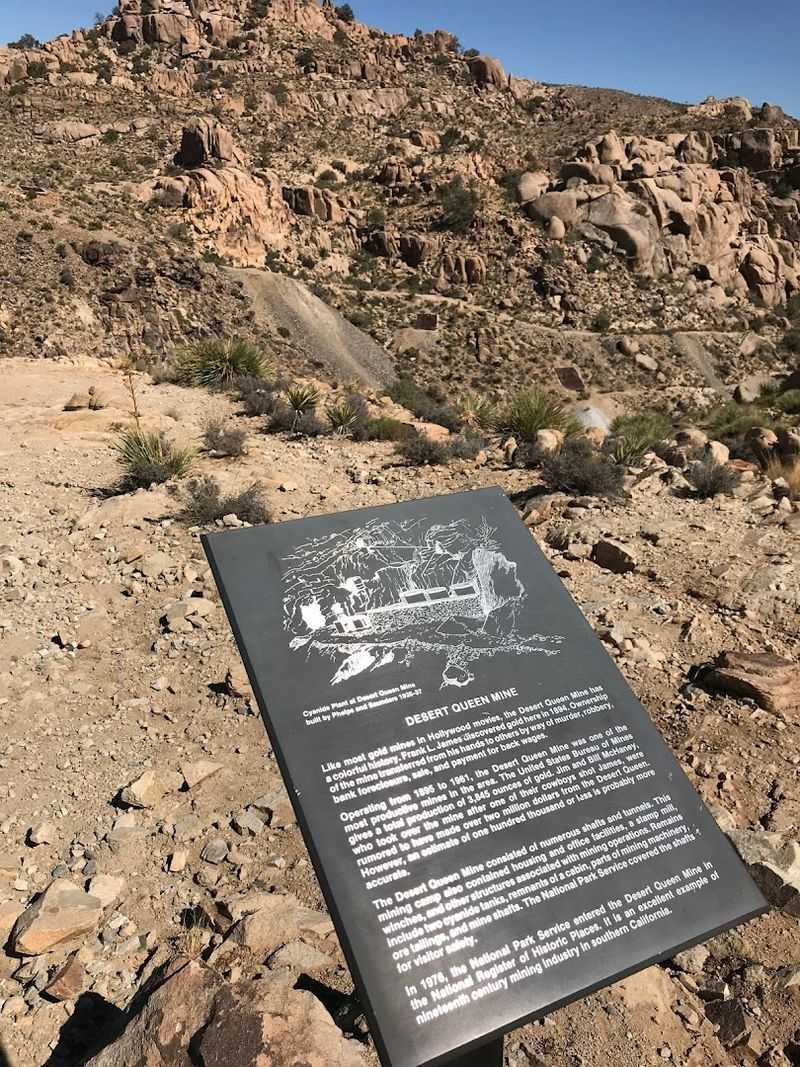
Frank L. James established the Desert Queen Mine back in the early 1890s, making it one of Southern California’s more enduring gold mining operations.
The mine kept producing gold for nearly 75 years, which is remarkable when compared to most desert mines that folded within a decade of opening.
That longevity speaks to the genuine richness of the ore discovered beneath these sun-hardened hills.
Over the decades, ownership of the mine changed hands several times, each new operator leaving behind a slightly different layer of history embedded in the rock and soil.
The combination of multiple eras of use means the site holds a layered story that goes well beyond a simple gold rush tale.
Artifacts from different periods of operation can still be spotted scattered across the terrain around the shafts.
Visiting the mine today feels less like looking at a museum exhibit and more like stumbling across a place that was simply walked away from one day.
The desert has preserved the structures in a kind of suspended decay that makes the history feel strangely immediate and personal.
2. Two Notorious Men Who Shaped The Mine’s Story
Not every trail comes loaded with the kind of colorful characters connected to the Desert Queen Mine.
Jim McHaney, a local cattle rustler with a reputation for bending the law, was among the early figures tied to this site.
His involvement added a lawless edge to the mine’s early history that fits perfectly with the wild nature of the surrounding Mojave landscape.
Bill Keys, on the other hand, brought a different kind of grit to the story.
Known as a determined and resourceful rancher, Keys became deeply associated with the broader Desert Queen area and left a lasting mark on the land that visitors can still trace today.
His nearby homestead, the Keys Ranch, is a separate site within Joshua Tree National Park that tells its own fascinating story.
Together, McHaney and Keys represent two very different personalities who were both shaped by the unforgiving demands of desert life.
Learning about them before hitting the trail adds a rich layer of human drama to what might otherwise feel like just a hike past old machinery.
The trail becomes a kind of open-air biography when their stories are kept in mind.
3. Trail Length And Elevation That Suit Most Hikers
Covering approximately 2.9 miles round-trip with an elevation gain of around 413 feet, the Desert Queen Mine Trail sits comfortably in the moderate difficulty range.
That makes it accessible to a wide range of hikers, from teenagers on a family trip to older adults who stay reasonably active.
The distance is short enough to complete in a couple of hours without feeling rushed.
The elevation gain is gradual in some sections and a bit steeper in others, keeping the hike interesting without becoming punishing.
Hikers who are used to flat terrain may feel the incline more noticeably, but the reward of reaching the mine overlook makes the effort feel worthwhile.
Sturdy footwear is a smart choice since the rocky ground can be uneven and loose in certain spots.
The trail does not require any technical climbing skills or special gear, which keeps the barrier to entry low for most visitors.
Pacing matters in the desert heat, so taking short breaks and drinking water regularly throughout the hike helps maintain energy and comfort.
Starting the hike in the early morning is a reliable strategy for avoiding the harshest midday sun.
4. Finding The Trailhead Without Getting Lost
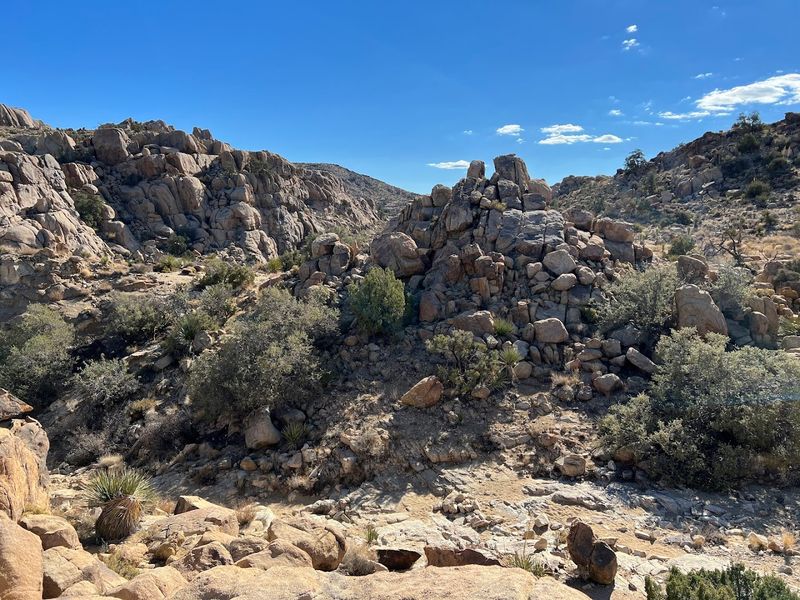
Getting to the Desert Queen Mine trailhead takes a bit more attention than some of the park’s more clearly marked routes.
Signage in this part of Joshua Tree is more limited, so relying on a map rather than expecting frequent directional signs is a smarter approach.
The trail sits within the Desert Queen Mine Road area, which leads toward other backcountry access points like the Pine City trailhead.
The road itself is unpaved, and conditions can vary depending on recent weather, so checking current park updates before heading out is a practical step.
The overall drive feels more remote compared to the main park roads, which adds to the sense of exploring a less-visited corner of Joshua Tree.
Cell service inside the park is often unreliable, so downloading an offline map ahead of time makes a noticeable difference.
The National Park Service recommends this, and it can help avoid unnecessary confusion once you are deeper into the park.
Parking availability can vary depending on timing, especially during spring when visitor numbers increase.
Arriving earlier in the day or choosing a weekday visit can make the experience feel smoother and more relaxed.
Planning ahead in small ways like this tends to set the tone for a much better overall hike.
5. What The Trail Actually Looks And Feels Like
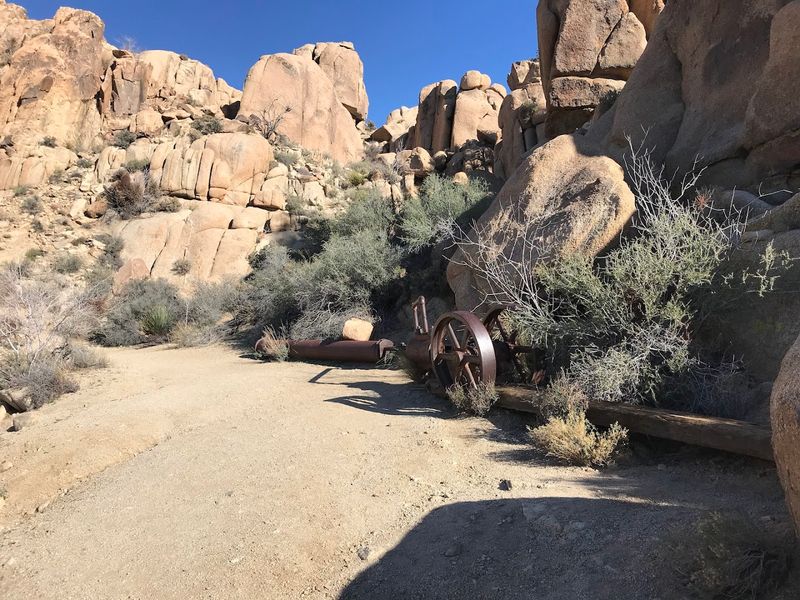
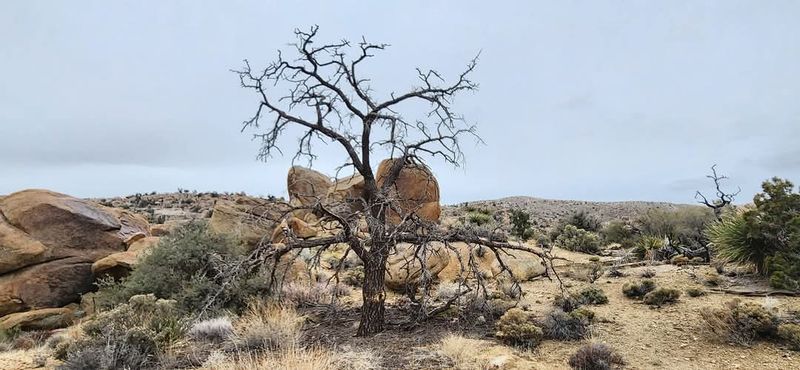
The trail begins by moving across open desert terrain dotted with the kind of rocky outcroppings that Joshua Tree National Park is known for.
The ground underfoot varies between packed sand, loose gravel, and exposed rock slabs, creating a texture that keeps attention focused on each step.
Sparse desert plants line the path, and the surrounding landscape has a stark, sun-bleached beauty that feels completely different from most California hiking destinations.
As the trail progresses, hikers reach an overlook positioned across from the main mine site that offers a panoramic view of the ravine below.
That vantage point gives a clear sense of the scale of the mining operation before the descent begins.
The drop into the ravine is the most physically demanding part of the route, but it leads directly to the most historically interesting section of the entire trail.
Once down in the ravine, the atmosphere shifts noticeably.
The walls of rock close in slightly and the rusted remnants of mining equipment appear in earnest, scattered across the ground like artifacts from a forgotten chapter of California history.
The quiet at the bottom of the ravine adds to the sense of stepping into a place that has been largely undisturbed for decades.
6. The Shafts And Structures Still Standing At The Site
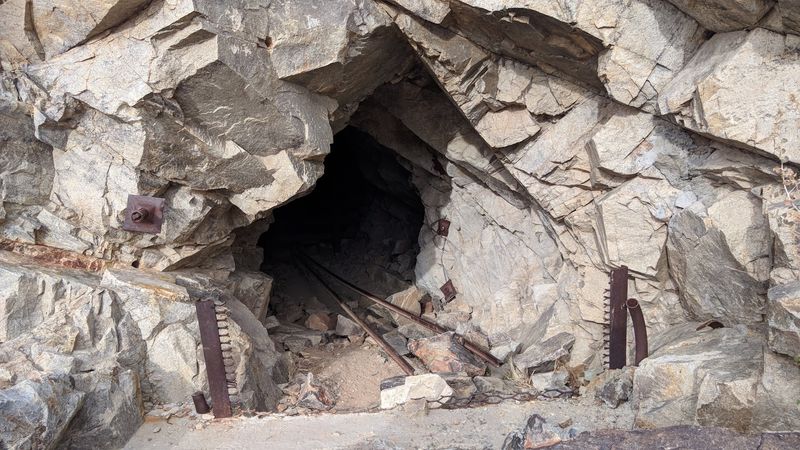
Few abandoned mining sites in Southern California retain as much physical evidence of their past as the Desert Queen Mine.
The site still contains four vertical shafts, five inclined shafts, and ten horizontal adits, which are horizontal tunnels driven into the rock face.
That number of remaining structural features is unusually high for a site of this age and gives the area a genuinely archaeological character.
The structures have been left largely intact as historical artifacts rather than being demolished or removed, which is part of what makes this trail so compelling for history-minded visitors.
Rusting metal components, rotting wooden beams, and scattered ore processing remnants are visible throughout the site.
Each piece of equipment tells a small story about the physical labor involved in extracting gold from desert rock.
Looking at the inclined shafts in particular gives a visceral sense of how dangerous and difficult mining life must have been in this environment.
The angles of entry are steep, and the surrounding terrain is unforgiving.
Standing at the rim of one of the sealed vertical shafts and peering into the darkness below is one of those quietly powerful moments that tends to stay with visitors long after the hike is over.
7. Why The Shafts Are Sealed And Why That Matters
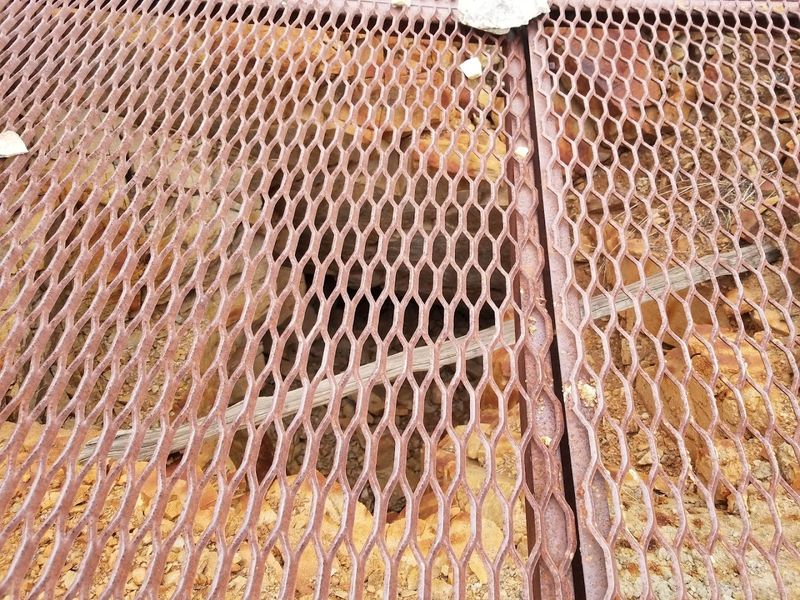
Many of the mine shafts at the Desert Queen site have been sealed by park authorities to prevent visitors from entering and to protect the wildlife that uses the dark interiors as habitat.
Bats in particular are known to roost inside old mine shafts throughout the Mojave Desert region, and disturbing those colonies can have serious ecological consequences.
The sealing of shafts is a conservation measure as much as a safety one. From a purely practical standpoint, open mine shafts are genuinely hazardous.
Vertical drops inside old mines can reach significant depths, and the rock walls surrounding them are not always stable.
A sealed shaft keeps the historical character of the site visible while eliminating the most serious physical risks for curious hikers.
Respecting the sealed areas is not just a park rule but a matter of personal safety and environmental responsibility.
The sealed grates used at many shafts are designed to allow bats to pass through while blocking human entry, which reflects the park service’s effort to balance preservation with access.
Visitors who encounter sealed shafts should treat them as windows into history rather than obstacles to overcome, observing the depth and scale from a safe distance above.
8. Spring Is The Season That Makes This Trail Shine
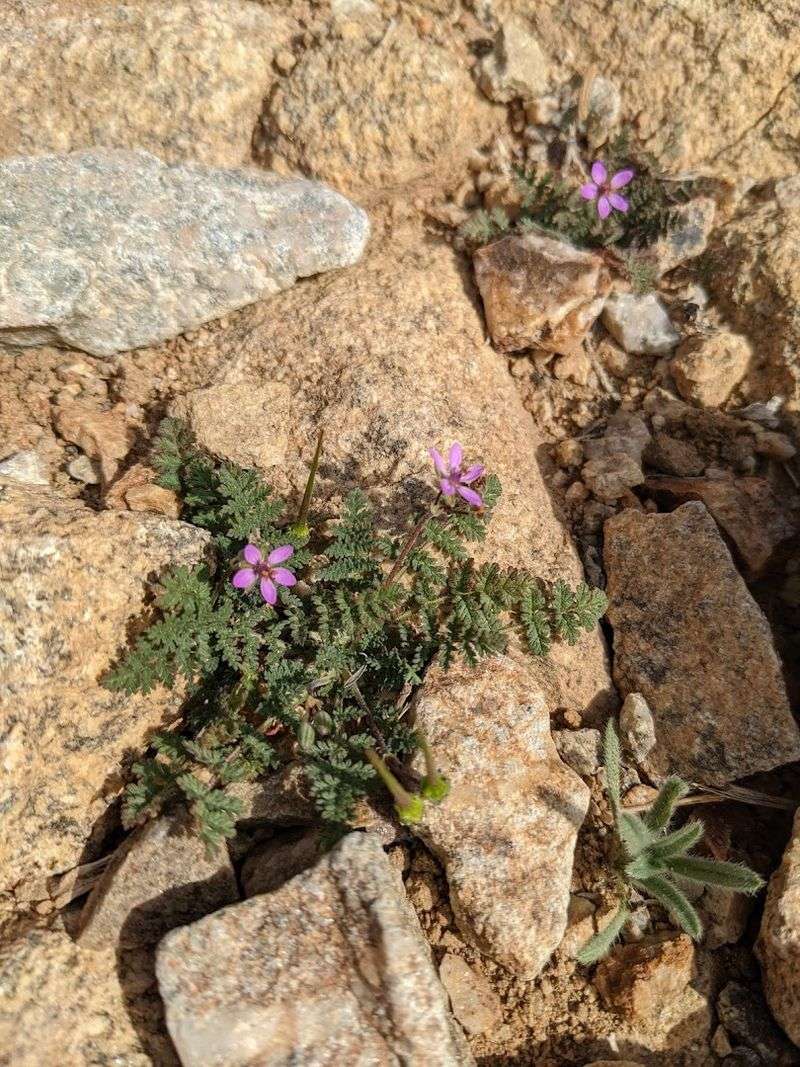
Spring consistently earns its reputation as the best season to tackle the Desert Queen Mine Trail, and the reasons go beyond just comfortable temperatures.
From roughly late February through April, the Mojave Desert can burst into color with wildflower blooms that transform the landscape from stark beige to vivid patches of purple, yellow, and orange.
Those blooms are entirely dependent on winter rainfall, so they vary from year to year, but when conditions are right the effect is striking.
Temperatures during spring mornings tend to hover in a range that feels genuinely pleasant for hiking, typically somewhere between the mid-50s and low 70s Fahrenheit.
That window of mild weather closes fast as summer approaches, making spring visits feel like a narrow and valuable opportunity.
The light in early spring also tends to be softer and more forgiving than the harsh midday glare of summer months.
Wildlife activity picks up noticeably in spring as well, with lizards, birds, and occasionally desert tortoises becoming more visible along the trail corridor.
The combination of pleasant weather, potential wildflower color, and increased animal activity makes spring visits feel layered and rewarding in a way that other seasons simply cannot match.
Planning a trip during March or April tends to deliver the most well-rounded experience on this trail.
9. Trail Markings Are Minimal So Come Prepared
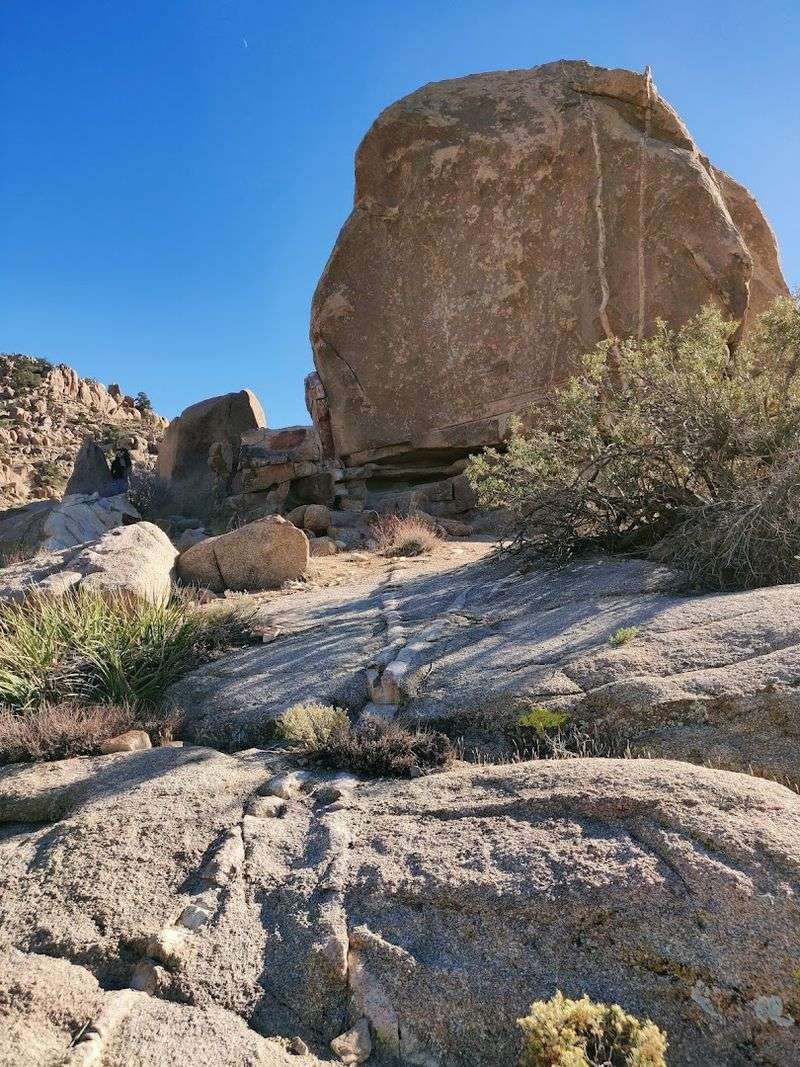
One of the most consistent pieces of advice from people who have completed the Desert Queen Mine Trail is to download a detailed map before leaving for the park.
The trail is not well-marked or maintained by the park service to the same standard as more popular routes within Joshua Tree.
That means hikers relying solely on physical trail markers or intuition could find themselves uncertain of the correct path at key decision points.
AllTrails and similar apps offer downloadable maps that work without cell service, which is a practical solution given the spotty connectivity inside the park.
Having a physical backup map is an even more reliable option for those who prefer not to depend on battery life during a hike.
Spending five minutes on map preparation before departure can prevent a significant amount of confusion on the trail itself.
The relatively unmaintained nature of the trail is actually part of its appeal for hikers who enjoy a more rugged and self-directed experience.
The absence of constant signage encourages a slower, more attentive style of hiking where observation and map-reading replace passive trail-following.
Treating the navigation challenge as part of the adventure rather than an inconvenience tends to make the overall experience feel more satisfying and genuinely exploratory.
10. The Eagle Cliff Boulder House Adds A Bonus Stop
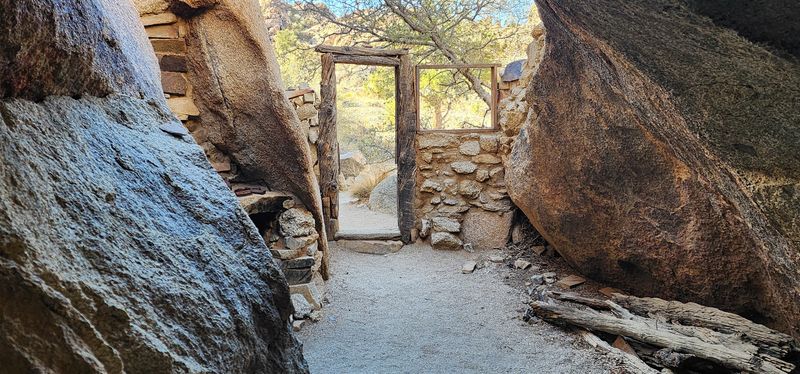
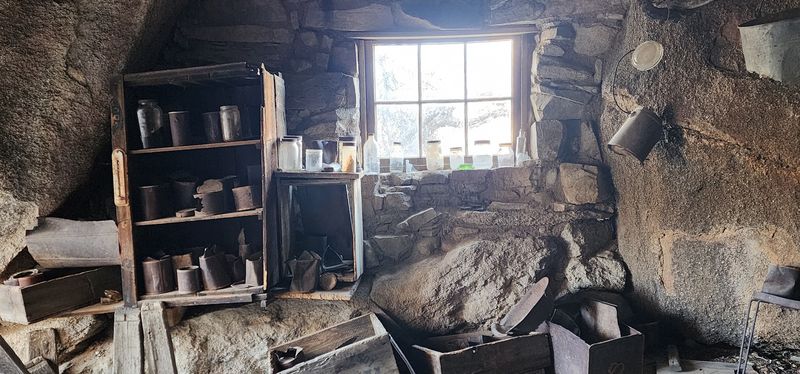
The Desert Queen Mine Trail holds at least one surprise that many first-time visitors do not anticipate: the Eagle Cliff Boulder House.
Tucked along the trail route, this historic mining homestead was built directly into the natural granite boulder formations that define the Joshua Tree landscape.
The structure is a quiet testament to the resourcefulness of the people who lived and worked in this remote desert environment.
The Boulder House served as a shelter for miners and workers associated with the broader Desert Queen operation, and its construction reflects the practical ingenuity that desert survival demanded.
Using existing boulders as walls and structural supports reduced the need to haul heavy building materials across rugged terrain.
The result is a structure that feels almost organically connected to the landscape around it.
Pausing at the Boulder House during the hike gives visitors a chance to appreciate the human scale of the mining era in a more intimate way than the large industrial shafts allow.
The site is small and easy to miss if hiking too quickly, so slowing down and looking carefully at the boulder formations along the trail is worthwhile.
The Boulder House rounds out the historical narrative of the trail in a way that makes the overall experience feel more complete.
11. Rusty Artifacts That Bring Mining History To Life
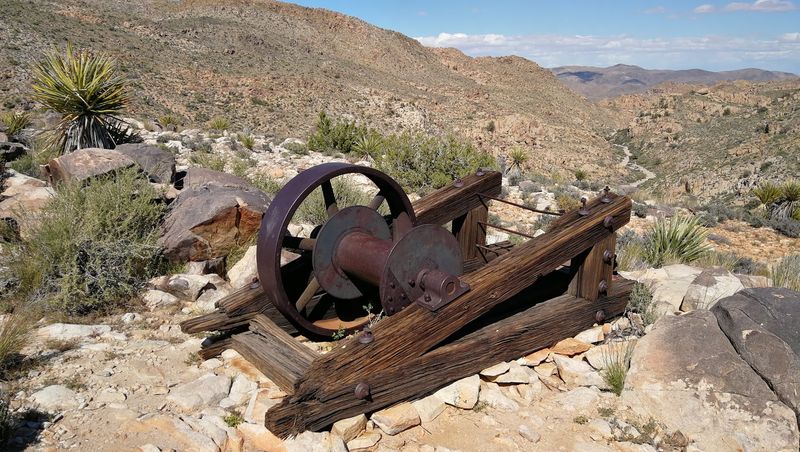
There is something genuinely captivating about standing next to a piece of machinery that has not moved in decades and trying to figure out what it once did.
The Desert Queen Mine site is scattered with rusting artifacts including ore carts, cable systems, processing equipment, and structural hardware that were simply left behind when operations ceased.
Each object is a physical clue to the mechanical complexity of gold extraction in the early 20th century.
The desert environment has acted as a natural preservative in some respects, slowing decomposition in ways that a wetter climate would not allow.
Metal surfaces are heavily oxidized and wooden components have become brittle and gray, but many items remain recognizable in form.
That recognizability is part of what makes the site feel more like an outdoor museum than a simple pile of old junk.
Park rules prohibit removing or disturbing any artifacts at the site, which is a regulation worth taking seriously since it protects the historical integrity of the location for future visitors.
Photographing the equipment up close is a satisfying way to document the experience without taking anything away.
The textures of layered rust and sun-bleached metal photograph particularly well in the warm light of a spring morning.
12. Essential Gear And Safety Tips For The Desert
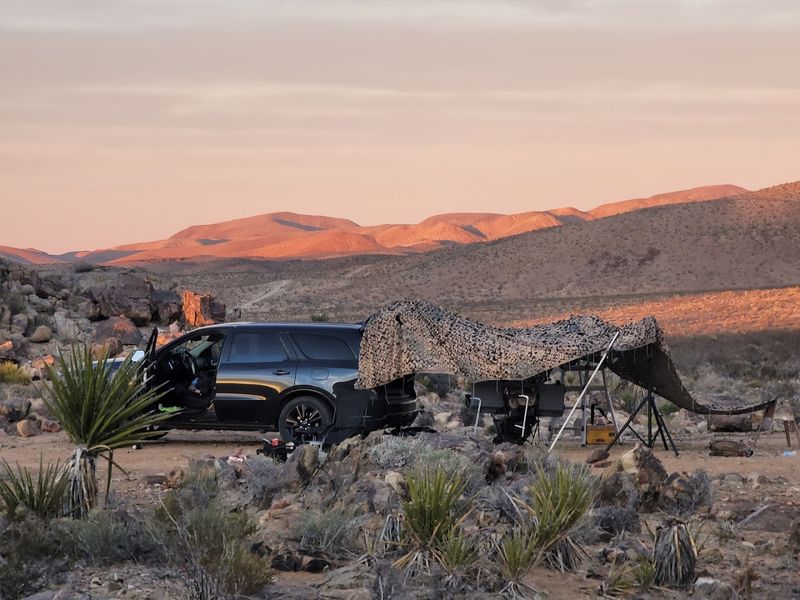
Preparation for the Desert Queen Mine Trail should start well before arriving at the trailhead.
Water is the single most important thing to bring, and the general recommendation for desert hiking is at least one liter per hour of planned activity.
Given the trail length and the time spent exploring the mine site, carrying two to three liters per person is a reasonable baseline for a spring visit.
Sun protection deserves equal attention, since the desert sun reflects off pale rock surfaces and intensifies UV exposure even on mild days.
A wide-brimmed hat, sunglasses, and sunscreen with a high SPF rating form the basic toolkit for staying comfortable and avoiding sunburn.
Lightweight, breathable clothing in light colors helps regulate body temperature without adding unnecessary bulk to a daypack.
Sturdy closed-toe shoes or hiking boots are strongly preferred over sandals or casual sneakers given the rocky and sometimes loose terrain on the trail.
A basic first-aid kit, a fully charged phone or GPS device, and a snack for energy mid-hike round out a sensible packing list.
Telling someone outside the park the planned route and expected return time is a straightforward safety habit that adds a meaningful layer of security for solo hikers or small groups venturing into remote terrain.