This 31-Mile California Drive Feels Like A Journey Through A Storybook
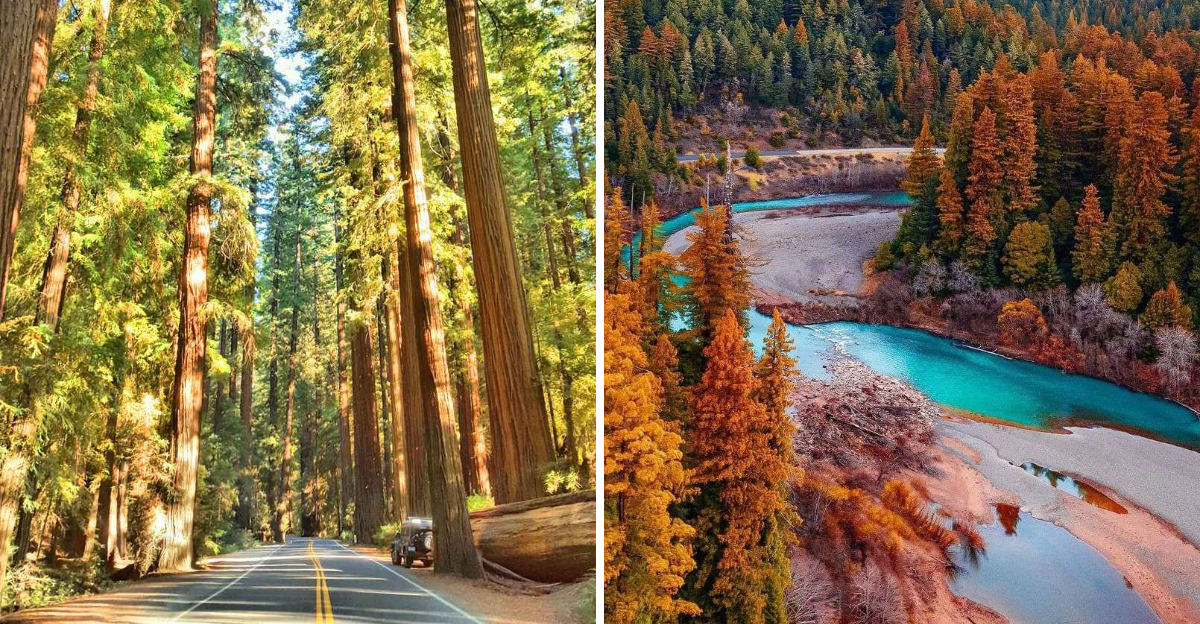
The first thing you notice as you leave the main highway is the quiet. Engine noise softens. Air turns cooler. The landscape begins to shift in small but unmistakable ways.
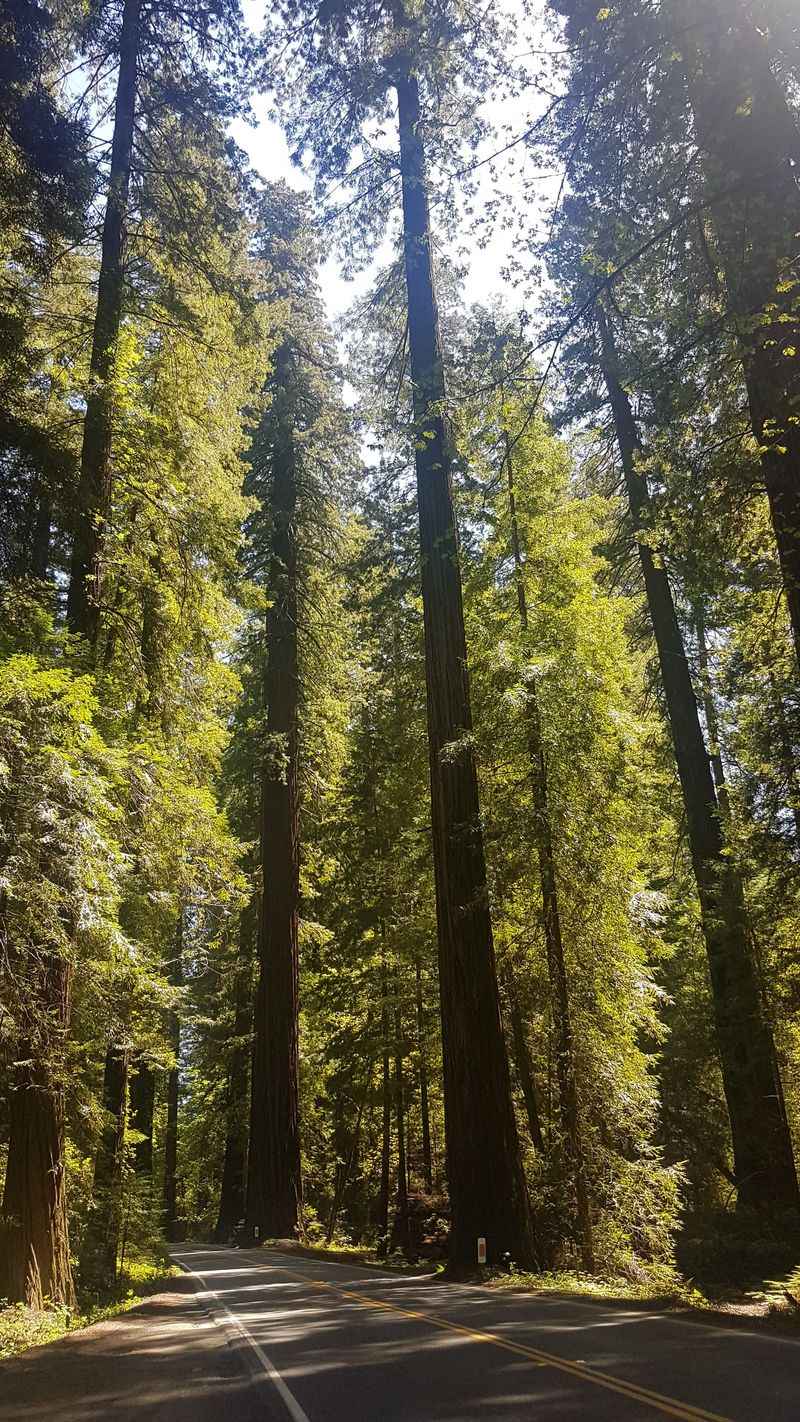
The road narrows and tall trunks start to appear on both sides. Light filters through a rising canopy, and the scale of everything around you changes.
Driving the Avenue of the Giants becomes less about distance and more about awareness.
The route winds for 31 miles through Humboldt Redwoods State Park, carrying travelers deep into one of the largest remaining old-growth redwood forests in the world.
Coast redwoods tower overhead, some standing for centuries, their presence steady and grounding. The drive encourages unhurried movement. Pullouts invite pauses without pressure.
Short trails lead off the road into groves where sound feels muted and time seems to stretch. Sunlight moves slowly across bark and pavement. Shadows lengthen. The forest holds attention without demanding it.
In California, few scenic drives feel this immersive. The Avenue of the Giants does not overwhelm with spectacle. It draws you in through scale, silence, and the quiet power of trees that have watched generations pass.
1. A Historic Byway With Deep Roots
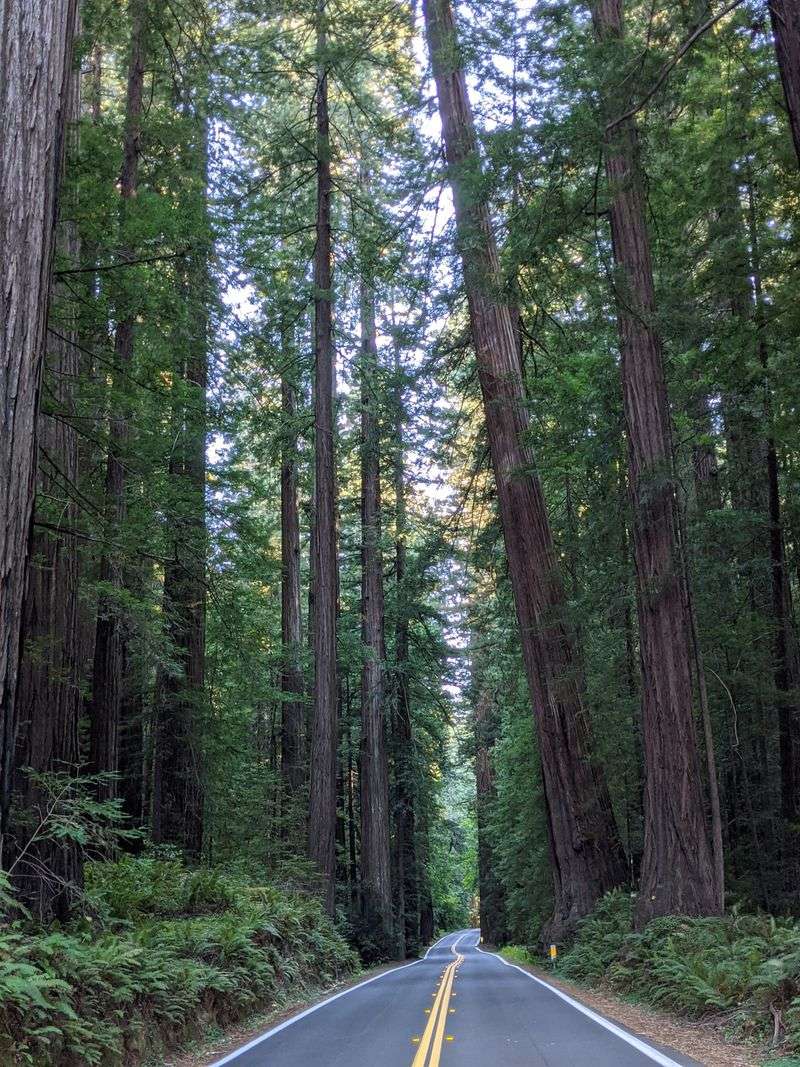
Before the modern freeway system took over, this scenic stretch served as part of the original U.S. Route 101, carrying travelers through the heart of redwood country.
When engineers completed a faster bypass in 1960, the old road was redesignated as State Route 254, preserving its character and allowing visitors to experience the route at a slower, more contemplative pace.
The decision to maintain this road as a scenic byway rather than widen it or convert it to modern highway standards proved fortunate for nature lovers and history enthusiasts alike.
Driving along this preserved route feels like stepping back in time, when road trips meant taking the scenic path rather than the fastest one.
The pavement winds gently through the forest, following natural contours rather than cutting straight lines through the landscape.
Signs along the way mark historical points and groves, offering context about how this area has been valued and protected over generations.
The designation as a scenic byway ensures that the road remains free from commercial billboards and maintains its natural character.
Visitors today experience much the same view that travelers did decades ago, with towering redwoods standing as silent witnesses to the passage of time and the evolution of California’s transportation network.
2. Stretching From Phillipsville To Pepperwood
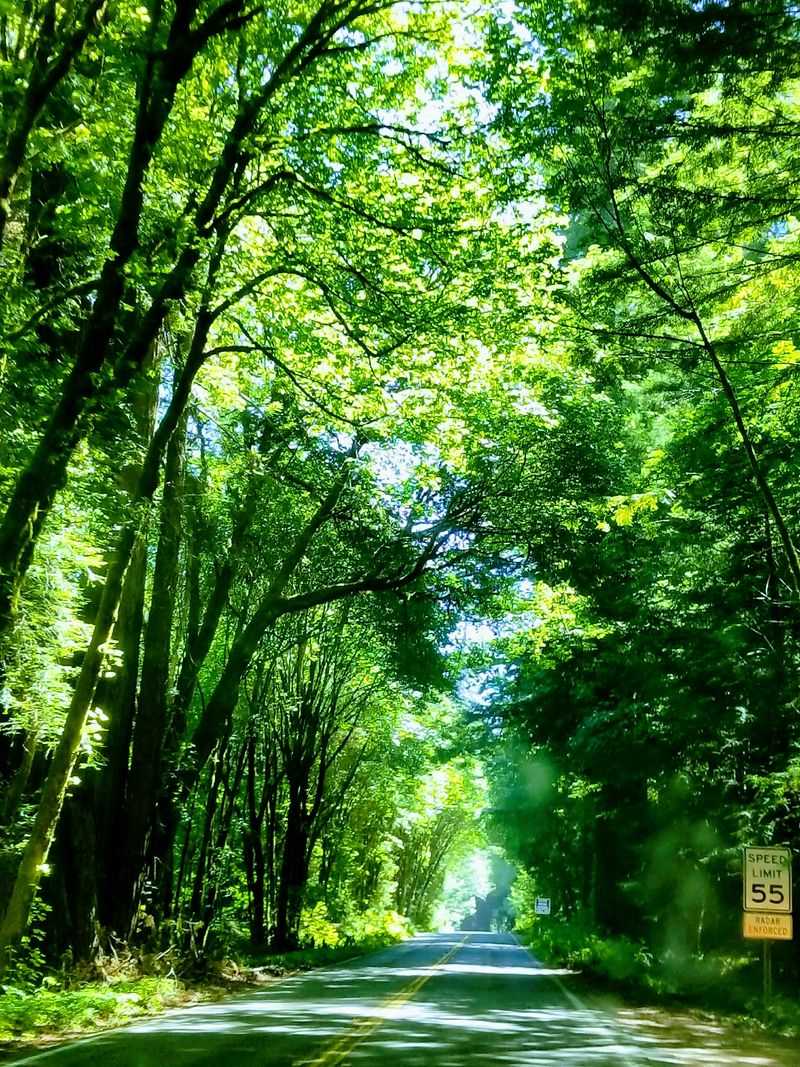
The entire journey covers approximately 31 miles, beginning near the small town of Phillipsville in the south and ending at Pepperwood in the north, both located in Humboldt County, California.
This route runs parallel to the Eel River, which provides a scenic companion to the drive and adds the sound of flowing water to the forest atmosphere.
The river has shaped this landscape for millennia, creating the fertile flood plains where these massive trees thrive.
Travelers can enter and exit the Avenue at multiple points along its length, making it easy to customize the experience based on available time and interest level.
Some visitors drive the entire 31 miles in one go, stopping frequently at marked groves and pullouts, while others choose to explore just a section. The flexibility of this route makes it accessible for quick visits or extended explorations.
The parallel relationship with Highway 101 means that modern travelers can easily access this historic route without significant detours from their main journey.
Multiple connecting roads allow drivers to hop on and off the Avenue, visiting specific attractions or groves without committing to the full length.
This design preserves the intimate, slow-paced character of the drive while remaining practical for contemporary travel schedules.
3. Home To Ancient Giants Over 1,000 Years Old
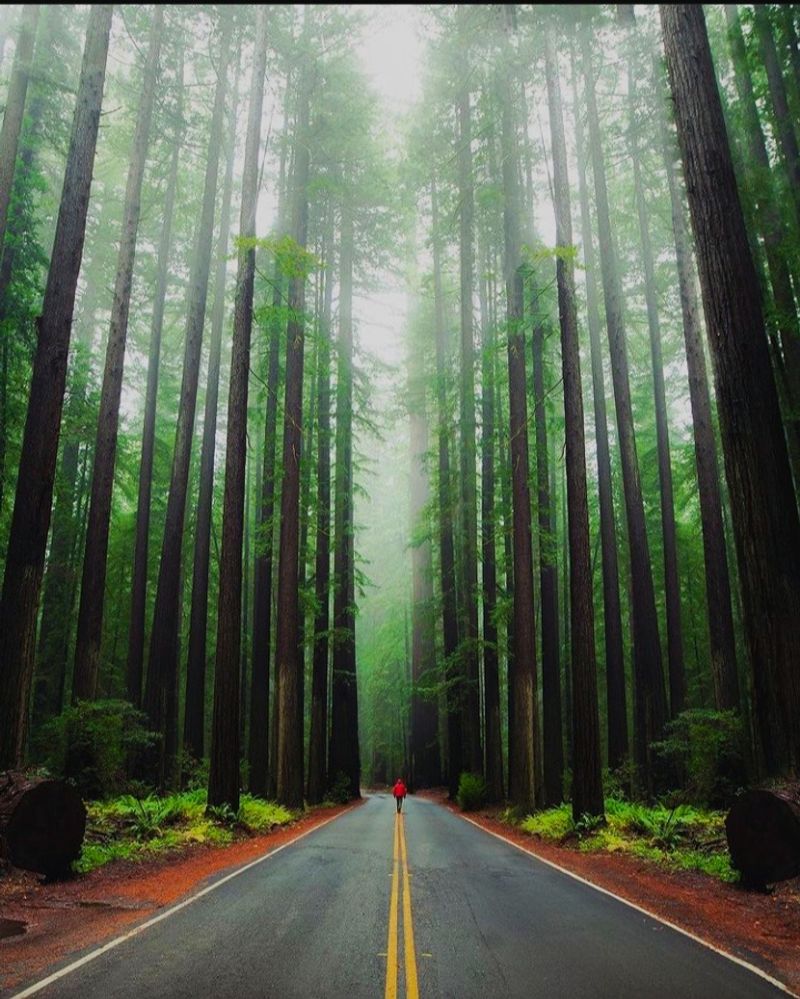
Walking among these coast redwoods means standing in the presence of living organisms that were already ancient when medieval castles were being built in Europe.
Many of the trees along this route exceed 300 feet in height, with some individuals estimated to be more than 1,000 years old.
Their massive trunks can measure 20 feet or more in diameter, creating a sense of scale that photographs struggle to capture accurately.
The longevity of these trees results from several factors, including their thick, fire-resistant bark and their ability to thrive in the coastal fog belt that provides consistent moisture.
Coast redwoods grow only in a narrow strip along the Pacific coast, where conditions create the perfect balance of temperature, rainfall, and humidity.
The trees along the Avenue of the Giants represent some of the finest remaining examples of old-growth redwood forest.
Standing beneath these giants offers a humbling perspective on human timescales and the patience of natural processes.
A single tree may have witnessed centuries of seasonal changes, survived countless storms, and provided habitat for generations of forest creatures.
The quiet majesty of these ancient beings creates an atmosphere that feels both peaceful and profound, reminding visitors of the deep time scales on which nature operates.
4. Founder’s Grove And Its Famous Residents
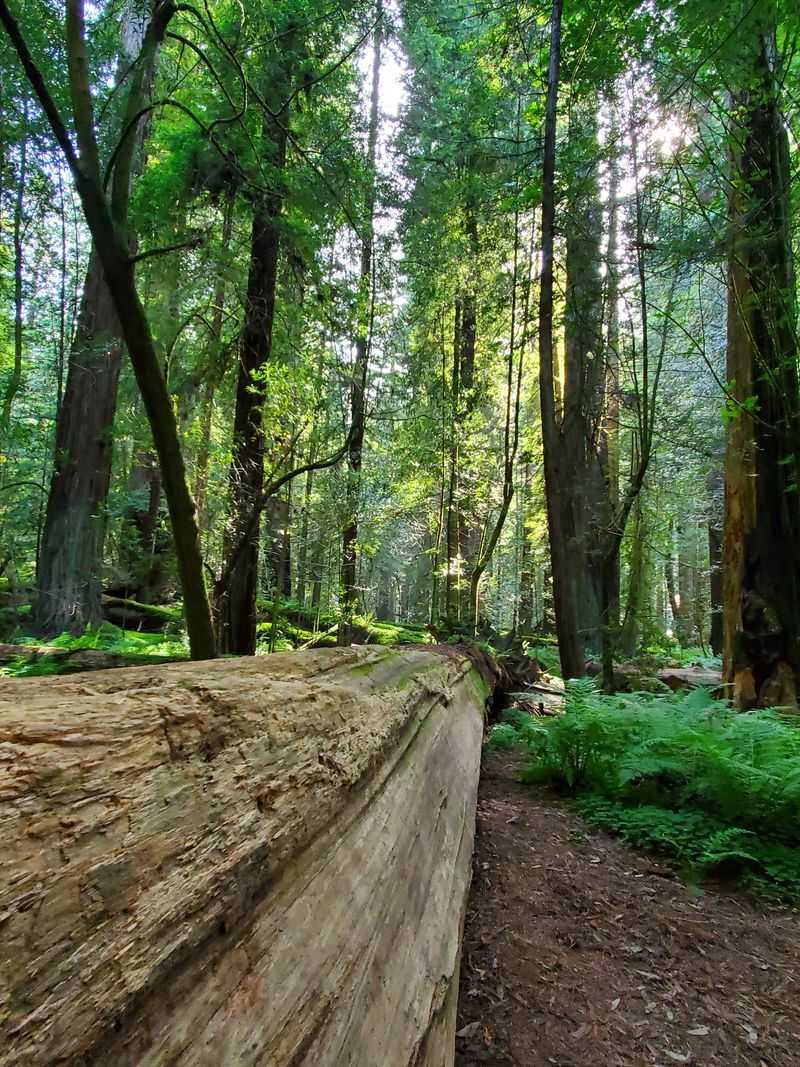
Near the town of Weott, Founder’s Grove offers one of the most accessible and impressive collections of massive redwoods along the entire route.
The grove features a well-maintained loop trail that allows visitors to walk among these giants without difficult hiking.
Two trees in particular draw attention: the Founder’s Tree, which stands at an impressive 346.1 feet tall, and the fallen Dyerville Giant, which once ranked among the tallest trees before toppling in 1991.
The Founder’s Tree received its name in honor of the Save the Redwoods League founders, whose conservation efforts helped protect this forest from logging.
Looking up at this towering specimen requires tilting your head back at an uncomfortable angle, yet still the top disappears into the canopy above.
The tree’s continued growth demonstrates the vitality of these ancient organisms and their ability to thrive when given proper protection.
The Dyerville Giant, though fallen, remains an impressive sight and serves as an educational opportunity about forest ecology.
Even lying horizontal, its massive trunk dwarfs human visitors and reveals the true scale of these trees.
The fallen giant now provides habitat for insects, fungi, and small animals, demonstrating how redwood forests continue to support life even after individual trees fall.
5. The Resilient Immortal Tree
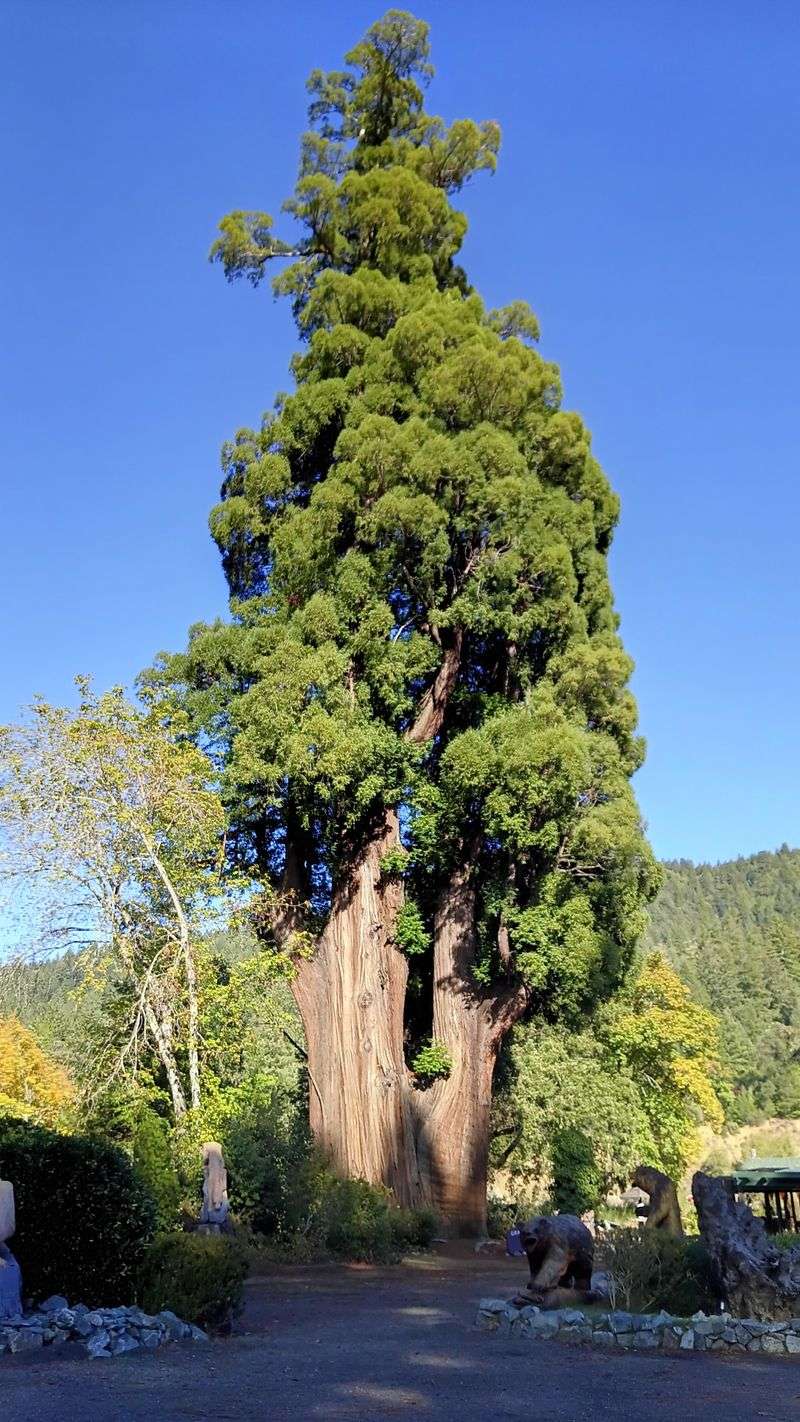
Some trees earn their names through extraordinary survival stories, and the Immortal Tree certainly qualifies for this distinction.
This ancient redwood, estimated at around 1,000 years old and standing approximately 250 feet tall, has survived challenges that would have killed most other trees.
In 1908, loggers attempted to cut it down, but the tree’s exceptional size and toughness defeated their efforts, leaving deep scars but not felling the giant.
Later, a lightning strike removed the top 45 feet of the tree, yet it continued growing and thriving despite this dramatic injury.
The tree also survived major floods and other natural events that reshaped the surrounding landscape.
These battle scars tell a story of resilience and adaptation, showing how coast redwoods have evolved to withstand the challenges of their environment.
California visitors can see the Immortal Tree from the road, though its most impressive features become apparent upon closer inspection.
The logging scars remain visible, creating dramatic texture in the bark and offering a tangible connection to the region’s logging history.
The tree stands as a living monument to both the destructive power of industrial logging and the remarkable resilience of these ancient organisms when given a chance to survive.
6. Drive-Through Tree Experiences
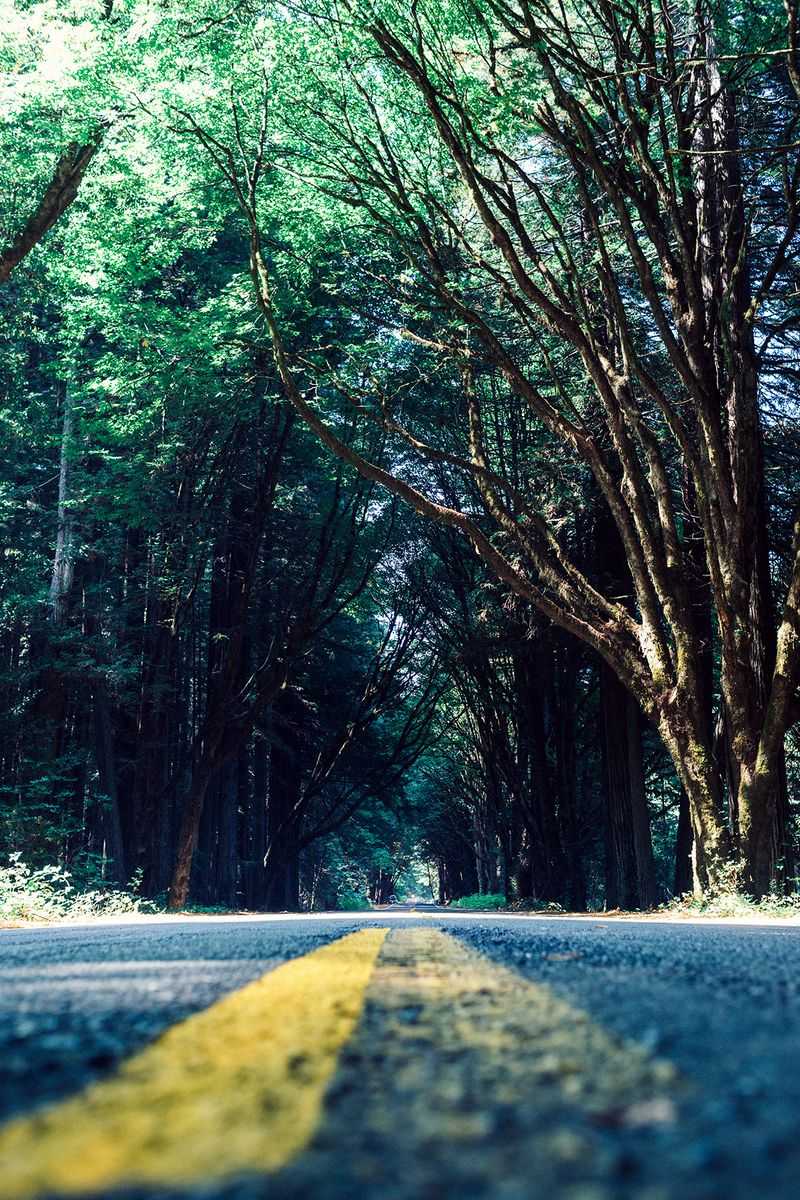
Few experiences along the Avenue capture imagination quite like driving an actual vehicle through a living redwood tree.
The Shrine Drive-Thru Tree in Myers Flat offers exactly this opportunity, where a natural opening in the trunk has been enlarged to accommodate cars.
This novelty attraction dates back to an era when such modifications were considered acceptable, though modern conservation ethics would never permit creating new drive-through trees.
The opening allows most standard cars to pass through, though larger vehicles like trucks or RVs will not fit.
Driving slowly through the tunnel carved in living wood creates a surreal moment, highlighting the immense size of these trees in a tactile, memorable way.
The experience feels playful and slightly absurd, offering a lighthearted counterpoint to the more contemplative aspects of the forest.
While some purists may object to the modification of a living tree, these drive-through attractions serve an important function by creating memorable experiences that connect visitors emotionally to the forest.
The trees continue to live and grow despite their tunnels, demonstrating redwood resilience.
For many families, the photo opportunity of their car inside a tree becomes a treasured memory that strengthens their appreciation for these remarkable forests and the importance of protecting them.
7. Rockefeller Forest: The Largest Old-Growth Stand
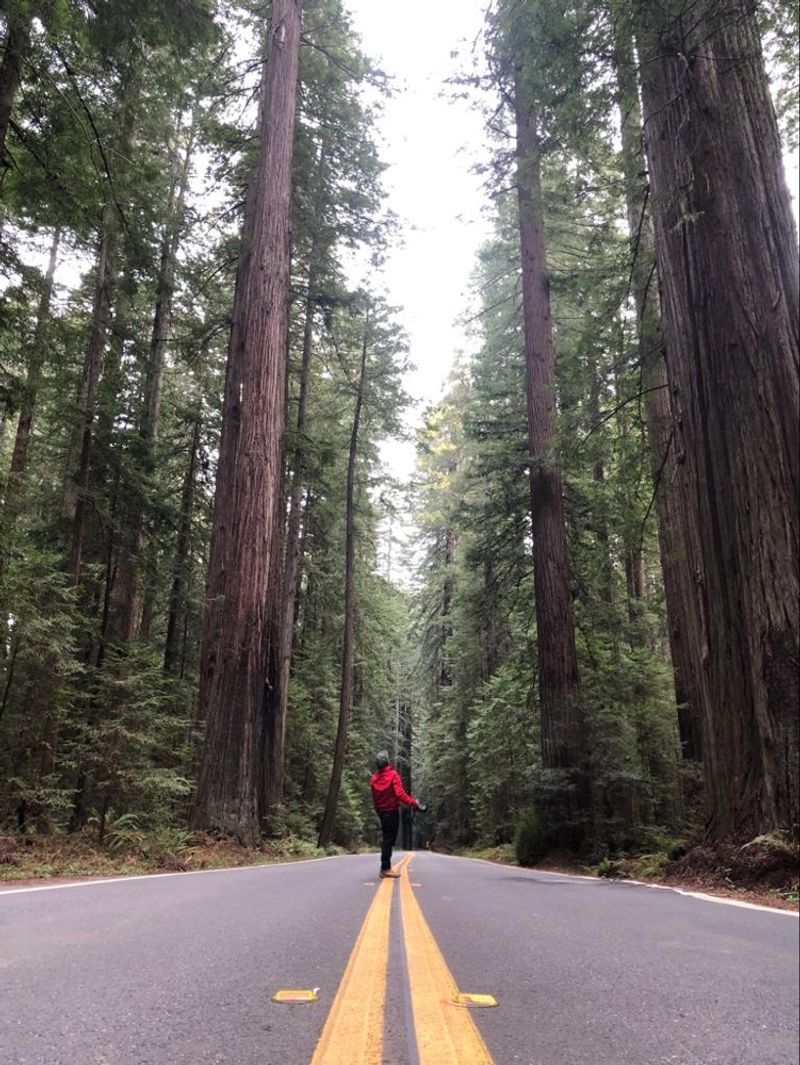
Encompassing an impressive 10,000 acres, Rockefeller Forest represents the largest single stand of old-growth coast redwoods remaining on Earth.
This designation carries significant weight, as old-growth forests possess ecological characteristics that younger forests cannot replicate, including complex canopy structures, abundant dead wood, and diverse habitats.
The forest received its name in recognition of a significant donation from the Rockefeller family that helped preserve this irreplaceable landscape.
The Bull Creek Flat loop provides an accessible entry point into this magnificent forest, offering an easy 30-minute walk suitable for most fitness levels.
The trail winds among massive trunks and crosses small streams, providing intimate encounters with the forest ecosystem.
Sunlight filters through the canopy in shifting patterns, creating ever-changing plays of light and shadow on the forest floor.
Walking through Rockefeller Forest offers a different experience than driving the Avenue, allowing visitors to slow down and notice details that blur past at driving speed.
The sound environment shifts from road noise to bird calls, rustling leaves, and the occasional creak of swaying trunks.
The air feels different here, cooler and more humid, carrying the distinctive earthy scent of redwood bark and decomposing forest litter that characterizes healthy old-growth ecosystems.
8. Eternal Tree House In Scotia
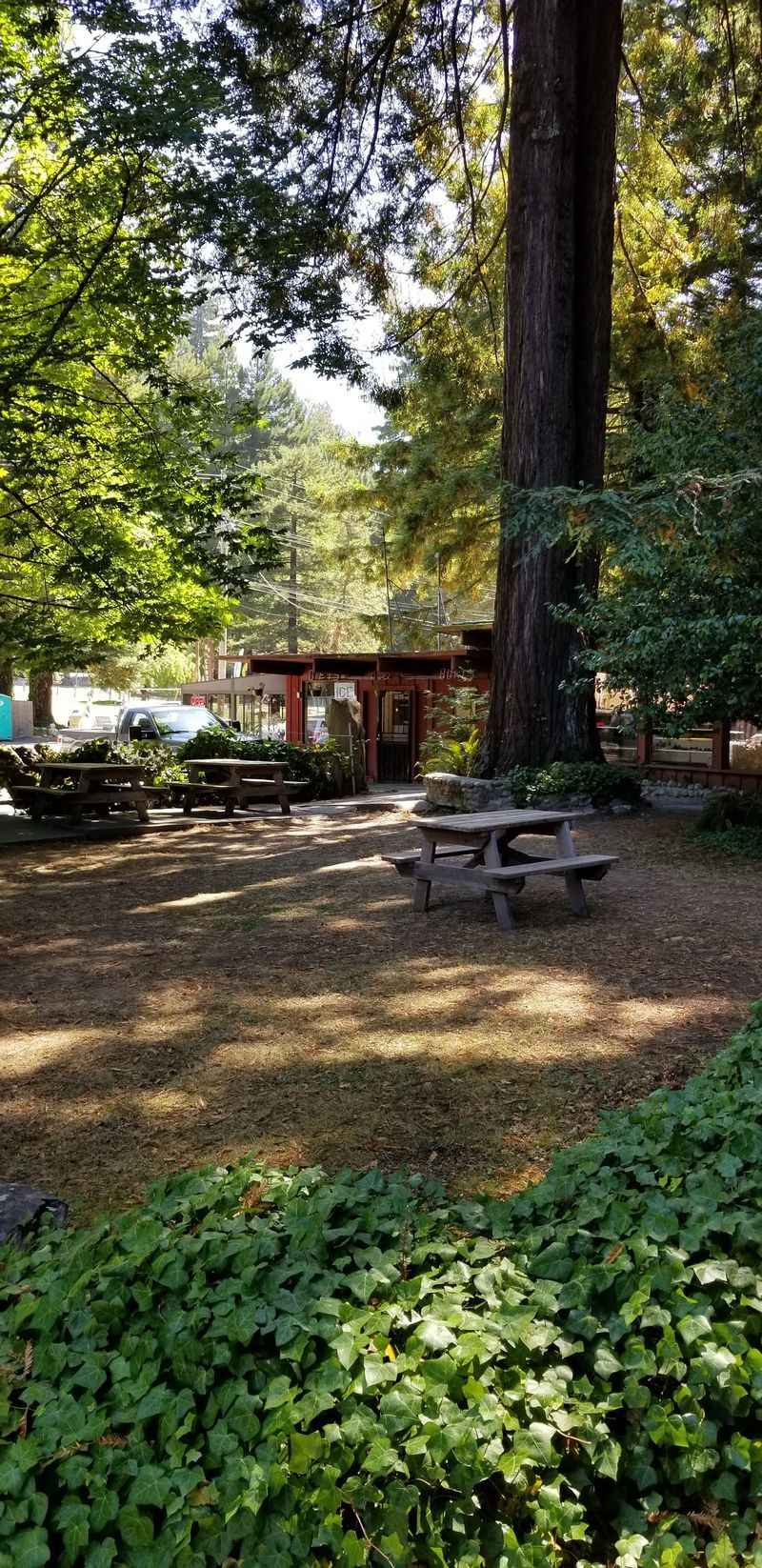
Among the various attractions along the Avenue, the Eternal Tree House in Scotia, California stands out for its unusual approach to showcasing redwood scale and history.
This unique structure features a 20-foot room carved from the stump of a 2,500-year-old living redwood, allowing visitors to step inside and experience the ancient forest from within.
The location is 26510 Avenue of the Giants, Scotia, CA 95565, positioned along the main route for easy access.
The interior space reveals the incredible width of these ancient trees, with walls formed by living wood that has been carefully preserved.
Interpretive displays inside provide information about redwood ecology, growth patterns, and the cultural history of the region.
The experience of standing inside a living tree creates a memorable perspective that photographs and external viewing cannot replicate.
The attraction operates seasonally, typically open during spring through fall when visitor traffic is highest.
The carved interior maintains a cool temperature year-round, providing welcome relief on warm summer days.
While the concept of carving into a living tree may seem questionable by modern conservation standards, this particular modification was made decades ago, and the tree continues to thrive, demonstrating the remarkable resilience of coast redwoods even when subjected to significant alterations.
9. The Chandelier Tree In Leggett
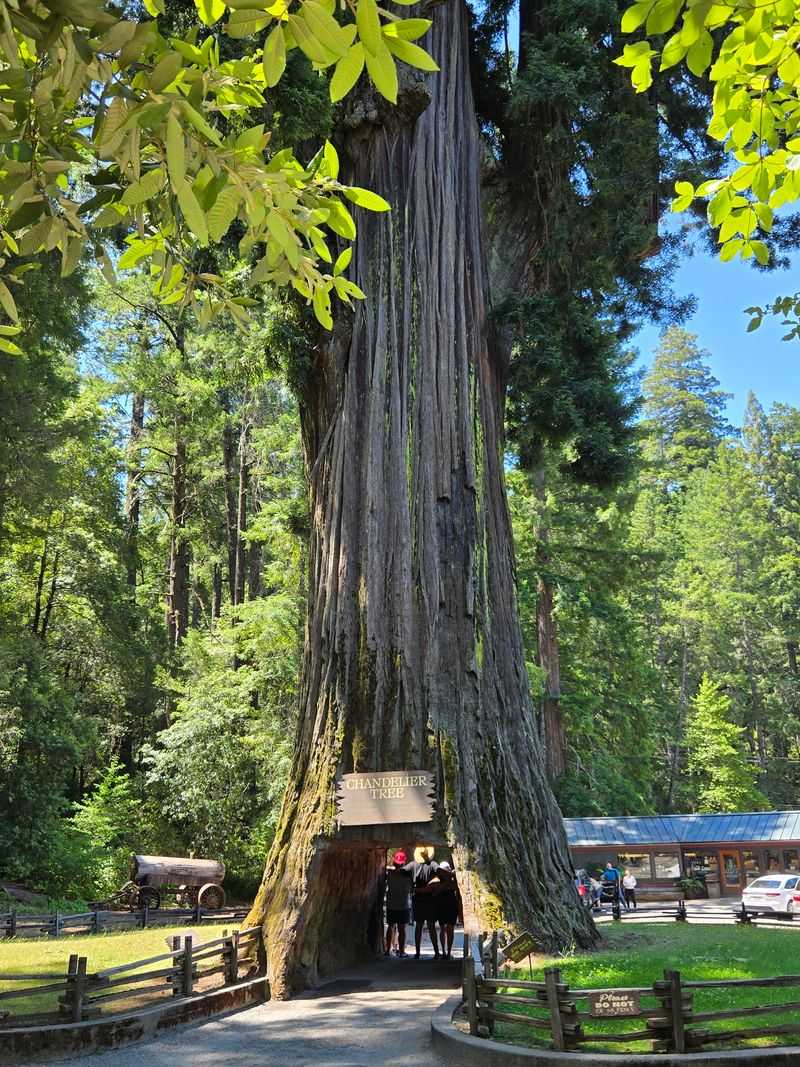
Though technically located slightly north of the main Avenue route, the Chandelier Tree in Leggett deserves mention as a related attraction that many visitors include in their redwood forest journey.
This 276-foot-tall giant features a 6×6-foot hole cut through its base, creating another drive-through tree experience.
The tree’s estimated age of around 2,400 years places it among the most ancient living organisms accessible to the public.
The name “Chandelier Tree” comes from the unusual shape of its canopy, where branches spread in a pattern reminiscent of an old-fashioned chandelier.
Despite the tunnel cut through its base, the tree continues to grow and appears healthy, supported by the remaining trunk structure.
The modification was made in the 1930s, during an era when such alterations were considered acceptable tourist attractions rather than environmental concerns.
Visiting the Chandelier Tree requires a small admission fee, as it sits on private property that has been operated as a tourist attraction for decades.
The site includes a small gift shop and picnic area, making it a convenient stop for families traveling the region.
While purists may prefer the unmodified groves within the state park system, the Chandelier Tree offers another memorable photo opportunity and helps illustrate the immense size of old-growth redwoods in a tangible, interactive way.
10. Outdoor Recreation Beyond Driving
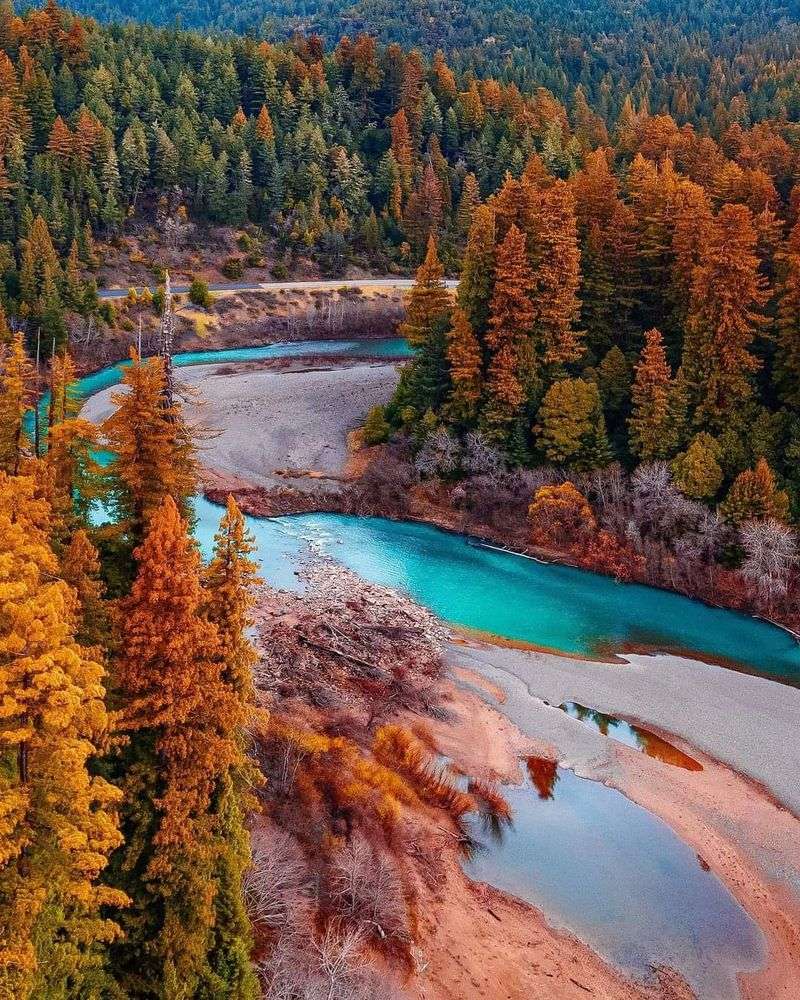
While driving remains the primary way most visitors experience the Avenue, the surrounding area offers numerous opportunities for more active engagement with the landscape.
Hiking trails of varying difficulty levels branch off from the main route, leading to hidden groves, river overlooks, and quiet forest clearings.
These trails range from easy, wheelchair-accessible paths to more challenging backcountry routes requiring proper preparation and fitness.
The Eel River provides opportunities for swimming during summer months when water levels drop and temperatures rise, creating pleasant conditions for cooling off.
Several access points along the Avenue lead to river beaches where families can wade, swim, or simply relax by the water.
Fishing is permitted in designated areas, with the river supporting populations of steelhead and salmon during their seasonal runs.
More adventurous visitors may choose to explore the river by kayak or raft, though water conditions vary significantly by season and require careful assessment.
Camping facilities throughout Humboldt Redwoods State Park allow for multi-day visits, giving travelers time to explore different sections of the Avenue at a relaxed pace.
Evening programs at some campgrounds offer educational presentations about redwood ecology, local wildlife, and conservation history, enriching the visit beyond the visual experience of the trees themselves.
11. The Avenue Of The Giants Marathon
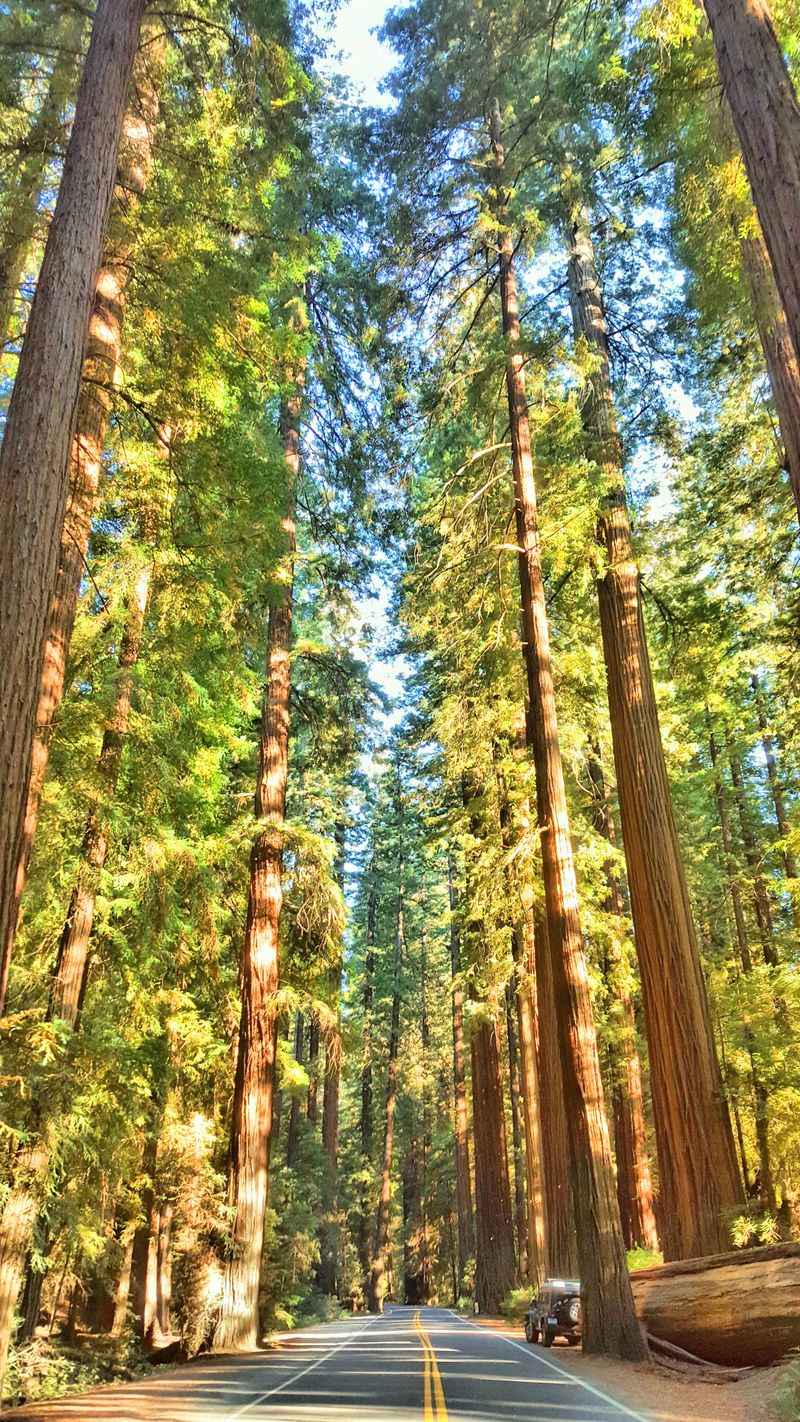
Twice each year, the Avenue transforms from a scenic drive into a challenging running course when the Avenue of the Giants Marathon takes place.
Held in both spring and fall, this race attracts runners from around the world who come to test themselves against the 26.2-mile course while surrounded by ancient redwoods.
The relatively flat elevation profile makes it an accessible marathon for runners of various skill levels, though the distance itself remains challenging.
Running through the Avenue offers a completely different experience than driving, allowing participants to notice details of the forest that blur past at driving speed.
The sound of footfalls on pavement, the rhythm of breathing, and the changing patterns of light through the canopy create an immersive sensory experience.
Many runners report that the beauty of the surroundings helps distract from the physical demands of the distance.
The race temporarily closes the Avenue to vehicle traffic, creating a rare opportunity to experience this road without cars.
Spectators gather at various points along the route, offering encouragement and support to runners.
For many participants, completing a marathon through this ancient forest becomes a memorable achievement that combines athletic accomplishment with appreciation for natural beauty, creating lasting memories that transcend the simple act of running a race.
12. Visitor Centers Offering Guidance And Context
Stop at the Humboldt Redwoods State Park Visitor Center at 17119 Avenue of the Giants, Weott, CA 95571 for maps, trail info, and current conditions.
This facility offers free driving guides, maps, and interpretive materials that enhance understanding of the natural and cultural history encountered along the route.
Staff members can answer questions about current conditions, suggest specific stops based on available time and interests, and provide updates about any temporary closures or special events.
The driving guides available at these centers highlight specific groves, turnouts, and attractions, helping visitors plan their experience efficiently.
Many travelers find it helpful to review these materials before starting the drive, marking particular stops they want to prioritize.
The center also provides information about hiking trails, camping facilities, and regulations designed to protect the forest ecosystem.
Beyond practical information, the visitor center offers interpretive displays about redwood ecology, explaining how these trees grow to such immense sizes and live for thousands of years.
Exhibits may cover topics like fire ecology, the role of fog in redwood forests, and the conservation efforts that preserved these groves from logging.
Taking time to visit this center before driving the Avenue significantly enriches the experience, providing context that transforms the drive from simple sightseeing into genuine learning about one of Earth’s most remarkable forest ecosystems.