This California German Restaurant Has Been Serving Old-World Favorites Since 1980 And Oktoberfest Is Its Biggest Party

Most of the year, this is the kind of restaurant where schnitzel, sausages, and comforting German classics do the talking.
Come Oktoberfest season, subtlety leaves the building.
This longtime California German restaurant has been keeping old-world flavors on the table since 1980, giving generations of diners a taste of tradition without requiring a flight across the Atlantic.
But its biggest celebration turns the energy up considerably.
Oktoberfest brings out the festive side of a place already deeply connected to German culture.
The atmosphere gets livelier, traditions move into the spotlight, and dinner starts feeling like something you should bring friends along for.
If you have been waiting for an excuse to swap an ordinary night out for something with a little more personality, this just might be it.
More Than Four Decades Of German Tradition

Founded in 1980 by a German couple who wanted a proper taste of home in the South Bay, the restaurant has now passed the 45-year mark.
Staying open that long in a city known for constant reinvention says something about the loyalty of regulars who keep coming back for the same plates.
Family involvement has continued across generations, and the recipes have stayed largely consistent rather than being reworked every few seasons.
Longtime guests often mention that dishes taste the way they remember from years earlier, which is rare in a restaurant scene that turns over quickly.
Anyone visiting for the first time should know the hours are limited compared to newer spots.
Dinner service runs Tuesday through Saturday, with lunch offered Thursday and Friday, and the doors stay closed Sunday and Monday.
Checking the schedule before driving over saves disappointment, especially for weekend plans.
Teske’s Germania sits at 255 N First St, San Jose, California 95113, along a downtown block that has changed enormously around it.
Longevity here feels earned rather than advertised, and the dining room carries that quiet confidence throughout the evening.
Oktoberfest Takes Over The Calendar

Fall brings the busiest stretch of the year, and the entertainment calendar reflects it clearly.
Oktoberfest celebrations for 2026 are listed on multiple October Fridays and Saturdays, including October 2, 9, 10, 16, 23, 24, and 30.
Spreading the party across the whole month lets more guests attend without every night feeling impossibly packed.
Planning matters during these dates because seating fills quickly, particularly in the covered garden area.
Guests who want a spot under the tent generally do better with a reservation made well in advance rather than walking in and hoping.
Arriving earlier in the evening usually means a calmer room, softer noise levels, and an easier time hearing conversation across the table.
Later hours bring the fuller festival feel with music, singing, and a lively crowd energy.
Families with younger children often find the earlier seatings more comfortable, while larger groups tend to enjoy the later stretch.
Weeknight visits outside October remain much quieter for anyone who prefers a relaxed pace.
Because the schedule can shift, confirming dates directly with the restaurant before making plans is a sensible step.
Growth over the years has turned a single celebration into a month-long tradition that shapes the entire autumn calendar here.
Live German Music Brings The Festival To Life

Music is what separates a real Oktoberfest from a restaurant that simply prints a seasonal menu.
The Internationals are scheduled to perform during the 2026 Oktoberfest events, bringing traditional songs and sing-along numbers to the garden.
Accordion-driven tunes, familiar choruses, and a steady rhythm turn a dinner into something closer to a neighborhood celebration.
Sound levels rise noticeably once a band starts, so guests who prefer quieter conversation may want to request indoor seating.
The interior dining rooms still catch the atmosphere without the full volume, which works well for older visitors or anyone sensitive to noise.
Dancing sometimes breaks out near the tables, and clapping along is entirely normal rather than something reserved for regulars.
Newcomers often feel awkward for about ten minutes and then join in without thinking twice.
Live performances also happen outside of October on select evenings, so checking the entertainment schedule can turn an ordinary weeknight into something more memorable.
Timing a visit around a set means arriving a bit early to settle in before the crowd builds.
Musicians typically play in stretches with breaks between, which gives tables a natural window to order, eat, and talk. Pacing the meal around those pauses makes the whole evening flow more comfortably.
The Massive Pork Shank Steals The Show

Few plates arrive with as much presence as the Schweinshaxe mit Kartoffelsalat.
A whole pork shank comes to the table with crackling skin, tender meat underneath, sauerkraut on the side, and a vinegar-dressed potato salad rounding out the plate.
Portion size is genuinely large, and sharing between two people is a reasonable approach for lighter appetites.
Vinegar-based potato salad tastes different from the creamy American version many diners expect. Tangy, slightly warm, and lighter on the palate, it cuts through the richness of the pork rather than adding to it.
Sauerkraut here plays a supporting role, offering brightness against the heavier meat.
Guests unfamiliar with German cooking sometimes find the combination surprising at first bite and then understand why the pairing has lasted for centuries.
Eating a shank takes patience, and using both fork and knife to work around the bone is completely normal. Nobody expects delicate technique with a dish built for comfort.
Ordering it early in the evening is wise since popular items can run out on busy nights.
Anyone planning a lighter meal might consider splitting the shank and adding a salad or an appetizer instead of a second entree.
Housemade Spätzle Is Prepared Every Morning

Morning prep at this kitchen includes something many restaurants simply buy in bags.
Spätzle is made fresh in house and served alongside dishes such as Jägerschnitzel, where it soaks up mushroom sauce beautifully.
Texture is the giveaway, with soft, slightly irregular noodles instead of uniform machine-made shapes.
Anyone who has eaten spätzle in southern Germany knows the difference immediately. Fresh batches carry a tender chew and an eggy richness that dried versions never quite match.
Ordering a dish that comes with spätzle is a good way to judge a German kitchen overall. Getting it right requires attention rather than expensive ingredients, which makes it a fair test of care.
Portions are generous, so pairing spätzle with an already substantial entree can be filling. Sharing sides across the table works well for groups who want to sample more of the menu.
Vegetarian diners sometimes ask about spätzle on its own, and asking the server about current preparations is the best way to confirm what is available.
Menus shift occasionally, and staff can explain how each dish is made.
Small details like daily noodle-making are the kind of thing that keeps regulars loyal decade after decade.
Schnitzel Remains One Of The Classics

Ask most people to name a German dish and schnitzel comes up first.
Wiener Schnitzel and Jäger Schnitzel both appear on the menu, giving guests a choice between the plain breaded cutlet and the version finished with a mushroom sauce.
Each one covers a different mood, and neither is complicated to order.
Wiener Schnitzel arrives crisp and golden, usually brightened with a squeeze of lemon. Jäger Schnitzel leans richer thanks to the sauce, which pairs naturally with the housemade spätzle.
First-time visitors who feel unsure about German menus often start here because the dish is familiar and approachable. Servers are used to explaining differences and can describe how each version is prepared.
Cutlets are large, and finishing an entire plate along with appetizers takes real commitment. Boxing up leftovers is common and nobody blinks at the request.
Timing plays a role in quality with fried food, so ordering when the kitchen is not at peak chaos may give better results. Earlier seatings on busy nights tend to run more smoothly.
Classics like these have stayed on the menu for decades because guests keep asking for them, not because tradition demanded it.
The Victorian Room Feels Like Another Era

Stepping into the adjoining Victorian Room shifts the mood noticeably.
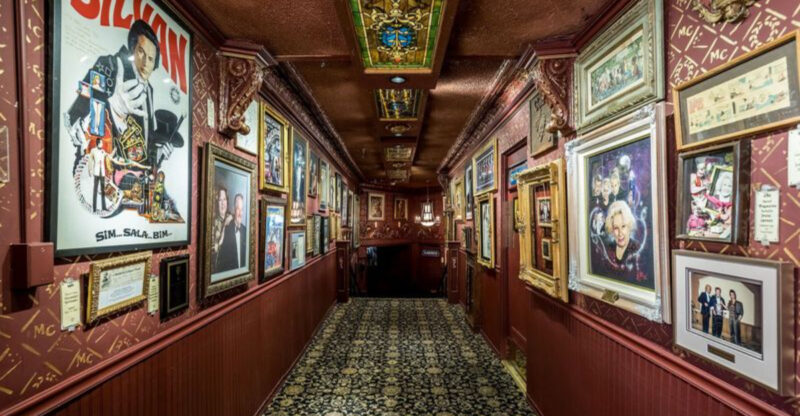
An ornate pressed tin ceiling stretches overhead, and historic decorative touches including mounted buffalo and deer heads fill the walls.
Lighting stays warm and low, which softens the room and makes conversation feel closer.
Character like that is difficult to reproduce, and the space reads as genuinely old rather than styled to look old. Guests who dislike bright, echoing modern dining rooms often prefer sitting here.
Noise carries differently in this room compared to the garden, generally staying more contained. Groups celebrating birthdays or anniversaries sometimes request it for that reason.
Seating tends to be traditional wooden chairs and tables rather than deep booths, so comfort suits a normal-length dinner well. Longer gatherings may want to plan a stretch break.
Requesting a specific room when booking is reasonable, though availability depends on how the evening is arranged.
Larger celebrations may be placed in the back area, which can host several parties at once on busy nights.
Anyone hoping for a quieter, more private setting should mention that clearly when reserving. Being specific about preferences makes a real difference here.
The Outdoor Garden Has Room For A Crowd

Out back sits the garden, and it holds roughly 120 guests when full.
Capacity like that explains how Oktoberfest can feel like a real communal celebration instead of a crowded dining room with a band squeezed into a corner.
Long tables encourage strangers to end up seated near one another, which is very much the point.
Open air changes the pace of a meal, with slower service rhythms and more time between courses feeling natural rather than frustrating. Evenings can cool off after sunset, so bringing a light jacket is sensible for fall visits.
Covered tent seating is used during Oktoberfest nights, and those spots go quickly. Reserving ahead is the reliable way to secure one.
Daytime visits in warmer months offer a completely different feel, with sunlight, shade, and far less noise. Lunch service on Thursday and Friday can be a pleasant time to sit outside.
Families sometimes find the garden easier than indoor rooms because children have a little more space and movement is less disruptive. Keeping an eye on little ones near serving paths is still important.
Outdoor seating remains one of the most mentioned features by returning guests.