This California Ghost Town Still Stands Just As The Gold Miners Left It
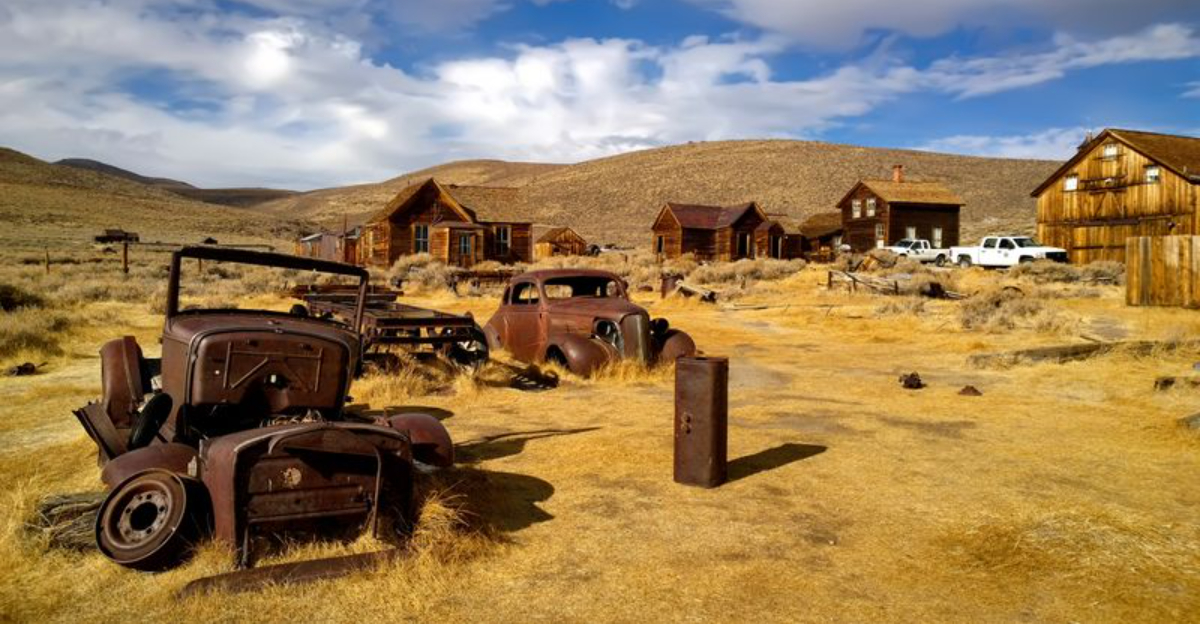
High in the eastern Sierra Nevada, a settlement remains where ambition once burned as fiercely as the furnaces that lined its hillsides.
What survives is not a reenactment or a polished tribute, but a raw imprint of a boomtown that rose fast and collapsed just as hard.
Bodie tells its story without narration. Homes sit open to the elements, still holding chairs, bottles, and tools exactly where they were abandoned.
Streets stretch wide and empty, built for crowds that vanished when the gold ran thin. The environment shows no interest in preserving comfort, only truth.
During its peak, Bodie pulsed with saloons, mills, and restless hope. Gunfire echoed. Fires erased entire blocks. Fortunes shifted overnight. What remains now is the aftermath, preserved not by restoration but by arrest.
Unlike staged ghost towns, Bodie stands in a state of careful neglect. California protects it as a historic site while allowing decay to continue at nature’s pace. Paint peels. Roofs sag. Time leaves fingerprints everywhere.
Walking through Bodie feels less like visiting history and more like intruding on it. The past does not perform here. It waits.
1. William Bodey’s Fatal Discovery Started It All
Back in 1859, a prospector named William S. Bodey stumbled upon gold in the barren hills east of the Sierra Nevada.
His discovery would eventually spark one of California’s most famous mining booms, but Bodey himself never lived to see it.
That same winter, he got caught in a terrible blizzard while returning to camp and froze to death before he could stake his claim or profit from the gold he found.
The town that grew from his discovery was named in his honor, though the spelling changed to Bodie.
Some say the spelling shift happened because a sign painter made a mistake, while others believe it was intentional to help people pronounce the name correctly.
Either way, the town carried his name forward even as it grew into a wild boomtown.
William Bodey’s tragic end became part of Bodie’s lore, a reminder of how harsh and unforgiving life could be in the mining camps.
His discovery changed the landscape forever, bringing thousands of fortune seekers to this remote corner of California.
The gold he found would eventually yield millions of dollars, but Bodey himself died penniless in the snow.
2. From Empty Hills To Bustling Boomtown In Twenty Years
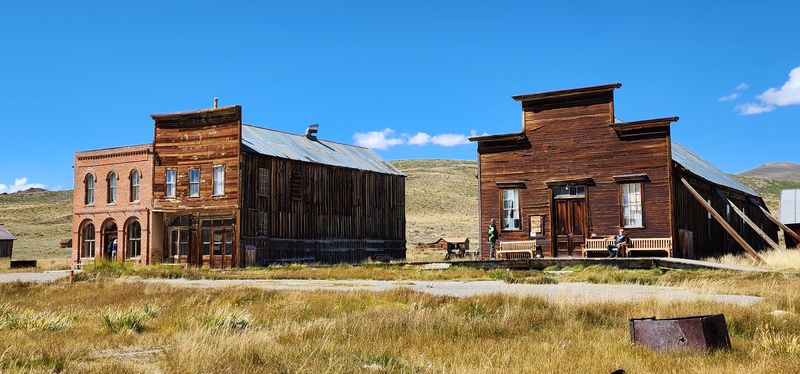
Bodie didn’t become an overnight success after gold was discovered.
For nearly two decades, the area remained a small, struggling camp with only a handful of miners trying their luck.
Everything changed in 1876 when a cave-in at the Standard Mine revealed an incredibly rich vein of gold ore.
By 1879, Bodie had exploded into a full-blown boomtown with somewhere between 7,000 and 10,000 residents packed into the dusty streets.
Around 2,000 buildings sprang up almost overnight, including saloons, stores, hotels, boarding houses, and even a Chinatown district.
The town had its own newspaper, breweries, a railroad, and all the trappings of a thriving city. The transformation was staggering for such a remote location.
Wagons hauled in supplies over treacherous mountain roads, and the sound of hammers and saws filled the air as carpenters raced to keep up with demand.
Bodie became one of California’s largest cities for a brief, shining moment. The population was a rough mix of miners, merchants, gamblers, and families all chasing the promise of gold.
3. The Standard Mine Produced Fifteen Million In Gold
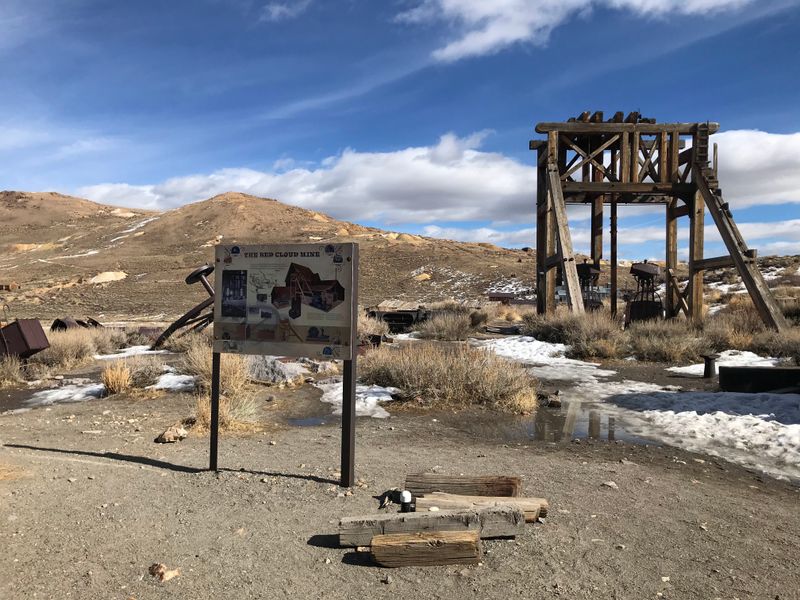
The Standard Mine became the heart of Bodie’s prosperity after it was acquired in 1877.
Over the next 25 years, this single mine pulled nearly $15 million worth of gold from the earth, an astronomical sum for the time.
The mine operated around the clock, with shifts of workers descending into the tunnels at all hours. The wealth from the Standard Mine funded much of Bodie’s growth and kept the town alive even as other mines played out.
The mine’s success attracted investors and more miners, creating a cycle of growth and prosperity. Stamping mills pounded ore day and night, creating a constant rhythmic thunder that echoed through the canyon.
Workers faced dangerous conditions underground, with cave-ins, toxic gases, and flooded shafts posing constant threats.
Despite the risks, men lined up for jobs because the pay was relatively good compared to other labor.
The Standard Mine’s output made fortunes for its owners and kept Bodie on the map as one of California’s premier gold producers for decades.
4. A Reputation For Violence And Lawlessness
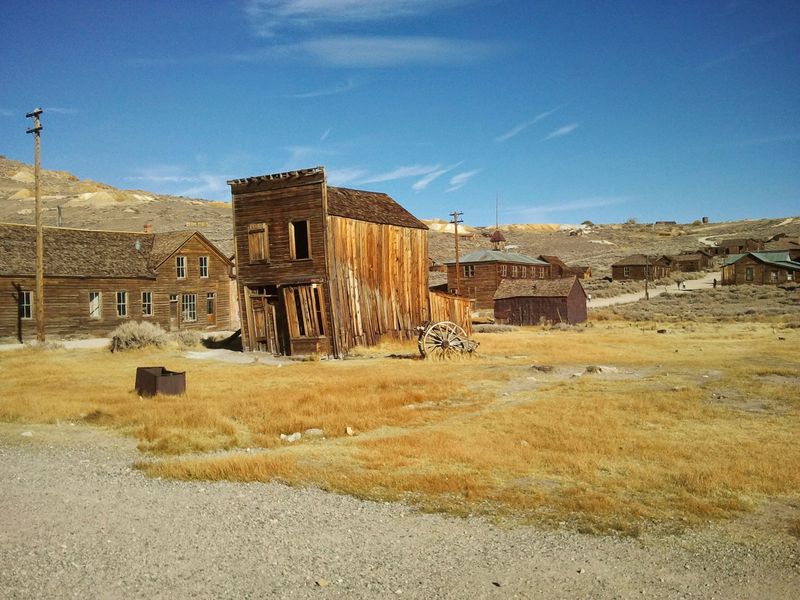
Bodie developed a reputation as one of the most unruly boomtowns of the Old West. Disputes often spilled into the streets, and theft and cheating were treated as part of daily life rather than shocking events.
One young girl, upon learning her family was moving to Bodie, is said to have written in her diary, “Goodbye God, I’m going to Bodie,” a line that captured how intimidating the town’s reputation had become.
Reverend F. M. Warrington visited in 1881 and described Bodie as “a sea of sin, lashed by the tempests of lust and passion.” Saloons dominated the townscape, outnumbering nearly every other kind of business, while gambling halls stayed busy day and night.
Fights and serious altercations were common, and the cemetery grew steadily as the years passed, reflecting the harsh and unpredictable nature of frontier life.
Bodie did have law officers and a jail, but maintaining order proved difficult with a population that changed constantly and resisted authority. When official systems failed, residents sometimes relied on informal forms of justice.
For many, Bodie’s lack of structure was exactly the appeal. The town drew people seeking independence from social expectations and a place where few rules seemed to apply.
5. Chinatown Added Cultural Diversity To The Mining Camp
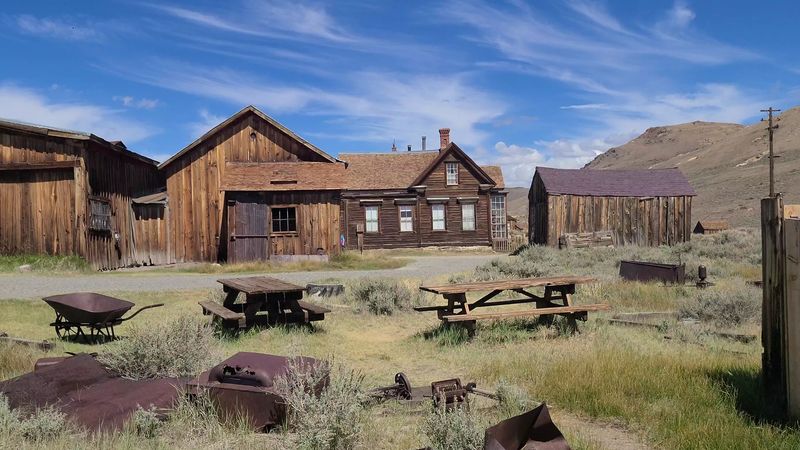
Bodie’s Chinatown stood as a distinct neighborhood within the larger town, home to several hundred Chinese immigrants who came seeking gold and opportunity.
The area featured its own businesses, including restaurants, stores, and a Taoist temple where residents could worship.
Chinese miners often worked claims that white miners had abandoned, using patient, careful techniques to extract gold others had missed.
The neighborhood also featured legal establishments where people gathered to unwind and socialize, reflecting the norms of the time. Much like saloons, these spaces offered an escape from the hardships of daily life and became part of the town’s social fabric during its most active years.
Chinese residents faced discrimination and were often barred from certain areas of town, but they created a thriving community nonetheless. They worked not just in mining but also as launderers, cooks, and laborers.
Bodie’s Chinatown contributed significantly to the town’s character and economy, though this aspect of history often gets overlooked. The cultural diversity made Bodie more cosmopolitan than many frontier towns.
Today, visitors can still see the foundations and remnants of Chinatown buildings, silent witnesses to this important piece of Bodie’s past.
6. Devastating Fires Nearly Erased The Town Twice
Fire was the constant enemy of wooden frontier towns, and Bodie suffered two catastrophic blazes that changed its fate forever.
The first major fire swept through in 1892, destroying a significant portion of the business district. The town rebuilt, but it never quite recovered its former glory.
The second and far more devastating fire struck in 1932, consuming roughly 95 percent of what remained of Bodie’s buildings.
By this time, the town was already in decline, and the fire essentially sealed its fate as a ghost town. Only a fraction of the original structures survived, including some on Main Street and the outlying areas.
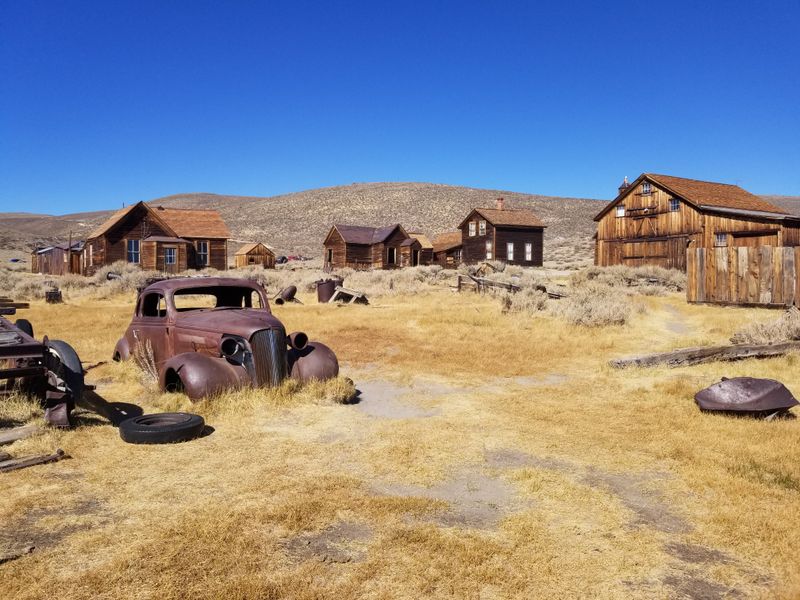
These fires explain why only about 110 buildings remain today out of the original 2,000. The structures that stand now are the lucky survivors, preserved by chance and location.
Without these fires, Bodie might have been one of the most complete Victorian-era mining towns in existence.
Instead, what remains offers just a glimpse of what once was a sprawling, bustling city.
7. James Stewart Cain Controlled Bodie’s Final Mining Era
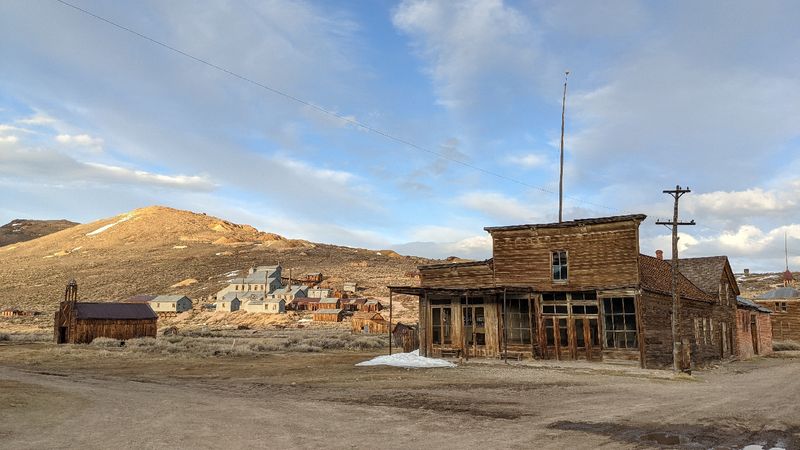
By 1915, most of Bodie’s important mines had fallen under the control of one man: James Stewart Cain.
He consolidated operations and continued extracting gold, but the easy pickings were long gone. Mining became less profitable as the richest veins played out and costs increased.
Cain’s family maintained ties to Bodie for decades, and his descendants eventually played a role in helping the town become a state park.
Under his ownership, mining continued sporadically into the 1940s, though the town’s population had dwindled to just a handful of die-hard residents.
The glory days were clearly over. The Cain family’s long connection to Bodie helped preserve the town’s history and artifacts.
When most people had given up and moved away, the Cains remained, maintaining property and keeping records.
Their stewardship during Bodie’s decline proved crucial for its eventual preservation.
Without their involvement, even fewer buildings and artifacts might have survived into the modern era when historians and preservationists recognized Bodie’s value.
8. Designated A State Historic Park In 1962
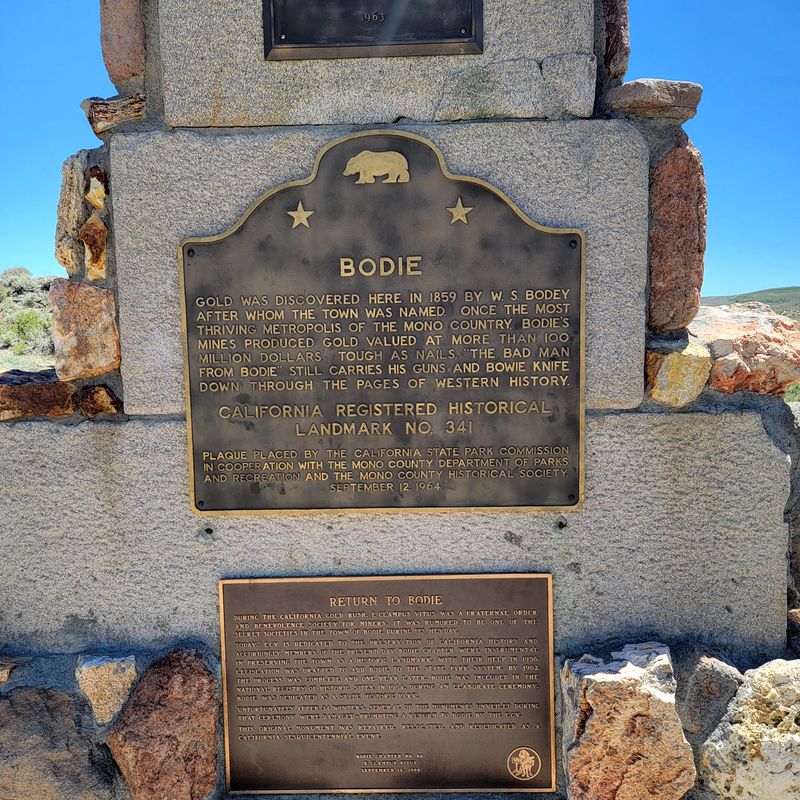
California recognized Bodie’s unique historical value in 1962 by designating it a State Historic Park. That same year, it also received recognition as a National Historic Landmark.
These designations ensured that Bodie would be preserved and protected for future generations rather than being lost to vandalism, weather, or development.
The park status meant that professional historians and preservationists would oversee Bodie’s care. Funding became available for stabilization work and visitor facilities.
The designation also brought Bodie to wider public attention, transforming it from a forgotten ruin into a destination for history enthusiasts and tourists.
Today, Bodie State Historic Park CA-270, Bridgeport, CA 93517 is managed by California State Parks and attracts thousands of visitors annually. The park charges an entrance fee, and rangers give tours during the summer season.
Becoming a state park saved Bodie from the fate of countless other ghost towns that simply crumbled away into dust and memory.
9. Arrested Decay Preservation Philosophy Keeps Bodie Authentic
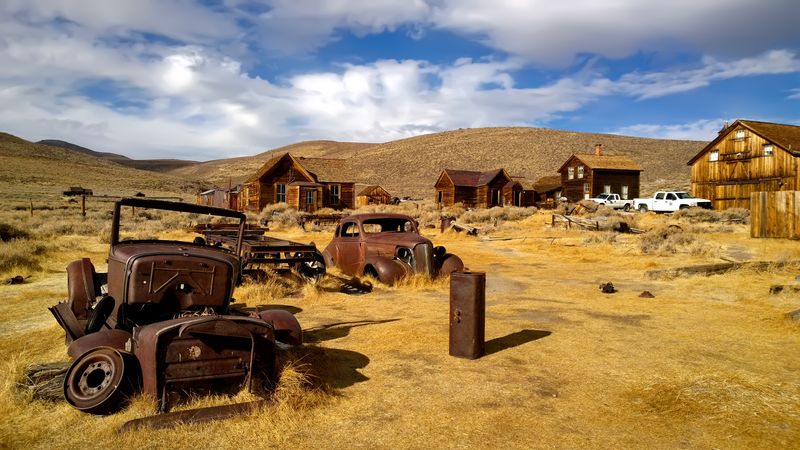
Bodie is maintained under an unusual preservation approach called “arrested decay.” This means that park staff stabilize existing structures to prevent further deterioration but don’t restore them to pristine condition or rebuild anything that has collapsed.
The goal is to keep Bodie looking exactly as it did when the last residents left.
This philosophy preserves the authentic ghost town atmosphere rather than creating a sanitized historical recreation. Weathered wood remains weathered, peeling paint stays peeling, and broken windows stay broken.
Park workers shore up foundations, replace rotted support beams, and weatherproof roofs, but they don’t repaint or add modern materials.
The arrested decay approach has sparked debate among preservationists, with some arguing it allows too much deterioration.
However, most visitors appreciate the genuine, untouched feeling it creates. Walking through Bodie feels like walking through a real abandoned town, not a museum display.
The dust, the tilting buildings, and the scattered artifacts all contribute to an experience that feels remarkably authentic and haunting.
10. Over One Hundred Buildings Remain To Explore
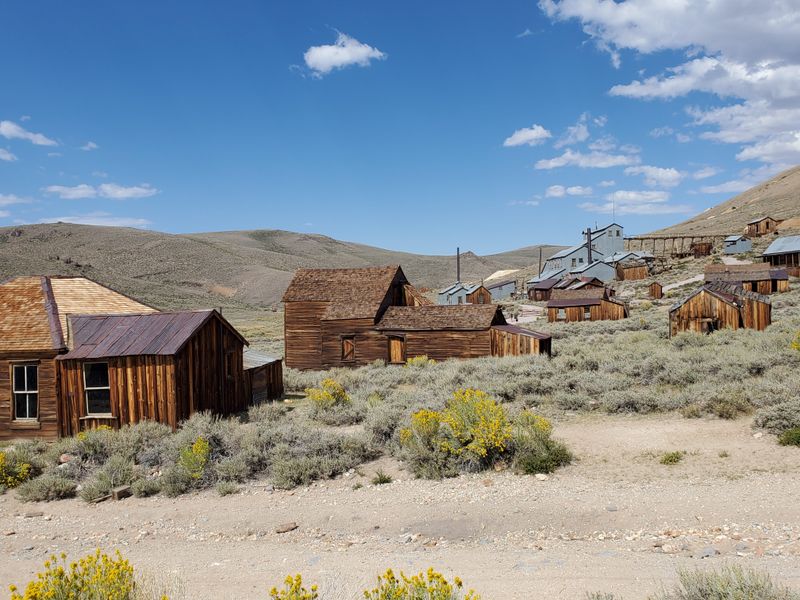
Visitors to Bodie can explore more than 100 remaining structures scattered across the townsite.
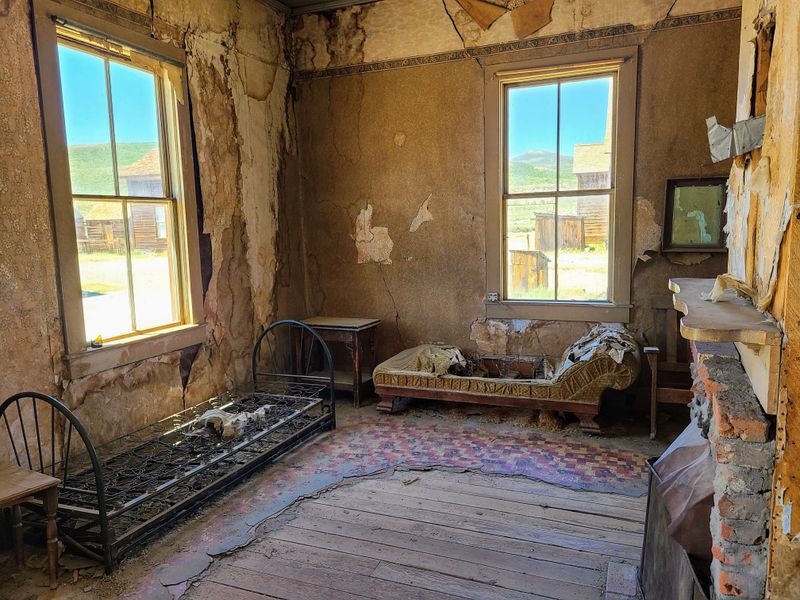
These include the schoolhouse with its textbooks still on desks, the Methodist church with its bell tower, homes with furniture in place, and storefronts with goods still on the shelves.
Each building offers a window into daily life during Bodie’s heyday. The interiors are particularly fascinating because items were often left exactly where they were last used.
You might see bottles lined up behind a bar, tools hanging on workshop walls, or children’s toys abandoned in a bedroom. This level of preservation is extremely rare and gives Bodie an eerie, time-capsule quality.
Park rangers lead guided tours during summer months, providing historical context and pointing out details visitors might otherwise miss.
Self-guided exploration is also allowed, though visitors must stay on designated paths and cannot enter most buildings.
Peering through dusty windows and walking the wooden sidewalks creates a powerful sense of connection to the past that few historic sites can match.
11. Ghost Stories And Paranormal Activity Draw Curious Visitors
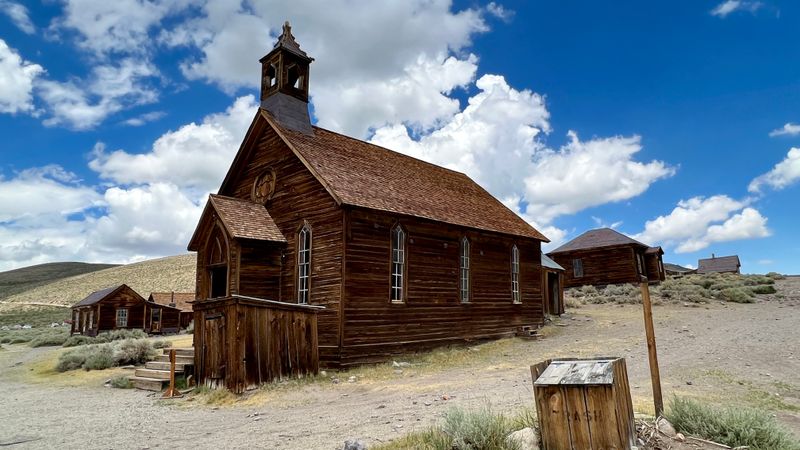
Bodie has earned a reputation as one of California’s most haunted locations, with countless reports of paranormal activity over the years.
Park rangers and visitors have reported hearing phantom footsteps echoing through empty buildings, particularly in the saloons and hotels.
Strange lights flicker in windows of buildings known to have no electricity.
One of the most famous ghost stories involves the Cain house, where people have reported seeing the figure of a Chinese maid going about her duties.
Other visitors claim to have heard piano music drifting from the old bars, children’s laughter near the schoolhouse, and the sound of horses and wagons on Main Street when no one else is around.
Some attribute these experiences to overactive imaginations or the wind whistling through old buildings.
Others believe that the violent, passionate history of Bodie left spiritual imprints that sensitive people can perceive.
Whether you believe in ghosts or not, spending time in Bodie after dark definitely creates an eerie atmosphere.
The isolation, the creaking buildings, and the knowledge of all the deaths that occurred here combine to make even skeptics feel a bit uneasy.
12. Remote Location And Winter Closures Limit Access
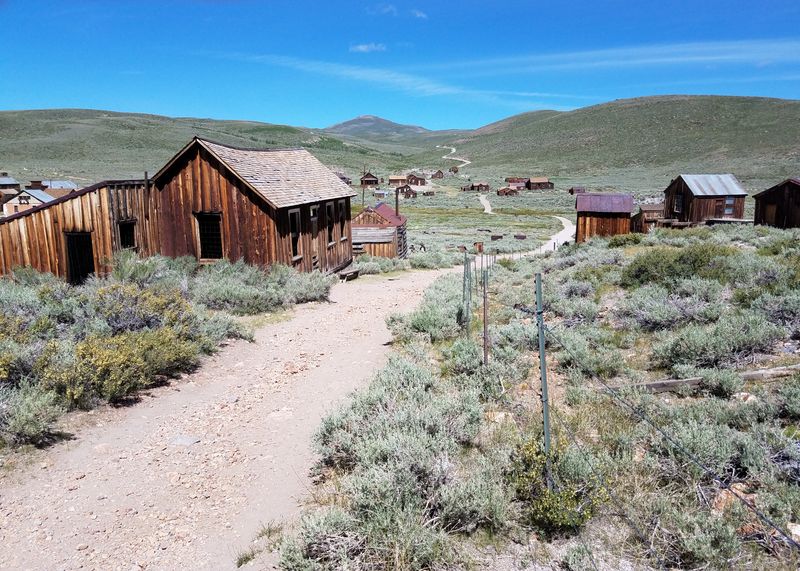
Bodie sits at an elevation of about 8,400 feet in the Bodie Hills, east of the Sierra Nevada range in Mono County.
Getting there requires driving the last three miles on a rough, unpaved road that can be challenging for low-clearance vehicles.
The remoteness that once made Bodie a difficult mining camp to supply now adds to its authentic, isolated atmosphere.
Heavy snowfall closes the access roads for several months each winter, typically from November through April, though exact dates vary depending on weather conditions.
During these months, Bodie is essentially inaccessible except by snowshoe or cross-country skis.
Summer and fall are the best times to visit, with warm days and cool nights typical of high desert elevations. The park typically opens daily during the accessible season, though hours vary by month.
Visitors should bring water, snacks, and sun protection, as services are minimal and the high-altitude sun is intense.
Cell phone service is nonexistent, adding to the sense of traveling back in time. The three-hour drive from major cities like Reno or Mammoth Lakes feels like a journey to the edge of civilization.