This California Haitian Restaurant Is A Flavor-Packed Find For Griot And Oxtails
Griot is not the kind of dish that politely waits in the background. It shows up with seasoning, heat, and enough personality to make the whole table pay attention.
Oxtails bring a different kind of power. Slower. Richer.
The kind of comfort food that makes people lean over their plates like conversation can wait a minute.
A Haitian restaurant in California can turn dinner into a real flavor discovery.
Not the fussy kind. The fun kind, where the menu feels exciting and every bite has something going on.
That is the pull of a place built around bold food and real warmth.
You might come in curious about griot. You might already know exactly what you want.
Either way, the meal has a way of making the decision feel smart fast.
Griot Comes Out Crispy, Citrus-Marinated, And Ready To Steal Attention
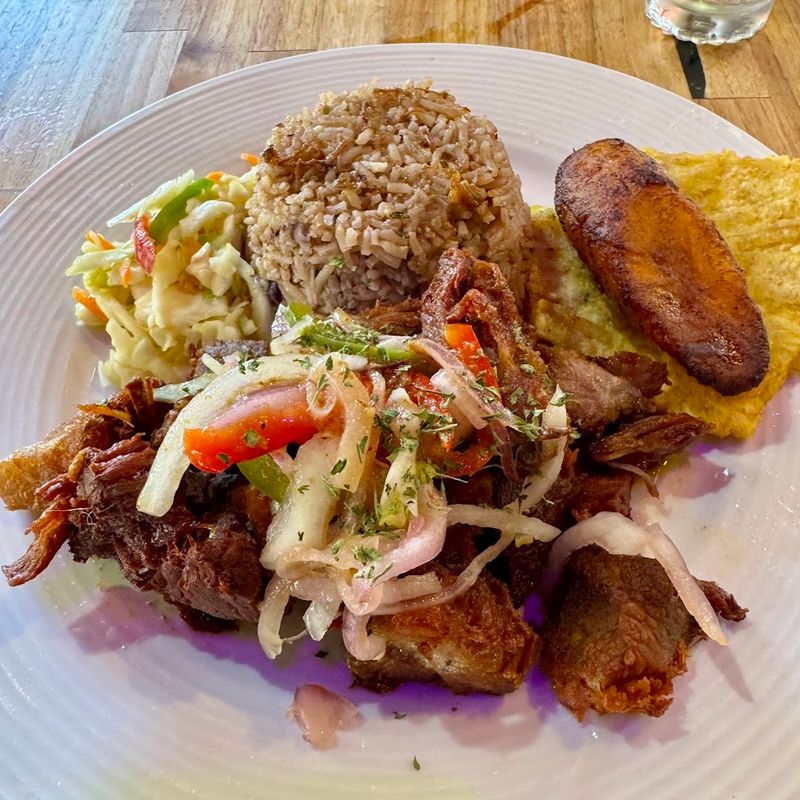
Few dishes announce themselves quite the way griot does at T’chaka.
The citrus marinade works its way deep into the pork before it ever hits the fryer, which means each bite carries both brightness and richness at the same time.
The edges come out with a light crisp that holds up well against the softer interior, giving the dish a satisfying contrast in texture.
Griot is considered a cornerstone of Haitian cooking, and T’chaka treats it that way. The pork is not rushed, and the seasoning reflects a kind of patience that shows up clearly on the plate.
Paired with rice and beans and a side of pikliz, the full plate feels complete without being overwhelming.
For anyone new to Haitian food, griot is a strong starting point because it offers familiar comfort with an unfamiliar depth of flavor.
The citrus notes keep things lively while the frying locks in moisture that cheaper preparations often lose.
Ordering this dish is genuinely one of the better decisions a first-time visitor to T’chaka could make, and it tends to be the one people talk about long after the meal ends.
Braised Oxtails Bring The Slow-Cooked Comfort
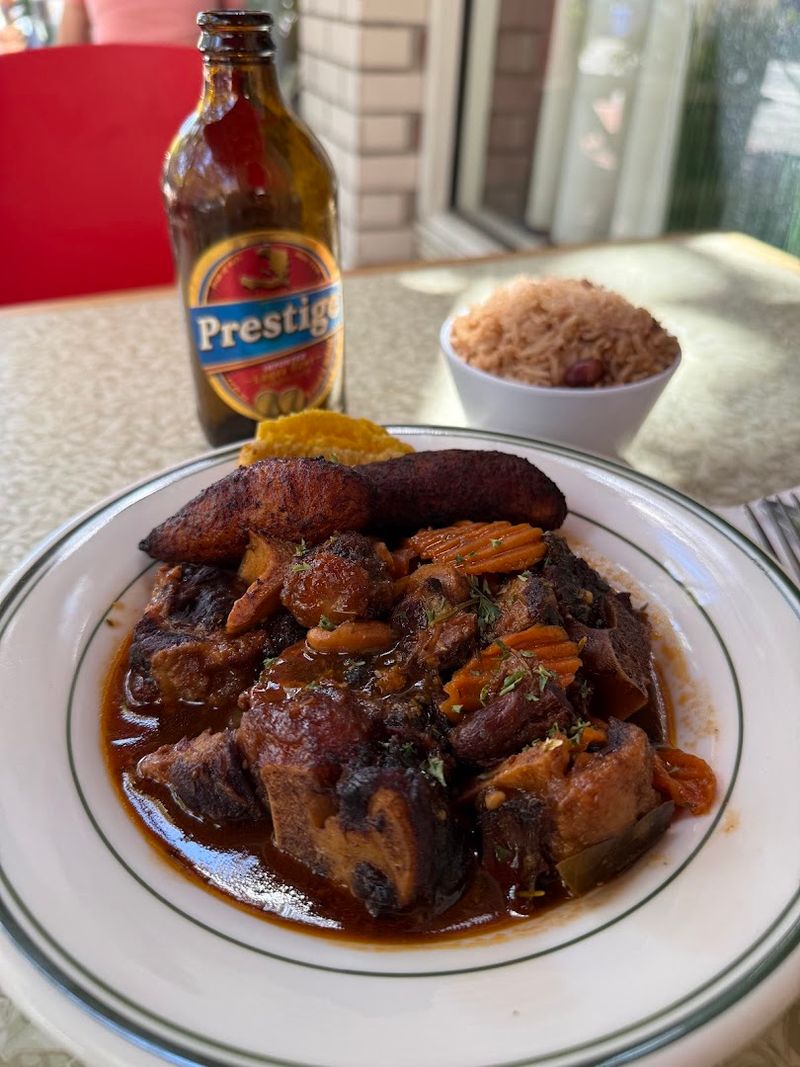
Oxtails done right require time, and T’chaka, at 901 Washington St, Oakland, CA 94607, clearly understands that.
The Creole oxtails on the menu are braised low and slow until the meat reaches a tenderness that barely holds its shape when lifted from the bone.
That kind of texture does not happen by accident, and the rich sauce surrounding the meat carries layers of seasoning that deepen with every spoonful.
Served over rice, the dish has a hearty, grounding quality that feels like the kind of meal someone spent all afternoon preparing.
The sauce soaks into the rice in a way that makes the supporting elements just as satisfying as the main protein.
There is a balance of spice and savoriness that keeps the dish from feeling heavy despite how rich it reads on the plate.
Oxtails appear across many Caribbean and Southern food traditions, but the Haitian Creole preparation at T’chaka has its own distinct personality.
The seasoning profile reflects Haitian culinary roots rather than a generalized Caribbean approach, which gives the dish a specificity that food lovers tend to appreciate.
Anyone who enjoys slow-cooked comfort food will find this plate to be one of the most memorable items on the menu.
Pikliz Adds The Bright, Spicy Kick
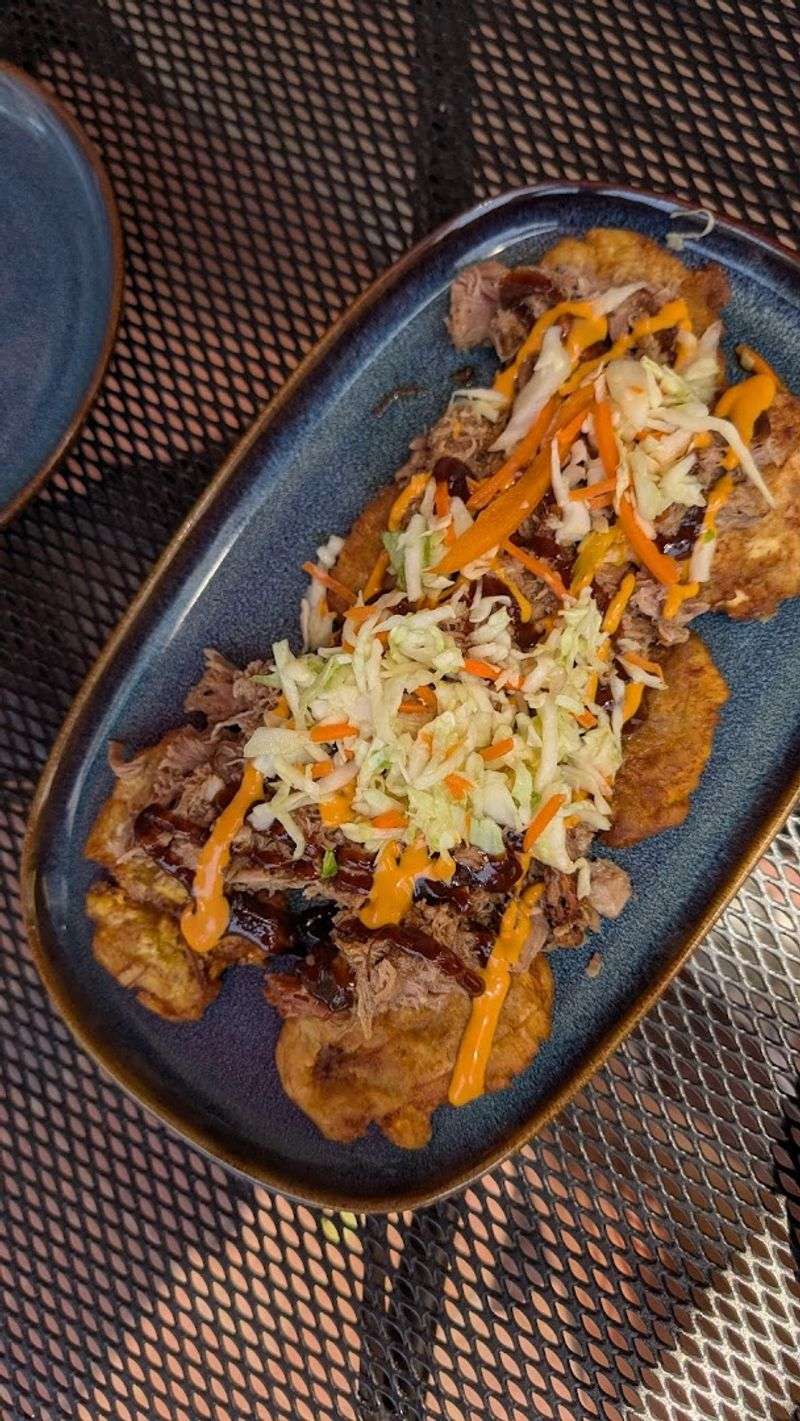
Pikliz might be the most underrated element on the plate, but it does a lot of heavy lifting.
Made from pickled cabbage and carrots with scotch bonnet peppers, it brings a sharp acidity and a slow-building heat that cuts right through the richness of fried pork or braised oxtails.
Without it, the plate would feel heavier and less balanced.
At T’chaka, pikliz shows up alongside griot as part of the traditional Haitian pairing, and it earns its place every time.
The crunch of the pickled vegetables adds a textural contrast that keeps each bite from becoming monotonous.
The heat level can be genuinely surprising for diners who are not expecting it, so it is worth approaching with some curiosity rather than caution.
Haitian cuisine relies on this kind of condiment to bring brightness and contrast to dishes that are otherwise deeply savory.
Pikliz functions similarly to how kimchi works in Korean cooking or how pickled jalapeños work in Mexican food, acting as a palate-cleaner and flavor amplifier all at once.
Tasting it alongside the griot at T’chaka gives a clearer picture of why this combination has remained a staple of Haitian home cooking for generations.
Plantains Make Every Plate Feel More Complete
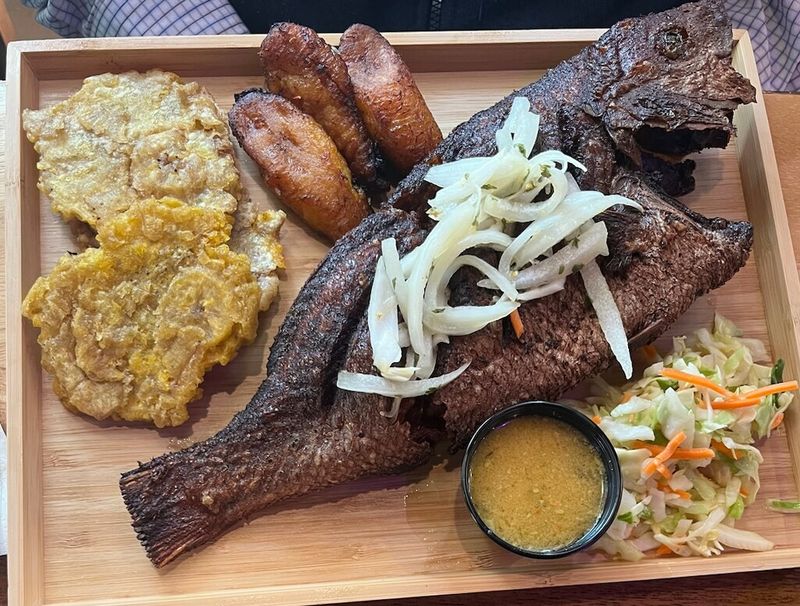
Plantains at T’chaka come in two forms, and both versions show up across the menu in ways that complement rather than repeat each other.
The sweet fried plantains carry a caramelized softness that pairs naturally with spiced meats, while the tostones offer a flatter, crispier alternative that works well topped with pork and pikliz.
Having both options available gives the menu a pleasant range without overcomplicating things.
Plantains are a staple across Caribbean and Latin cooking traditions, and their role at T’chaka is clearly understood.
The sweet version tends to show up alongside griot and rice as part of the classic Haitian plate combination, adding a mellow counterpoint to the bold seasoning of the meat.
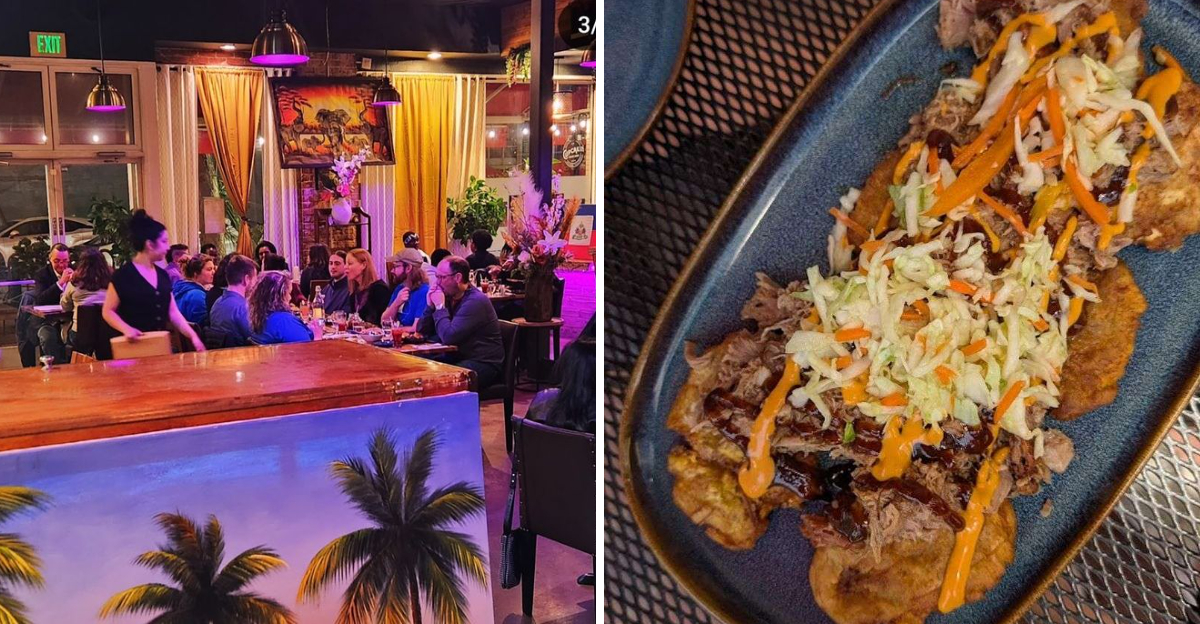
The tostones lean savory and are sometimes served as a standalone starter topped with pork, which makes them a satisfying small plate on their own.
For diners who have never thought much about plantains beyond a side item, T’chaka offers a reason to reconsider.
The preparation here reflects genuine care rather than an afterthought, and the texture on both versions suggests they are cooked to order rather than sitting under a heat lamp.
Plantains this good have a way of becoming the thing people quietly look forward to most on the plate.
Akra Fritters Are The Starter To Watch
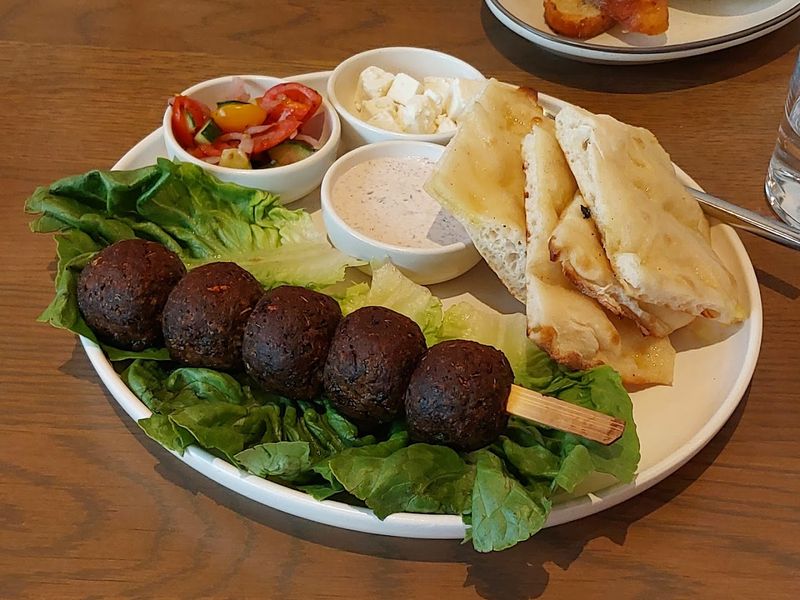
Akra fritters deserve more attention than they typically get, and T’chaka’s version makes a strong case for ordering them before anything else.
Made from malanga, a starchy root vegetable, the fritters are fried until the outside develops a satisfying crispness while the inside stays soft and slightly earthy.
The flavor is subtle but distinct, and the texture is closer to a well-made fritter than anything heavy or doughy.
Listed on the restaurant’s own site as Accra Fritters, they are described as a fitting start to the meal, and that framing holds up in practice.
The lightness of the fritter works well as an opener before heavier plates like griot or oxtails, giving the palate something interesting to work with before the main event.
They also pair naturally with the spicy condiments available at the table.
Malanga is not an ingredient most diners in California encounter regularly, which makes akra fritters a genuinely educational bite as well as a delicious one. Haitian cuisine has a long tradition of turning humble root vegetables into something worth celebrating, and this dish reflects that sensibility clearly.
Starting the meal with akra is a low-risk, high-reward move that tends to set a positive tone for everything that follows.
Old Oakland Gives The Restaurant Extra Character
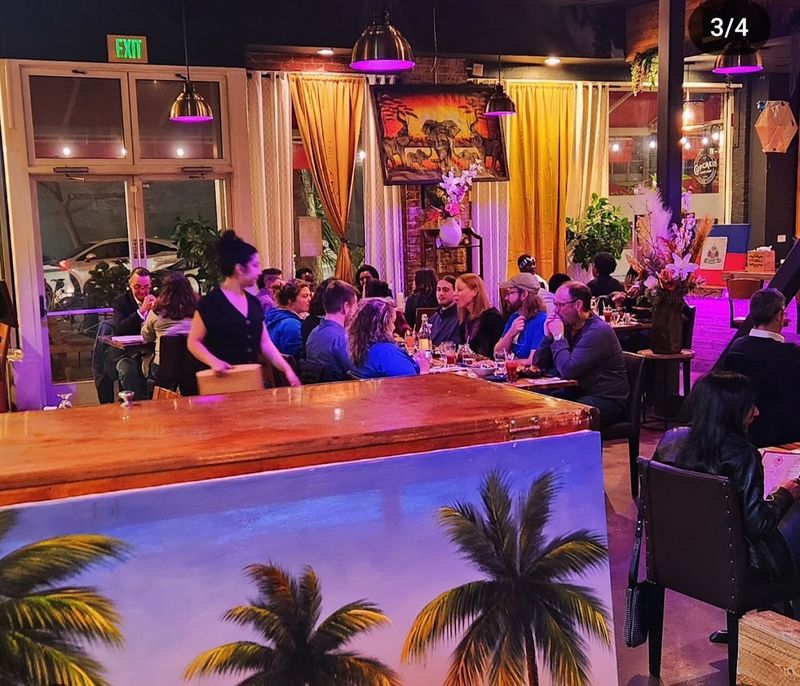
The neighborhood surrounding T’chaka is part of what makes the experience feel distinct.
Old Oakland carries its own history, with preserved Victorian-era architecture and a walkable block layout that gives the area a slower, more intentional pace than many parts of the Bay Area.
Arriving at 901 Washington St feels like stepping into a corner of the city that still has room to breathe.
T’chaka occupies the former location of Miss Ollie’s, an Afro-Caribbean restaurant that had its own devoted following in Oakland.
Taking over a space with that kind of culinary legacy puts a certain kind of pressure on any newcomer, but the atmosphere inside T’chaka holds its own.
Vibrant colors, Haitian music playing at a comfortable volume, and a layout that encourages lingering give the room a warmth that feels deliberate rather than designed.
Outdoor seating is available, which makes the location even more appealing on mild Bay Area afternoons.
Sitting outside on Washington Street with a plate of griot and a view of the Old Oakland streetscape is a genuinely pleasant way to spend a lunch hour.
The neighborhood and the restaurant feel well-matched, with both offering something that rewards a slower, more attentive kind of visit rather than a rushed in-and-out experience.
Caribbean Spice Shows Up Beyond The Main Plates
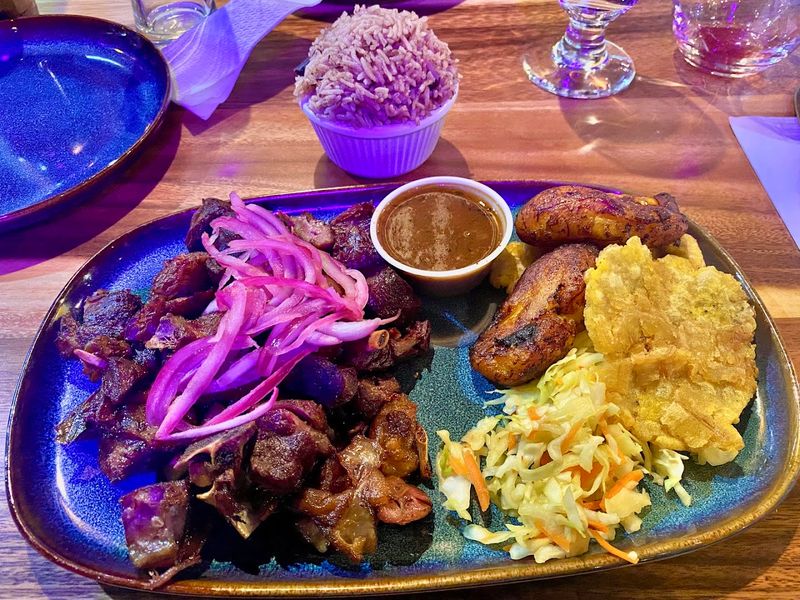
Griot and oxtails get most of the attention, but the menu at T’chaka stretches well beyond those two anchors.
Jerk shrimp, curry goat, whole fried snapper, and legume stew all appear in the ordering listings, giving the menu a range that reflects the full breadth of Haitian and Caribbean cooking rather than a narrow highlight reel.
Each of those dishes carries its own spice logic and preparation style, which keeps repeat visits interesting.
The whole fried snapper is worth mentioning specifically because it represents a different kind of commitment from the kitchen.
Frying a whole fish well requires timing and confidence, and a properly done snapper arrives with crispy skin and moist flesh that holds flavor all the way to the bone.
Legume stew, on the other hand, brings the vegetable-forward side of Haitian cooking into focus, offering a hearty option that does not rely on meat for its depth.
T’chaka also keeps a house-made scotch bonnet hot sauce on hand, which adds another layer of heat for diners who want to push the spice further.
The menu as a whole feels like a genuine representation of Haitian culinary tradition rather than a simplified version built for outside tastes.
That authenticity is one of the clearest reasons the restaurant has built a loyal following in Oakland.
Oakland Finally Gets A Haitian Food Standout
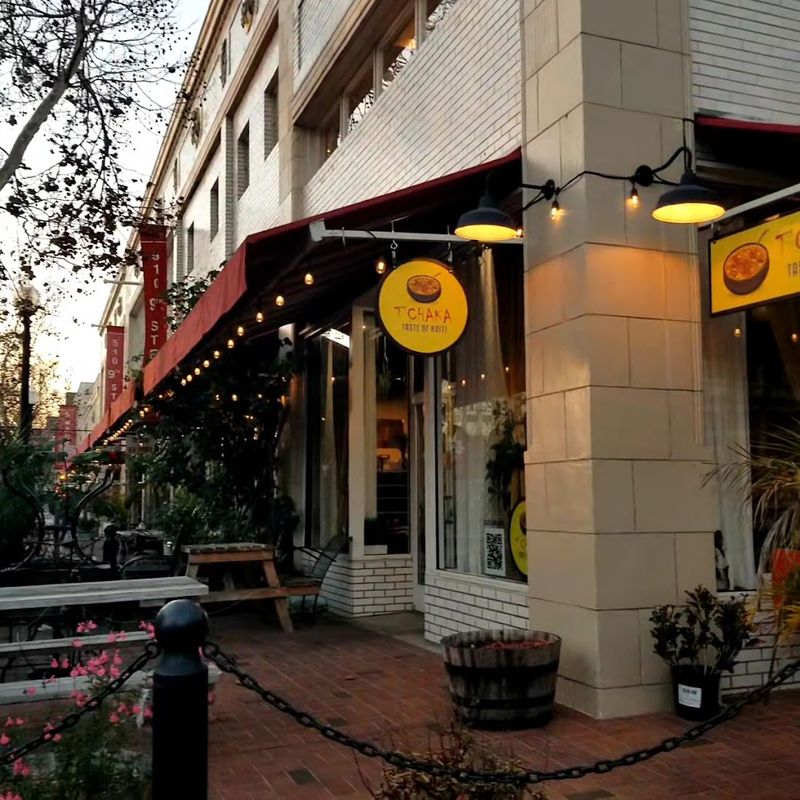
Being the first and only Haitian restaurant in Oakland is a meaningful distinction, and T’chaka carries it without making it feel like a marketing angle.
The city has a rich and diverse food culture, with strong representation from many global traditions, but Haitian cuisine had been largely absent from that conversation until T’chaka opened its doors.
Filling that gap matters beyond novelty.
The veteran-owned status of the restaurant adds another layer of context to what T’chaka represents in Oakland.
Opening a restaurant that introduces an entire cuisine to a major American city takes conviction, and the care evident in the food and the space reflects that sense of purpose.
The menu is built around market-fresh ingredients prepared in-house, which keeps the quality consistent and the flavors grounded in what is actually good rather than what is easiest.
For Oakland diners who have been curious about Haitian food but never had a local option to explore it, T’chaka removes every excuse.
The atmosphere is welcoming enough for first-timers and specific enough to satisfy those already familiar with the cuisine.
A restaurant that can serve both audiences well without compromising either experience is genuinely rare, and T’chaka manages it in a way that feels effortless from the guest side of the table.