This California Park Is Home To Waterfalls Taller Than Skyscrapers
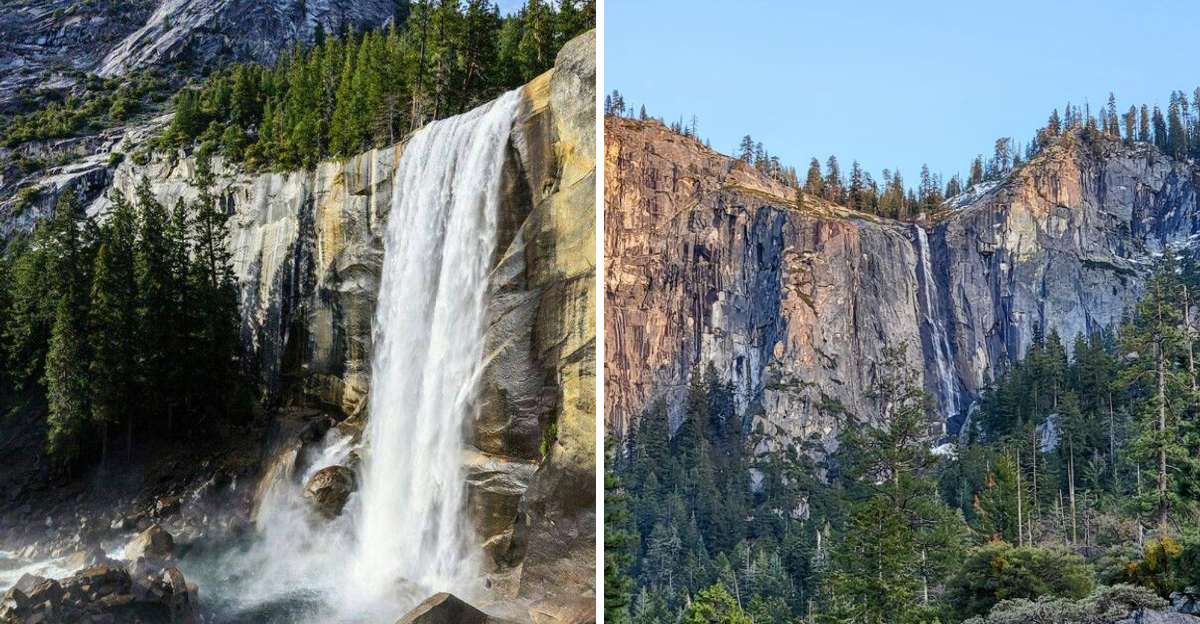
Water that crashes from heights you can barely wrap your head around. Cliffs that make everything below feel small. Moments that stop people mid-step.
Some places don’t just impress you. They completely take over your attention.
You don’t expect waterfalls to feel this powerful. Then you see one, and suddenly everything else fades into the background. The sound alone pulls you in. The scale keeps you there.
This is the kind of experience that turns a simple trip into something you keep thinking about long after it’s over.
This is where California quietly shows off in the most unforgettable way.
Massive drops, mist filling the air, and trails that bring you right to the edge of it all create something that feels bigger than just scenery. It feels alive. Every turn reveals something new, and no two waterfalls feel the same.
Some plunge in a single dramatic drop. Others stretch out in long, layered cascades that seem to go on forever.
1. Yosemite Falls: The Tallest Waterfall In North America
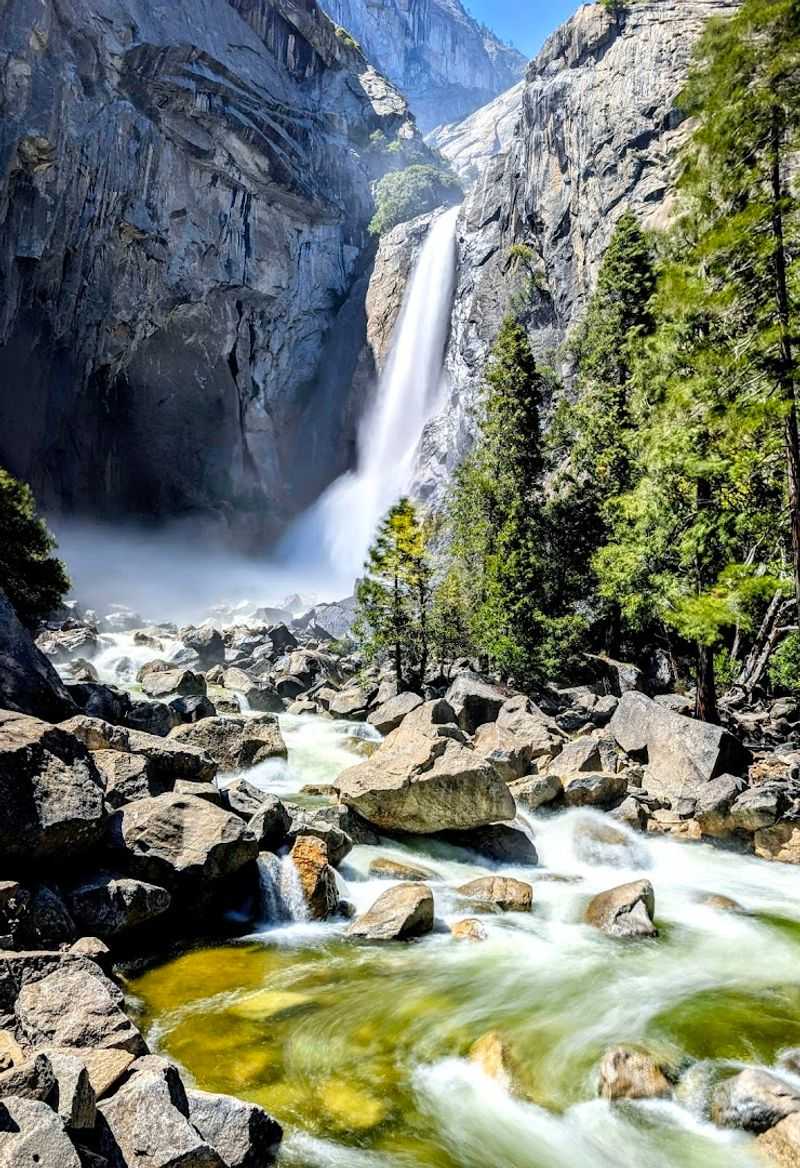
Standing at a total drop of 2,425 feet, Yosemite Falls holds the title of the tallest waterfall in North America and ranks among the tallest in the entire world.
That measurement includes the Upper Fall at 1,430 feet, the middle cascades, and the Lower Fall at 320 feet. Together, they create one of the most visually powerful sights in all of California.
The best time to see Yosemite Falls at full force tends to be late spring when snowmelt from the high Sierra pushes water volume to its peak.
By late summer, the falls can slow to a trickle or disappear entirely depending on the year. Visiting in May or early June generally offers the most dramatic display of rushing white water.
A paved, accessible trail leads to the base of Lower Yosemite Fall, making it reachable for most visitors without strenuous hiking. The round trip to the base is about one mile.
For those willing to push harder, the Upper Yosemite Fall Trail climbs over 2,600 feet in elevation and rewards hikers with a close-up view of the falls from above that feels almost unreal.
2. Ribbon Fall: The Tallest Single-Drop Waterfall in the Contiguous US
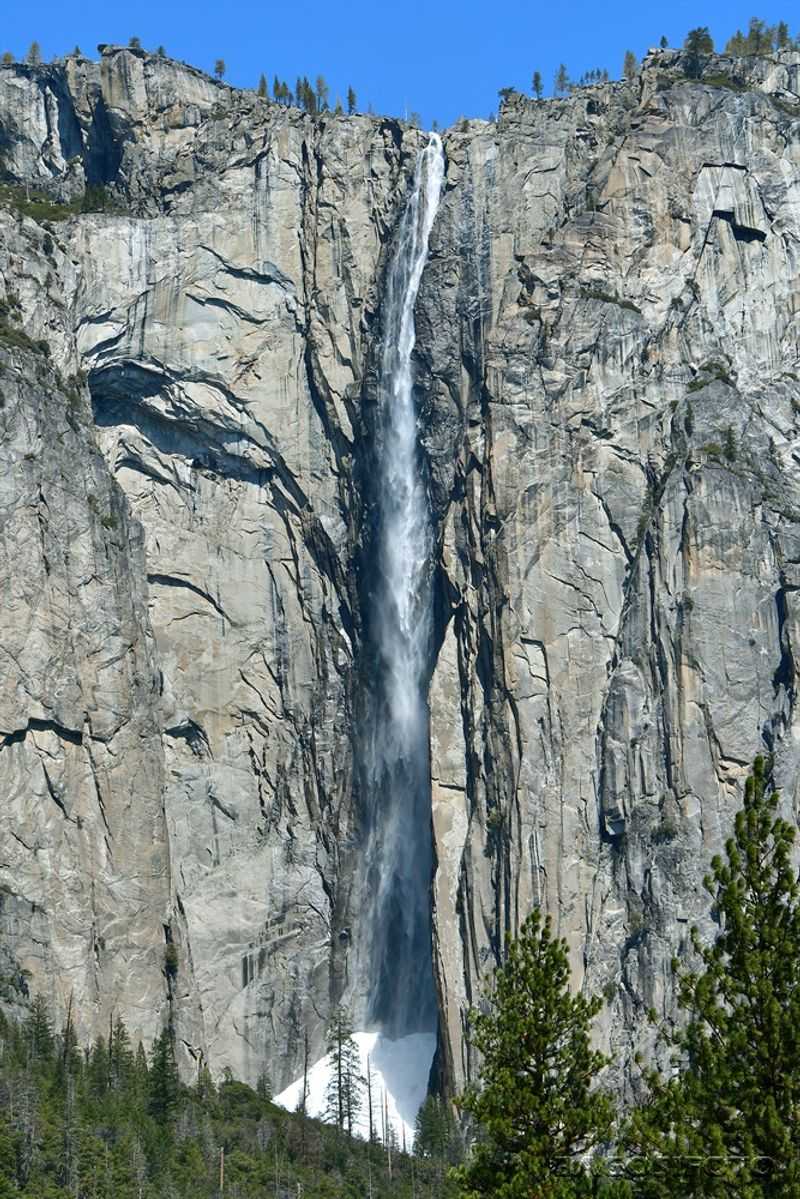
Ribbon Fall drops a staggering 1,612 feet in a single unbroken plunge, earning it the title of the tallest single-drop waterfall in the contiguous United States.
That single continuous drop is taller than the Empire State Building, which tops out at 1,454 feet including its antenna.
The scale becomes easier to appreciate when standing on the valley floor looking up at the thin ribbon of water threading down the granite wall.
Located on the western side of Yosemite Valley just west of El Capitan, Ribbon Fall is most visible and most powerful during spring snowmelt.
By midsummer, the fall typically dries up completely, which means timing a visit matters more here than at many other waterfalls in the park.
Early May often delivers the fullest and most photogenic conditions.
There is no maintained trail leading directly to the base of Ribbon Fall, so most visitors enjoy it from viewpoints along the valley floor.
The falls can be seen clearly from several pullouts and meadow areas without any hiking required.
Binoculars help bring the upper portion into sharper focus, especially on bright spring mornings when the mist catches the sunlight.
3. Sentinel Fall: A 2,000-Foot Cascade Most Visitors Miss
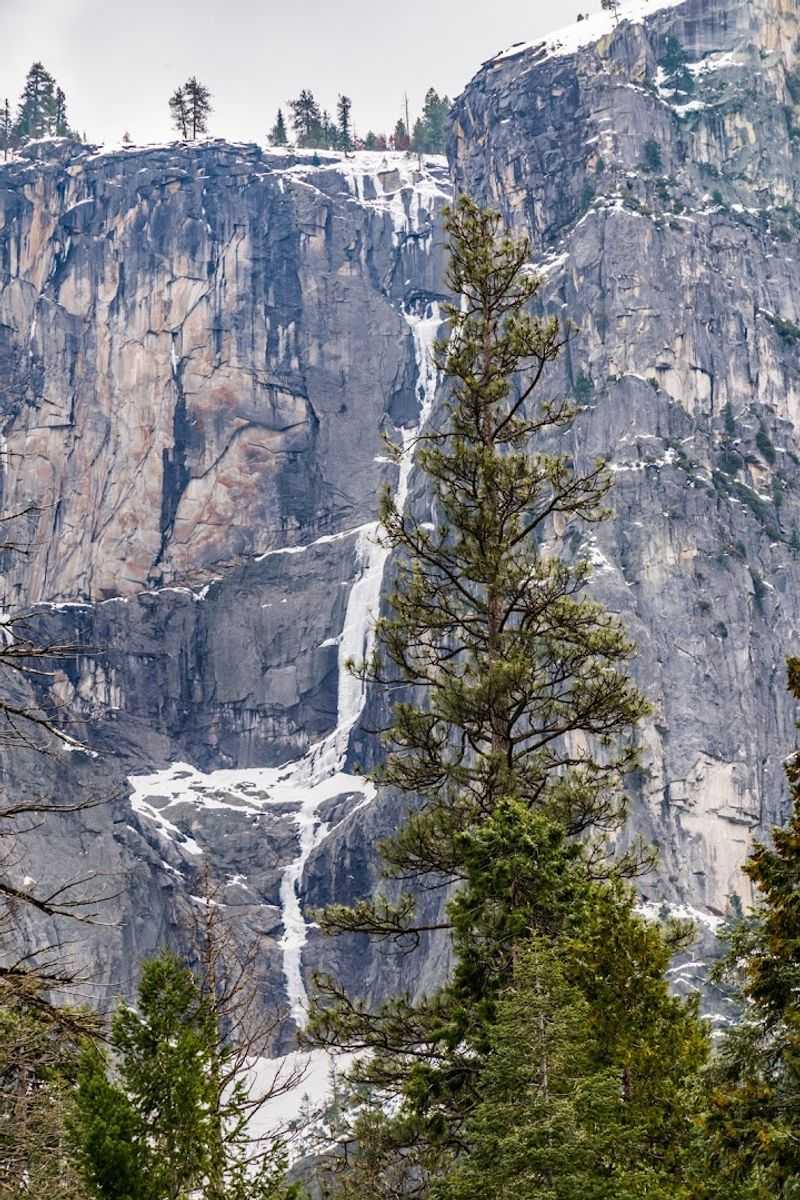
Sentinel Fall tumbles down 2,000 feet of granite on the south wall of Yosemite Valley, making it one of the tallest waterfalls in the park.
Despite that impressive height, it tends to get overlooked by visitors focused on more famous landmarks nearby.
That relative quiet makes it a rewarding spot for those who take a moment to look up and notice it. The falls flow most strongly during late winter and spring when snowmelt feeds the stream above.
Like several other seasonal waterfalls in the park, Sentinel Fall can dry up significantly or vanish entirely during the dry summer and fall months.
Planning a visit during April or May gives the best chance of catching it in full, dramatic flow.
Sentinel Fall is visible from the valley floor without any hiking, particularly from areas near Sentinel Meadow.
The waterfall descends in a series of cascades rather than one clean drop, which gives it a layered, textured look that differs from the more vertical falls nearby.
Watching the water break across the rock face in multiple stages creates a kind of natural rhythm that feels almost musical from a distance.
4. Wapama Falls: The Powerhouse of Hetch Hetchy Valley
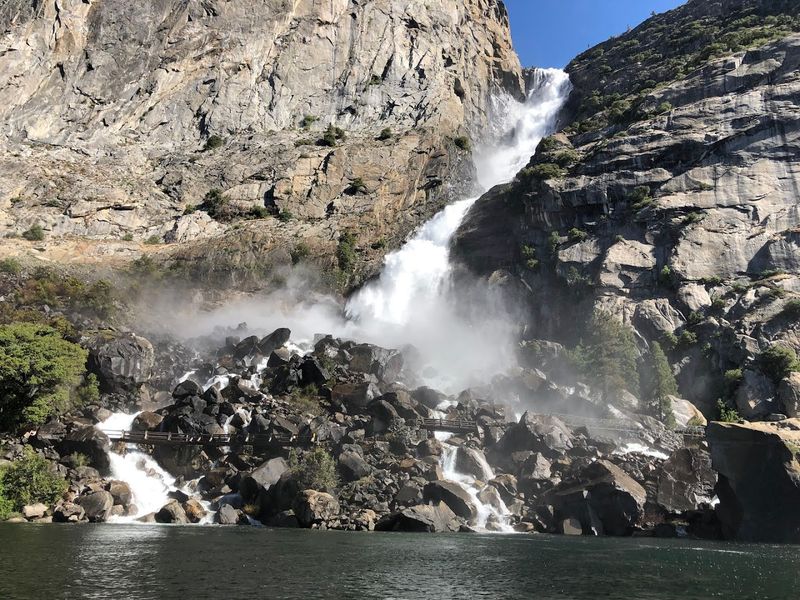
With a total drop of 1,500 feet, Wapama Falls is one of the most powerful and dramatic waterfalls accessible by trail in Yosemite National Park.
Located in Hetch Hetchy Valley, which sits in the northern part of the park, Wapama Falls flows into the Hetch Hetchy Reservoir and can be heard long before it comes into view.
During peak snowmelt, the water volume can be intense enough that the footbridges crossing below the falls get completely drenched in spray.
The hike to Wapama Falls follows a relatively moderate trail of about five miles round trip from the O’Shaughnessy Dam trailhead.
The path winds along the reservoir shoreline through oak woodland and granite terrain before reaching the base of the falls.
Spring conditions can make the crossing at the footbridges genuinely challenging due to the force and volume of water rushing through.
Hetch Hetchy Valley is less visited than Yosemite Valley, which means the trail to Wapama Falls tends to feel quieter and more spacious on most days.
The combination of the reservoir, the surrounding granite walls, and the powerful roar of the falls creates an atmosphere that feels wilder and less crowded than many other parts of the park.
5. Illilouette Fall: The Hidden Gem of the Glacier Point Area
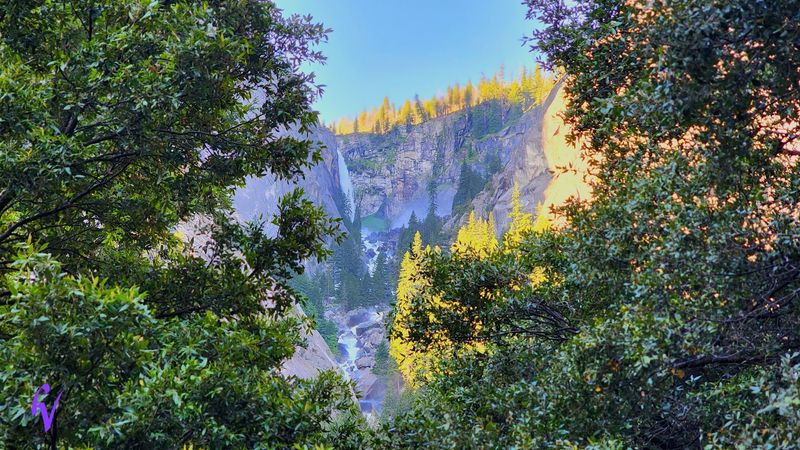
Tucked away in a rocky gorge southeast of Yosemite Valley, Illilouette Fall drops 370 feet into a rugged canyon that most day visitors never reach.
The waterfall flows from Illilouette Creek and feeds into the Merced River system below.
Because it sits off the main valley floor loop, it tends to attract hikers who are specifically seeking it out rather than stumbling across it by chance.
The most common route to Illilouette Fall starts at Glacier Point and follows the Panorama Trail downhill, covering around 8.5 miles.
The trail passes through open forest and granite terrain with occasional views of the surrounding high country.
Reaching the falls requires crossing a footbridge near the base, where the mist and sound of the water create a cool, refreshing atmosphere even on warm days.
Illilouette Fall flows year-round but is most impressive during spring when snowmelt keeps the creek running strong.
The surrounding area has historically been part of the park’s fire management zone, and the forest nearby shows signs of natural fire ecology that tell a story about how the landscape regenerates over time.
That ecological context adds an extra layer of interest beyond just the waterfall itself.
6. Bridalveil Fall: The First Waterfall Most Visitors See
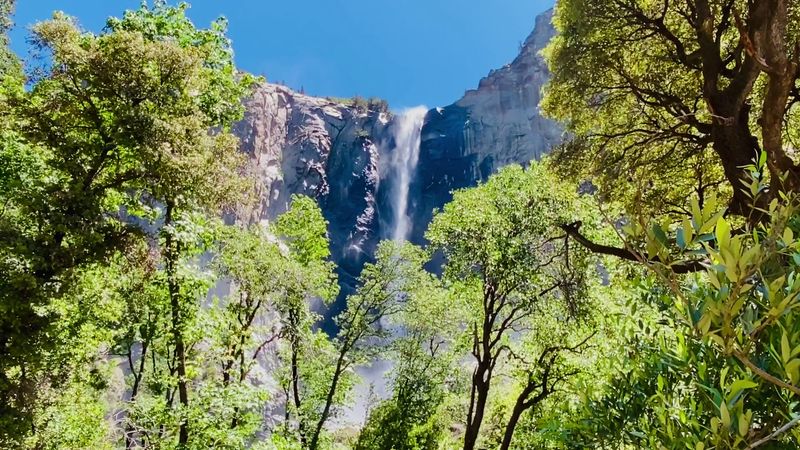
At 620 feet tall, Bridalveil Fall is often the very first waterfall visitors encounter when entering Yosemite Valley from the west.
The water has a tendency to blow sideways in the wind, which gives it that distinctive veil-like appearance that earned it its name.
On breezy days, the mist drifts far from the base and can be felt well before reaching the viewing area.
A short paved trail leads from the Bridalveil Fall parking area to a viewpoint near the base, covering just a quarter mile each way.
The path is relatively accessible and sees heavy foot traffic throughout the year.
Spring visits bring the fullest flow and the most dramatic mist, while late summer visits still offer a visible falls even if the volume drops considerably.
The Ahwahnechee people, the Indigenous group historically connected to Yosemite Valley, called this waterfall Pohono, meaning spirit of the puffing wind.
That name reflects how the water behaves on a typical day, swirling and shifting with the breeze rather than falling in a straight, predictable line.
Standing near the base on a spring afternoon with the mist catching the light is one of those park experiences that tends to stay with visitors for a long time.
7. Nevada Fall: The Big Drop Along the Mist Trail
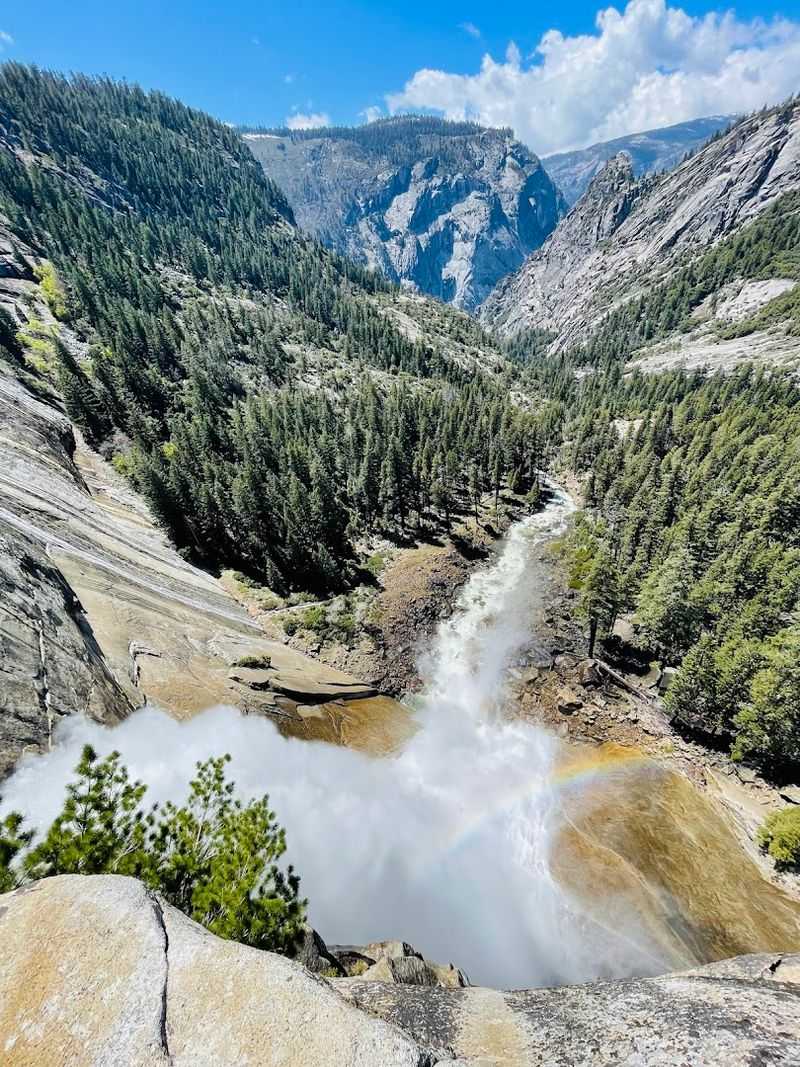
Nevada Fall sends the Merced River plunging 594 feet over a broad granite ledge, creating a wide curtain of white water that thunders into the canyon below.
The sheer volume of water during peak flow season makes this one of the most physically impressive waterfalls in the park.
Standing at the railing near the top of the falls gives a perspective that is both thrilling and a little humbling.
Reaching Nevada Fall requires a solid hike, with the most popular route being the Mist Trail from Happy Isles, covering about 5.4 miles round trip with significant elevation gain.
The trail passes Vernal Fall on the way up, meaning hikers get two major waterfalls in a single outing.
The upper section of the trail above Vernal Fall follows a drier switchback route that climbs steeply through granite and open forest.
Nevada Fall is accessible from late spring through fall, but the trail can be icy and dangerous in winter and early spring due to snow and ice.
Traction devices and layers are strongly recommended for anyone attempting the route before conditions fully clear.
The effort involved in reaching Nevada Fall tends to thin out the crowds compared to lower valley viewpoints, giving the experience a more personal and rewarding quality.
8. Vernal Fall: Where the Mist Soaks Every Hiker Through
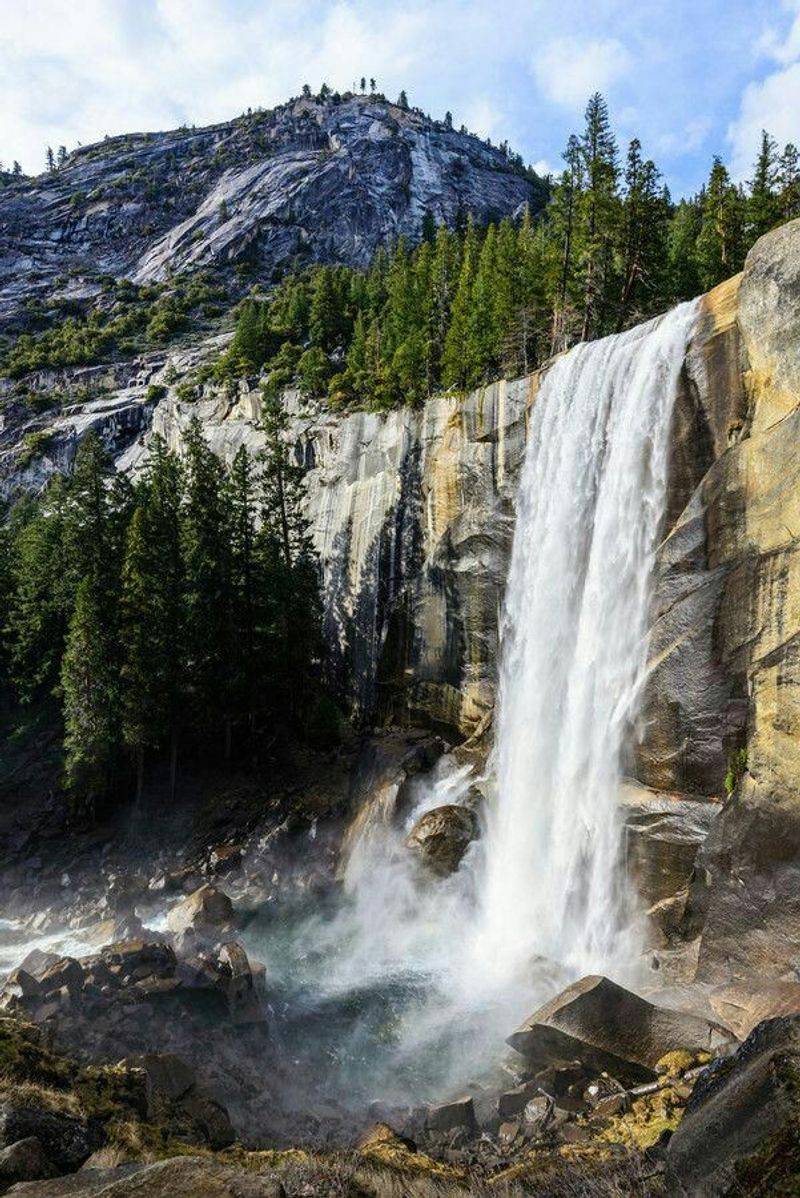
Vernal Fall drops 317 feet over a wide granite face and produces so much mist that the trail leading to it is permanently damp and slippery during spring and early summer.
The stretch of trail known as the Mist Trail earns its name honestly, as hikers ascending the granite staircase alongside the falls get thoroughly soaked even on sunny days.
A rain jacket or poncho is genuinely useful here rather than just optional gear.
The hike to the top of Vernal Fall via the Mist Trail covers about three miles round trip from Happy Isles with a substantial climb of around 1,000 feet.
The granite steps are well-maintained but steep, and the wet conditions from the mist make footing unpredictable.
Taking time to pause at the Vernal Fall footbridge before continuing upward gives a strong view of the falls from below and a chance to catch a breath.
On clear mornings when the sun hits the mist at the right angle, rainbows appear regularly near the base of the falls.
That combination of thundering water, cool spray, and colorful light makes Vernal Fall one of the most sensory-rich experiences in the entire park.
The trail is busy but manageable on weekday mornings during shoulder season.
9. Chilnualna Falls: The Wawona Area’s Best-Kept Secret
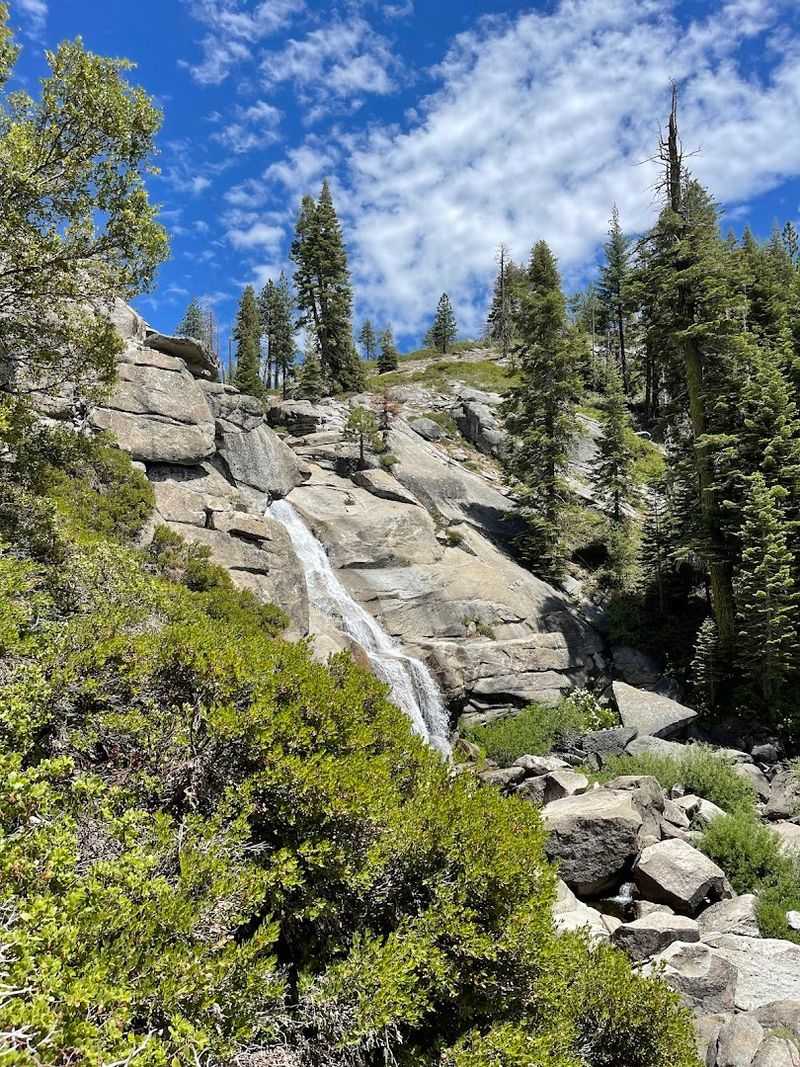
Chilnualna Falls is a series of cascades rather than a single plunge, with a total drop of 690 feet spread across multiple tiers of granite in the Wawona area of Yosemite National Park.
Each section of the falls has its own character, from wide fanning cascades near the bottom to narrower, faster chutes higher up.
The variety in the water’s movement gives the hike a sense of discovery that builds with every switchback.
The trail to the upper falls is about eight miles round trip with a challenging elevation gain of roughly 2,400 feet, making it one of the more demanding day hikes in the park.
Starting early in the morning helps avoid heat and crowds, particularly during summer when the Wawona area gets warm by midday.
The trailhead sits near the Wawona area of the park, which is closer to the south entrance than the main Yosemite Valley.
Because Chilnualna Falls sits away from the main valley corridor, the trail sees fewer visitors than popular routes like the Mist Trail.
That quieter atmosphere allows for a more contemplative pace, with plenty of spots along the way to stop, listen to the water, and take in the surrounding forest.
The falls flow best in spring but remain partially active through early summer in most years.
10. Lehamite Falls: A Towering Waterfall Hidden in Plain Sight
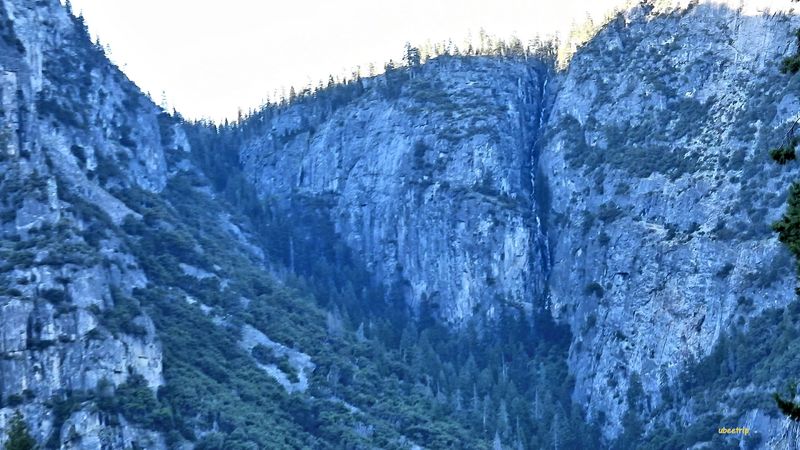
Lehamite Falls drops 1,180 feet down the north wall of Yosemite Valley, making it one of the taller waterfalls in the park by total height.
Despite that impressive measurement, it rarely gets the same attention as Yosemite Falls or Bridalveil Fall.
Part of the reason is its location on the valley wall, which makes it easier to miss unless visitors know to look for it specifically.
The falls flow from Lehamite Creek, which drains the area above the north rim of the valley.
Like many of the park’s seasonal waterfalls, Lehamite Falls is most active during late winter and spring snowmelt and may diminish significantly or stop flowing entirely by late summer.
Visiting during April or May offers the best chance of seeing it at its most dramatic.
There is no maintained trail leading to the base of Lehamite Falls, and off-trail travel in that area is not recommended due to steep and unstable terrain.
The best viewing experience comes from valley floor meadows and pullout areas that offer a clear sightline to the north wall.
Spotting Lehamite Falls from below and knowing its height exceeds the Eiffel Tower by more than 200 feet puts the scale of Yosemite’s cliffs into a genuinely striking perspective.
11. Tueeulala Falls: The Quieter Companion to Wapama in Hetch Hetchy
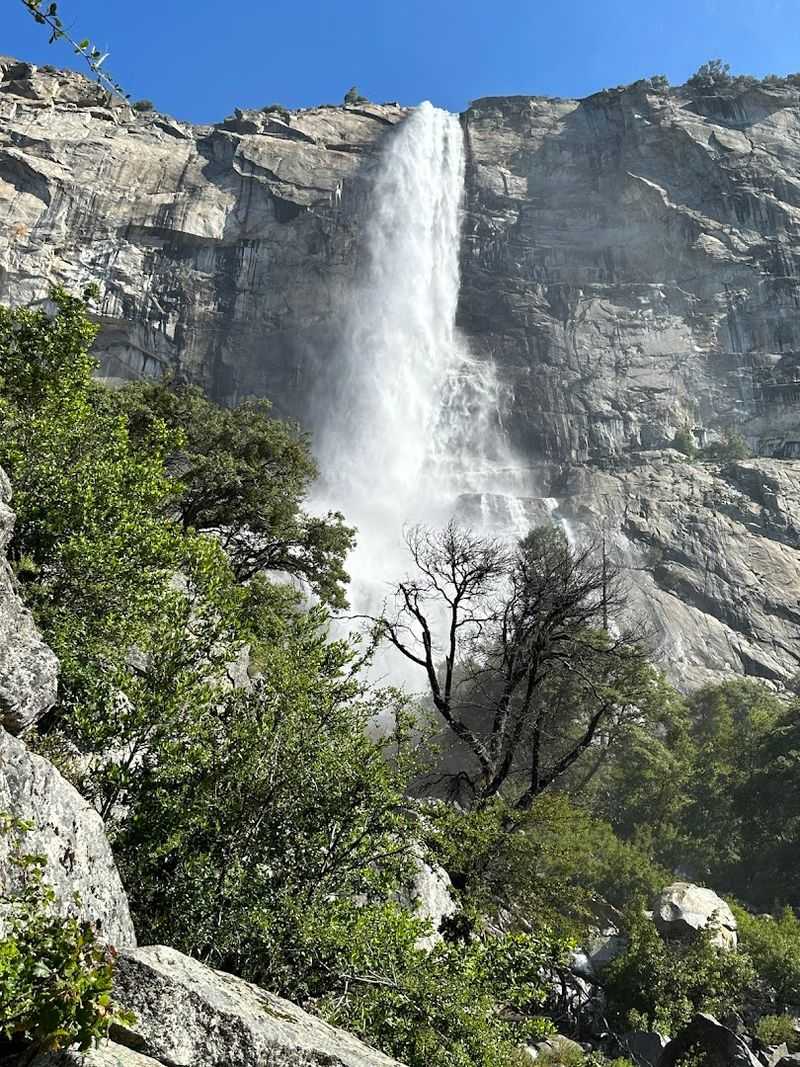
Tueeulala Falls stands 880 feet tall and flows from a granite ledge above the Hetch Hetchy Reservoir, appearing as a slender thread of water that contrasts dramatically with the massive rock walls surrounding it.
Located on the same trail as Wapama Falls, Tueeulala is the first waterfall hikers encounter on the route from O’Shaughnessy Dam.
Its more delicate appearance compared to the powerful Wapama Falls gives it a quieter, almost contemplative quality.
Tueeulala Falls is highly seasonal and typically only flows during spring snowmelt, usually from around March through May depending on the year’s precipitation levels.
By early summer, the falls often dry up completely, leaving only a dark streak on the granite to show where the water once ran.
Timing a Hetch Hetchy visit for late April tends to offer the best chance of seeing both Tueeulala and Wapama in full flow on the same outing.
The trail from O’Shaughnessy Dam to Tueeulala Falls covers about two miles one way and follows relatively flat terrain along the reservoir’s northern shoreline.
The Hetch Hetchy area is less visited than Yosemite Valley, and the combination of the reservoir’s still surface, the towering granite walls, and the seasonal waterfalls creates a landscape that feels distinctly remote and unhurried.
12. Wildcat Falls: An Underrated Drop With Impressive Height
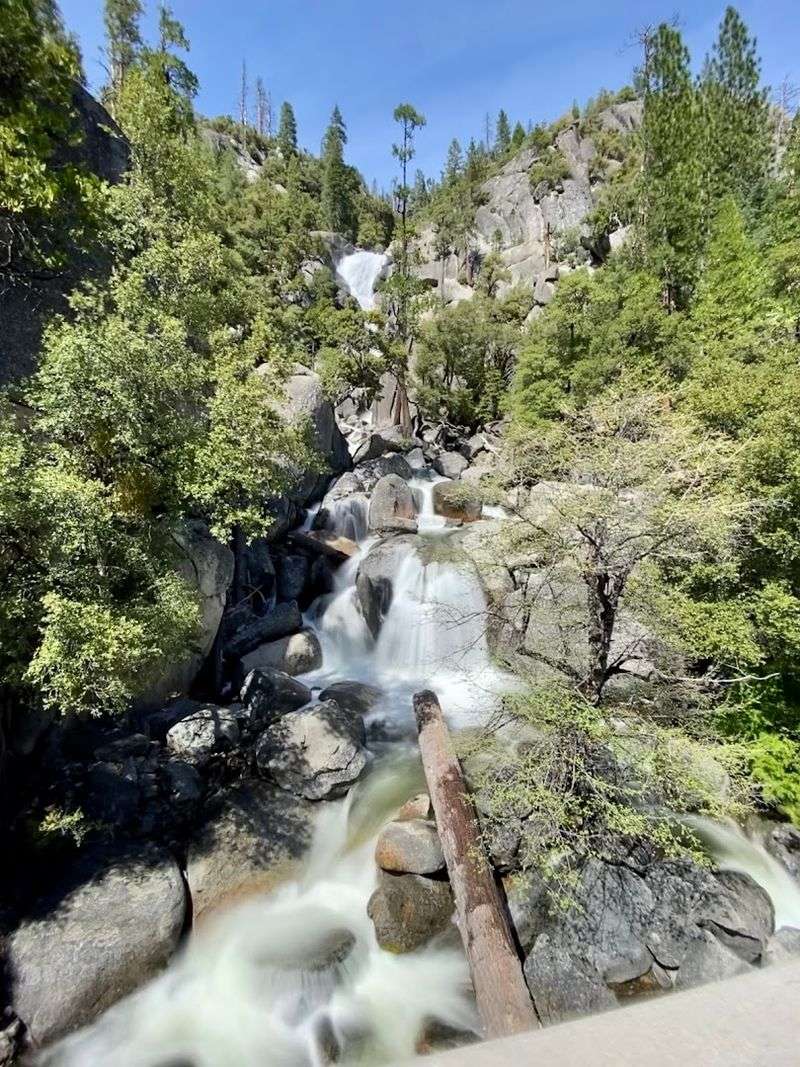
Wildcat Falls drops 720 feet down the granite walls of Yosemite National Park, putting it well above many of the world’s most famous waterfalls in terms of raw height.
Despite that number, it remains largely off the radar for casual visitors and does not appear on most standard park maps or visitor guides.
That obscurity makes it a satisfying find for those who dig deeper into the park’s geography. The falls are seasonal and flow primarily during the snowmelt period in late winter and spring.
Water volume and visibility can vary considerably from year to year depending on how much snow accumulated in the high country during winter.
In a strong snow year, Wildcat Falls can put on a striking display that holds its own against more famous neighbors.
Viewing Wildcat Falls typically involves identifying the correct section of cliff from valley floor viewpoints or from roads passing through the relevant area of the park.
Because no maintained trail leads directly to the base, most encounters with the falls are from a distance.
That distance still communicates the scale of the drop clearly, especially when compared to trees and rock features on the cliff face that provide a natural sense of proportion.
13. Royal Arch Cascade: Where Water Meets One of the Valley’s Most Dramatic Walls
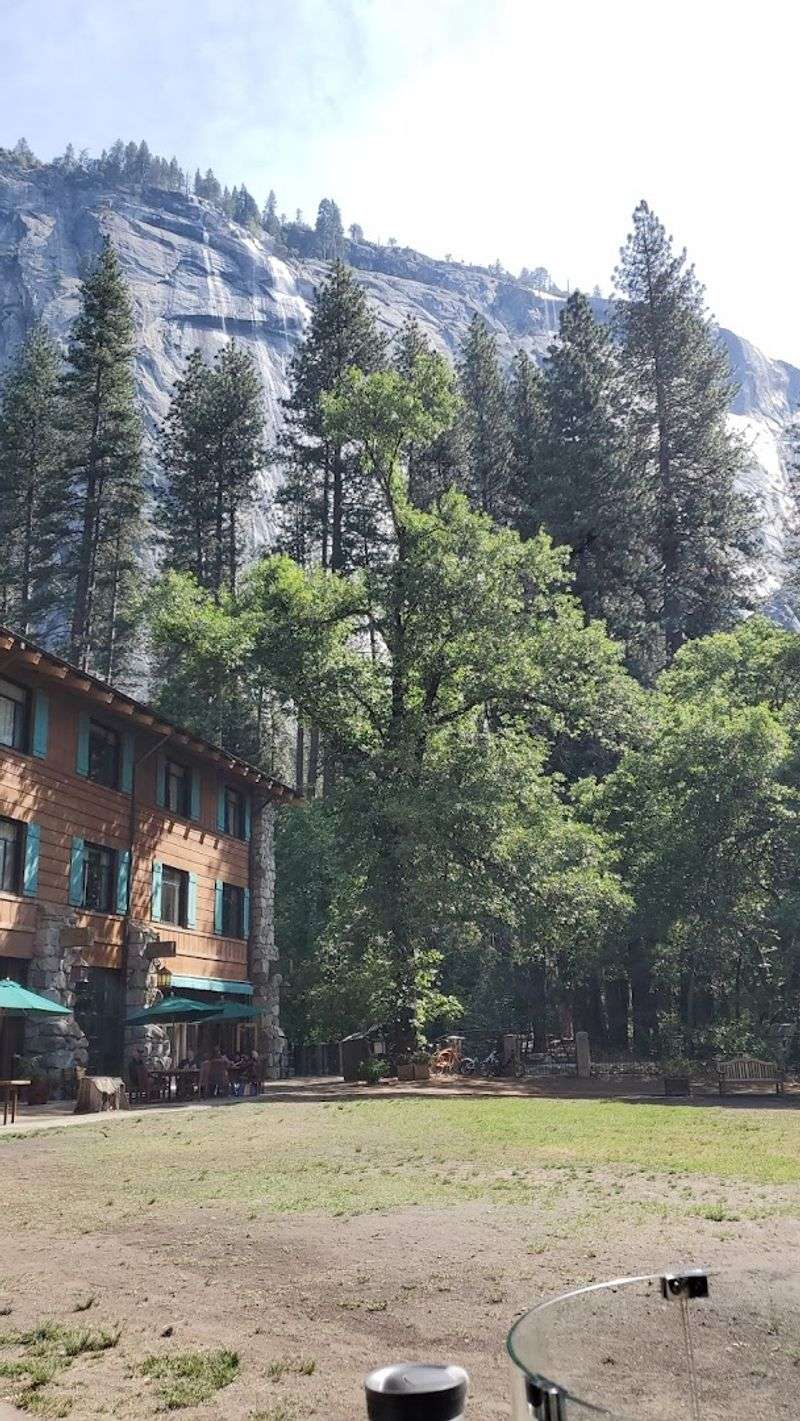
Royal Arch Cascade tumbles 1,250 feet down the north side of Yosemite Valley, flowing across one of the most architecturally striking sections of granite in the entire park.
The curved granite arches that give the area its name create a natural amphitheater effect, and the water traces the contours of the rock as it descends.
The result is a waterfall that looks almost deliberately designed rather than purely accidental.
The cascade is most visible and most active during spring when snowmelt fills the streams draining the north rim.
Like many of the valley’s wall-fed waterfalls, Royal Arch Cascade can fade to a thin trickle or stop entirely by midsummer.
Visiting in April or early May offers the most rewarding view from the valley floor meadows and roads nearby.
The area near Royal Arch Cascade sits close to the historic Ahwahnee Hotel, which gives visitors a chance to combine a look at the falls with a walk through one of the most architecturally significant buildings in any national park in the country.
The hotel itself opened in 1927 and was designed to blend with the surrounding granite landscape.
Looking up at the cascade from the meadow near the hotel provides a view that connects natural and human history in a single glance.
14. Staircase Falls: A Long Seasonal Cascade Above the Valley Floor
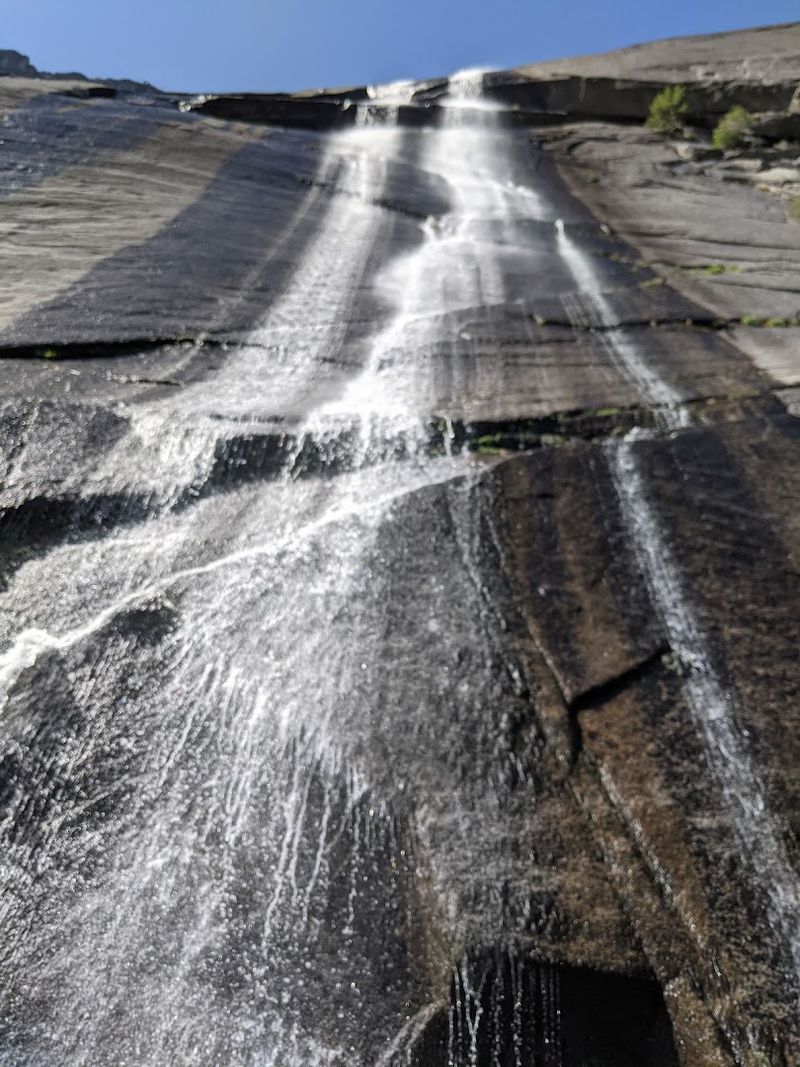
Staircase Falls descends 1,300 feet in a series of drops down the south wall of Yosemite Valley, stepping its way down the granite in a pattern that gives the falls their name.
The staircase-like progression of the water creates a layered visual effect that looks different depending on where in the valley the viewer is standing.
From some angles, the upper and lower sections appear almost separate, while from others the full cascade reads as one long connected flow.
The falls are most active during late winter and early spring, particularly after heavy rain or during the peak snowmelt period.
Because the drainage basin feeding Staircase Falls is relatively small, the flow can change quickly in response to weather.
A warm week in March can send the falls roaring while a dry February may leave them barely visible.
Staircase Falls is visible from the valley floor near the eastern end of the valley, and several open meadow areas provide unobstructed sightlines to the south wall where the falls descend.
No maintained trail leads to the base of the falls, and the terrain below is steep and loose.
The best approach for most visitors is to find a comfortable spot in one of the meadows, look up, and let the scale of the drop settle in gradually.
15. Silver Strand Falls: A Slender Giant on the Valley’s South Wall
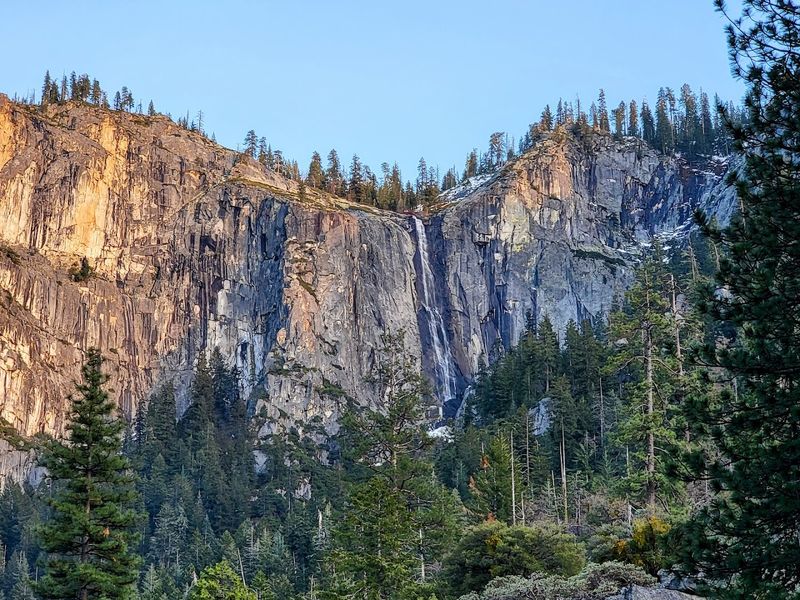
Silver Strand Falls drops 1,170 feet from the south rim of Yosemite Valley in a slender, thread-like stream that contrasts with the massive granite walls it flows across.
The falls are narrow enough that they can be easy to miss from a moving vehicle, but stopping to look carefully at the south wall during spring reveals that thin silver line cutting through the rock.
The name suits it perfectly.
Like most of the wall-fed waterfalls in Yosemite Valley, Silver Strand Falls depends on snowmelt and runs most strongly from late winter through spring.
By summer, the flow typically drops to nothing, and the falls disappear until the next wet season.
Years with above-average snowpack in the Sierra Nevada tend to produce the most impressive displays at Silver Strand and other seasonal falls throughout the park.
There is no maintained trail to Silver Strand Falls, and the terrain in the area is not suitable for casual off-trail exploration.
The best viewing opportunity comes from valley floor meadows and road pullouts that face the south wall.
Bringing a pair of binoculars helps bring the upper portion of the falls into clearer focus, especially on bright spring mornings when the light catches the water against the dark granite and makes the silver thread unmistakably visible from across the valley floor.