This California Steakhouse Still Rolls Out Silver Carts To Carve Prime Rib Right At Your Table
Most steakhouses bring your dinner out on a plate.
At one legendary dining room, the main event arrives on wheels, and the person carving your meal becomes part of the entertainment.
A gleaming silver cart rolls up beside the table, revealing beautifully roasted prime rib ready to be sliced and served.
It is an old-fashioned ritual that feels wonderfully extravagant, especially when so many modern restaurants focus on getting food out as quickly as possible.
Few California dining traditions feel quite as theatrical as watching your prime rib carved beside a gleaming silver cart.
The appeal goes beyond the beef itself. There is something satisfying about a restaurant that treats dinner as an occasion, complete with polished service and a little anticipation before the first bite.
You can settle into your seat, enjoy the atmosphere, and watch a dining tradition unfold right in front of you.
The Famous Silver Carts Roll Right Up To Your Table
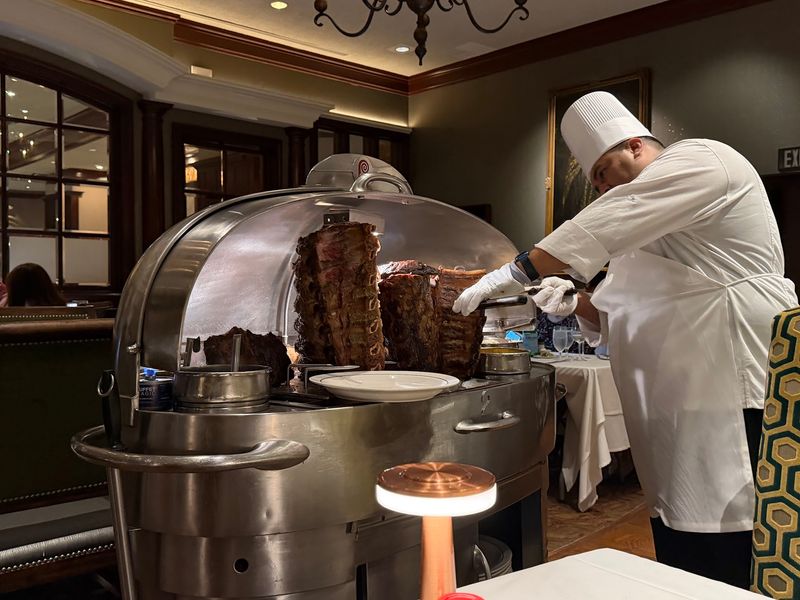
Few things in a restaurant draw every eye in the room quite like a large silver cart rolling slowly between the tables.
Lawry’s The Prime Rib keeps that tradition alive at its original location in Beverly Hills.
The restaurant sits at 100 N La Cienega Blvd, Beverly Hills, California 90211, along a busy stretch of the street known for dining.
The carts are made of polished stainless steel with a rounded dome on top. According to the restaurant’s history, the idea for these carts came from one of the founders.
Reports describe them as very heavy, which helps them move smoothly and stay steady while the beef is sliced.
Each cart is heated, so the roasted beef stays warm as it travels across the dining room. The plates are kept warm too, which helps the meal reach guests at a pleasant temperature.
Diners often notice the soft glow of the dome under the low lights. The sound of the wheels rolling across the floor may signal that dinner is getting close.
Guests who want a good view of the carts might ask for a table with some open space nearby.
Seating requests are never guaranteed, but a polite ask while booking can sometimes help.
Prime Rib Is Carved Right In Front Of You
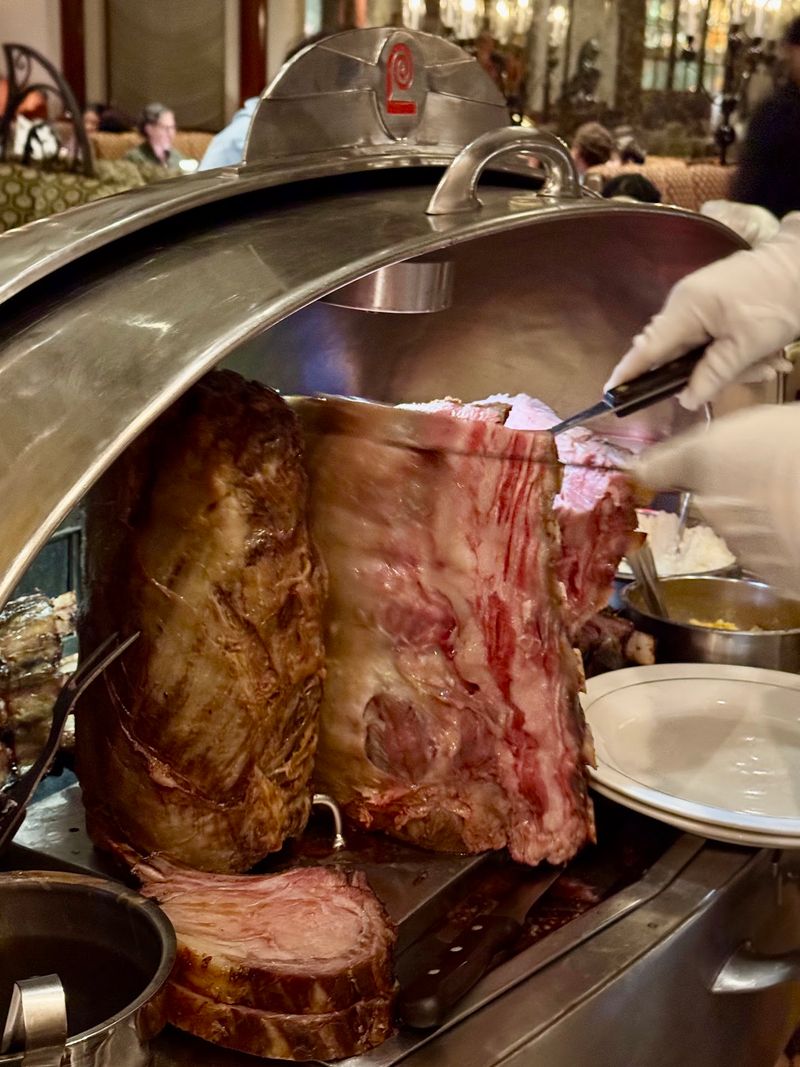
Watching a skilled hand slice beef just inches away turns a regular dinner into a small piece of theater.
At the table, the carver asks two simple questions. Guests choose the cut they want and how they like it cooked, from rare to well done.
The beef is then sliced right there on the cart. Carvers at the restaurant train for a period of time before earning the medallions they wear, according to restaurant information.
That training shows in the steady rhythm of the knife. Slices come off evenly, and the plate is built in a set order before it is placed in front of the guest.
A helpful tip is to know the preferred doneness before the cart arrives. Ends of the roast tend to be more cooked, while the center stays pinker, so guests who want something specific should say so clearly.
Polite questions are welcome during the carving. Many carvers seem happy to explain the cuts or share a bit about how the beef is roasted.
Phones often come out at this moment for photos or short videos. Giving the carver enough room to work keeps the process smooth and safe.
The whole service moves at an unhurried pace. Guests can simply sit back, watch, and let the moment unfold without feeling rushed.
The Restaurant Has Been Around Since 1938
Back in 1938, two partners had a bold idea for a restaurant that served one main dish and served it very well.
Lawrence L. Frank and Walter Van de Kamp opened Lawry’s The Prime Rib in Beverly Hills that year.
Building a menu around a single roasted beef dish was an unusual plan at the time.
The idea worked, and the restaurant became a well-known stop for locals and travelers. It has now served guests for more than eight decades.
Another fun bit of history connects to kitchens across the country. Lawry’s Seasoned Salt traces its roots to the restaurant, where the founders worked on a seasoning blend for their beef.
That blend later became a grocery store item found in many homes. Diners may still spot seasoning shakers on the tables today.
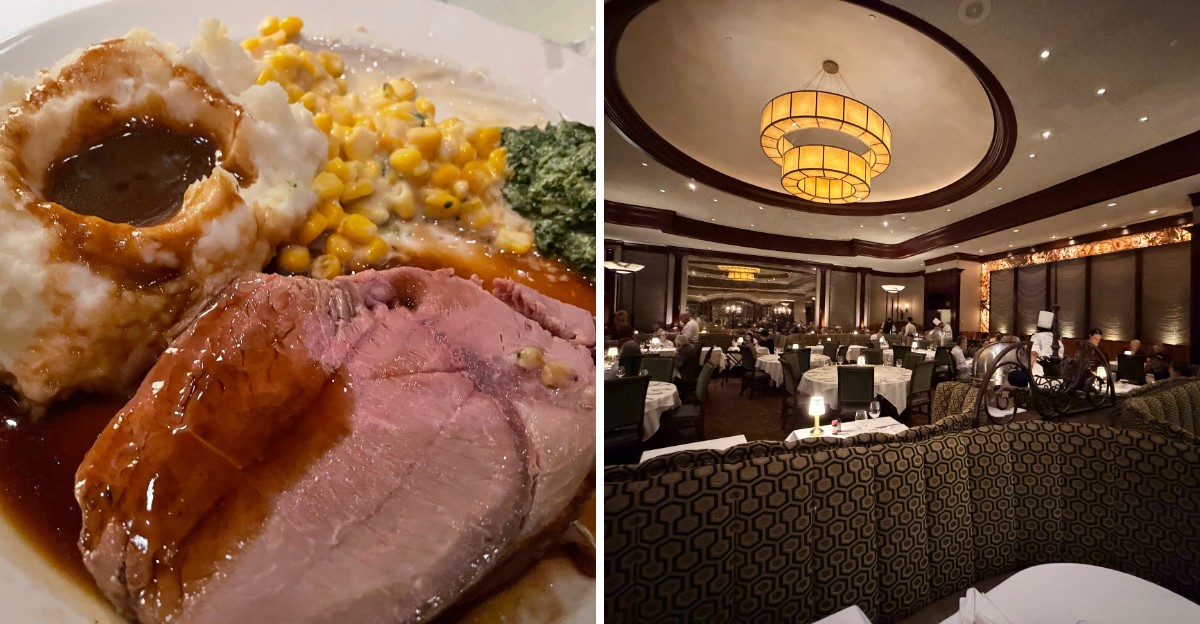
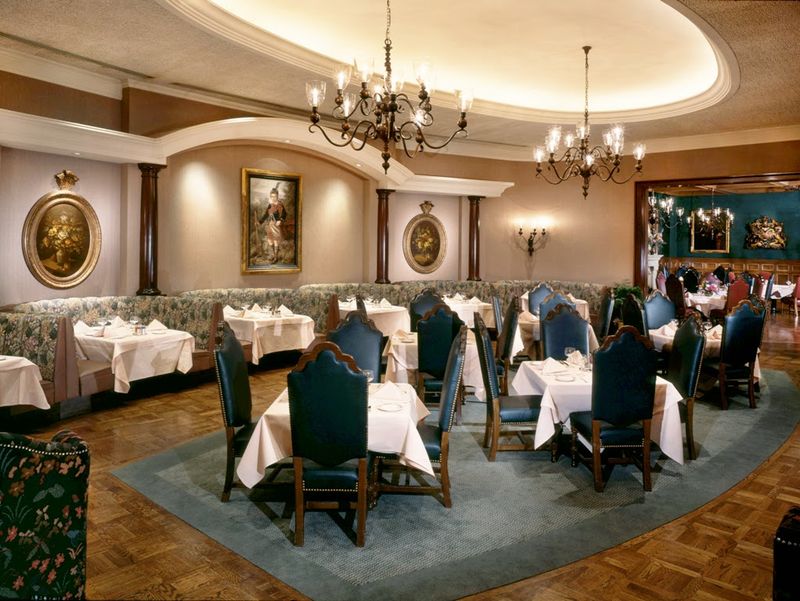
The building and dining rooms carry a classic look that fits the long history. Dark wood, curved booths, and white tablecloths help the space feel rooted in an earlier era.
Some staff members have worked at the restaurant for many years. That long service adds a sense of continuity that newer places may not have.
The Spinning Bowl Salad Is Another Tableside Tradition
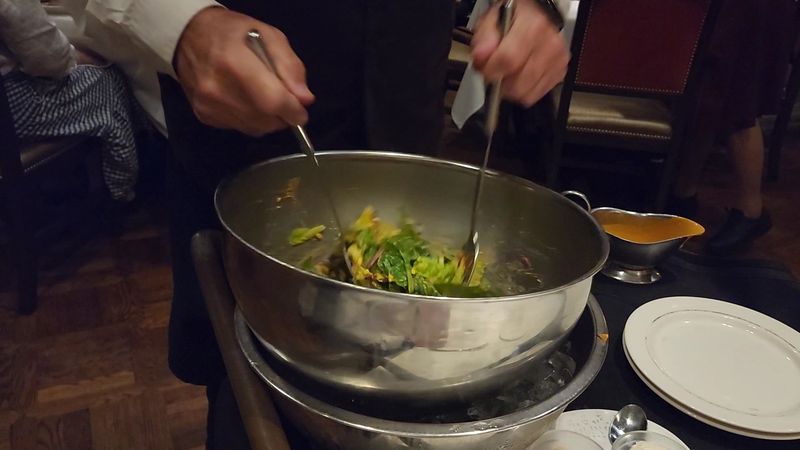
Before any beef appears, a second little show begins with a metal bowl sitting on a bed of crushed ice.
The Famous Original Spinning Bowl Salad is made right beside the table. Romaine, iceberg lettuce, and baby spinach go into the chilled bowl first.
Shoestring beets, chopped hard-boiled egg, and croutons are added next. The server then pours the house dressing from above while spinning the bowl quickly.
The spin coats each leaf evenly and keeps everything cold. Guests often hear the soft clink of ice and the whir of the bowl as it turns.
The result is a crisp and cool starter that sets up the richer dishes to come. The salad comes with the prime rib dinner, so no extra order is needed for it.
Guests who prefer less dressing can mention that before the pour begins. Servers can usually adjust the amount if asked early.
Warm sourdough bread with butter often arrives around this time too. Saving room is wise, since the main course is filling.
The spinning bowl gives kids and adults alike something fun to watch. It also builds a nice sense of anticipation for the carts.
You Can Choose From Several Famous Prime Rib Cuts
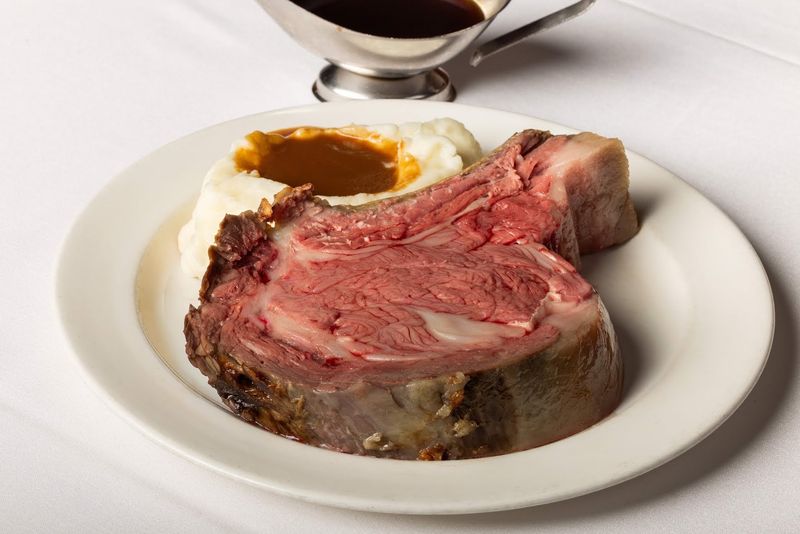
Hungry or just a little peckish, every guest gets to pick a portion that fits the moment.
The restaurant offers several named prime rib cuts. Common choices include the California Cut, the English Cut, the Lawry Cut, and the Diamond Jim Brady Cut.
The California Cut is the lighter option. Many first-time guests choose it because the full dinner already includes salad, potatoes, and Yorkshire pudding.
The English Cut comes as thinner slices. Some diners like how those slices soak up the au jus.
The Lawry Cut is the traditional choice and is often described as the most popular. It offers a generous slice that feels like the classic version of the meal.
The Diamond Jim Brady Cut is a thick, bone-in portion for very big appetites. Leftovers are common with that one.
Exact cuts, sizes, and prices can change over time. Checking the current menu on the restaurant’s website before a visit is a smart move.
Groups sometimes order different cuts so everyone can compare. Watching the carver adjust the slice for each person adds to the fun.
The Beef Comes With Classic Au Jus
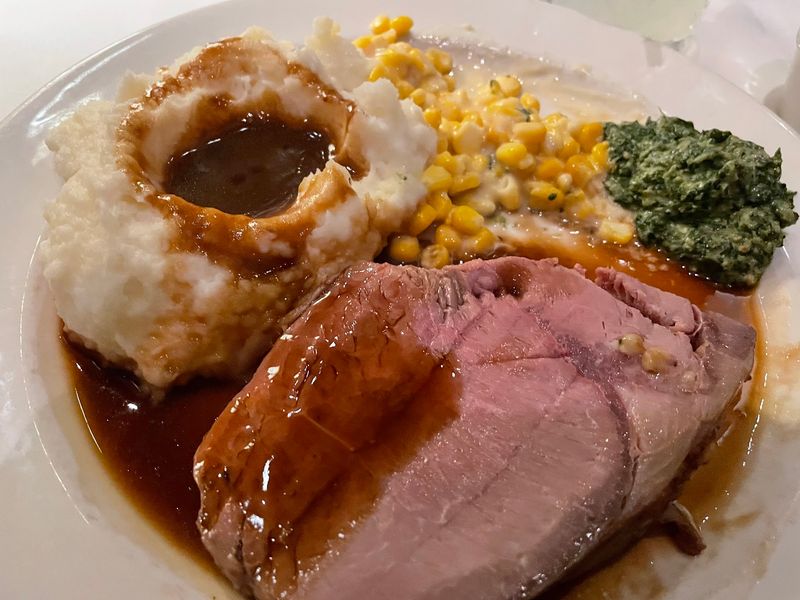
A good spoonful of warm meat juices can turn a tender slice of beef into something even more satisfying.
Au jus is the natural juice that comes from roasting the beef. It is spooned over the prime rib right at the cart as part of the traditional plating.
The flavor is savory and beefy, with a light texture rather than a thick sauce. It helps keep each bite moist as guests work through the slice.
Guests who want less can ask the carver to go light. Those who love it can ask for a little extra on the side.
The thinner English Cut slices pair especially well with the juices. The sourdough bread on the table can also be handy for catching the last drops.
The prime rib is roasted slowly for hours before it reaches the dining room, according to restaurant information. That slow cooking is part of what builds the rich flavor in the juices.
Asking for au jus on the side is a simple way to control flavor. Small requests like this are common and usually handled without fuss.
The Restaurant Has Served Certified Angus Beef For Over 30 Years
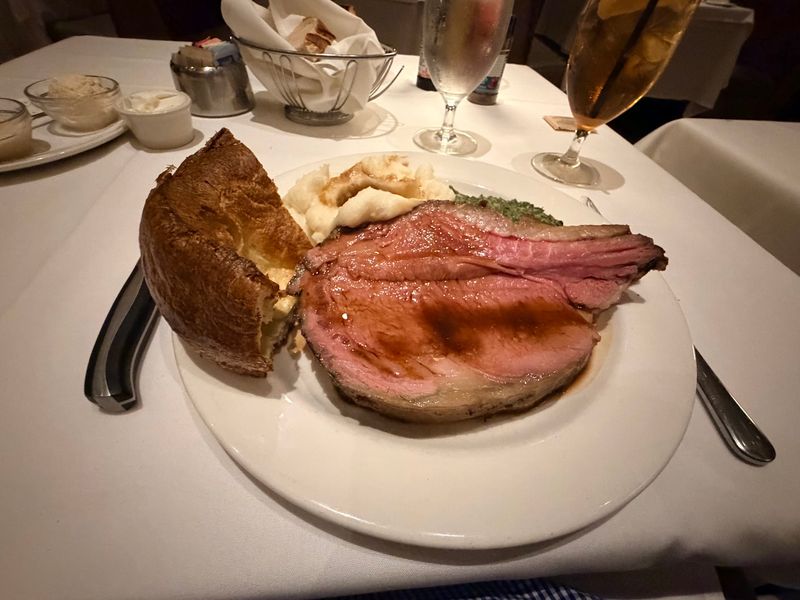
Great prime rib starts long before the cart rolls out, beginning with the beef itself.
The restaurant has served the Certified Angus Beef brand for more than 30 years. That long partnership shows a steady focus on consistent quality.
Certified Angus Beef is a brand with set standards for things like marbling. Marbling means the thin lines of fat inside the meat, which help with flavor and tenderness.
Restaurant information also describes how the beef is prepared. The prime rib is aged and then slow-roasted for hours before it is carved.
Slow roasting at steady heat helps the inside cook evenly. That gentle method is part of why slices often come out soft and juicy.
The outside develops a seasoned crust during cooking. Many guests enjoy getting a piece of that edge with their slice.
Knowing a little about the beef can make the meal more interesting. Curious diners might ask their server how the roasting works on a busy night.
Tastes still differ from person to person. Some may want a stronger beef flavor, while others love the mild and tender style.
Either way, the focus on one carefully chosen product has been central to the restaurant’s identity for decades. Consistency is a big part of its lasting appeal.
There Are Steaks And Seafood Beyond The Famous Prime Rib
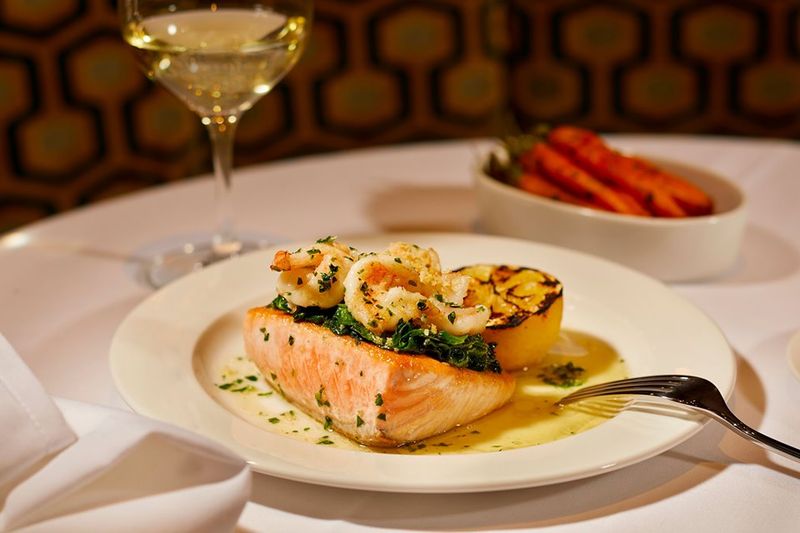
Not every guest at the table may want prime rib, and that is perfectly fine here.
The menu includes several other choices for different tastes. Steak options have included a filet mignon and a Prime New York strip, along with a ribeye.
Seafood lovers can find dishes such as lobster tails and salmon. Starters like crab cakes and jumbo shrimp cocktail also appear on the menu.
The shrimp cocktail is chilled and served with a tangy sauce. It can be a light way to begin before a heavier main course.
Other entrees like lamb chops may also be offered. Menus can change, so the current list on the restaurant website is the best guide.
A few options may work for guests who eat seafood but not red meat. Vegetarian choices appear more limited, so asking ahead is a good idea.
Groups with mixed tastes can still share the fun of the carts. Even diners ordering fish can enjoy watching the prime rib being carved nearby.
Desserts round out the meal for those with room left. Options such as English trifle and creme brulee have been offered.
On Sundays, the restaurant also opens for a midday meal. Brunch-style items may include prime rib hash or a prime rib sandwich.
The Dining Room Still Feels Like A Special Occasion
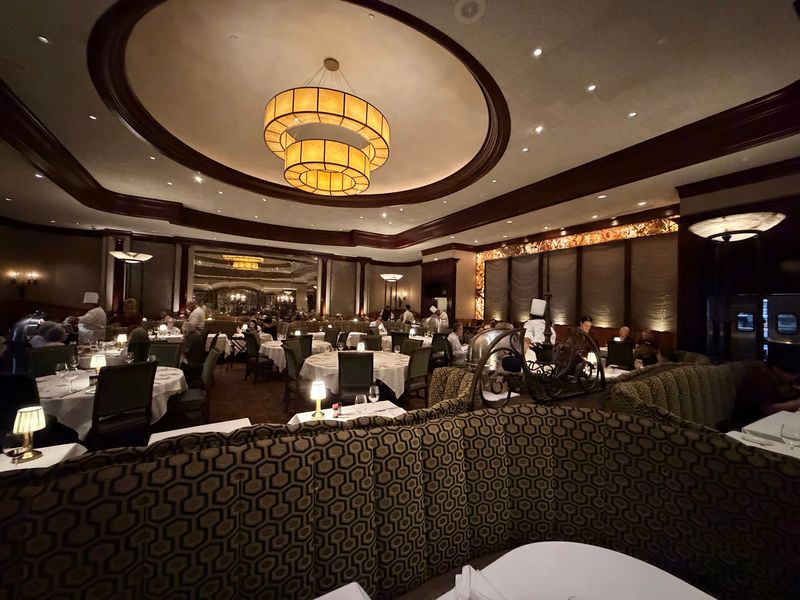
Walking in feels a bit like stepping into an older chapter of Los Angeles dining.
The dining room features dark wood, curved booths, and white tablecloths. Lighting is soft and warm but bright enough to see the food clearly.
Seating includes comfortable banquettes that suit long, relaxed dinners. The noise level often rises on busy nights as carts move and tables celebrate.
A business casual dress code is requested. Beachwear, athletic wear, cut-offs, and flip-flops are not allowed, so planning an outfit ahead is wise.
Parking is valet only at the front entrance. Fees can change, so guests may want to bring a little extra for parking and tips.
Reservations are strongly recommended, especially on weekends and holidays. Popular dates may book up weeks in advance, and short waits can still happen.
Dinner hours generally start in the late afternoon. Weekend evenings run later, and Sunday also includes a midday service.
Early evening on a weekday may feel calmer for those who prefer a quieter meal. Weekends tend to bring more energy and more celebrations.
The overall feel is polished yet welcoming, making it easy to see why so many guests return.