This California Storybook Theme Park Brings Classic Fairy Tales To Life For Families
Fairy tales hit differently when kids can actually walk through them.
Not just hear about castles or point at storybook pictures.
Actually wander past playful creatures and places that look like someone let a bedtime story spill into the real world.
That is when a family outing gets easier.
Kids have something to chase with their eyes. Parents get the joy of watching the day entertain itself.
Honestly, take the win.
California makes childhood nostalgia feel alive when a theme park keeps things sweet and wonderfully old-fashioned.
A place like this works because it meets families at kid level.
Bright enough to excite them. Small enough not to overwhelm everyone.
By the end, classic fairy tales feel less like old stories and more like a day everyone actually got to step inside.
Step Into A 10-Acre Storybook Park
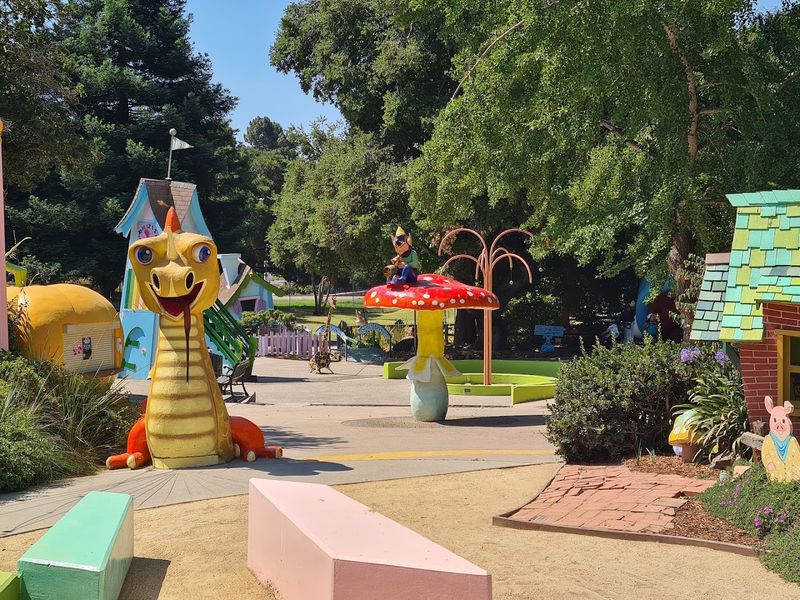
Sitting right beside Lake Merritt, Children’s Fairyland covers 10 acres of carefully designed fantasy space built specifically with young children in mind.
The park located at 699 Bellevue Ave, Oakland, CA 94610 maintains an unusual admission policy: adults must be accompanied by a child to enter, and children must be accompanied by an adult.
The scale of everything inside feels intentionally small, which is actually part of the charm.
Structures are sized closer to a child’s height than an adult’s, so kids feel like they genuinely belong in the space rather than just visiting it. That design choice changes how children move through the park entirely.
Open most days from 10 AM, the park runs until 4 PM on weekdays and until 5 PM on weekends, giving families a solid window to explore without feeling rushed.
Weekday visits tend to be quieter, which allows kids to spend more time at each set without waiting.
The grounds stay colorful and visually active in every direction, so there is rarely a dull stretch between one attraction and the next.
Look For Nearly 60 Storybook Sets
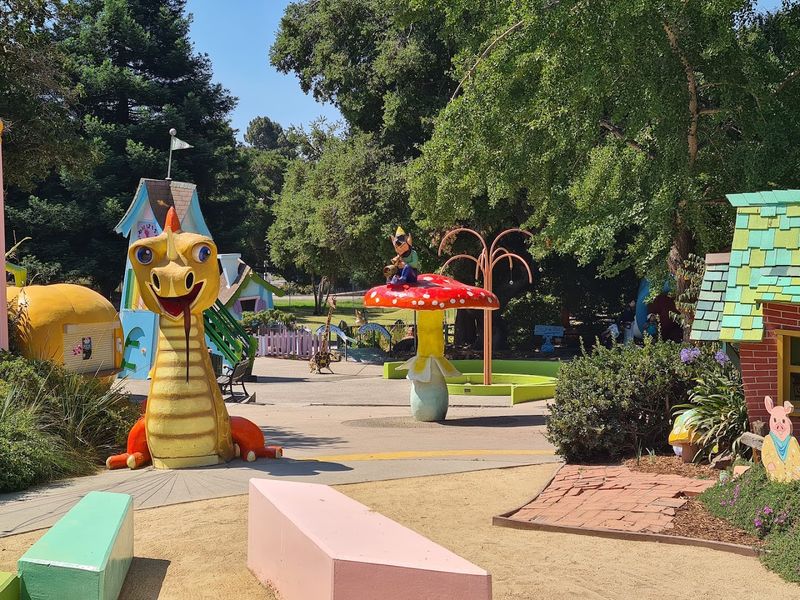
Walking through the park feels less like touring an amusement attraction and more like flipping through a picture book that somehow became three-dimensional.
Nearly 60 storybook sets are spread across the grounds, each one representing a different tale, from Pinocchio’s Castle to the Three Little Pigs to the Happy Dragon.
The sets are built at child-friendly scale, painted in vivid colors, and detailed enough to spark real imaginative play rather than just passive looking.
Kids tend to run from one to the next with genuine excitement because each set offers something different to climb, peek through, or duck inside.
What keeps the experience from feeling repetitive is the variety of stories represented.
Some sets come from European fairy tales, others from American nursery rhymes, and a few draw from stories with broader cultural roots.
Adults who know the source material often find themselves narrating along as kids explore, which turns the walk into an informal storytime.
The sheer number of sets means that even families who visit more than once are likely to notice something they missed the first time around.
Use A Magic Key Around The Park
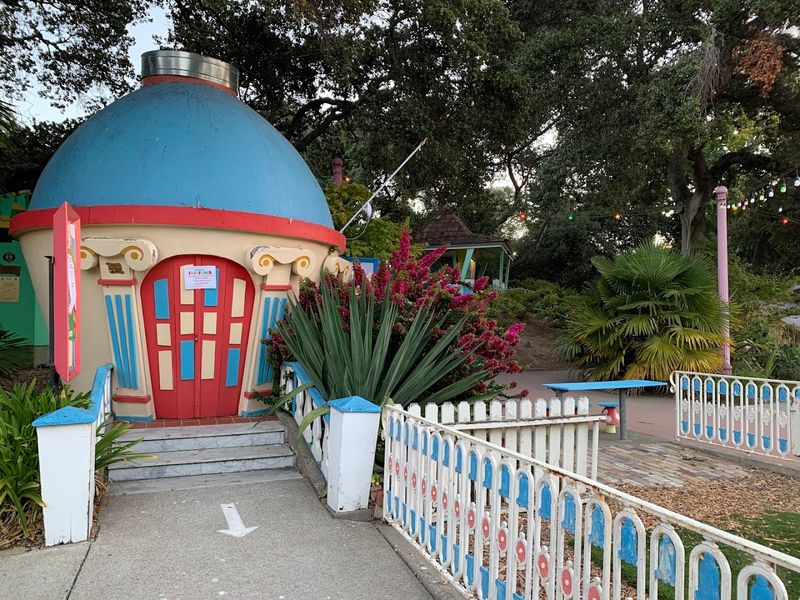
Scattered throughout the park are more than 20 Talking Storybook Boxes, and a Magic Key is the only thing that brings them to life.
For an additional fee, families can purchase one of these keys and use it to unlock audio recordings of classic fairy tales at each box they pass.
The stories play in both English and Spanish, which makes the experience more accessible for bilingual families visiting the park.
Kids tend to treat the key itself as a treasure, gripping it tightly as they move from box to box looking for the next story to unlock.
There is something genuinely satisfying about the physical act of inserting the key and hearing a tale begin.
It turns passive walking into an active quest, giving children a sense of purpose and discovery as they navigate the grounds.
The key is returned at the exit, so families do not keep it permanently, but the experience of using it throughout the visit tends to be memorable regardless.
For families with early readers or kids who love being read to, the Talking Storybook Boxes add a layer of engagement that connects the physical sets to the actual stories behind them.
Start At The Old Lady In The Shoe
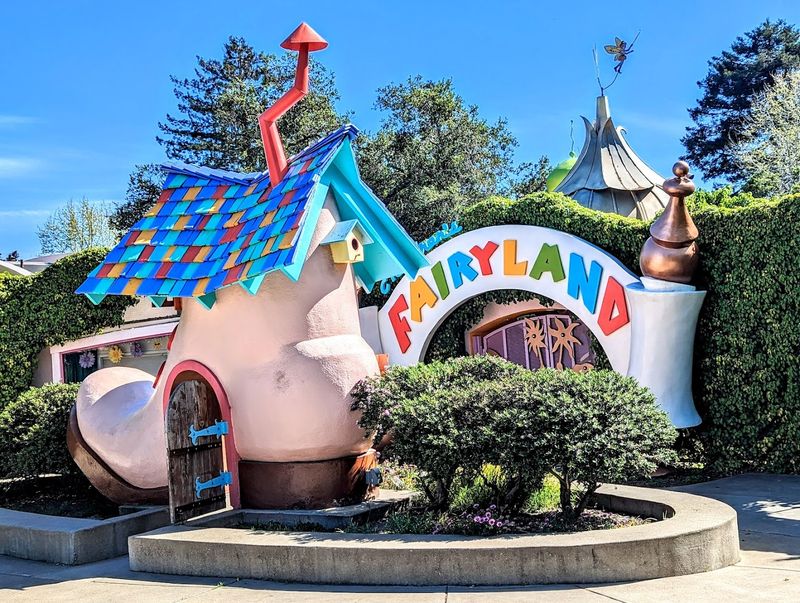
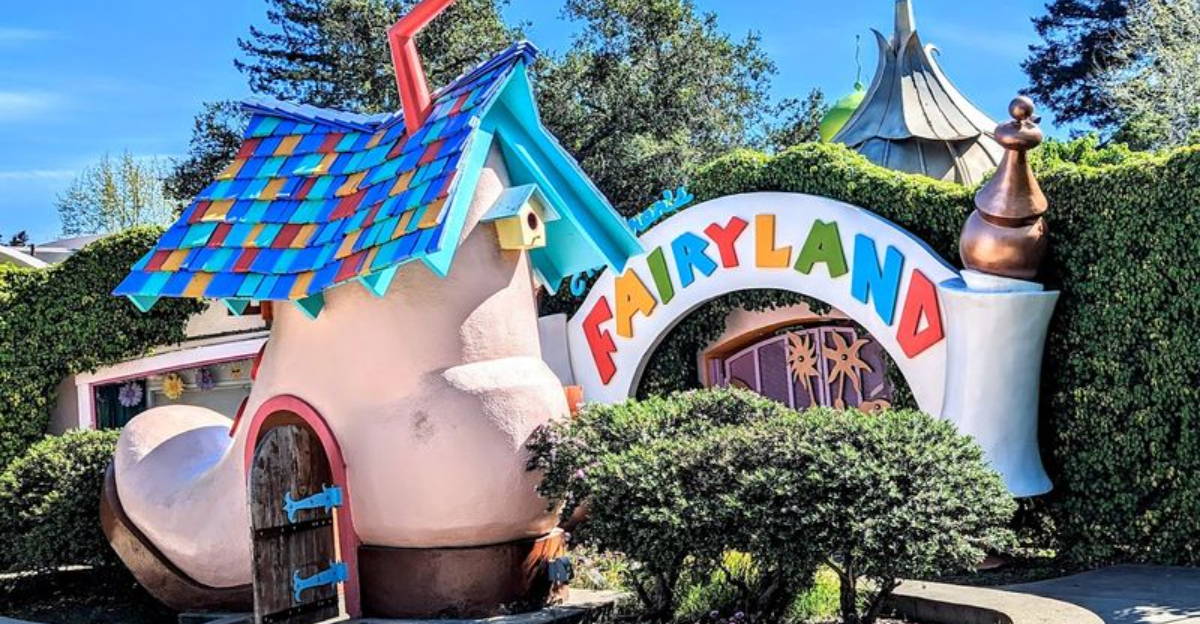
Arriving at the Fairy Gates and spotting the Old Lady in the Shoe right at the entrance sets the tone for everything that follows.
The structure is exactly what it sounds like: a large, walkable shoe-shaped building that greets visitors as they enter the park, signaling immediately that the rules of ordinary space no longer apply here.
For kids who have heard the nursery rhyme before, seeing it rendered at this scale tends to produce a genuine double-take.
The entrance experience functions almost like a threshold ritual, the moment where children understand that the park operates by different logic than the outside world.
Adults often appreciate this detail more than they expect to.
There is something disarming about walking past a giant shoe on your way into a morning of fairy tales, and it tends to lower everyone’s guard in the best possible way.
The structure is also practical as a landmark, making it easy for families to orient themselves and regroup if kids scatter in different directions later.
Starting a visit here rather than jumping straight to rides gives younger children a moment to absorb the atmosphere before the sensory input of the full park kicks in.
Climb Jack And Jill Hill
Bright green and shaped to suggest a small rolling hill, the Jack and Jill play area brings a nursery rhyme to life in the most physical way possible.
Kids are encouraged to climb, scramble, and roll around in a space that doubles as both a play structure and a nod to one of the most recognizable rhymes in the English language.
The area works well as a energy-burning stop between calmer parts of the park.
After sitting through a puppet show or walking slowly through storybook sets, children tend to need a place to move fast and loud, and this spot delivers that without pulling the family out of the fairy tale atmosphere.
The nursery rhyme connection gives parents a natural conversation starter while kids play, which keeps adults engaged rather than just waiting.
Younger toddlers who cannot yet handle bigger structures tend to enjoy the softer slopes and open grass nearby, while older kids in the park’s target age range of two to eight can make the most of the climbing elements.
The bright color of the hill makes it easy to spot from across the park, which also helps with keeping track of energetic runners.
Ride The Jolly Trolly
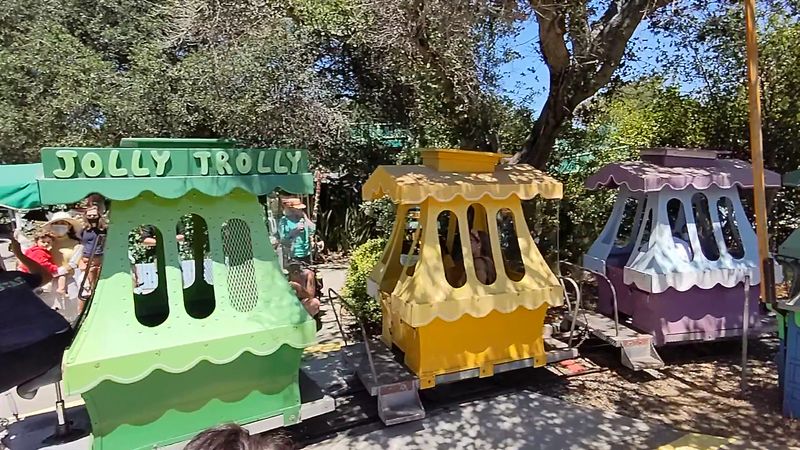
Installed in 1954, the Jolly Trolly holds the distinction of being the oldest ride at Children’s Fairyland, and it has been carrying small passengers through the park for longer than most of their grandparents have been alive.
The train-style ride moves at a gentle pace past Old West Junction and through a tunnel, giving kids a tour-style experience alongside the thrill of motion.
The ride tends to be a highlight for the youngest visitors, particularly infants and toddlers who respond strongly to the combination of movement and changing scenery.
Families with very young children often find that the Jolly Trolly produces some of the most animated reactions of the entire visit.
Lines for the ride can grow on busy weekend mornings, so arriving earlier in the day or visiting on a weekday could mean shorter waits.
The Jolly Trolly also serves as a useful orientation tool for first-time visitors, since its route through the park provides a quick overview of the layout before families set off on foot.
The vintage quality of the ride adds to its appeal, giving it a character that newer, shinier attractions sometimes lack. It feels genuinely old in the best possible sense.
Try The Classic Kid-Sized Rides
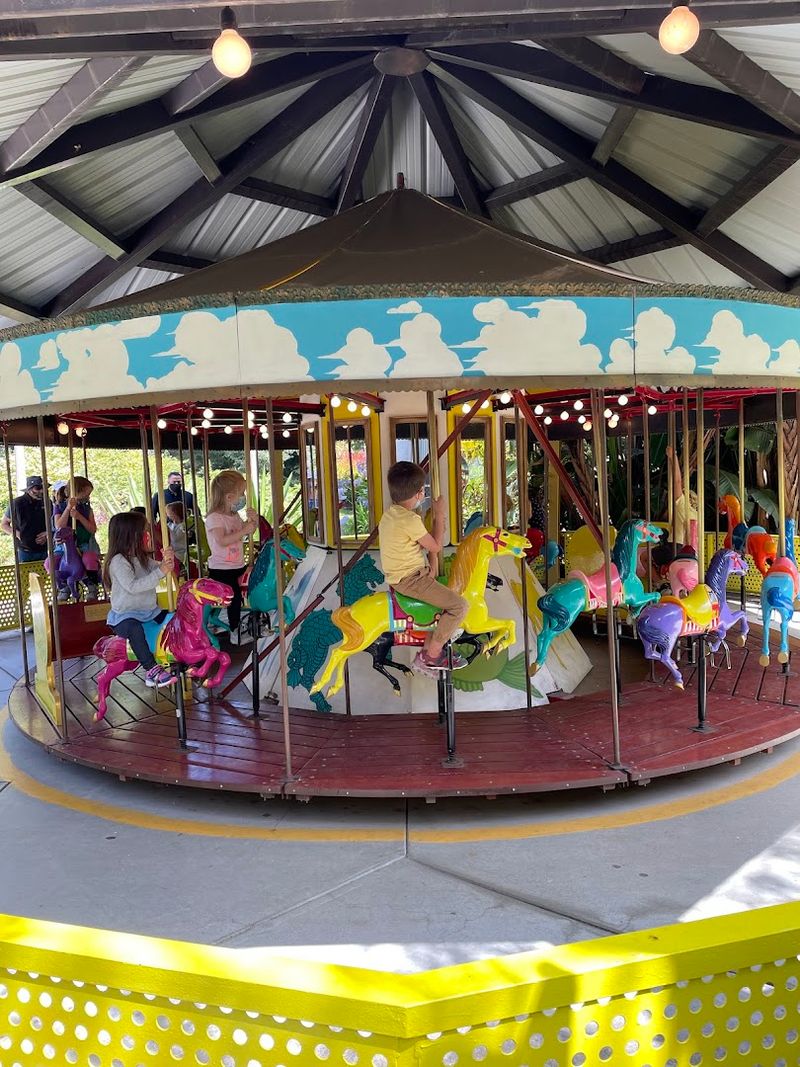
Beyond the Jolly Trolly, the park offers a small collection of gentle rides sized and paced for very young children.
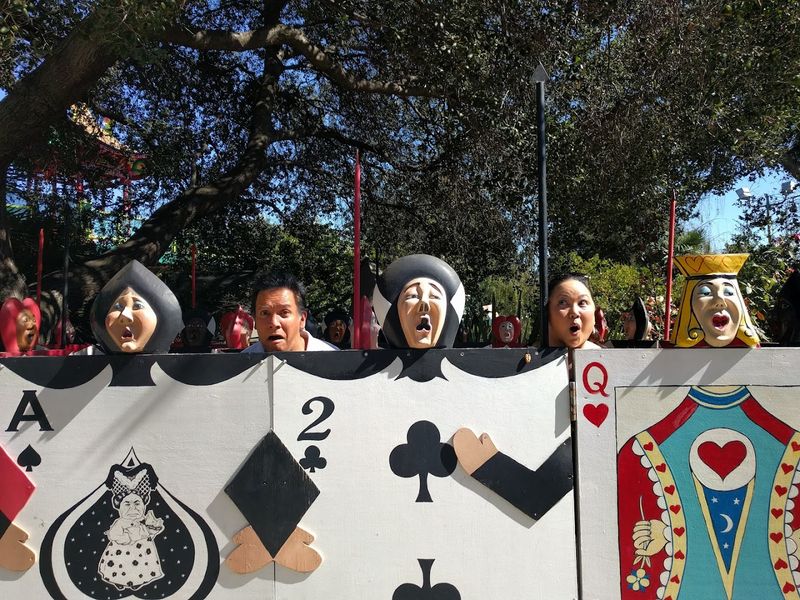
The Wonder-Go-Round is an Alice in Wonderland-themed carousel, and Anansi’s Magic Web is a mini Ferris wheel that gives kids a slightly elevated view of the surrounding storybook sets.
None of these rides are built for speed or height, which is entirely the point.
The target audience is children aged roughly two to eight, and the ride selection reflects that with calm, colorful options that feel exciting at that age without overwhelming smaller kids or nervous first-timers.
The carousel tends to be a repeat favorite, with kids often asking to go around more than once. Visiting on a quieter weekday can make that kind of repeat riding easier since wait times tend to be shorter.
The theming on each ride connects to the broader storybook atmosphere of the park, so hopping from the carousel to the Ferris wheel to the train still feels like part of the same fairy tale world rather than a jarring shift into generic amusement park territory.
For families with children at the younger end of the age range, the rides offer just enough novelty to hold attention between the walking sections.
Catch A Puppet Show
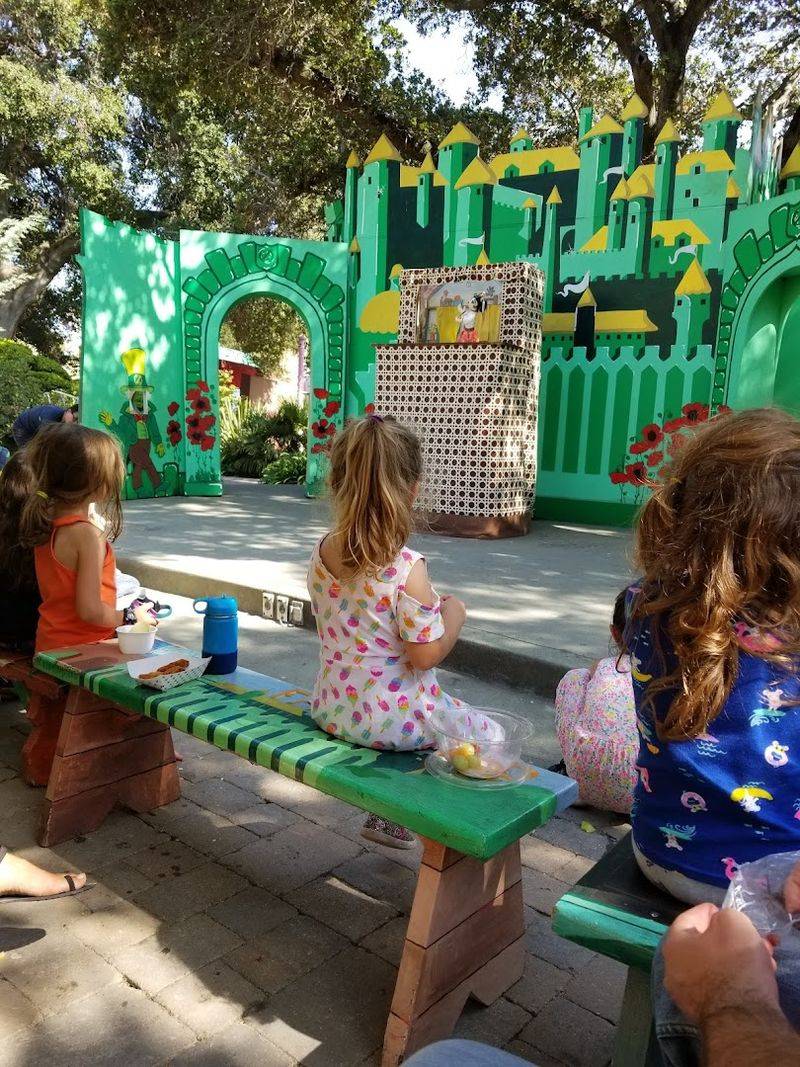
Holding a genuinely remarkable distinction, the Open Storybook Puppet Theater at Children’s Fairyland is recognized as the oldest continuously operating puppet theater in the United States.
That is not a small claim, and the theater has maintained its programming through decades of changing trends in children’s entertainment.
Productions at the theater are original works rather than strict retellings of familiar stories, which keeps the shows fresh even for families who visit the park more than once.
The performances are calibrated for young audiences, with pacing and visuals designed to hold the attention of children who might otherwise struggle to sit still.
Storytime and puppet show schedules vary by day, so checking the park’s current programming before visiting could help families plan their arrival time around a performance.
Sitting in the outdoor theater during a show also gives adults a natural rest point in the middle of what can otherwise be a physically active visit.
The combination of live performance and the park’s broader storybook atmosphere makes the theater feel like a centerpiece rather than an add-on.
For children who are already drawn to storytelling through books or film, watching puppets perform an original production in this setting tends to be one of the most memorable parts of the day.
Meet The Park Animals
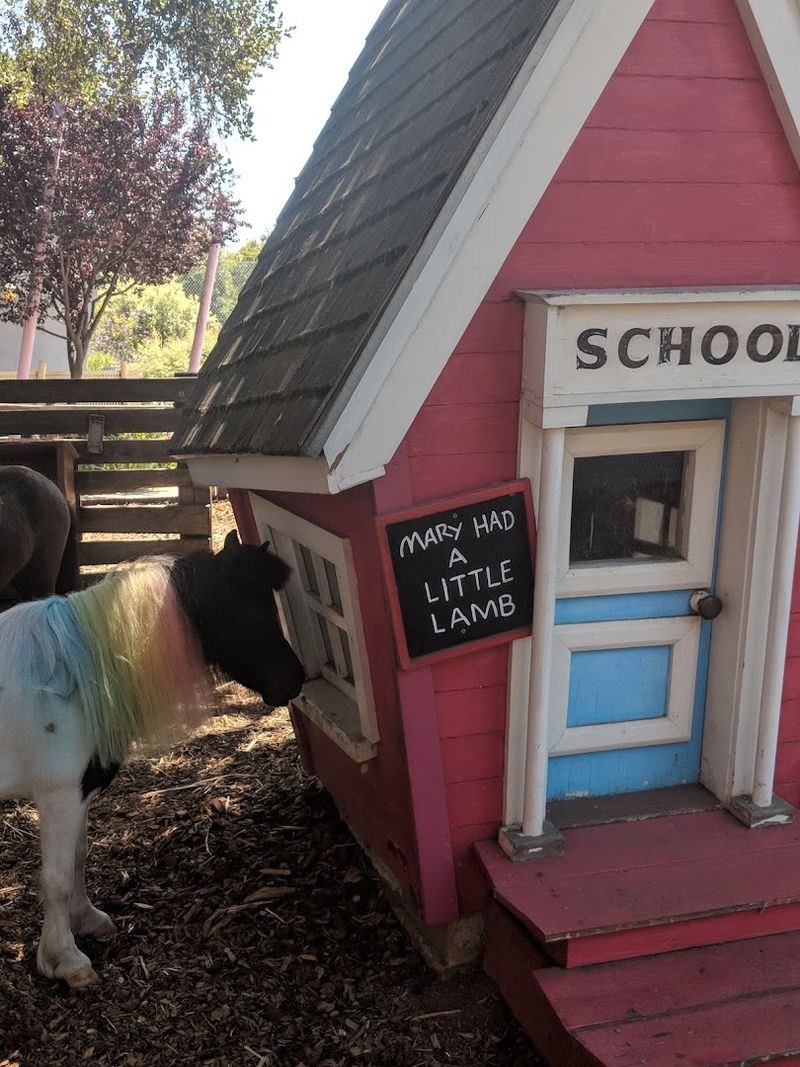
Animals have been part of the Children’s Fairyland experience since the park opened in 1950, and today more than 15 gentle animals live on the grounds.
The current residents include Nigerian dwarf goats, miniature donkeys, Baby Doll sheep, and a bearded dragon, offering a range of encounters that suit different comfort levels among young visitors.
For kids who have never been close to a live goat or a small donkey, the animal area tends to produce a very different kind of excitement than the rides or storybook sets do.
The interaction is unscripted and sensory in a way that painted structures simply cannot replicate.
The animals are chosen for their calm temperaments, which makes the area accessible even for children who might feel nervous around larger or more unpredictable animals.
Parents often find this section of the park produces some of the most spontaneous and genuine moments of the visit, including the kind of wide-eyed stillness that happens when a child and a small goat make eye contact for the first time.
The bearded dragon tends to draw particular curiosity from older kids in the group, offering a slightly different texture to the animal experience beyond the soft and fluffy options nearby.