This California Summit Trail Feels Like You’re Walking Above The Clouds
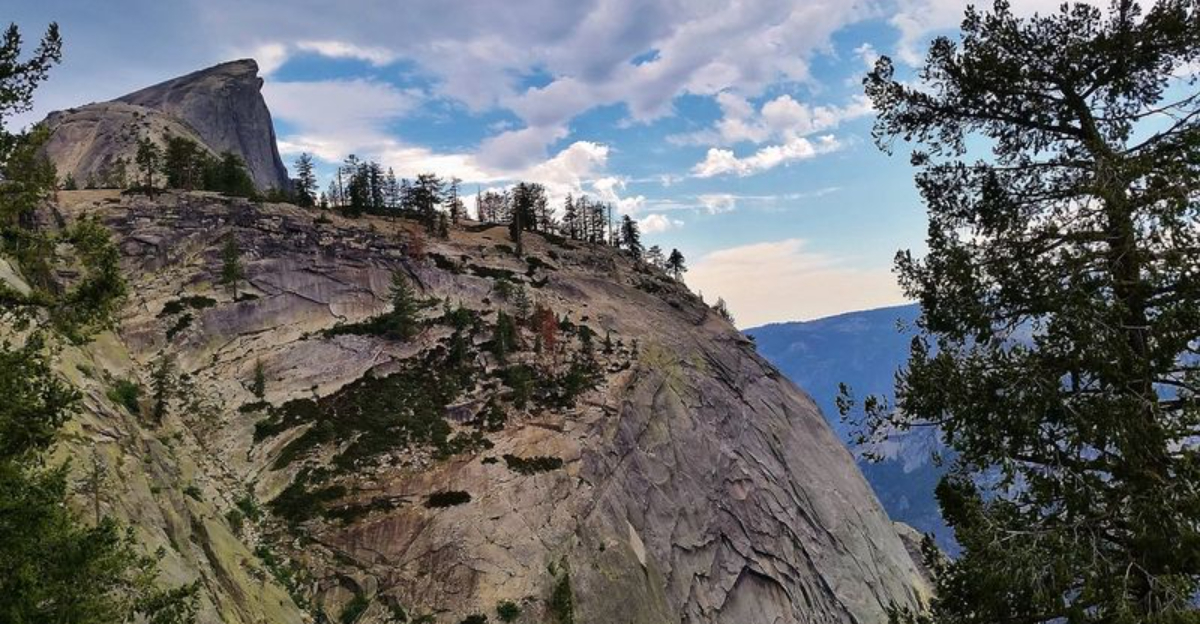
The climb feels steady at first. Switchbacks, shade, a rhythm that lets your mind drift for a while.
Then the trees begin to thin.
Light breaks through in wider stretches. The trail tilts upward just enough to shift your focus back to each step. The air changes too, quieter, thinner, like the higher you go, the less there is to distract from what’s ahead.
At what point does solid ground stop feeling so certain?
Near the top, it happens quickly. The ridge narrows. The drop sharpens. Every step feels more deliberate, more aware. Wind moves differently here, and the space around you doesn’t just open – it expands.
This is where California feels higher, sharper, and more exposed than expected.
What stays with you isn’t just the view. It’s the feeling of standing on a stretch of granite that almost disappears beneath your feet, like the mountain briefly lets you step into its highest edge and look out from its spine.
Standing At 9,926 Feet
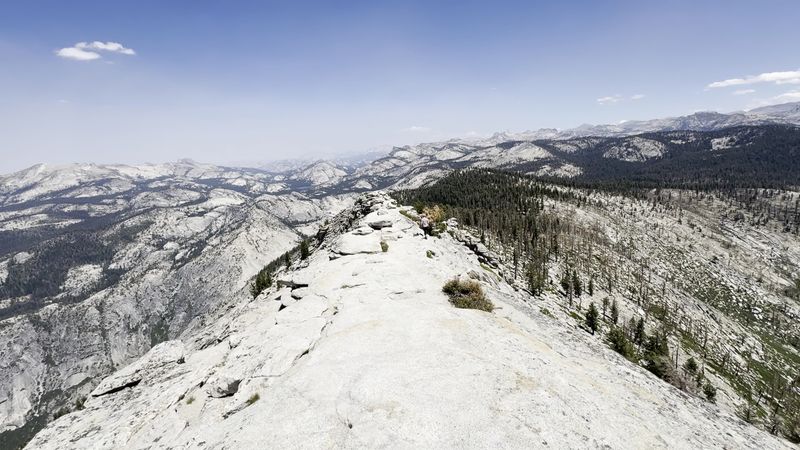
At 9,926 feet above sea level, Clouds Rest sits noticeably higher than many of Yosemite’s most famous landmarks.
For reference, Half Dome tops out at around 8,839 feet, which means Clouds Rest clears it by more than 1,000 feet.
That extra altitude changes everything about the experience at the summit.
The air feels thinner up there, and hikers who are not accustomed to elevation may notice their breathing becoming more labored than expected.
Headaches and fatigue can set in gradually, especially if the ascent is rushed.
Drinking water consistently throughout the hike rather than waiting until thirst kicks in tends to help manage altitude-related discomfort.
The prominence of Clouds Rest, which measures about 806 feet, means the summit genuinely stands apart from surrounding terrain rather than blending into a ridge.
That physical separation is part of what makes the views feel so open and unobstructed.
Hikers who make it to the top often describe a sensation of floating above the landscape, with the valley floor and distant peaks spread out in every direction like a living topographic map.
The Geological Story Behind The Ridge
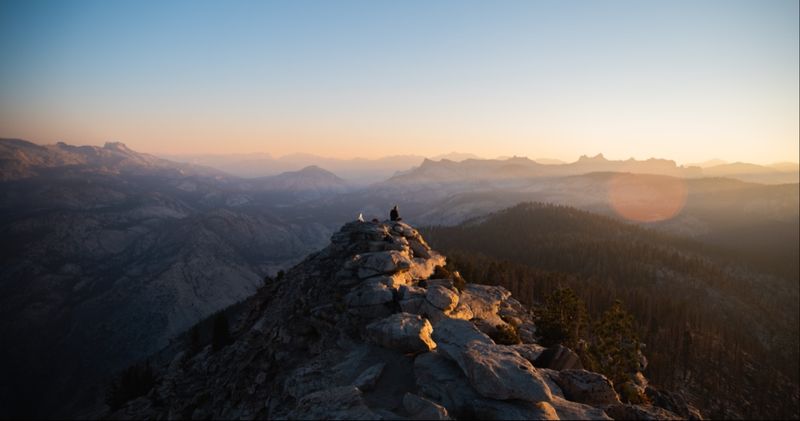
Long before any hiker ever set foot on Clouds Rest, glaciers were quietly carving it into shape.
The formation is classified as an arête, which is a sharp, narrow ridge created when glacial erosion eats away at rock from two opposing sides simultaneously.
The result is the knife-edge silhouette that makes the final approach to the summit so visually striking.
The northwest face of Clouds Rest drops approximately 5,000 feet down toward Tenaya Creek, one of the most dramatic vertical drops in the entire park.
Standing near the edge and looking down into that canyon gives a visceral sense of just how powerful glacial forces can be over thousands of years.
The polished granite surfaces visible along the trail are another reminder of that ancient ice at work.
Yosemite’s glacial history shaped nearly every feature visible from the summit, from the rounded domes to the deep U-shaped valleys below.
Clouds Rest is essentially a textbook example of glacial landform creation, preserved in stone at high altitude.
Geology enthusiasts tend to find the hike as intellectually rewarding as it is physically demanding, since every rock face tells part of that ancient story.
The Sunrise Lakes Trailhead
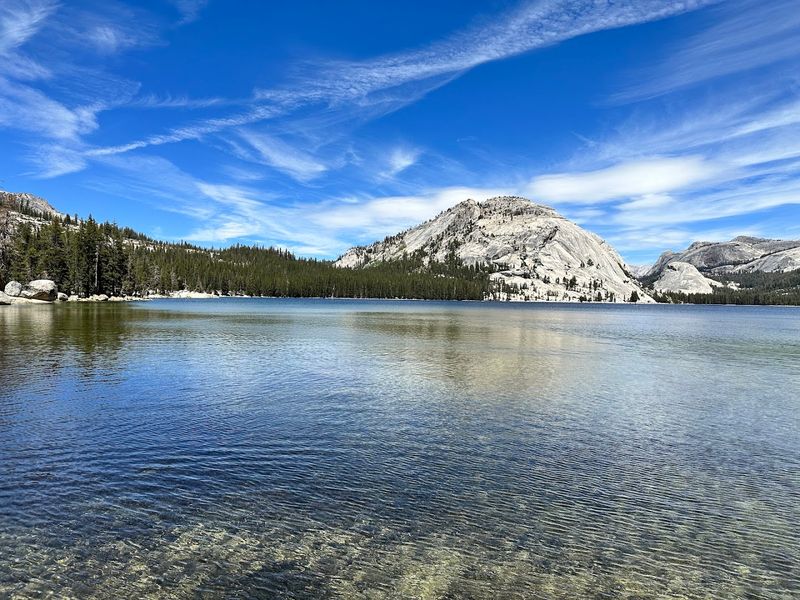
Most day hikers heading to Clouds Rest start at the Sunrise Lakes Trailhead, located along Tioga Road near Tenaya Lake.
The trailhead sits at a relatively high starting elevation, which helps reduce the total climbing effort compared to routes that begin in Yosemite Valley.
Getting there requires driving Tioga Road, which is a seasonal road that typically opens in late spring and closes in early winter depending on snowpack.
The one-way distance from this trailhead to the Clouds Rest summit is approximately 7 miles, with a total elevation gain of around 3,300 feet.
Round trip, hikers should plan for roughly 14 miles of walking, which takes most people between 7 and 10 hours depending on fitness level and pace.
Starting early in the morning is strongly recommended, both to secure parking and to avoid afternoon thunderstorms that can develop quickly at elevation.
Parking at the Sunrise Lakes Trailhead can fill up fast on weekends and holidays during peak season.
Arriving before sunrise is a practical strategy that also rewards hikers with the chance to watch the light shift across the granite as the day begins.
The trailhead itself is well-marked and relatively easy to locate using navigation apps.
Strenuous From The Start
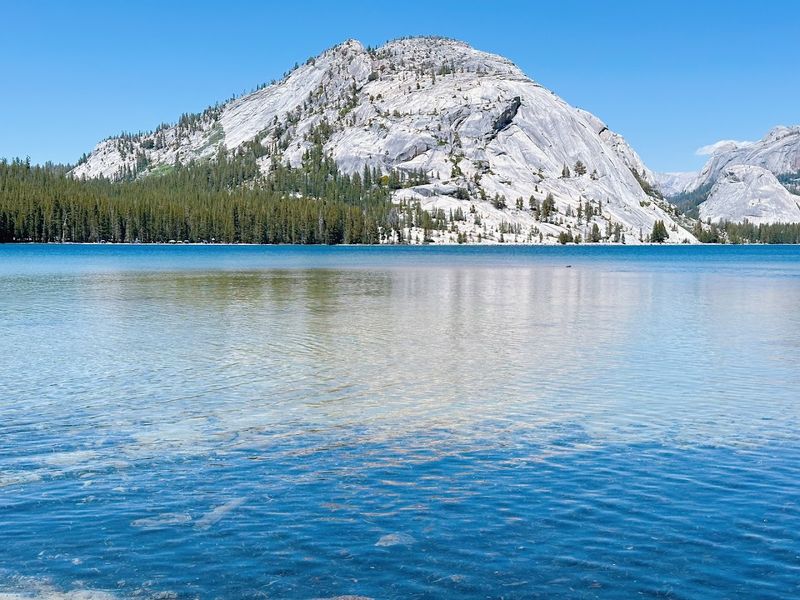
Clouds Rest carries a strenuous difficulty rating, and that label earns its place right from the first mile.
The initial 1.5-mile section of the trail climbs roughly 1,000 feet in elevation, which is a demanding warm-up even for experienced hikers.
Legs that feel fresh at the trailhead may start protesting well before the halfway point.
Rocky terrain dominates the first half of the trail, with uneven footing that demands attention on every step.
Hiking poles can be genuinely useful here, especially during the descent when tired legs and loose gravel create a higher risk of slipping.
Sturdy footwear with good ankle support tends to make a meaningful difference in both comfort and safety.
Physical fitness matters more on Clouds Rest than on many of Yosemite’s more moderate trails.
The sustained elevation gain, combined with the altitude and trail length, creates a cumulative challenge that catches some hikers off guard.
Taking breaks regularly rather than pushing through fatigue helps maintain a safer, more enjoyable pace.
Hikers with cardiovascular conditions or limited hiking experience may want to consult a doctor before attempting this route, as the demands are real and consistent throughout the full distance.
360-Degree Views That Stop You In Your Tracks
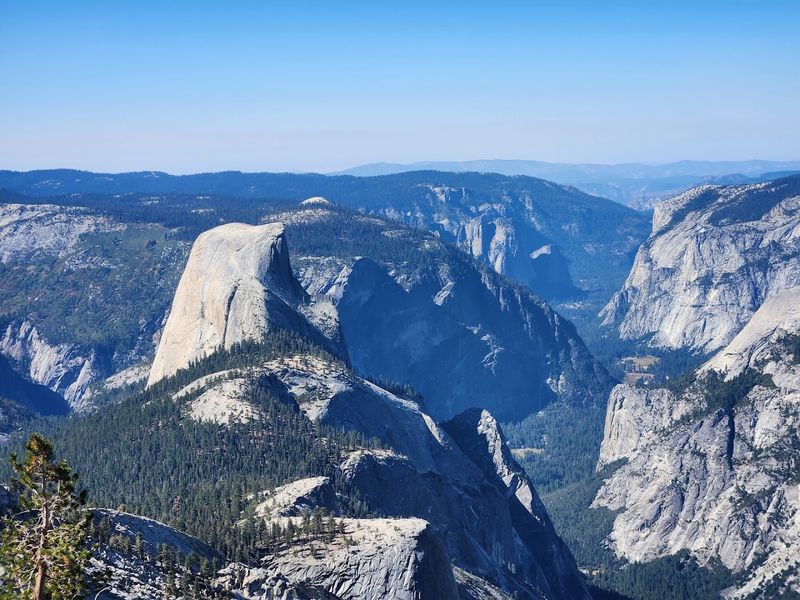
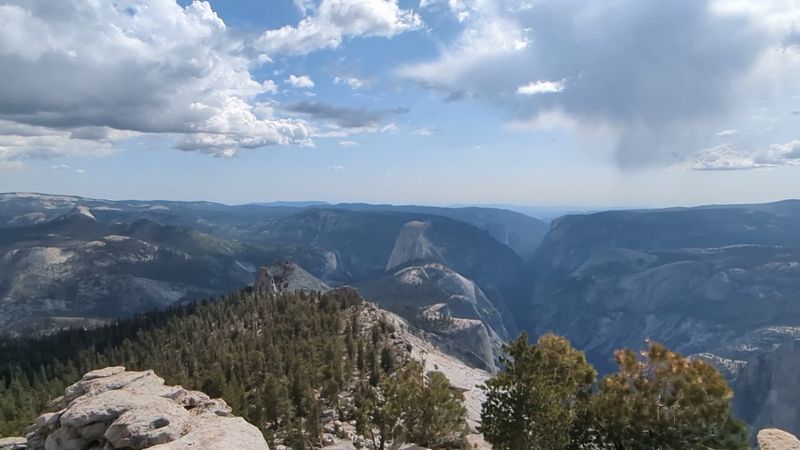
Reaching the top of Clouds Rest delivers one of the most complete panoramas available anywhere in Yosemite National Park.
Half Dome appears directly to the south, and from this vantage point it looks smaller and more approachable than it does from the valley floor.
The visual perspective shift is genuinely surprising, especially for those who have previously seen Half Dome only from below.
Tenaya Canyon stretches out to the northwest in a deep, glacially carved sweep of granite and shadow.
The Cathedral Range rises to the south and east, with its jagged spires catching light differently depending on the time of day.
On clear days, the Sierra Nevada extends in seemingly every direction, giving the summit a feeling of being suspended above the entire mountain world.
The summit itself is a broad granite slab rather than a sharp point, which means there is enough room to sit, eat, and take in the view without feeling dangerously perched.
That said, the edges drop away steeply on multiple sides, so staying aware of footing near the rim remains important.
Many hikers report that the summit view alone makes every difficult step of the ascent feel completely worth the effort.
Trail Conditions And Why Starting Early Is Smart
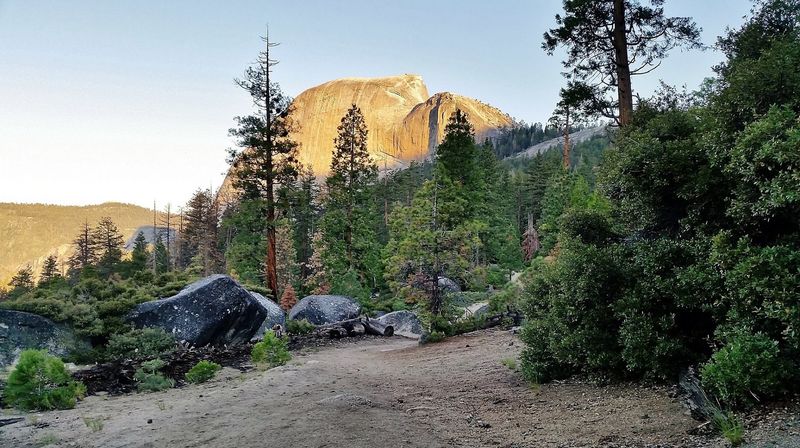
The trail to Clouds Rest is generally well-maintained, but its condition can shift considerably depending on the season and recent weather.
Snow and ice can linger on the upper sections well into June in some years, creating slippery patches that demand careful footing.
Checking current trail conditions through the National Park Service before heading out is a practical step that can prevent unpleasant surprises.
Afternoon thunderstorms are a real concern in the Sierra Nevada during summer months.
The exposed granite ridge near the summit offers no shelter, and lightning strikes at elevation are a genuine hazard.
Hikers who start at or before dawn can often reach the summit and begin descending before storm clouds build in the early afternoon.
Beyond weather, starting early also means cooler temperatures during the hardest climbing sections and a quieter trail experience overall.
Weekend crowds on popular trails in Yosemite can be significant, and the upper sections of Clouds Rest can feel noticeably more peaceful when reached before midday.
Packing a light rain layer even on clear mornings is a sensible precaution, since mountain weather in California’s high country can shift faster than forecasts sometimes predict.
The Valley Route: An Alternate Path From Happy Isles
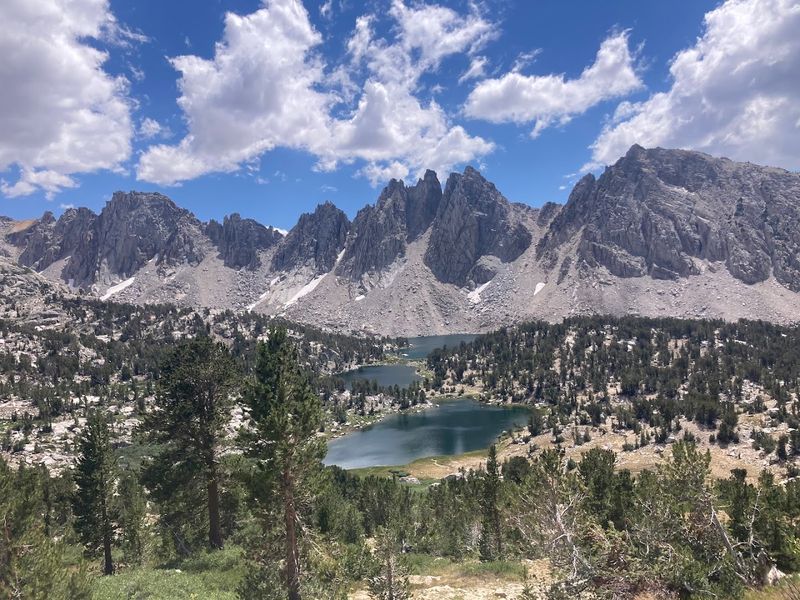
Not every hiker begins the Clouds Rest journey from Tioga Road.
An alternate route starts at Happy Isles in Yosemite Valley, following the John Muir Trail before branching off toward the summit.
The added distance makes this version approximately 2.5 miles longer each way compared to the Sunrise Lakes Trailhead approach, pushing the round-trip total closer to 22 miles for some hikers.
The valley-start route passes through some of Yosemite’s most iconic lower terrain, including sections near Nevada Falls and Little Yosemite Valley.
Water sources along this route tend to be more plentiful in the lower sections, though carrying a filter or purification tablets is still advisable.
The elevation gain from the valley floor is considerably greater than from the Tioga Road trailhead, making this option significantly more demanding in terms of total climbing.
Some hikers choose the valley route specifically because they want to experience the contrast between the lush, forested lower elevations and the stark granite of the upper trail.
The transition from dense forest to open ridgeline happens gradually and creates a satisfying sense of progression throughout the day.
Hikers attempting this longer version should plan for a very early start and consider whether a wilderness permit for overnight camping might make the experience more manageable.
How Clouds Rest Got Its Name
The name Clouds Rest has a specific origin rooted in the early recorded history of Yosemite.
Lafayette H.
Bunnell, a member of the Mariposa Battalion, is credited with giving the summit its name after his party observed storm clouds appearing to settle and rest directly on the mountain.
The battalion encountered the peak in 1851 during one of the first documented entries by non-indigenous people into Yosemite Valley.
Bunnell noted that the group had been forced to turn back toward camp to avoid an incoming snowstorm, and as they retreated they watched the clouds descend onto the summit as if settling in for the night.
The image was vivid enough that the name stuck, and it has remained unchanged ever since.
That kind of atmospheric moment, clouds draped across a granite peak in the fading light, is still something hikers witness today under the right conditions.
The naming of Yosemite’s landmarks by early explorers reflects a broader pattern of replacing indigenous place names with English descriptions, a history that the park has begun acknowledging more openly in recent years.
The original indigenous inhabitants of this region, the Ahwahnechee people, had their own deep relationship with this landscape long before any formal naming occurred.
Wildlife Along The Trail
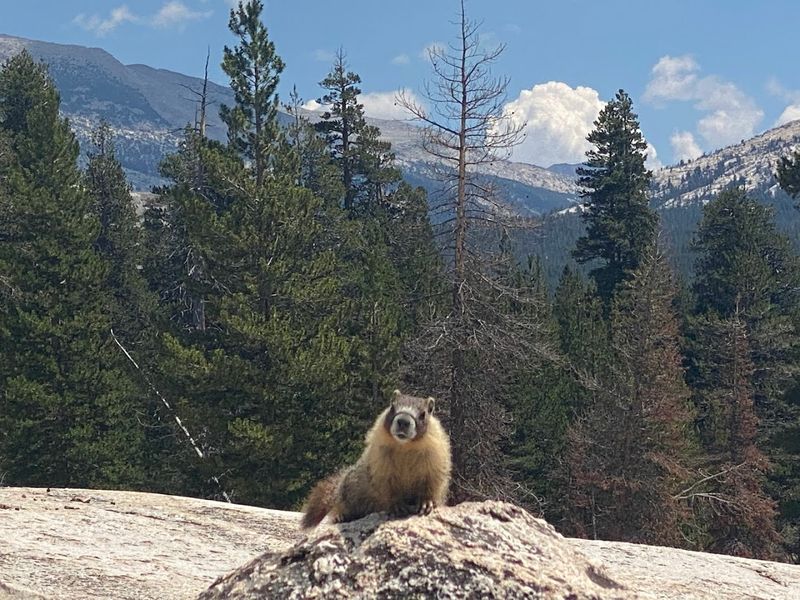
Sharing the trail with wildlife is part of what makes hiking in Yosemite feel genuinely different from a treadmill or a gym staircase.
Mule deer are among the most commonly spotted animals along the Clouds Rest route, often seen grazing near the tree line in the early morning hours before hikers arrive in large numbers.
Their calm, unhurried presence near the trail can be a memorable part of the journey.
Black bears also inhabit the area, and while encounters are not guaranteed, they are a real possibility particularly in the lower forested sections of the trail.
Storing food properly in bear canisters or bear boxes and never leaving snacks unattended are basic practices that protect both hikers and the animals themselves.
Bears that associate humans with food can become habituated, which creates problems that ultimately harm the wildlife.
Bird life along the trail adds a layer of sound and movement to the hike that is easy to overlook but genuinely enriching.
Clark’s nutcrackers, Steller’s jays, and various mountain songbirds can be heard and spotted throughout the forested sections.
Mosquitoes also make their presence known during summer months, particularly in the lower and mid-elevation sections of the trail, so bringing insect repellent is a practical necessity rather than an optional extra.
Seasonal Access And Tioga Road Timing
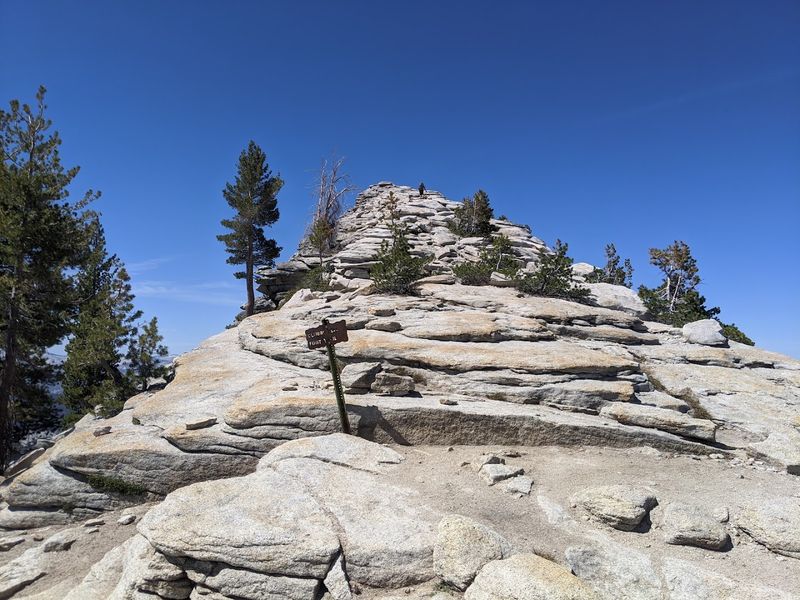
Access to the Clouds Rest trailhead depends almost entirely on the opening of Tioga Road, which runs through the high country of Yosemite at elevations that make winter travel impossible.
The road typically opens sometime between late May and mid-June, depending on how much snow fell the previous winter and how quickly it melts.
Some years the opening comes earlier, while heavy snow years can push it into late June.
The prime hiking window generally runs from July through September, when trail conditions are most stable and the weather is most predictable.
October can still offer excellent hiking with fewer crowds and spectacular fall light, though temperatures drop quickly and early snowstorms become a possibility.
Carrying layers and checking the forecast before any late-season hike is especially important.
Winter access to Clouds Rest is essentially not viable for most hikers due to deep snow, closed roads, and avalanche risk on exposed slopes.
Early spring hikers who attempt the trail before conditions fully clear may encounter significant postholing through soft snow, which dramatically slows progress and increases fatigue.
Planning a visit within the reliable summer window offers the best combination of safety, trail quality, and visibility from the summit.
Backcountry Camping Near Clouds Rest
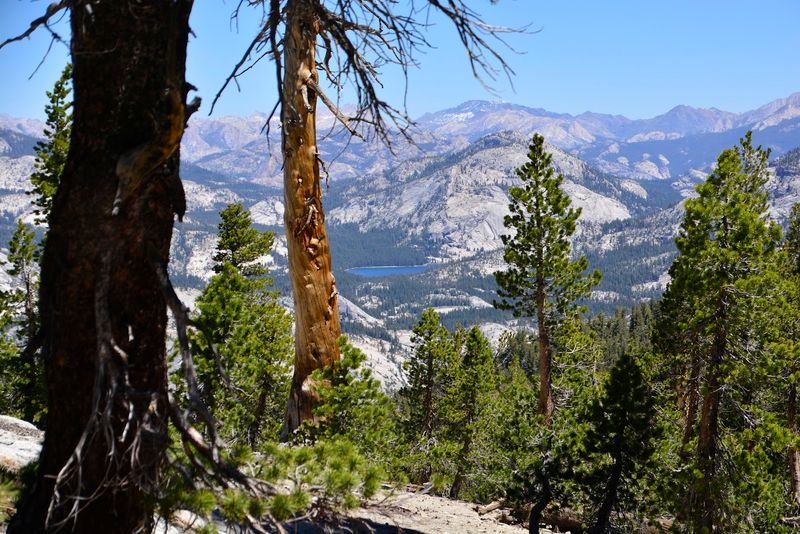
Spending a night in the backcountry near Clouds Rest transforms the experience from a long day hike into something more immersive and quietly extraordinary.
There are no designated campsites along the trail itself, but dispersed backcountry camping is permitted in appropriate areas with a valid wilderness permit.
Permits are required for all overnight stays in Yosemite’s backcountry and must be obtained in advance through the National Park Service reservation system.
Demand for wilderness permits in Yosemite is high, particularly during peak summer months, so planning ahead by several weeks or even months is a practical necessity.
A portion of permits are held for walk-up availability at trailhead permit stations the morning before the intended departure date, but competition for those spots can be intense.
Having a flexible itinerary increases the chances of securing a permit through either the reservation or walk-up system.
Leave No Trace principles apply strictly in the Yosemite backcountry, covering everything from campsite selection to waste disposal and food storage.
Camping at least 100 feet from water sources and staying on durable surfaces helps minimize impact on a landscape that sees significant foot traffic.
The reward for following these practices is a night under a sky full of stars, far from valley crowds, with the granite ridge of Clouds Rest visible against the darkness above.
Safety On The Summit Ridge
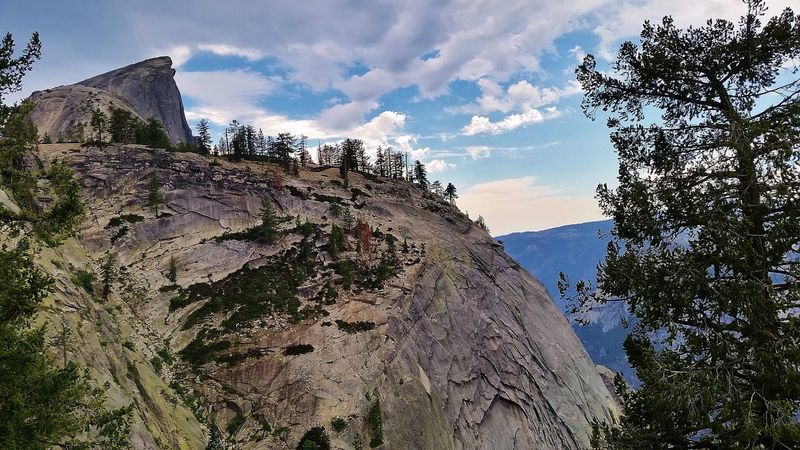
The final stretch of the Clouds Rest hike is the part that tends to linger in memory long after sore muscles have recovered.
The summit ridge narrows to a knife-edge spine of granite with steep drop-offs on both sides, and while the path is walkable without technical climbing gear, it demands full attention and a steady head for heights.
Some hikers find this section exhilarating while others feel uncomfortable enough to stop short of the very top, which is a completely valid and safe choice.
Sudden weather changes pose one of the most serious safety risks on the exposed upper ridge.
Lightning is particularly dangerous on open granite above the tree line, and the warning signs, darkening skies, distant thunder, and a metallic smell in the air, can arrive with little advance notice.
Turning back immediately when conditions begin to shift is always the right decision, regardless of how close the summit feels.
Carrying a headlamp is strongly recommended even for day hikers, since descents can take longer than expected and darkness falls quickly in mountain terrain.
Bringing more water than seems necessary, packing high-calorie snacks, and telling someone the planned itinerary before departing are basic safety steps that experienced hikers treat as non-negotiable.
Preparation is the difference between a challenging adventure and a dangerous situation on a trail this demanding.