This California Town Was Once A Tahoe Pit Stop, But Now It Is Becoming A Destination Of Its Own

For years, plenty of drivers treated this place like punctuation.
Stop for coffee. Stretch your legs. Get back on the road toward Tahoe. That habit is getting harder to justify.
This California foothill town has enough personality, food, history, and scenery to make the old “quick stop” routine feel increasingly outdated.
Give it a proper afternoon and the shift becomes obvious.
Historic streets invite a slower wander, local restaurants give you reasons to stay hungry, and the surrounding landscape makes it easy to stretch the visit beyond downtown.
Have you ever realized halfway through a road trip that the supposed pit stop was actually the better destination?
That is the kind of surprise happening here.
The Tahoe Pit Stop Is Becoming The Main Event

For decades the routine looked the same: pull off the freeway, fill the tank, grab coffee, and keep climbing toward the lake. Travelers rarely gave the foothill exit a second thought.
Recent 2026 coverage tells a different story, pointing to a town that increasingly gives people reasons to stay put for a night or a weekend.
Geography helps explain the shift. Sitting about 45 minutes from Sacramento and roughly 90 minutes from Lake Tahoe, the location works as a launching point or as the whole trip.
The change has not come from one big attraction. Instead it comes from layers stacking up, a growing food and drink scene, easy access to river canyons, and historic streets that remain in daily use.
Anyone planning a first visit should treat it less like a rest break and more like a small town with a full day of options. Weekdays feel calmer, while Saturdays bring more foot traffic through the historic district.
Parking near the older commercial blocks can fill up during busy weekend mornings, so arriving earlier tends to make the walking portion of a visit easier.
The town remains compact enough that most of the central sights sit within a short stroll of one another.
The Food Scene Is Getting Serious Attention

Something changed in the kitchens here before it changed anywhere else. The dining landscape has become the clearest signal of the town’s larger transformation.
Small independently owned businesses drive most of the momentum.
Seasonality shapes the menus, and the local movement gets described as exploratory and farm to fork, with regional ingredients doing much of the heavy lifting.
Both the historic Old Town district and the busier Downtown blocks hold a mix of newer destination restaurants alongside longtime cafés and bakeries that have fed locals for years.
Walking between the two areas takes only a few minutes, which makes grazing across a single afternoon realistic.
Reservations are worth checking for the smaller dining rooms, especially on weekend evenings when seating is limited. Midweek visits usually bring a quieter room and a slower service rhythm.
Portions and pricing vary widely between casual counter spots and full sit-down establishments, so scanning menus posted at the door helps set expectations before committing.
Farm-focused cooking also means menus shift with the growing calendar, and dishes available in spring may disappear by autumn. Flexibility pays off here.
For travelers used to treating the town as a gas station stop, the restaurant scene alone now justifies rearranging a drive to arrive hungry rather than already fed.
A James Beard Nod Put Auburn On The Culinary Map

National recognition arrived when the chefs behind Restaurant Josephine were named 2026 James Beard Award semifinalists for Best Chef: California.
That kind of nod does not usually land in a town of under 14,000 people.
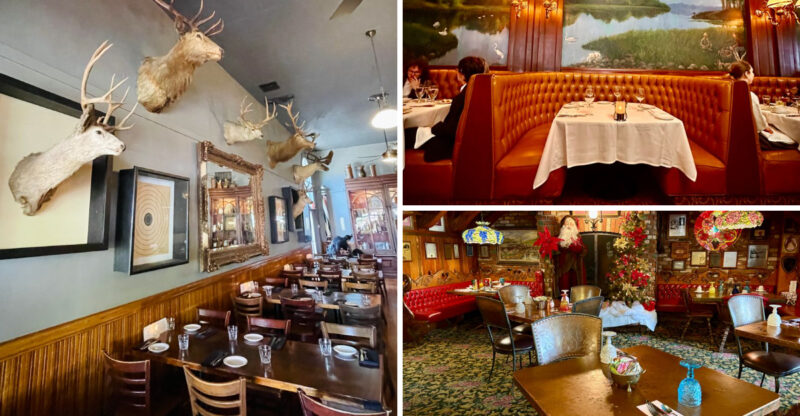
Restaurant Josephine operates at 1226 Lincoln Way, Auburn, CA 95603, inside the historic Odd Fellows No. 7 Lodge.
The brick building dates to 1894, and the old bones give the room a settled, Old World feel rather than a polished new-build sheen.
Cooking here leans toward refined but approachable French bistro fare. The chefs and co-owners draw on Eastern European family heritage along with produce from their own Four Tines Farm in Auburn.
Menus change frequently because they follow what local producers have available, so repeat visits rarely look identical.
The dining room reads romantic and colorful, with a cozy bar area offering additional seating for smaller parties.
Given the size of the space, booking ahead is sensible, particularly on weekends. Solo diners or couples may find the bar seats easier to secure on short notice.
Noise levels stay conversational rather than loud, which suits longer meals. Arriving a few minutes early allows time to look at the building itself, since the 19th-century lodge architecture is part of the experience.
The 1898 Courthouse Towers Above Downtown

Few small towns have a landmark this commanding. The stately 1898 Placer County Courthouse sits on a hill overlooking the surrounding streets, visible from multiple approaches into town.
Located at 101 Maple Street, Auburn, CA 95603, the building still functions as a courthouse while dedicating its first floor to the Placer County Museum.
The dual role means visitors share the space with people conducting county business.
The structure contributes to the Old Auburn Historic District and appears on the National Register of Historic Places. Its architectural grandeur stands out against the lower brick storefronts nearby.
Because it remains an operating government building, hours for the museum portion differ from general courthouse access, and checking current schedules before arriving prevents a wasted trip.
The hilltop position rewards a short walk up from the older commercial blocks. Views back across the rooftops help explain how the town developed around its county seat.
Photography from the exterior grounds is straightforward, and the building photographs particularly well when lit in the evening.
Anyone building an itinerary can treat the courthouse as a natural anchor point between the historic district and the museum experience, since the two overlap in the same structure.
The combination adds substance to a visit that might otherwise revolve entirely around eating.
A Huge Recreation Area Begins Right Outside Town

Step past the last row of buildings and the landscape drops away into canyon country. Auburn State Recreation Area stretches along roughly 40 miles of the North and Middle Forks of the American River.
More than 900,000 visitors come through annually, according to California State Parks. That volume says a lot about how central the outdoors is to the local identity.
Activities cover a wide range: hiking, river access, boating, fishing, camping, mountain biking, gold panning, horseback riding, and off-highway motorcycle riding. Whitewater recreation draws people to both forks of the river.
Summer heat in the canyon can be intense, and shade is inconsistent on many routes. Carrying more water than seems necessary is a habit experienced visitors adopt quickly.
Trail conditions shift with the seasons, and higher river flows in spring change what is safe near the water. Checking current park conditions before heading down is a basic precaution.
Cell service can be spotty in the deeper canyon sections, so downloading maps in advance helps.
The proximity is what makes the area unusual.
A visitor can finish a bakery breakfast in the historic district and be standing beside the river within a short drive, which is exactly the combination that turns a quick stop into a full day.
Lake Clementine Adds A Completely Different Side Of Auburn

Turquoise water between steep canyon walls looks nothing like the brick streets a few miles away. Lake Clementine sits on the North Fork of the American River within Auburn State Recreation Area.
The reservoir stretches roughly 3.5 miles and offers clear blue water framed by dramatic canyon scenery. Paddling in canoes or kayaks is a common way to see it from the water.
Hiking options include the Lake Clementine Trail, which gives access without needing a boat. Swimming spots such as Clark’s Pool and the Upper Lake beach draw warm-weather visitors.
Seasonal rules matter here. The Upper Lake area typically operates from April 15 to October 14 and does not permit motorized boats, which keeps that stretch noticeably quieter.
The Lower Lake stays accessible year-round and does allow motorized boating and water skiing, so the two sections feel quite different depending on where a visit lands.
Parking areas can fill on hot summer weekends, and arriving early tends to solve that problem.
The area remains actively managed within Auburn State Recreation Area in 2026, though access points and seasonal dates can change, so confirming current status before driving out is sensible.
Turning a downtown afternoon into an outdoor weekend takes very little effort when water like this sits this close.
There Are Trails Almost Everywhere You Look

Locals here talk about trail conditions the way people elsewhere talk about traffic. Position beside the American River canyon makes outdoor recreation a daily habit rather than a special outing.
Over 100 miles of trails wind through the steep canyons and along the North and Middle Forks of the river. Hiking, mountain biking, and horseback riding all share the network.
Routes range widely in difficulty, from gentle riverside stretches to punishing climbs out of the canyon. Reading a trail description before setting out prevents an unpleasant surprise on the return leg.
A significant portion of the Western States Trail passes through the recreation area, running 100 miles from Lake Tahoe to Auburn. Walking even a small section connects a visit to that larger history.
Year-round access is possible, though conditions vary. Summer brings heat and dust while winter can bring mud and higher water.
Trailheads differ in parking capacity, and some require driving narrow canyon roads, so allowing extra travel time is realistic.
Sharing trails with horses and cyclists calls for basic etiquette, including stepping aside for equestrians and announcing a pass on foot or bike.
The sheer variety means a visitor can pick a 30-minute stroll or an all-day effort without leaving the area, which is rare for a town this size.
Auburn Calls Itself The Endurance Capital Of The World

Not many towns claim a title like that, and fewer can back it up. The city formally adopted the nickname Endurance Capital of the World in 2003.
The designation grew out of genuine athletic history rather than a marketing campaign. Legendary events anchor the reputation, including the Western States 100-Mile Endurance Run and the historic Tevis Cup.
Both competitions finish in the area after crossing severe terrain from the high country, and the surrounding canyons provide exactly the punishing conditions those races demand.
For visitors who are not ultramarathoners, the endurance culture still shapes the town’s rhythm. Trail runners appear on paths early in the morning, and gear-focused conversations are common around town.
Race weekends bring noticeably more activity, along with fuller lodging and busier restaurants, so anyone hoping for a quiet visit may want to check the event calendar first.
The flip side is that watching a finish line unfold can be genuinely moving, and spectators are part of the tradition.
Casual walkers can sample sections of the same terrain without committing to anything extreme, since many trails allow short out-and-back routes.
The athletic identity gives the town a distinct personality that separates it from other Gold Rush communities along the highway corridor toward the Sierra Nevada.
The Best Part Is How Much Fits Into One Trip

Variety within a small radius is the real advantage. A single visit can move from Gold Rush streets to a river canyon in a matter of minutes.
Morning might mean pastries and a walk past 1890s brick facades. Midday could bring a museum with a panning stream or a courthouse built in 1898.
Afternoon opens up entirely different terrain, with trails, a reservoir, and a bridge deck hundreds of feet above the water all within reach.
The combination of preserved history, a rising food reputation, and immediate outdoor access is what separates this place from an ordinary historic highway stop.
Pacing matters when building an itinerary. Trying to compress everything into four hours leads to a rushed feeling, while allowing a full day or an overnight lets each part breathe.
Comfortable shoes handle both cobblestone sidewalks and dirt trails, which simplifies packing considerably.
Seasons change the balance. Spring and fall generally offer the most comfortable conditions for combining walking downtown with time in the canyon, while summer favors early starts.
For anyone who has driven past the exit dozens of times without stopping, the shift in how Auburn, California presents itself is worth checking firsthand.