This 1,300-Acre California Wetland Reserve In Huntington Beach Draws Birdwatchers And Photographers Every Spring
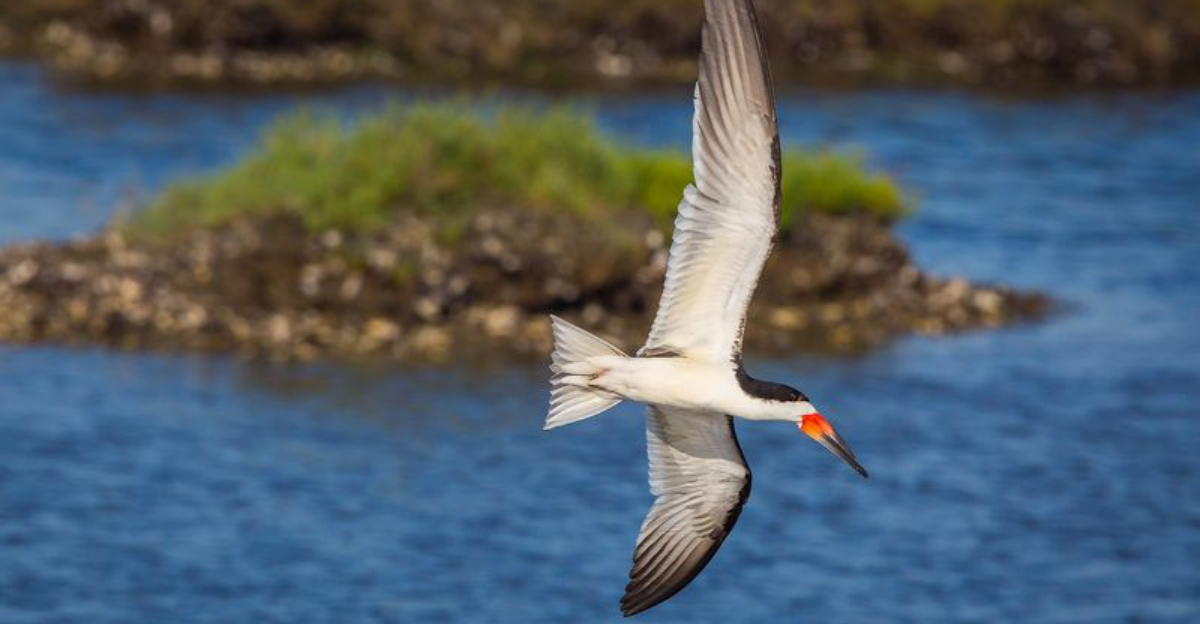
Along the edge of the western sea, where the land yields softly to wind and tide, there lies a quiet place that does not call out for attention, yet draws those who wander near.
There, the marsh breathes with its own ancient rhythm, shaped by water, sky, and the passing of wings unseen until they rise.
This place stretches wide across the California coast, a haven of still waters and shifting light.
In the turning of spring, it stirs to life in fuller measure, as flocks arrive from distant paths and settle among reeds and open flats, filling the air with motion and quiet song.
Footbridges cross the wetlands like narrow roads between worlds, where watchers pause and time seems to loosen its hold.
Wildflowers bloom in scattered color, and the breeze carries the scent of salt and earth together.
Here, nothing hurries. And yet, much is always happening.
A Wetland That Covers 1,300 Acres Of Coastal Land
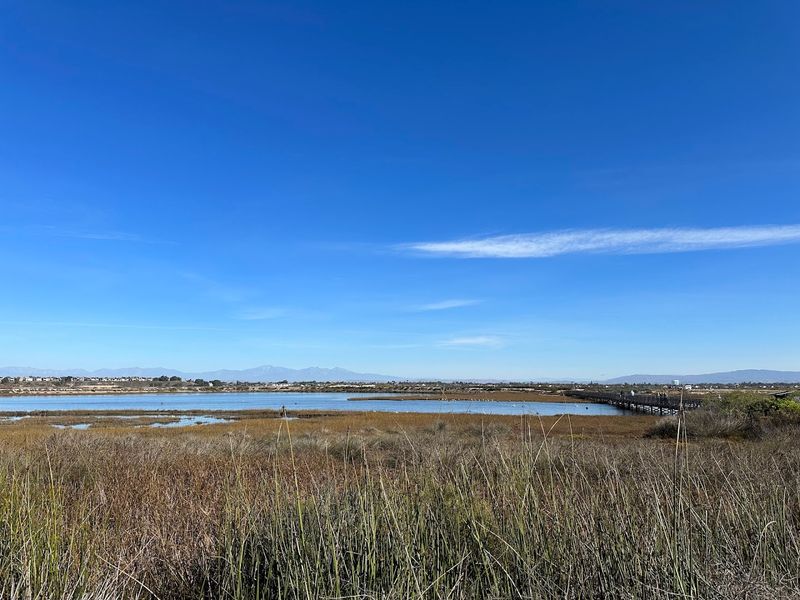
Not many places along the Southern California coast can offer this kind of scale.
Bolsa Chica Ecological Reserve stretches across approximately 1,300 acres of protected coastal land in Huntington Beach, sitting just minutes from the Pacific Ocean and the busy shores that surround it.
The sheer size of the reserve is part of what makes it so valuable.
Within those acres, visitors encounter open water, mudflats, salt marshes, coastal dunes, and freshwater areas, all existing side by side in a mosaic of interconnected habitats.
Each zone supports different species and serves a different ecological function. Walking the trails here gives a real sense of just how vast and varied the landscape is.
The flat terrain makes distances feel manageable, but the scenery shifts noticeably from one section to the next, keeping the experience interesting throughout.
Bringing water and a hat is strongly recommended since the open landscape offers very little natural shade along most of the trail system.
Over 200 Bird Species Call This Reserve Home
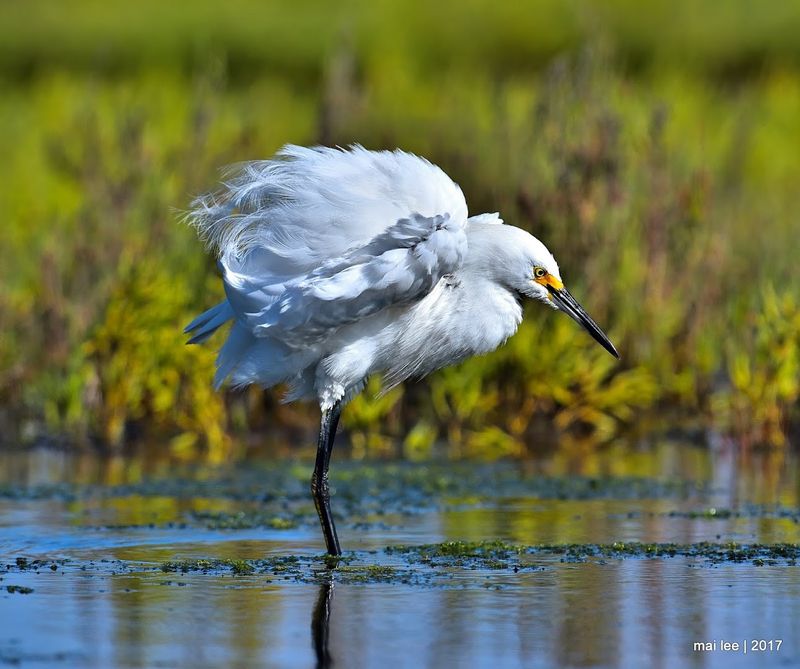
Few wetland destinations along the West Coast can match the bird diversity found here.
More than 200 bird species have been recorded at Bolsa Chica, making it one of the most productive birdwatching locations in all of Southern California.
The variety is genuinely striking. Shorebirds wade through shallow mudflats, raptors circle overhead, and seabirds nest on small protected islands within the reserve.
During spring migration, the population swells as species traveling along the Pacific Flyway stop to rest and feed before continuing their journeys northward.
Birdwatchers often position themselves on the footbridges that cross the wetland channels, where the birds have grown accustomed to human presence and tend to allow closer observation than in more remote locations.
A pair of binoculars makes a noticeable difference, especially when trying to identify smaller shorebirds at a distance.
Early morning visits typically offer the most activity, with birds feeding actively before midday heat sets in along the coast.
Rare And Endangered Species Find Shelter Here
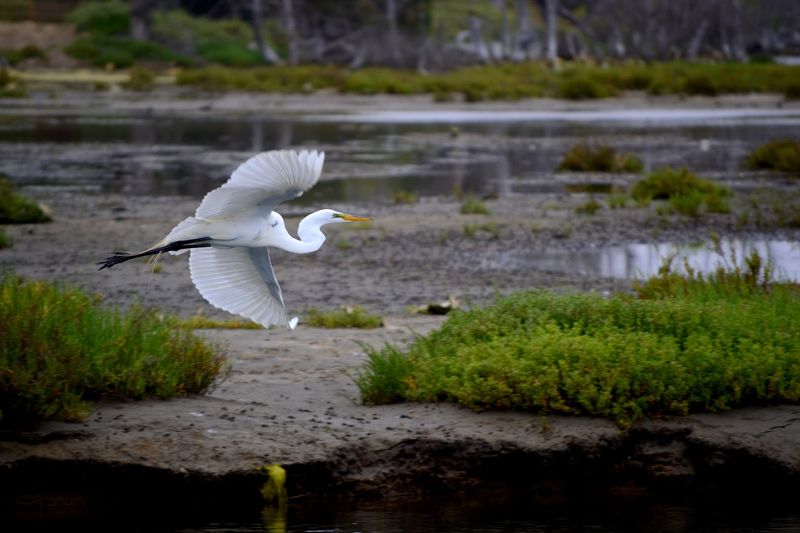
Beyond the sheer number of species present, what truly sets Bolsa Chica apart is the presence of wildlife that has disappeared from most of the California coast.
The reserve shelters 18 rare species, including the California brown pelican, Belding’s savannah sparrow, and the silvery legless lizard.
Protecting these animals requires careful management of the habitat.
Certain areas within the reserve are closed to visitors during nesting season to reduce disturbance to sensitive populations.
Signage throughout the trails explains which species are present and why certain zones are restricted at particular times of year.
Spotting a rare or endangered animal in the wild carries a different kind of weight than seeing one in a zoo or nature documentary.
At Bolsa Chica, those encounters happen naturally and quietly, often without any fanfare.
A brown pelican gliding low over the water or a snowy plover perched in the distance can stop a walk entirely, and that sense of stillness tends to stay with visitors long after they leave the reserve.
The Land Has Been Used For Thousands Of Years
Long before the reserve carried its current name or boundaries, people were living and working along this stretch of coastline.
Archaeological evidence suggests that Native Americans inhabited the Bolsa Chica area as far back as 9,000 years ago, making it one of the oldest continuously significant landscapes in Southern California.
The wetlands provided rich resources for those early communities, including fish, birds, and plant materials that supported daily life.
The natural productivity of coastal wetland ecosystems made them essential gathering places for indigenous groups throughout the region.
Understanding that history adds a meaningful layer to a visit here.
The trails cross land that has witnessed thousands of years of human presence, long before highways, beach towns, or ecological reserves existed.
Interpretive panels along the route occasionally reference the broader natural and cultural history of the area, offering context that transforms a simple walk into something more connected.
Pausing at a viewpoint and considering the depth of time embedded in the landscape tends to shift how a visitor experiences the reserve altogether.
Five Miles Of Public Trails Wind Through The Reserve
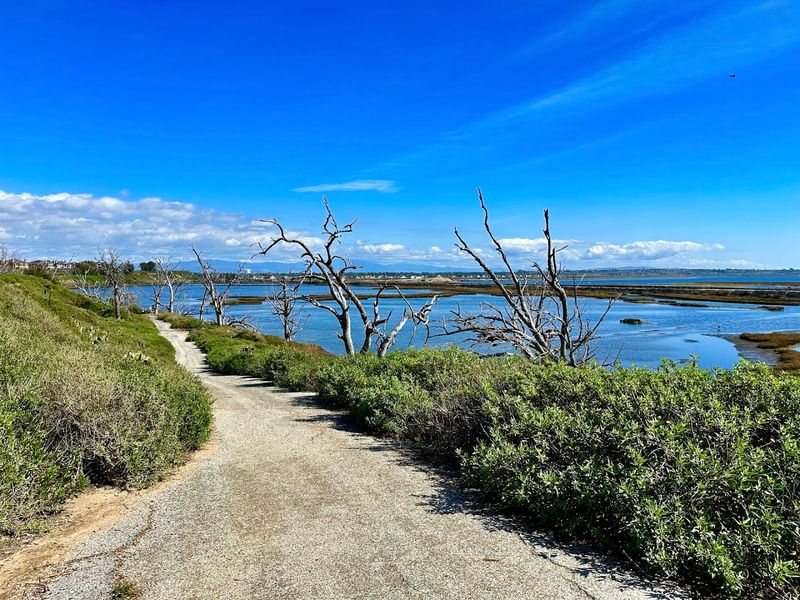
Getting out into the reserve is straightforward and accessible for most fitness levels.
Approximately five miles of public hiking trails wind through the wetlands, connecting different habitat zones and offering multiple vantage points along the way.
The paths are generally flat and well-maintained, which makes them suitable for walkers of various ages and abilities.
Strollers have been pushed through sections of the trail without major difficulty, and the even terrain keeps the experience comfortable even on longer outings.
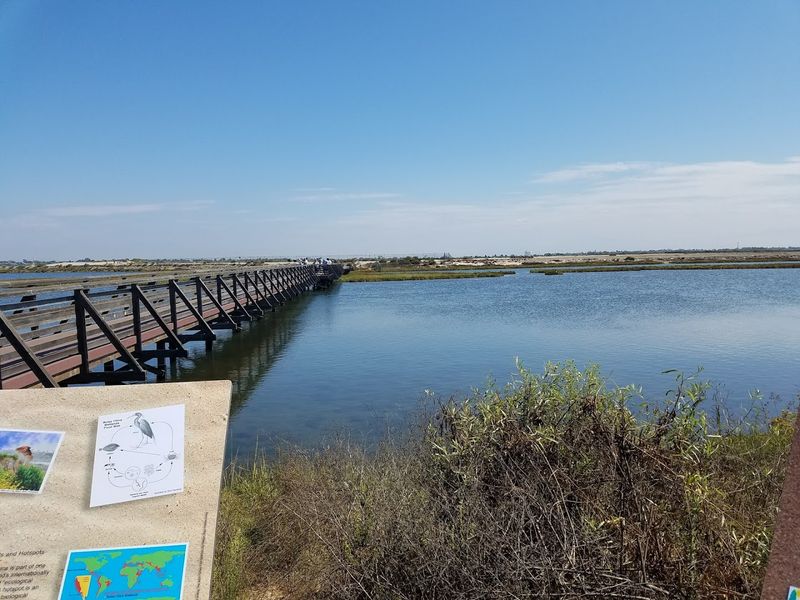
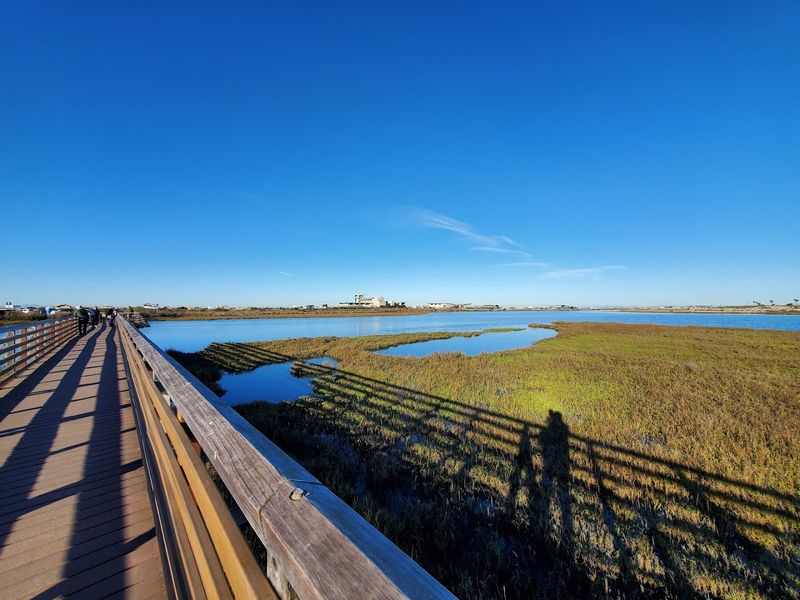
Wooden footbridges cross the water channels at several points, providing elevated views of the wetlands below.
Scenic overlooks and educational interpretive panels are placed at regular intervals, giving visitors a chance to pause, read, and better understand what they are seeing.
The panels cover topics ranging from bird identification to wetland ecology and conservation history.
Staying on designated trails is required throughout the reserve, both for visitor safety and to protect the sensitive habitats that border the paths.
Trail conditions can vary slightly by season, so checking ahead during winter months is a reasonable precaution.
An Interpretive Center Offers Educational Exhibits
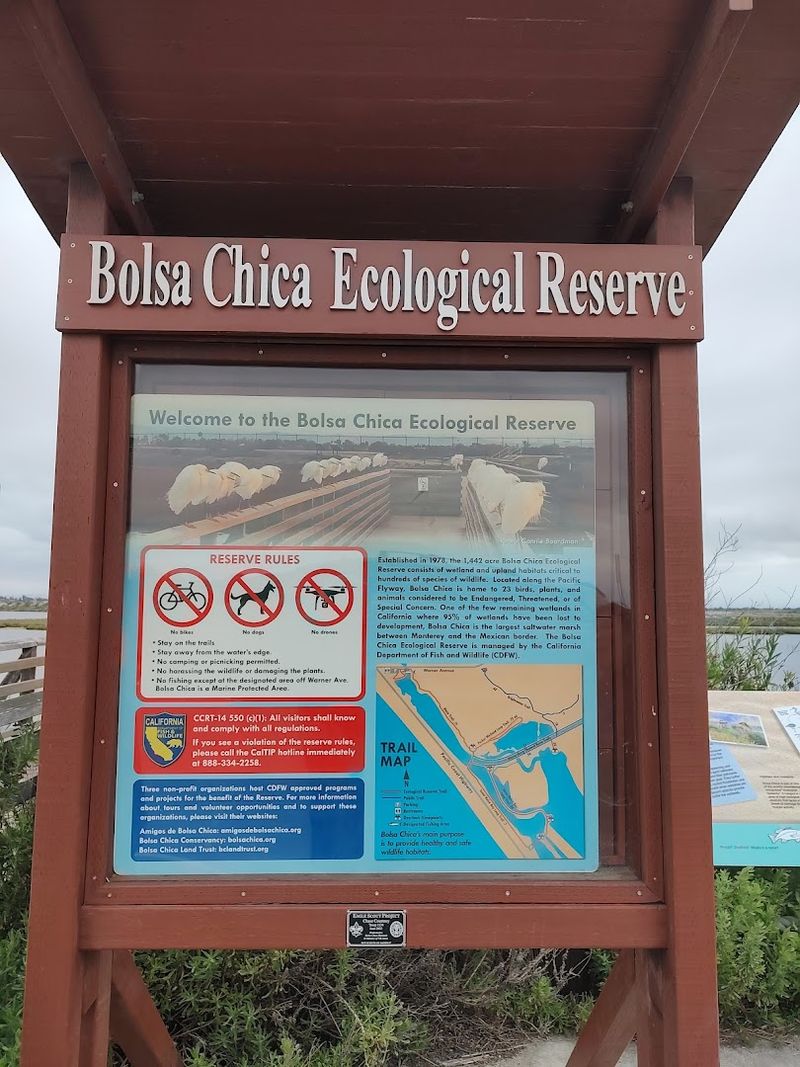
A visit to the reserve can start well before stepping onto the trails.
The Bolsa Chica Conservancy operates an interpretive center that serves as an educational hub for visitors who want to understand the wetlands before exploring them on foot.
The center is located near the Warner Avenue entrance and features exhibits about the reserve’s ecology, wildlife, and conservation history.
Staff and volunteers are typically on hand to answer questions and offer guidance on what to look for during a walk through the reserve.
For first-time visitors especially, spending a few minutes in the center can make the trail experience significantly more rewarding.
The Bolsa Chica Conservancy Interpretive Center sits at 3842 Warner Ave, Huntington Beach, CA 92649.
Hours and availability for the center can vary, so checking the conservancy’s website before visiting is a practical step.
The center also serves as a starting point for guided tours and public programs that run throughout the year, offering a more structured way to engage with the reserve’s natural and cultural history.
Spring Migration Turns The Reserve Into A Photographer’s Dream
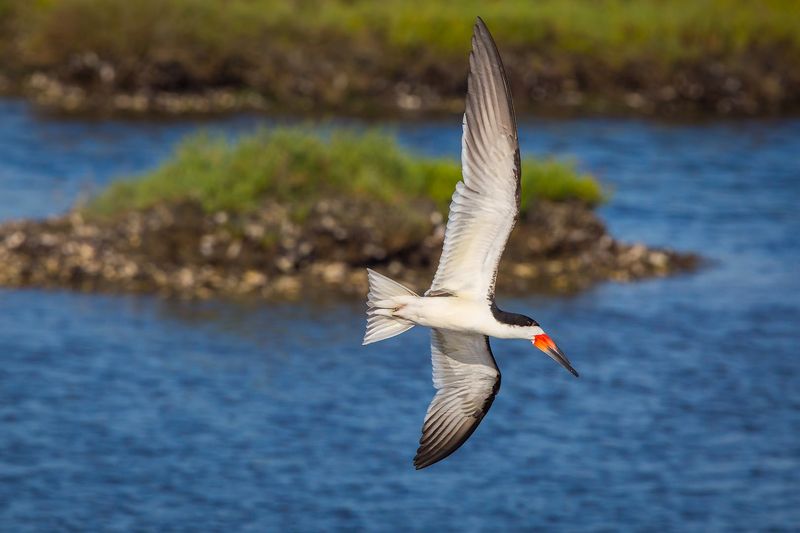
Spring at Bolsa Chica operates on a different energy than the rest of the year.
As migratory birds move northward along the Pacific Flyway, the reserve fills with species that are only present for a short window, creating rare and highly sought-after photographic opportunities.
The footbridges become popular spots for photographers during this season, partly because the birds are comfortable near humans and partly because the elevated angles allow for clean shots over the water.
Soft morning light, which filters in from the east before the marine layer burns off, tends to produce the most flattering conditions for wildlife photography.
Flat, overcast days also work surprisingly well for capturing fine feather detail without harsh glare.
Arriving early on weekdays gives photographers the best combination of good light and manageable crowds.
Weekends during peak spring migration can see the parking lots fill quickly, particularly the lot near Pacific Coast Highway.
Telephoto lenses in the 300mm to 500mm range are commonly used here, though the proximity of the birds on the footbridges sometimes allows for closer captures than expected.
Parking Is Free At Two Main Access Points
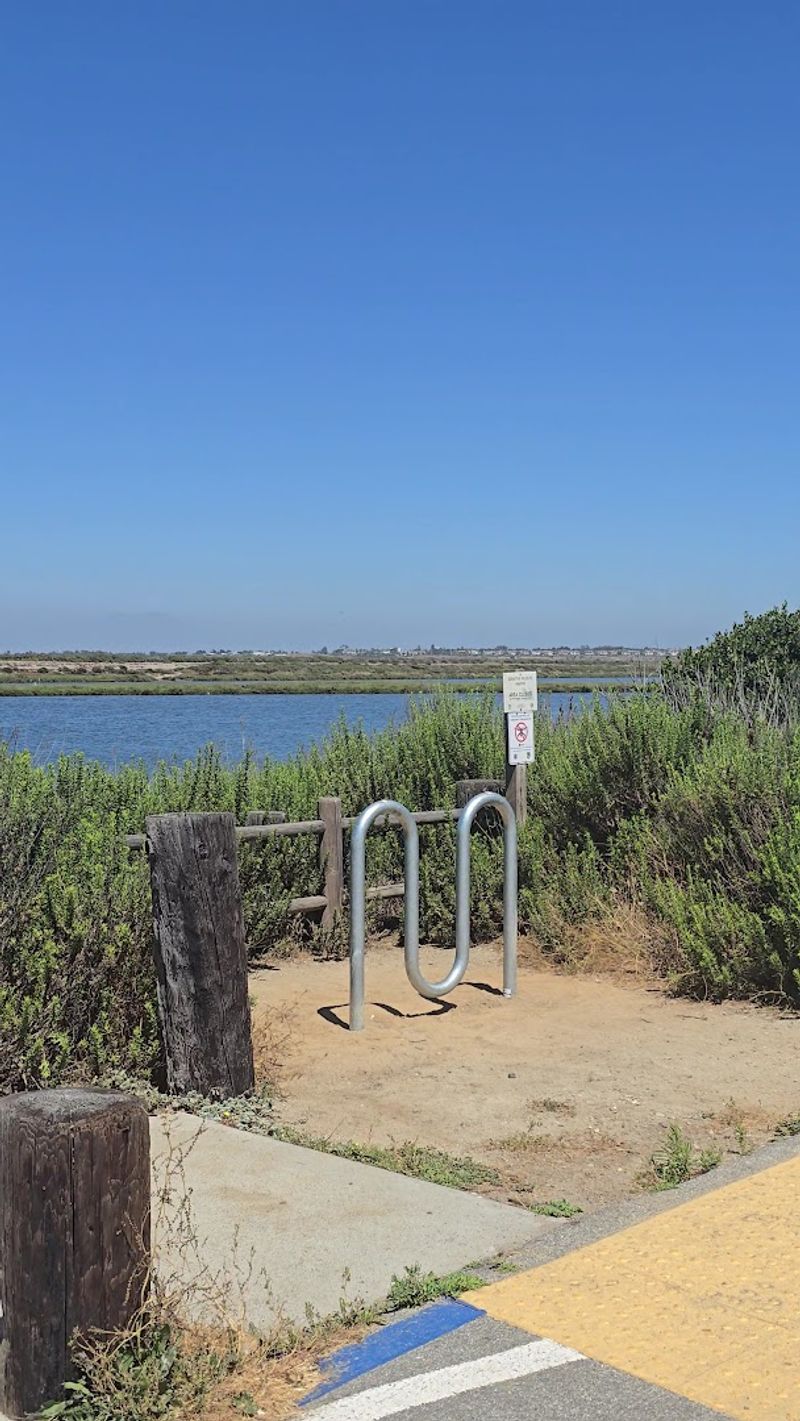
Access to the reserve comes without any entry fee, and parking is free at both of the main lots.
That combination makes Bolsa Chica one of the most accessible natural reserves in the region, removing a common barrier that keeps people away from similar destinations.
Two parking areas serve the reserve.
One is located at 3842 Warner Avenue in Huntington Beach, near the interpretive center, and the other sits at 18000 Pacific Coast Highway, Huntington Beach, CA 92648, directly across from the beach.
Both lots provide trail access and are free to use throughout the day.
The PCH lot tends to fill up faster on weekends and during peak spring months, so arriving before 8 AM on busy days is a practical approach.
The Warner Avenue lot is slightly less crowded on average and offers proximity to the conservancy center.
Neither lot is particularly large, so overflow parking at nearby beach facilities is sometimes necessary on high-traffic days.
The reserve is open daily from 6 AM to 8 PM, giving visitors a solid window of time to explore at a comfortable pace.
Diverse Habitats Support An Unusually Wide Range Of Wildlife
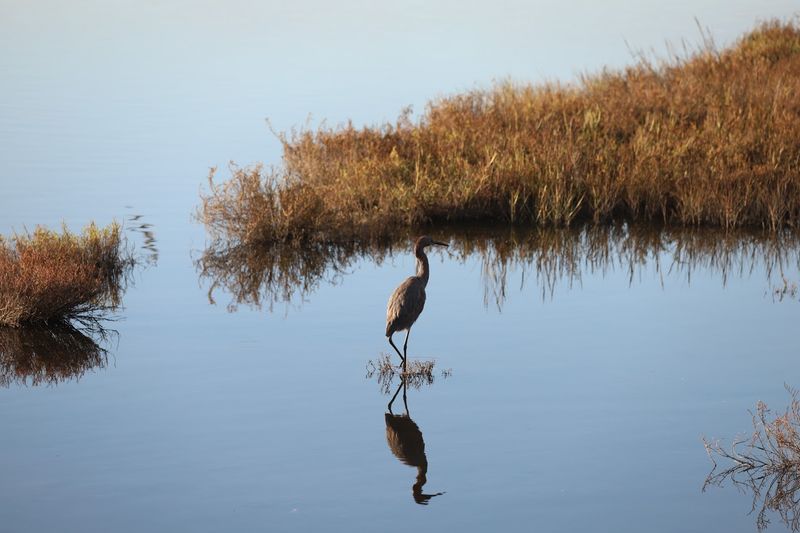
What makes Bolsa Chica ecologically remarkable is not just its size but its variety.
The reserve contains multiple distinct habitat types within a single continuous landscape, including open water, mudflats, salt marshes, coastal dunes, seabird nesting islands, riparian zones, and freshwater marshes.
Each habitat functions differently and attracts different species. Mudflats draw shorebirds probing for invertebrates at low tide. Salt marshes provide nesting cover for secretive marsh birds.
Open water channels support diving ducks, cormorants, and occasional stingrays visible from the footbridges.
The freshwater areas attract species that would not typically use the saltier sections of the reserve.
That layered diversity is part of why the species count here remains so high year-round, not just during migration season.
Lizards, rabbits, squirrels, and even coyotes have been spotted within the reserve, adding to the sense that this is a genuinely functioning ecosystem rather than a managed park.
Visitors who take time to slow down and observe each habitat zone carefully tend to notice far more than those who move quickly through the trails without pausing.
Conservation At Bolsa Chica Matters Because Most California Wetlands Are Gone
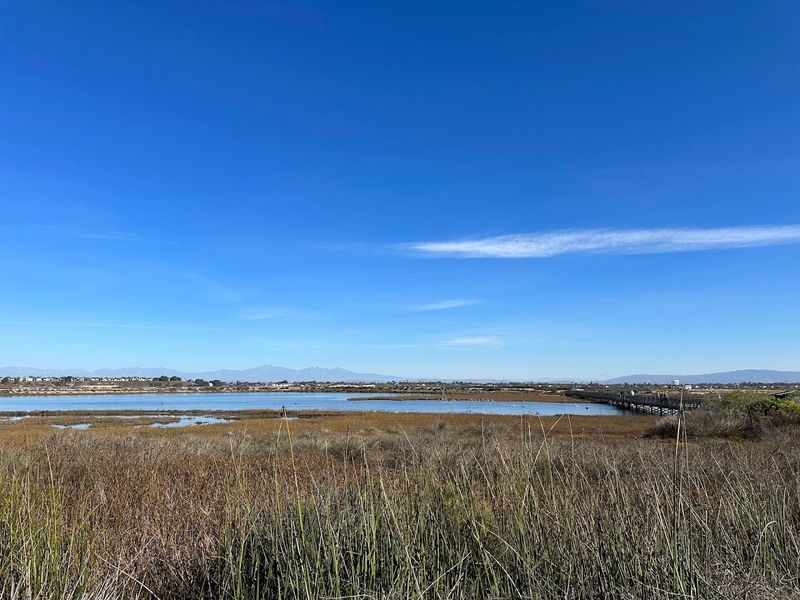
The numbers behind California’s wetland loss are sobering.
More than 95 percent of all coastal wetlands in the state have been destroyed over the past two centuries, drained or filled for development, agriculture, and infrastructure.
What remains is a fraction of what once stretched continuously along the California coast.
Bolsa Chica represents one of the most significant surviving examples of Southern California coastal wetland, and its preservation required decades of organized effort.
Conservation groups, government agencies, and community volunteers worked together to protect the land from development and to restore portions of the wetland that had been degraded by oil extraction and other industrial uses.
Restoration work continues at the reserve, with ongoing projects aimed at improving water flow, expanding native plant coverage, and supporting the recovery of endangered species populations.
Visiting the reserve contributes indirectly to that mission by demonstrating public interest in and support for protected natural spaces.
Understanding the broader context of wetland loss in California makes the experience of standing in the middle of Bolsa Chica feel less like a casual walk and more like a rare and genuinely meaningful encounter with a disappearing landscape.
Volunteer Programs Keep The Reserve Healthy And Engaged
Behind the peaceful trails and thriving wildlife, a steady stream of volunteer work keeps the reserve functioning at a high level.
The Bolsa Chica Conservancy organizes a range of volunteer programs throughout the year, covering habitat restoration, invasive species removal, and community education outreach.
Habitat restoration days bring groups of volunteers together to plant native species, clear debris, and support the ongoing recovery of areas that have been impacted by decades of industrial use.
Educational outreach programs connect the conservancy with schools and community groups, bringing the story of the wetlands to audiences who might never think to visit otherwise.
For people who want a more active relationship with the reserve beyond casual visits, volunteering offers a hands-on way to contribute.
Programs are typically organized through the conservancy’s website, where schedules and registration details are posted in advance.
Public guided tours also run periodically and are often free to attend, providing a structured introduction to the reserve’s ecology and history.
Checking the conservancy’s event calendar before a visit can reveal opportunities to participate in something more interactive than a solo walk through the wetlands.