This 18th-Century California Mission Has A Chilling History And Ghost Stories That Still Haunt Its Halls
A man in a blue peacoat is said to still make his rounds at an old adobe church, more than 175 years after thieves came hunting for his gold. That story alone gives chills.
The walls here are a full six feet thick. Inside, painted murals from 1821 have never been repainted, which makes them some of the most authentic in California.
I like how this place holds beauty and mystery side by side. You get a calm courtyard with a splashing fountain, then a cemetery nearby that tells much heavier stories.
Shadowy child-sized figures, a woman in white, and unexplained alarms all show up in the local legends. So how do spooky tales fit with a church that still holds Mass every single week?
The Archangel’s Outpost Has Been Standing Since 1797
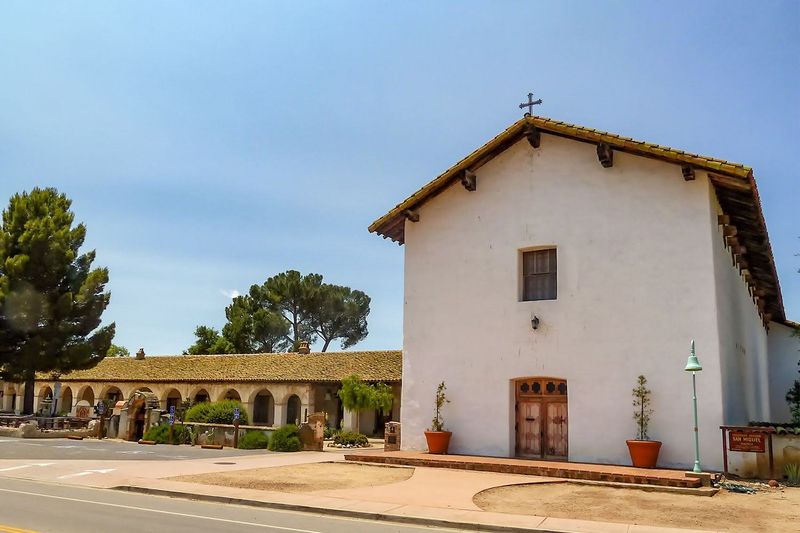
Saint Michael the Archangel is famous for battling darkness, which feels fitting for a place with this many ghost stories. Mission San Miguel Arcángel was named in his honor when it was founded on July 25, 1797.
Franciscan Father Fermín Lasuén led the founding. That made it the 16th stop in the chain of 21 California missions.
The first church wasn’t built to last. Workers put up a temporary wooden structure in 1797, but fire destroyed it in 1806.
Talk about a rough start. The builders responded by going big, and the current church went up between 1816 and 1818.
Those adobe walls measure about six feet thick. That’s thicker than most people are tall when lying down, which is a strange but helpful way to picture it.
I believe the toughness of this building is part of the appeal. It has survived fires, sales, and earthquakes while keeping its old soul intact.
Before you hear a single ghost tale, it helps to know the basics. This place has been around for more than two centuries, and it has collected plenty of stories along the way.
You Can See Murals No One Has Ever Touched Up
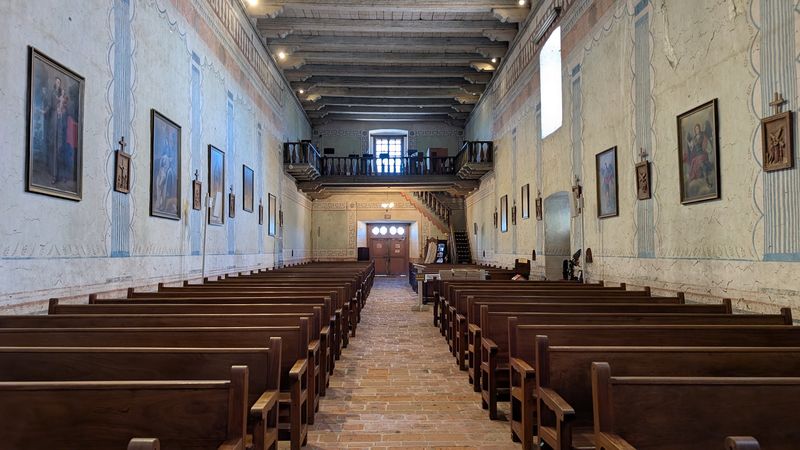
Nobody has repainted these walls since 1821. That one fact makes the church interior a true time capsule.
Artist Esteban Munrás designed the murals, and Salinan people helped bring them to life. They used dyes made from local minerals to create the colors.
Many California missions have restored or redone their old artwork over the years.
Mission San Miguel Arcángel kept its originals, earning a reputation as one of the most authentic interiors anywhere in the mission chain.
So what you see is what early worshippers saw. That’s a little thrilling and maybe a tiny bit eerie when you think about it.
Look closely at the painted details along the walls. The designs show how much skill and patience went into decorating a frontier church with simple materials.
I can’t imagine the steady hands this work required. Every brushstroke has now lasted for two centuries without a single touch-up.
Here’s a practical tip for history fans. Give yourself extra time inside the church, because the murals reward slow looking far more than a quick glance.
Remember that this is an active parish. A quiet, respectful visit fits the space best.
Brace Yourself For The Darkest Night In Its History
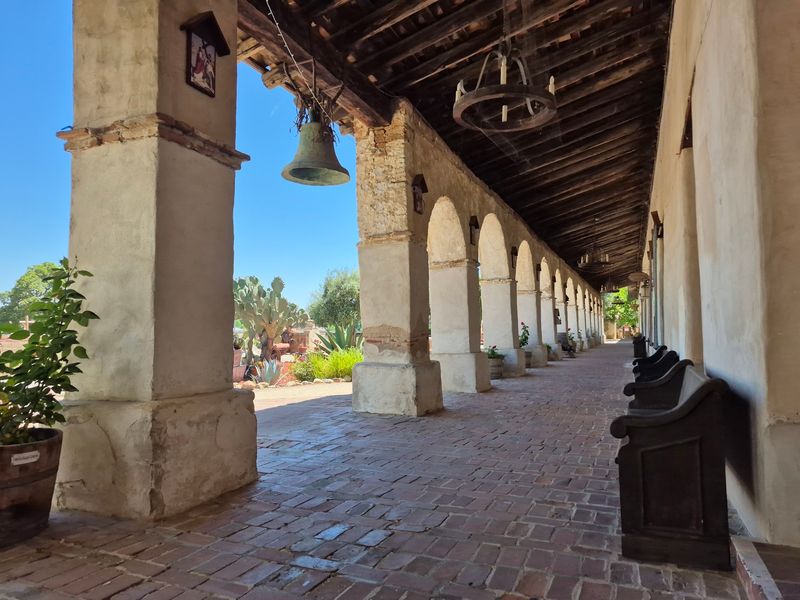
Rumors of buried gold set off the most chilling chapter here. In 1848, a band of thieves came after William Reed, who had turned parts of the mission into an inn.
Reed had been living there with his family after the mission was secularized. The thieves believed he had hidden a fortune somewhere on the property.
That night ended in tragedy. Reed, his pregnant wife, their 4-year-old son, a midwife, and other childrenall lost their lives in the attack.
Estimates put the total number of victims somewhere between 10 and 13 people. It remains one of the grimmest events in early California history.
The victims were buried together in a shared grave. That grave sits near the sacristy of the mission church.
Knowing this changes how the quiet grounds feel. A peaceful courtyard suddenly carries a lot more weight.
Some legends claim the victims won’t rest until that communal grave is moved. Whether you believe that or not, it explains why the stories never really faded.
I think it’s worth pausing near the church to remember the family. Their story is real history first and a ghost story second.
Keep An Eye Out For A Blue Peacoat And A White Dress
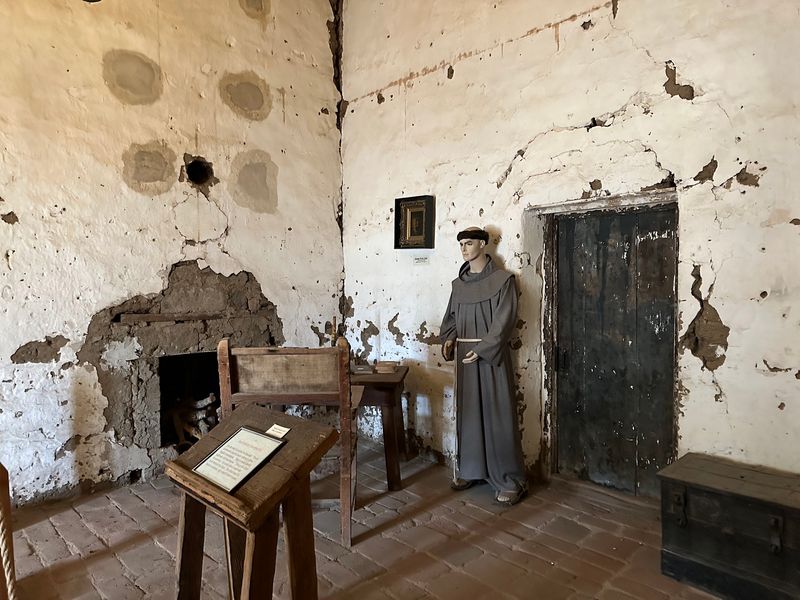
Two figures star in most of the ghost stories here. One wears a blue peacoat, and the other wears a white dress.
The man in the peacoat is believed to be William Reed himself. Visitors and staff have reported seeing him, as if he’s still making rounds through the complex.
Picture an innkeeper who never quite clocked out. It’s a spooky idea, yet oddly loyal too.
The woman in white is often linked to Mrs. Reed. Some accounts describe mysterious marks on her dress, which is the kind of detail that sticks in your brain at bedtime.
Sightings of her pop up again and again in local legend. She’s become one of the most talked-about spirits at any California mission.
Of course, nobody can prove these stories. Still, they’ve lasted for generations, and that staying power says something.
Mission San Miguel Arcángel doesn’t run ghost hunts or promote paranormal events. It’s a working church, so treat any spooky curiosity as a quiet personal thought rather than a mission.
Keep your eyes open while you wander. You’ll at least see gorgeous arches, and maybe a little more.
Stranger Things Have Reportedly Happened Here Too
Screams with no clear source sit near the top of the creepy list. Reports describe pained cries coming from different parts of the mission complex.
Then there are the small shadows. Child-sized figures have reportedly been seen running near the church.
The museum rooms have their own tale. Some accounts mention the apparition of a monk drifting through those spaces.
Security systems have joined the mystery as well. Alarms have been triggered by movement in an office that once served as living quarters, where a Brother reportedly passed away.
Gift shop employees have shared unnerving experiences they couldn’t explain. That’s a lot of odd moments for one quiet little shop.
One older ghost story describes mysterious remains supposedly kept in a back room, though the details are unverified.
Psychics who visited have also described intense visions tied to the 1848 crimes. Skeptics will shrug, and believers will lean in closer.
Either way, these stories add a shiver to a sunny afternoon visit. I like that the legends feel layered rather than cartoonish.
It Survived Being A Hotel, Shops, And A Major Earthquake
After Mexico’s secularization act of 1833 to 1834, things got weird fast. The mission land was sold off, and its buildings took on commercial jobs.
At various points, parts of the complex served as a hotel and retail shops. That’s quite a career change for a church.
The U.S. government returned the properties to the Catholic Church in 1859. The mission finally had its original purpose back.
Mission San Miguel Arcángel suffered serious damage in the 2003 earthquake, with its gift shop reopening in 2005, museum in 2006, and church in 2009.
Extensive renovations followed during that long closure. The mission reopened on September 29, 2009, which happens to be the feast day of Saint Michael.
Nice timing, right? It feels like a comeback planned with real care.
In 2006, the site was named a National Historic Landmark. That honor recognizes its value to the whole country, not just California.
I believe this comeback story deserves as much attention as the ghosts. A building that keeps bouncing back has earned a little respect.
The Cemetery Holds Some Of The Most Moving Stories
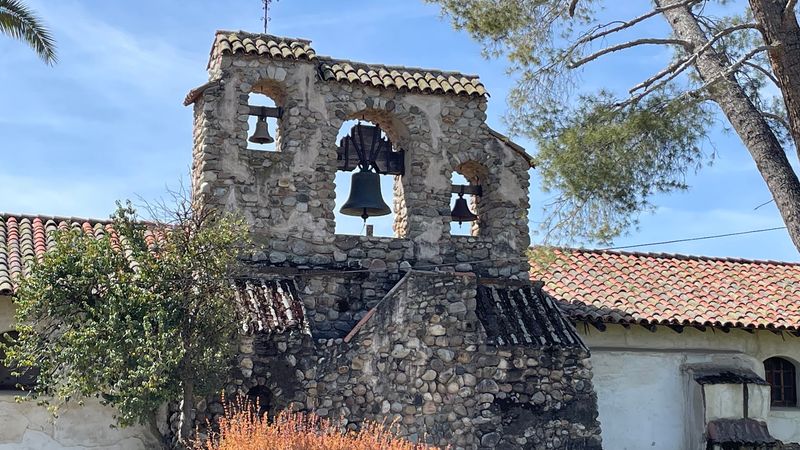
More than 2,000 Salinan people are buried on these grounds. A feathered cross stands in the cemetery to honor them.
That number is hard to take in. It reminds every visitor that the mission’s story includes the Native people who built and sustained it.
Graves of many early settlers also rest here. Walking among them gives you a sense of how many lives crossed paths at this spot.
Nearby, an original stone bell tower holds three bells. One of them was crafted in San Francisco in 1888 from melted pieces of other mission bells.
So that single bell carries bits of older bells inside it. It’s history recycled in the most fitting way possible.
The cemetery side of the property can be seen without a museum ticket. That makes it an easy stop even if you’re short on time.
Quiet reflection works best in this space. Ghost stories may draw people in, yet the real people buried here deserve the most attention.
I like how the feathered cross makes Salinan history visible. It turns a simple walk into a meaningful moment.
Save Time For The Arches, Courtyard, And A Very Old Cannon
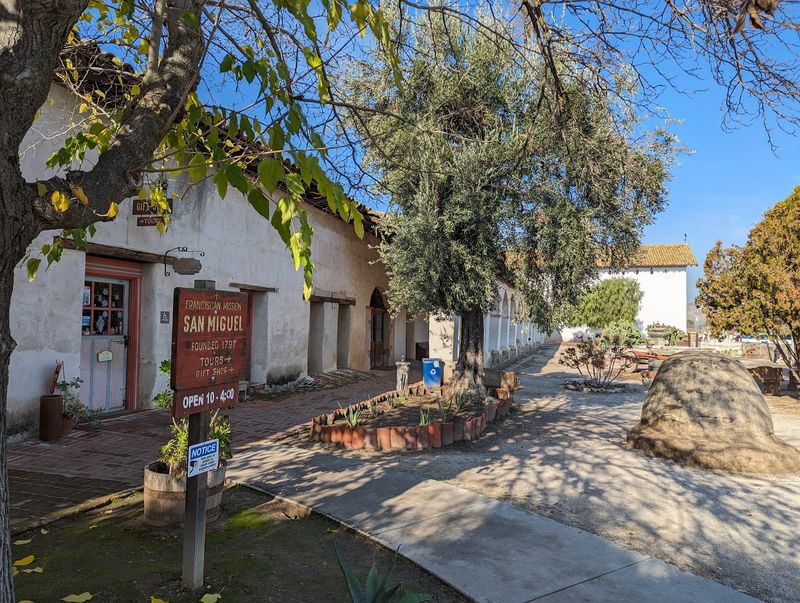
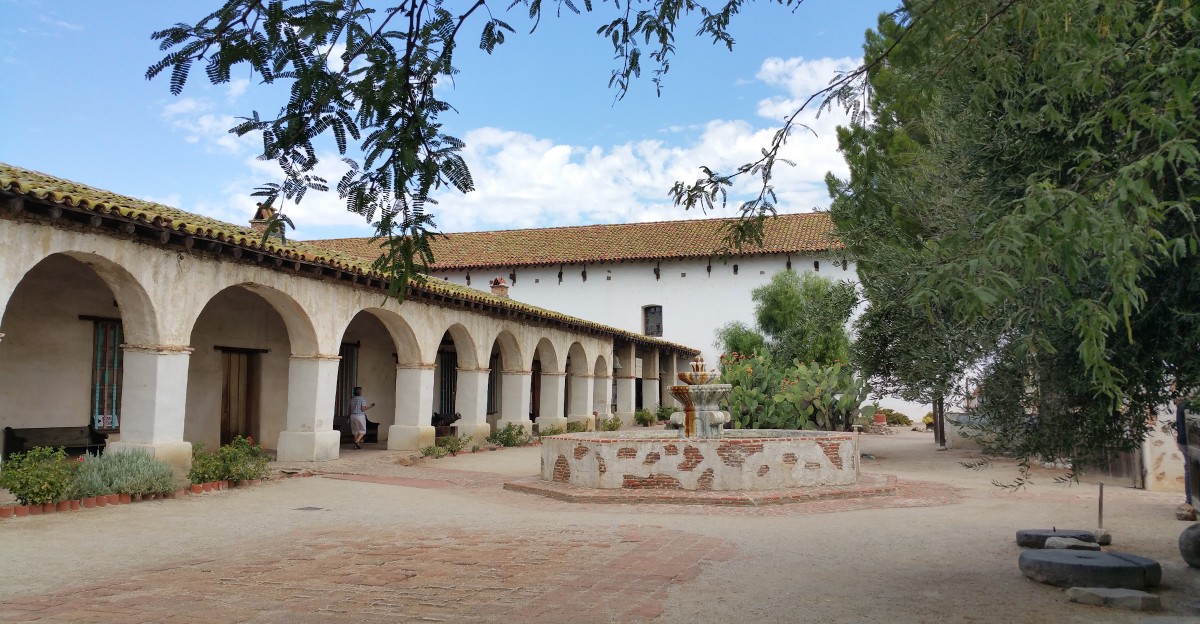
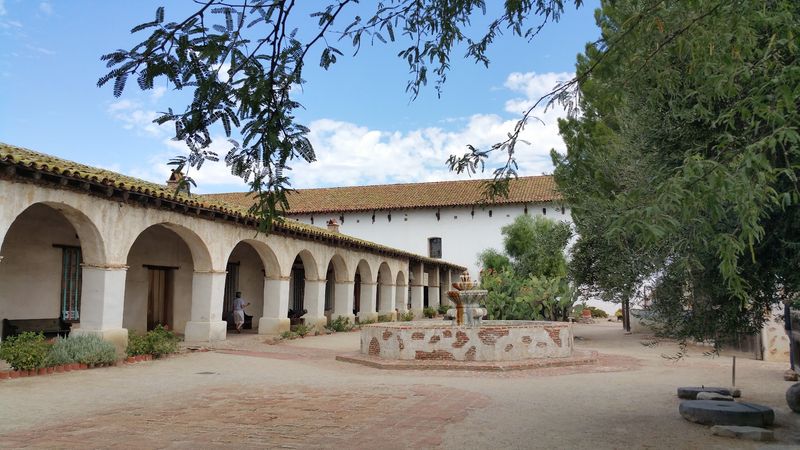
Twelve arches line the mission arcade, and no two seem to match. They come in varying shapes and sizes, which gives the front a charming, handmade look.
Perfect symmetry is overrated anyway. These uneven arches feel honest and full of character.
Step into the courtyard and the mood softens right away. A fountain sits among cacti, roses, and olive trees.
Tucked into the scenery is an antique Spanish cannon dating to 1697. It’s older than the mission itself by a full century.
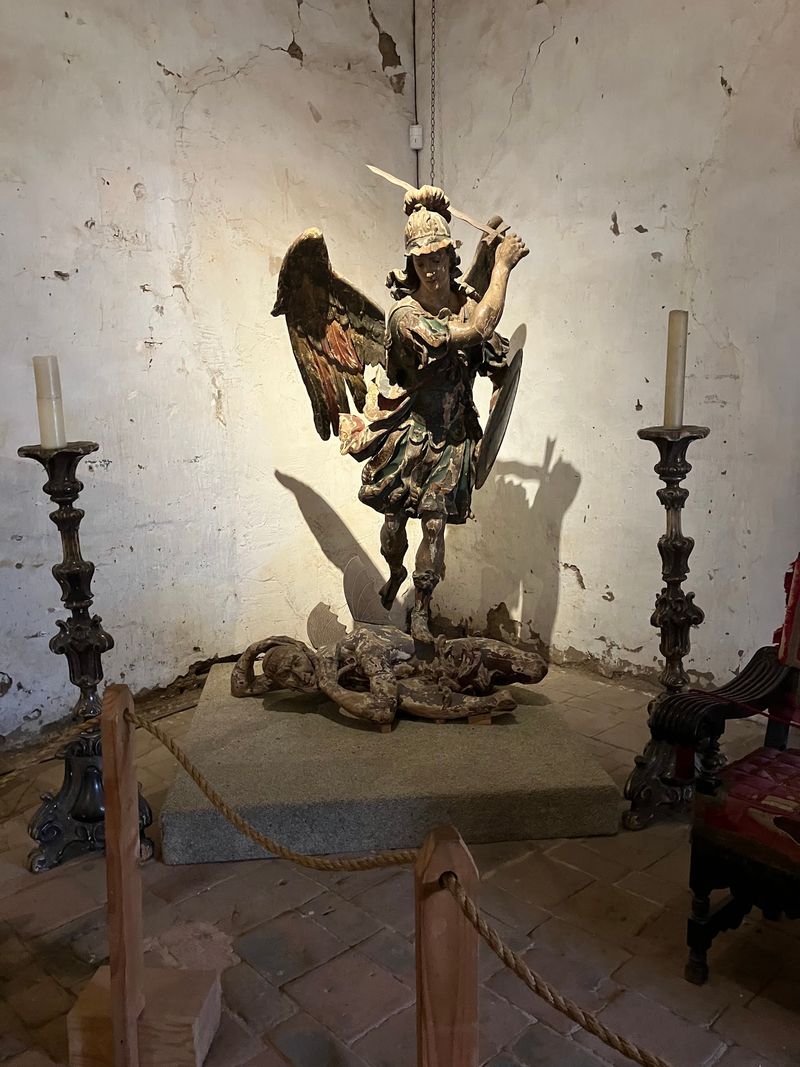
Inside the museum, a 16th-century Spanish wood carving of Saint Michael takes center stage. Exhibits also cover mission life through spaces like the Salinan Room, Kitchen, Dining area, and Sala.
The museum tour is self-guided, so you can move at your own pace. Kids and adults can both find something that clicks.
A gift shop rounds out the visit. It’s a handy spot for a California keepsake or a small gift for someone back home.
Bring a camera for the arches and garden. The daytime calm makes a sweet contrast with all those spooky legends.
Plan Your Visit Before The Doors Close At Four
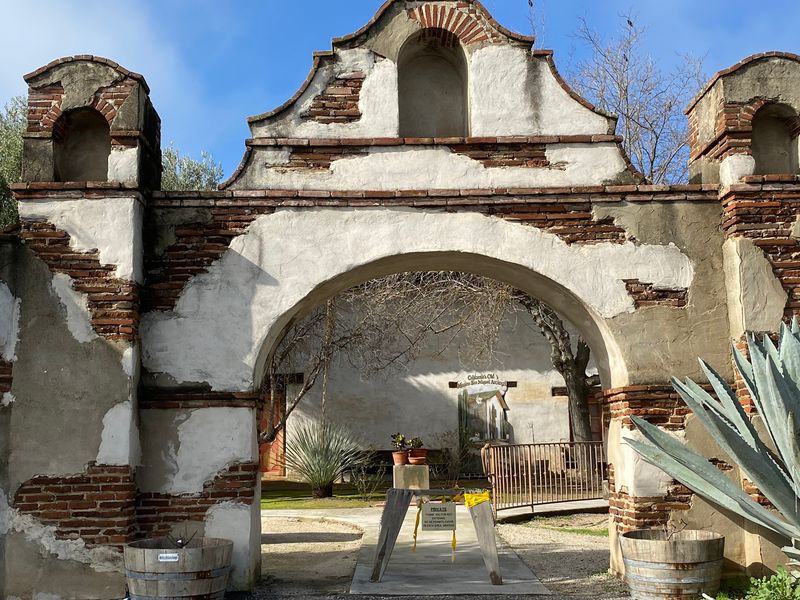
Timing matters here more than you might expect. The museum and gift shop typically open daily from 10 a.m. to 4 p.m.
Arrive late and you’ll be peeking through the gates. Schedules can change, so check ahead before making the drive.
You’ll find Mission San Miguel Arcángel at 775 Mission Street, San Miguel, CA 93451. It sits right off Highway 101 in the Salinas River Valley.
That location once made it a key stop along El Camino Real. The historic route linked the California missions from one end to the other.
Fun bonus fact for road trippers: it lies roughly halfway between Mission San Antonio de Padua and Mission San Luis Obispo de Tolosa. Mission collectors can easily chain all three together.
This is still an active parish in the Diocese of Monterey. Mass is held regularly, so expect services to shape parts of the schedule.
Groups can even stay overnight at the retreat center inside the historic friars’ dormitories. It offers double rooms with shared bathrooms, a kitchen, and a meeting space.
Sleeping where legends roam? That’s one way to test your nerves.