This Classic Nebraska Restaurant Still Wins People Over The Same Way It Always Has
Some restaurants build loyalty by constantly reinventing themselves. This one took the opposite route.
The appeal is familiar the moment you settle in.
The atmosphere feels unchanged in the best way, the menu leans on longtime favorites, and there is a reassuring sense that nobody felt the need to chase whatever dining trend came along next.
This Nebraska classic has kept generations of diners coming back by trusting the same straightforward formula that worked in the first place.
Order what people have been ordering for years. Notice how many tables seem to know exactly what they want before opening the menu.
Let the meal feel a little old-fashioned without treating that as something that needs fixing. That consistency is the whole point.
The Southern Fried Chicken Recipe That Has Survived Since 1945
Back in 1945, a couple named Lee and Alice Franks bought a small roadside business that had been operating as Al’s Place.
Alice brought along a Louisiana family recipe for Southern fried chicken, and that single decision reshaped everything about the menu.
Eighty years later, the restaurant states that it still uses those original recipes. The chicken is fried in peanut oil, sometimes blended with soybean oil, which contributes to the color and texture of the finished crust.
What makes the recipe interesting is how simple it stays. The batter is built on milk, eggs, and salt rather than a long list of seasonings, so the flavor leans mild and homestyle instead of bold or spicy.
Diners who grew up on heavily seasoned chain chicken may notice the difference right away.
The crust comes out crunchy and flaky, and the meat underneath stays juicy, which is generally the point of a recipe like this one.
A spicy breading option has also appeared on the menu for guests who want a little more heat. Ordering the classic version first makes sense for anyone curious about what the original tastes like.
Recipes rarely survive this long without a reason, and consistency appears to be the reason here.
Fresh Preparation That Still Shapes Every Order
Plenty of chicken restaurants receive their product pre-battered and frozen, ready to drop straight into hot oil.
That is not the routine here, according to the restaurant’s general manager, who has explained that the chicken arrives whole and gets cut and prepared on site.
The company website leans on the phrase “Where Fresh is the Secret!” and the kitchen practice backs it up. Batter is mixed with milk, eggs, and salt, and the pieces are coated by hand before frying.
Preparing food this way has a practical consequence worth knowing before sitting down. Cook-to-order chicken takes time, and waits of twenty to thirty-five minutes have been reported by guests during busier stretches.
Planning around that pace makes the visit smoother. Arriving hungry but not starving, ordering an appetizer for the table, or visiting slightly before the usual dinner rush all help.
The payoff shows up when the plate lands. Chicken served this fresh comes out steaming, sometimes hot enough that a few minutes of patience are needed before the first bite.
Fresh preparation also means small variations from visit to visit, since nothing is machine-identical. Regulars seem to treat that as part of the charm rather than a flaw worth complaining about.
Booths And Counter Stools That Generations Remember
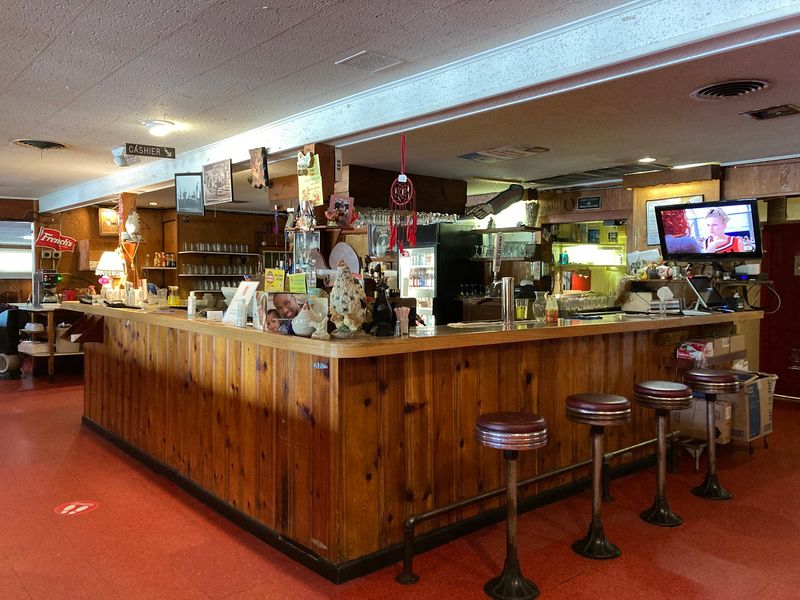
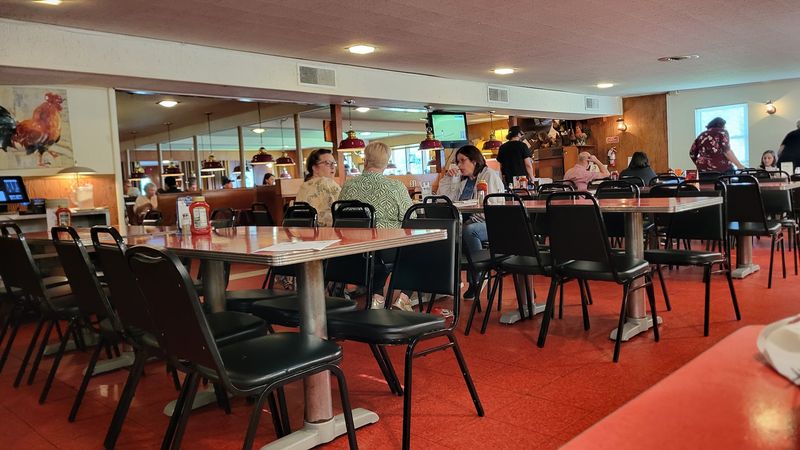
Walking into the dining room feels a bit like stepping backward a few decades, and that effect is intentional.
The owners have talked about keeping the booths and the other details that people remember from earlier visits.
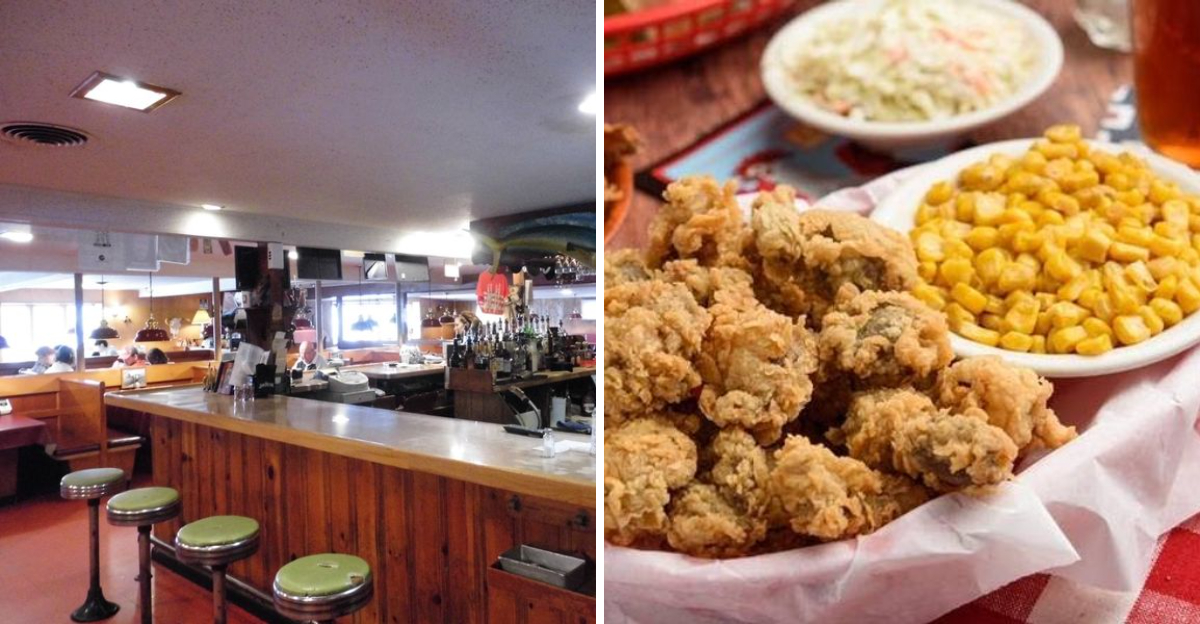
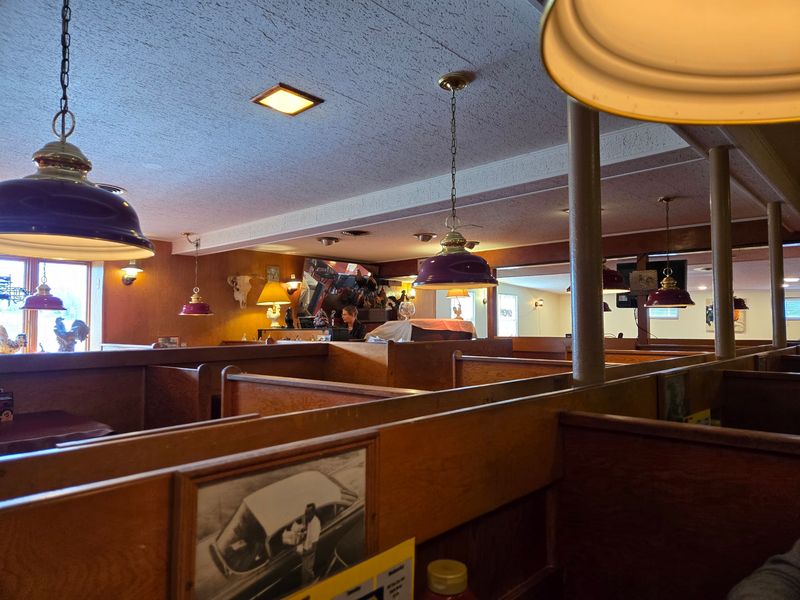
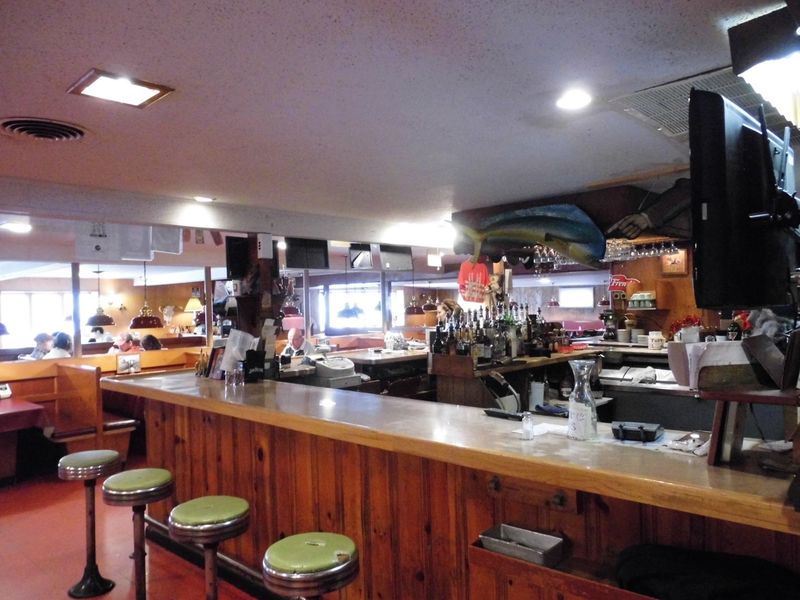
Worn wooden booths line the room, with counter stools available for solo diners or anyone who prefers a quick meal.
Historic photographs and old decor hang on the walls, giving the space a lived-in quality that newer restaurants cannot manufacture.
Lighting stays warm rather than bright, and the noise level generally sits in a comfortable middle range. Conversations carry, but the room rarely feels loud enough to make talking difficult.
Booth seating tends to work well for families with children, since the enclosed shape keeps everyone contained and gives kids something solid to lean against. Larger parties may want to call ahead to get a sense of table availability.
A renovation has taken place in recent years, though many of the old photos and decorative touches were kept in place.
The result is a room that feels maintained without feeling stripped of its character.
Comfort here comes from familiarity more than from luxury, and that suits the food being served.
From A 12-Stool Shack To A Lincoln Institution
Long before fried chicken entered the picture, the corner of West Van Dorn and Burlington held something far smaller.
In the early 1930s, a simple establishment nicknamed “the shack” operated on the site with just twelve bar stools and no running water.
Al and Elizabeth Remaly ran that first version, serving deluxe hamburgers to local golfers after Prohibition ended. Nothing about the setup suggested it would still be feeding people ninety years later.
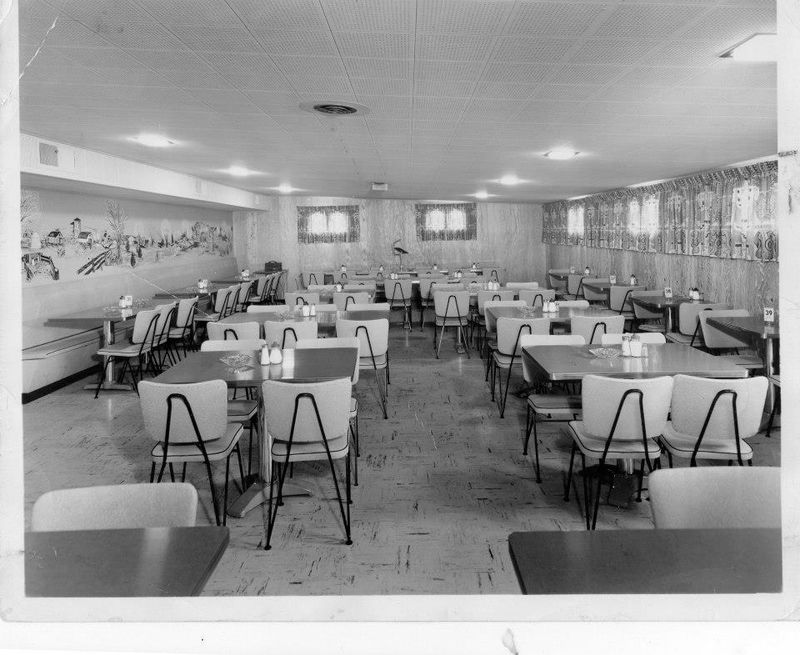
Knowing the backstory changes how the current building reads. The dining room that exists today grew outward from that original footprint rather than replacing it entirely.
History displays inside the restaurant give visitors a chance to see how the place looked in earlier eras.
Taking a few minutes to study them before or after a meal is an easy way to appreciate the scale of the change.
The contrast between twelve stools and a full-service dining room says something about how neighborhood restaurants used to grow.
Expansion came slowly, one addition at a time, funded by regular customers rather than outside investment.
Roadside shacks like this one rarely last. That one did makes the corner worth a stop for anyone interested in local history.
Ordering The Chicken Dinner That Keeps The Tradition Going
Menus at long-running restaurants can get cluttered over time, but the core offering here stays refreshingly simple.
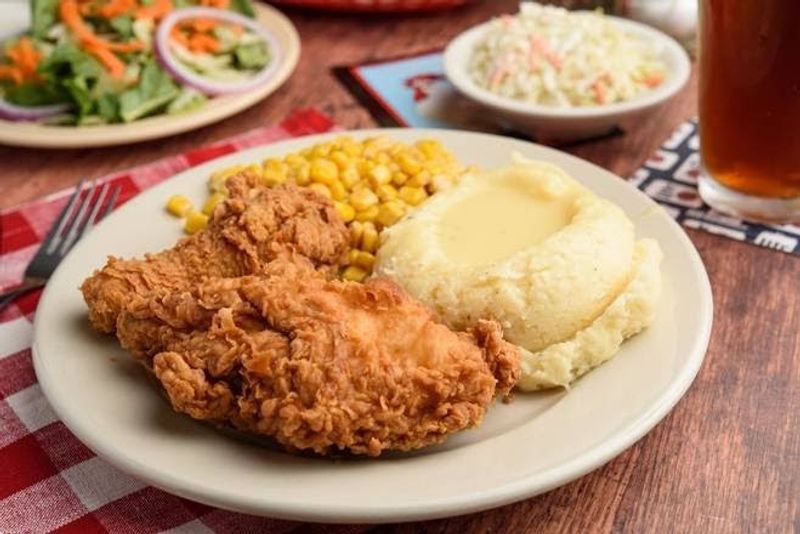
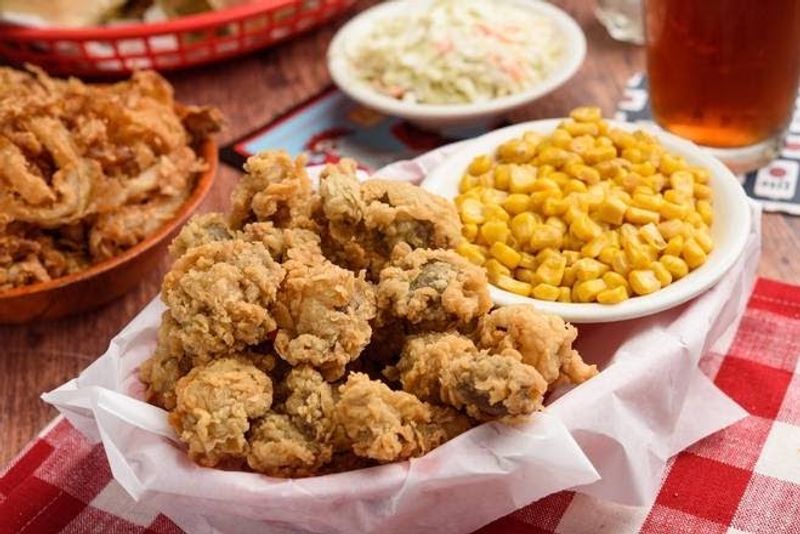
Chicken dinners come in two-piece or three-piece options, built around hand-battered Southern fried chicken.
Each dinner arrives with two sides and a roll with butter. Choices include mashed potatoes and gravy, corn, green beans, coleslaw, french fries, and onion rings.
Additional options such as homemade mac and cheese, baked potatoes, and tossed salads round out the list.
The onion rings come cut thin, closer to onion straws than thick-cut rings, which surprises some first-time visitors.
Larger groups have their own path through the menu. Family meals and buckets make the same recipe available for gatherings, reunions, and anyone feeding a crowd at home.
Chicken fried steak also appears among the dishes people order regularly. Gizzards show up on the menu too, which fits the old-school character of the kitchen.
Ordering advice is straightforward: pick the classic fried chicken on a first visit and save the variations for later. Sides lean homestyle rather than fancy, so expect comfort food rather than reinvention.
Portions run generous enough that leftovers are common. Boxing up the extra piece for the next day is a normal move here.
Carryout And Curb Service Long Before Delivery Apps
Food delivery apps feel like a modern invention, yet the idea of grabbing dinner without sitting down has been part of this restaurant’s routine since the 1940s.
Carry-out service and catering were introduced as pioneering amenities during that first ownership era.
By the 1950s, the place had built a reputation for to-go orders, curb service, and catering jobs around Lincoln. Those services remain available today.
For travelers passing through, takeout offers a practical option. Picking up a bucket and eating at a park or hotel works well when the dining room is busy or when time is short.
Catering matters for anyone planning a family event in the area. Ordering fried chicken for a group has been part of the operation for roughly seventy years, so the kitchen is used to volume orders.
Calling ahead is the sensible approach with cook-to-order food. The restaurant’s phone number is 402-477-4339, and giving the kitchen lead time helps avoid a long wait at the counter.
Fried chicken travels reasonably well, though the crust is at its crispiest right out of the fryer. Keeping the box slightly vented on the drive home helps preserve texture.
Weekend Organ And Piano Music In The Dining Room
Live music in a chicken restaurant sounds like something from another era, and that is more or less the point. Weekend performances featuring organ and piano players have continued here for decades.
A Hammond B3 organ sits in the dining room and has been producing tunes for years. Guests frequently call ahead to ask whether the music is still happening, which says plenty about how attached people are to it.
Music changes the rhythm of a meal in a noticeable way. Conversations slow down, tables linger a little longer, and the room takes on a relaxed feeling that background playlists cannot match.
Volume stays at a level where talking remains easy. Nobody has to shout across the booth to be heard.
Anyone specifically hoping to catch the music should plan a weekend evening visit rather than a weekday lunch. Schedules can shift, so a quick phone call before driving over is worth the effort.
For families introducing kids to live music, the setting is low-pressure and casual. There is no ticket, no cover, and no expectation beyond enjoying dinner.
Details like this are exactly what disappear when restaurants modernize too aggressively. Keeping the organ around has clearly been a deliberate choice.
Planning A Visit To West Van Dorn Street
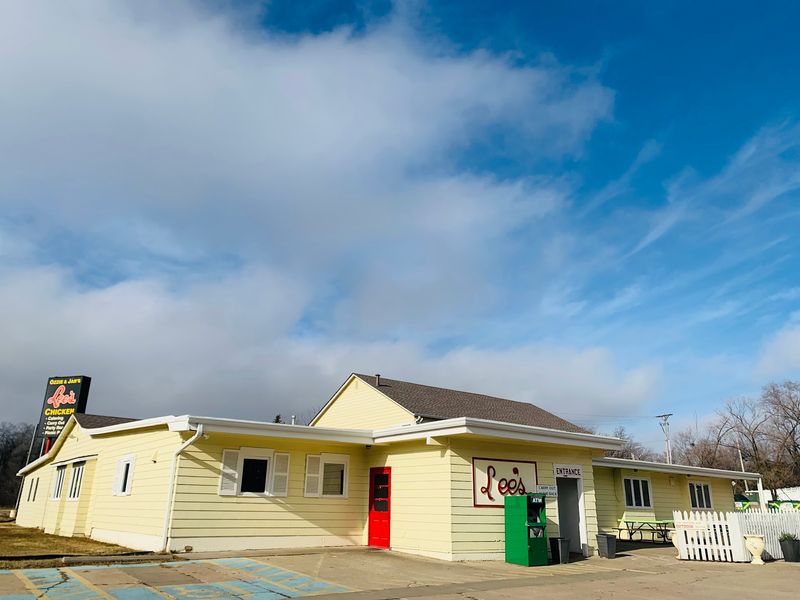
Eight decades in business earned the restaurant a community celebration in 2025, complete with an open house, historic displays, games, and a mayoral proclamation recognizing the milestone.
Local reporting has described it as Lincoln’s oldest continuously operating restaurant.
Anyone planning a stop will find the dining room at 1940 W Van Dorn St, Lincoln, Nebraska 68522, on the same corner it has occupied for generations.
Current listings show service running Tuesday through Sunday, generally starting at 11 a.m., with Monday closed. Hours can shift, so confirming before a long drive is a smart habit.
Weekday lunches tend to feel calmer than weekend evenings, which makes them a good choice for a quieter meal. Saturday afternoons can swing between quiet and packed depending on the week.
The building sits away from downtown in a residential-feeling part of the city, with on-site parking available. Getting there by car is the most practical option for most visitors.
Reviews for the restaurant are generally positive, and the atmosphere draws as much comment as the food. Arriving with patience and an appetite for straightforward comfort cooking sets the right expectation.