This Connecticut Border Town Packs Historic Streets, Wooded Trails And Old Industrial Charm Into One Small Escape
A good small-town escape should give you options without making you spend half the day driving between them. Here, a change of scenery can happen surprisingly quickly.
Old streets hint at earlier chapters, while the surrounding landscape gives the town a completely different side once pavement gives way to trees. Connecticut feels especially layered in places where history and the outdoors sit this comfortably together.
The industrial past has not vanished either. Traces of it still shape the character of the area, adding a slightly rugged edge that keeps everything from feeling overly polished.
That mixture makes wandering more interesting. You can follow whatever mood takes over instead of deciding that the whole day needs to be about one thing.
There is enough here to fill an afternoon without turning the outing into a marathon.
For a little border town, it manages to squeeze an impressive change of pace into a surprisingly compact package.
1. Mill-Town History Gives Stafford Its Distinctive Character
This town has lived several lives. Farming came first. Then mineral springs, ironworks, and busy mills completely changed its story.
Stafford was settled in 1719, and agriculture shaped much of its early character. That rural side never entirely disappeared, with broad stretches of countryside still separating the town’s villages today.
Long before manufacturing dominated the local economy, however, visitors were arriving for another reason. Natural mineral springs earned Stafford a reputation as an early resort destination, drawing travelers who believed the water offered health benefits.
The town says that reputation lasted for roughly a century.
Industry eventually became the bigger story. Iron production began in the late 1700s, followed by an expanding manufacturing economy.
By the 1800s, local waterways were powering textile operations and related businesses, while factories produced everything from buttons to machinery.
Stafford Springs developed into the town’s commercial and industrial center, and textile manufacturing remained an important part of local life well into the 20th century.
That history makes exploring Stafford more interesting than simply admiring old buildings. Former industrial sites, traditional streetscapes, and quieter rural sections reveal how dramatically the community changed over time.
Look closely while wandering around and those different chapters begin overlapping everywhere, turning an ordinary small-town outing into a surprisingly layered history lesson.
2. The Massachusetts Border Sits Just Minutes Away
Few state towns make a two-state day trip this easy. Stafford sits in the north central part of the state and shares a direct border with Massachusetts, so crossing the line takes only minutes of driving.
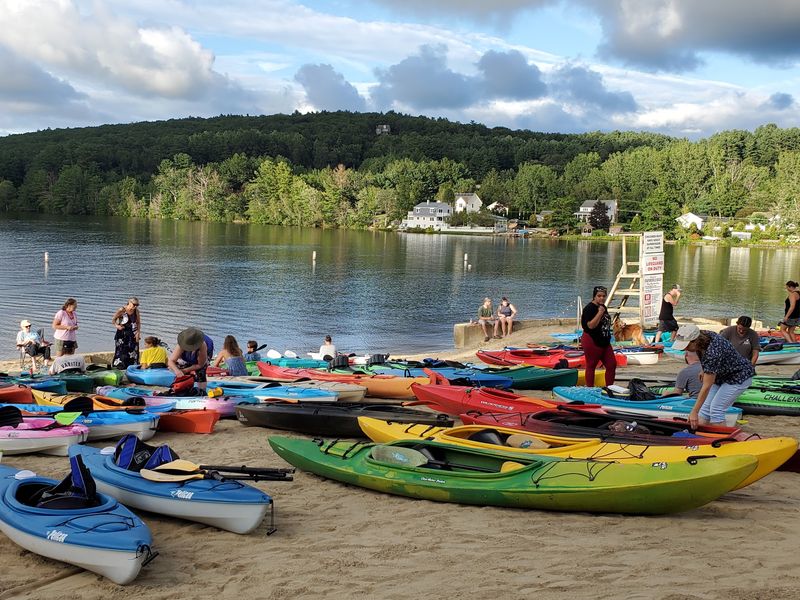
Staffordville Lake shows that geography clearly. Also called Staffordville Reservoir, the 149-acre waterbody lies along Route 19 in the northeastern part of town, right against the Connecticut and Massachusetts boundary.
In warm weather it draws swimmers, picnickers, and people who just want a shoreline to sit beside.
Elevation helps too. From observation points inside Shenipsit State Forest, the view stretches well into western Massachusetts, which is a fun reward after a climb and a good reminder of how close the state line really is.
For travelers building a longer itinerary, Springfield, Massachusetts, is roughly a thirty-mile drive, putting city museums and events within comfortable reach of a quiet base.
Plan accordingly and you can spend a morning on wooded trails, eat lunch in the village, and still have an afternoon free for something across the border. That flexibility is one of the practical advantages of choosing a border town as your home base rather than somewhere deeper inside the state.
3. Historic Streets Reveal Its Industrial Past
Some towns make more sense from the sidewalk, and Stafford rewards anyone willing to slow down and notice how its streets changed from one era to the next. Old buildings and small architectural details quietly reveal how the community developed.
One of the most interesting areas to explore is Stafford Hollow, the town’s early civic center before Stafford Springs grew into the dominant village.
The Stafford Hollow Historic District is listed on the National Register of Historic Places and includes buildings representing several architectural periods, including Greek Revival, Colonial Revival, and Victorian-era styles.
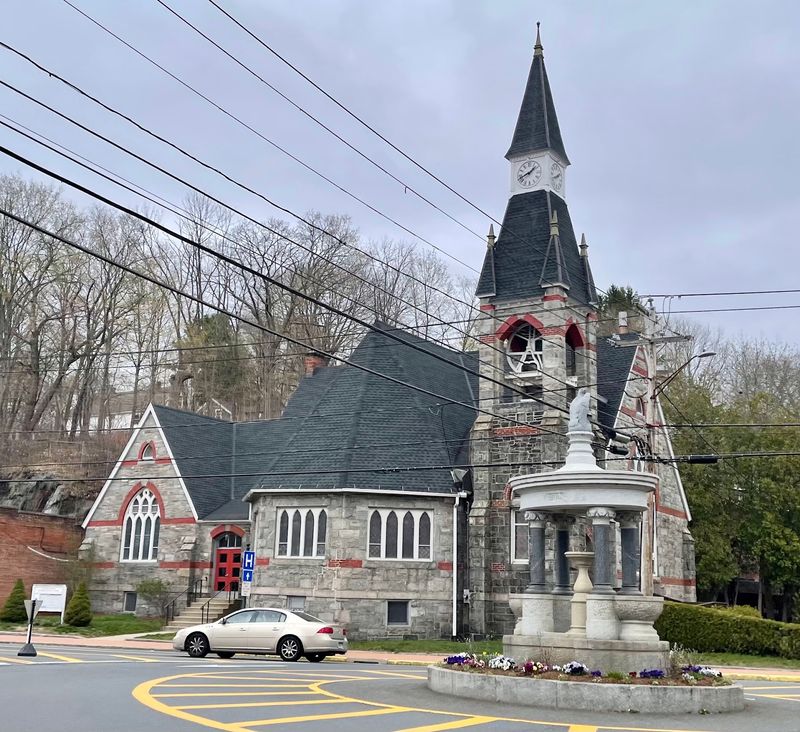
Downtown tells another chapter. Near the meeting of Routes 190 and 32, the historic Holt Memorial Fountain stands in the middle of a distinctive traffic circle.
It is an easy landmark to notice, although its connection to Stafford’s past may be less obvious when simply driving through.
Exploring on foot gives you time to spot details a windshield makes easy to miss. Look at older storefronts, decorative trim, brickwork, and the different shapes and styles of buildings lining the streets.
The compact scale also keeps a walk manageable, with businesses and community spaces relatively close together.
There is no need to rush this part of Stafford. A casual stroll can easily become a longer wander once the town’s smaller details start grabbing your attention.
4. Old Mill Buildings Still Shape The Landscape
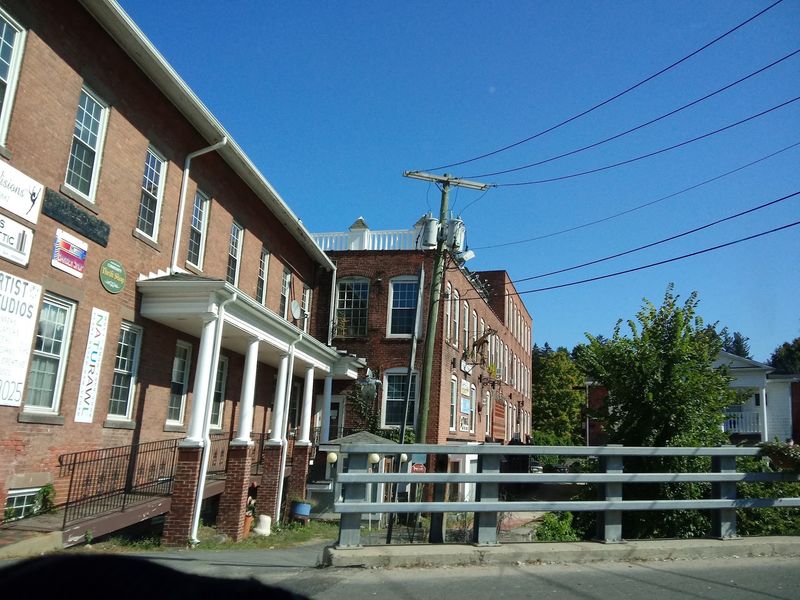
Brick and stone do most of the storytelling downtown. Stafford Springs kept a remarkable share of its former mill buildings, and they still define the shape and skyline of the village core.
One address carries particular weight. The site at 1 Spring Street held the Mineral Springs Manufacturing Company, the first woolen mill in Stafford Springs, built in 1839, and after several transformations the property is again home to a manufacturing operation.
A short walk down the road, the Stafford Historical Society Museum occupies a building put up between 1887 and 1889, originally serving as an office for that same mill company and as a place where the mineral spring water was bottled.
You will find it at 5 Spring Street, Stafford Springs, CT 06076.
The Warren and Cyril Johnson mills, once known for premium worsted and woolen fabrics, have also seen efforts to bring textile production back to town.
Other buildings took a creative turn. Some converted mills now hold industrial style apartments with high ceilings, exposed brick, and hanging industrial lighting, plus studio spaces used for yoga, dance, recording, and vintage shopping.
Old walls, new uses, same footprint.
5. Rivers Once Powered The Town’s Factories
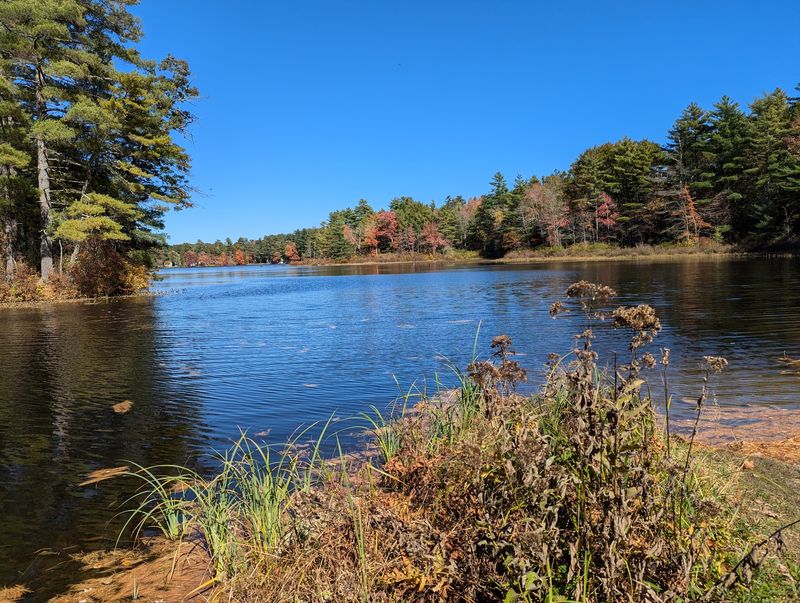
Water built this town’s fortunes. The Willimantic River and its tributaries supplied the power that allowed Stafford’s mills to run, and that steady flow is a major reason the population grew during the industrial years.
Managing the water took organization. In the second half of the 1800s, factory owners along the northern branch of the Willimantic River formed the Staffordville Reservoir Company to control the flow their machinery depended on.
Then came a hard lesson. In 1877 the Staffordville Reservoir dam burst, sending a wall of water down the valley and causing serious damage to the manufacturing district and to cotton and woolen factories along the Willimantic River.
That event says a lot about how tightly the town’s economy was tied to its waterways. Rivers were not scenery here, they were machinery, and everything from wages to shipping schedules depended on them.
Today the same streams are quieter company. They wind past roads and woods, offering the soft background sound that makes a walk through town feel calmer than it should for a former industrial center.
Look for the river whenever you cross a bridge downtown. Once you connect the water to the mills, the layout of the whole village suddenly makes sense.
6. Wooded Trails Offer An Easy Escape
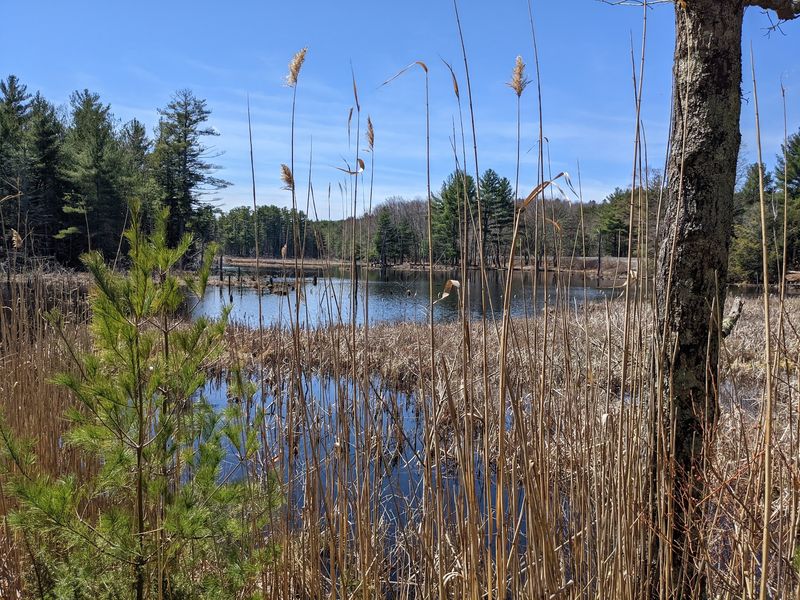
Trade the sidewalks for soft ground and the town changes completely. Shenipsit State Forest spreads across roughly 7,170 acres in Stafford and neighboring towns, and it is the main reason hikers keep coming back.
Choices here suit different energy levels. The blue blazed Shenipsit Trail runs through the forest, paths climb Soapstone Mountain where an observation tower opens up wide views, and the Bald Mountain Trail gives another solid option inside the same forest.
Mountain bikers and horseback riders use the forest as well, so trail etiquette matters. Step aside, announce yourself on blind corners, and everyone has a better morning.
Looking farther afield, Peak Mountain via the Metacomet Trail and the Nipmuck Trail, one of state’s longest blue blazed routes, add serious mileage for ambitious walkers.
Gentler outings exist too. The Woodlawn Trail in Hyde Park is an easy woodland walk, while the West Stafford Conservation Area combines hiking paths with a marked arboretum that makes tree identification simple for kids.
Bigelow Hollow State Park sits a short drive away if you still want more.
Finish at Staffordville Lake, where swimming and picnicking round out a summer day nicely. Bring water, sturdy shoes, and a paper map as backup.
7. Historic Architecture Rewards A Slow Stroll
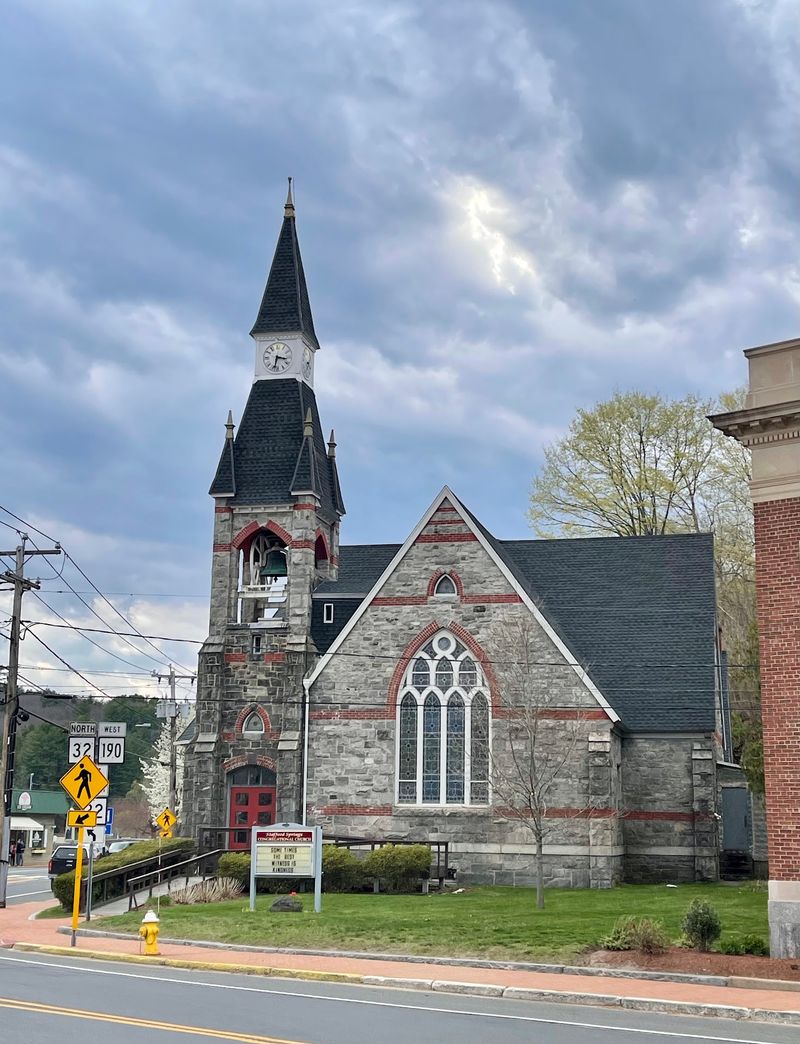
Architecture fans tend to lose track of time in Stafford. The town holds historic resources that cannot be replaced, and the pleasure of them comes from wandering rather than checking off a list.
Stafford Hollow rewards that approach. Colonial Revival, Greek Revival, and Late Victorian buildings sit near each other, making it easy to compare how tastes shifted across generations without driving anywhere in between.
A couple of landmarks stand out. The Pinney School, built in 1895 in Queen Anne style, shows the decorative confidence of the late Victorian years, while the Stafford Historical Society Museum occupies an elegant building from the late 1880s tied directly to the mill era.
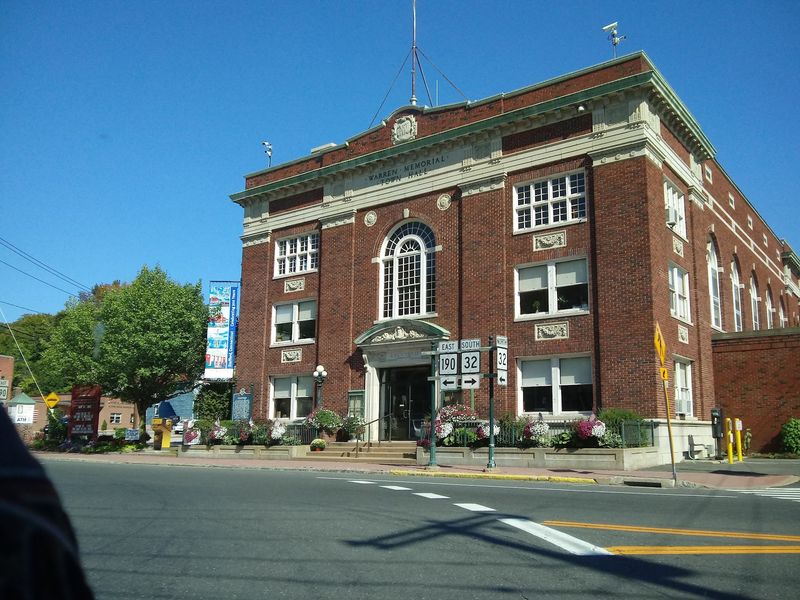
Warren Memorial Hall, dedicated in 1924, adds another chapter and remains a recognizable piece of the town’s civic fabric.
Downtown Stafford Springs carries the densest collection. Rooflines, window shapes, and cornice details reveal themselves gradually, especially in low afternoon light when shadows sharpen every edge.
Practical tip: comfortable shoes and a camera with a wide view help more than any guidebook. Distances are short, parking downtown is manageable, and the streets are flat enough for a relaxed pace.
Let curiosity set the route and the town fills in the rest.
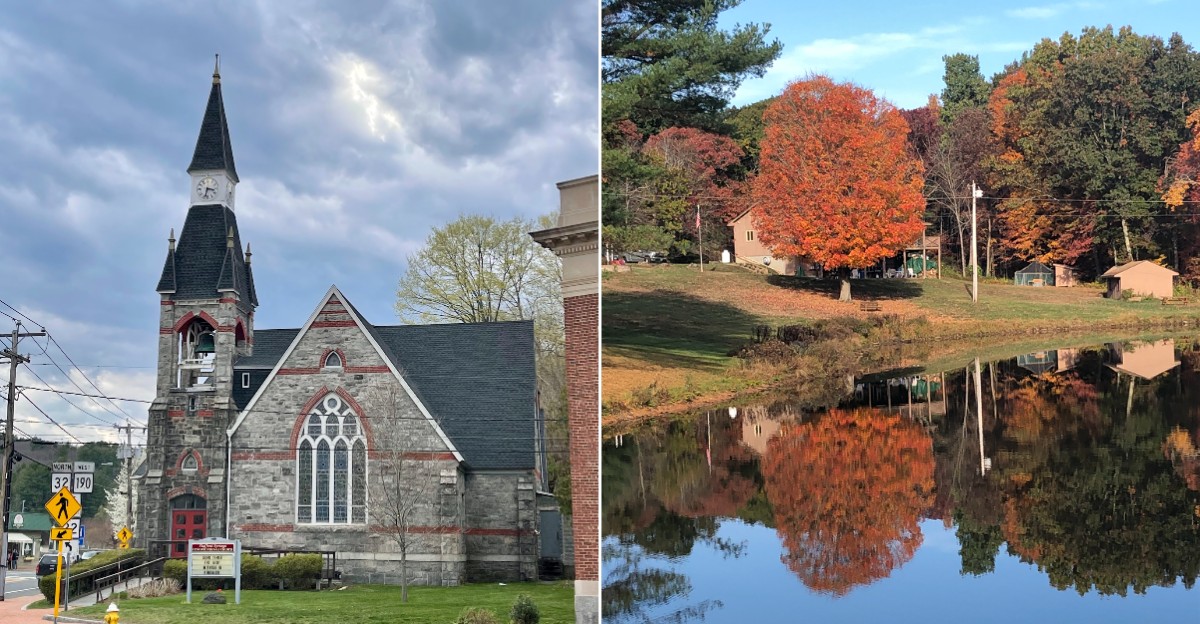
8. Fall Color Adds To The Old-Mill Scenery
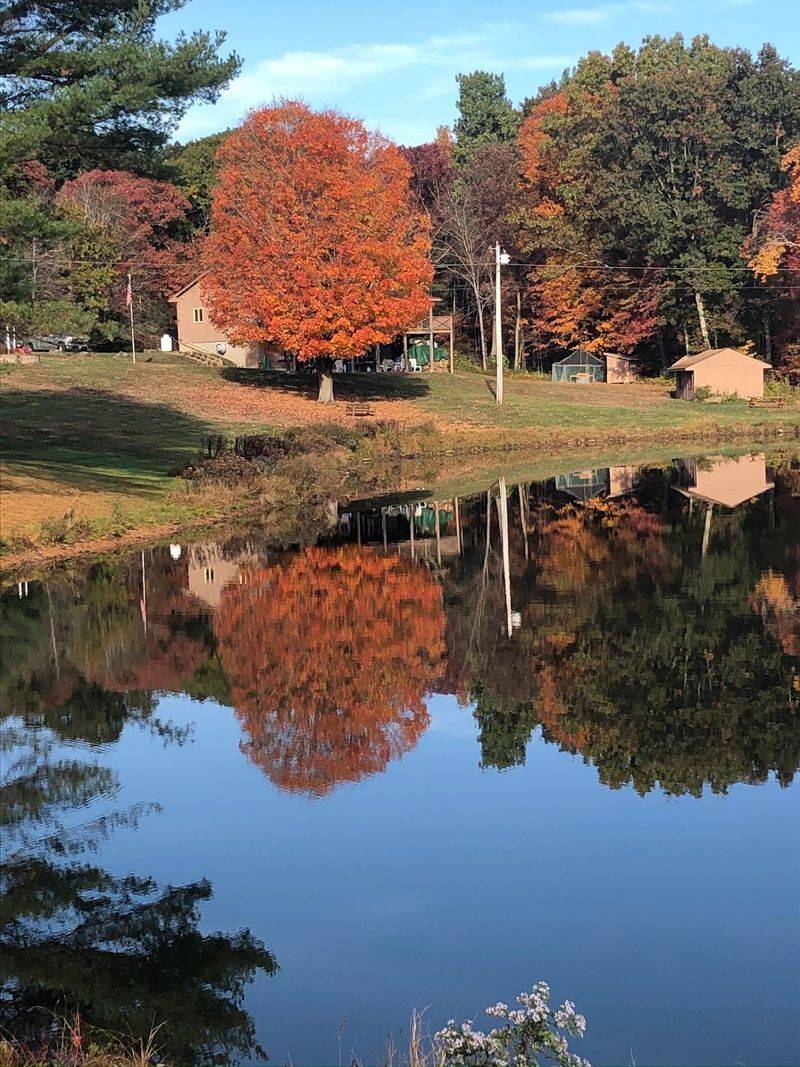
October is when the whole combination clicks. State’s foliage season is famous, with peak color across much of the state usually arriving between mid and late October, and the northeast corner, including Stafford, often hits its best colors around early to mid October.
Tree variety drives the show. Sugar maple, red maple, oak, and hickory mix across these hills, producing reds, oranges, and yellows rather than one flat shade.
What sets Stafford apart is the backdrop. Brick mill walls, rolling farmland, and forested ridges give the color something solid to play against, which is why photographers like this part of the state so much.
Trails make good viewing platforms. The Woodlawn Trail offers a pleasant autumn walk through the leaves, and higher points in Shenipsit State Forest open up broad views across the treetops.
Timing takes a little flexibility. Peak dates shift year to year depending on rainfall and overnight temperatures, so check a current foliage report before committing to a specific weekend.
Go early in the day if you can. Morning light through thinning leaves, cool air, and quiet streets make the old mill village feel especially welcoming, and you will have the trails largely to yourself.