This Connecticut Cemetery Is More Than 325 Years Old And Filled With Graves And Stories You Would Never Expect
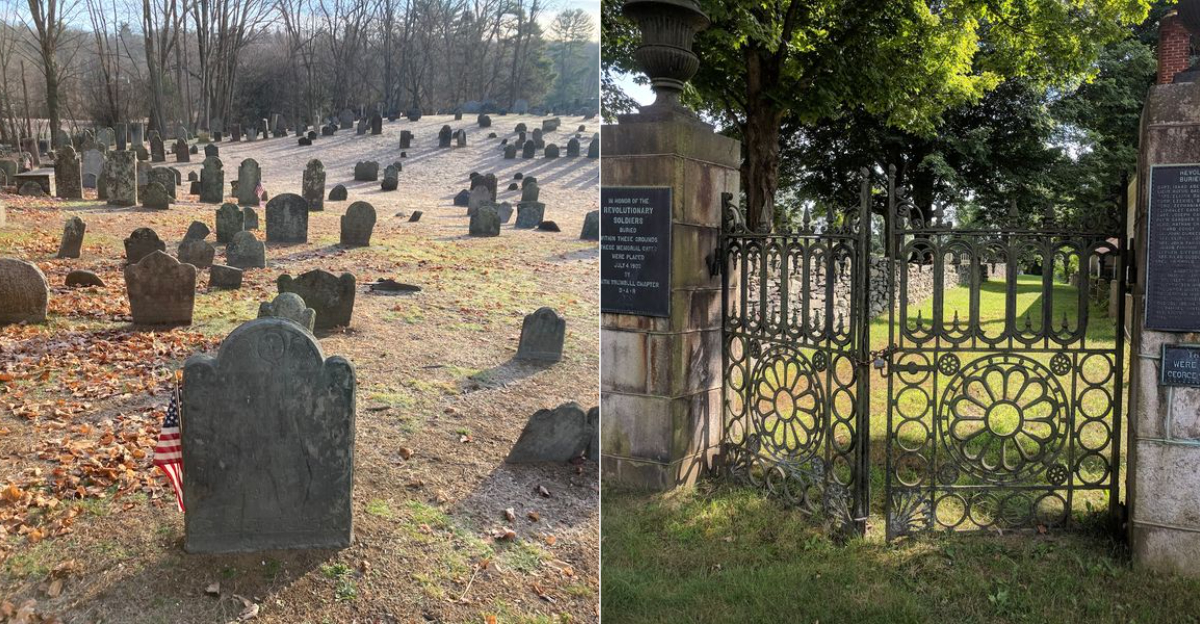
Old cemeteries are already quiet, but this one carries the sort of silence that makes every cracked stone feel slightly more watchful.
The markers reach back centuries, and many belong to people whose names are woven into early local history.
Walk slowly and the inscriptions begin to feel less like dates on stone and more like fragments of lives left behind.
This Connecticut burial ground has been here for more than three centuries, giving the landscape an eerie sense of time stacked on top of itself.
Weathered carvings make some headstones especially haunting. Others are so old that reading them becomes its own little mystery.
Even in daylight, the place can feel strangely atmospheric. History is everywhere, but it does not sit politely in the background. It follows you from marker to marker.
How many stories can one quiet patch of ground hold before the whole place starts feeling a little too aware of you?
1. More Than Three Centuries Of Local History Rest Here
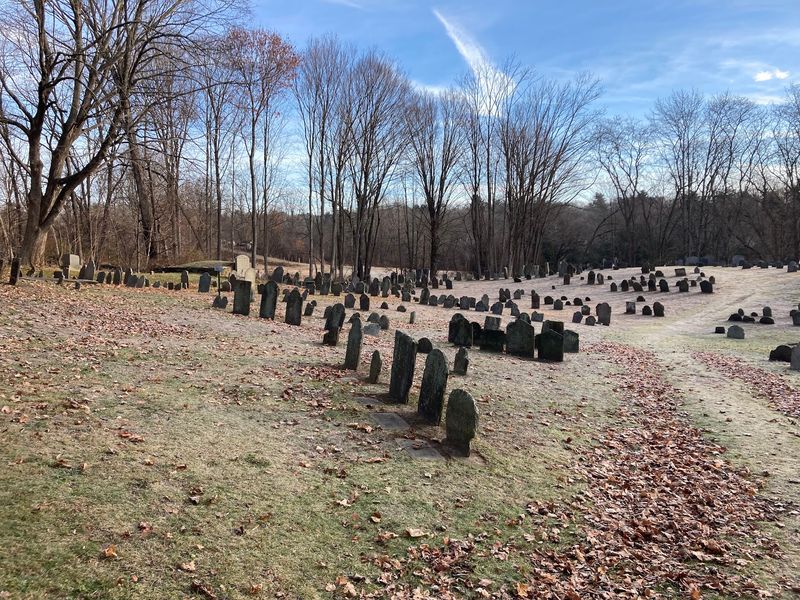
The hill keeps its history in plain sight. What looks like a quiet slope in Norwich is actually one of the city’s oldest surviving links to its earliest generations.
The burying ground was established in 1700 on hilly land owned by Reverend James Fitch and Lieutenant Samuel Huntington. The ground was considered poor for farming, which made it useful for a different purpose.
As Norwich expanded through the eighteenth century, the burial area grew with it.
Today, it is recognized as the city’s second-oldest burying ground. Several thousand burials have been recorded here, although only about 1,300 headstones remain visible.
That alone changes the way a walk through the property feels. History is not gathered around one grand monument.
It appears gradually across the hillside.
Older stones fill the original colonial section, while later additions stretch farther uphill. Weathered carvings and changing styles reveal how memorial traditions shifted across generations.
The atmosphere feels surprisingly peaceful. Trees soften the edges of the property, and the slope encourages a slower pace as more markers come into view.
Do not rush this one. The reward comes from wandering carefully and realizing how much of Norwich’s early story is still written across the hill.
2. The Old Colonial District Surrounds This Quiet Historic Ground
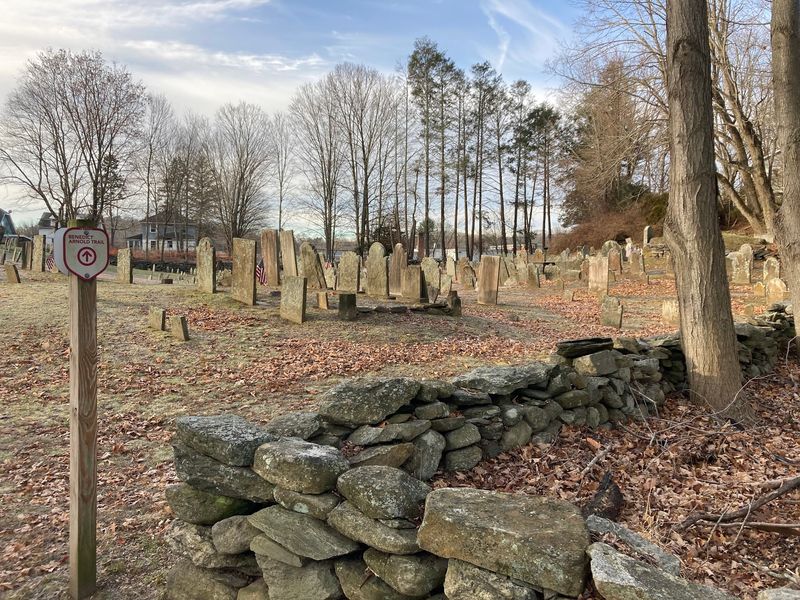
Half the pleasure of a visit comes before you reach the gates. The cemetery sits inside the Norwichtown neighborhood, a district that still wears its colonial character openly.
Norwichtown Green is nearby, along with historic homes and old taverns that keep the streetscape feeling rooted in another century. Walking between them takes minutes, not effort.
Access comes from Old Cemetery Lane, a small street branching off the intersection of Elm Avenue and Town Street. That lane leads straight to the oldest colonial section, which is the part most people come to see.
Parking is genuinely limited, and several visitors point that out. Many people leave their car in nearby business lots along Town Street and finish the trip on foot, which suits the neighborhood anyway.
For reference, the Old Burying Ground at Norwich Town is reached from Old Cemetery Lane off Town Street in Norwich, with the historic grounds extending toward East Town Street.
One thing catches most first-timers off guard. The grounds are far larger and hillier than they appear from the road below, split into two sections divided by a small stream.
Wear shoes you can walk uneven grass in. You will be covering more ground than expected.
3. The Cemetery Was Established Back In 1700
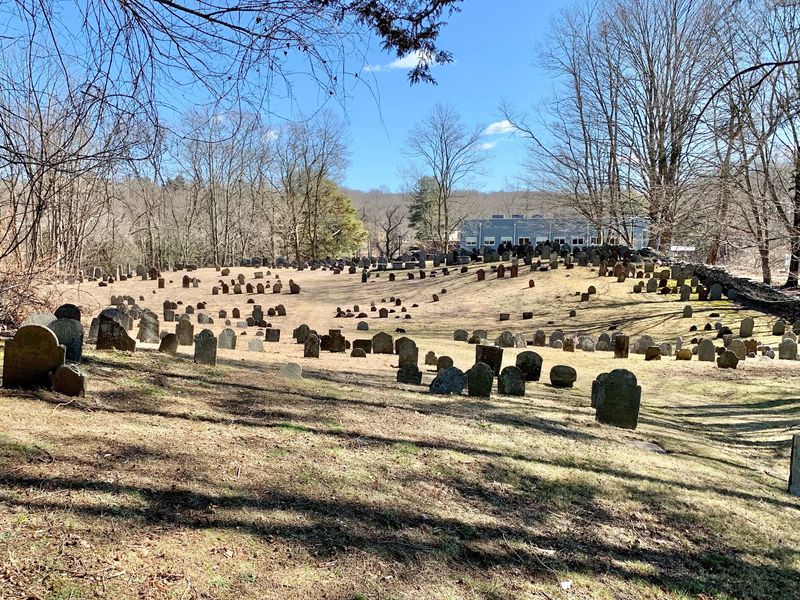
January 4, 1700. That is the date attached to the official establishment of this burying ground, when land acquired from Lieutenant Samuel Huntington was set aside for public burials.
Precision like that is rare for colonial sites, and it gives the place a clean starting line. Everything you see on the hill grew outward from that single decision.
The original portion, reached through the historic gates, is the hilliest part and holds burials mostly from the 17th and 18th centuries. Stones lean at angles the ground shaped over hundreds of winters.
Norwich kept growing, and so did the need for space. Additional land was folded in, forming a second section uphill to the north of the original area.
A small footbridge connects the two, crossing the stream that separates them. Crossing it feels like moving forward in time, since the later section stretches toward the Hubbard Gates on East Town Street.
That layout is worth understanding before you arrive. Plenty of visitors explore the front section, assume they have seen everything, and head back to the car.
Walk the bridge. The uphill portion changes your sense of how big this place really is, and the views back across the slope are quietly beautiful.
4. Around 1,300 Historic Headstones Still Remain
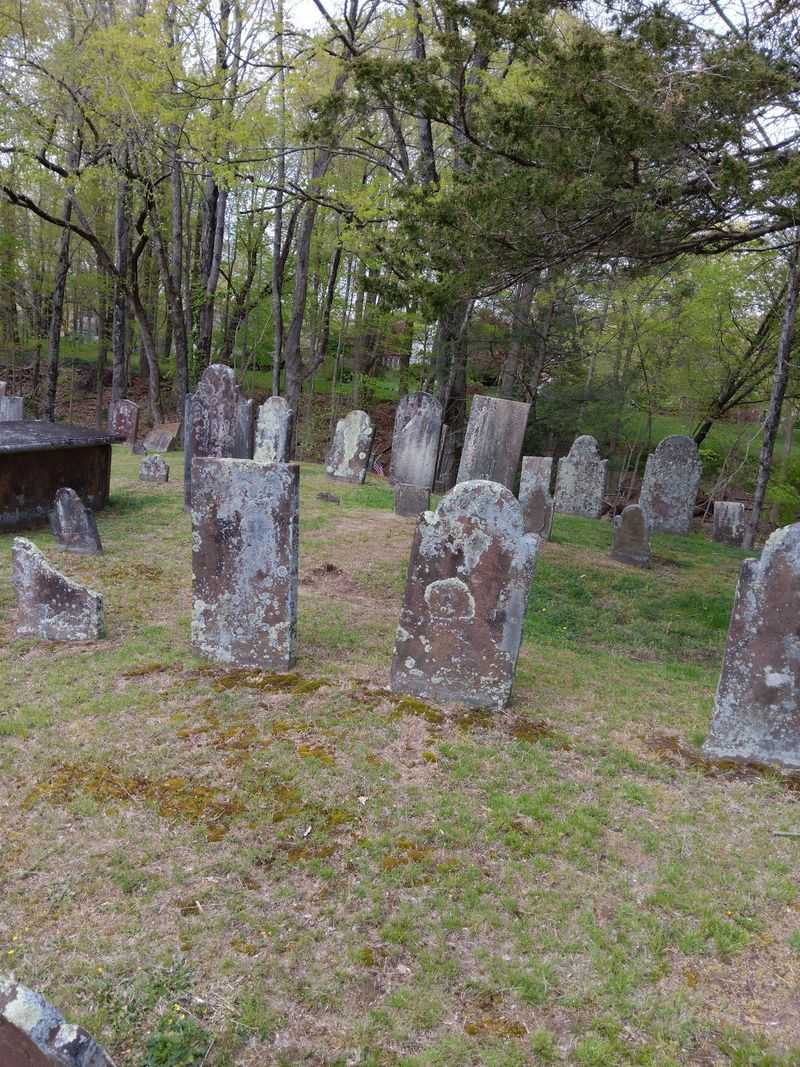
Thousands of people are believed to be buried here, yet roughly 1,300 to 1,400 gravestones remain visible. That gap says a lot about how much time erases and how much still survives.
The names on those markers include many of Norwich’s founding families and earliest residents. Reading them in sequence feels like flipping through the town’s original directory.
Sixty-nine people who took part in the American Revolutionary War rest on this hillside. Their markers are scattered rather than grouped, so finding them turns a stroll into a small treasure hunt.
Twenty French soldiers are also buried here, believed to have been merchantmen or sailors who died of illness in Norwich in 1778. Two monuments honor those allies, a detail most visitors never expect to find in eastern parts of the state.
The grounds hold the graves of numerous African Americans as well, many interred toward the rear of the cemetery and often without marked headstones. Boston Trowtrow, recognized as a Black Governor of Norwich, is buried here.
An informative pamphlet has been available at the gate, with a map noting significant burials. Grab one if it is there.
Interpretive plaques placed around the grounds add context, and visitors regularly mention how helpful those markers are.
5. Early Stone Carvings Reveal Changing Colonial Traditions
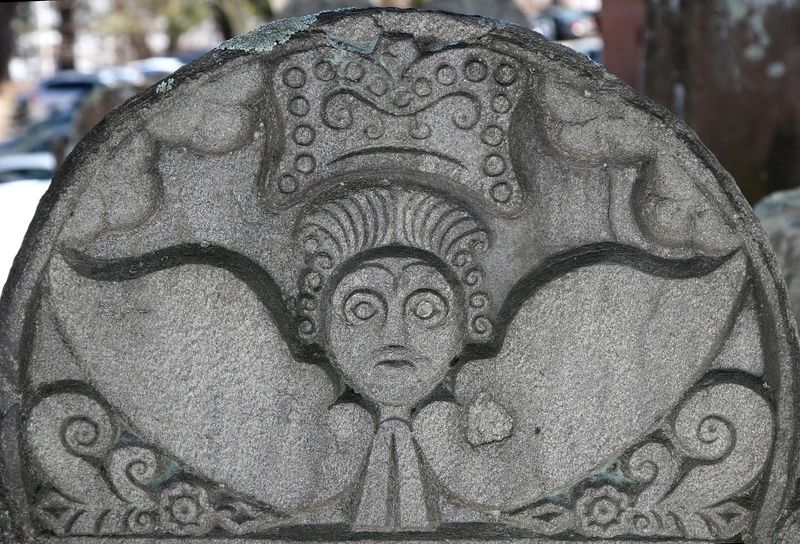
Think of these headstones as an outdoor gallery of America’s earliest art. Long before museums existed here, carvers were cutting faces, wings, and lettering into slate by hand.
The styles shift as you move through the grounds, tracking changing beliefs and fashions across decades. Some markers are stiff and severe, others rounder and softer.
Soul effigies are the crowd favorite. The carved faces range from concerned to stern to what honestly looks like mild annoyance, and once you notice the expressions you cannot stop comparing them.
One distinctive hand belongs to the so-called Norwich Ovoid Carver, known for primitively lettered, rounded markers. They look almost folk-art simple, and they pull you straight back to the state’s earliest days.
Work by the Manning family of colonial carvers appears here too, including Josiah, Frederick, and Rockwell. Their artistry shows up on many of the older stones.
Restoration work has been carried out on many markers throughout the burying ground, which is why so much of the carving is still readable.
Bring a camera and visit when the light is low. Angled sunlight catches the shallow carving far better than midday glare, and details you would otherwise miss suddenly jump off the slate.
6. One Headstone Belongs To Simon Huntington Jr.
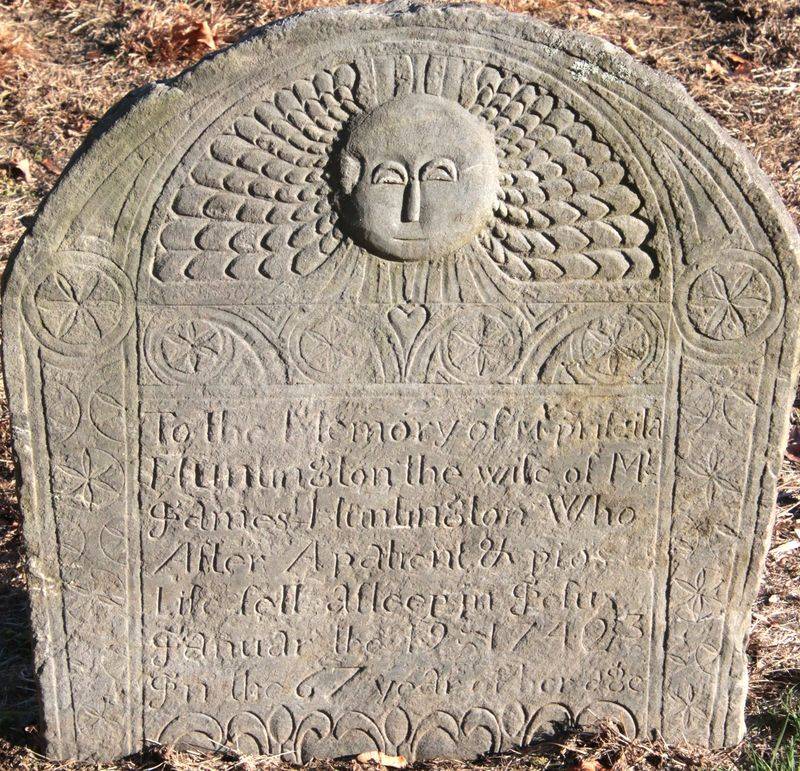
Every old cemetery has one stone that outranks the rest by age, and here it belongs to Deacon Simon Huntington Jr., who lived from 1629 to 1706. His gravestone is recognized as the oldest in the burying ground.
He was born in Norwich, Norfolk, England, and came to New England as a child. Around 1660 he settled in Norwich, joining the town’s earliest group of settlers.
His role in the community went well beyond attending services. He served as a deacon of Norwich’s first church until 1696, and that position later passed through four generations of the same family.
His homestead stood next to the northern edge of Norwichtown Green, a short walk from the church. Knowing that makes the neighborhood outside the gates feel connected rather than separate.
Civic duties filled the rest of his time. He served as a townsman and as a Commissioner to the Court, the kind of unglamorous work that keeps a young settlement functioning.
He passed at 77 in 1706, and his wife, Sarah, is buried alongside him.
Standing at a marker cut more than three centuries ago is a genuinely humbling few minutes. It is worth seeking out early in your visit.
7. Historic Iron Gates Mark One Of The Entrances
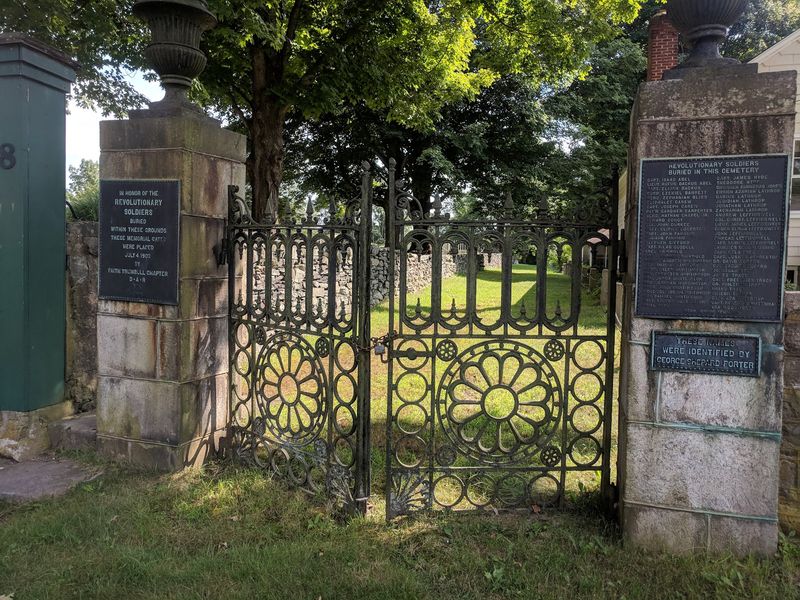
The gates set the mood instantly. Before the hillside opens up, ironwork on Old Cemetery Lane creates a striking threshold between the road and centuries of local history.
Pass through and the oldest section appears quickly. Colonial-era headstones cluster across the slope, many worn into irregular shapes by generations of weather.
Maps are sometimes available near this entrance, making it a useful starting point for exploring the grounds without wandering aimlessly.
The cemetery becomes larger than it first appears. Beyond the original section, a small footbridge leads toward later portions that continue uphill.
At the northern end, the historic Hubbard Gates mark the boundary along East Town Street. Their presence helps show just how much the burial ground expanded as Norwich grew.
Both entrances add character beyond their practical purpose. The ironwork frames views of grass, mature trees, and weathered markers particularly well, giving photographers plenty to notice before they move deeper into the property.
Entering from Old Cemetery Lane and continuing toward East Town Street creates a natural route across the hillside. It also avoids seeing the same stretch twice.
Pause at the first gate before heading in. That small transition from ordinary roadside to centuries-old ground makes the history ahead feel immediately closer.
8. Centuries Of Norwich Stories Fill The Hillside
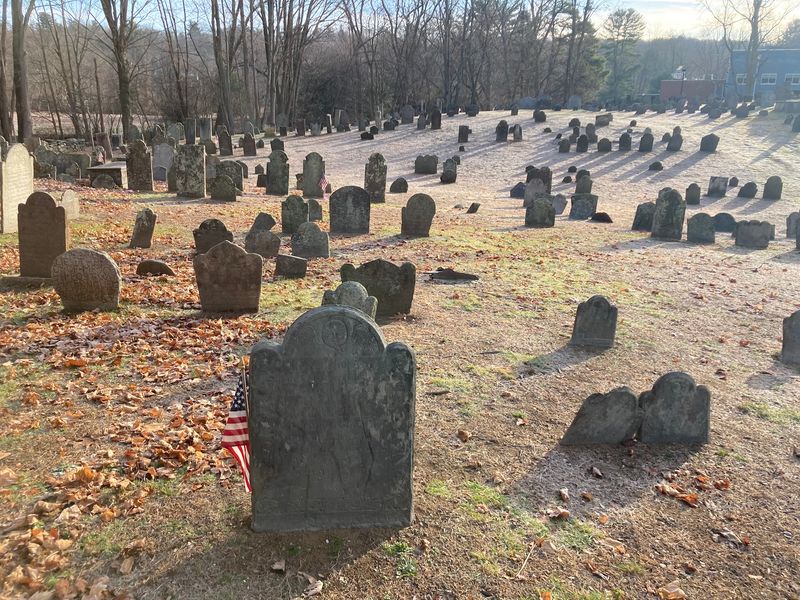
Some hillsides just hold grass. This one holds statesmen, community leaders, and Revolutionary War soldiers, woven together across the same slope.
Hannah Arnold, mother of Benedict Arnold, is buried here.
Her son, then 18, is said to have watched her burial in August 1759, and after his later treason, grave markers for Arnold family members were reportedly removed by angry patriots, with some said to have been thrown into the Yantic River.
The biggest name on the hill is Samuel Huntington. He signed the Declaration of Independence, served as President of the Continental Congress, and later became Governor of Connecticut.
Because he led Congress when the Articles of Confederation took effect in 1781, some argue he deserves recognition as the country’s first president. His remains rest in a prominent red brick tomb, along with relatives including Generals Jedediah and Ebenezer Huntington and Benjamin Huntington.
The grounds also hold many enslaved and free African Americans, among them Boston Trowtrow, a historical Black Governor of Norwich.
Walk all the way to the back before leaving. The Lowthorpe Meadow Natural Area waits there, with streams, wildlife, and open green space that make a peaceful finish to a genuinely memorable morning.