This Connecticut Church Looks Like A Work Of Art Outside And Gets Even More Impressive When You Step Inside
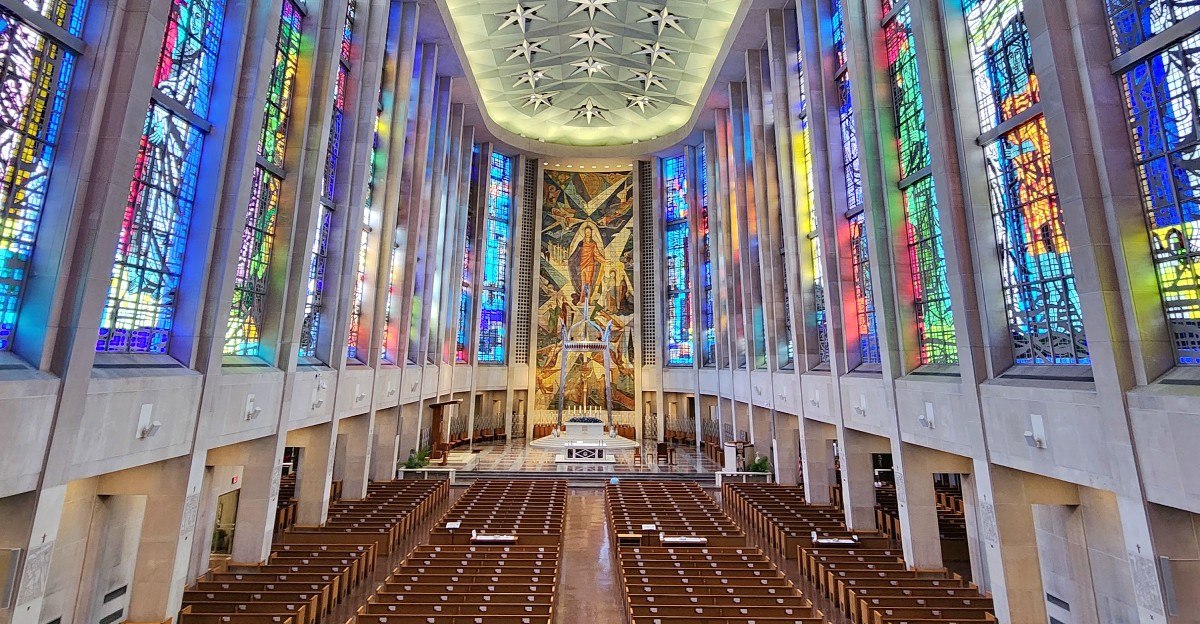
From the street, you already know this is not a building you simply glance at and keep moving. The architecture demands a proper look. Then the doors open.
One remarkable Connecticut church pairs a striking exterior with an interior that somehow manages to raise expectations even higher.
Light and scale completely change the experience once you are inside. Your eyes naturally travel upward, then start picking out details that were impossible to guess from the street.
It feels closer to exploring an enormous work of art than making a quick architectural stop.
Even visitors who rarely seek out churches can find plenty to appreciate here. Craftsmanship becomes the attraction, and the building encourages you to slow down enough to notice how much thought went into the space.
The exterior may be what makes you stop. The real surprise is discovering that it was only the introduction.
1. Modern Architecture Makes The Cathedral Impossible To Miss
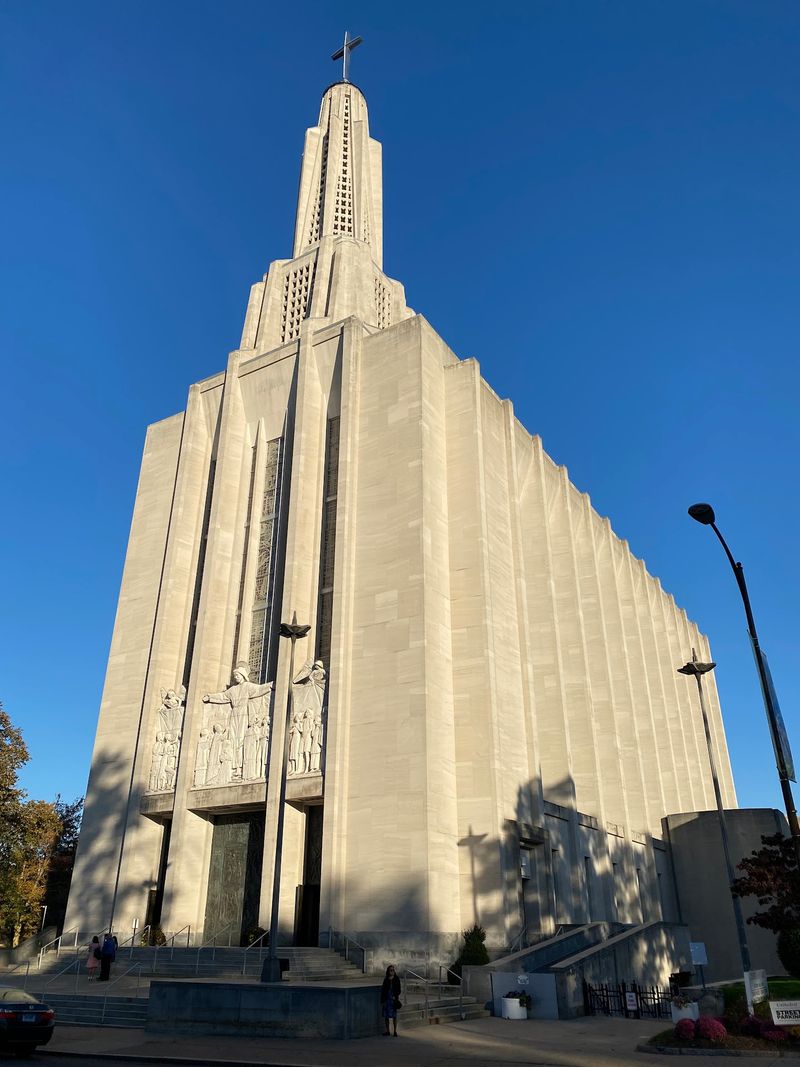
Now that is a church. One glance upward is enough to understand why the Cathedral of Saint Joseph has become such a recognizable part of Hartford’s skyline.
Its soaring tower, pale limestone exterior, and sharp modern lines make it look dramatically different from the historic churches scattered around New England.
The reason begins with a major change in the 1950s. An earlier Gothic Revival cathedral occupied the site until a fire in 1956 led to plans for an entirely new building.
Instead of recreating what had been lost, architects Eggers and Higgins designed a modern cathedral that still borrowed elements from traditional Gothic architecture.
The new building was consecrated on May 15, 1962. Its tall vertical lines immediately pull your eyes upward, while huge sections of stained glass hint at the burst of color waiting inside.
That contrast is one of the most memorable parts of a visit. The restrained stone exterior gives little warning of the vibrant interior, where enormous stained-glass windows transform sunlight into intense shades of blue, red, and gold.
Take time to circle the building rather than rushing through the doors. Different angles reveal just how ambitious the design really is.
Even decades after its completion, the cathedral still feels daring, proving that a modern church can deliver just as much architectural drama as one built centuries ago.
2. Farmington Avenue Leads Straight To Its Towering Exterior
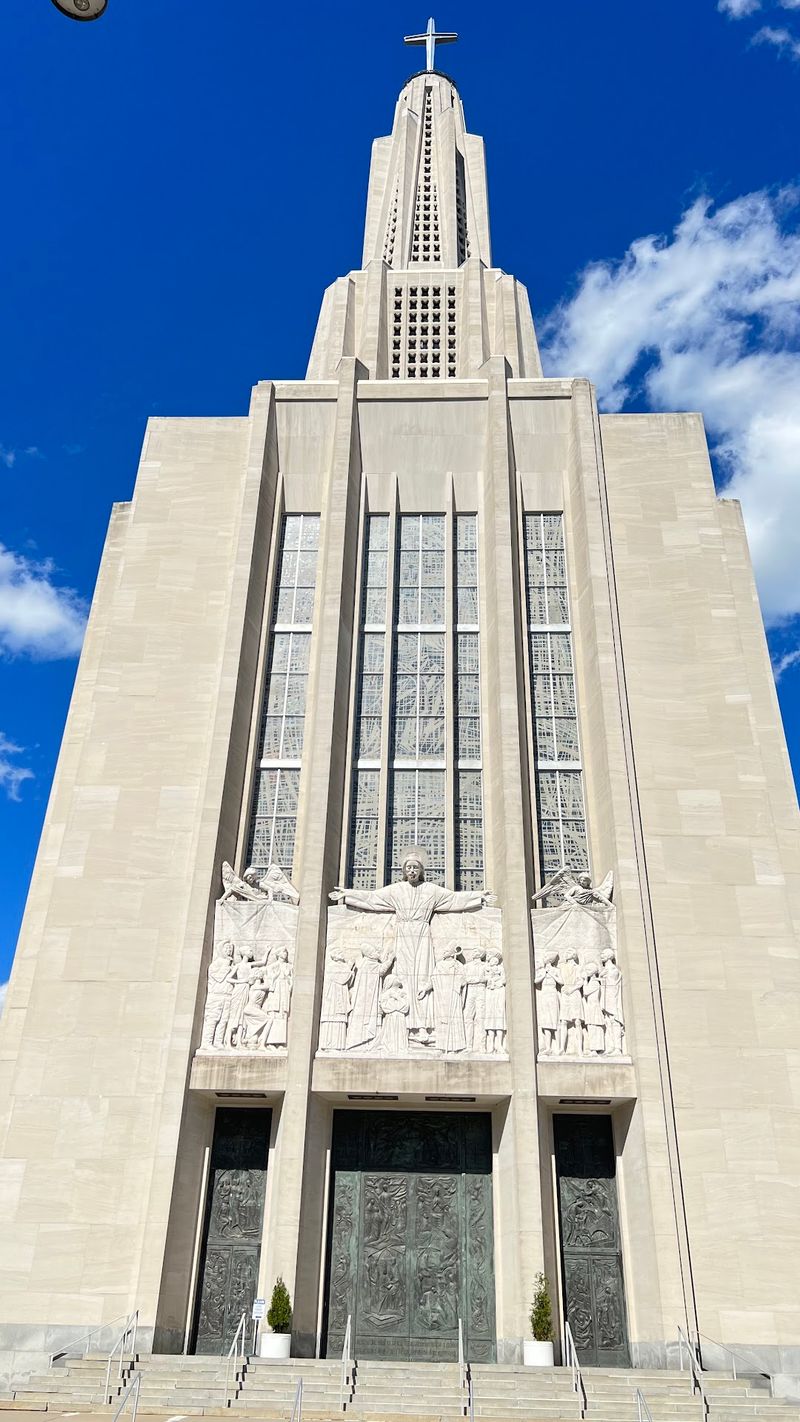
Keep an eye on the skyline. Long before you reach the cathedral doors, its soaring tower begins appearing above rooftops and grows more impressive with every block.
That gradual reveal makes the final approach part of the experience.
The tower has received extensive restoration work over the years, helping preserve one of Hartford’s most recognizable architectural features.
Exterior lighting adds another dimension after sunset, illuminating the structure and making its distinctive silhouette easy to pick out against the evening sky.
A little planning can make a visit smoother. Parking options include nearby street spaces and cathedral parking areas, although major services, concerts, holidays, and special ceremonies can bring larger crowds.
Arriving with extra time on busy days takes away the rush.
Because this remains an active place of worship, public access can vary around Masses, events, and other church activities. Visitors hoping to explore the interior should check the current schedule beforehand rather than counting on set sightseeing hours.
Accessibility improvements have also been incorporated into the cathedral complex, helping more visitors comfortably experience the building. The cathedral stands at 140 Farmington Avenue in Hartford, just beyond the heart of downtown.
If the weather cooperates, cover the final stretch on foot. Seeing that enormous tower gradually take over the view makes the entrance feel even more dramatic.
3. Limestone Walls Give The Building Its Monumental Look
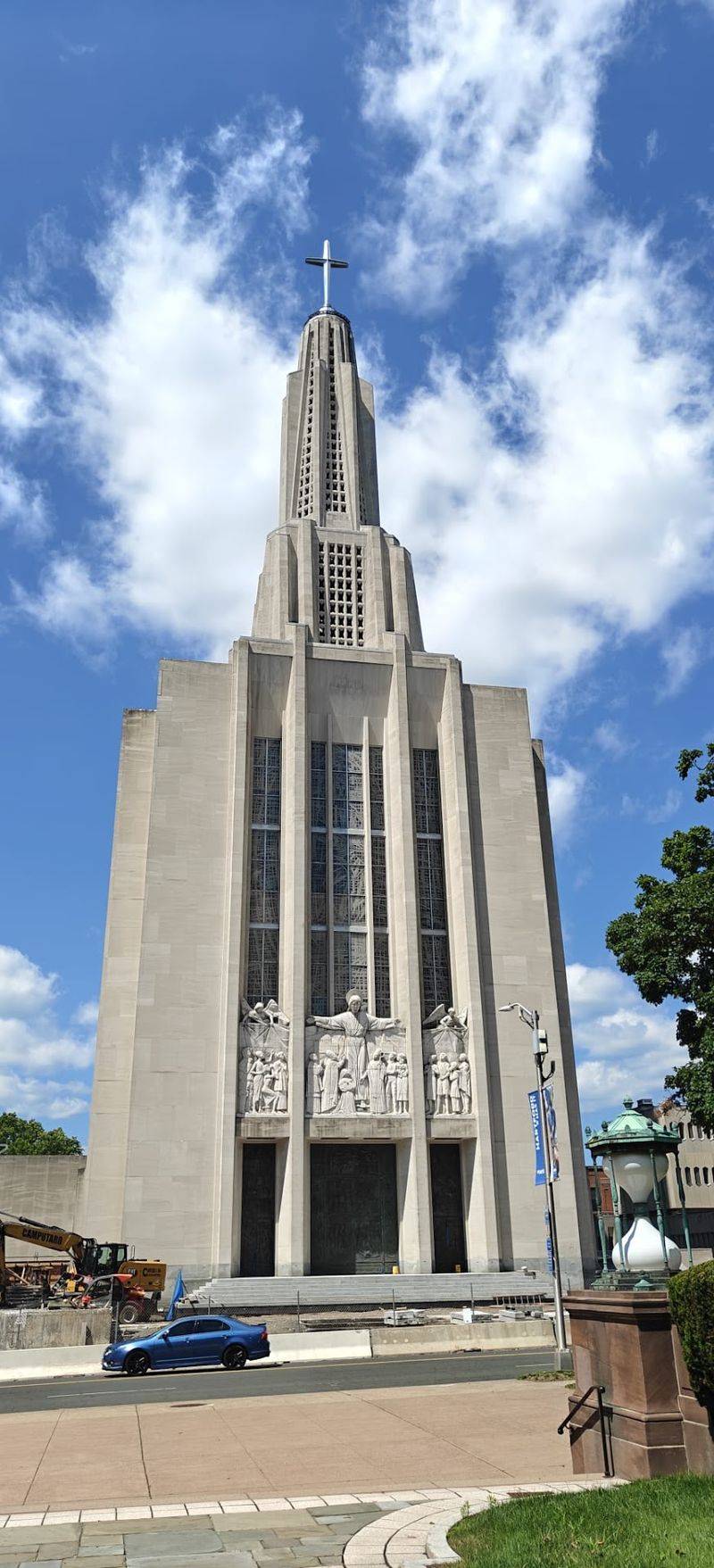
Run your eyes across the outer walls and you will see smooth, light gray stone that seems to glow in the sun. That stone is Alabama limestone, wrapped around a strong frame of reinforced concrete.
Together they give the cathedral its solid, monumental feel.
Above the main entrance, a large frieze shows Saint Joseph, who is the patron of both the cathedral and the archdiocese. Below it stand tall bronze doors weighing about five and a half tons.
Their surfaces are covered with carved biblical scenes, so they are worth studying up close before you walk through.
Look higher, toward the spire. The stone blocks there are cut in a pattern of open spaces, or voids.
As sunlight moves through the day, those gaps create shifting shadows, so the tower never looks exactly the same twice.
Hidden up in the bell room are 12 bells made in the Netherlands. The smallest weighs about 225 pounds, while the largest tips the scale at roughly 3,850 pounds, which is heavier than many cars.
Inside, the stonework continues with Indiana limestone set above a lower band of Cliffdale marble. It is a small detail, but it ties the outside and inside together in a quiet, elegant way.
4. Stained Glass Transforms The Interior With Color
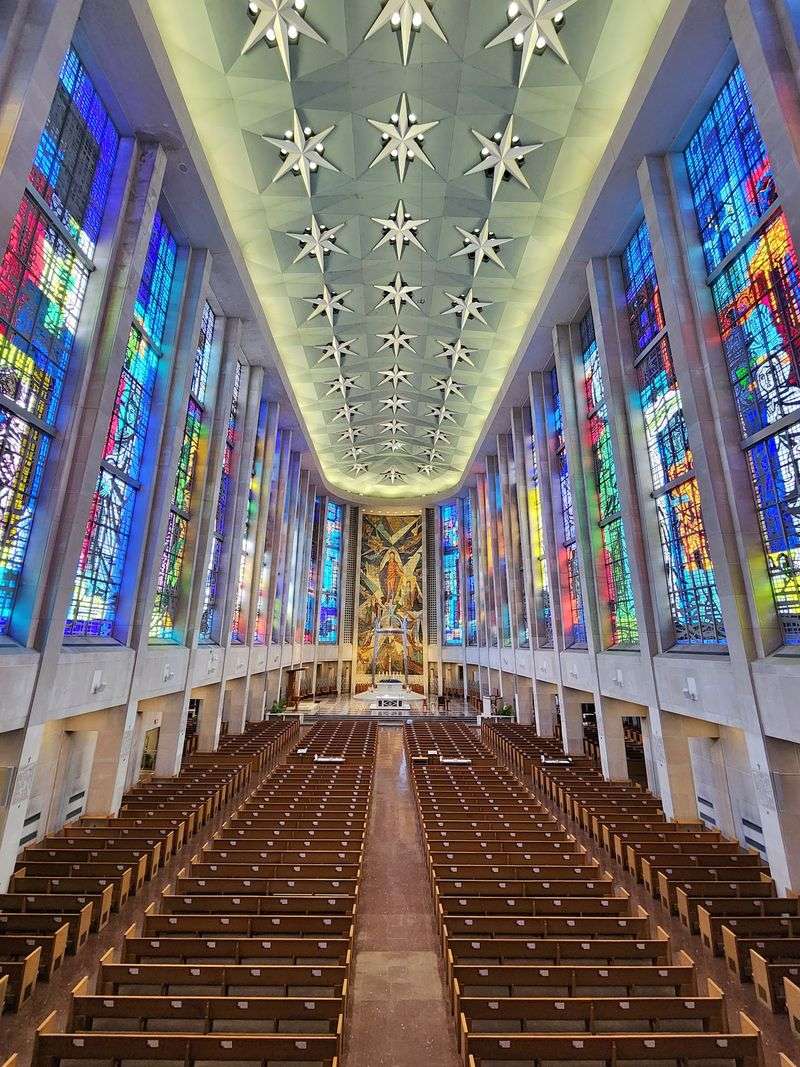
Then the sunlight hits. Suddenly, the entire interior seems to change color.
Enormous stained-glass windows send deep blues, glowing reds, and warm golds across the cathedral, creating one of its most memorable sights.
These are no ordinary church windows. Designed in Paris under the direction of French stained-glass artist Jean Barillet, the towering panels rise roughly 67 feet and use thick pieces of colored glass.
Rather than relying on the delicate lead framework familiar from older stained glass, the pieces are set into reinforced concrete. The result feels bold and substantial, perfectly matching the cathedral’s modern architecture.
Look closer and the windows begin telling stories. Those lining the nave focus on Christ as Savior and feature scenes inspired by the Gospels.
Behind the sanctuary, additional stained glass incorporates symbols connected with the Sacraments.
The experience also changes throughout the day. As sunlight shifts, patches of color travel across the interior, illuminating different details and making the space feel slightly different from one moment to the next.
A bright day gives the glass its chance to really perform. Stand beneath those immense panels for a minute and look upward.
Their scale is impressive enough, but seeing the colors come alive is what makes them difficult to forget.
5. Soaring Ceilings Make The Nave Feel Enormous
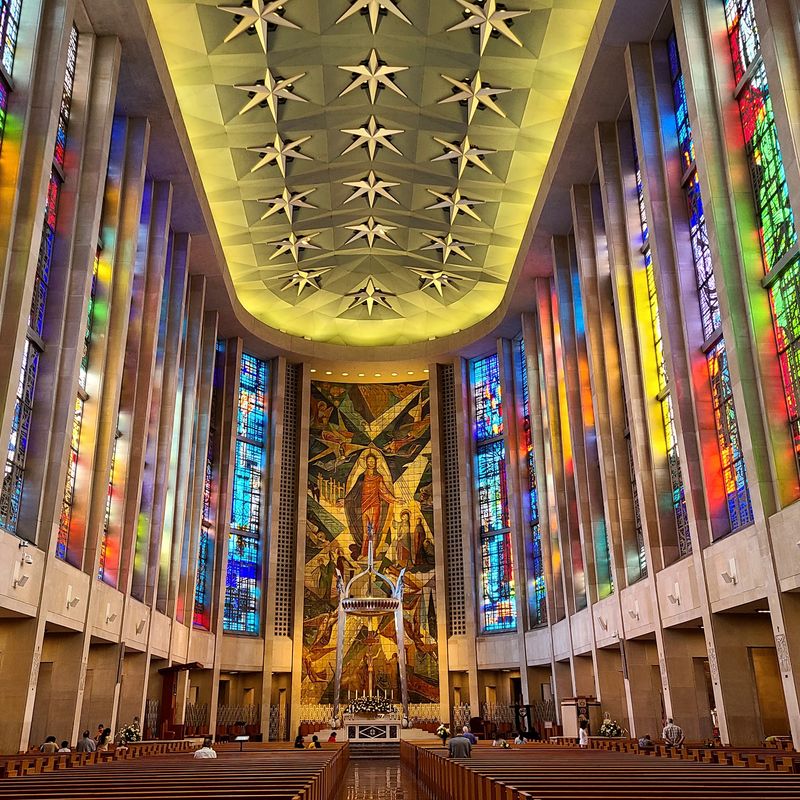
Tilt your head back. Way back. The ceiling inside rises about 108 feet, and that height makes the main worship space, called the nave, feel wide open and full of air.
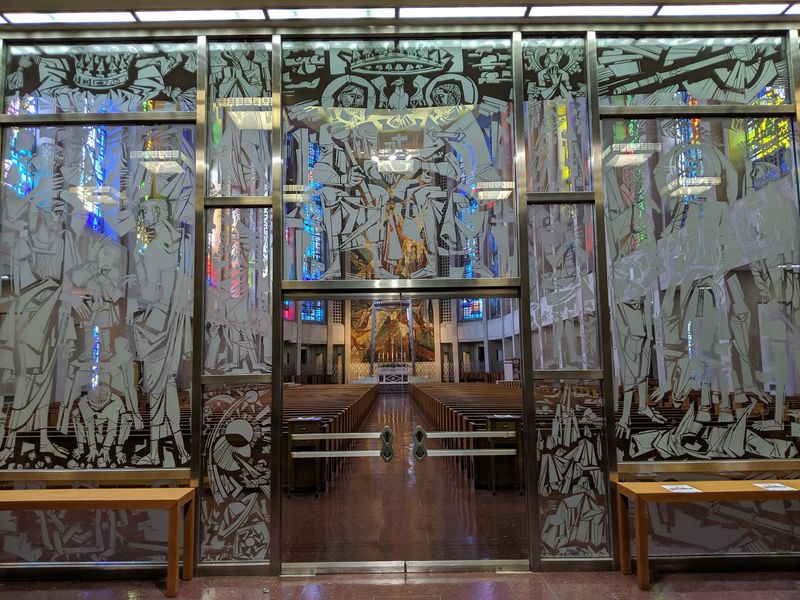
Before reaching it, you pass through the entrance area, known as the narthex. A wall of etched glass separates it from the nave.
Created by artist Giovanni Hajnal, it shows the Kingdom of Christ on Earth and in Heaven, and it acts like a see-through doorway into the bigger space beyond.
Once inside, space seems to stretch in every direction. The cathedral seats about 1,750 people, not counting its two side chapels.
Even when it is full for a confirmation or holiday service, guests often say the sound system carries well from the middle rows.
Then there are the lights. Fixtures overhead are shaped like stars, and many visitors say they almost look three-dimensional, as if a night sky has been hung indoors.
A practical tip for services: sit toward the center if you can. Some side seats sit near large pillars that may block part of your view.
Choosing a middle spot lets you take in the full sweep of ceiling, glass, and altar all at once.
6. Mosaics Add Detail Around Nearly Every Corner
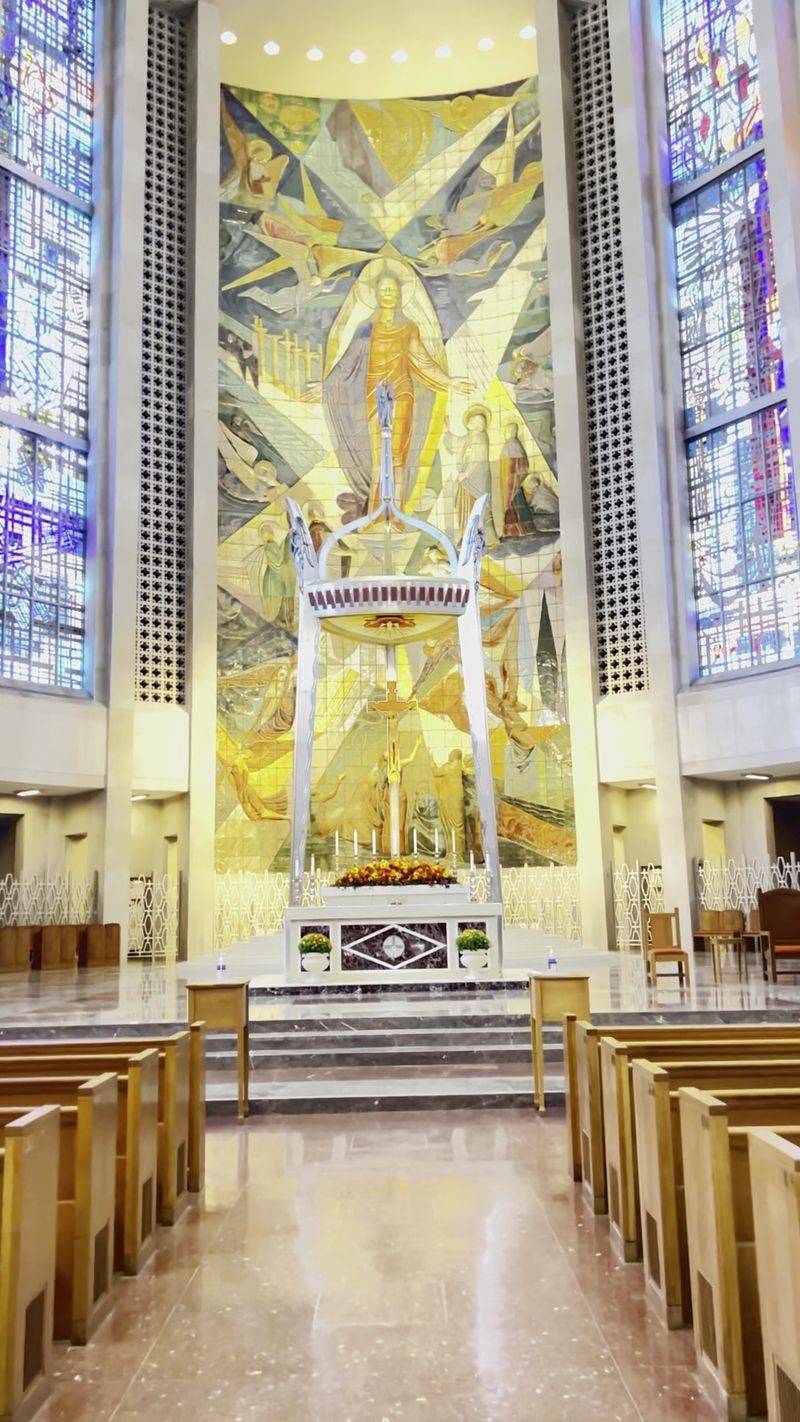
Did you know one of the most famous artworks in Hartford is made of ceramic tile? Behind the main altar stands a massive mural called Christ in Glory, widely considered the largest of its kind in the world.
Seeing it in person is a lesson in scale. From the back of the church, the image reads clearly as one grand scene.
Walk closer, and you begin to notice how countless pieces work together to build faces, robes, and color.
The artistry does not stop at the altar. Smaller chapels throughout the cathedral are decorated with colorful mosaic tiles.
Side altars feature life-size mosaic figures of the saints they honor, which makes them feel surprisingly personal and close.
These pieces reward patience. Try this simple game with kids or friends: pick one mosaic and look for the smallest detail you can find, such as a hand, a flower, or a pattern along the edge.
It is a fun way to slow down and really see the work.
Because mosaics catch light differently than paint, they can look a little different at various times of day. If you visit more than once, you might notice new tones each time, which keeps the experience fresh.
7. A Massive Pipe Organ Commands Attention Inside
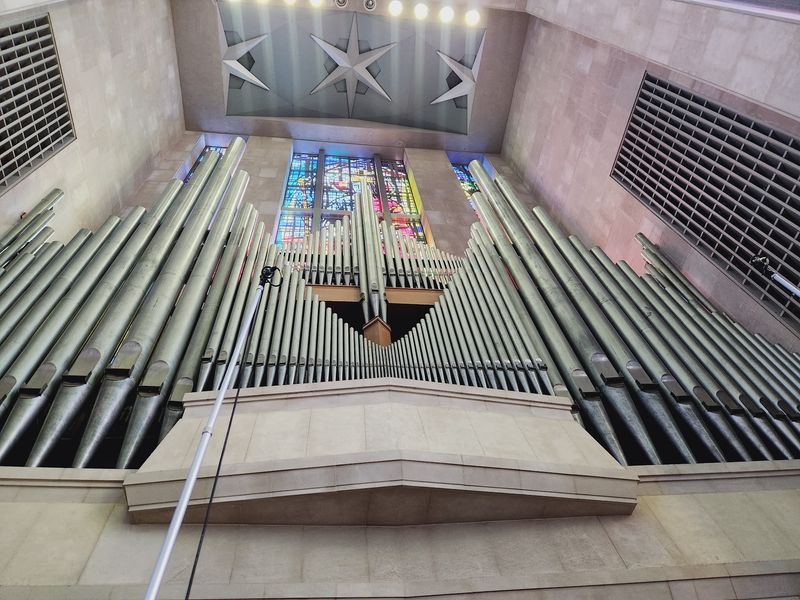
When the main organ starts to play, you feel it as much as you hear it. Up in the rear gallery sits the largest pipe organ in Connecticut, and it fills the building with rich, rolling sound.
Hartford has a special connection here. Both of the cathedral’s organs were built by the Austin Organ Company, a local organ maker based right in the city.
The main instrument has four keyboards, 81 stops, 114 ranks, and 6,878 pipes. Some pipes are small as pencils, while others tower overhead.
A second organ lives in the Blessed Sacrament Chapel. It is smaller but still impressive, with three keyboards and 1,195 pipes, perfect for quieter services.
Music lovers should keep an eye out for concerts, especially around the holidays. Guests often praise the quality of the organ music and the pleasing acoustics, and a Christmas concert here can be a memorable family tradition.
Just remember to arrive early, since parking fills up on those nights.
Even if you visit on an ordinary afternoon, glance up at the gallery. Knowing how much sound waits inside those pipes gives the quiet room a feeling of hidden energy, like a giant instrument resting between songs.
8. Quiet Moments Reveal Details Easy To Overlook
Some of the best discoveries happen when you stop moving. Find a seat, let your eyes adjust, and the cathedral starts sharing its smaller secrets.
Head toward the side chapels first. One holds a mural of Jesus with his followers.
Another, on the left side, features a mural of the Holy Family and houses the baptismal font, where many local families have celebrated important milestones.
On your way out, give the entrance a second look. The etched glass wall between the narthex and the nave is full of fine lines that are easy to miss when you first rush in.
The bronze doors deserve another pass too, since their biblical scenes reveal more each time you study them.
Outside, pause and look up at the spire again. The patterned limestone throws changing shadows as the sun moves, so a late afternoon view can look quite different from a morning one.
Many visitors describe the space as peaceful and welcoming, a calm spot to pray, reflect, or simply rest. Weekday hours tend to be quieter than weekends, which makes them ideal for a slow visit.
Leave your phone in your pocket for a few minutes, and you may be surprised by how much you notice.