This Connecticut City Just Broke A 54-Year Summer Rainfall Record With More Than 21 Inches Of Rain
Lately, Connecticut weather has been giving one city a summer story nobody expected to tell.
More than 21 inches of rain fell there during the season, enough to break a record that had stood for 54 years. That number sounds dramatic because it is.
The real surprise is how quickly a familiar summer can turn into something people remember for decades. Streets that usually handle routine storms suddenly saw rainfall totals stack up far beyond the norm.
Longtime residents had plenty to compare it with, which makes the record even more striking.
A statistic like this can feel abstract until you picture how many wet days it takes to reach it.
The city did not just have a rainy stretch. It rewrote part of its weather history.
What caused the summer to tip so far past the old mark, and how unusual was the pattern that produced it?
1. Bridgeport’s Wettest Summer On Record
By late August, the rain had already rewritten the record book. Bridgeport’s summer was officially the wettest measured at its long-running climate station.
From June 1 through August 23, 2026, Igor I. Sikorsky Memorial Airport recorded 21.21 inches of rain.
That pushed past the previous meteorological summer record of 20.23 inches, set in 1972 and untouched for 54 years. Meteorological summer covers June, July, and August, so the total could still climb before the season closes on August 31.
And because the record fell before August ended, the final figure may finish even higher.
The remarkable part is how the water arrived. June was relatively dry with 2.52 inches, but July surged to 12.33 inches.
Another 6.36 inches followed through August 23, including 2.36 inches that day alone, a new daily record for the date.
By that point, rainfall was already more than double the normal amount for this stage of summer. The official climate record at Sikorsky stretches back to 1948, making the new benchmark especially notable.
Long after the umbrellas are put away, this number will remain attached to 2026. For Bridgeport weather watchers, 21.21 inches is now the summer total every future rainy season will have to chase.
2. Coastal City Life Along Long Island Sound
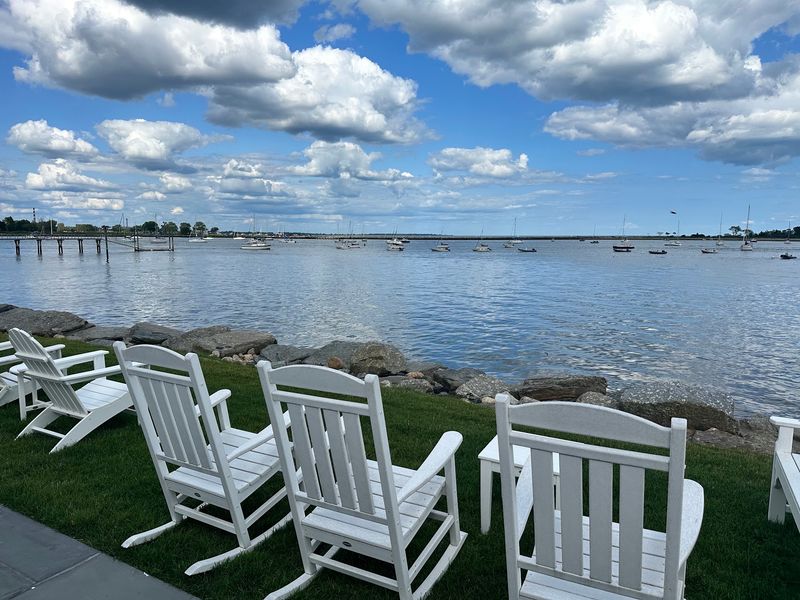
Sitting at the mouth of the Pequonnock River where it meets Long Island Sound, Bridgeport has always taken its weather cues from the water. The Sound moderates temperatures, nudges sea breezes inland on hot afternoons, and shapes how storms behave as they cross Fairfield County.
The state’s most populous city counted 148,654 residents in the 2020 census, making it the fifth largest in New England. Manhattan sits about 60 miles away, and The Bronx about 40, which puts Bridgeport within easy reach of the wider metro region.
Bridgeport lies near the transition between humid subtropical and humid continental climates. Warm summers, cold winters, and precipitation that spreads fairly evenly across the calendar, with winter moisture often arriving as snow rather than rain.
That balance is what made 2026 stand out so sharply. A summer this wet is not simply a wetter version of normal, it is a genuine departure from the pattern residents expect.
Coastal geography played its part in daily life too. Humidity lingered, harbor views turned hazy, and the salt air carried that heavy, storm-ready feeling for weeks at a stretch.
Local parks, waterfront paths, and shoreline spots stayed lush, and the greenery around the city held its color far longer than a typical August allows.
3. The Official Weather Station Behind The Record
Every official record needs an official measuring point, and Bridgeport’s is Igor I. Sikorsky Memorial Airport.
Observations there have been kept continuously since July 1, 1948, giving the city a climate history stretching back more than seven decades.
The National Weather Service uses those readings to build daily, monthly, and seasonal climate summaries. That consistency matters enormously.
Comparing 2026 to 1972 only works because both years were measured at the same site using standardized methods.
Rainfall gets recorded to the hundredth of an inch, which explains why the summer total reads as 21.21 rather than a rounded 21. Those small decimals decide whether a record stands or falls.
Airport weather stations are common choices for official climate sites because they are staffed, maintained, and already equipped for aviation forecasting. The instruments sit in open ground away from buildings and trees that could skew a reading.
Backyard rain gauges scattered around Bridgeport almost certainly caught different amounts. Summer downpours are notoriously patchy, and one neighborhood can get soaked while another two miles away stays mostly dry.
The airport figure is the one that goes into the books, though, which is why it carries the weight of an official record.
4. 21 Inches Before August Even Ended
August 23, 2026 turned out to be the tipping point. A single rain event dropped 2.36 inches on Bridgeport that day, and by the following morning the summer total had climbed to 21.21 inches.
That one day did double duty. It pushed the season past the all-time mark and set a new daily record for August 23, beating the 1.69 inches measured on that same calendar date back in 1970.
Two and a third inches in a day is a serious amount of water. Storm drains work overtime, low spots collect puddles that stick around for hours, and driving conditions get noticeably tricky.
The timing added drama to the story. With a full week of meteorological summer still left, the record fell before the season even had a chance to finish.
Late August storms in coastal Connecticut often carry tropical moisture, which lets clouds hold and release far more water than a routine summer shower.
For residents, the practical lesson was familiar. Keep an eye on flash flood alerts, avoid driving through standing water on flooded roadways, and give yourself extra time when the sky opens up during rush hour.
5. The 1972 Summer Record Finally Falls
For 54 years, 20.23 inches was the number to beat. Set during the summer of 1972, it survived every wet season Bridgeport threw at it until 2026 came along.
That old record had a dramatic backstory. June 1972 alone brought 17.7 inches of rain to Bridgeport, making it the wettest single month the city had ever recorded at the time.
The far-reaching effects of Hurricane Agnes were tied to that summer, a storm remembered across the Northeast for the extraordinary flooding it produced as it moved inland.
What is interesting is how differently the two record summers unfolded. In 1972, one enormous month did nearly all the work.
In 2026, the total built up more gradually before a late surge finished the job.
Records that last more than half a century tend to feel permanent. Plenty of Bridgeport residents were not yet born when the 1972 mark was set, and many who remember it have since moved away.
Now there is a new figure in the record book, and it will be the one future summers get measured against.
Whether it stands for another 54 years is anybody’s guess, but it has a good head start.
6. July Delivered A Remarkable 12.33 Inches
July forgot how to behave. What began as an unremarkable summer suddenly turned remarkably soggy.
June had brought only 2.52 inches of rain, leaving the season on the dry side at first. Then Bridgeport collected 12.33 inches in July, enough to make it the city’s second-wettest July on record.
Only July 1971 finished higher, with 12.84 inches. The difference was barely half an inch.
The normal July total is 3.32 inches, so 2026 delivered nearly four times the usual amount in a single month. That swing explains why the summer rainfall record was already in serious trouble before August was over.
Along the shoreline, repeated downpours could quickly complicate anything planned outdoors. Gardens received more water than they typically would in July, while long stretches of damp weather also created conditions that can encourage plant diseases.
Standing water after repeated rain can give mosquitoes more places to breed as well.
What makes July remarkable is not simply that it was wet. One month supplied well over half of Bridgeport’s record-setting summer rainfall through August 23.
Few seasonal turnarounds could have been sharper than that. A season that started relatively dry changed direction fast, and July did most of the work.
7. More Than Twice The Normal Rain By Late August
Numbers tell the story best here. Through August 23, 2026, Bridgeport was running 11.09 inches above its normal rainfall for that point in the season.
Normal summer rainfall through August 23 comes in around 10.12 inches. The city had already collected more than twice that amount, essentially banking two full summers of rain in one.
A surplus that large changes the ground itself. Soil stays saturated, meaning each new storm has nowhere to soak in, so water runs off faster and pools in places it normally would not.
Homeowners in situations like this often notice the effects indoors before outdoors. Damp basements, sticky doors, and higher humidity are common companions to a summer like this one.
Practical steps help. Clearing gutters, extending downspouts away from foundations, and running a dehumidifier in lower levels all make a real difference during extended wet stretches.
On the brighter side, reservoirs and groundwater levels benefit enormously from a season like this, and drought concerns essentially vanish.
Trees, shrubs, and lawns across the city were still benefiting from the unusually wet conditions in late August.
Extreme is the right word for a surplus this big.
8. A Record That Could Still Climb Before Summer Ends
Breaking a record with a week to spare leaves an interesting question hanging. As of August 24, 2026, just under a week remained in meteorological summer, and forecasts pointed toward more chances of rain.
Meteorologists suggested another half inch to an inch could fall before September arrived. Every additional hundredth would push the new benchmark a little further out of reach for future summers.
That kind of buffer matters over the long run. A record set at 21.21 inches is one thing, but a record padded closer to 22 inches becomes considerably harder to beat.
Meteorological summer ends on August 31, unlike astronomical summer, which runs into late September. Climate records follow the meteorological calendar because whole months make statistical comparison much simpler.
For Bridgeport residents, the final days of the season brought a familiar routine. Umbrellas by the door, flexible weekend plans, and a habit of checking the radar before heading out.
Whatever the closing total turns out to be, the headline is already secure. The summer of 2026 stands as the wettest in the city’s recorded history, dating back to 1948.
That is a distinction Bridgeport will carry in the record books for a long while.