This Connecticut Museum Costs Nothing To Visit But Feels Like A Big-Ticket Attraction
Free admission changes the mood before you even get through the door. There is no pressure to squeeze every possible ounce of value from the visit, yet the experience can still feel surprisingly substantial.
This is not a tiny room you finish before your coat warms up.
Inside, exhibits give curious minds plenty to linger over, with the sort of displays that can pull adults in just as easily as younger visitors.
The scale makes it easy to forget that Connecticut visitors can experience the museum without paying admission. That feels almost like discovering somebody forgot to charge you.
You can wander according to whatever grabs your attention instead of racing through a checklist. A museum afternoon feels better when curiosity gets to set the pace.
Plenty of attractions ask for a serious ticket price before offering this much to explore. Here, the biggest surprise may come before the exhibits even begin: getting through the entrance costs nothing at all.
Free Admission Opens The Door To Millions Of Wonders
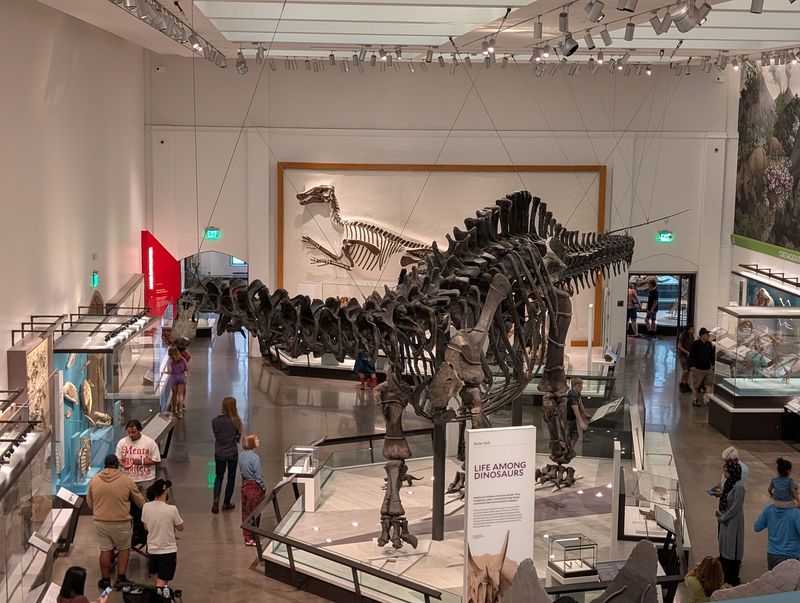
Free really does mean free here. No ticket price. No need to cram everything into one exhausting visit.
Since reopening after a major renovation in March 2024, this Connecticut museum has offered free general admission, removing one of the biggest barriers to exploring its enormous collections.
That change was made possible through major philanthropic support, including a $40 million donation from Edward P. Bass. The goal was to make the museum and its collections more accessible to everyone.
And those collections are huge. The Peabody holds more than 14 million specimens and objects spanning natural history, anthropology, paleontology, and related fields.
Only part of that collection can appear in the galleries at once, but many objects have scientific importance far beyond their display cases.
Researchers continue using the collections for active study, giving visitors a glimpse at material connected to real scientific work rather than exhibits created purely for decoration.
Free admission also changes the pace of a visit. Families can spend an hour following whatever grabs everyone’s attention instead of racing through every gallery to justify a ticket.
That freedom might be one of the museum’s biggest luxuries. Come for dinosaurs today, return for minerals another time, and leave the rest waiting for another afternoon.
Downtown Surroundings Make It Easy To Explore More
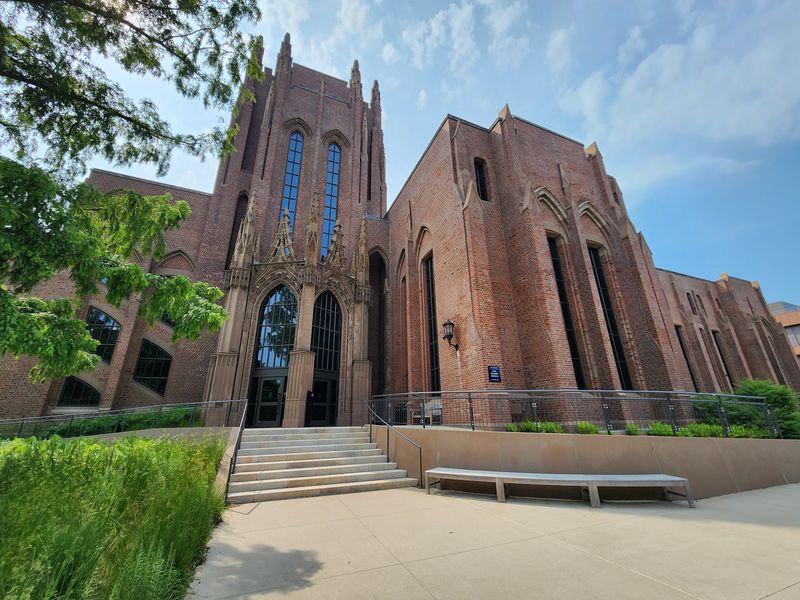
One museum can easily become a full day out, especially when so much else is waiting nearby.
The Yale Peabody Museum sits close to downtown New Haven and the Yale campus, putting art, green spaces, restaurants, and more within easy reach.
Two major museums make natural additions to the day. The Yale University Art Gallery and Yale Center for British Art are both within walking distance, and general admission to each is free.
The New Haven Green also provides an easy place to slow down between stops.
Lunch deserves some planning too. New Haven is particularly famous for its distinctive apizza tradition, with several celebrated pizzerias around the city.
That makes it easy to break up a museum-heavy afternoon with something completely different.
Visitors arriving by car have several parking options. The Peabody offers validated parking in Yale Lot 22V during designated hours, although availability is limited.
Metered street spaces and other nearby parking facilities provide alternatives when the lot fills. Public transportation also serves the surrounding area.
The museum itself is at 170 Whitney Avenue in New Haven, close to the heart of Yale’s campus.
With so much packed into the surrounding blocks, there is little reason to make the Peabody the day’s only stop. Free museums nearby make extending the outing especially tempting.
Dinosaurs Remain The Undisputed Showstoppers
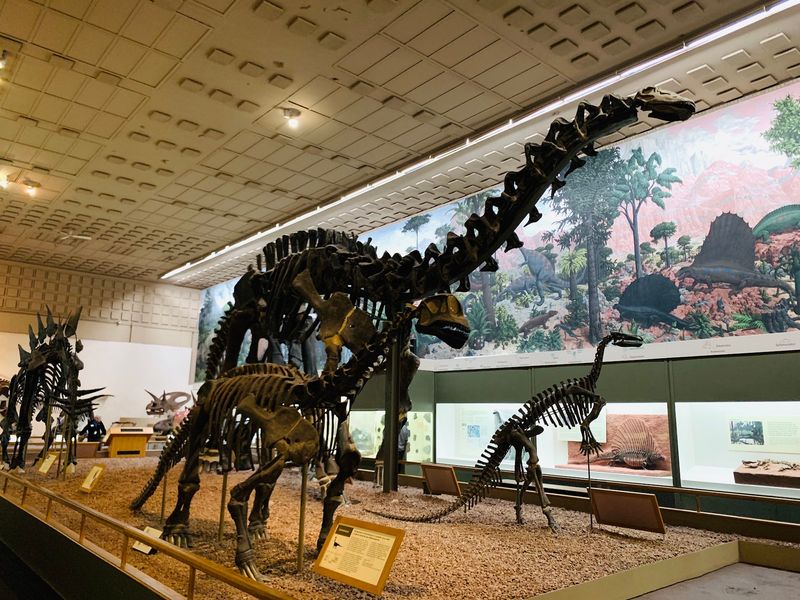
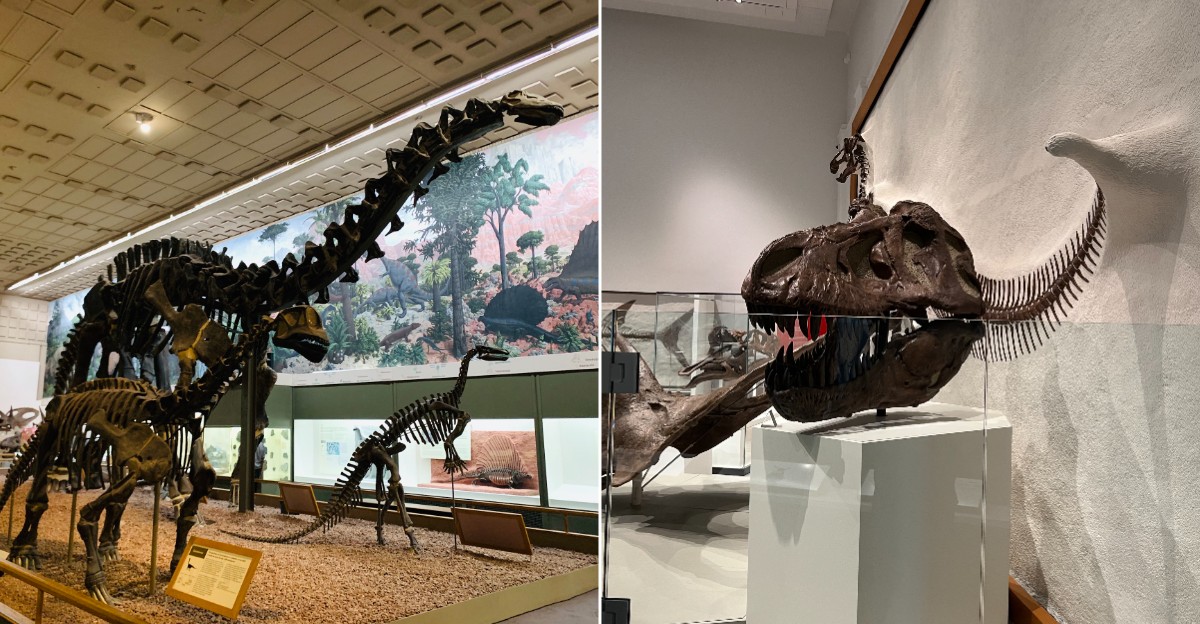
Kids tend to sprint toward one room, and adults quietly follow. The Coleman P. Burke Hall of Dinosaurs, long known simply as the Great Hall, anchors the whole building with skeletons that are hard to process until you are standing under them.
The Brontosaurus is the headliner. It was carefully cleaned and remounted in a livelier posture, tail raised off the ground, which matches what scientists now understand about how these animals actually carried themselves.
Stretching across one wall is The Age of Reptiles, a 110-foot mural painted by Rudolph F. Zallinger that has shaped how generations picture prehistoric life.
Restoration work brought back colors that decades of dust had muted, and the difference is striking in person.
Stegosaurus, Camarasaurus, and Camptosaurus fill out the rest of the hall with their own commanding presences.
A newer balcony gives you something most dinosaur halls cannot: a raised vantage point that puts you closer to eye level with the giants.
From there, the hall reads as a timeline, moving from ancient oceans and sea scorpion fossils through the arrival of life on land, with mass extinctions marked along the way.
Interactive tablets nearby keep younger visitors reading longer than expected.
Ancient Fossils Fill The Reimagined Galleries
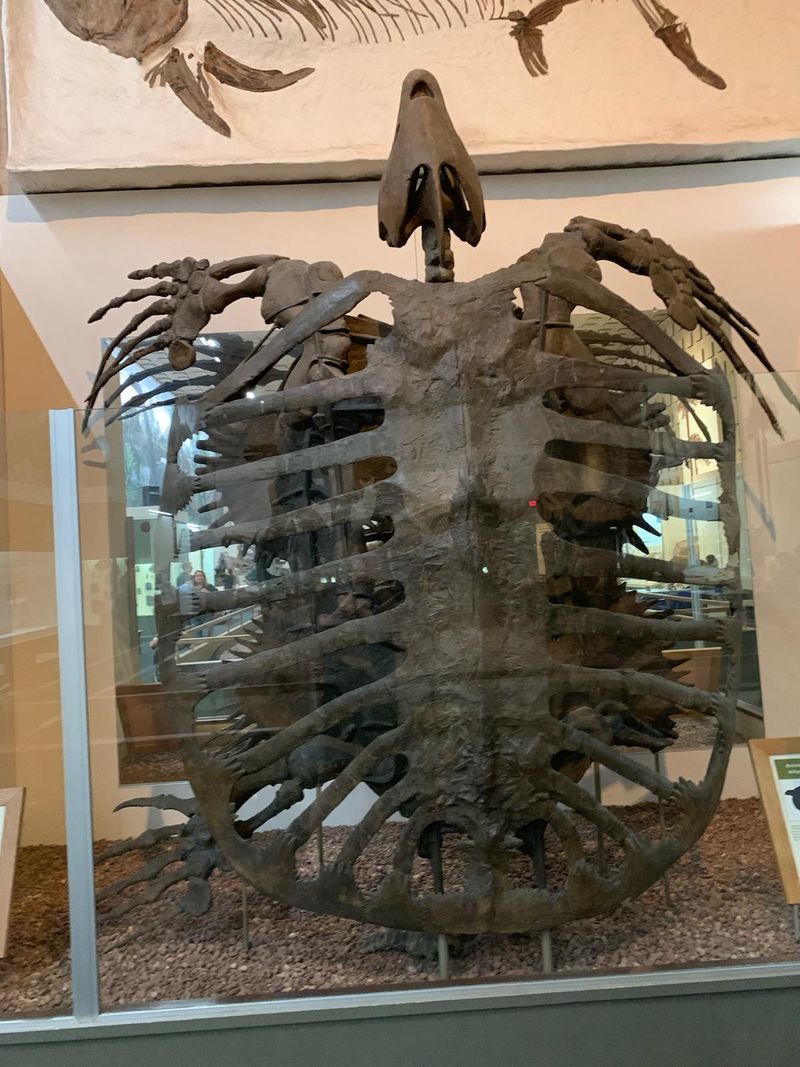
Look up in the Central Gallery and there is a turtle the size of a small car floating above your head.
That mount is Archelon, the largest turtle ever documented, and it shares the airspace with Tylosaurus, a 40-foot mosasaur that once patrolled ancient seas.
The gallery itself has a fun backstory. The skylit, bench-lined space used to be a loading dock before the renovation turned it into one of the brightest rooms in the building.
Overall exhibition space grew by more than 50 percent, which opened room for stories the old museum could not fit. Some of the big hanging mounts are 3D-printed casts made from fragile originals, while others include substantial real fossil material.
Within Burke Hall, the Ancient Oceans section slows visitors down with coiled ammonites, trilobites, sea scorpions, and echinoderms, plus clear explanations of the Permian Extinction.
Human history gets its own thoughtful treatment in Fossil Fragments: The Riddle of Human Origins, which digs into how scientists piece together our family tree from incomplete evidence.
The Hall of Mammalian Evolution holds The Age of Mammals, a second Zallinger mural that pairs beautifully with the dinosaur one.
Historic plant fossils round out the story for anyone curious about ancient forests.
Brilliant Minerals Add Serious Sparkle
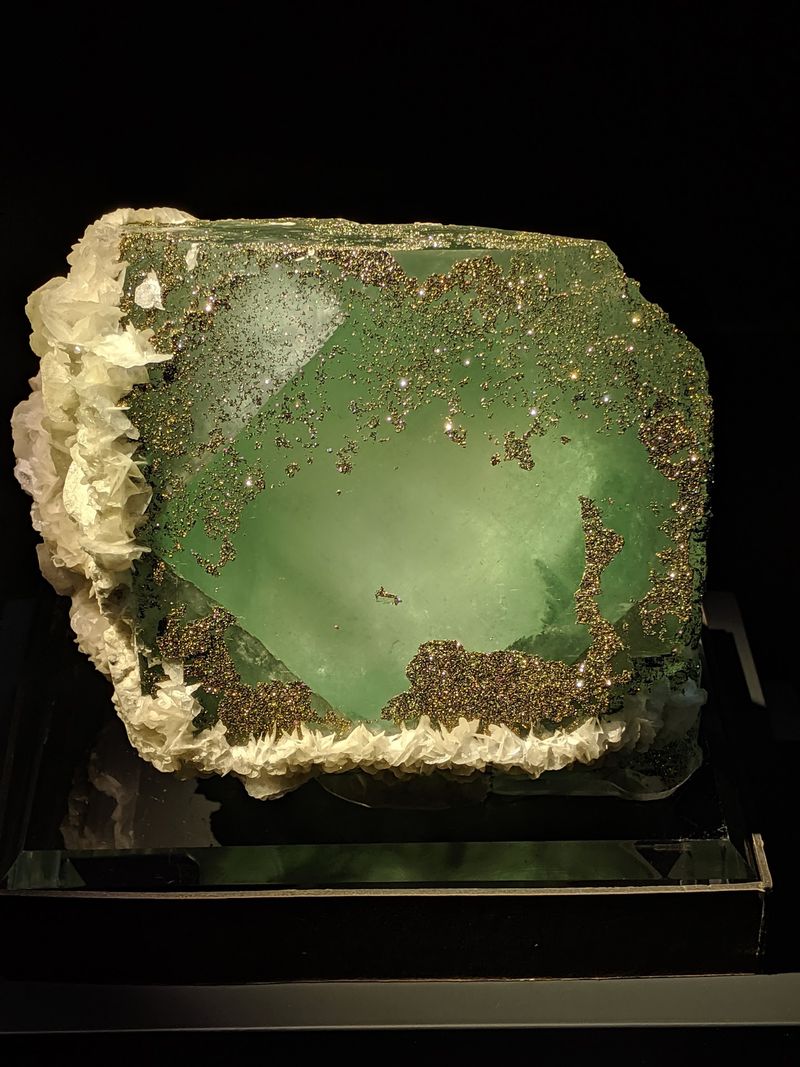
Plenty of visitors arrive for bones and leave talking about rocks instead. David Friend Hall handles minerals the way an art museum handles sculpture, with dark backgrounds, focused lighting, and plenty of breathing room around each piece.
More than 150 specimens are on display, and several are enormous. A quartz crystal from Namibia weighing roughly 1,900 pounds sits alongside towering green fluorite and deep purple amethyst.
The low lighting is intentional. It gives the sensation of moving through an underground chamber, and it lets spotlights pull out color, transparency, and texture that flat overhead light would flatten.
Quartz in many forms, citrine, and petrified wood show just how varied Earth’s mineral output can be.
Behind the display cases lies a research collection of remarkable depth, roughly 100,000 minerals plus about 23,000 meteorites.
The Minerals, Earth and Space exhibit connects those meteorites to the broader story of our solar system, while the Zucker Beesley Gem Room spotlights world-class gemstones, some on long-term loan and others given permanently.
Bring patience here. People who expected to glance and move on often end up circling the room twice, and children are frequently the ones pointing out details adults missed.
Dioramas Bring Wildlife Surprisingly Close
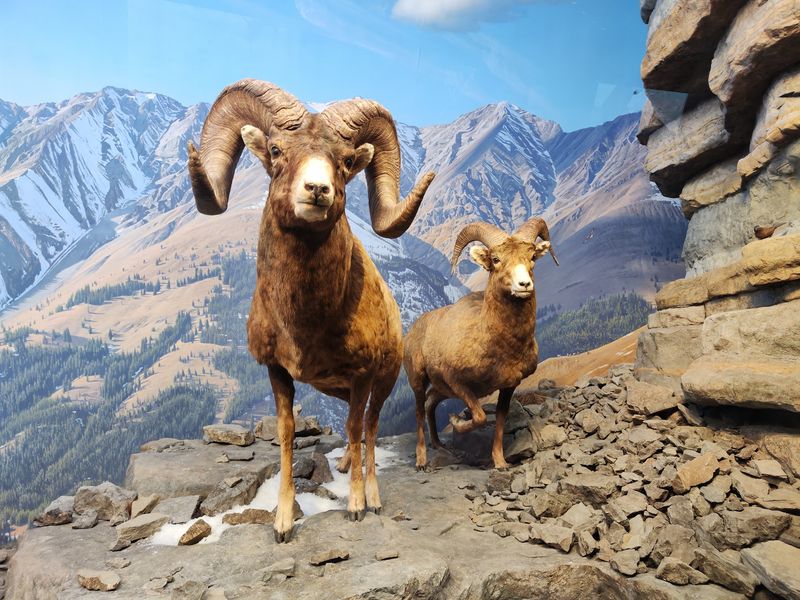
Painted skies, real-looking grass, and animals frozen mid-motion make the Hall of North American Dioramas feel less like a display and more like a window.
Most of these scenes were built in the 1940s and 1950s, and museum professionals still hold them up as benchmarks for the craft.
Each one captures a specific habitat at a specific moment, showing how plants and animals fit together in a working ecosystem rather than posing them in isolation.
Restoration has been a long, careful project.
Beloved scenes featuring the mule deer, Alaskan brown bear, and bison have been treated with modern techniques to reverse damage caused by decades of aging and by preservation chemicals used when they were first created.
At certain times, viewing areas let visitors watch conservators working, which turns the repair process itself into an exhibit.
Fresh signage does something the originals never did. It explains how these landscapes have changed since the scenes were painted and what human activity has meant for the species inside them.
The effect is quietly moving. You come for the taxidermy skill, notice the brushwork on a distant mountain range, and leave thinking about what those habitats look like today.
Renovated Spaces Give Old Favorites New Life
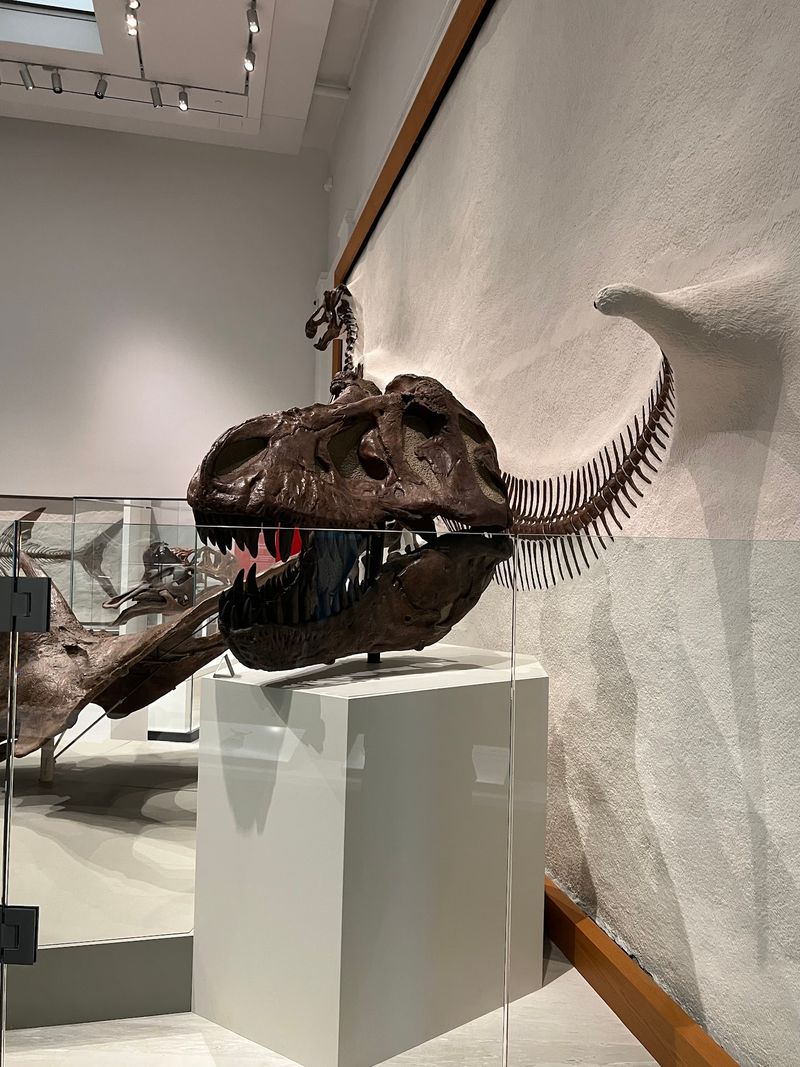
Anyone who visited before 2020 will notice the change immediately. The building closed that year for its first major overhaul in roughly a century and reopened on March 26, 2024, lighter and considerably larger.
Gallery space expanded by more than 50 percent, making room for new exhibition areas, modern classrooms, and a dedicated K-12 education center.
Structurally, the project added a four-story, 65,000-square-foot infill section, a new glass entrance tower, and the skylit Central Gallery that now works as the building’s crossroads. Wall text was simplified, more interactive elements appeared, and daylight reaches places it never used to.
Familiar specimens were taken apart, restored, and reinstalled with updated science behind them, so even repeat visitors find new information beside old friends.
Not all of the work is visible to the public. New climate-controlled classrooms let Yale students handle collection material directly, and certain spaces highlight research currently underway by students and faculty, which keeps the museum feeling active rather than archival.
The stated aim was a more welcoming institution, particularly for young people. Judging by the crowds of school groups and families moving through the halls, that goal landed.
One Visit Can Easily Stretch Into Hours
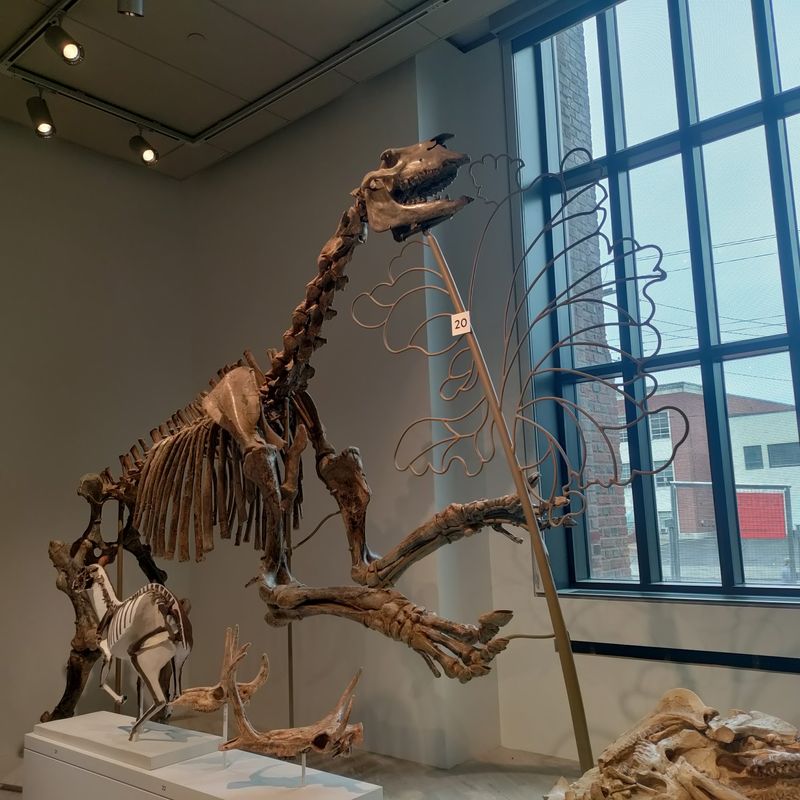
Two hours is the usual estimate people give themselves. Then they find the gem room, or the balcony above the dinosaurs, and the afternoon quietly disappears.
Individual visitors are welcome Tuesday through Saturday from 10 am to 5 pm and Sundays from noon to 5 pm, with the museum closed on Mondays and several major holidays.
Comfort clearly factored into the redesign. The whole museum is accessible, with outdoor ramps and indoor elevators, and seating appears regularly throughout the galleries so you can rest without hunting for a spot.
Families will find a private wellness room on the lower level for nursing or feeding, and the Central Gallery doubles as a pleasant place to regroup under the skylight.
No advance booking is needed for individuals, though school field trips and groups do need reservations. Arriving right at opening tends to mean quieter galleries, and starting on the top floor and working down is a popular approach.
Visitors consistently mention how clean, well organized, and easy to navigate the place feels, along with staff who seem happy to answer questions. Attendance has climbed sharply since reopening, which says plenty.