This Connecticut Trail Rewards A Fall Hike With Golden Woods And A View Worth The Climb
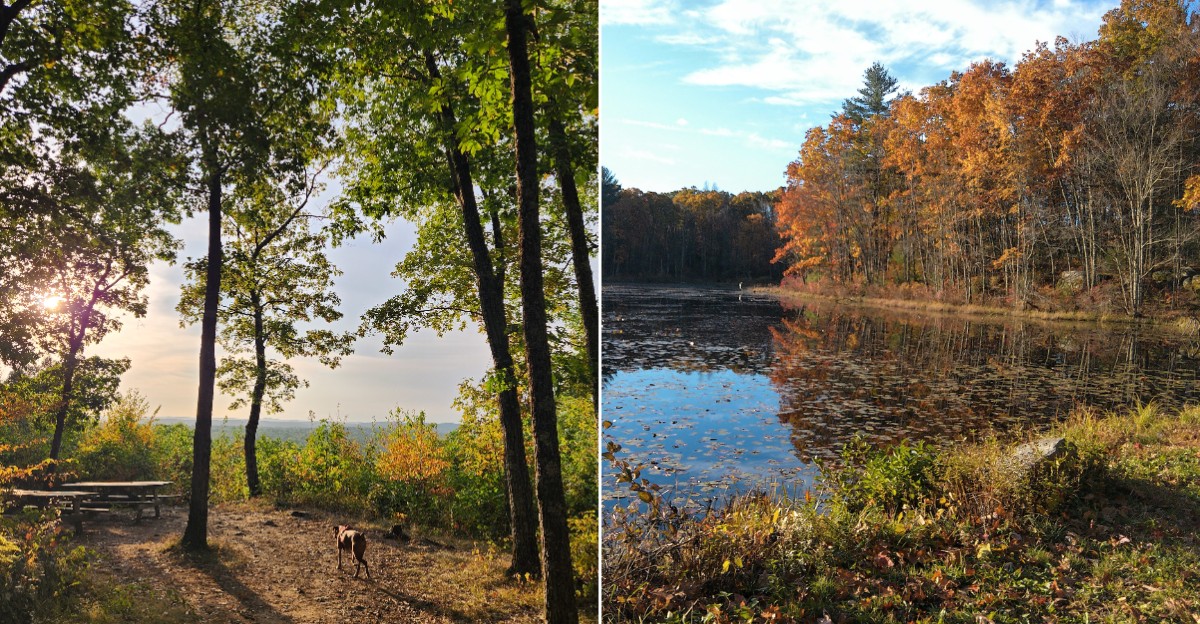
At first, the trail makes you work for it. The path climbs, your legs begin filing complaints and the easier route you could have chosen suddenly sounds rather sensible. Keep going.
Autumn changes the mood considerably when the surrounding woods start glowing with seasonal color. Crunching leaves underfoot make the climb feel unmistakably fall, while the higher ground keeps promising something beyond the trees.
A climb through Connecticut woodland becomes especially rewarding when golden foliage surrounds the trail and a broad view waits above.
That payoff gives the uphill sections a purpose.
Instead of racing toward the finish, you get scenery along the way before reaching the view that makes all that elevation feel much easier to forgive.
Fall hikes should demand a little effort occasionally. When the woods are putting on their brief autumn performance, earning the final view can make reaching it feel even better.
1. Forest Trails Climb Toward One Big Reward
The best part waits at the top. Getting there, however, leaves plenty of room to choose your own adventure.
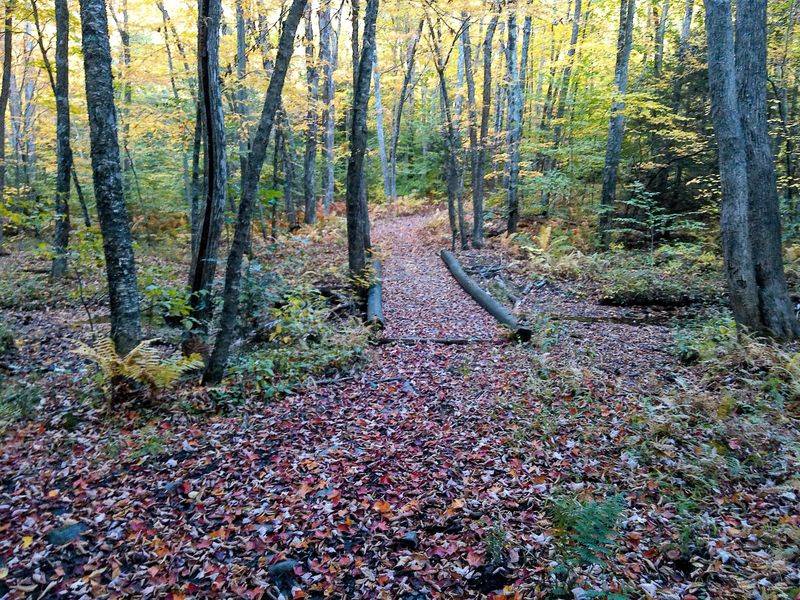
Soapstone Mountain rises about 1,075 feet within Shenipsit State Forest, with multiple trails winding toward the summit. Some provide a more direct workout, while others let hikers spend longer under the trees before reaching the high point.
One of the main routes is the blue-blazed Shenipsit Trail, which crosses the mountain as part of a much longer trail system. Intersecting paths create additional options, so checking the route before setting off can prevent an accidental detour.
Downloading a map beforehand is especially useful when phone service becomes unreliable.
Hikers looking for steadier footing have another choice. An access road climbs toward the summit and offers a more gradual approach than the woodland trails.
Vehicle access can vary, so it is better to plan on walking rather than assuming the road will be open for driving.
Fall gives the climb an extra reward. Changing leaves brighten the surrounding forest, and the higher elevation opens up broader views beyond the trees.
Bring water, wear shoes that can handle uneven ground and leave enough time to explore. Once the summit comes into view, the uphill effort starts making a lot more sense.
2. Golden Leaves Transform The Woods Each Fall
Oak trees are the quiet stars of this forest. Shenipsit State Forest has plenty of them, and oaks tend to hold their leaves later than many other trees.
That means the woods around Soapstone Mountain can keep their warm colors after some other spots have started to look bare.
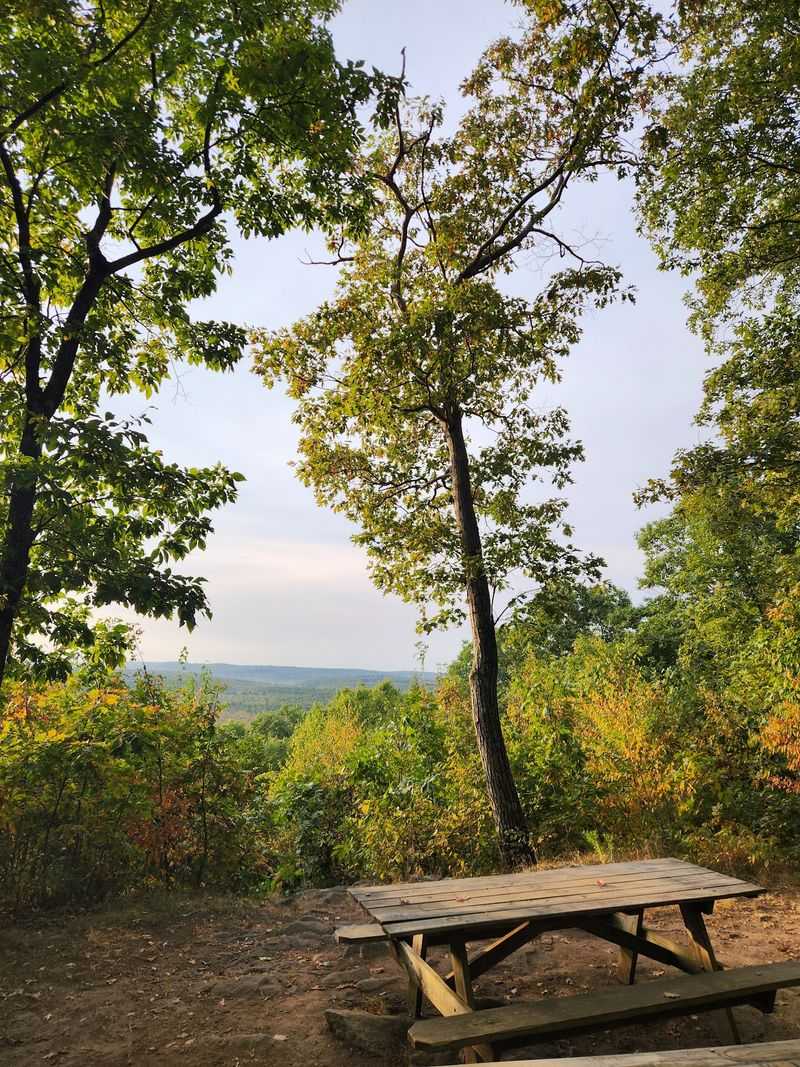
In fall, the trail becomes a tunnel of gold, orange, and rusty brown. Sunlight filters through the canopy and brightens the forest floor, even on a cloudy afternoon.
Fallen leaves crunch under your boots, and the air smells earthy and sweet.
Maples and birches add splashes of yellow and red, so the colors are rarely just one shade. Look up often, but also look down.
Leaf-covered trails can hide roots and loose stones, so slow steps are smart when the ground is thick with foliage.
Here is a fun fact to share on the way up. The mountain got its name from soapstone, a soft rock that was quarried here back in colonial times.
People valued it for things like cooking pots and hearth stones because it holds heat well.
So while you admire the golden trees, remember that the ground beneath them carries its own long story.
3. Rural Back Roads Set Up The Quiet Arrival
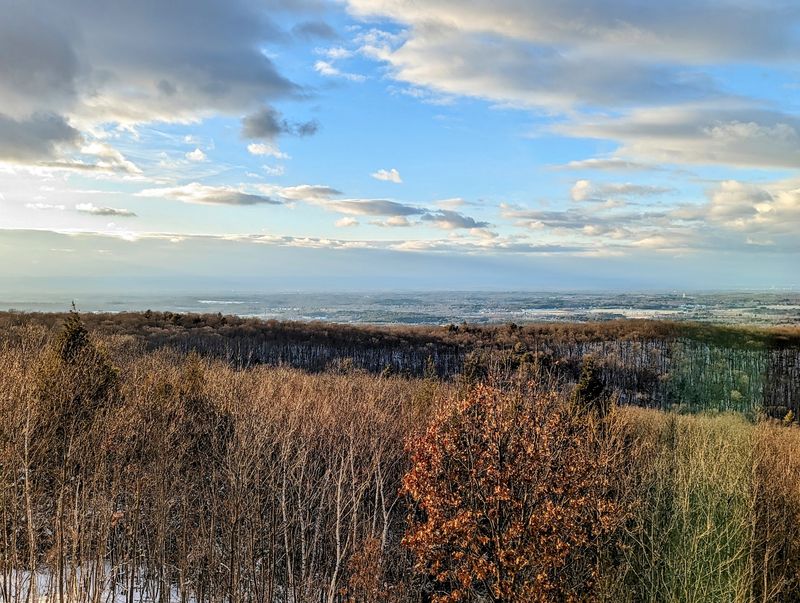
The drive to Soapstone Mountain feels like a slow exhale. Somers is a small town in north-central Connecticut, close to the Massachusetts line, and the roads leading to the forest pass open fields, stone walls, and scattered farmhouses.
By the time you reach the trees, the busy part of your day already feels far behind.
Most hikers head for the main entrance on Soapstone Mountain Road, off Gulf Road in Somers, CT 06071. A parking area near the bottom has room for a good number of cars, and visitors mention outhouses there, which helps before a climb.
On pretty fall weekends, arriving earlier in the day can make parking easier.
From the lot, you can start on the trails or follow the paved road uphill. When the road is open to vehicles, a few spaces near the summit let people with limited mobility get close to the tower.
There are no trash cans in the forest, so plan to carry out everything you bring. It keeps the area clean and keeps wildlife from digging into leftovers.
One last tip: cell service can be spotty in rural areas, so download directions before you leave home. That way, the winding roads stay relaxing instead of confusing.
4. The Summit Tower Opens Up Sweeping Views
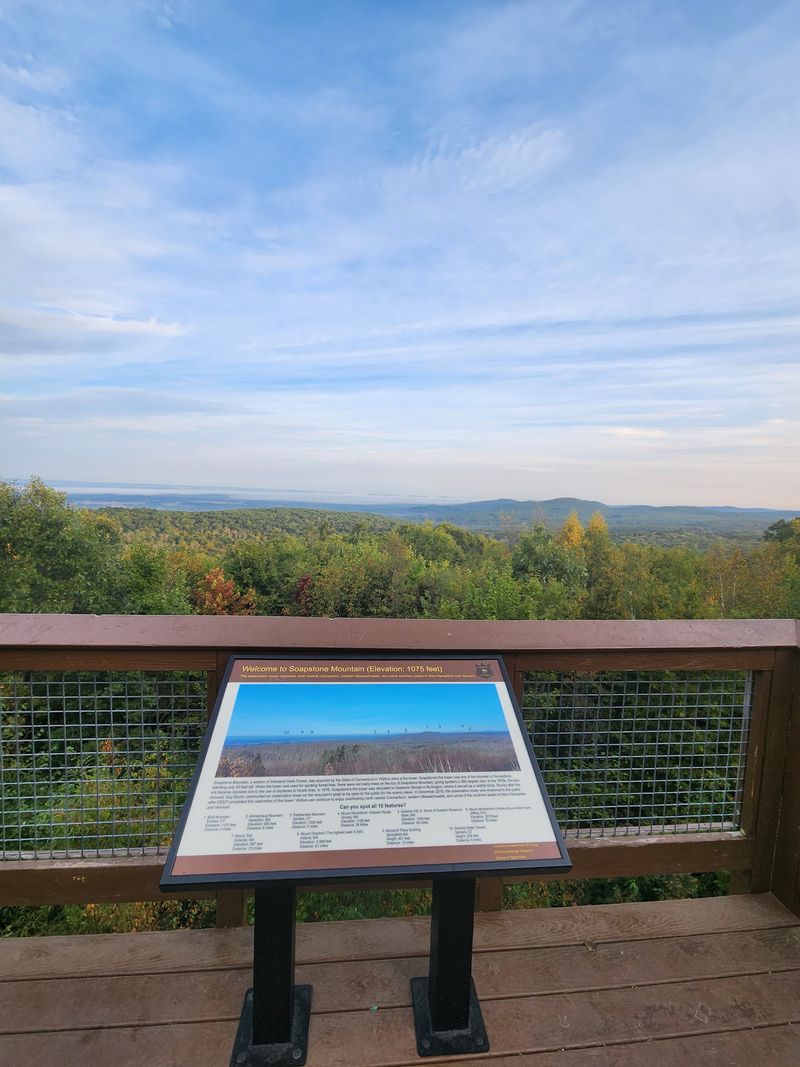
Climbing the last set of stairs, you rise above the treetops, and suddenly the forest becomes a rolling carpet below you. That moment is why so many people make the trip.
The observation tower on Soapstone Mountain is one of the best-loved lookouts in this part of the state.
A fire tower first stood here back in the 1920s, but it disappeared long ago. The current wooden tower was rebuilt around 2018 and designed for visitors who want to enjoy the scenery.
It has sturdy stairs and a roomy deck that gives everyone space to find a spot at the railing.
Because the platform lifts you just above the tree line, the view opens in almost every direction. Bring a light jacket, since the wind often feels stronger up top than it did on the trail.
Picnic tables near the base of the tower make the summit a nice place to rest before heading down. Pack a simple lunch or a thermos of hot cocoa and settle in.
Sunset is a favorite time for many visitors, as the sky and hills change color together.
Just remember to check how much daylight is left, since trails get dark quickly under the trees.
5. Distant Hills Stretch Across The Horizon
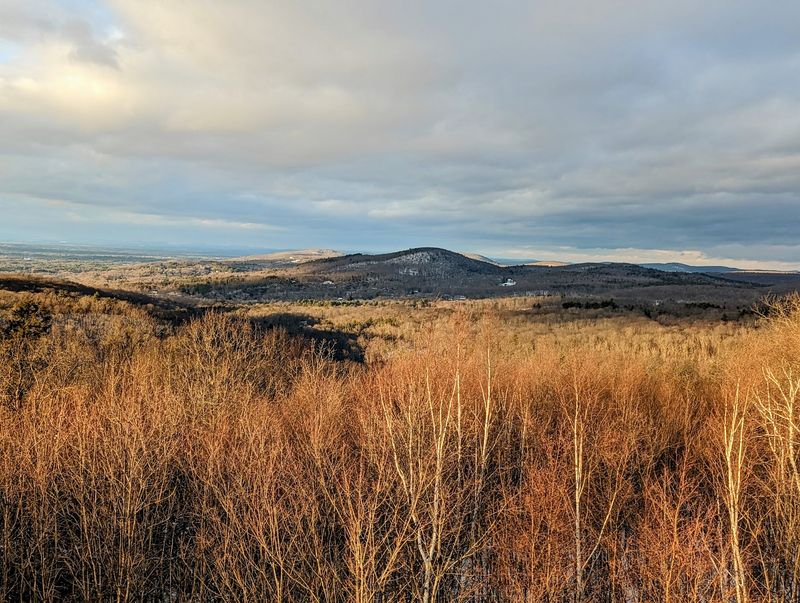
On a crisp, clear day, the view from Soapstone Mountain feels much larger than its modest height suggests. Look north and west from the tower, and the Connecticut River Valley spreads out in soft layers of farmland, forest, and small towns.
Look closer and you may spot the skyline of Springfield, Massachusetts, standing out against the hills. It is a fun reminder of how close you are to the state line.
Kids especially enjoy trying to pick out buildings, water towers, and roads far below.
Some hikers report that on exceptionally clear days, far-off peaks such as Mount Greylock in western Massachusetts and Mount Monadnock in New Hampshire can be seen. Those sightings depend on the weather, so treat them as a bonus rather than a promise.
Haze, humidity, and clouds can shorten the view quickly.
A pair of binoculars makes a big difference here. So does a little patience, since the light shifts as clouds move across the valley.
Morning and late afternoon often bring the best contrast, with shadows that help the hills stand out. The eastern view has its charm too, and early risers sometimes come up to watch the sunrise.
Whatever time you choose, give yourself a few quiet minutes to take it all in.
6. Rocky Sections Add Just Enough Adventure
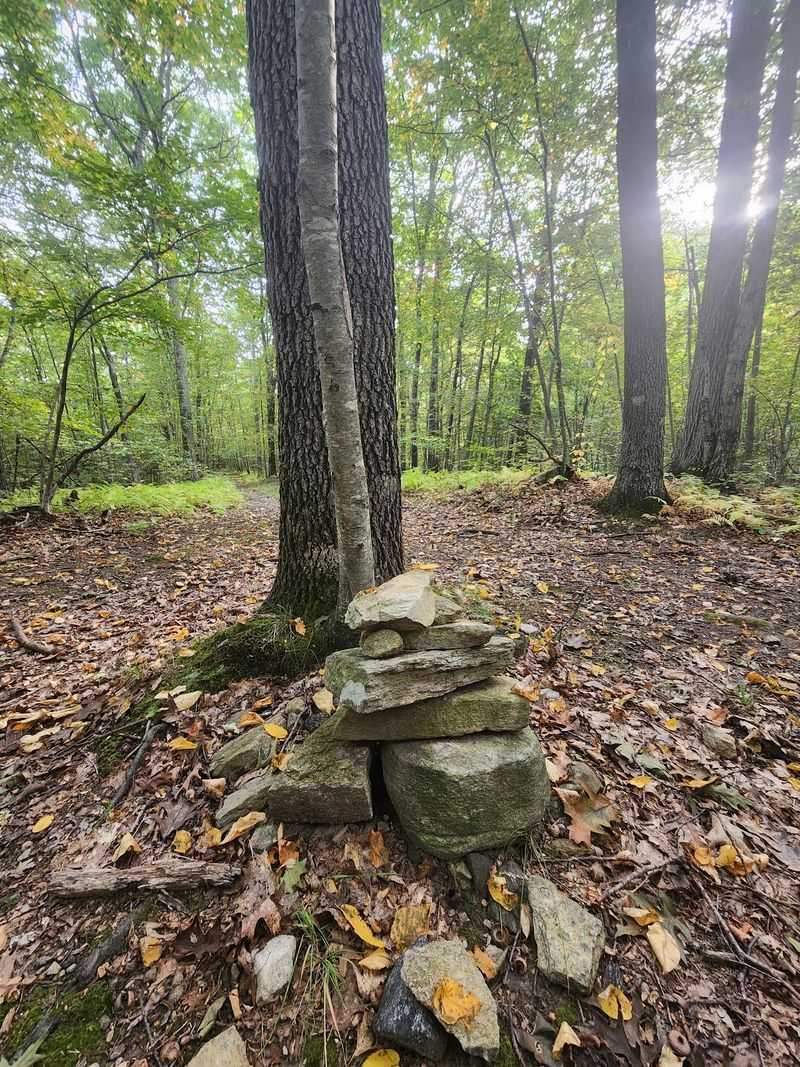
Watch your step. This trail likes to keep hikers busy.
Soapstone Mountain delivers the kind of terrain that makes a relatively short climb feel like a proper woodland adventure. Roots cross the path, rocks break through the dirt and steeper sections add just enough scrambling to keep things interesting.
The blue-blazed Shenipsit Trail includes rocky stretches on its way across the mountain. Another option, the Ledge Trail, is short but noticeably steeper, with rough ground that can demand more attention than its distance suggests.
Other paths eventually ease up, giving tired legs a welcome break between tougher sections.
That variety can make the hike especially entertaining for older kids comfortable on uneven trails. Large rocks become natural obstacles to climb around, while quieter sections offer good opportunities to stop and catch your breath.
Shoes with reliable grip make a big difference here. Fallen leaves can hide roots and loose rocks during autumn, while rain can leave exposed stone surprisingly slick.
Conditions deserve extra attention after wet weather or once colder temperatures bring frost. Choosing an easier route or the access road may make more sense on those days.
There is no need to rush uphill. Take the rocky sections carefully, enjoy the changing forest and let the climb itself become part of the reward.
7. Cool Autumn Air Makes The Climb Easier
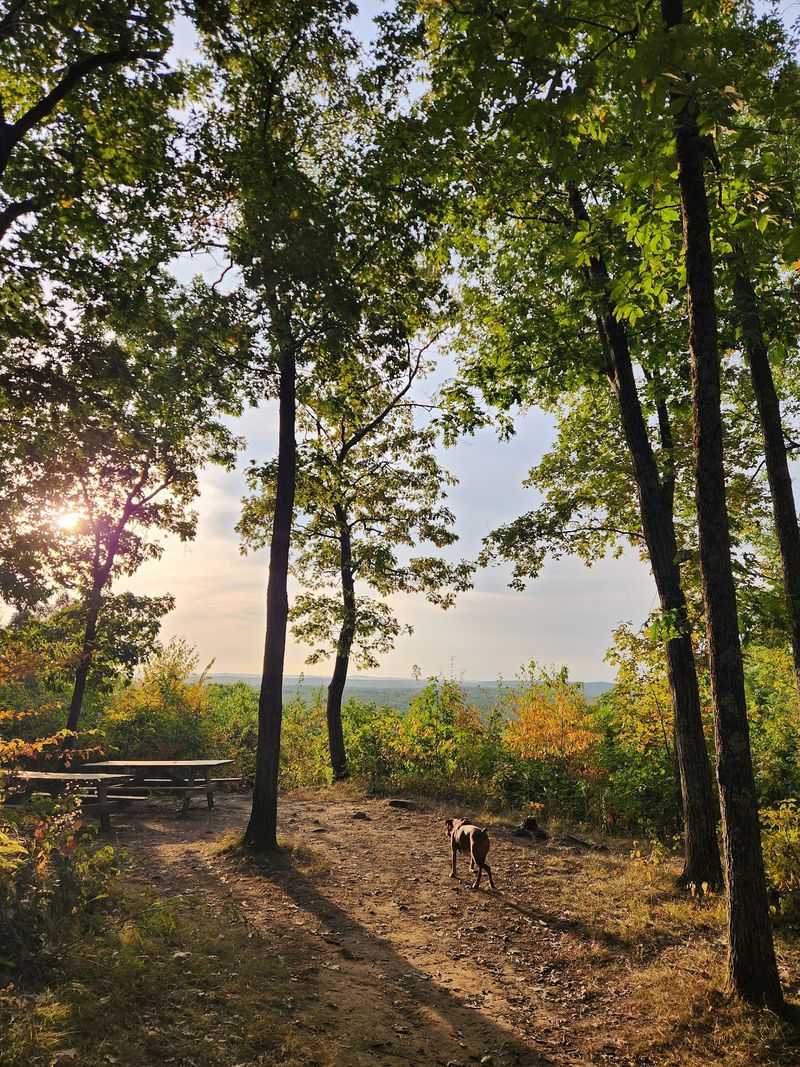
Summer hikes can leave you sweaty before you reach the first bend. Autumn is kinder.
Once September slides into October, the air in Somers turns crisp, and a climb that felt tiring in July suddenly seems much more manageable.
Cool temperatures let your body work without overheating, so you can keep a steady pace and stop less often. The bugs usually quiet down as well, which makes resting on a rock or at a picnic table far more pleasant.
Fall weather in state can shift a lot in one day, though. A chilly morning may turn warm by noon, and the summit can feel breezy even when the parking lot felt calm.
Layers are the answer. Start with a light shirt that dries fast, add a fleece or sweater, and pack a thin windbreaker for the top of the tower.
A hat and light gloves take up little space and help on late-season hikes.
Even in cool weather, you still need water, since there is none available on the mountain. A small snack helps too, especially for younger hikers.
Dress smart, and the fresh air becomes a helper instead of a hurdle. You might find yourself wanting to hike the loop twice.
8. Peak Color Turns The Summit Into The Finale
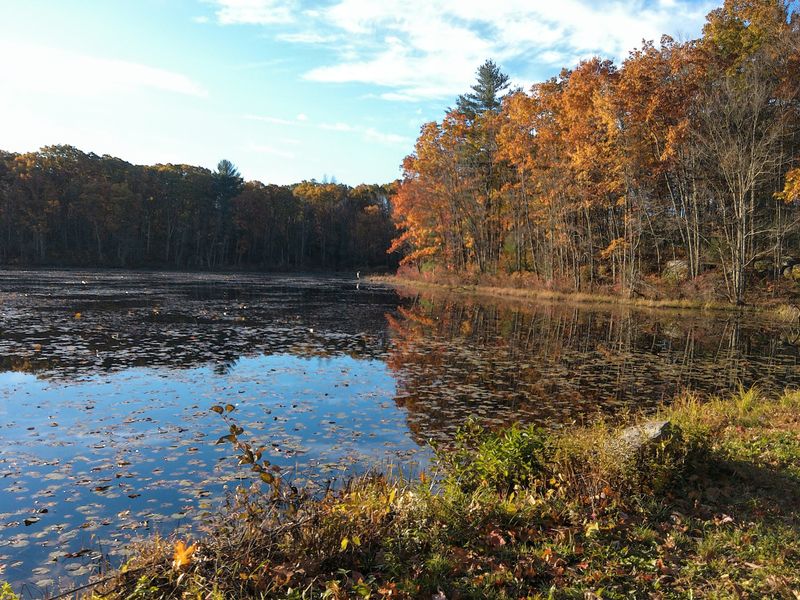
Timing is everything when you want to see Soapstone Mountain at its most colorful. Fall color in northeastern parts of the state can begin showing in early October, and across much of the state, the best displays usually arrive from mid to late October.
Weather each year can push those dates earlier or later.
When you hit it just right, the tower becomes a front-row seat to a huge painting. Gold, orange, and deep red roll across the valley in every direction, and the oaks keep adding warm tones even as other trees start to fade.
To plan your visit, check a foliage report a few days before you go. Weekday trips can feel quieter than weekends during this popular season.
Afternoon light is lovely for photos, since the low sun makes the leaves glow. Bring your camera or phone fully charged, and try taking a few pictures from each side of the deck.
Once you have soaked in the view, head back down slowly and notice how the woods look different on the way out. The same trail feels new with a head full of color.
That mix of effort and reward is what makes a fall hike here so memorable. It stays with you long after the leaves drop.