This Connecticut Used-Book Paradise Has Book Lovers Going Out Of Their Way To Visit
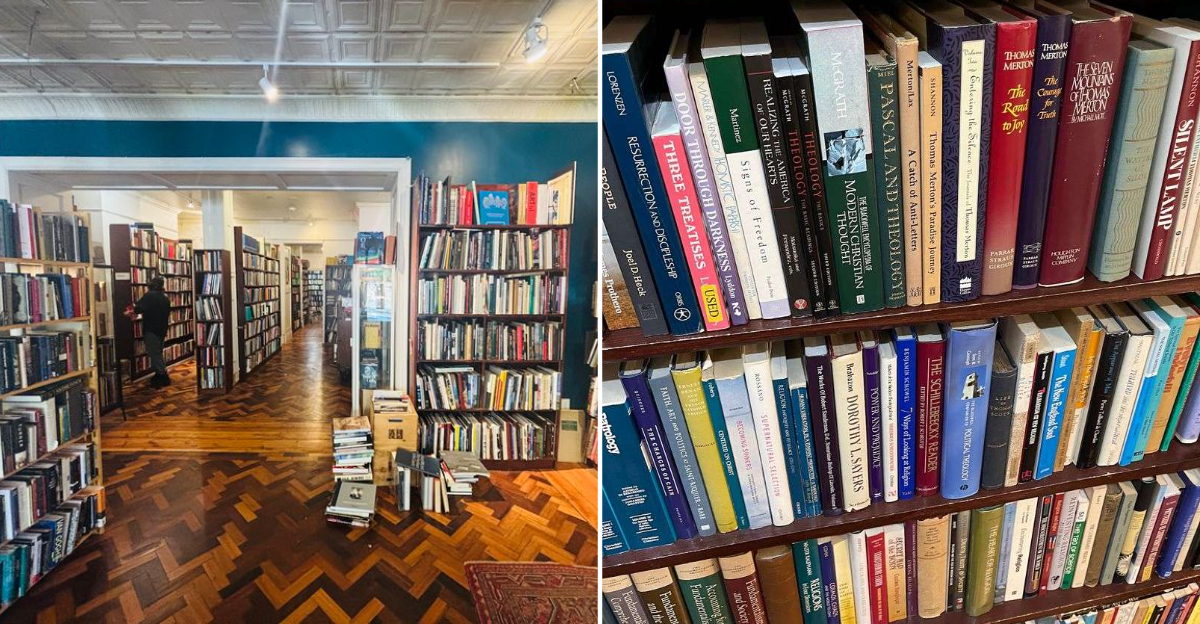
Used bookstores have a wonderful habit of making twenty minutes disappear without permission.
This one rewards people who enjoy wandering rather than hunting down a bestseller and leaving. The shelves lean heavily into thoughtful subjects, and new arrivals keep changing what you might stumble across from one visit to the next.
Book lovers willing to make the drive will find a Connecticut shop that treats browsing like the main event.
The space is not enormous, which somehow makes the hunt more personal. Every shelf feels close enough to inspect properly, and older editions can turn an ordinary afternoon into a very specific little obsession.
You may arrive looking for one author and leave carrying something you had never heard of an hour earlier. That is the danger of a used-book shop with personality.
How far would you go for the chance to find a book you did not even know you wanted?
1. Serious Browsing For Curious Book Lovers
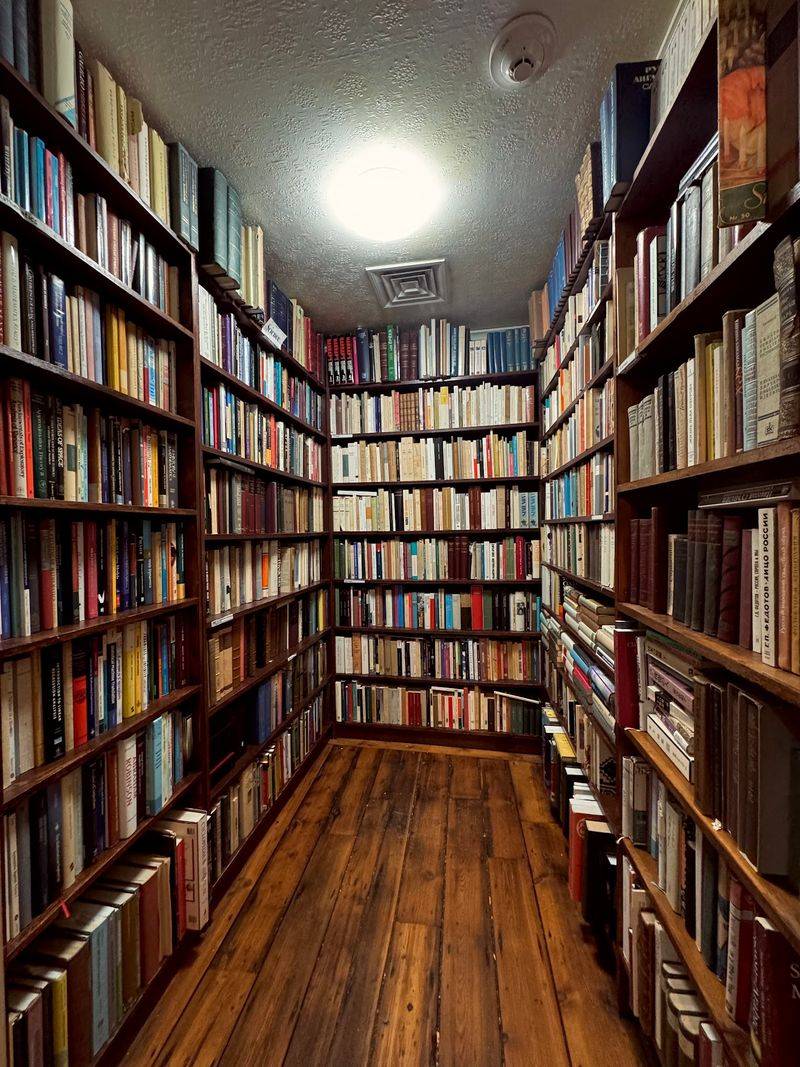
This is not a quick in-and-out stop. The shelves invite wandering, and one interesting spine can easily lead to ten more.
The atmosphere stays quiet without feeling stiff. Aging paper gives the room that familiar secondhand-book scent, while the slower pace makes it easy to forget how long you have been browsing.
What really sets this Connecticut shop apart is its focus. Most of the space is devoted to books rather than gifts or novelty items.
That leaves more room for unexpected finds, especially titles that rarely show up in larger chain stores.
The collection has a scholarly streak, but it never feels intimidating. Curious readers can stumble across unusual subjects, forgotten authors, and books they had no intention of buying when they walked in.
That unpredictability is half the fun.
Give yourself at least an hour if you like reading covers or sampling first pages. Comfortable shoes are useful too, especially when the best discovery happens to be sitting near the floor.
Showing up with a rigid shopping list almost defeats the point. Browsing works better when you follow whatever catches your eye.
The reward is often a book you never knew you wanted until it was already in your hands.
2. York Street Beside The Yale Campus
Books have a funny way of changing the pace of a city walk. One interesting spine can turn a quick stop into an hour, especially in a neighborhood built around readers.
The Yale area gives this shop natural traffic from students, professors, and visitors. Cafes, theaters, and museums nearby make it easy to fold browsing into a bigger afternoon.
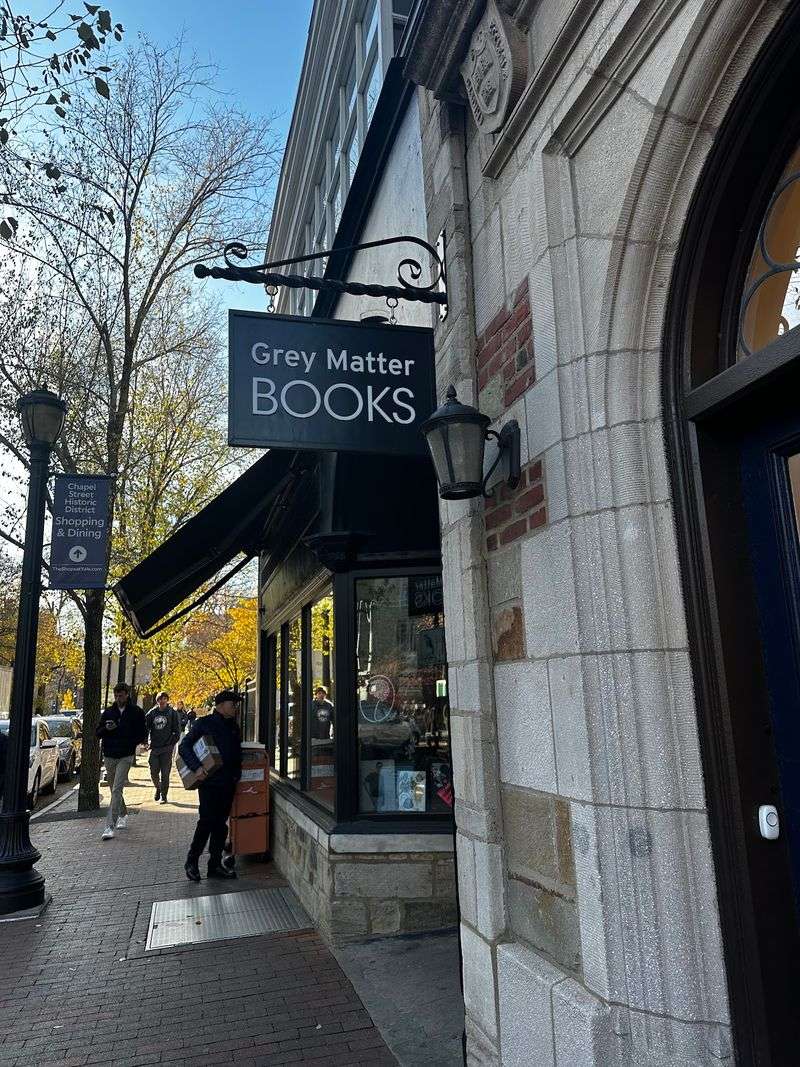
Grey Matter Books sits at 264 York St in New Haven, just steps from the university campus.
That setting shapes what reaches the shelves. Academic titles circulate constantly, but the selection still leaves room for unexpected finds and subjects worth exploring.
The result feels thoughtful without becoming overly formal.
Getting around is simple once you are in the neighborhood. Most nearby attractions are close enough to reach on foot, so there is little reason to keep moving the car.
Street parking can be competitive during busier weekday hours, while nearby garages give visitors another option.
The best plan is to make the bookstore a midpoint rather than a final stop. Browse slowly, pick something that catches you off guard, then carry it to a nearby bench or cafe.
Starting the first chapter before heading home feels completely appropriate here.
3. A New Haven Shop Since 2019
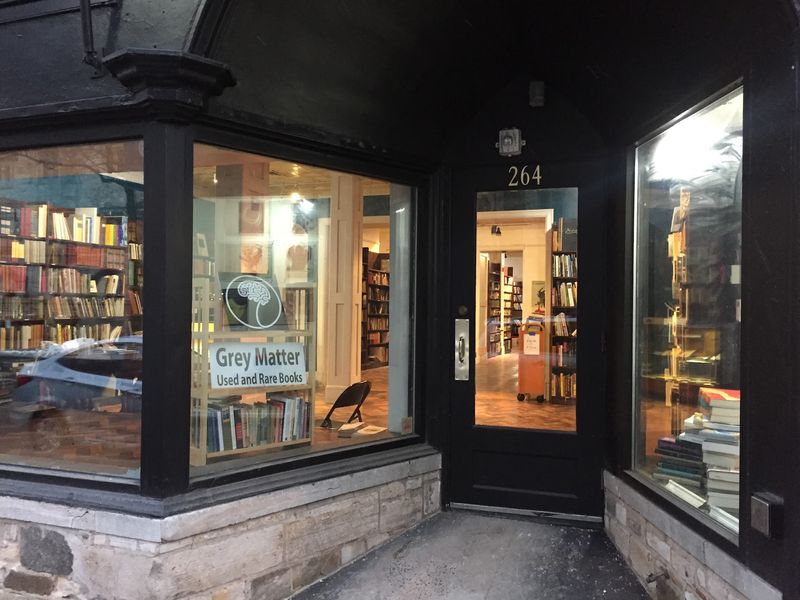
Fun fact for shop history buffs: the Grey Matter name existed before New Haven did. The business had an earlier home in Hadley, Massachusetts, and the New Haven chapter opened in March 2019.
That arrival filled a real gap. A city built around reading, research, and long conversations had room for another dedicated used bookstore, and locals welcomed the addition quickly.
Opening a physical bookshop in 2019 was also a small act of confidence. Digital reading had already reshaped the industry, yet the shop bet on people still wanting to touch, flip, and compare printed books in person.
Several years on, the bet looks sound. The store has become a familiar stop for students, neighborhood residents, and travelers who make a point of visiting bookshops wherever they go.
Knowing the timeline helps explain the inventory too. A shop with roots in two states has had years to build relationships with sellers, collectors, and estates, which shows up in the range of material on the shelves.
If you want the fuller picture, ask at the counter about how books arrive. Staff members are frequently described as friendly and helpful without hovering, and they know the collection well.
4. Shelves Heavy On Literature And The Arts
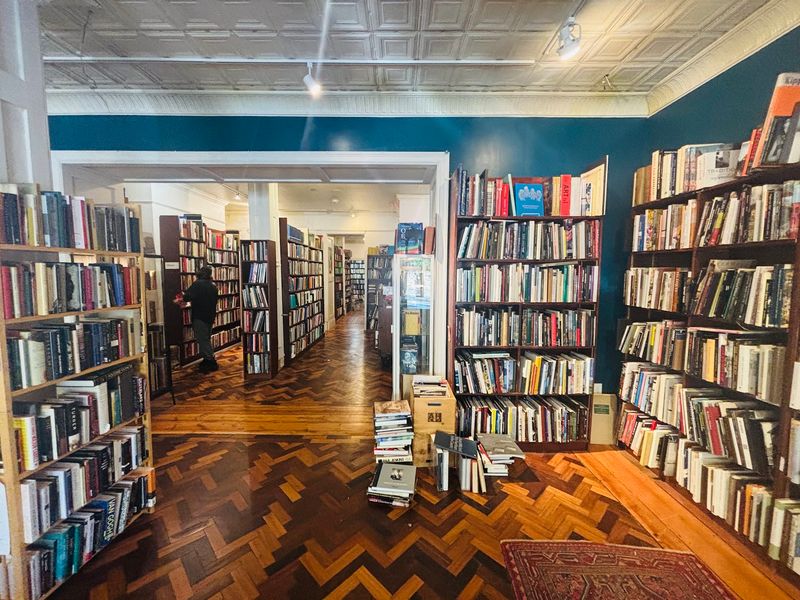
Literature and the arts get the star treatment. Fiction, poetry, drama, art history, criticism, and design all hold real estate here, and not just token shelves with a handful of familiar names.
Art book lovers tend to linger longest. Oversized volumes on painting, photography, architecture, and design turn up regularly, and used copies often cost a fraction of what new editions run.
The literature section mixes eras in a satisfying way. Classic novels sit near contemporary poetry and criticism, so a single aisle might take you from nineteenth century fiction to a slim modern collection printed a few years ago.
Shoppers frequently mention that the stock feels current rather than dated. Alongside older editions you will find recent and much discussed titles, which keeps the browsing lively for readers who follow new releases.
Bring a phone or notebook if you collect. Comparing editions, translations, and printings is easier when you can jot down what you already own before spending.
Prices vary with condition and rarity, and patient digging often turns up bargains. There is also a dollar rack outside, which makes for a fun warm up before you head through the door.
Readers who love poetry and drama in particular should not skip this shop.
5. Humanities And Science Get Plenty Of Space
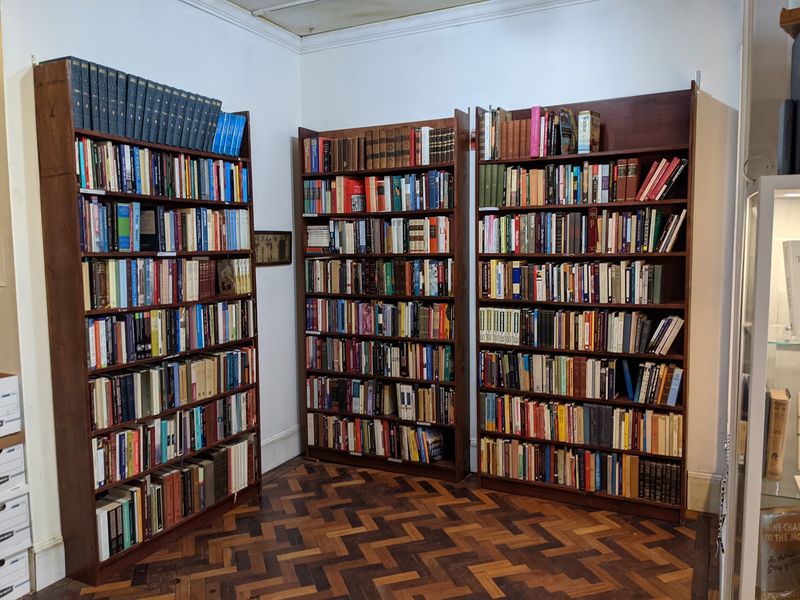
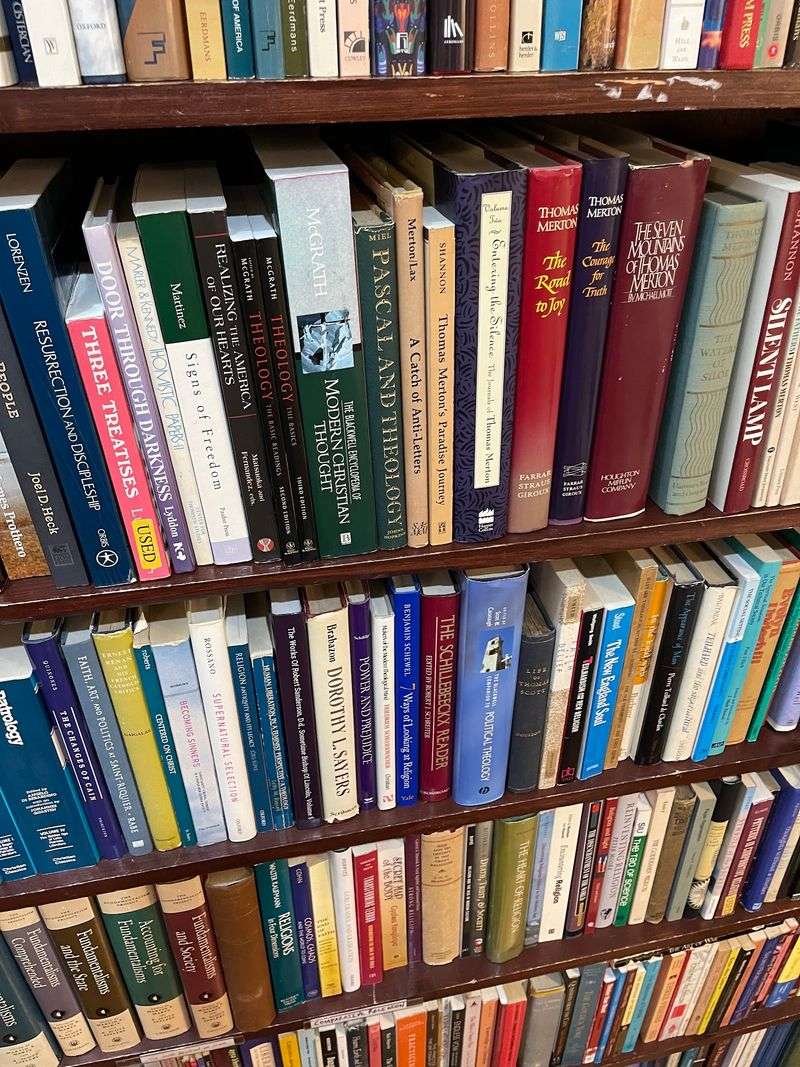
Philosophy, history, and the sciences carry serious weight in this collection. The shop actively looks for material in the theoretical and applied sciences, mathematics, the humanities, and the arts, which keeps those sections deep and constantly changing.
Academic readers notice the university press titles right away. Scholarly publishers appear throughout the shelves, giving the place the feel of a research library where you can buy what you pull down.
Curiosity gets rewarded in unexpected corners. Along with philosophy, sociology, religious history, and political thought, the store is known for carrying oddly specific reference books that seem to exist for exactly one very interested reader.
Popular topics among visitors include the philosophy selection and the history shelves, both of which come up often in conversations about the shop. Science fiction and design also have their fans.
Students working on papers may find this a genuinely practical resource, since used academic books cost far less than new copies. It helps to know your subject area before you arrive, because the sections run deep.
Anyone who simply likes learning things will do fine too. Wander the nonfiction aisles without an agenda and you will almost certainly leave holding a subject you had never considered reading about.
6. Fresh Used Books Arriving Every Day
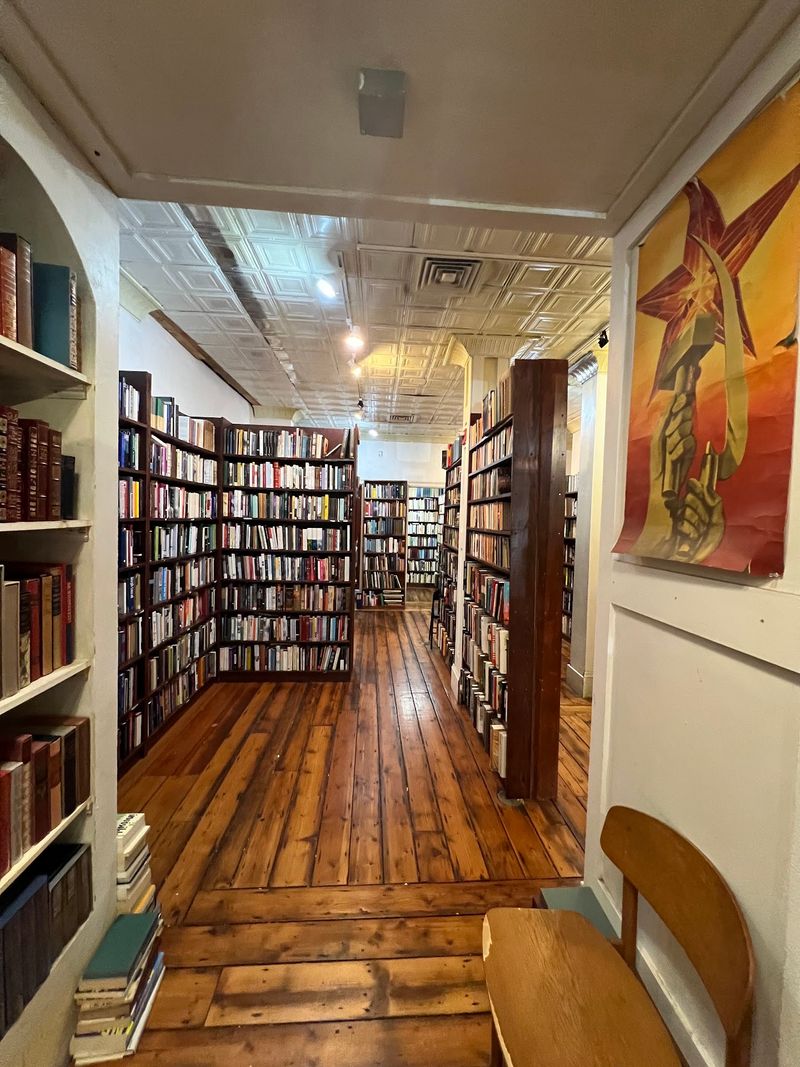
Daily arrivals change everything about how you shop here. New books come in constantly, which means the store you visited last month is not quite the store you will walk into today.
Repeat visits become part of the appeal. Regulars stop in every few weeks precisely because the shelves keep shifting, and a title that was not there in spring might be waiting in summer.
Books reach the shop from a mix of sources, including private collections. Some have come from scholars connected to the university, which explains the unusually strong academic material threaded through the general stock.
Personal libraries also carry personality. Buying from collections means you sometimes end up with books that were clearly loved, complete with the particular focus of whoever assembled them.
Practical advice for hunters: if you spot something unusual and want it, buy it. Single copies move quickly in a shop with turnover like this, and there is rarely a second chance on rare material.
Asking staff about recent arrivals is also worth doing. They handle the incoming stock and often know what has just been shelved, which can save you a lot of searching.
Timing your visit early in the day helps too.
7. Rare Finds Mixed Among Everyday Titles
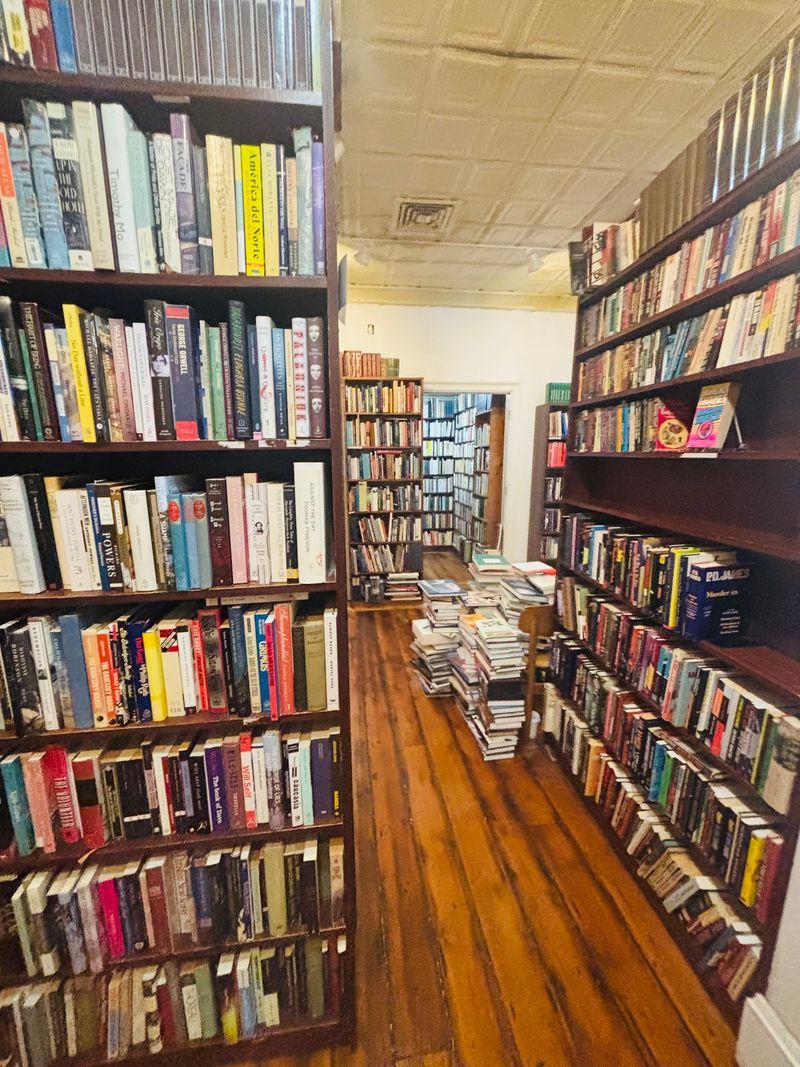
Imagine pulling a book off a shelf and realizing it was printed in the 1890s. That kind of moment happens here, because the New Haven location keeps a smattering of rarities woven right into the general collection.
Truly special items get protected. Visitors have noted rare pieces displayed behind glass, which is a good sign that the shop knows exactly what it has.
The mix is what makes browsing exciting. A five dollar paperback might sit two shelves below something genuinely uncommon, so no aisle feels safe to skip.
Collectors describe the store as a place for both used and rare books rather than one or the other. That dual identity is unusual and part of why readers travel to reach it.
Obscure material is a specialty. Shoppers looking for esoteric subjects, odd scholarly corners, or out of print editions frequently report success where bigger stores came up empty.
If you are hunting something specific, say so at the counter. Staff can tell you whether a title is in stock, and special orders are sometimes possible for books the shop does not have.
Handle older volumes gently, and enjoy the small thrill of holding something that has already outlasted a century of readers.
8. An Independent Shop Built For Browsing
Chairs scattered through the aisles say a lot about a bookstore’s priorities. Here they invite you to sit down with whatever you just discovered instead of hurrying toward the register.
The space is compact and thoroughly packed, shelves rising high and filled to capacity. Some visitors call it small, then immediately point out that the collection feels enormous, which is a fair description of both.
Music sometimes plays softly in the background, and the general mood stays relaxed. Nobody trails you around the store, though help is available the moment you want it.
Staying focused on books rather than gifts and gadgets gives the place its character. Every display is another set of titles, and that consistency is exactly what dedicated readers appreciate.
Community events have been part of the picture too, which strengthens the connection between the shop and the neighborhood around it.
Hours generally run from morning into evening most days, with a shorter Sunday schedule, so checking before a long drive is wise. Weekday mornings tend to be the quietest time to browse.
What visitors keep coming back for is simple: an independent bookshop that treats browsing as the main event rather than a step toward checkout.