This Enigmatic 1-Mile Trail Leads To A Forgotten 19th-Century Ghost Town In Michigan
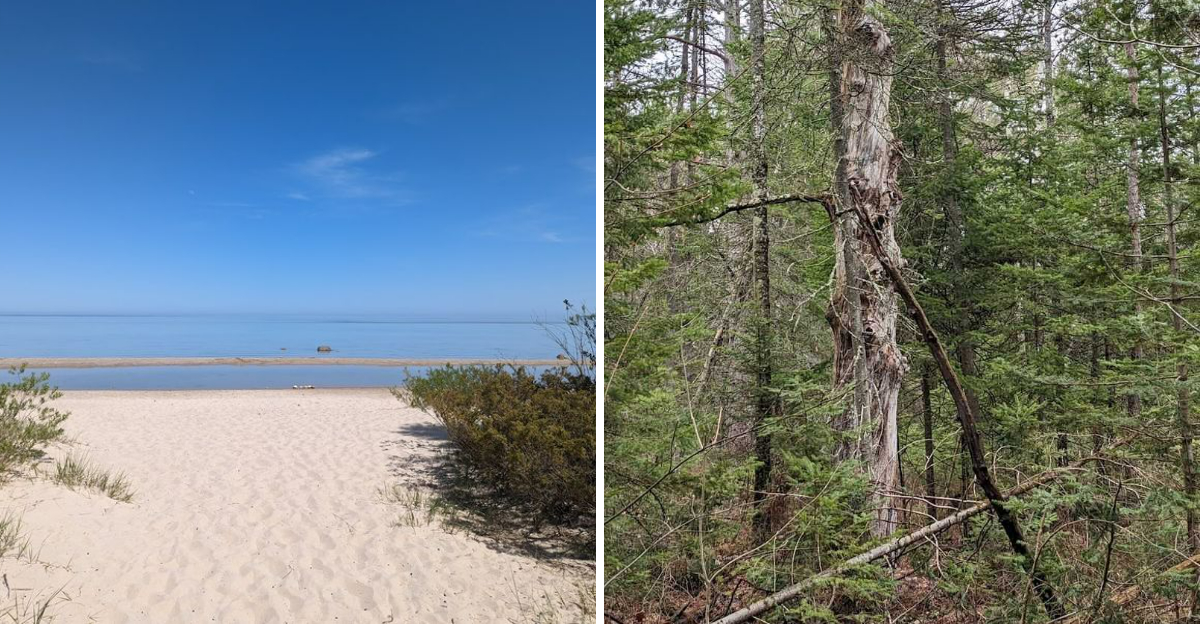
Some places refuse to stay forgotten. One mile into the trees, the forest starts giving things back.
A crumbling foundation here. A chimney rising out of nowhere there.
The outline of a life that simply stopped one day and never started again. Michigan has wilderness that can genuinely take your breath away, but this trail offers something rarer than scenery.
It offers a mystery you can walk straight into. Nobody is waiting at the end to explain it.
You piece it together yourself, step by step, ruin by ruin, until the whole strange picture starts to form. The people who once lived here left in such a hurry that the land still holds their shape.
Michigan does not advertise this place. It sits quietly off the map, waiting for the curious ones.
One mile in, and an entire century opens up.
The Trail That Starts Small But Delivers Big
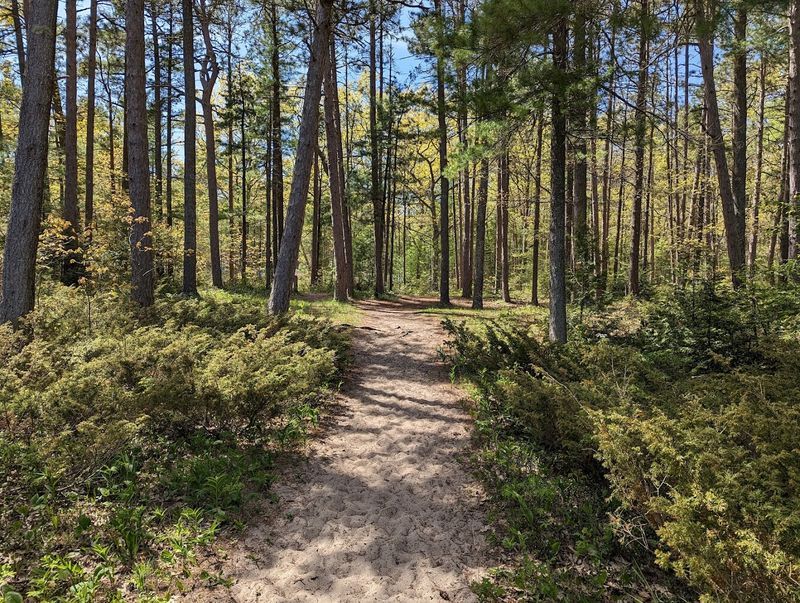
Not every great adventure announces itself loudly. This one begins quietly, with a packed gravel lot and a modest trailhead sign pointing into the trees.
The loop stretches just over a mile, making it approachable for almost anyone. I brought my younger cousin along, and she kept up the entire time without complaint.
The trail surface is well-maintained and easy to follow. Roots and rocks appear here and there, but nothing that slows you down much.
What makes it interesting is how the scenery keeps shifting. One moment you are walking through cathedral-like old-growth forest, the next you are stepping over mossy ground near the lakeshore.
A side trail branches off toward Lake Huron, adding roughly 0.2 miles to the full experience. That detour alone is worth the extra steps.
The Besser Natural Area sits at 12057 E Grand Lake Rd, Presque Isle, MI 49777, about 14 miles north of Alpena. Parking is free, restrooms are available, and the trail is open year-round.
Plan for at least 90 minutes so you do not feel rushed. Slow down and look around every corner.
A Ghost Town Frozen In The 19th Century
Imagine a whole village swallowed by the forest without a single headline. That is exactly what happened to the Village of Bell, and the evidence is still scattered across the ground.
Bell was settled in 1880 during Michigan’s lumber boom era. At its peak, more than 100 people called it home.
The town had everything a frontier community needed. There was a sawmill, a general store, a school, and homes lining what were once proper streets.
A post office opened in 1884, which tells you the town was legitimate and busy. It closed in 1911, a quiet signal that things were winding down.
By around 1915, Bell was fully abandoned. The lumber ran out, the jobs disappeared, and the residents simply moved on.
Walking through the old village site today feels genuinely surreal. Tree roots have cracked through old foundations.
Vines have wrapped themselves around collapsed walls.
The forest reclaimed this place so thoroughly that you almost miss some of the remnants entirely. Keep your eyes low and your pace slow.
History here does not shout at you. It whispers through the undergrowth.
The Lone Chimney That Refused To Fall
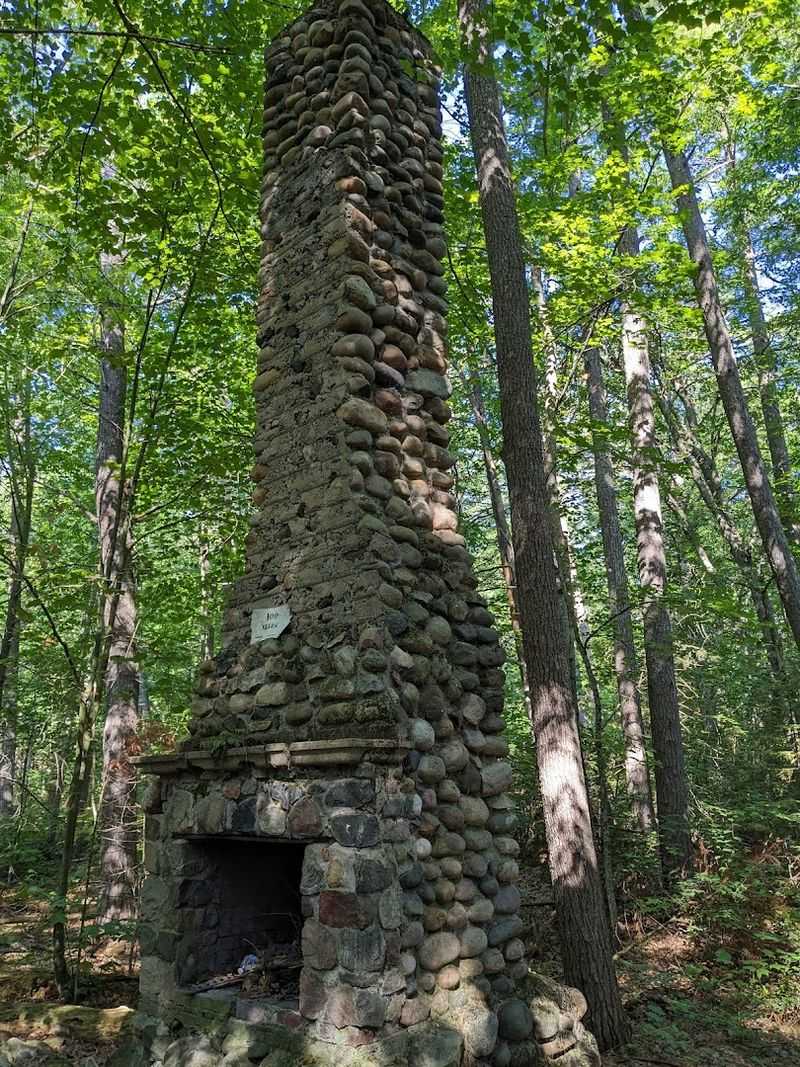
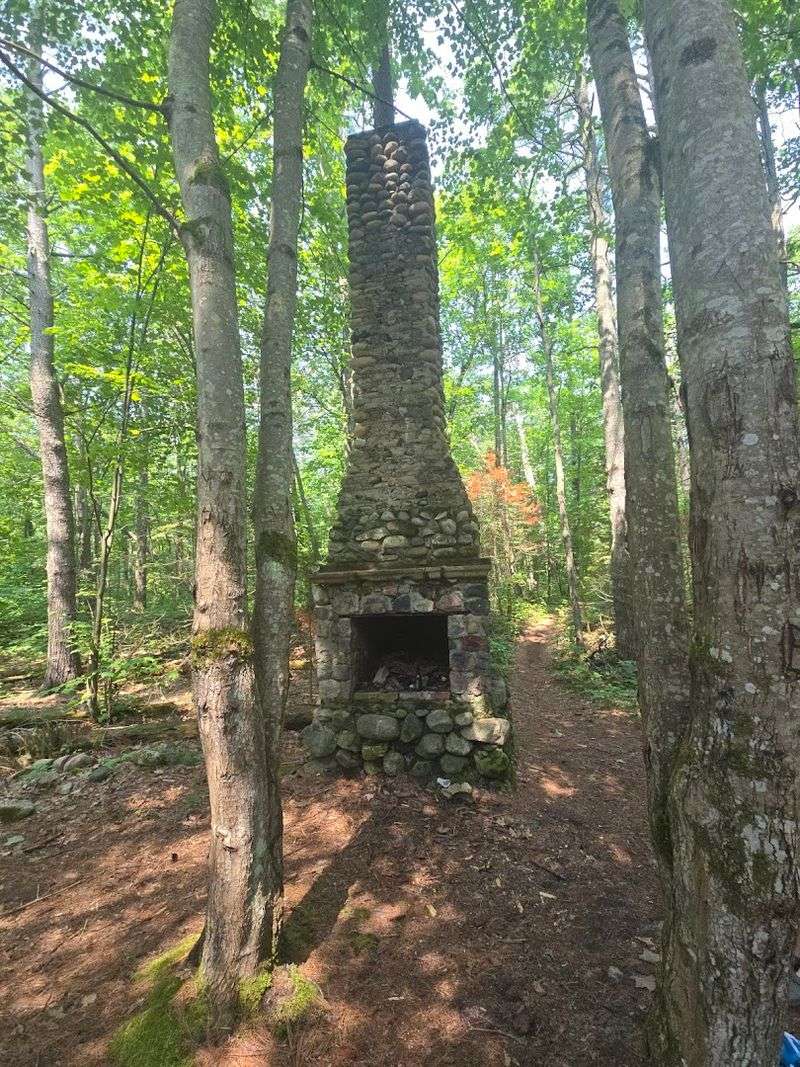
There is something almost defiant about a chimney standing alone in the middle of the woods. Everything else around it crumbled, but this one stayed upright.
The stone chimney is the most recognizable landmark along the trail. It rises above the surrounding brush like a quiet monument to the people who once lived here.
Originally part of one of Bell’s buildings, the chimney was restored in 1975 to preserve it for future visitors. Someone cared enough to make sure it lasted.
Standing next to it, you get a real sense of scale. These were not tiny cabins.
Bell had real structures built to last through Michigan winters.
The chimney also serves as a natural gathering point on the trail. Most hikers stop here, look up, and go a little quiet for a moment.
It is one of those rare spots where the past feels genuinely close. You do not need a museum exhibit or a guided tour to feel the weight of it.
Just stand there for a minute. Let the silence settle around you.
The chimney has been standing for well over a century, and it has plenty of stories it is not giving up easily.
The Steel Safe And The Icebox Counter
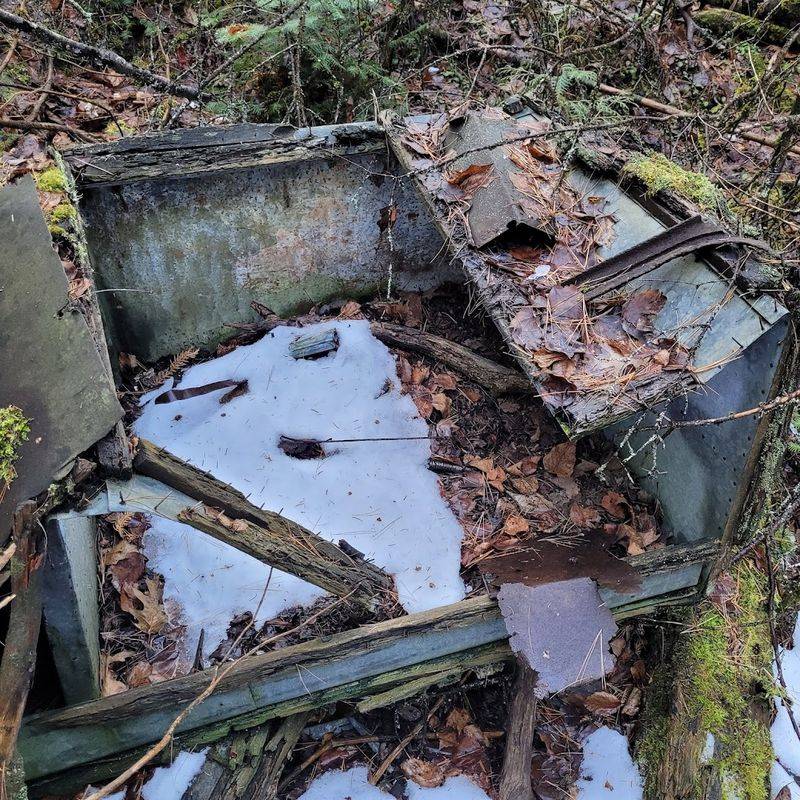
Finding a steel safe in the middle of the woods is not something most people expect on a casual hike. But Bell delivers exactly that kind of surprise.
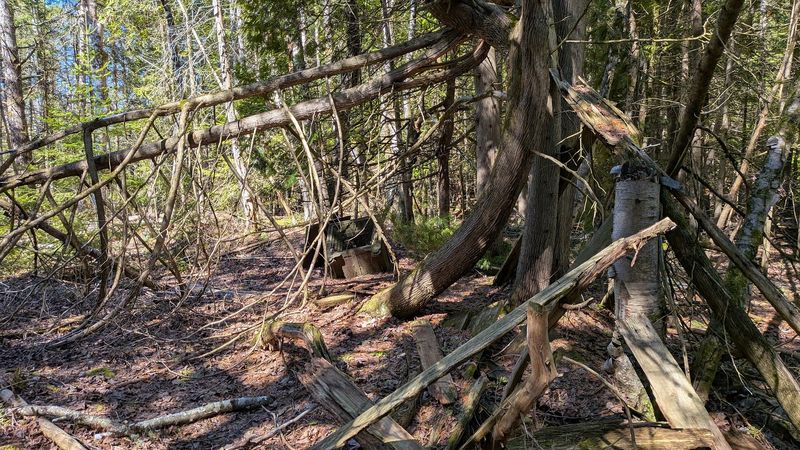
Among the scattered remnants along the trail, a rusted steel safe and an icebox counter sit partially buried in the earth. They may have belonged to one of the businesses that once operated in Bell.
The safe is especially striking. It is corroded and half-tipped, but still recognizable for what it once was.
Someone locked something in there over a hundred years ago.
The icebox counter is another detail that sparks the imagination. Businesses in small frontier towns kept perishables cold with blocks of ice cut from nearby lakes in winter.
These objects were not placed here as props. They were simply left behind when everyone walked away from Bell for good.
Time and weather have done their work, but the forms are still clear enough to identify. That is what makes this trail feel different from a typical nature walk.
Every few steps, another object catches your eye. This place rewards curious people who take their time and pay attention to what is half-hidden in the leaves.
The Bell Cemetery And Its Quiet Graves
Cemeteries tell stories that buildings never can. The Bell Cemetery sits nearby, holding graves that date back to the 1800s, and visiting it feels like reading the final chapter of the village’s story.
The graves belong to real people who built their lives in this remote corner of Michigan. Some markers are weathered almost beyond reading.
Others are surprisingly clear.
Getting to the cemetery requires crossing the road from the main trailhead and following a two-track path. It is a short walk, but it feels distinctly separate from the main loop.
The path through the trees is narrow in places. Branches reach in from both sides, and the ground is uneven.
But the destination is absolutely worth the extra effort.
Standing among those old stones, you realize Bell was not just a lumber operation. It was a real community with families, children, and neighbors who looked out for one another.
The cemetery is quiet in a way that feels intentional. No traffic noise reaches it.
No crowds gather here.
It is one of the most genuinely moving spots along the entire experience. Bring a little respect and take nothing but memories from this place.
Old-Growth Forest That Has Seen Everything
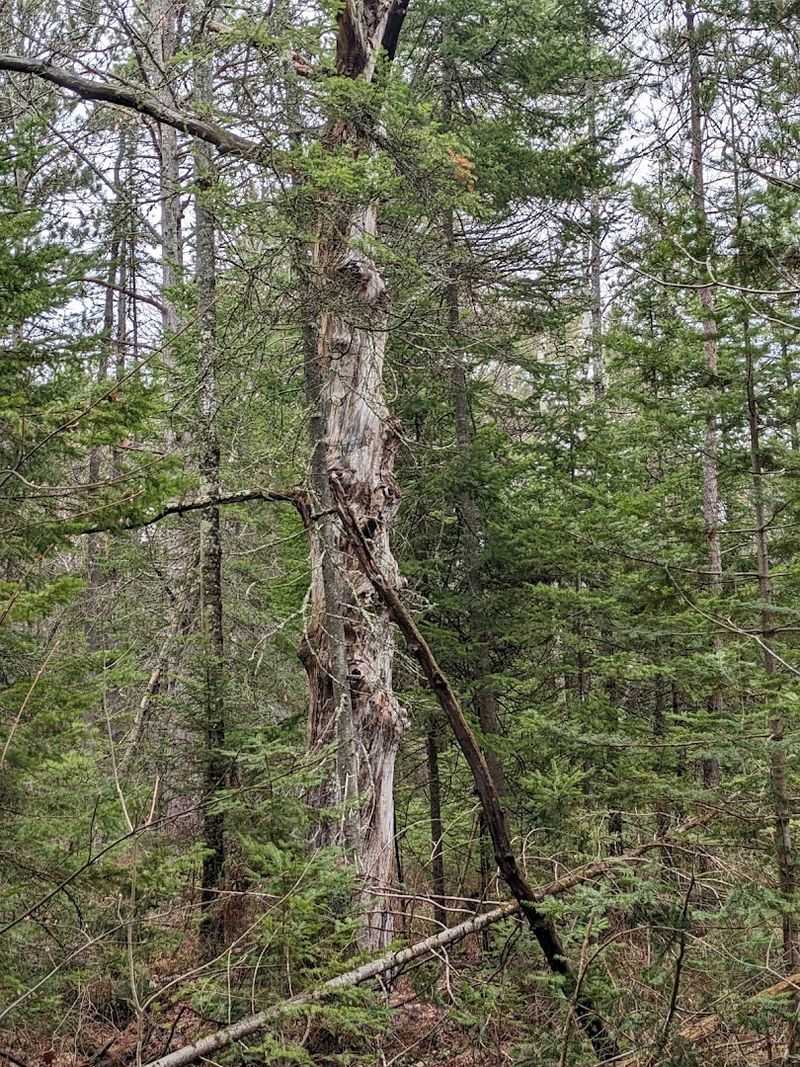
Before the ghost town ruins catch your eye, the trees will stop you cold. This forest is old in a way that feels almost prehistoric.
The Besser Natural Area protects a stand of old-growth trees that were never logged. That is rare in Michigan, where the 19th-century lumber industry stripped vast stretches of forest bare.
Walking beneath these giants gives you a strong sense of how the entire region once looked. The canopy is thick and layered, filtering light into soft green columns.
Some of the white cedars and hemlocks here are massive. Their root systems have buckled the ground around them over decades of slow, steady growth.
The forest floor is carpeted with moss, ferns, and fallen needles. Every step sounds slightly different depending on where you place your foot.
Wildlife moves through this area regularly. Toads appear after rain.
Water snakes bask on rocks near the shore. Birds call from branches you cannot even see clearly through the canopy.
This forest survived because someone made sure it would. Jesse Besser eventually purchased the land and donated it to the state of Michigan, which is why it remains protected and accessible today.
A Lake Huron Shoreline Worth Every Step
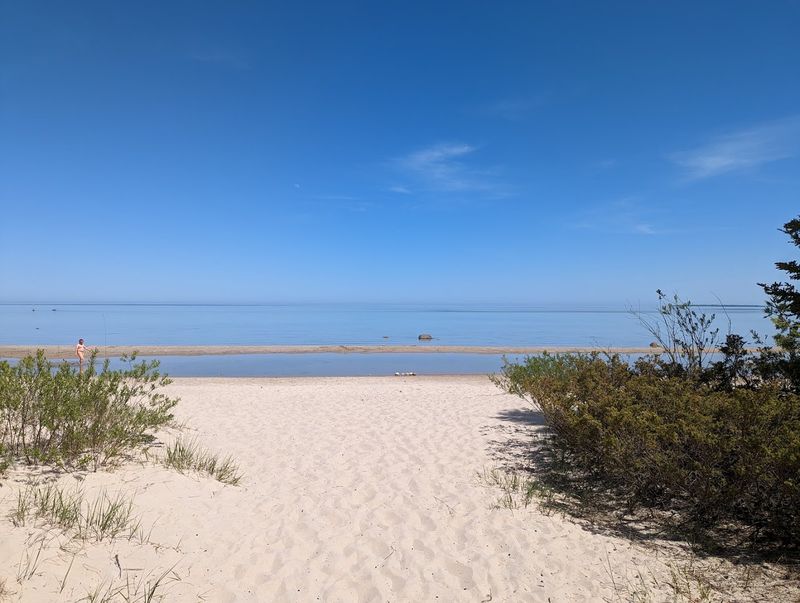
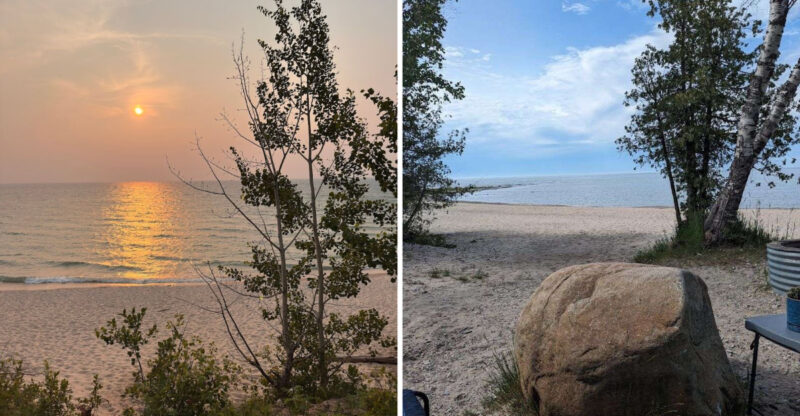
After walking through ghost town ruins and ancient trees, stumbling onto a Lake Huron beach feels like a reward you did not fully expect. The water is clear enough to see the bottom well offshore.
The beach at this spot mixes smooth sandy stretches with sections of colorful rounded rocks. Rock hounders especially love it here, since the variety of stones is genuinely impressive.
The shoreline is calm on mild days, which makes it easy to wade in or just sit and watch the water move. On windy days, the waves get choppy and the rocks become slippery, so good footwear matters.
Kids consistently enjoy this section of the trail. The shallow water near shore can be inviting for wading, but conditions can change quickly.
There is no lifeguard on duty, so keep a close eye on younger visitors near the water. The lake can shift from calm to rough quickly depending on the weather.
The views across Lake Huron from this shoreline are wide and uninterrupted. On a clear day, the horizon seems impossibly far away.
Pack a snack and take a real break here before looping back through the forest. This beach deserves more than a quick glance.
The Shipwreck You Can Actually See
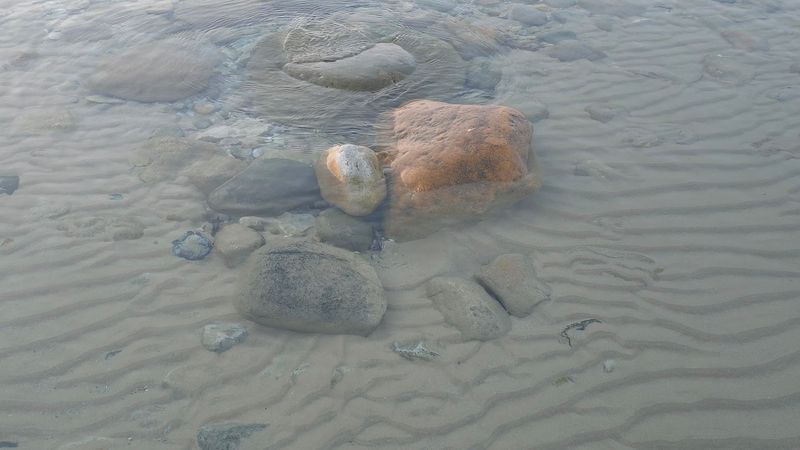
Most shipwrecks require scuba gear and serious planning. This one sits close enough to shore that you can see it without getting your hair wet.
A side trail branches off the main loop and leads down to a spot where shipwreck pieces are visible near the water. One portion of the wreck sits in a calm, pond-like area just off the beach.
Another section rests in the shallower part of the lake itself. On a calm day with good sunlight, the wooden beams are clearly visible beneath the surface.
Some visitors have waded out or even swum to the wreck, though choppy conditions make that tricky. The rocks near the waterline can be slippery, so approach carefully.
The wreck adds a completely different dimension to the visit. You start the hike thinking about a ghost town, and you end it staring at a sunken vessel from another era.
It is the kind of layered experience that makes this area stand out from other Michigan nature trails. History shows up in multiple forms here, not just on land.
The side trail to the wreck adds about 0.2 miles to the loop. That brings the full experience to roughly 1.3 miles total, which is still very manageable.
Why Jesse Besser Deserves A Thank You
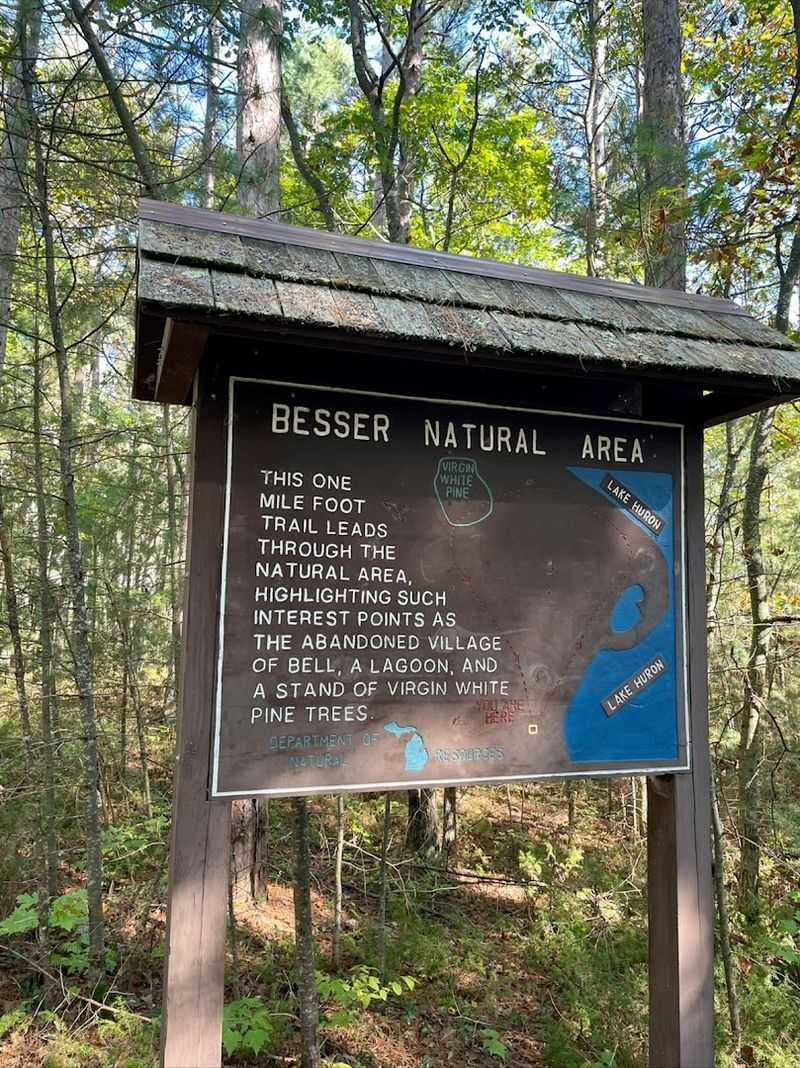
Not every industrialist turns around and gives something back. Jesse Besser did, and the result is a place that thousands of people enjoy every year without paying a single admission fee.
Besser was a Michigan businessman who eventually acquired this land and made the decision to donate it to the state. That act of generosity is the reason the forest, the ghost town ruins, and the shoreline are all protected today.
Without that donation, this area could easily have been developed or logged. The old-growth trees might have been cleared.
The ruins might have been bulldozed.
Instead, the state designated it as the Besser Natural Area, preserving everything within its boundaries for public access. The trail is free to use, parking is available, and restrooms are on-site.
The area sits about six miles southeast of Presque Isle on Grand Lake Road. It also connects to a two-track trail that links to another recreation area roughly six miles away.
Visiting this place feels like receiving a gift from someone you never met. The generosity behind it makes the experience feel a little more meaningful.
Go on a weekday if you want more solitude.