This Famous North Carolina Battleship Comes Alive For One Incredible Day This Weekend

By Saturday morning, this old warship will sound a lot less retired.
For one day, the decks fill with voices, movement, and routines that usually belong to another era. That shift changes everything.
A quiet landmark in Wilmington suddenly feels busy enough to make visitors forget they are standing inside a museum.
North Carolina history stops sitting still and starts moving around you. The narrow passageways feel more urgent.
The ship feels less like something preserved and more like something briefly awakened.
That is the magic of living history done right.
For a few hours, the past does not feel very far away at all.
Watch World War II Living History Interpreters Bring The Ship Back To Life
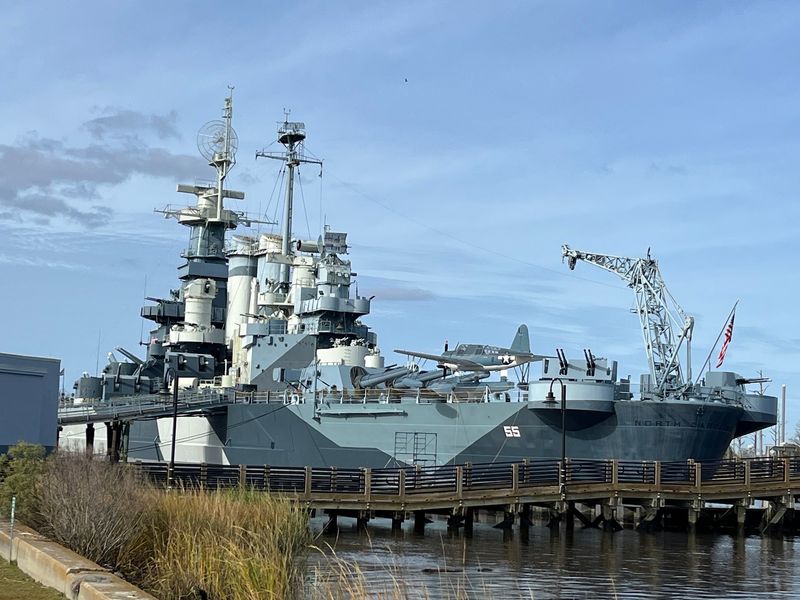
Gray steel has a way of staying silent until someone fills it with voices.
During Battleship Alive, interpreters in period dungarees and white caps move through the passageways, handling equipment and speaking the language of a wartime crew.
Suddenly the mess tables, bunks, and dials stop feeling like museum pieces and start feeling like somebody’s workplace.
You will hear boots on ladders, orders repeated back, and the low hum of a ship that once carried more than 2,000 young men across the Pacific.
The vessel earned the nickname Showboat during her service years, and this is the day she lives up to it best.
Interpreters take posts in compartments you might otherwise walk past, from crew berthing to operational spaces, giving each corner a purpose again.
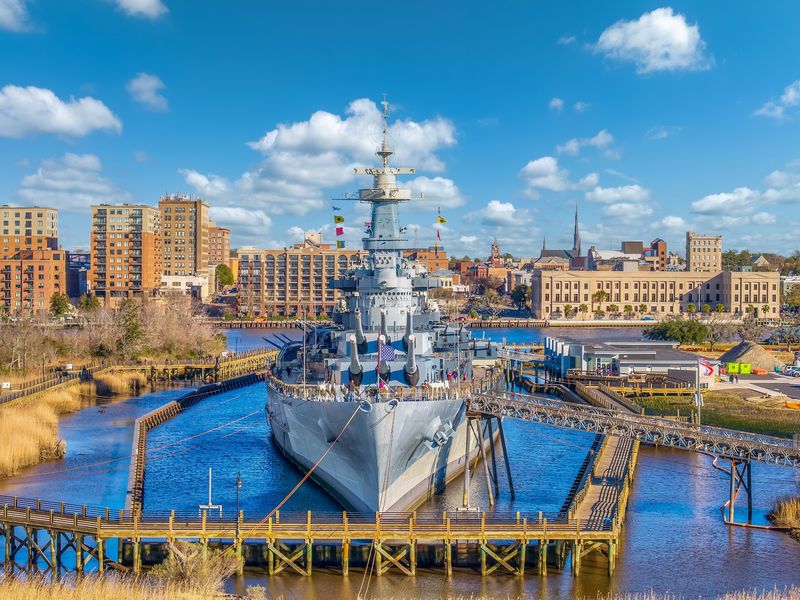
Her address is 1 Battleship Road NE, Wilmington, NC 28401, right across the water from downtown.
Come with curiosity and comfortable shoes.
Interpreters stay in character enough to make the scene believable, yet remain friendly and approachable throughout the day.
Watching them work turns reading about the 1940s into something closer to standing inside it.
See Daily Duties And Drills Recreated Across The Battleship
Life aboard a battleship ran on routine, and that routine is exactly what interpreters recreate.
Expect to see drills demonstrated, gear inspected, and the small repeated tasks that kept a floating city running smoothly hour after hour.
Living-history demonstrations take place aboard the ship rather than on a single stage.
As you follow the tour route, watch for interpreters re-enacting different parts of daily shipboard life.
What makes these recreations memorable is the detail.
You might watch a signal passed along, see how equipment was maintained, or learn how hundreds of meals came out of a galley barely larger than a school cafeteria kitchen.
Each station explains one slice of a job that never really paused, since the ship operated around the clock in rotating watches.
Drills also reveal how teamwork mattered more than individual strength.
One person alone could not load, aim, or communicate fast enough, so crews trained until movements became automatic.
Watch for a few minutes at one station, then move on and return later.
Demonstrations repeat through the day, so patience rewards you with a fuller picture of shipboard life.
Ask Questions And Hear What Life At Sea Was Really Like
Here is the part many visitors enjoy most: you get to ask anything.
Interpreters welcome questions, and the answers often go straight to the details that history books skip. How did sailors sleep in bunks stacked three high?
What did they eat on long patrols? Where did mail arrive, and how long did letters take to reach North Carolina families back home?
Conversations tend to wander in the best way.
A question about laundry might lead to a story about ice cream made aboard ship, or how sailors kept cool when interior temperatures climbed in tropical waters.
Since the ship remains largely in her original state, interpreters can point to the exact fixture, pipe, or hatch they are describing, which makes explanations click quickly for younger visitors.
Kids especially benefit from this back-and-forth format.
A shy child who will not read a placard often has plenty to ask a person standing at a real station.
Jot down a question or two before you arrive. Even a simple one opens the door to details you will retell at dinner that night.
Explore The Ship While Historical Demonstrations Unfold Around You
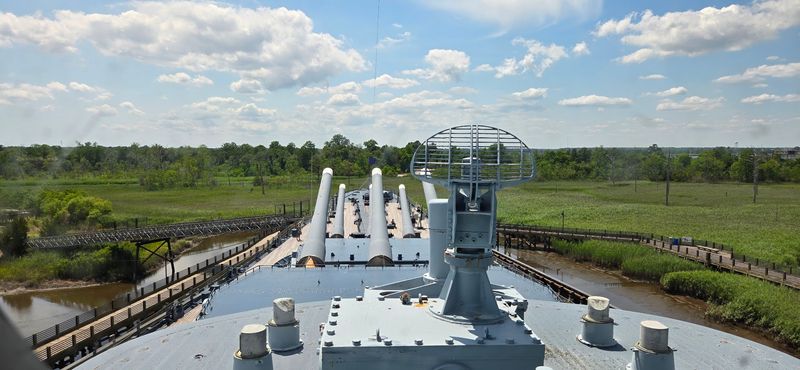
Nine levels are open to exploration, but the upper and lower decks include steep ladders, narrow passages, and uneven surfaces that limit accessibility.
Demonstrations happen along the way, so exploring and watching blend together naturally.
The stairs are narrow and steep, closer to ladders than staircases, with handrails throughout.
Comfortable shoes make a real difference.
Certain spaces stand out. Inside a 16-inch gun turret you crouch into a world of gears and shell handling gear.
In the plotting room, early mechanical computers show how gunners calculated targets long before digital screens existed.
Sick bay, the dentist’s space, and the laboratory hide in small nooks that are easy to miss unless you slow down and glance sideways.
Fans move air through the interior, though lower decks still warm up in summer.
Restrooms and water fountains sit near the entrance and aboard the ship, and a water bottle is worth carrying.
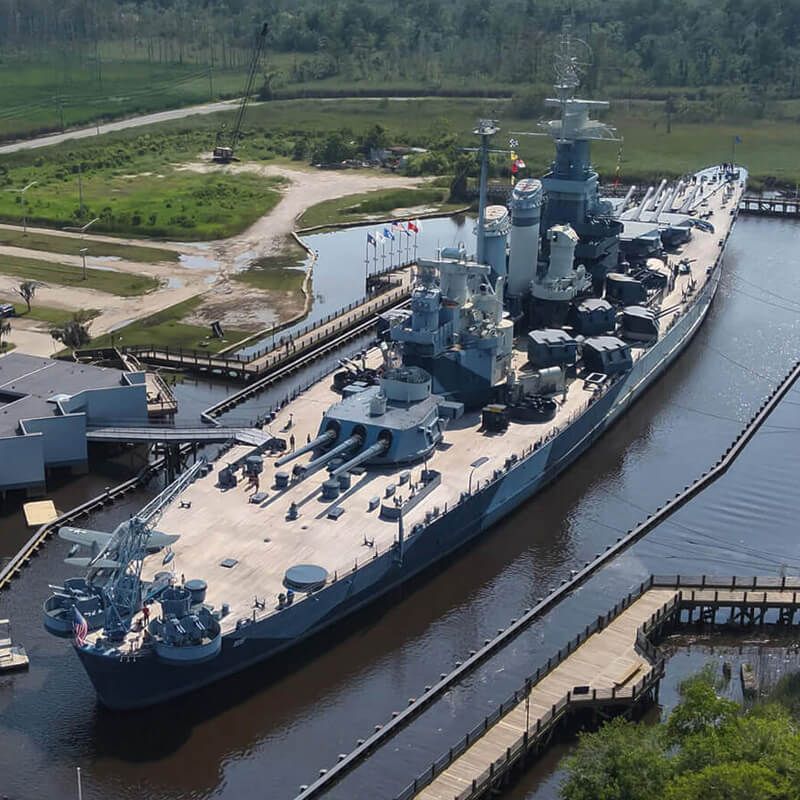
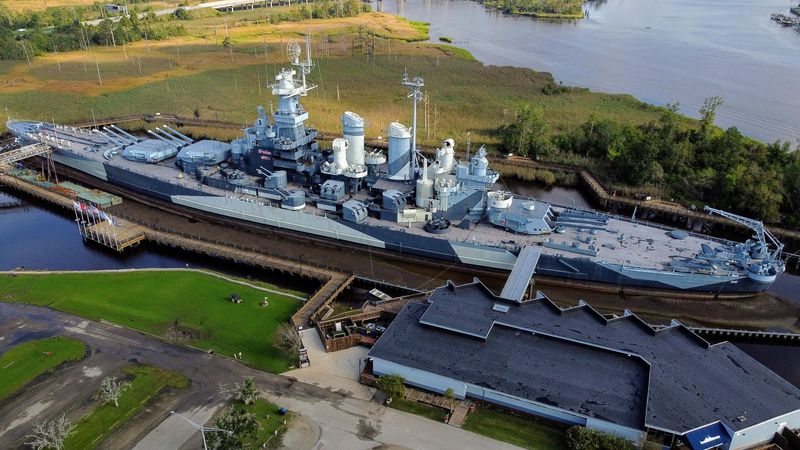
Outside, an elevated wooden walkway circles the hull, giving you a full view of her 728-foot length and the Wilmington skyline across the river.
Bring The Family For A Full Day Of Interactive History
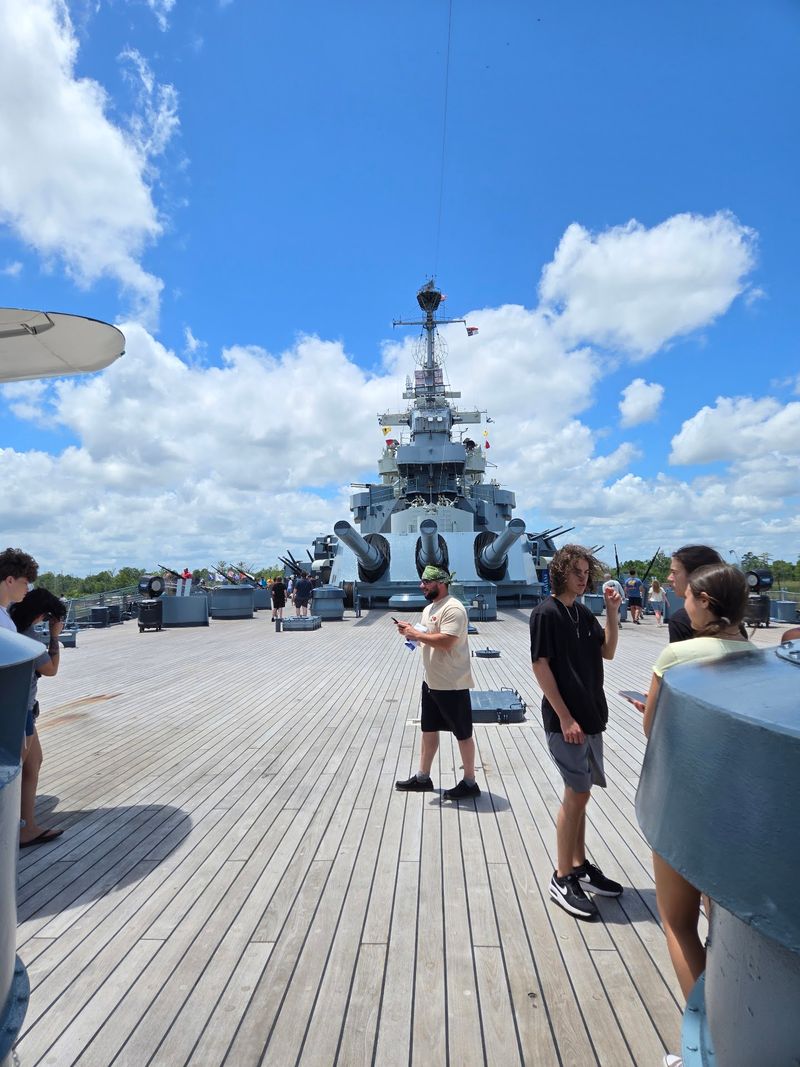
Families tend to do well here because the ship rewards climbing, peeking, and touching.
Interactive buttons and exhibits appear throughout, letting kids push, listen, and see how systems worked.
Battleship Alive adds a human layer to that.
Interpreters explain jobs in plain language, and children often start acting out those roles minutes later. The ship suits a wide age range.
Teenagers who normally shrug at museums get drawn in by the tight corridors, hatches, and the sense of solving a puzzle with every turn.
Grandparents find the crew memories on the placards moving, since the museum recorded oral histories from sailors who served aboard. Practical notes help.
Free parking sits beside the visitor center, vending machines offer cold drinks on the main deck and in the visitor center, and a picnic pavilion near the river gives everyone a shady place to rest with a packed lunch and a view of downtown.
Plan for two hours minimum, though many families stretch it to four.
With demonstrations running, a full day never feels like too much.
Stay Long Enough To Catch More Than One Reenactment
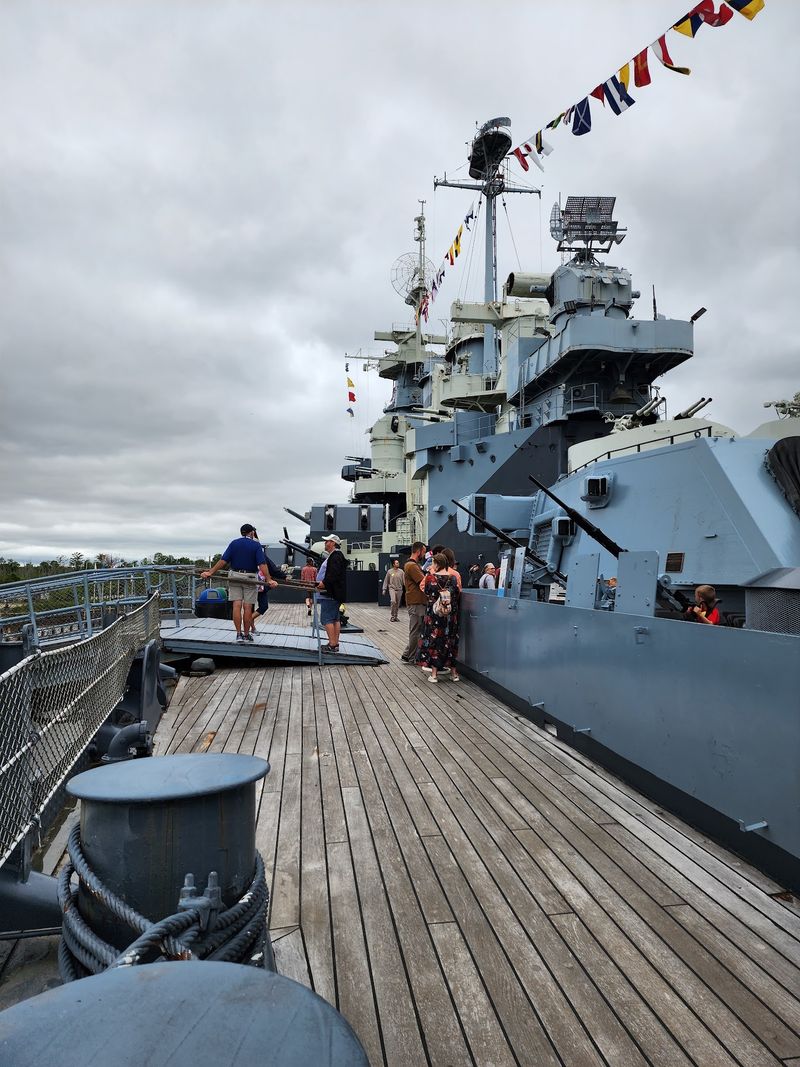
Rushing is the one mistake worth avoiding.
Demonstrations take place at different stations across the ship, and each one covers a separate part of shipboard life.
Catch a gun crew above deck, then work your way down to engineering or the galley for something completely different. No two presentations repeat the same information.
Because the route runs top to bottom, timing works in your favor if you loop back.
Spaces that felt crowded in the morning often quiet down later, letting you linger at a station and ask follow-up questions without waiting your turn.
Some visitors spend four or five hours aboard and still find plaques they never read.
Think of it like a slow walk through a neighborhood rather than a straight line.
A second pass through the crew berthing or the bridge feels different once you understand who worked there and why. Bring water, wear layers you can adjust, and give yourself permission to sit on a bench and simply watch.
That unhurried approach is how the Showboat’s story truly settles in.
Come Early Because The September 26 Event Runs From 8 AM To 5 PM
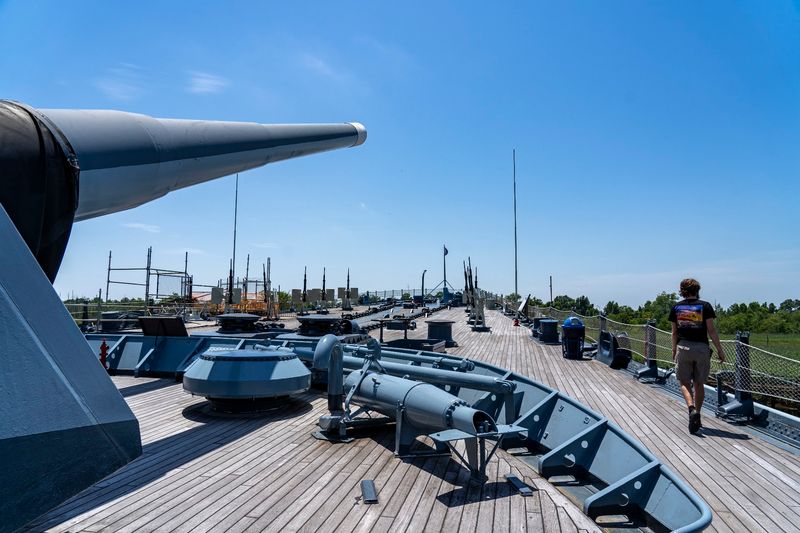
Doors open at 8 AM on September 26, and the event continues until 5 PM.
Arriving in that first hour is the smartest move you can make.
Morning light hits the hull beautifully, the parking lot stays open, and interior spaces feel cooler before the day heats up. Early arrivals also get more one-on-one time with interpreters.
Fewer visitors mean longer conversations and clearer views into cramped compartments where only a handful of people fit comfortably at once.
By midday, popular spots like the aft turret and the bridge draw steady traffic.
Address details help with planning.
The ship sits at 1 Battleship Road NE in Wilmington, reached by a short drive from the historic downtown waterfront across the Cape Fear River, with free parking near the visitor center.
Dress for a working ship rather than a climate-controlled gallery.
Shorts, breathable clothing, sturdy shoes, a hat for the sunny main deck, and a refillable water bottle will carry you through a long, rewarding day aboard one of North Carolina’s most recognizable landmarks.
Know That Battleship Alive Is Included With Regular Admission
Good news for budget-minded travelers: the living history program costs nothing extra.
Battleship Alive comes with regular admission, so one ticket covers the full self-guided experience plus every demonstration happening that day.
Standard admission has long been considered a bargain compared with other museum ships around the country.
That value stretches further when you consider how much there is to see.
Nine levels, gun turrets, the bridge, officer country, crew berthing, medical spaces, and engineering areas all open to visitors, with detailed placards and recorded crew memories throughout.
The memorial is self-supporting and relies on admission, program fees, gift-shop sales, and donations to help maintain the ship and keep it open to visitors.
The visitor center holds an extensive gift shop with shirts, hats, and books, plus restrooms and vending machines before you board.
Outside the paid area, the elevated wooden walkway around the ship is free to stroll, and the riverside park offers picnic tables with skyline views.
Add it all together and a single day here delivers one of the best history experiences along the North Carolina coast.