This Flea Market In California Feels Like A Never-Ending Treasure Hunt
Some markets sell products. This one sells the feeling that you’re about to find something nobody else has discovered yet.
Oakland is loud, fast, and full of energy, but this particular corner of the city slows everything down the moment you walk in. Rows of sellers stretch as far as you can see, each table carrying its own strange and wonderful mix of objects.
The state of California has built a reputation for doing things differently, and this market fits that reputation perfectly. Old vinyl records sit next to hand-stitched clothing.
Antique tools lean against modern art. Food smells drift across the whole space and somehow make everything feel more alive.
California has no shortage of weekend destinations, but few of them ask so little of you while giving back so much. Show up with no plan, no list, and no agenda.
That is exactly when this place works best.
A Market That Feels Bigger With Every Step
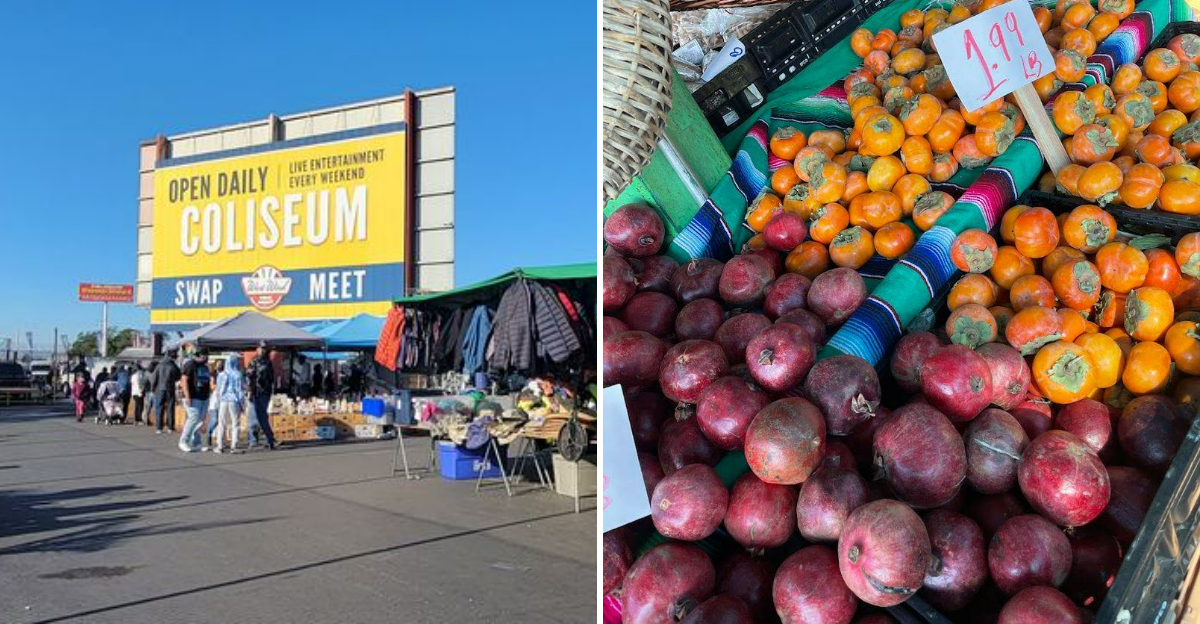
Twenty minutes is usually enough to see most of what a flea market has to offer. The Oakland Flea Market at 5401 Joe Morgan Way does not follow that rule. What looks like a manageable stretch of stalls from the entrance keeps expanding as you move further inside.
New rows appear around corners, and sections you missed on the way in pull you back for a second look.
The layout is not perfectly organized, and that is actually part of what makes it feel so large. There is no single clear path to follow, so most visitors end up creating their own route.
That means two people can walk the same market and have completely different experiences.
Comfortable shoes are genuinely important here. The ground is mostly flat, but the sheer amount of ground to cover adds up fast.
Plan to spend at least two to three hours here. That’s what it takes to see a meaningful portion of the market.
Where Every Corner Holds Something Unexpected
No two tables at the Oakland Flea Market look alike. That is not an accident.
The inventory changes constantly, and that feeling follows you from one end of the grounds to the other.
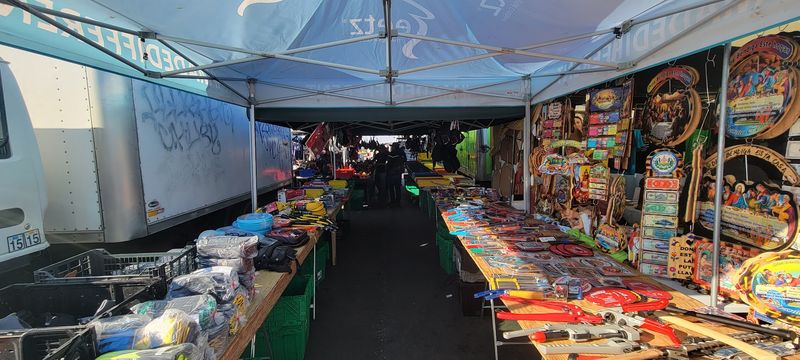
One stall might be stacked with power tools and extension cords. The next one over could have a folding table covered in costume jewelry, old sunglasses, and small decorative figurines.
Around the corner, someone might be selling fresh produce right next to a table with a pile of used sneakers in surprisingly good condition.
The variety is not random in a chaotic way. It reflects the genuine mix of people who set up here, each bringing whatever they have collected, made, or sourced.
That mix gives the market its unpredictable energy.
You are not going to locate a specific item by searching systematically. The better approach is to slow down and look at each table without rushing.
Stay open to unexpected finds.
Rows Of Finds That Keep Pulling You Forward
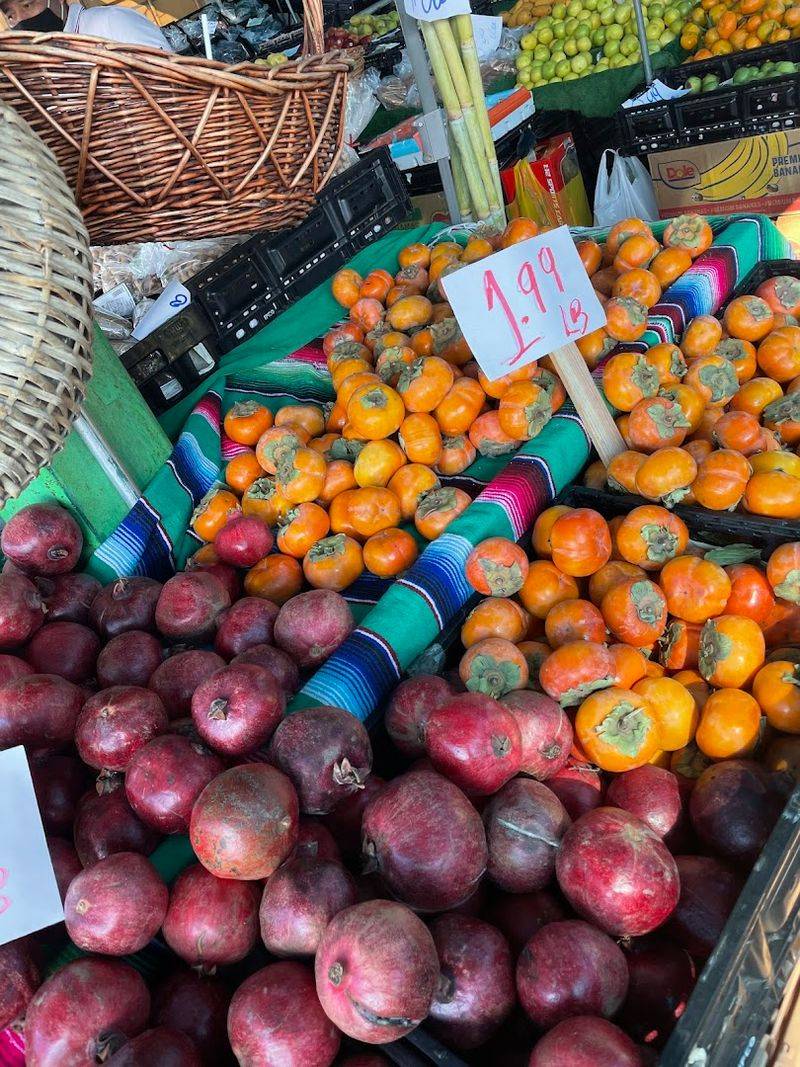
Walking through the Oakland Flea Market has a particular rhythm. You pause at one table and pick something up.
Before you move on, something at the next table catches your eye. That forward pull is constant.
The rows are set up in a way that makes it easy to keep moving without feeling rushed. Stalls are spaced closely enough that there is always something visible ahead, but not so tightly packed that it feels uncomfortable.
On weekends especially, the rows fill with more sellers and the variety increases noticeably.
Tools are a consistent draw throughout the market. You will find both hand tools and power tools at multiple stalls, ranging from basic household items to more specialized equipment.
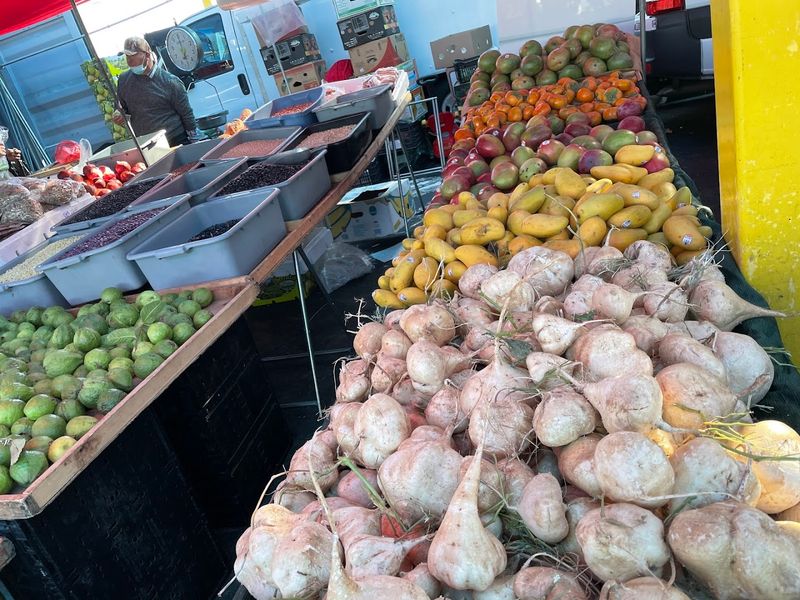
Clothing, electronics, and home goods fill out the rest of the space, with fresh produce available in a dedicated section.
Arriving early gives you the best access to the full selection before items sell or get picked through. The market opens as early as 6 AM on most days, and serious shoppers often show up close to that time to get first access to whatever is laid out for the day.
A Place Where Time Slows Without Warning
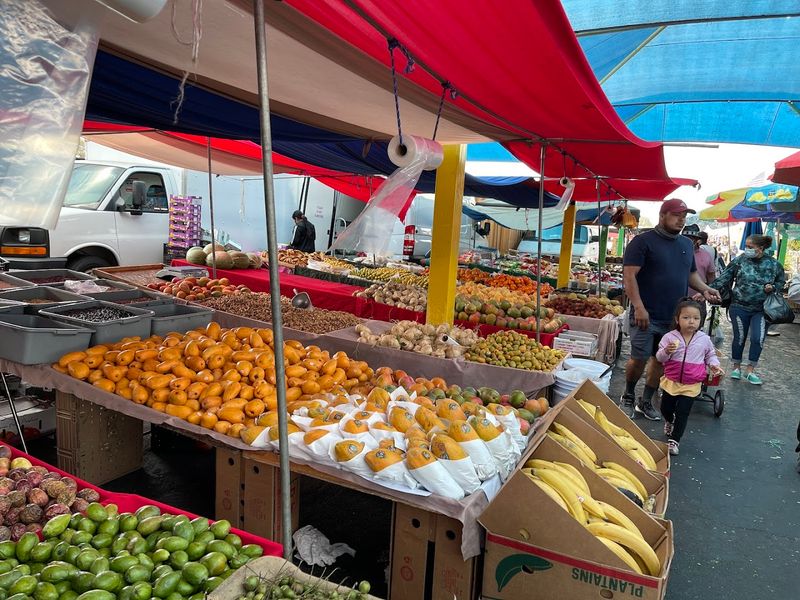
There is something about the pace of the Oakland Flea Market that quietly disconnects you from whatever you had planned for the rest of the day. You arrive with a rough idea of how long you will stay, and then an hour passes before you realize it.
Part of that has to do with the layout. There is no obvious end point, no checkout line pulling you toward an exit.
You move from table to table at whatever speed feels right, and the market accommodates that completely. Nobody is rushing you along or watching the clock.
The food stalls add another layer to this unhurried atmosphere. Fresh street food is available across the grounds.
Sitting down to eat gives you a natural pause. It shifts the visit from a shopping trip into something closer to an afternoon outing.
For families, the market also has small amusements for younger kids, including family-friendly features and activities for children that can extend a visit beyond what parents originally planned, often turning a quick stop into a full morning out in Oakland.
Vintage Pieces That Still Carry Stories
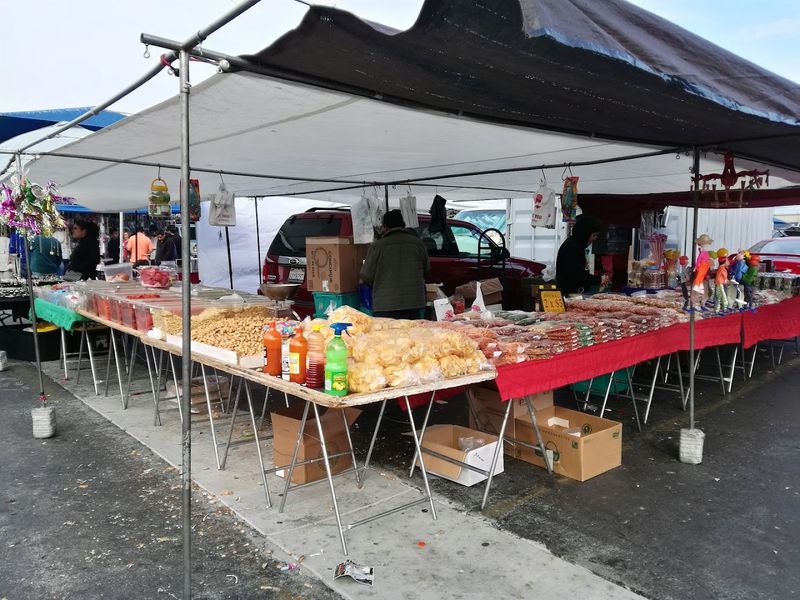
Not everything at the Oakland Flea Market is new or mass-produced. Scattered throughout the rows are people who specialize in older items, the kind that clearly have some history behind them.
You might come across a worn leather jacket, vintage hand tools, or old electronics that still look functional. These pieces tend to show up without much fanfare, just sitting on a table among everything else, waiting for someone who recognizes their value.
The mix of old and new is one of the market’s more interesting qualities. One stall selling new phone accessories might be next to someone with items from decades ago.
Some look like they came straight out of a storage unit. That contrast keeps the browsing experience from feeling predictable.
Vintage finds here are priced by individual sellers, so there is room to negotiate. Coming in with a general sense of what something is worth helps, but even without that knowledge, the prices vary depending on who you buy from.
Tables Filled With Objects You Did Not Plan To Find
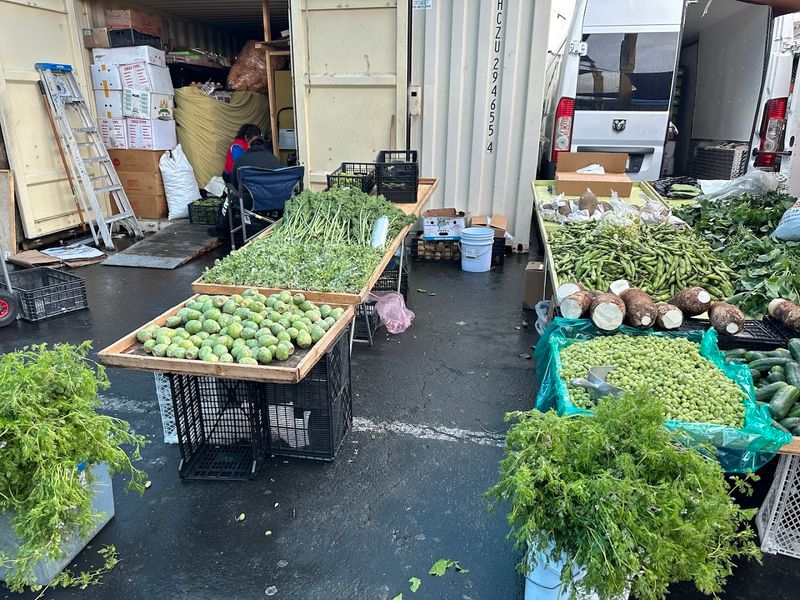
Planning what to buy at the Oakland Flea Market is mostly a losing strategy. The market works best when you arrive without a strict list and let the tables do the deciding for you.
On any given day, one table might hold automotive parts, kitchen utensils, brand-new cosmetics, and a stack of used DVDs all sharing the same folding table. That kind of mix is not unusual here.
It reflects the wide range of people who sell at the market and the different sources they draw from.
Some sellers buy in bulk and sell general merchandise. Others are clearing out personal collections or household items accumulated over years.
A few specialize in specific categories like tools or produce, while others seem to bring whatever they have available that week.
The unpredictability is what makes table-by-table browsing so satisfying. You stop because something catches your eye, and while you are looking at that one thing, three other objects nearby pull your attention.
That layered discovery is hard to replicate in a standard store. It’s a big reason people keep coming back instead of shopping online.
A Space That Rewards Curiosity At Every Turn
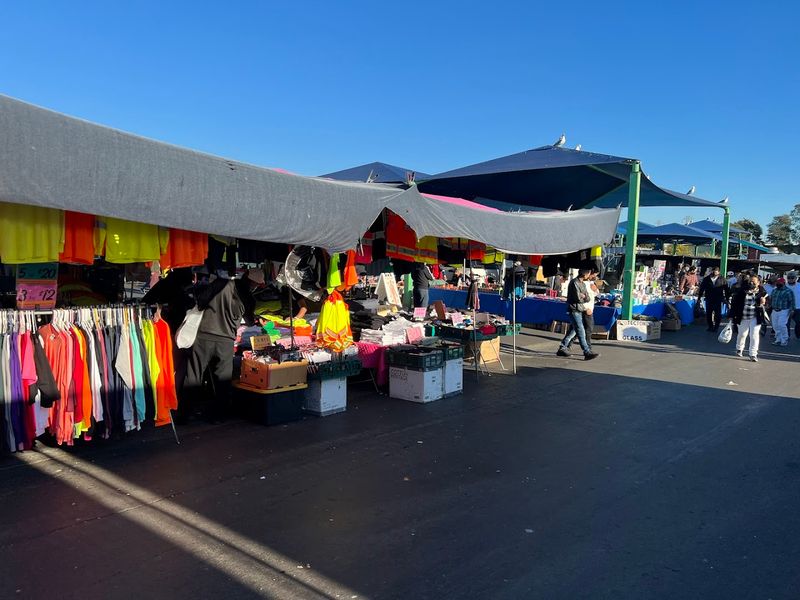
The visitors who rush through this market miss most of it. Slowing down and actually looking at what is in front of you is what separates a forgettable visit from a really good one.
Part of what rewards that slower approach is the sheer density of items on display. Tables are often packed, and things are often stacked or layered in ways that require a second look.
Something worthwhile might be sitting underneath something else, or tucked behind a larger item at the back of the table.
Talking to people also opens up possibilities that are not obvious from just scanning the table. Some sellers have more inventory stored nearby and will bring it out if they know you are interested.
Others can point you toward someone else nearby who has exactly what you are looking for.
The multicultural character of the market adds another dimension to this. Vendors and shoppers come from a wide range of backgrounds, and the goods on offer reflect that diversity.
Oakland’s community is genuinely represented here, from the languages spoken to the food available, making curiosity not just useful but also genuinely rewarding in unexpected ways.
Where Searching Becomes Part Of The Experience
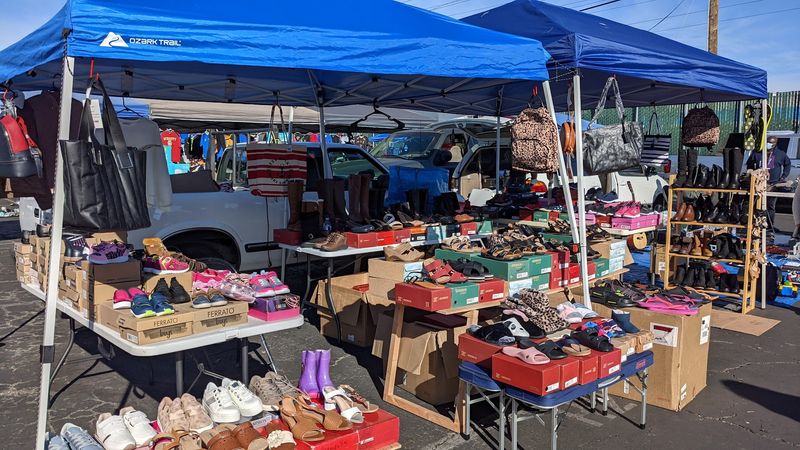
Most shopping experiences are designed to end quickly. This one is designed to keep going.
Moving from stall to stall without a fixed destination creates a kind of low-pressure exploration that is hard to find in everyday shopping. You are not being directed by signs or algorithms.
You are just looking, and that simple act turns out to be genuinely enjoyable when the environment supports it.
The market operates Tuesday through Sunday, with Monday hours running from 7 AM to 2 PM. Weekends draw more setups and more variety, making Saturday and Sunday the best days for thorough browsing.
On those days, the grounds fill up steadily from early morning onward, and the energy of the crowd adds to the overall experience.
Bringing cash is recommended, as payment options can vary between sellers and having it ready helps transactions move smoothly.
A small bag or backpack also helps, since carrying multiple purchases across a large outdoor market gets unwieldy quickly without somewhere to put things.
Flea Market Energy That Never Fully Settles
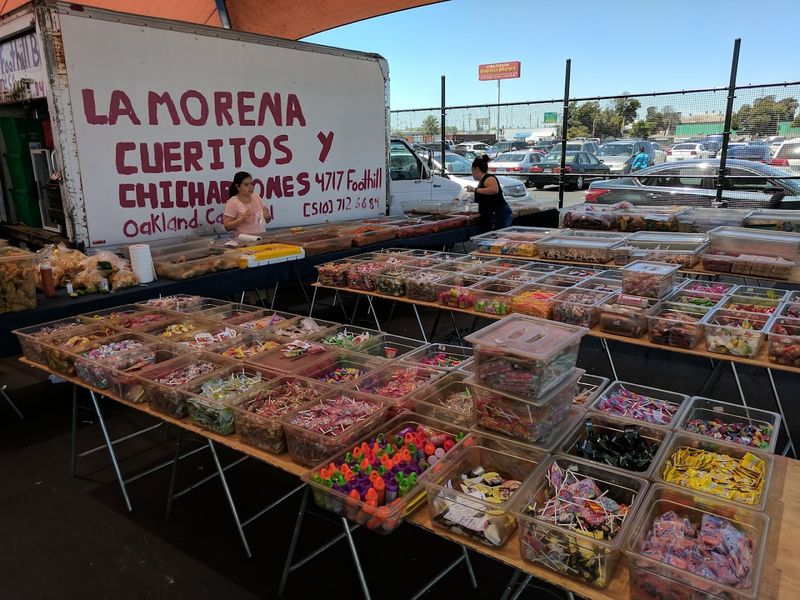
Even on a slow Tuesday morning, this place refuses to stand still.
Vendors call out to passersby and music drifts through the market. The smell of street food shifts depending on where you are.
All of that sensory input adds up to something that feels genuinely alive rather than static.
On weekends, that energy increases considerably. More sellers set up, foot traffic picks up noticeably by mid-morning, and the food stalls outside the main market area draw their own steady crowd.
Parking can get competitive on busy days, so arriving closer to the 6 AM opening time on Saturdays and Sundays makes a real difference.
Admission ranges from $1.00 to $2.25 depending on the day, with children 11 and under entering free. That pricing keeps the market accessible to a wide range of visitors, which contributes directly to the mix of people you encounter there.
The crowd itself is part of what makes the energy feel so consistent and real throughout the day.
A Stop That Feels Different Every Single Time
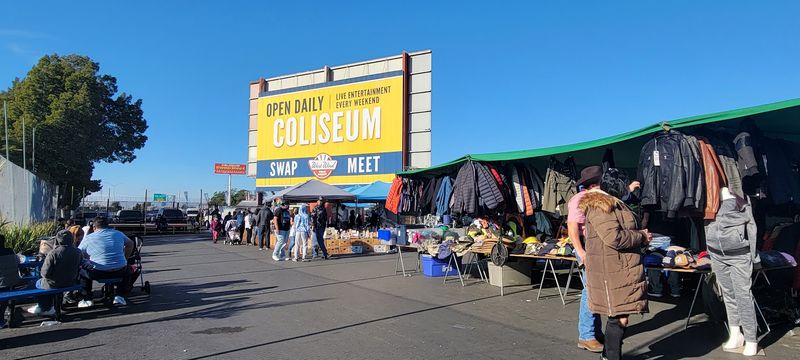
Regulars often say returning is what really unlocks the experience. A single visit gives you a taste, but coming back on different days and at different times reveals how much the market actually shifts from one week to the next.
Setups rotate. Some show up only on weekends, while others are weekday regulars.
The produce section refreshes with whatever is in season. New items appear on familiar tables, and occasionally an entirely new setup appears in a spot that was empty the last time you passed through.
That constant turnover is what keeps the market from feeling repetitive. There is no point at which you can honestly say you have seen everything, because the inventory is not fixed.
Each visit is shaped by who decided to show up that day and what they brought with them.
The market is easy to reach by public transportation, including BART to Coliseum Station and nearby bus connections. For anyone who has been meaning to visit but has not yet made the trip, the most honest advice is straightforward: just go, and then go again.