This Florida Bird Sanctuary Lets Visitors Get Close To Owls And Hawks
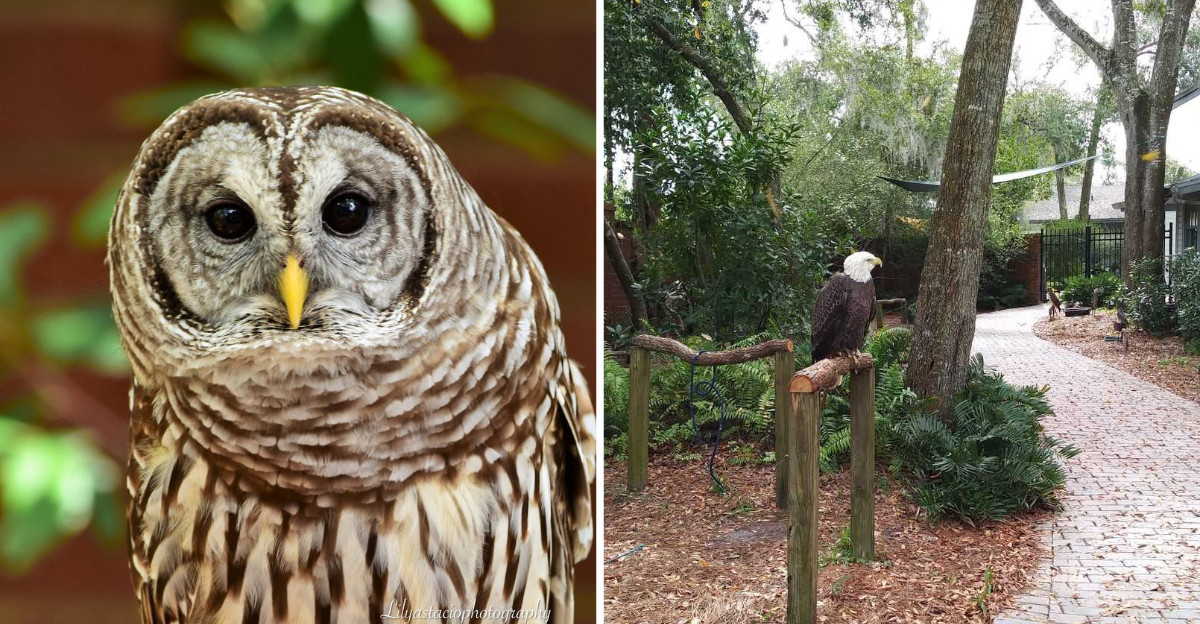
Owls look very different when the only thing between you and those enormous eyes is a few feet of air.
At this Florida sanctuary, hawks, eagles, owls, and other raptors become the center of a visit built around rescue, rehabilitation, and education.
The birds command attention immediately.
Several are recovering from injuries. Others remain as ambassadors, helping visitors understand what survival in the wild actually requires.
Those talons are no joke!
Shaded paths and knowledgeable staff add depth beyond the close-up views. Take your time with each enclosure and read the stories.
The longer you stay, the more impressive every feather, scar, silent stare, and second chance becomes.
Where The Story Began
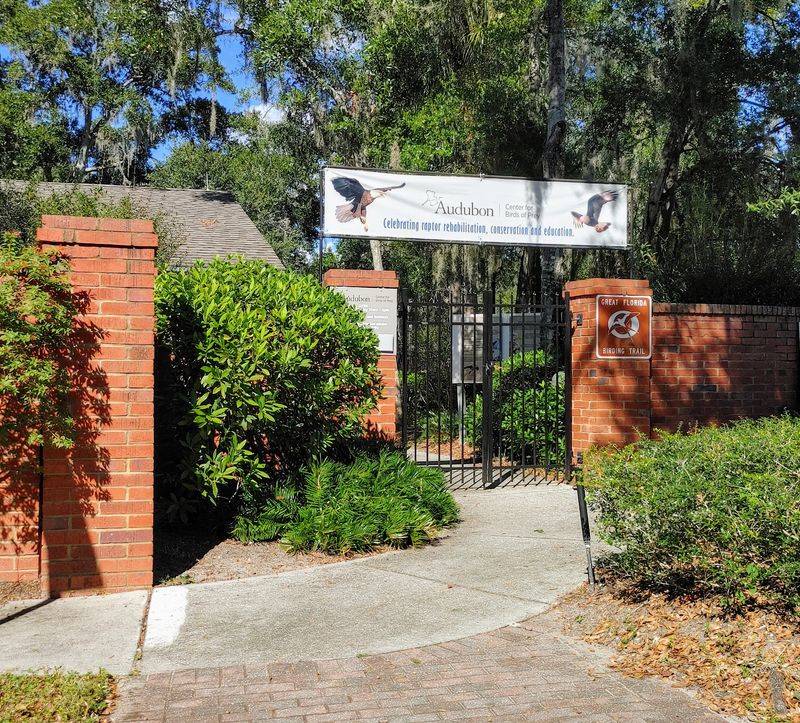
History buffs get a bonus here. The very first Florida Audubon Society meeting happened in Maitland back in March 1900, focused on protecting wading birds.
That early spark eventually grew into something with feathers and talons. The raptor facility itself opened its doors on October 19, 1979, built around rescue, treatment, and release.
Credit for the raptor mission goes largely to a woman who once ran the gift shop and cared for injured birds in her own home. Her devotion to bald eagles pushed the idea forward until a proper clinic existed.
What began with Doris Mager caring for injured raptors at home grew into a major rehabilitation center known especially for its specialized care of Bald Eagles and other Florida raptors.
The three-acre property retains a historic two-story veranda bungalow built in the 1920s, connecting today’s conservation work with Audubon’s long history in Maitland.
You will find the Audubon Center for Birds of Prey along the shores of Lake Sybelia at 1101 Audubon Way in Maitland.
Second Chances In Feathers
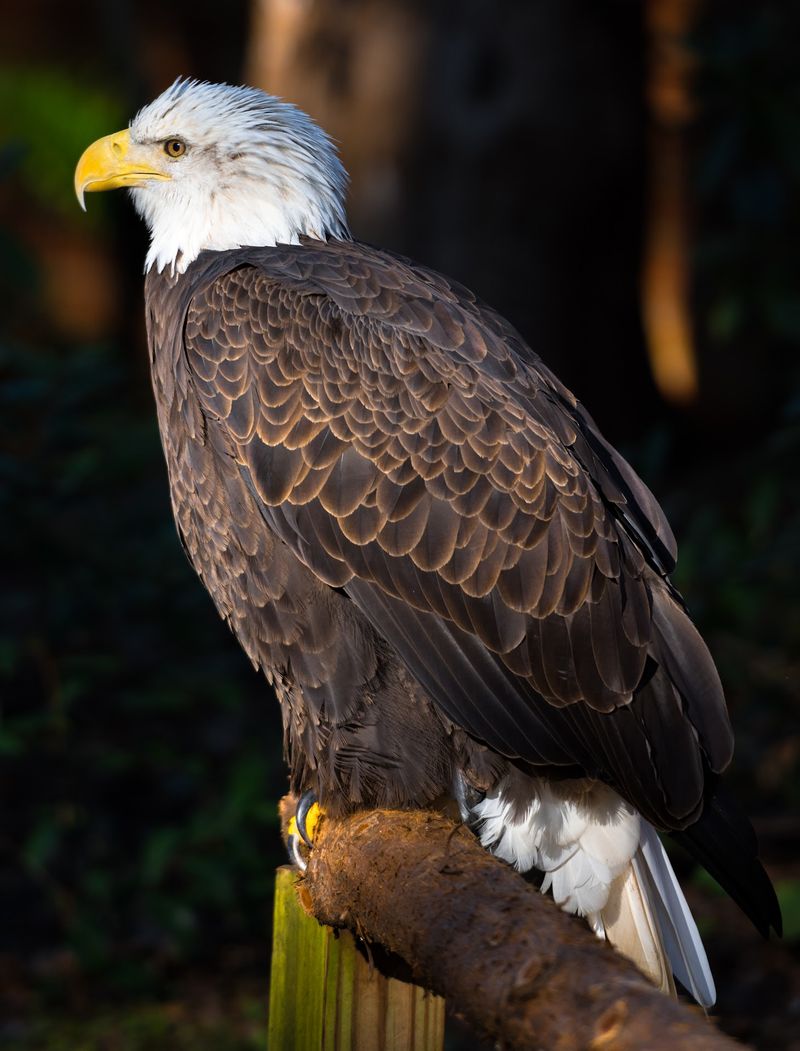
The Raptor Trauma Clinic currently treats more than 700 sick, injured, or orphaned raptors each year, and thousands have been rehabilitated and released since the center opened in 1979.
Bald Eagles remain a major specialty here, and the center celebrated the release of its 800th rehabilitated Bald Eagle in November 2025.
The clinic runs on real medical equipment, including X-ray machines for spotting fractures and internal damage. Complicated surgeries happen with help from local veterinarians who partner with the staff.
Injuries usually trace back to human activity. Car collisions, power line electrocution, and gunshot wounds account for many arrivals, which explains why education matters so much here.
Not every patient can return to the wild. Some lose vision, some lose flight, and those birds become permanent residents with a job to do.
The permanent ambassadors each have individual rehabilitation histories explaining why they cannot return to the wild and how they now contribute to education.
Meeting The Resident Ambassadors
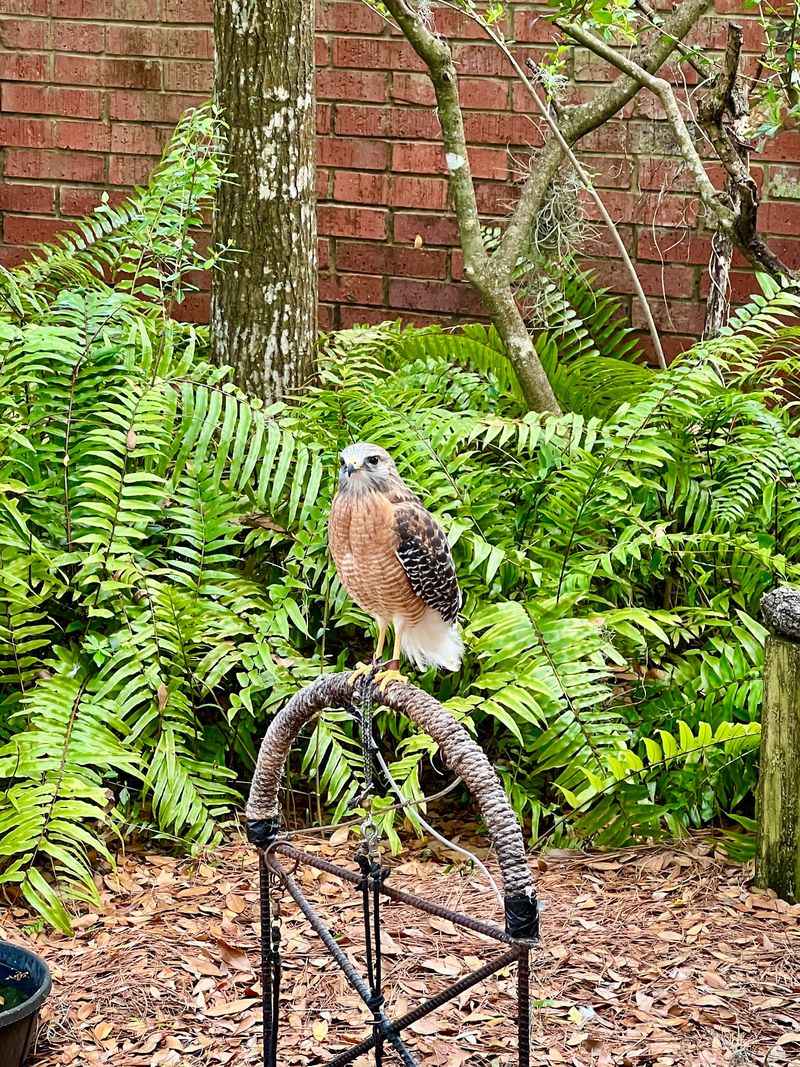
Fifteen-plus species of raptors live here permanently, and each one comes with a backstory worth hearing. The lineup shifts, but the variety always impresses.
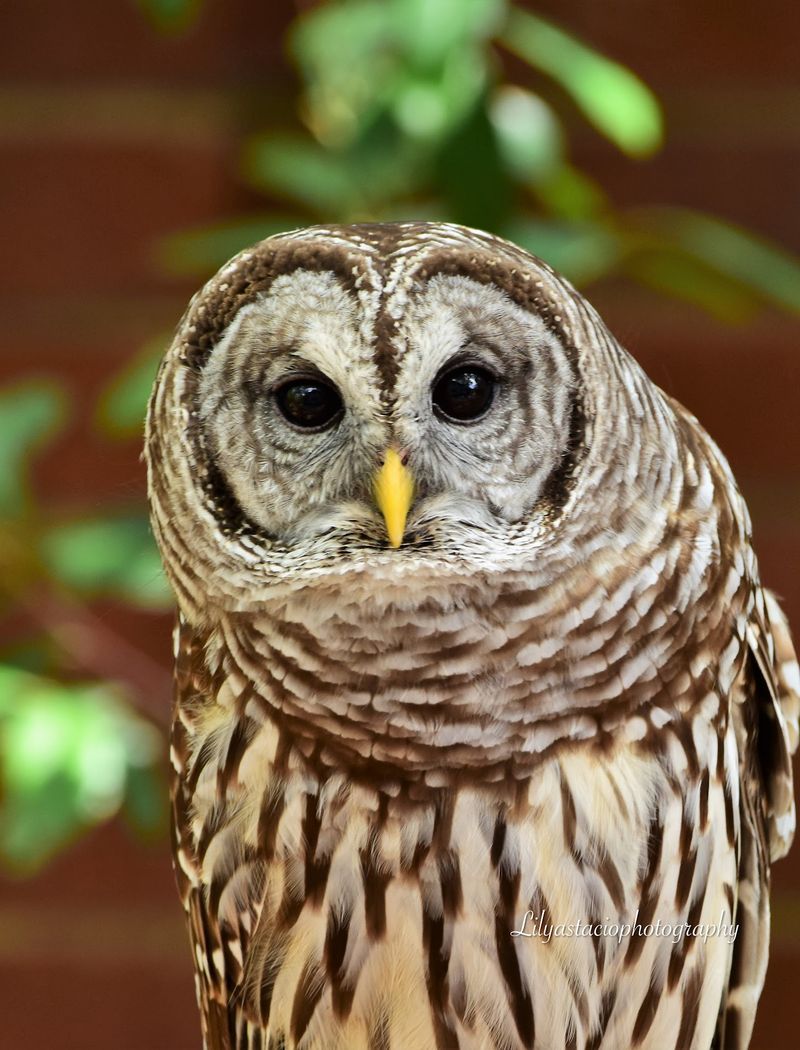
Owls steal plenty of attention. Great horned owls loom with tufted ears, eastern screech owls blend into bark, and burrowing owls bob like tiny comedians on long legs.
Current hawk ambassadors include Red-shouldered, Red-tailed, and Short-tailed Hawks, giving visitors a close look at several distinctly different Florida raptors.
Peregrine Falcons and American Kestrels represent the falcon family among the center’s current ambassadors.
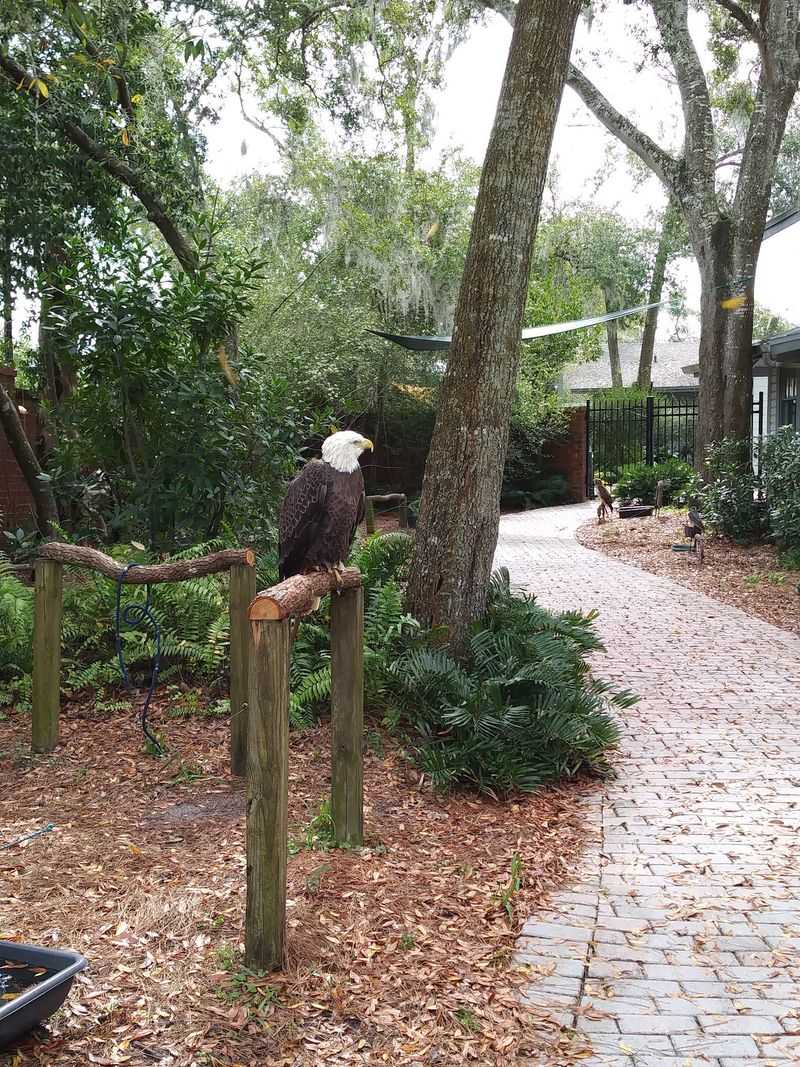
Bald Eagles and an Osprey join Turkey and Black Vultures among the current ambassadors, while Mississippi and Snail Kites add even more variety to the resident lineup.
Special programs and prearranged group tours can include close encounters with ambassador birds, while regular visits already provide unusually close views of permanent resident raptors.
The close viewing distances can give photographers perspectives that would be difficult to capture safely with wild raptors.
Shaded Paths And Lake Views
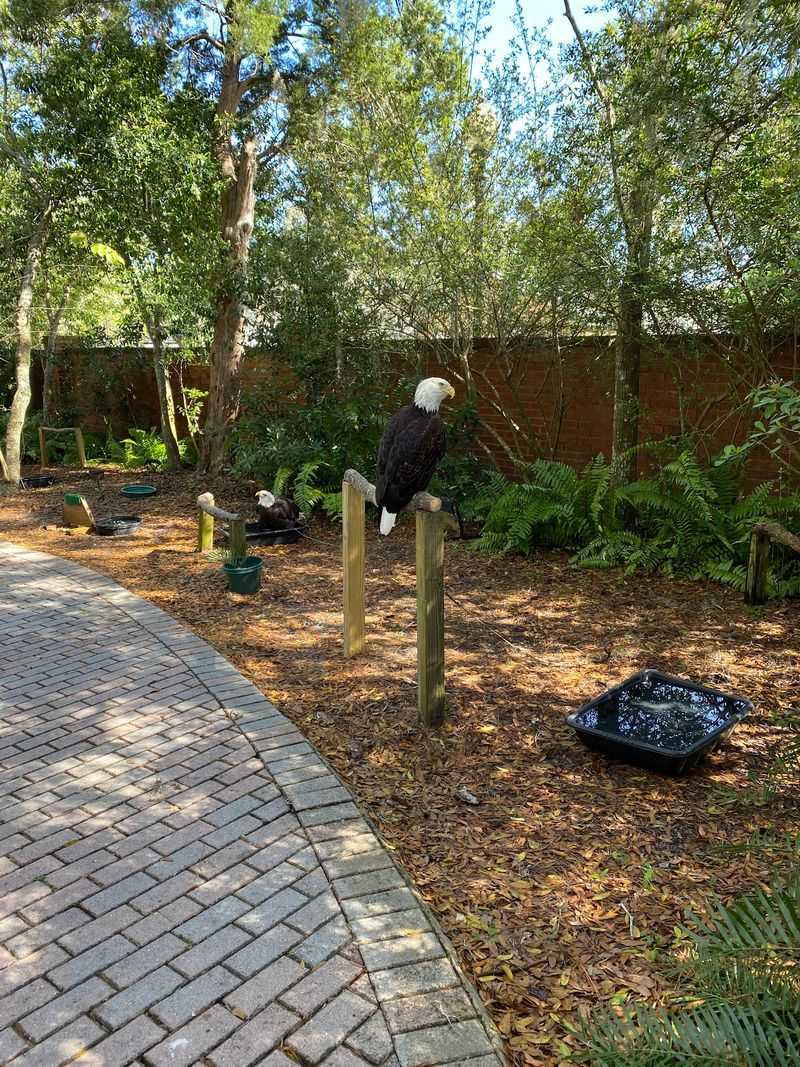
Almost everything here happens outdoors, which suits the setting perfectly. A paved path loops the grounds, friendly to wheelchairs and strollers alike.
Mature trees throw generous shade across most of the route. That shade earns its keep during a Florida summer afternoon.
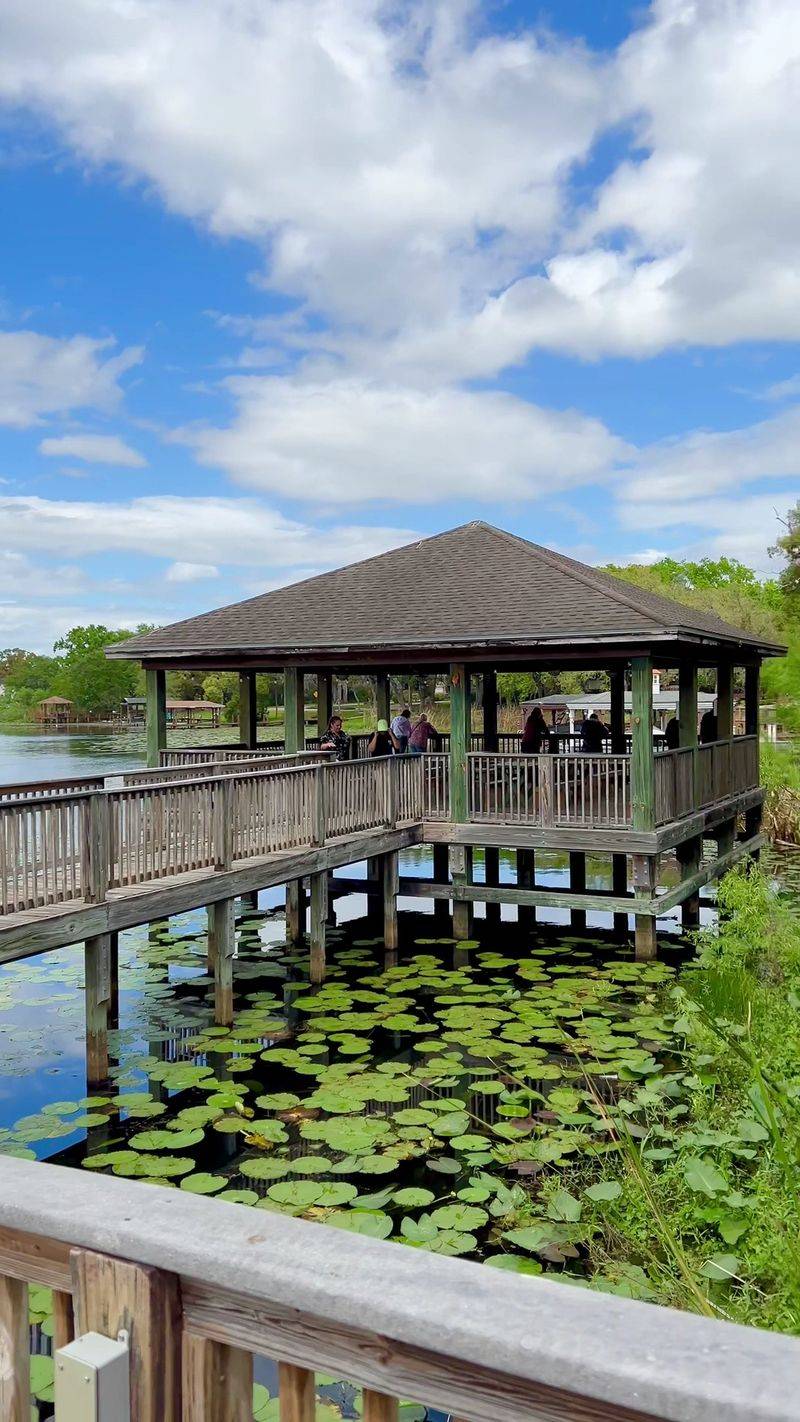
The path leads past the aviaries to a gazebo overlooking Lake Sybelia, where visitors can pause for birdwatching or a quiet break.
The lakeside gazebo includes picnic tables and benches where visitors may stop for a snack or lunch.
Landscaping and outdoor exhibits soften the route between aviaries, while the lakeside setting adds habitat and wildlife beyond the resident raptors.
There is even a constructed wetland on site, quietly filtering runoff and improving water quality in the lake. Conservation here extends past the birds themselves.
Guidebooks are available to download, turning a self-guided walk into something far more informative. I recommend loading one before you arrive.
The historic Audubon House provides additional educational context alongside the center’s outdoor exhibits.
Learning That Actually Sticks
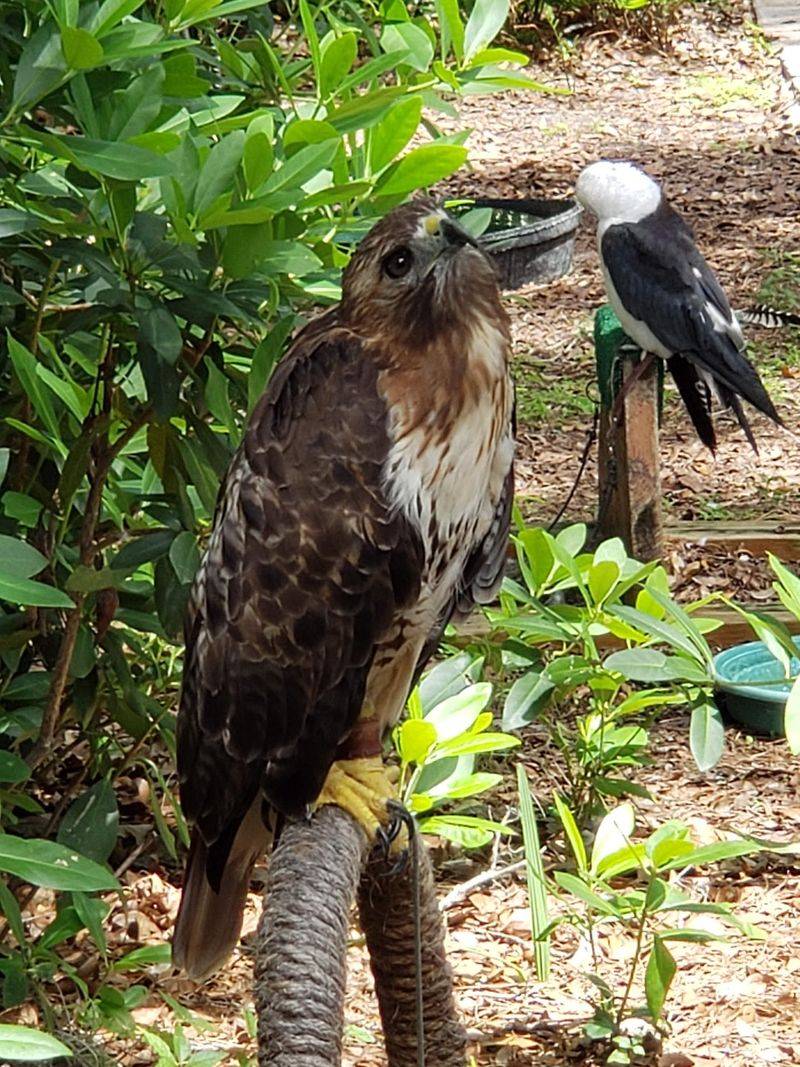
Curiosity gets rewarded quickly here. Staff and volunteers seem genuinely delighted when someone asks a question, and answers come with detail rather than a script.
Programs cover rehabilitation methods, raptor biology, habitat needs, and species identification. Families and solo visitors both find something at their level.
School groups, homeschool families, and scout troops have dedicated offerings aligned with Florida’s Sunshine State Standards. Teachers can plan a trip that fits the curriculum without extra scrambling.
Raptor Camp is the standout for young learners in first through sixth grade. It follows a STEAM theme, mixing science, technology, engineering, art, and math with wildlife conservation.
Docent-guided tours can be arranged for groups, often including a close ambassador bird encounter. Those moments turn abstract lessons into something kids remember for years.
Virtual programs are available as well, allowing classrooms and other groups to arrange remote encounters with ambassador birds.
Worth setting expectations: this is not a petting zoo, and visitors do not handle the birds. What you get instead is real knowledge from people who care deeply about raptors and their futures.
Science Beyond The Fences
Conservation work reaches far beyond the property through raptor rehabilitation, research, telemetry projects, and the statewide EagleWatch community science program.
EagleWatch is the flagship effort. Trained monitors track bald eagle nests across Florida, collecting data that guides protection decisions year after year.
Telemetry studies add another layer. Advanced tracking technology follows eagle movement and habitat use, revealing patterns nobody could see from the ground alone.
That research helps identify real threats, including habitat loss and shifting climate conditions. Numbers make arguments, and these numbers protect land and water across the state.
Together, these long-term datasets help conservation teams recognize changes early and focus resources where raptors and their habitats need them most.
An exhibit called Eagle Eyes on the Environment offers a behind-the-scenes look at the rehabilitation process between admission and eventual release.
Advocacy runs alongside the science. Staff push for protections that benefit whole ecosystems rather than single species.
Raptors sit near the top of the food chain, so their health signals the health of everything below them. Healthy hawks generally mean healthy marshes, forests, and neighborhoods.
Night Walks And Baby Owls
The center has hosted Owl Prowl events combining owl education with after-hours activities and guided nighttime walks, though visitors should check the current event calendar for future dates.
Barred Owls are famous for a varied series of calls that can sound surprisingly unlike a simple hoot, making nighttime owl programs especially interesting when offered.
Spring brings the Baby Owl Shower, a warmhearted event where a wish list donation earns free admission. Supplies go directly toward caring for young birds in the clinic.
Rainbow Raptors arrives during Pride Month with free admission, family activities, and bird education in a festive setting. It is one of the more joyful days on the calendar.
International Vulture Awareness Day gives the cleanup crew their moment in the spotlight. Vultures rarely get applause, so this celebration feels overdue and well earned.
Facility rentals are available for birthday parties, weddings, and corporate gatherings. Few venues offer a lakeside setting with eagles as neighbors.
Donations, wish-list purchases, memberships, and other support options help fund rehabilitation, ambassador care, education, and conservation work after a visit.
Smart Tips Before You Go
Timing matters more than you might expect. Doors open Tuesday through Sunday from 10 a.m. to 4 p.m., and Mondays are closed entirely.
Tickets can be bought at the window or online ahead of time. Keep in mind that sales are final, with no refunds or rainchecks.
Most visitors finish in about an hour, though I lingered closer to two. Chatting with volunteers stretches the visit in the best way.
Water is essential since nearly everything sits outdoors. Sunscreen helps too, even with all that tree cover overhead.
Summer brings mosquitoes near the lake, so bug spray belongs in your bag. That is simply part of the Florida experience.
Picnic tables and benches are available at the Lake Sybelia gazebo, and wheelchairs can be borrowed from the admissions window if needed.
The center reopened in February 2026 after completing a major renovation that added the new Sitek Smith Owl Aviary, though checking current visitor information before arriving is always useful.
Located just outside Orlando, the Audubon Center for Birds of Prey makes an easy half-day escape from the theme park rush.