This Flower Farm In California Is A Must-Visit In March With Fields That Look Like A Spring Painting
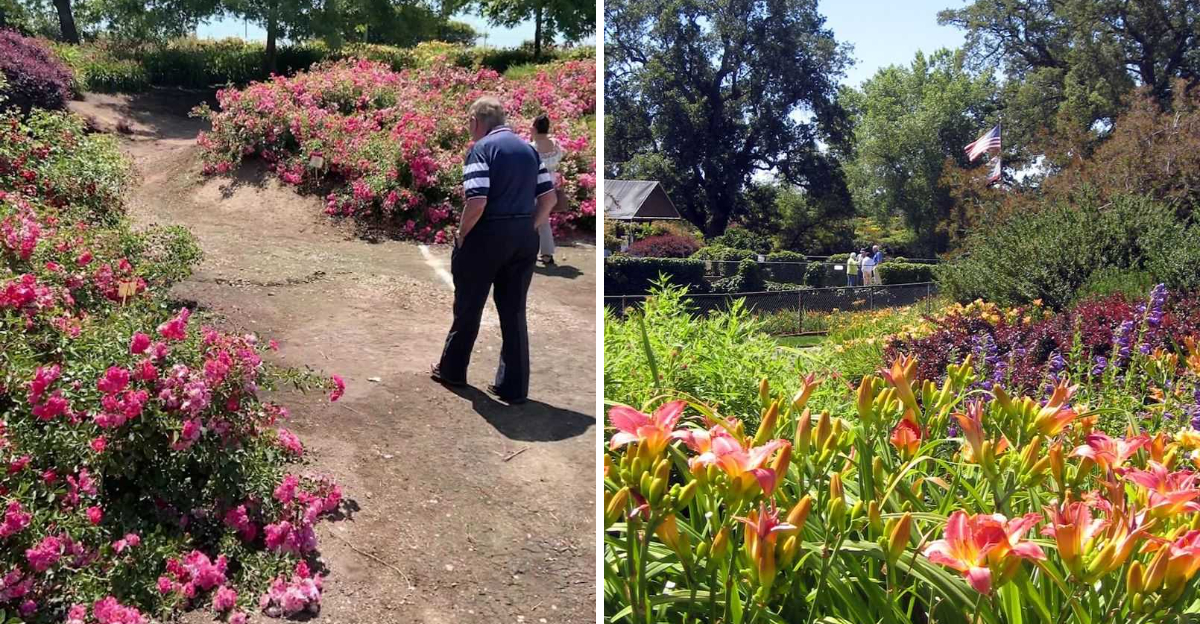
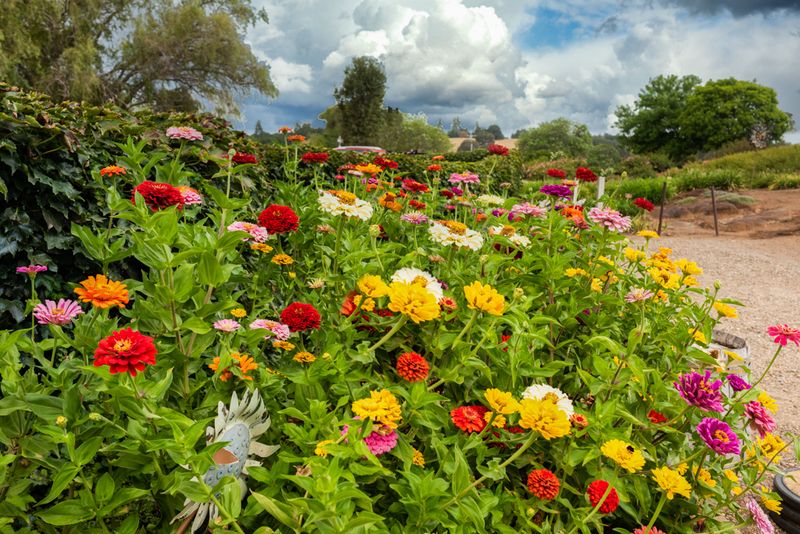
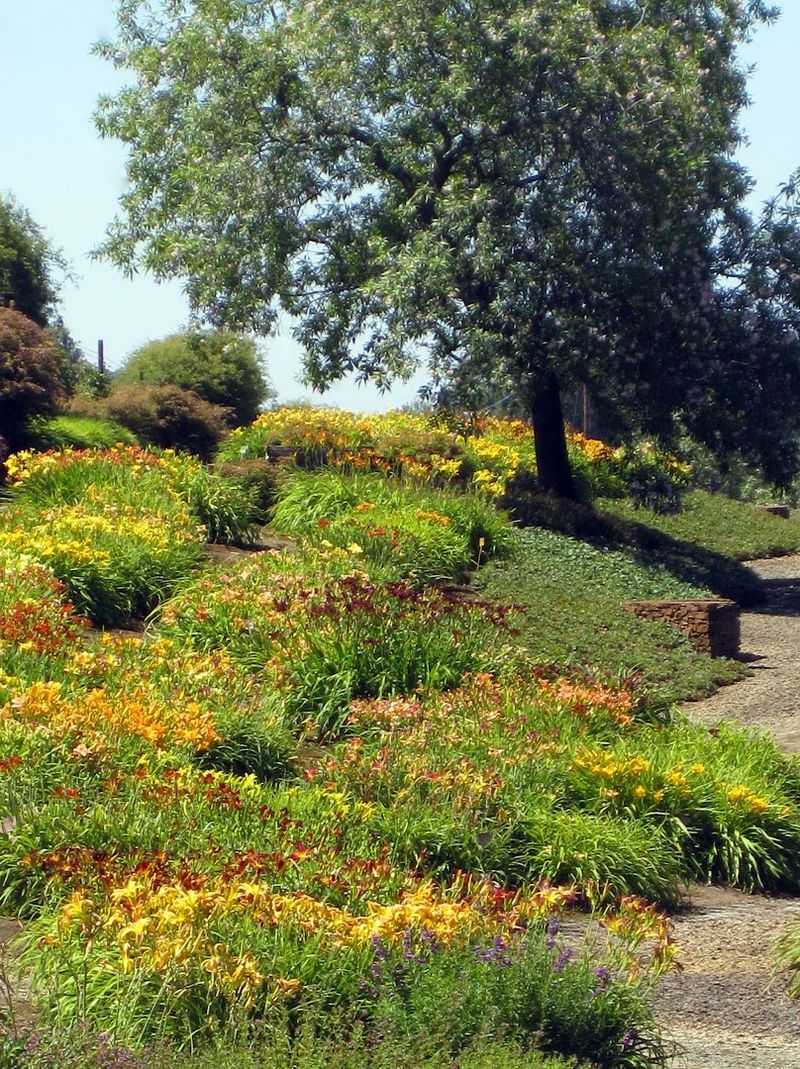
Color hits you before you even park. Rolling hills outside Plymouth erupt in coral, gold, and deep burgundy as thousands of blooming daylilies spill across 14 acres at Amador Flower Farm.
In March, the quiet foothills flip a switch. What looked peaceful just weeks earlier turns into a living, breathing canvas.
Petals glow against heritage oaks. Ponds mirror the color. Winding garden paths pull you deeper with every turn.
It’s not just a flower field. It’s the kind of place where you lose track of time without trying. Families wander slowly. Garden lovers pause to study rare varieties. Picnic tables under ancient trees invite you to stay longer than planned.
The air smells like fresh blooms and warm earth. The noise of daily life fades fast. March is when it all begins – when the farm wakes up and the hills start to look painted by hand.
If you’re anywhere near Sacramento or exploring California, this is the detour that feels like the destination.
1. Over 1,200 Varieties Of Daylilies On Display
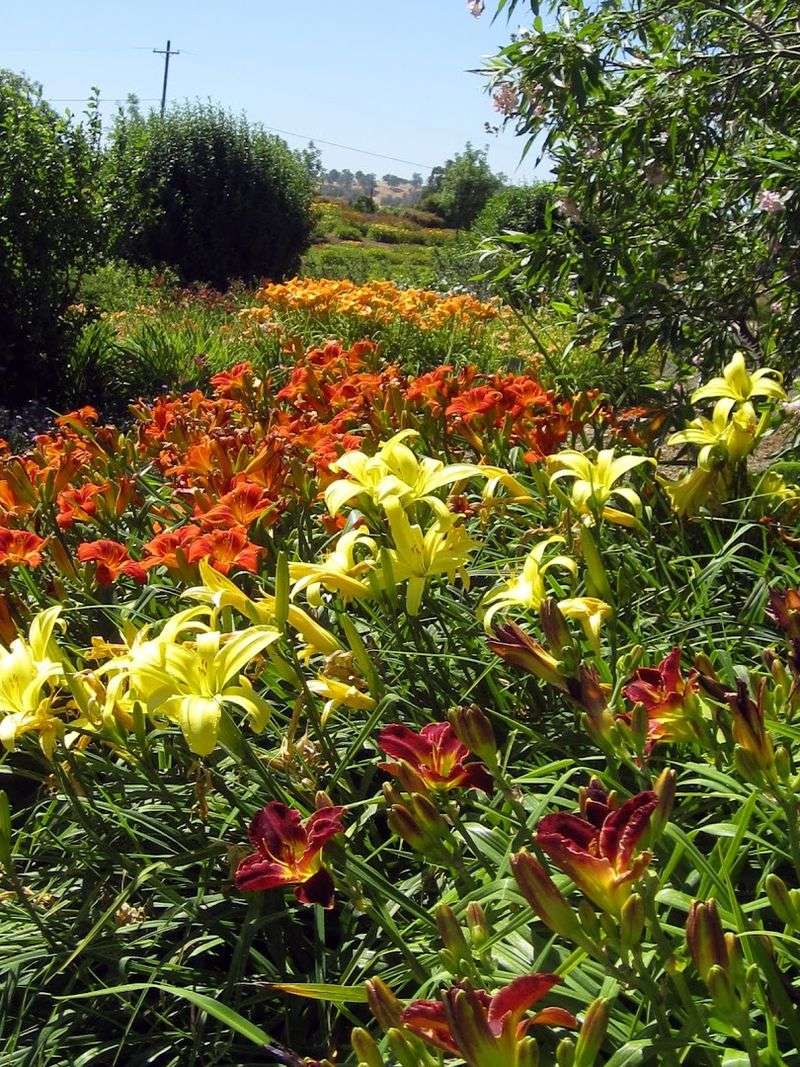
Walking through the demonstration gardens at Amador Flower Farm at 22001 Shenandoah School Rd, Plymouth, CA 95669 feels like flipping through a botanical encyclopedia brought to life.
The farm cultivates more than 1,200 different daylily varieties, each with its own distinct color, petal shape, and blooming pattern.
Some flowers display ruffled edges that catch the light, while others feature bold streaks of contrasting color running through their petals. The sheer diversity means that no two visits will look quite the same, even during the same season.
Early bloomers might show off pale yellows and soft peaches, while later varieties lean toward deep purples and rich burgundies.
The farm’s collection includes both classic varieties that have been popular for decades and newer hybrids developed by specialty growers.
Daylilies earn their name because each bloom lasts only a single day, but the plants produce multiple buds that open in succession.
This means the gardens remain vibrant for weeks at a time, with fresh flowers appearing daily throughout the season.
The farm arranges the plants in carefully labeled beds, making it easy to identify favorites and learn about different cultivars.
Gardeners visiting the farm often bring notebooks to jot down names of varieties they want to add to their own landscapes.
The staff can provide information about growing conditions, bloom times, and which varieties perform best in different climates.
2. Fourteen Acres Of Landscaped Gardens To Explore
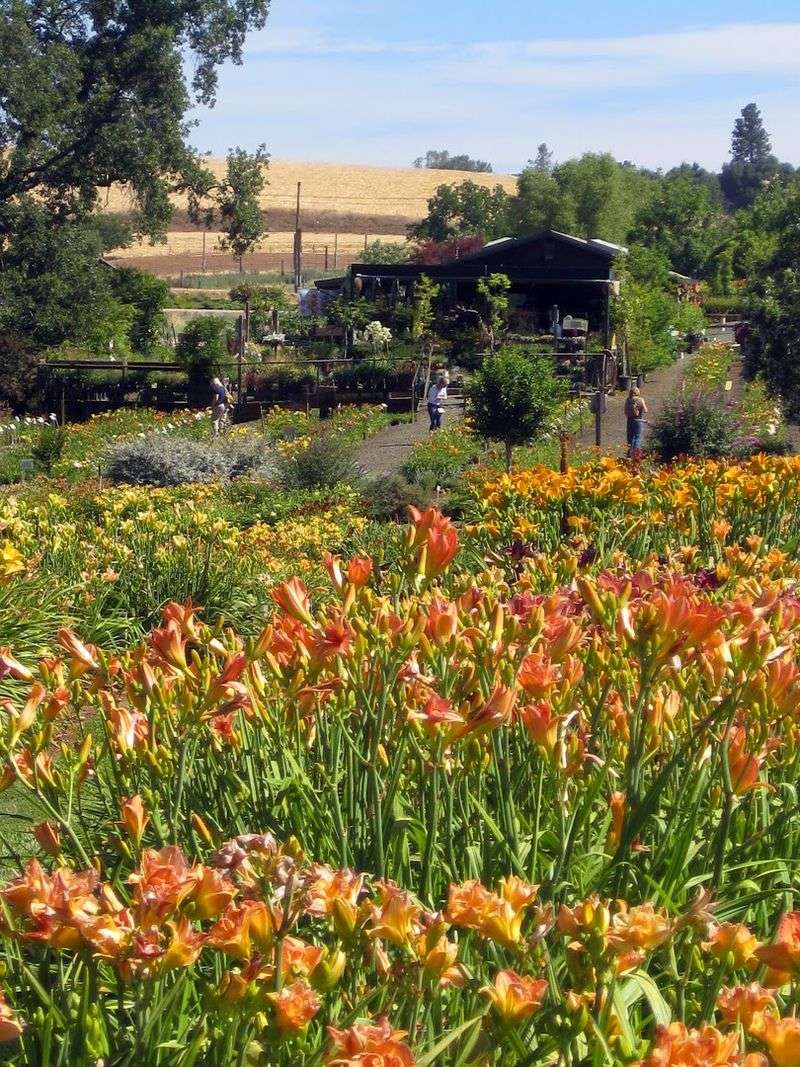
The property spans 14 acres of thoughtfully designed landscape that invites visitors to wander at their own pace.
Four of those acres are dedicated to award-winning demonstration gardens that showcase the farm’s daylily collection in naturalistic settings.
The remaining acreage includes nursery areas, mature trees, a pond, and open spaces that provide breathing room between garden sections.
Paths wind through the property in gentle curves, creating a sense of discovery as you round each bend.
Some areas feature densely planted beds bursting with color, while others offer more restful green spaces where ornamental grasses sway in the breeze.
The layout encourages exploration without feeling overwhelming or requiring a map. Mature landscaping gives the property an established feel that newer gardens can’t replicate.
Shade from large trees provides relief on warm days, and the varied terrain includes both flat areas and gentle slopes that add visual interest.
Benches placed throughout the grounds offer spots to pause and take in the views. The scale of the property means visitors can find quiet corners even during busier times.
Families with children appreciate having room to roam, while photographers find endless compositions as the light shifts throughout the day. The gardens feel designed for lingering rather than rushing through.
3. More Than 200 Unusual Perennials And Grasses
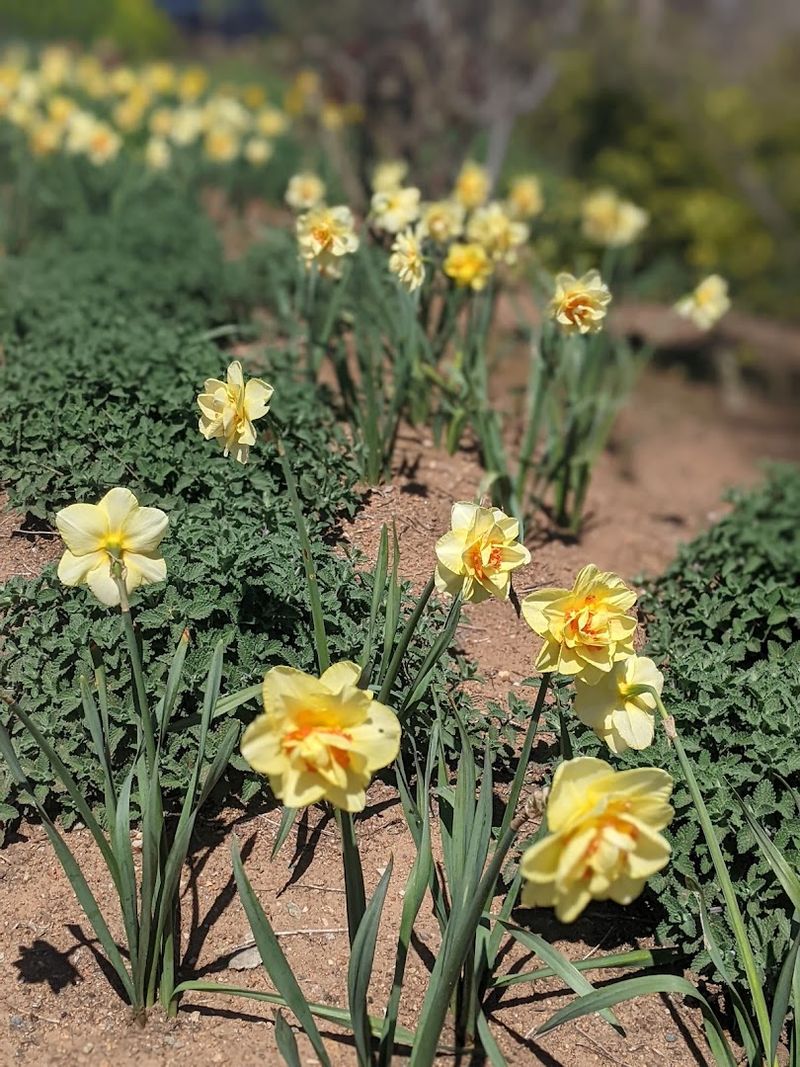
Daylilies may be the stars of the show, but the supporting cast of plants adds depth and texture that makes the gardens truly memorable.
The farm cultivates over 200 varieties of perennials and ornamental grasses that complement the daylilies and extend the season of interest.
These include plants that bloom before, during, and after the main daylily season, ensuring something catches the eye year-round.
Ornamental grasses add movement and sound to the gardens as they rustle in the breeze. Their vertical forms and feathery plumes provide contrast to the bold shapes of daylily blooms.
Some grasses display subtle color changes as they mature, shifting from green to bronze or gold as the season progresses.
The perennial collection includes both familiar garden favorites and less common varieties that spark curiosity.
Purple coneflowers attract butterflies, while salvia spikes add vertical accents in shades of blue and purple.
Ground covers fill spaces between larger plants, creating a layered look that feels natural rather than rigid. This diversity serves a practical purpose beyond aesthetics.
The varied plant palette demonstrates how different species can work together in a home garden, providing ideas for visitors planning their own landscapes.
The farm’s nursery sells many of these companion plants, allowing gardeners to recreate favorite combinations at home.
4. Open Daily From March Through November
Planning a visit becomes straightforward thanks to the farm’s consistent schedule during the main growing season. From March through November, the grounds welcome visitors daily from 9:00 am to 4:00 pm.
This seven-hour window gives both early birds and afternoon explorers plenty of time to experience the gardens without feeling rushed.
The March opening coincides with the beginning of spring bloom in the foothills, when the first daylilies start to show color and the landscape shakes off winter dormancy.
By opening in early spring, the farm captures the season when many people feel most eager to get outdoors and reconnect with nature.
The November closing allows the gardens to rest during the quieter winter months. During winter months from December through February, the farm operates on a reduced schedule, opening Thursday through Sunday while maintaining the same 9:00 am to 4:00 pm hours.
This limited winter schedule accommodates visitors who want to explore the grounds during the off-season while giving staff time for maintenance and preparation for the busy spring ahead.
The reliable schedule makes it easy to incorporate a farm visit into weekend plans or weekday outings.
No reservation is required for general admission, which removes a barrier that sometimes complicates visiting other attractions. Visitors can arrive when it suits their schedule rather than planning around specific time slots.
5. Picnic Tables Under 300-Year-Old Heritage Oak Trees
Few things beat eating lunch under the shade of a tree that was already mature when California became a state.
The farm’s heritage oak trees have stood on this land for three centuries, their massive branches spreading wide to create natural canopies. Picnic tables positioned beneath these giants offer a peaceful spot to rest and refuel during a visit.
The tables overlook a pond where resident ducks paddle lazily between visits from frogs that sun themselves on the banks.
The combination of shade, water views, and the gentle sounds of wildlife creates an atmosphere that encourages visitors to slow down and stay awhile. Bringing a packed lunch transforms a garden visit into an unhurried afternoon retreat.
The farm charges a modest $5.00 per table reservation fee, which helps manage capacity during busy times and ensures groups have a guaranteed spot.
The fee feels reasonable for the experience of dining in such a distinctive setting. Families appreciate having a designated home base where they can leave a cooler and return throughout their visit.
The oak trees themselves deserve attention beyond their shade-providing function. Their gnarled trunks and sprawling branches tell a story of centuries weathering storms and droughts.
The trees create a sense of permanence and connection to the land’s history that no amount of landscape design could replicate.
6. Gift Shop Featuring Garden Items And Statuary
Browsing the gift shop offers a different kind of treasure hunt than walking the gardens.
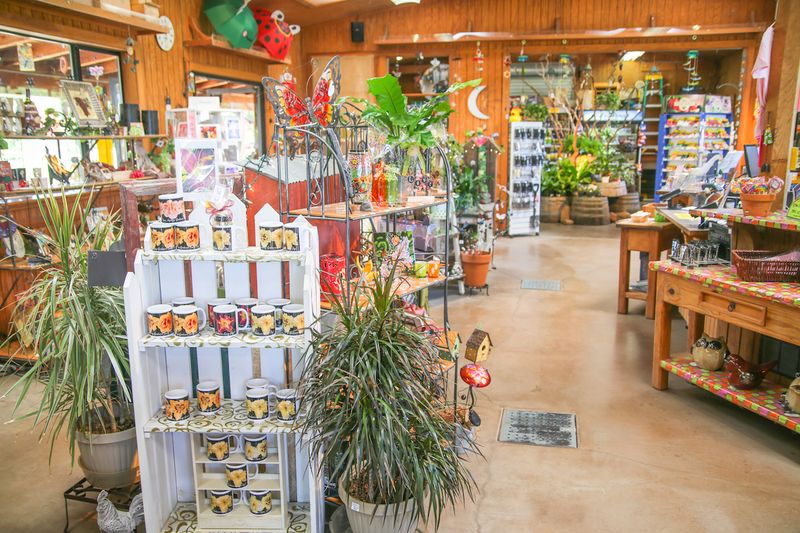
The on-site shop stocks a curated selection of gardening tools, decorative items, and statuary that appeals to both serious gardeners and casual browsers.
Items range from practical tools that will see daily use to whimsical garden art that adds personality to outdoor spaces.
Statuary selections include everything from small fairy figures that tuck into flower beds to larger statement pieces that serve as focal points.
The inventory reflects the farm’s aesthetic, leaning toward natural materials and designs that complement rather than compete with living plants.
Bronze finishes, stone textures, and weathered metals dominate the color palette. Practical items include specialized gardening gloves, pruning tools, plant markers, and containers in various sizes.
The shop carries products that staff members actually use and recommend, lending credibility to the selection.
Visitors often discover tools they didn’t know existed but immediately recognize as solutions to common gardening challenges.
The gift shop serves another purpose beyond retail. It provides a comfortable indoor space on hot afternoons or during unexpected weather changes.
The shop’s location near the entrance makes it convenient for both arriving and departing visitors, and staff members are usually available to answer questions about products or the gardens themselves.
7. Nursery Selling Perennials, Grasses, And Annuals
Walking through the demonstration gardens naturally leads to wanting to recreate some of that beauty at home.
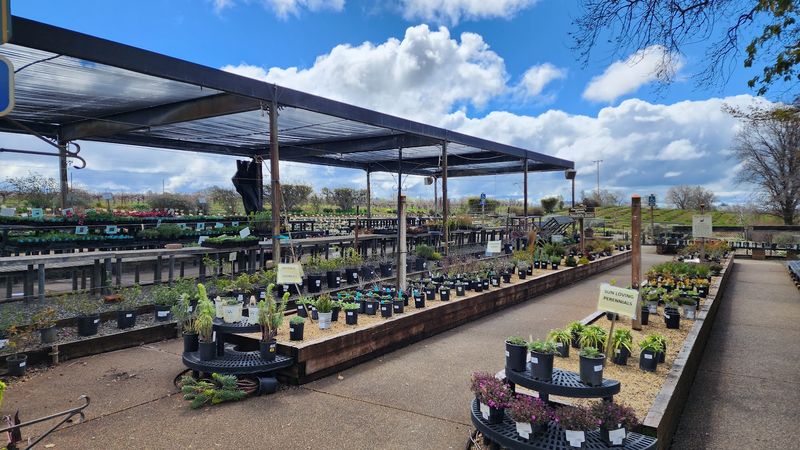
The farm’s nursery makes that possible by selling many of the same plants visitors admire in the display gardens.
Seeing plants in their mature form before purchasing helps gardeners make informed decisions about what will work in their own landscapes.
The nursery inventory extends beyond daylilies to include the full range of perennials and grasses featured throughout the property.
Houseplants and colorful annuals round out the selection, offering options for indoor gardeners and those looking to add quick color to containers or beds.
Plants are organized by type and clearly labeled with care information.
Staff members can provide guidance on growing conditions, mature size, and companion plants that work well together.
This expertise proves especially valuable for novice gardeners who may feel overwhelmed by the choices.
The farm’s location in the Sierra foothills means the plants are already acclimated to the region’s climate and soil conditions.
Purchasing plants directly from the farm where they were grown offers advantages over buying from big-box stores.
The plants tend to be healthier and better established, and you can ask questions of the people who actually grew them.
The nursery operates on the same schedule as the gardens, making it easy to browse after exploring the grounds.
8. Designated American Hemerocallis Society Display Garden
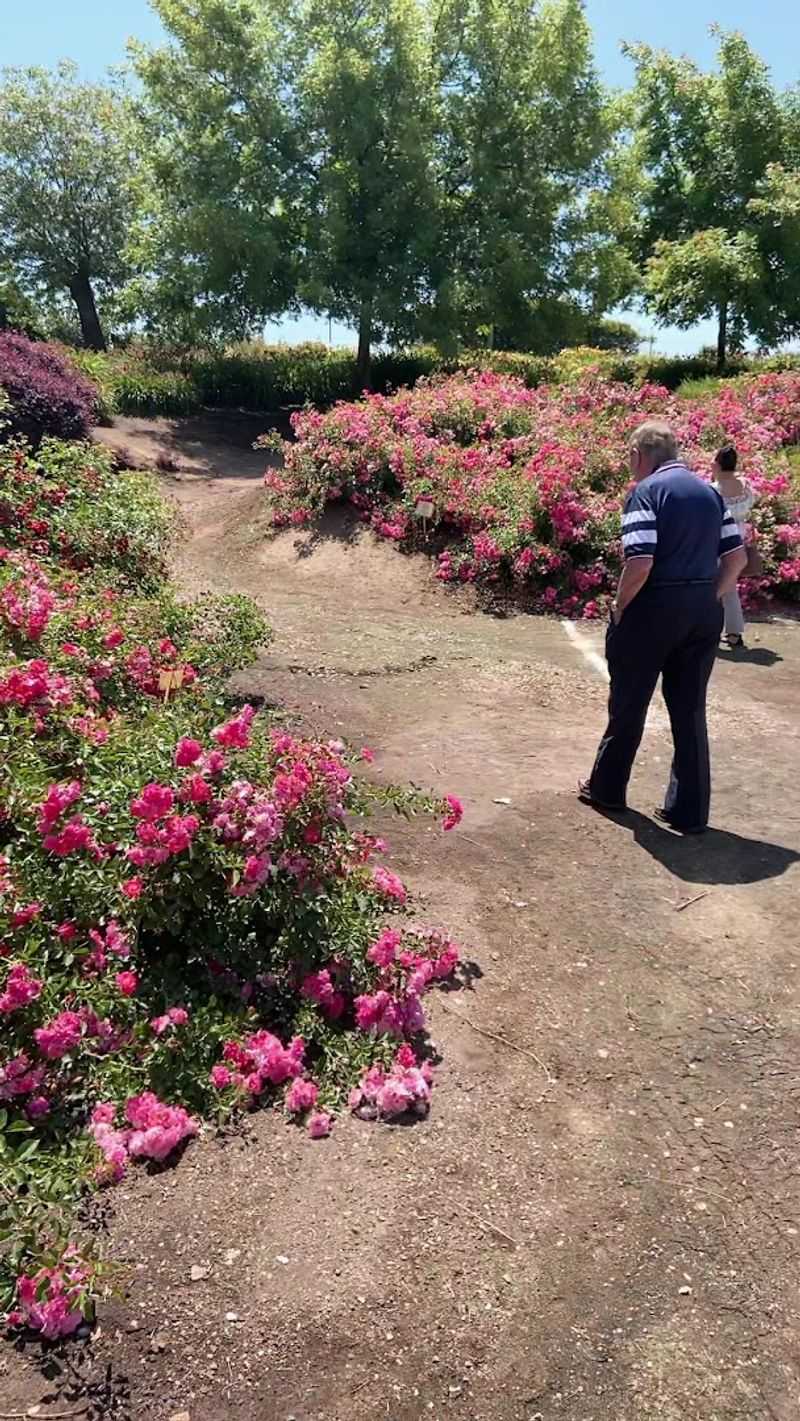
Recognition from the American Hemerocallis Society carries weight in the world of daylily cultivation.
The society designates certain gardens as official display gardens based on strict criteria including plant variety, garden design, maintenance standards, and educational value.
Amador Flower Farm earned this prestigious designation, placing it among a select group of gardens nationwide.
The display garden status means the farm meets rigorous standards for how plants are grown, labeled, and maintained. Gardens must demonstrate excellence in design and provide educational opportunities for visitors.
The designation serves as a quality seal that assures visitors they’re seeing daylilies grown to professional standards.
For serious daylily enthusiasts, visiting an official display garden offers a chance to see rare cultivars and new introductions that may not be available elsewhere.
The gardens serve as living catalogs where visitors can observe how different varieties perform in real garden conditions rather than relying on catalog descriptions alone.
This proves invaluable when selecting plants for purchase. The recognition also reflects the farm’s commitment to advancing knowledge about daylilies.
Display gardens serve an educational mission, helping gardeners understand these plants better and inspiring new generations of growers.
The designation connects the farm to a larger community of daylily enthusiasts and breeders working to develop new varieties.
9. Award-Winning Landscape Design From California Garden Club
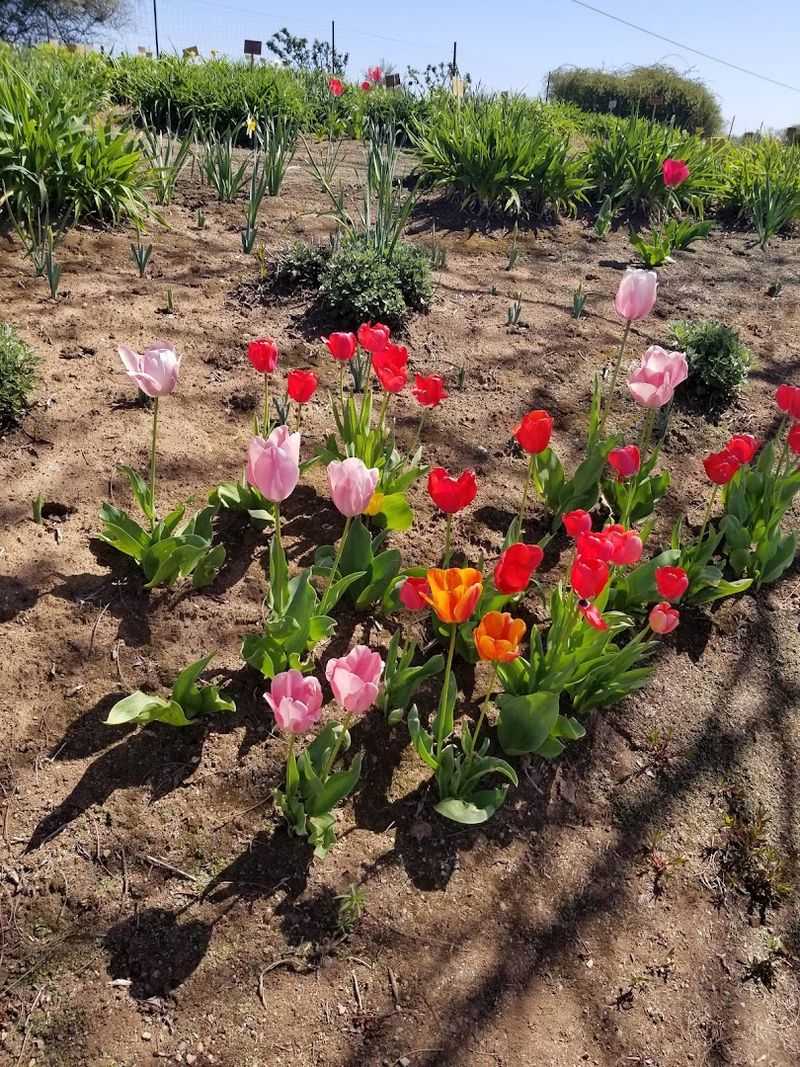
The California Garden Club doesn’t hand out awards lightly. Their special recognition of the farm’s landscape design acknowledges the thought and skill that went into creating gardens that are both beautiful and educational.
The awards validate what visitors instinctively feel when they walk the grounds – that these gardens were designed with care and expertise.
Effective landscape design creates flow and visual interest while serving practical purposes. The farm’s gardens demonstrate principles like proper plant spacing, effective use of color and texture, and creating focal points that draw the eye.
The layouts show how to combine plants with different bloom times to maintain interest across seasons.
The recognition from a respected garden club adds credibility that benefits both the farm and its visitors.
Gardeners can trust that the design choices they’re observing reflect best practices worth emulating.
The awards also bring attention to the farm from the broader gardening community, raising its profile among serious horticulturists.
What makes the landscape design particularly effective is how it balances structure with a natural feel. The gardens don’t look overly manicured or artificial.
Paths curve naturally, plants are allowed to grow into their full forms, and the overall effect feels organic rather than forced. This approach creates spaces that feel inviting and comfortable rather than intimidating or precious.
10. Annual Spring Events With Activities
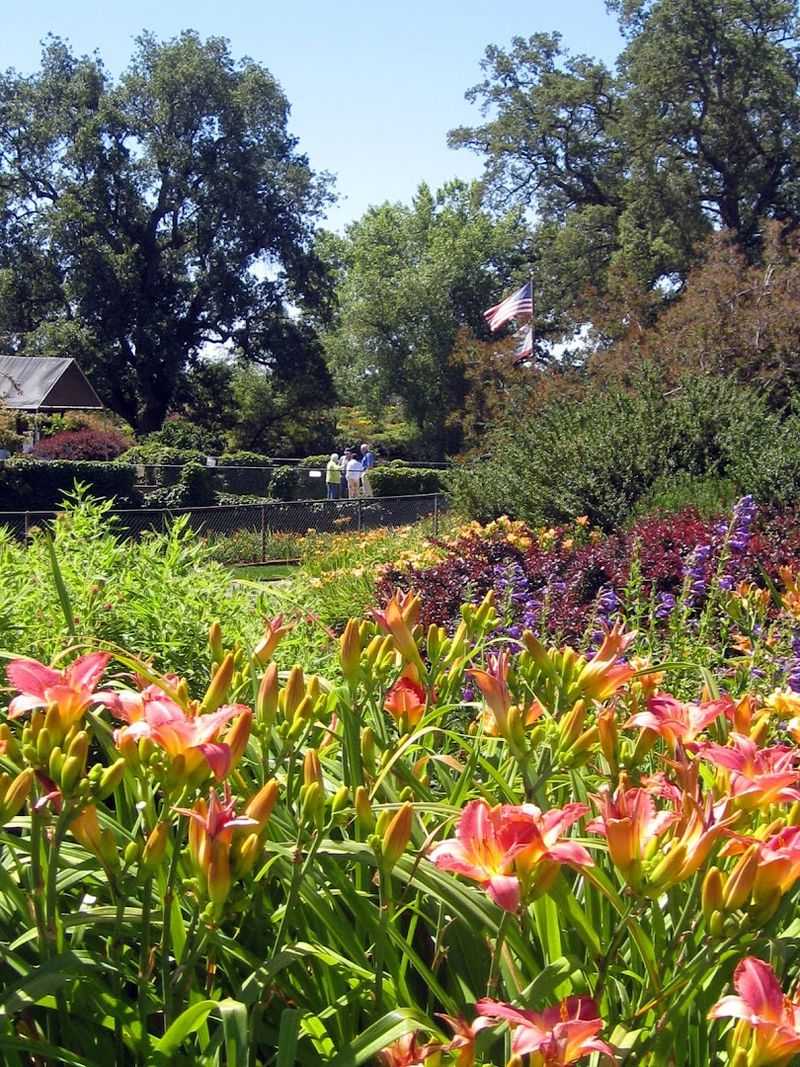
April is when the farm truly comes alive – not just with blooms, but with celebration.
Spring kicks off with the cheerful Easter Bunny Visit and Egg Hunt, where kids race through rows of daylilies searching for hidden eggs in the growing garden. It’s playful, colorful, and just the right kind of chaotic in the best way.
The annual Spring Fling follows with seminars, plant demonstrations, garden strolls, and free tram rides that glide visitors through rolling hills covered in fresh growth.
The nursery fills with seasonal plants ready for home gardens, and the energy shifts from quiet wandering to full-on spring excitement.
As the season builds, Daylily Days in June transforms the property into a sea of more than a million blooms.
Picnicking under the oaks, shopping for rare varieties, and hopping on complimentary tram tours turn it into a full weekend event rather than a simple visit.
Fall brings its own rhythm with Grandparent’s Day, Fall Fun Days Festival, and a month-long Pumpkin Patch & Corn Maze, while winter softens into holiday charm with Visits with Santa and the cozy Christmas Store stocked with gifts and warm cider.
At Amador Flower Farm, the blooms may draw you in – but the events give you a reason to come back all year.
11. Online Bloom Reports Track What’s Currently Flowering
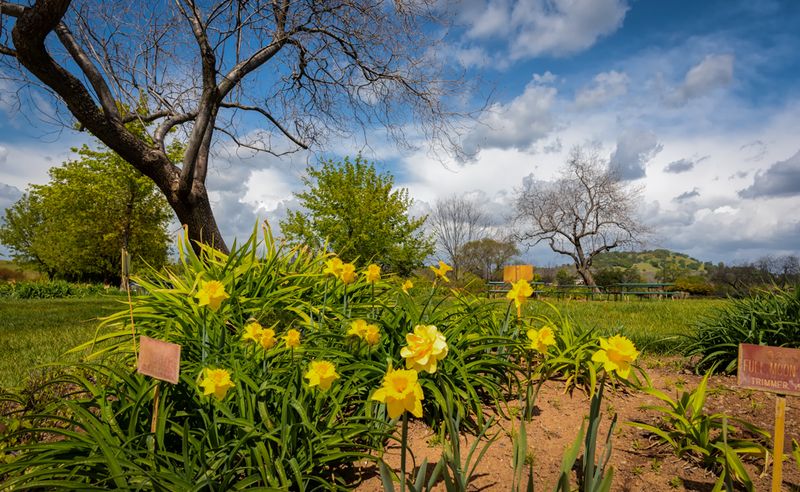
Planning a visit becomes easier when you know what to expect. The farm maintains an online bloom report that details which plants are currently flowering in the demonstration gardens.
This practical tool helps visitors time their trips to coincide with specific plants they want to see or to catch the gardens at peak color.
The bloom report typically includes photos showing current conditions along with descriptions of which varieties are performing best.
This transparency helps manage expectations and prevents disappointment from visitors who might arrive expecting full bloom during an off-peak period.
The reports are updated regularly throughout the growing season. For photographers, the bloom report proves especially valuable. Knowing exactly what’s in bloom allows them to plan shots and bring appropriate equipment.
Gardeners considering plant purchases benefit from seeing how varieties perform at different times, helping them select plants that will fill gaps in their own garden’s bloom schedule.
The online report also demonstrates the farm’s understanding of how people use information to plan outings. Rather than making visitors guess or call for updates, the farm proactively shares current conditions.
This customer-focused approach builds trust and encourages repeat visits because people know they can rely on accurate information.
12. Located In Shenandoah Valley Wine Country
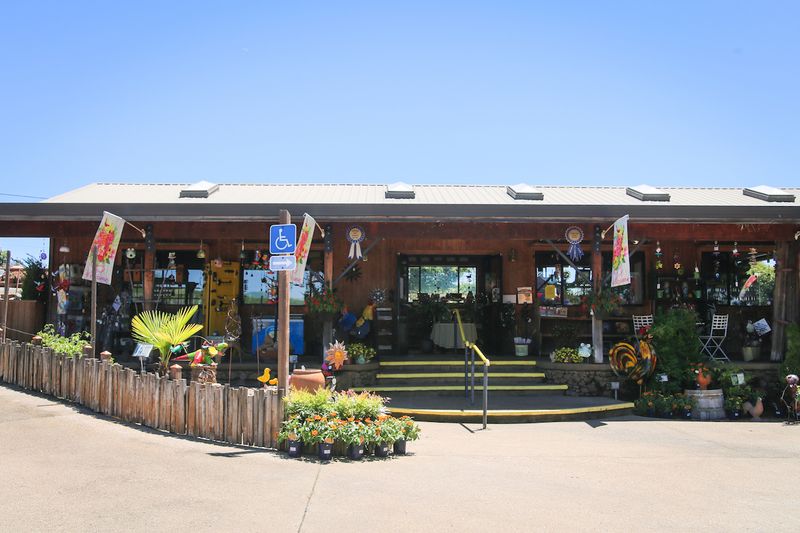
The farm’s location in the Shenandoah Valley adds another dimension to any visit by placing it within one of California’s respected wine regions.
The valley sits in the Sierra foothills east of Sacramento, an area that has produced wine since the Gold Rush era.
The combination of flower gardens and nearby wineries makes the area appealing for day trips or weekend getaways.
The valley’s microclimate and rolling terrain create ideal conditions for both grape growing and diverse plant cultivation.
Warm days and cool nights allow plants to develop complex characteristics, whether those plants are grapevines or daylilies. The region’s natural beauty provides a scenic backdrop that enhances any outdoor activity.
Visitors often combine a morning at the farm with afternoon winery visits, creating a full day of exploring the area’s agricultural offerings.
The proximity to historic gold-mining towns adds yet another layer of interest. Small communities like Plymouth and Sutter Creek retain their 19th-century architecture and offer antique shops, cafes, and local history museums.
The Shenandoah Valley location means the farm benefits from the tourism infrastructure developed to serve wine country visitors. Accommodations, restaurants, and other amenities are readily available in the area.
The region’s growing reputation as a destination makes it easier to convince friends or family to join you for a visit.
13. Contact Options For Questions And Information
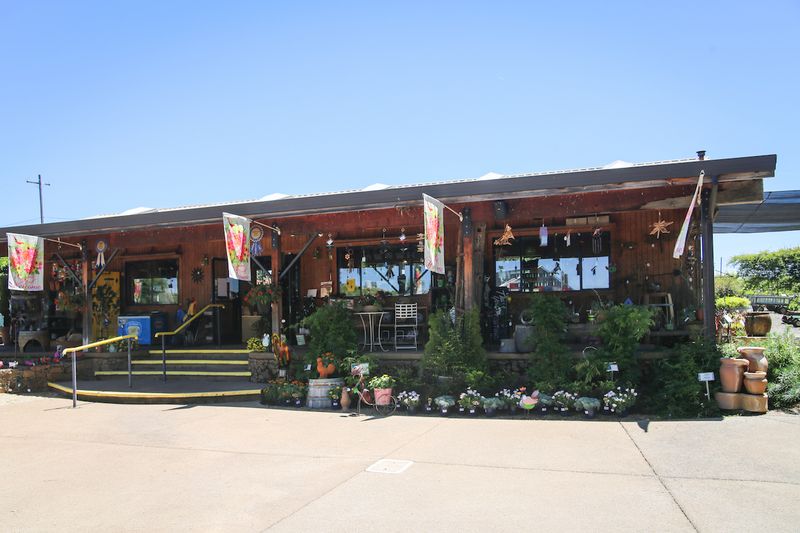
Sometimes you need specific information before planning a visit. The farm provides multiple contact options for visitors who have questions about hours, events, plant availability, or other details.
A phone line at (209) 245-6660 connects callers directly with staff who can provide current information and answer questions about the property or plants.
Email contact through [email protected] offers an alternative for people who prefer written communication or who are contacting outside business hours.
Email allows for more detailed questions and gives staff time to research answers if needed. The address itself reinforces the farm’s specialization and makes it easy to remember.
Having direct contact information available shows confidence in customer service and a willingness to engage with visitors.
Some attractions hide behind automated systems or make it difficult to reach actual people with questions.
The farm’s straightforward approach suggests they welcome inquiries and want to help people plan successful visits.
The contact information proves particularly useful for groups planning special visits, people with accessibility questions, or gardeners seeking advice about specific plants.
Being able to speak with knowledgeable staff before visiting can enhance the experience by helping visitors prepare appropriately or time their visit to see specific plants or attend particular events.
The availability of responsive human contact adds a personal touch that larger commercial attractions often lack.