This Four-Mile Florida Wildlife Drive Takes You Past Roseate Spoonbills And Wild Wetlands
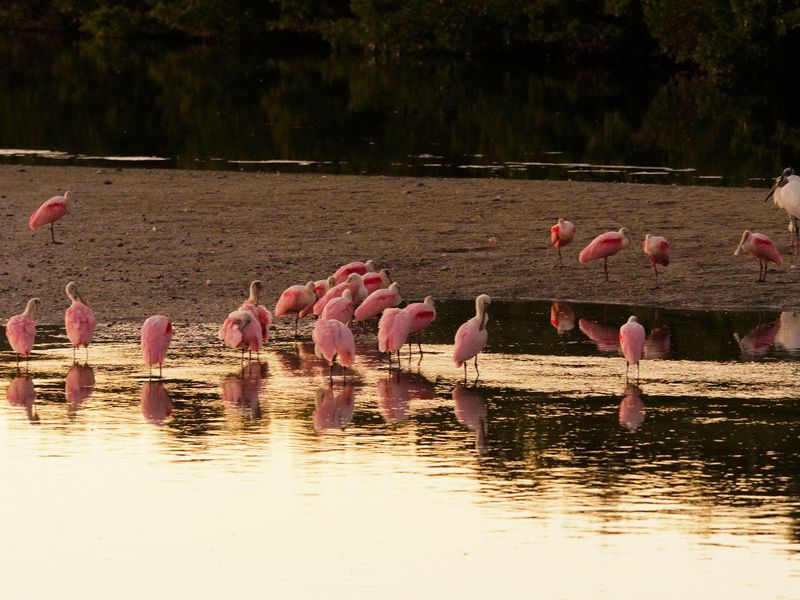
I pulled off the road in Florida expecting a quiet patch of marsh and maybe a heron or two. What I got instead was a shallow flat full of pink birds sweeping their spoon-shaped bills through the water about thirty feet from my windshield.
The whole route is only four miles long, paved, one-way, and slow enough that you can stop whenever something catches your eye. Bring binoculars, roll the windows down, and give yourself more time than you think you need.
Where the Pavement Meets the Mangroves
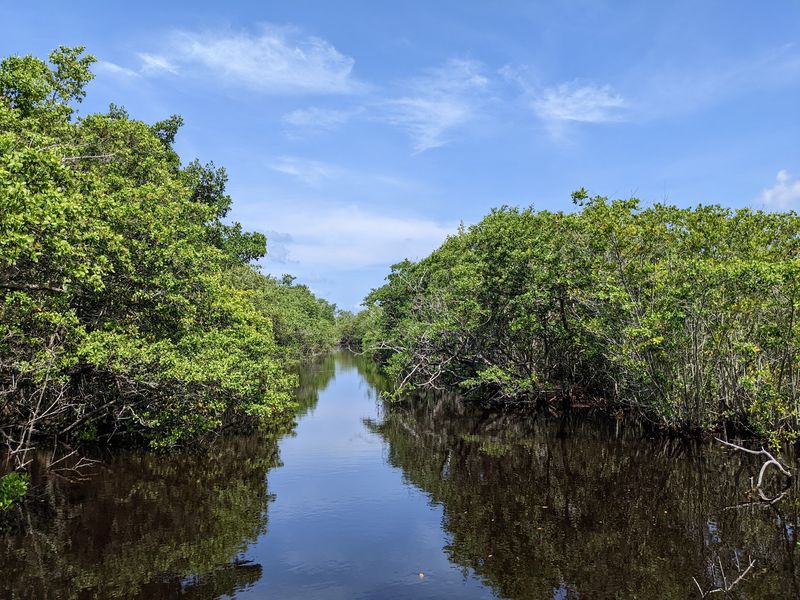
Sanibel Island curves like a shrimp off Florida’s southwest coast, and along its northern edge sits the J.N. “Ding” Darling National Wildlife Refuge, at 1 Wildlife Dr. The entrance booth is modest. A staffer hands over a pass, mentions the tide, and points you toward a narrow ribbon of pavement that runs four miles through mangrove flats and shallow water.
Traffic moves at a crawl because everyone is looking sideways. The road is one-way, and pulling onto the right shoulder to get out and walk around is encouraged rather than frowned upon.
That single design choice changes everything about how the place feels.
Around 6,524 acres make up the refuge, part of the largest undeveloped mangrove ecosystem in the country. Over 230 bird species have been recorded here, which explains the number of long lenses propped on car doors.
The refuge closes every Friday, giving wildlife a full day of undisturbed feeding. The visitor center keeps daytime hours, though the drive itself opens earlier in the morning.
Check before you go, since seasonal adjustments happen.
Pink Birds and the Shrimp That Make Them
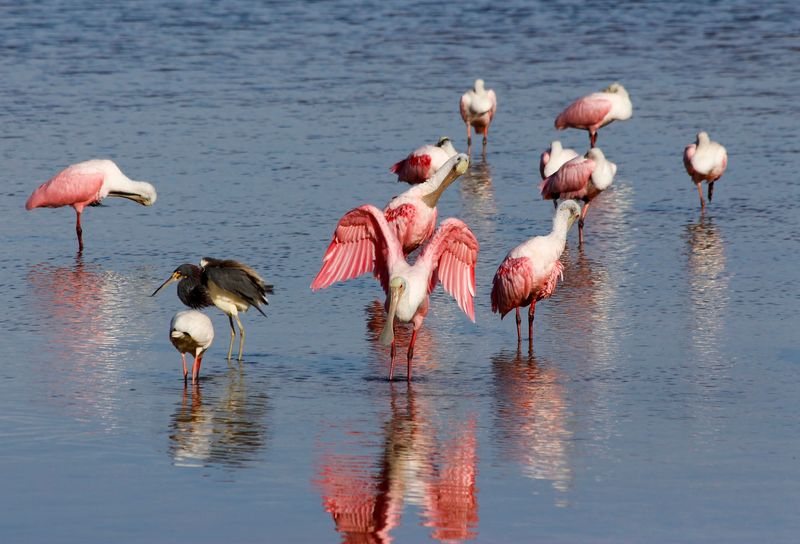
Bright pink and vaguely prehistoric, the roseate spoonbill looks like something a child invented. Its color comes from carotenoid pigments picked up through a diet heavy in shrimp and other small crustaceans, so the bird literally eats its way into that shade.
Feeding is the part to watch. The flattened, spoon-tipped bill swings side to side through shallow water, snapping shut the instant it touches a fish, shrimp, or insect.
No sight required, just touch.
Shallow water depth is exactly why the refuge matters to them. When the tide drops and the flats go ankle-deep, spoonbills move in close to the drive, sometimes near enough that a phone camera does the job.
Sightings happen year-round, but they climb from late fall through winter. On one stretch of the road a spotting scope was set up on a tripod, trained on a single spoonbill standing motionless in the shallows while a small crowd took turns.
In flight the effect intensifies. Neck out, broad wings spread, that pink burning against gray marsh and green mangrove.
Tide Charts Beat Luck Every Time
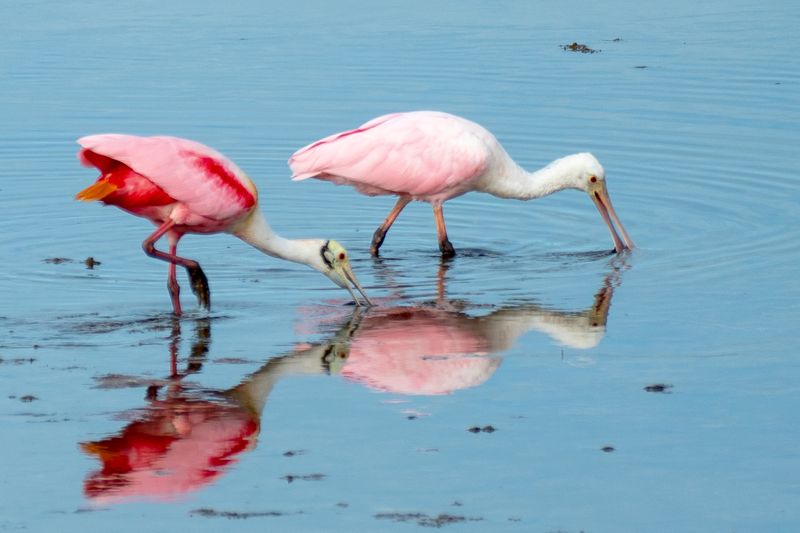
Timing is the difference between a pleasant drive and a memorable one. Low tide concentrates fish and shrimp into shrinking pools, and the birds follow the food right up to the edge of the pavement.
Early morning and late afternoon stack the odds further. Heat pushes wildlife into shade during the middle of a Florida day, and a scorching, humid afternoon can leave the flats looking empty.
Plenty of people drive the route twice in one day for this reason. One pass in the morning, another when the water drops, and the second trip often delivers what the first did not.
Entry passes cover multiple days, which makes repeat visits painless. Walkers and cyclists pay a small per-person fee, cars pay a modest vehicle fee, and a national park pass covers admission entirely.
Spring and fall bring water drawdowns that pull in shorebirds by the dozen. Winter is the reliable season overall, when migratory birds crowd the impoundments and the humidity finally backs off.
Check a tide chart the night before. It costs nothing and changes everything.
The Observation Tower Payoff
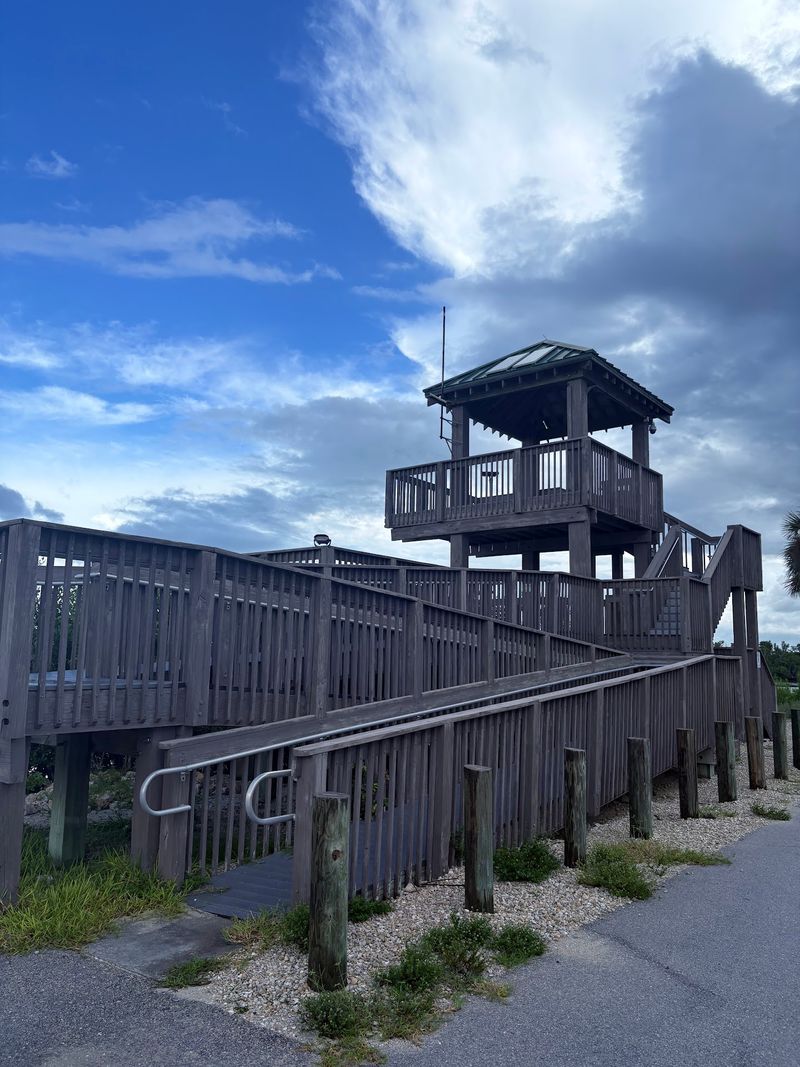
About halfway along the drive, a wooden observation tower rises above the mangroves and offers the one thing a car window cannot: elevation. From the platform the whole estuary flattens out below you, and birds that were hidden behind vegetation suddenly become countable.
Manatees turn up in the channel across from the tower with surprising regularity. Their backs roll at the surface, then a snout, then nothing, and everyone on the platform goes quiet waiting for the next one.
Bring binoculars. The distances are longer than they look, and a decent pair turns a distant white smudge into a wood stork or a yellow-crowned night heron.
Restrooms are positioned along the route, and they are kept notably clean, with interactive displays inside that make handwashing oddly educational.
Three trails branch off the drive: the Indigo Trail, the Calusa Shell Mound Trail, and the Wulfert Keys Trail. Each one drops you into a different habitat, from shell mound hammock to open flats, and all three reward a slow pace on foot.
Everything Else Living Out There
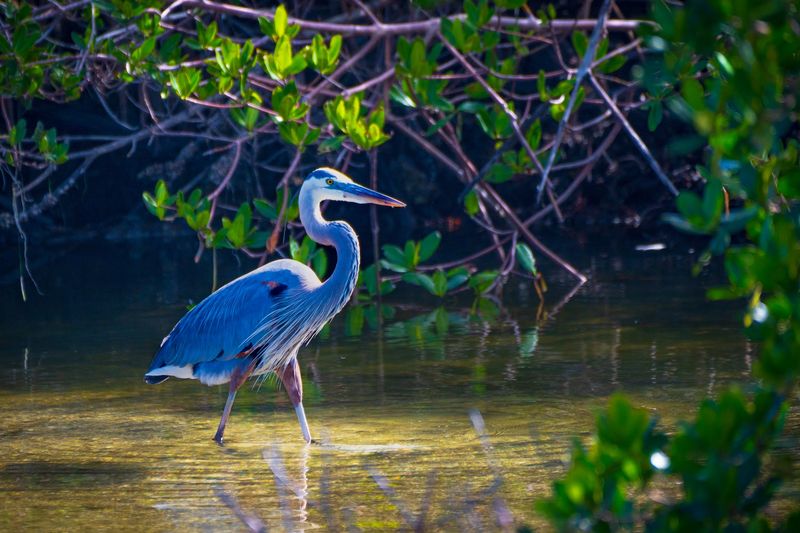
Spoonbills get the headlines, but they share the flats with a long cast of characters. White ibis probe the mud in loose flocks.
Great egrets stand like statues. Brown and white pelicans crash into the water, anhingas dry their wings in the sun, and green herons hunch on low branches looking permanently annoyed.
Alligators are the other big draw, and they come up in conversation more than almost anything else here. Some days they are stretched across a bank in plain sight.
Other days the water gives up nothing.
Ospreys nest within easy view, and bald eagles turn up often enough that people keep scanning the treetops. Raccoons rummage in the undergrowth, marsh rabbits bolt across the road, and otters and bobcats make rare appearances.
Iguanas are a common sight along the pavement, sunning themselves without concern. They are not native, and their presence is a reminder of how invasive species press on a fragile system.
Anglers fish from the pullouts too. Catfish come easily, everything else takes patience.
A Cartoonist Who Changed Florida Conservation
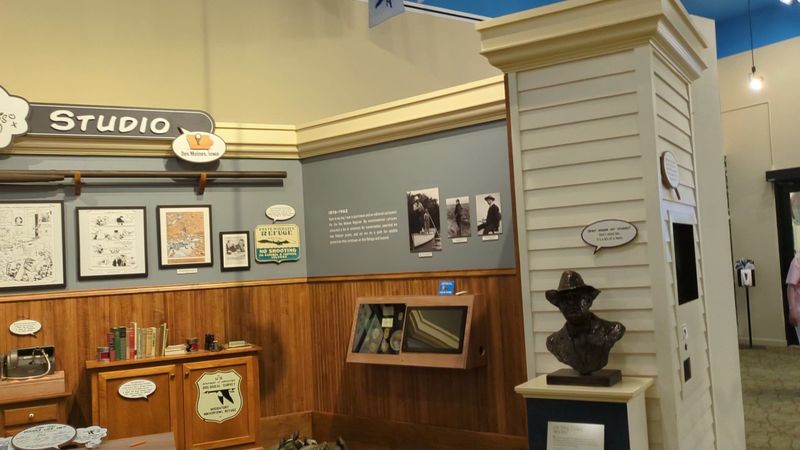
Jay Norwood Darling signed his editorial cartoons “Ding,” a contraction of his last name, and won a Pulitzer Prize for the work. He also happened to be one of the most effective conservationists of his era, pushing hard for protected habitat across the country.
Sanibel was his winter home. When development pressure threatened the island’s mangrove flats, he pressed for federal protection, and the refuge was established in 1945 to safeguard the wildlife living there.
In 1967 it was renamed in his honor. The exhibit devoted to his story inside the visitor center is genuinely absorbing, tracing how a newspaper cartoonist ended up shaping national wildlife policy.
Admission to the Visitor and Education Center is free. Inside, interactive displays explain the refuge’s ecosystems and the migratory flyways that funnel birds down the Florida peninsula each winter.
An interactive manatee exhibit lands hardest. It lays out human impact on the animals plainly, and most people walk away thinking differently about boat wakes and water quality.
Free bird checklists are available at the desk, which makes the drive feel like a scavenger hunt.
Drive It, Bike It, or Let Someone Else Steer
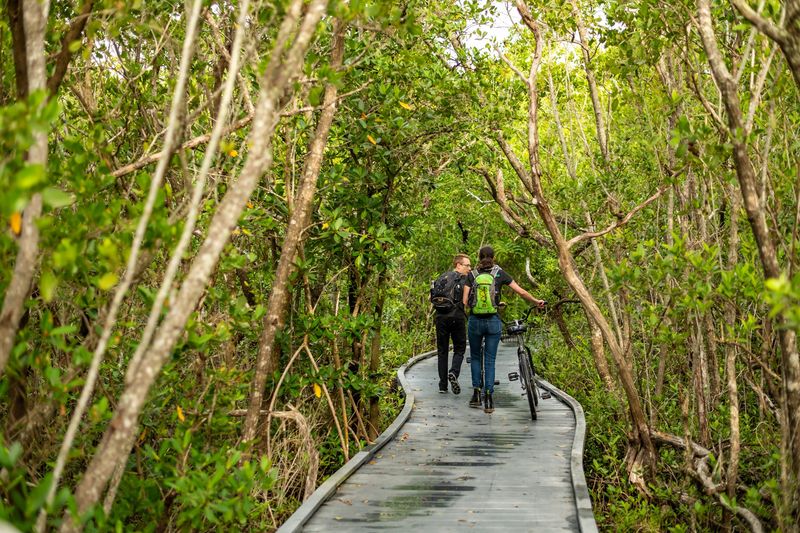
Three ways to cover the same four miles, and each one produces a different trip. Driving wins on hot days and for anyone who wants air conditioning between stops, and the road is short enough that pulling over a dozen times costs you nothing.
Cycling changes the sensory experience entirely. The path is flat and paved the whole way, the fee for bikes is a dollar per person, and a longer loop of roughly eight miles continues onto the island bike trail beyond the refuge boundary.
Walking works too, at the same dollar rate, though shade is scarce and Florida sun is unforgiving. Water, a hat, and a small fan are sensible.
Guided tram tours run through the refuge with a narrator who points out what most people drive past. Evening cruises operate from Tarpon Bay as well.
Pack bug spray without exception. No-see-ums swarm around sunset, and the itch from their bites can linger for a week or more.
Sunscreen and binoculars round out the kit.
Seniors manage the route comfortably, stopping and resting as often as they like.
Why Four Miles Stays With You
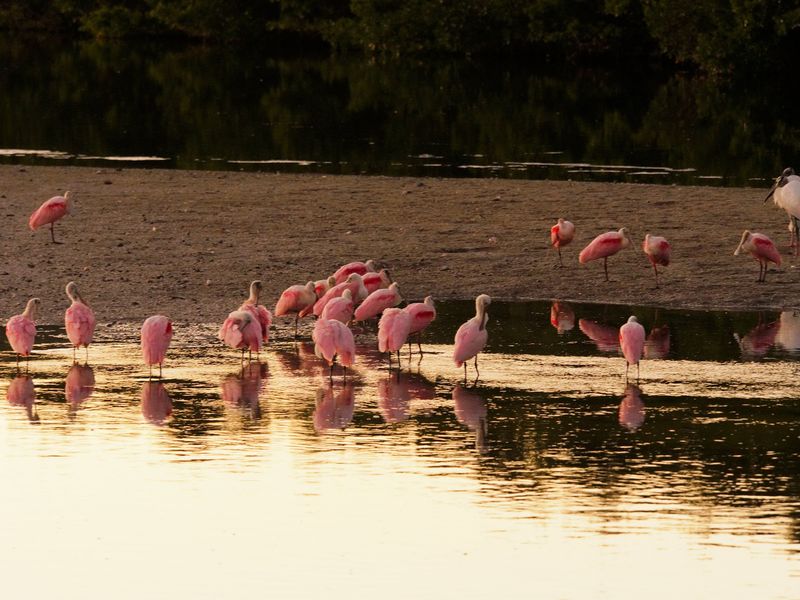
Four miles sounds like nothing. Then you spend three hours on it, because a spoonbill lands in a pool beside the road and you sit there with the engine off, watching the bill swing back and forth through the shallows.
Nobody honks. There is no traffic to speak of, no soundtrack beyond wind in the mangroves and the occasional splash of a pelican hitting the water.
The remoteness feels improbable given how close the beach parking lots are.
Some days deliver an eagle, a gator, and manatees rolling past the tower. Other days the heat keeps everything hidden and you come away with a quiet drive and a few ibis.
Both versions are fine.
The refuge charges a modest vehicle fee, passes cover several days of re-entry, and a national park pass gets you in at no cost. Rangers at the desk will tell you exactly where things were seen that morning.
Go early, go at low tide, and go more than once if you can. That is how Sanibel’s pink birds end up at your window.