This Free Kentucky Forest Lets You Hunt For Fossils Millions Of Years Old
Some hobbies require expensive gear. This one just requires you to look down.
Kentucky sits on top of an ancient seabed, which is a strange thing to picture on dry land.
Millions of years ago, this whole region was underwater. The proof is still sitting there in the rock.
That’s where this forest comes in. It invites you to search the ground for fossils and actually keep what you find.
No permit. No entry fee.
No gift shop trying to sell you a plastic dinosaur on the way out. You just show up, slow down, and start scanning the trail like a treasure hunter.
Kids love it, but let’s be real. Adults get quietly competitive about it too.
Summer is a fine time to go, though early morning saves you from the heat. You leave with dirt on your hands and a pocket full of tiny relics.
Here’s everything you need to know before you go digging.
The Place That Makes You Impressed
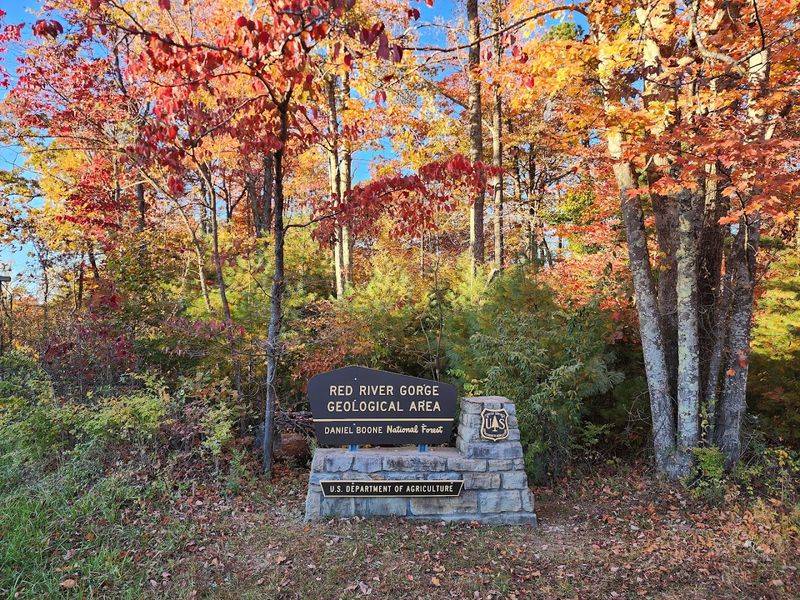
Daniel Boone National Forest in Kentucky is one of those places that sounds impressive on paper but hits differently when you are actually standing in it.
The forest covers over 700,000 acres across 21 counties in eastern Kentucky, and it is entirely open to the public at no charge.
The address to the main supervisor’s office is 1700 Bypass Road, Winchester, KY 40391, but access points are spread throughout the region.
What makes this forest genuinely special is the geology. The rock layers exposed throughout the forest date back to the Mississippian period, roughly 310 to 360 million years ago.
Back then, this land sat beneath a warm, shallow sea teeming with marine life.
When those creatures died, their shells and skeletons settled into the seafloor sediment and slowly turned to stone.
Today, those fossils are sitting right on the surface, waiting for anyone curious enough to look. You do not need a permit, a guide, or any special equipment to start exploring.
Just show up, look down, and pay attention.
The Mississippian-Age Rock Layers
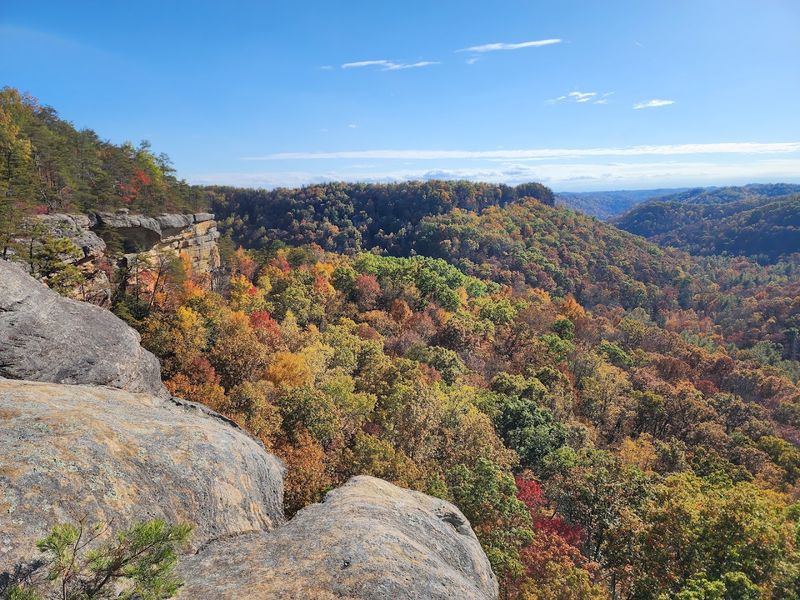
Geology class never made sedimentary rock this exciting.
The limestone and shale layers visible throughout Daniel Boone National Forest were formed during the Mississippian period, a stretch of time that ended about 310 million years ago.
These rocks are literally pages from Earth’s autobiography.
Limestone forms when calcium-rich marine sediments compact and harden over millions of years.
Because this region was once a sea, the limestone here is absolutely loaded with organic material, including the remains of corals, crinoids, brachiopods, and mollusks that lived in that ancient water.
You can spot these rock layers along creek beds, cliff faces, and trail cuts throughout the forest. The layering effect is striking once you know what you are looking at.
Each horizontal band represents a different period of deposition, sometimes thousands of years apart.
Hikers who slow down and actually study the exposed rock faces are often rewarded with clear fossil outlines right there in the stone. No digging required.
The fossils are already coming to you.
Crinoid Fossils
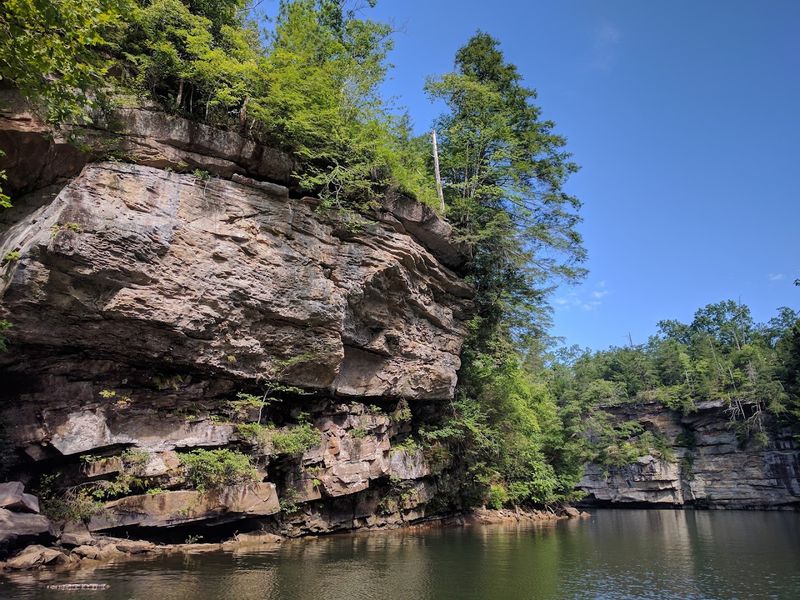
Crinoids are the fossil you will find most often, and they are genuinely beautiful once you know what to look for.
These ancient marine animals resembled flowers on stalks, which is why they are sometimes called sea lilies even though they were animals, not plants. They anchored themselves to the seafloor and filtered food from the water around them.
What you will typically find are the stem segments, which look like small discs or cylinders with a star-shaped hole in the center.
They range from the size of a pencil eraser to about the size of a quarter. Once you spot one, you will suddenly notice them everywhere, scattered across rock surfaces like tiny coins dropped by someone in a hurry.
Crinoids were incredibly abundant during the Mississippian period, which is partly why this era is sometimes called the Age of Crinoids.
Finding one in Kentucky does not require any special technique. Walk along a creek bed, crouch down, and scan the flat rock surfaces.
The star pattern is unmistakable once your eyes are trained to see it.
Brachiopod Shells In Stone
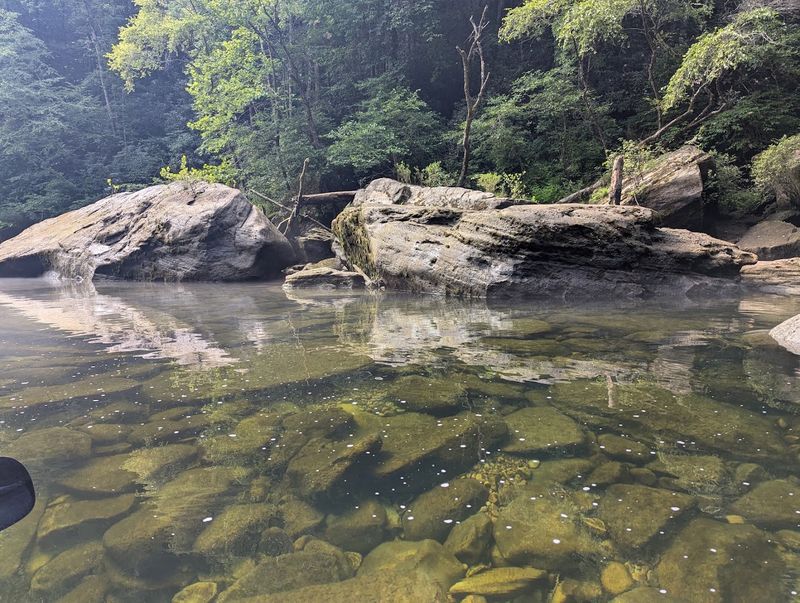
Brachiopods look a lot like clams, but they are an entirely different category of animal with a history stretching back over 500 million years.
Finding one fossilized in Kentucky limestone feels like holding a phone call from the Paleozoic era. They are common, but that does not make them any less satisfying to discover.
These creatures had two shells connected by a hinge, and the shell surfaces often show clear ribbing patterns that preserved beautifully in stone. When you find one, the symmetry is almost eerie.
Something that lived hundreds of millions of years ago looks almost identical to shells you might pick up on a modern beach.
Brachiopods thrived in the warm shallow sea that once covered Kentucky, and their fossils show up throughout the rock outcroppings in Daniel Boone National Forest.
Look for rounded or fan-shaped impressions in flat limestone surfaces. The ribbed texture is your best clue.
Some specimens preserve both shells together, while others show just one valve.
Either way, you are looking at an animal that predates the dinosaurs by a very wide margin.
Coral Fossils From An Ancient Sea
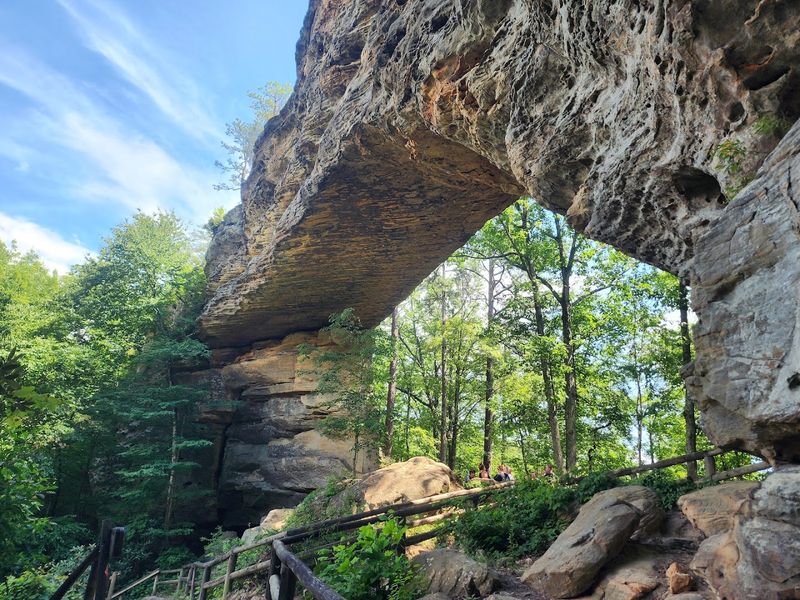
Finding coral in a landlocked state like Kentucky sounds like a geography error, but it makes perfect sense once you understand the history.
Around 350 million years ago, a shallow tropical sea stretched across much of what is now the eastern United States, and coral reefs thrived in those warm waters. The evidence is still right there in the rock.
Horn corals are among the most recognizable fossils you can find in Daniel Boone National Forest. They look like small cone-shaped tubes, sometimes curved like an old-fashioned ear trumpet.
The interior often shows a pattern of radiating lines, which are the preserved walls of the coral’s internal chambers.
Colonial corals also appear in the rock, forming honeycomb-like patterns where many individual coral animals lived together in a shared structure.
Spotting a section of colonial coral in a rock face is a genuinely exciting moment because the pattern is so clearly biological. It does not look like random rock texture.
It looks like something that was alive, because it was. Pack a hand lens if you want to get a closer look at the fine detail inside these fossils.
Where To Look Inside The Forest
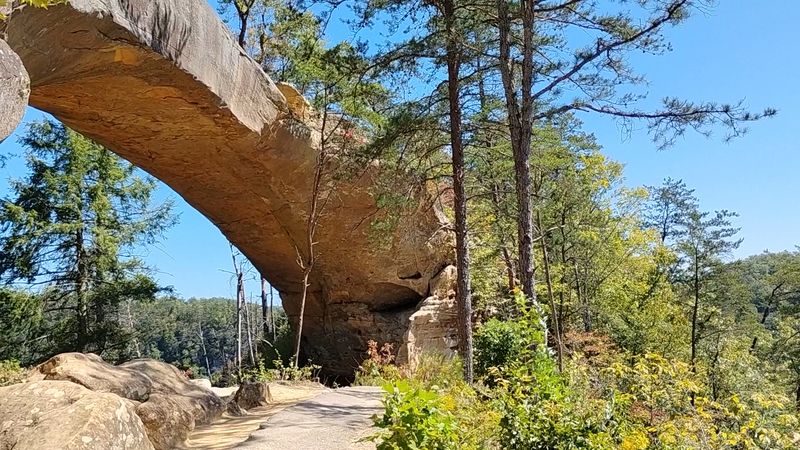
Knowing the forest exists is one thing. Knowing where to actually look inside it is what separates a successful fossil hunt from a long walk with nothing to show for it.
Creek beds are your best starting point. Moving water naturally erodes the surrounding limestone and exposes fresh rock surfaces, which means creek banks and gravel bars are often scattered with fossil fragments.
Trail cuts are another reliable spot. When paths were carved through hillsides, they exposed cross-sections of rock layers that have been sitting undisturbed for millions of years.
Running your hand along those exposed walls sometimes reveals impressions you would never notice at a glance.
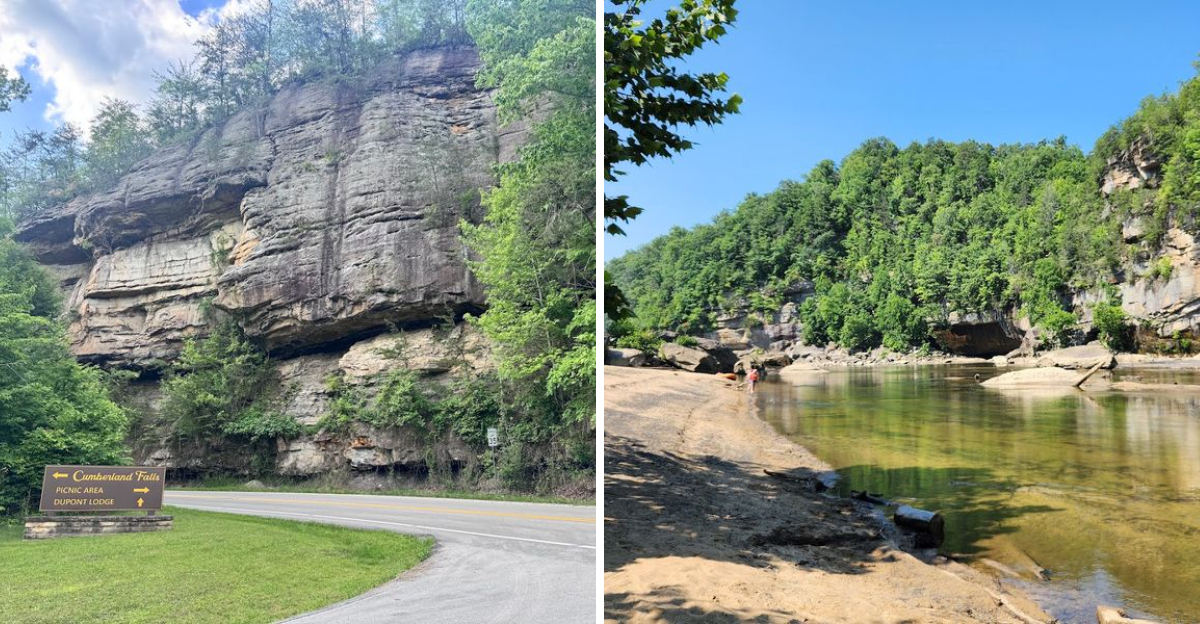
Red River Gorge, which sits within Daniel Boone National Forest, is one of the more popular areas for both hiking and rock exploration.
The sandstone cliffs there are stunning, but the limestone zones nearby are where the fossil action tends to be. Always stay on public land and follow posted guidelines.
The forest is large enough that you rarely feel crowded, and a slow, patient walk almost always turns up something worth stopping for.
Rules And Ethics Of Fossil Collecting
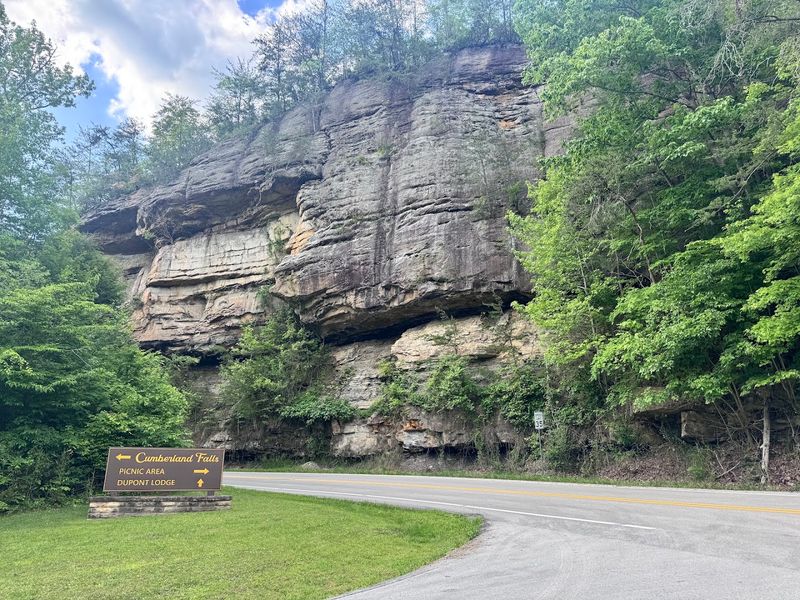
Before you start filling your pockets, there are some rules worth knowing. On National Forest land, casual collection of common invertebrate fossils for personal use is generally permitted, but there are limits.
You cannot collect more than a reasonable personal amount, and selling anything you find is not allowed. The forest is a shared resource, and the goal is to keep it that way.
The real ethical standard is simple. If you find something remarkable, consider leaving it in place or at least photographing it before moving it.
Rare or scientifically significant specimens should be reported to the forest service rather than pocketed. The rules exist to make sure the next visitor has the same chance to discover something amazing.
Never use tools to excavate into bedrock or damage rock formations. Surface collecting is the standard practice here.
Take photos, take notes, and take only what the rules allow.
The experience of finding a 350-million-year-old fossil is already the reward. Keeping the site intact means the forest stays generous for everyone who comes after you.
That is a fair trade by any measure.
What To Bring On Your Fossil Hunt
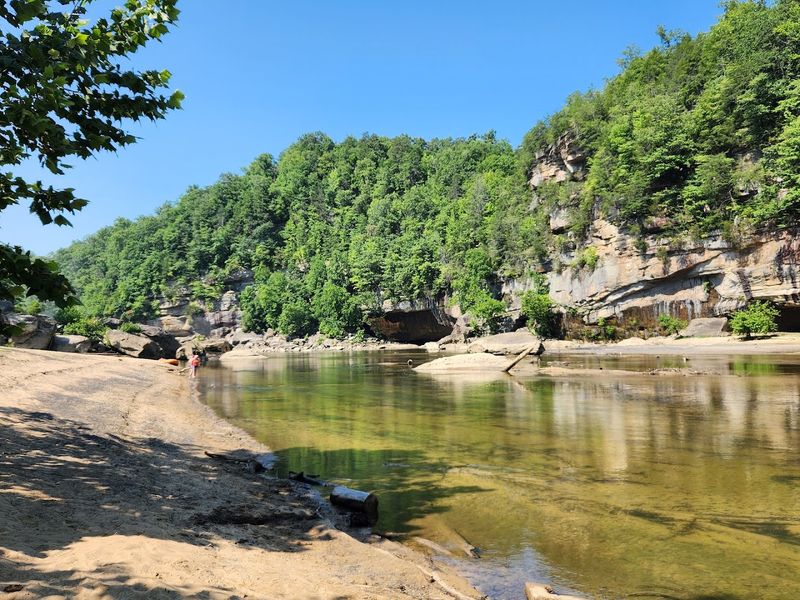
You do not need a lot of gear to have a great time fossil hunting in Daniel Boone National Forest, but a few items make a real difference.
A hand lens or small magnifying glass is probably the most useful tool you can carry. Many fossil details are only visible up close, and a 10x loupe costs about ten dollars and fits in any pocket.
Sturdy waterproof hiking boots matter more than people expect. Creek walking is one of the best fossil hunting techniques, and wet feet get old fast.
Bring more water than you think you need, especially in summer when the forest gets genuinely hot and humid.
A small notebook and pencil let you record where you found things, which becomes surprisingly useful if you plan to return or share your finds with others.
A soft brush helps clear debris from rock surfaces without scratching potential specimens. Leave the hammers and chisels at home.
Surface collecting is the approach here, and honestly, it is more than enough. The forest has been leaving fossils out in the open for millions of years.
You just have to show up and look.