This Free Kentucky Japanese Garden Has Arched Bridges, Koi Ponds, And Peaceful Paths Waiting To Be Explored
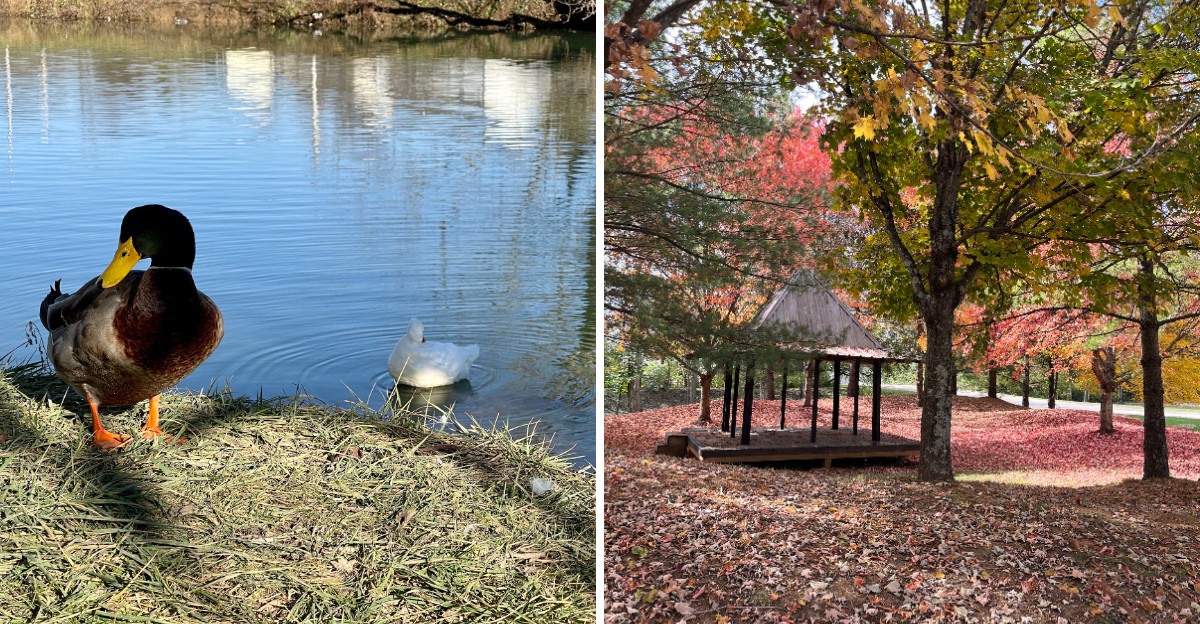
You have had a loud week, and your brain feels like a phone with twelve apps open. The usual fix is a long scroll on the couch that somehow makes it worse.
There is a better plan, and it costs exactly nothing. A Japanese garden in Kentucky opens its gates every day from dawn to dusk.
The whole place covers five and a half acres of calm. You enter through a grand gate styled after Japan’s Tokugawa era.
Winding paths lead you past waterfalls, stone lanterns, and a raked stone garden. Arched bridges and a koi pond give you plenty of reasons to slow down.
The fish can be shy, so a little patience pays off. Your dog is welcome too, as long as it stays on a leash.
Elkhorn Creek hums along the edge like free background music. Pack a picnic.
Silence your phone. Let the quiet do the rest.
A Gate That Asks You To Leave Your Worries Behind
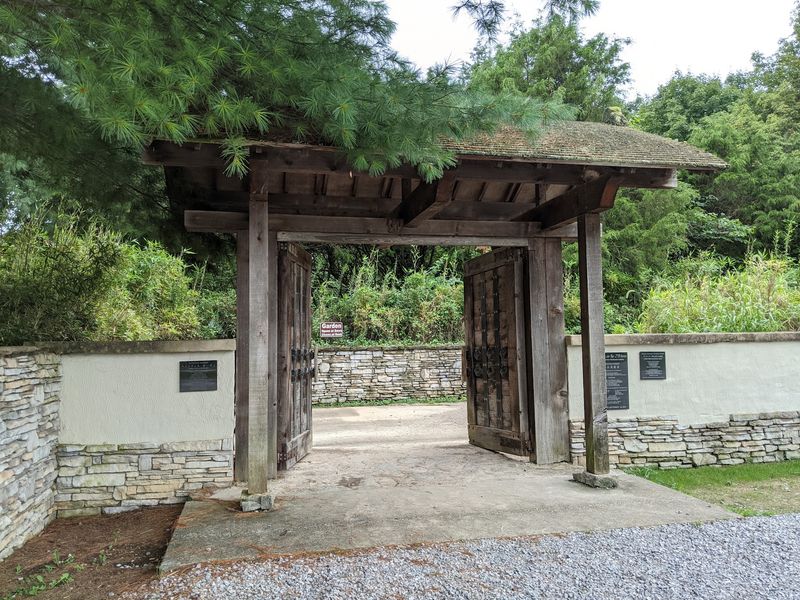
Few gates come with a job description, but this one does. At Yuko-En on the Elkhorn, the Tokugawa Gate invites you to drop your stress at the door.
The garden is the official Kentucky-Japan Friendship Garden. That is a big title for a spot you can visit for free.
Step through the gate and the mood shifts fast. Traffic noise fades into the background as gravel crunches under your shoes.
The idea behind the gate is simple and old. In Japanese garden tradition, an entrance marks a change from busy life to calm space.
You do not need to know any of that to feel it. Your shoulders will probably drop an inch all on their own.
Take a second at the gate before rushing ahead. Look at the wood, the roof lines, and the careful joinery.
Snap a photo here if you like souvenirs. The gate makes a handsome frame for friends, family, or a very patient dog.
Wear comfy shoes for the paths ahead. The walkways at 700 Cincinnati Road, Georgetown, Kentucky, are mostly level, so strollers and slow walkers can enjoy the trip too.
The Bright Red Bridge Everyone Wants To Cross
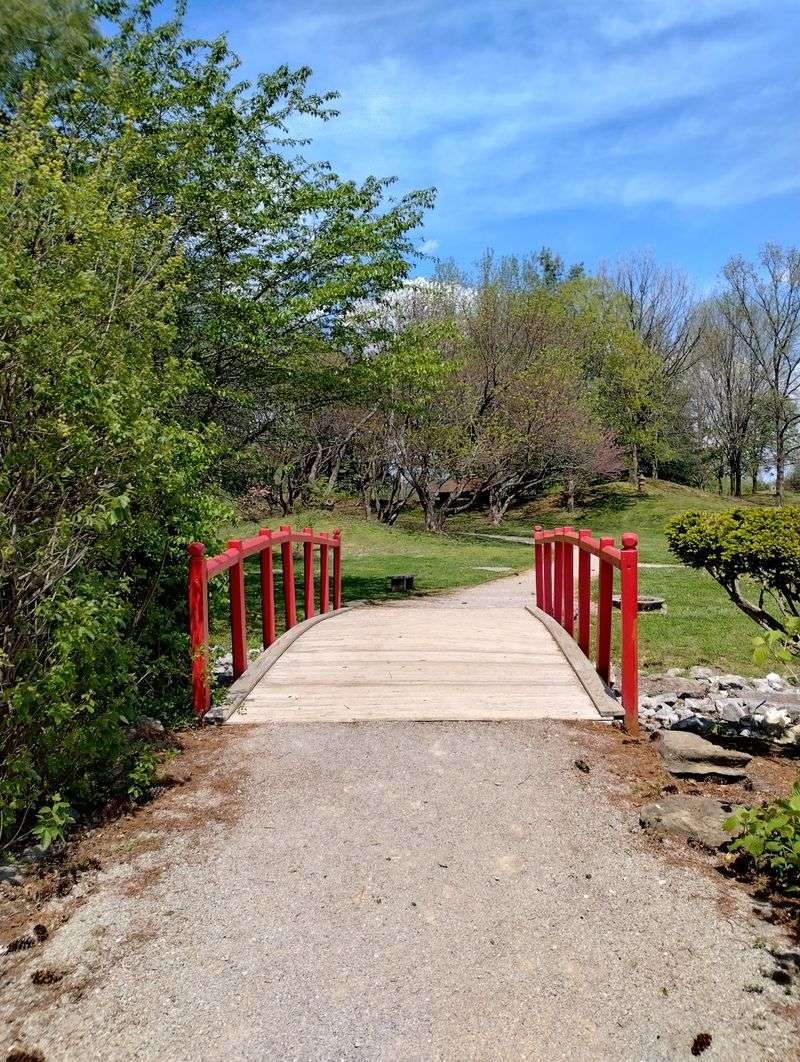
Red is not a shy color, and neither is this bridge. It arches over a stream at the garden like it knows it is the star.
Here is the fun twist. The stream below is often a dry rock stream, made of carefully placed stones instead of water.
Those rocks tell a story. They represent the volcanic mountain regions of Japan, shaped into a miniature scene in Kentucky.
When rain comes, the stream can actually flow into the pond. So the same view can look totally different from one visit to the next.
Kids tend to love the climb up and over the arch. It feels a little like crossing into a storybook.
For the best photo, stand back a few steps. The curve of the bridge looks sharper against green leaves and blue sky.
Early mornings bring softer light and fewer people. That makes the red pop even more in your pictures.
Take a moment on top of the bridge, too. From there, you can look down at the stones and imagine tiny mountains and valleys.
It is a small bridge with a big personality. You will likely cross it more than once before you leave.
Koi Fish With Very Good Manners
Orange, white, gold, and speckled, the koi here dress better than most of us. They glide through the large pond at the heart of the garden.
On a good day, these fish swim right up near the surface. It almost feels like they came over to say hello.
Patience helps with koi spotting. In cooler months, the fish often stay deeper and move slowly, so a winter visit may show fewer of them.
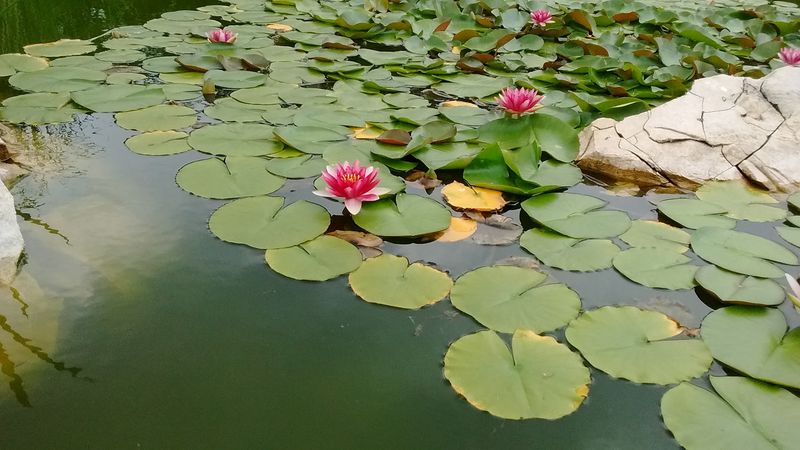
Waterlilies float on the reflecting pool and add bright bursts of color. Their round pads make the water look like a living painting.
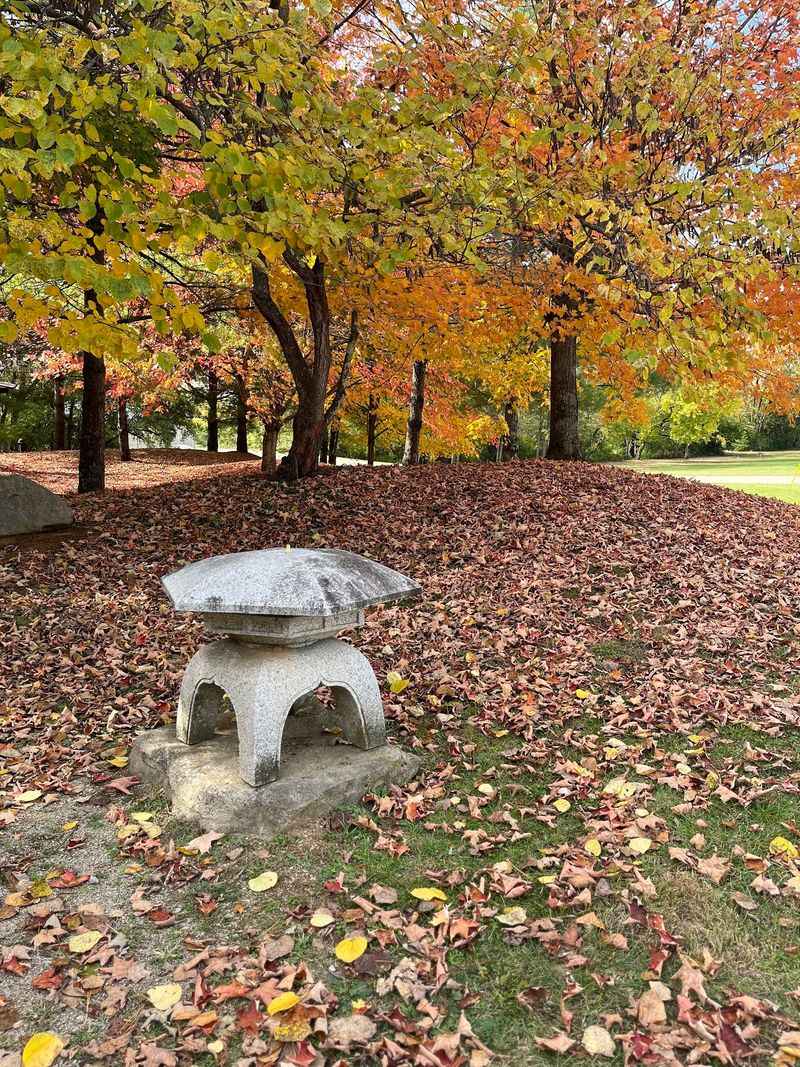
Look around the edges, too. Stone lanterns with names like Kotoji, Maru-yukimi, and Rankei stand near the water.
The Kotoji lantern has two legs of different lengths. It is modeled after a bridge on a Japanese harp called a koto.
Maru-yukimi means round snow-viewing lantern. Picture it dusted with white on a winter morning.
Find a bench by the pond and give yourself ten quiet minutes. Watching fish drift by is cheaper than therapy and far more colorful.
Geese sometimes visit the pond as well. Keep a respectful distance and let them enjoy the view with you.
Waterfalls That Borrow From Two Countries
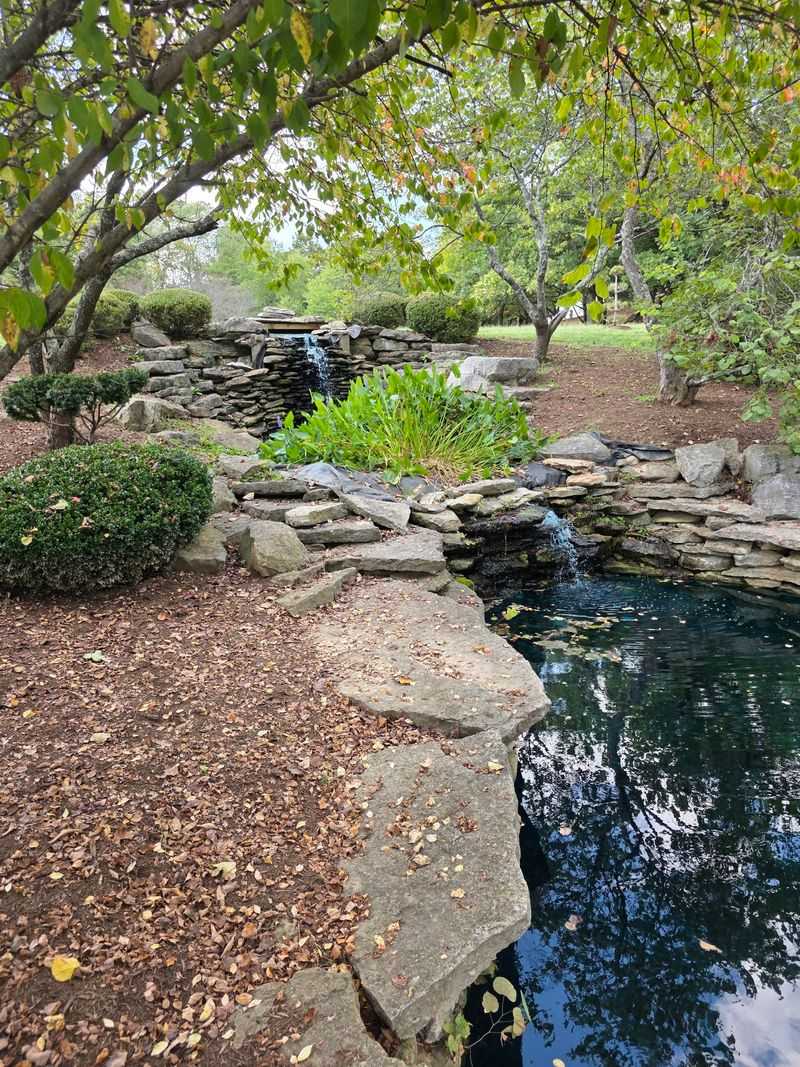
Kentucky limestone meets a Japanese island in one clever corner. The Upper Waterfall and Mountain feature blends both places into one scene.
The falls copy the limestone waterfalls found along nearby Elkhorn Creek. So the water you hear is a nod to local nature.
Now look at the cone-shaped mountains nearby. They represent Yakushima, a lush island in southern Japan famous for ancient cedar forests.
Putting those together is a smart design move. It shows friendship through landscape instead of words.
Keep walking along the winding path. You will reach the Tahara Waterfall Garden, named for Georgetown’s sister city in Japan.
The sound of falling water changes as you move. Close up, it splashes, and farther away, it hums softly.
Visitors often count two waterfalls during their stroll. Each one gives you a different spot to pause and listen.
Bring a friend who talks a lot. Then see if the water can out-talk them, because sometimes it wins.
Photographers should try a slower shutter speed here if their camera allows it. The falling water turns silky and dreamy in pictures.
Raked Pebbles And A Quiet Place To Think
Nobody has ever gotten a speeding ticket in a Zen garden. The rock garden at Yuko-En slows everyone down, and that is the point.
Volunteers rake patterns into the pebbles by hand. The lines suggest flowing streams, while larger stones stand in for islands.
It is art that asks you to use your imagination. Stare for a minute and the gravel starts to look like moving water.
The best view comes from the Elkhorn Viewing Pavilion. Sit down, get comfy, and let your eyes wander across the pattern.
Traditional rock gardens are meant to be viewed, not walked on. So keep your feet on the path and leave the raking lines untouched.
Try a simple challenge while you sit. Count your breaths until you reach twenty, and notice how your thoughts settle.
Patterns can shift over time. Weather and fresh raking give the garden a new look on different visits.
Teens and adults often like this spot for journaling. A small notebook fits easily in a pocket or bag.
You might leave with fewer racing thoughts. Not bad for a pile of small rocks.
A Tea House And A Kiln Unlike Any Other
Tea and pottery walk into a garden. It sounds like the start of a joke, but at Yuko-En, it is simply true.
The Maho-An Tea House offers a quiet place to rest. It was designed for traditional Japanese tea ceremonies, which focus on calm and respect.
Even from the outside, the building feels peaceful. Simple wood and clean lines keep the look humble and neat.
Then comes the real surprise. The Raku Kiln House is said to be the only working kiln inside a Japanese-style garden anywhere.
Raku is a style of pottery from Japan. Pieces are pulled from the kiln while still glowing hot, which creates wild, crackled finishes.
That kiln stands for a blend of cultures. Japanese craft meets Kentucky hands and clay, right in the garden.
Keep an eye on local event listings if pottery excites you. Special programs can bring the kiln and its craft to life.
If you are a maker at heart, this corner may spark ideas. A garden walk and a creative itch pair nicely.
Either way, it is a fact worth sharing at dinner. Few people know Kentucky holds a world first like this.
A Friendship Story Written In Stone And Soil
The friendship behind this garden goes back even further than the garden itself.
Georgetown, Kentucky, and Tahara, Japan, established their sister-city relationship in 1990, and Yuko-En was created a decade later as a celebration of those ties.
The name Yuko-En roughly means friendship garden. It fits, since the whole place grew from a partnership.
Industry played a part, too. The Toyota manufacturing plant in Georgetown helped strengthen ties between Kentucky and Japan.
The garden follows classic Japanese design ideas. Two big ones are harmony with nature and creating a miniature world.
That miniature world idea shows up everywhere. Small stones become mountains, and pebble lines become rivers.
What makes it special is the local twist. Designers blended Japanese strolling garden style with the rolling Bluegrass landscape.
So you are not looking at a copy of Japan. You are seeing a mix of two homes, shaped side by side.
Nearby Elkhorn Creek adds its own voice to the scene. A short trail even continues toward a spot beside the creek.
Think about that as you stroll along. Every path here exists because people chose friendship across an ocean.
Blossoms, Maples, And Paths Made For Wandering
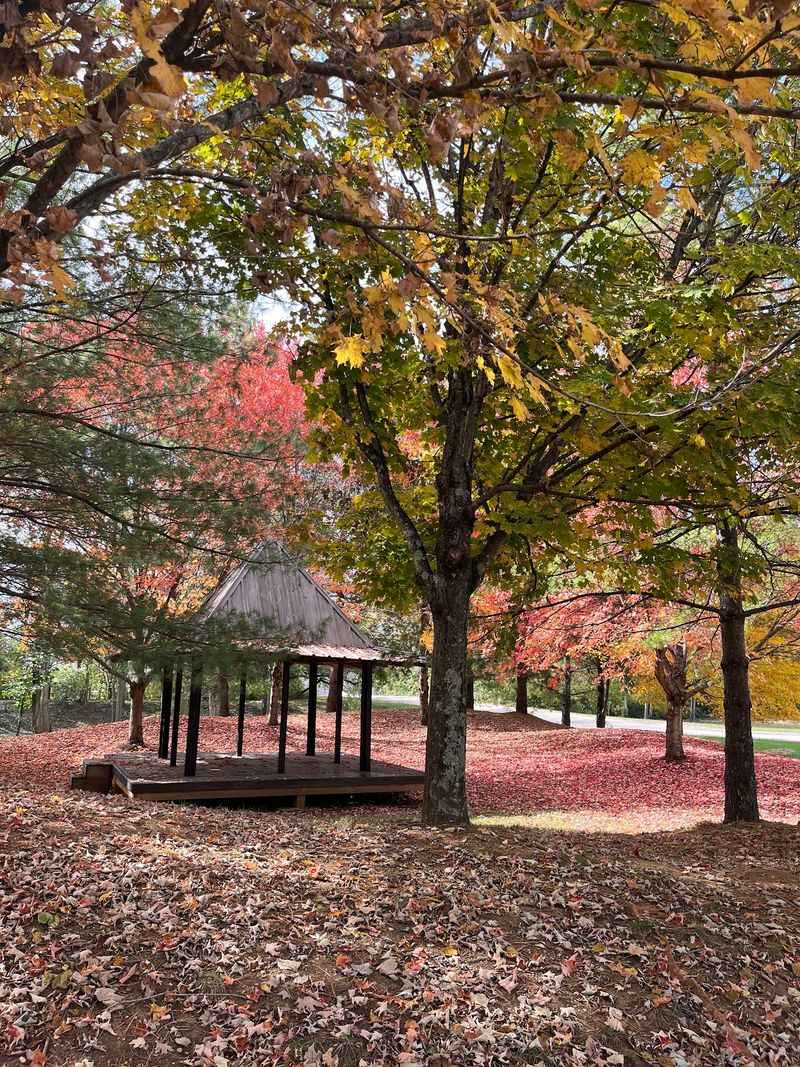
Your nose may notice the flowers before your eyes do. Sweet blooms pop up across the garden throughout the growing season.
Japanese irises stand tall with ruffled petals. Wisteria wraps around posts and hangs in purple clusters that look almost too pretty to be real.
Hydrangeas add big, round puffs of color. Depending on the variety, you might spot blue, pink, or white.
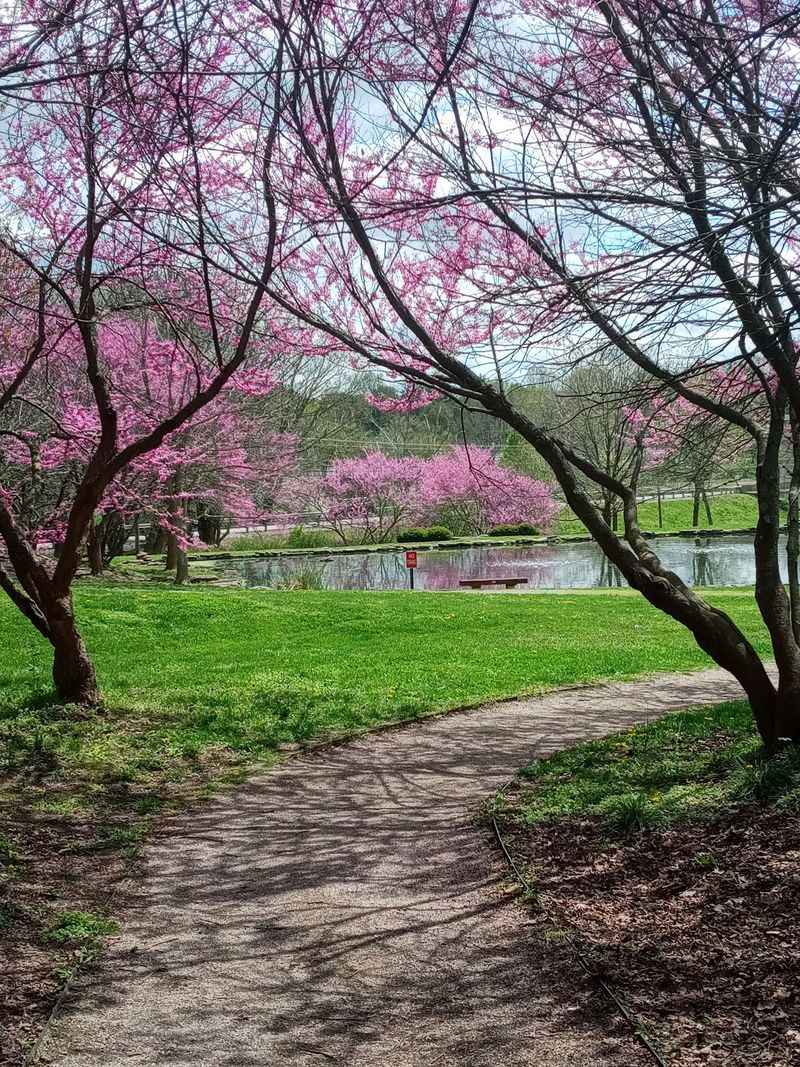
The trees bring their own charm. Japanese cherry trees and Kentucky redbuds both light up the garden in spring.
Cedars and maples fill out the scene. Some maple species come from America, while others come from Japan.
Fall is a great time for those maples. Their leaves can shift into warm reds and golds.
The gravel paths make exploring easy. Follow them in a loop and you will not get lost, even on your first visit.
Benches sit along the way for resting. Pack water and snacks, since there are no public restrooms on site.
Bikes and rollerblades do not work well on the pea gravel. Your own two feet are the perfect ride here.