This Free Maryland Museum Is Packed With Fascinating Natural History Treasures
Free rarely means impressive, yet Maryland keeps proving that wrong. I drove past a small brick building a dozen times before curiosity finally won.
Nothing about the outside suggested what waited inside. Fossils lined the walls, minerals glowed under soft lighting, and an actual Ice Age skeleton stood taller than I expected.
Maryland tucks real treasures into buildings most people never think to enter, and this one earns every bit of attention it gets. Kids pressed their faces against display cases.
Adults read every plaque twice. Nobody rushed through, even though the whole visit cost nothing.
Not one dollar changed hands, and yet the experience felt worth far more than most paid attractions. I left more curious about this state than when I arrived, already planning a return trip.
A Nonprofit Started Back In 1929
Ninety-something years is a long run for any organization. This private nonprofit was established in 1929 and never lost its focus on Maryland’s natural heritage.
The mission sounds simple but carries weight. Conserve collections, teach the public about natural sciences, and encourage young people toward science careers.
What surprised me most was who keeps the lights on. Volunteers do the bulk of the work, supported by a small part-time staff.
That volunteer spirit shows up everywhere inside. People here genuinely enjoy explaining what a specimen is and why it matters.
Maryland happens to be one of the few states without an official natural science museum. This group has quietly stepped up to fill that gap.
The building itself came into their hands in 2006. It measures roughly 9,000 square feet and serves as the hub for everything they do.
You will find it at 6908 Belair Road in Baltimore. That address belongs to the Natural History Society of Maryland.
For a place run largely on donated hours, the standards feel remarkably high. Nothing about the displays feels careless or thrown together.
Free Admission With An Optional Donation Box
Free museums usually come with a catch. Here there is none, just a donation box near the entrance for anyone who wants to help.
Admission costs nothing for every visitor, every open day. That makes it one of the easiest educational outings in the region to plan.
Families with several kids feel this difference instantly. No ticket math, no surprise fees, no pressure to rush through to get your money’s worth.
I watched a parent let two small children circle the same exhibit three times. Nobody minded, and nobody was counting minutes.
Donations do real work, since the organization relies on community support. Memberships and gift shop purchases also help fund programs.
Because entry is free, short visits make sense too. You can stop by for thirty minutes and still leave with something new in your head.
Parking is on site and free, with handicap accessibility available. Overflow parking sits in a public lot across the road.
Budget-friendly outings rarely deliver this much substance. The value here is genuinely hard to beat.
The Woolly Mammoth Everyone Talks About
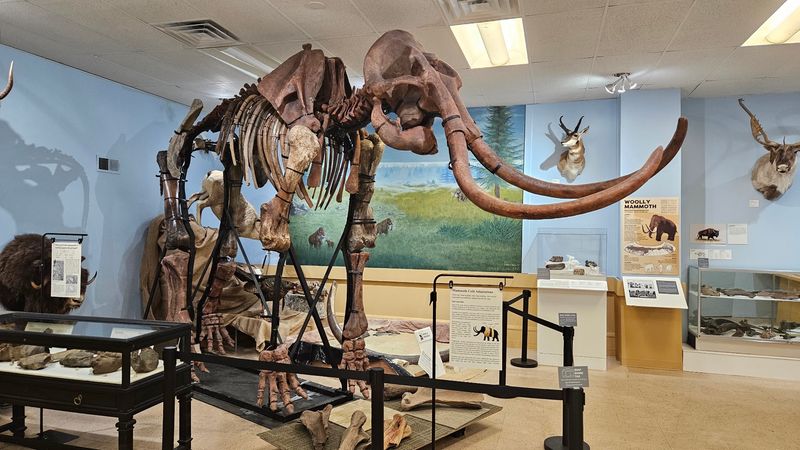
Nothing prepares you for an Ice Age giant inside a two-room museum. The woolly mammoth display is the star attraction, and visitors mention it constantly.
Standing near it changes your sense of scale. Textbook pictures simply do not communicate how enormous these animals actually were.
The mammoth arrived with real fanfare. An unveiling event in early February paired the display with a program about Ice Age plants and animals.
Kids tend to freeze in place when they spot it. Adults quietly do the same thing, just with better posture.
What makes the exhibit work is the context around it. The museum connects the mammoth to the broader story of this region long ago.
Photographs are worth taking here. The lighting is straightforward and the display sits at an easy viewing height.
Ask a volunteer about it if someone is nearby. The explanations go well beyond what any label can fit.
Plan to spend real time at this stop. It anchors the whole visit and gives everything else a sense of deep history.
Over 200,000 Specimens Stored Downstairs
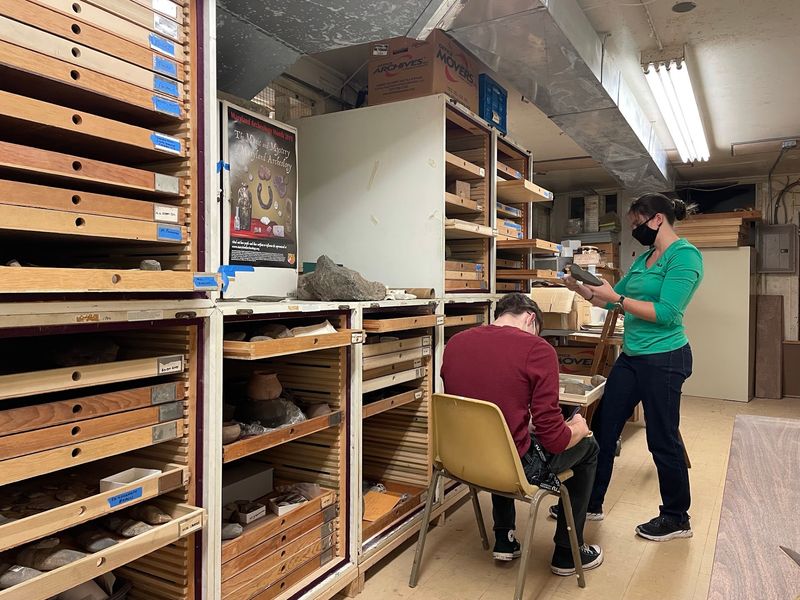
The two public rooms are only the appetizer. Below them sits a collections facility holding more than 200,000 natural history specimens and artifacts.
That number stops most people mid-sentence. It puts this small institution in serious scientific company.
Items in the collection date from the 1800s straight through to the present day. Flora, fauna, fossils, and minerals all have a place.
Most specimens come from Maryland and the wider mid-Atlantic region. Unique artifacts round out the holdings.
Some pieces carry real research value for scientists studying regional change. Others are set aside specifically for hands-on educational programs.
That second category matters more than you might guess. Being allowed to hold a real specimen sticks with a young learner.
Preserving material like this takes constant care. Labeling, storage conditions, and record keeping all demand steady attention.
Knowing what sits below your feet changes how you see the upstairs displays. Every case on view represents a careful choice from a much deeper library.
Fossils, Gems, And Glittering Minerals
Sparkle does a lot of the recruiting here. The mineral and gem cases pull people in before they even read a single label.
Geology and mineralogy are among the disciplines represented in the collections. Crystals of different colors sit alongside rougher, more humble rocks.
Fossils get plenty of attention too. Paleontology runs deep in this part of the country, and the displays reflect that.
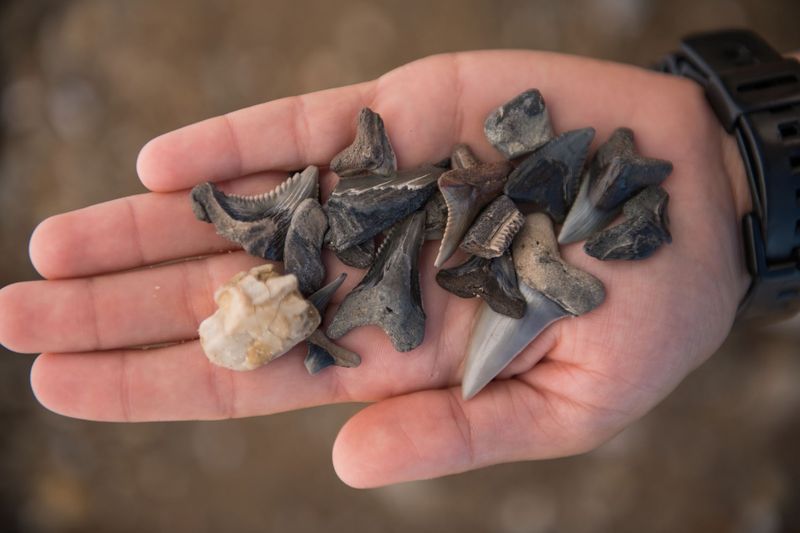
Maryland’s coastal plain has long been productive fossil territory. Shark teeth and shells turn up regularly for those who know where to look.
There is a nice reward system in the shop as well. A purchase can come with a fossil to take home.
That small souvenir does something clever. It turns a museum visit into the start of a personal collection.
Look closely at the labels near these cases. They often note where a specimen was found, which makes the geology feel local.
Rock hounds and curious beginners both leave happy. Very few displays manage that balance so easily.
Mounted Wildlife Displays That Bring The Collection To Life
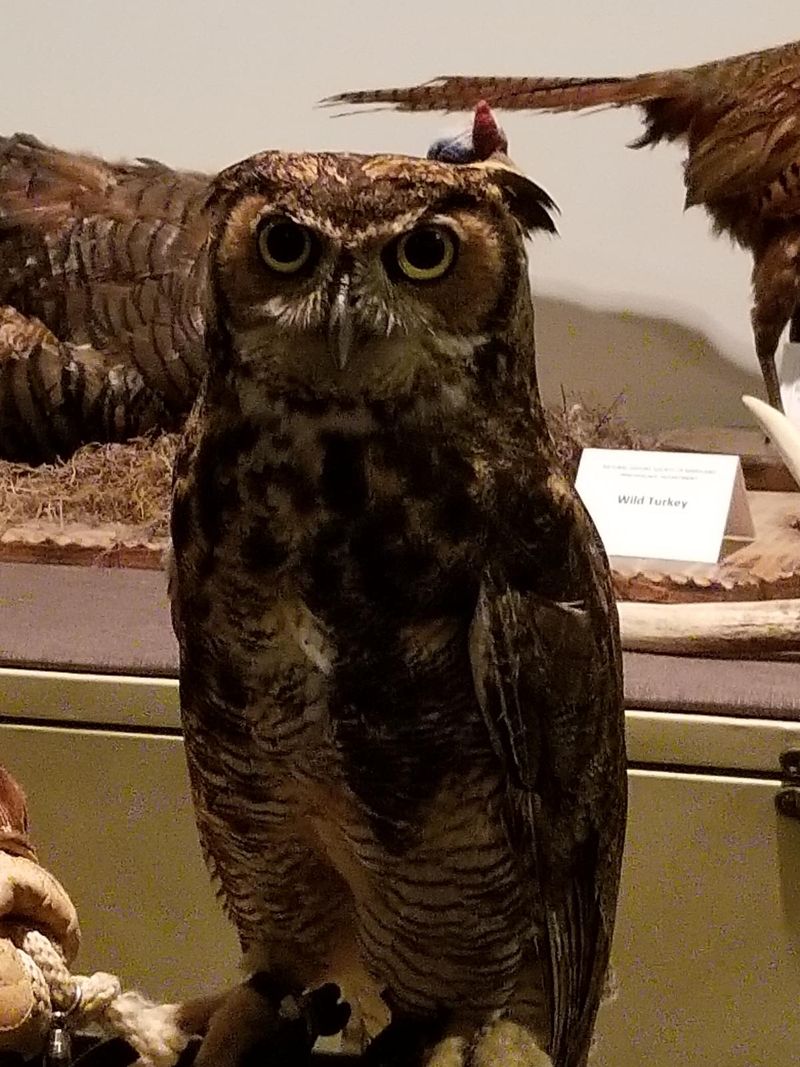
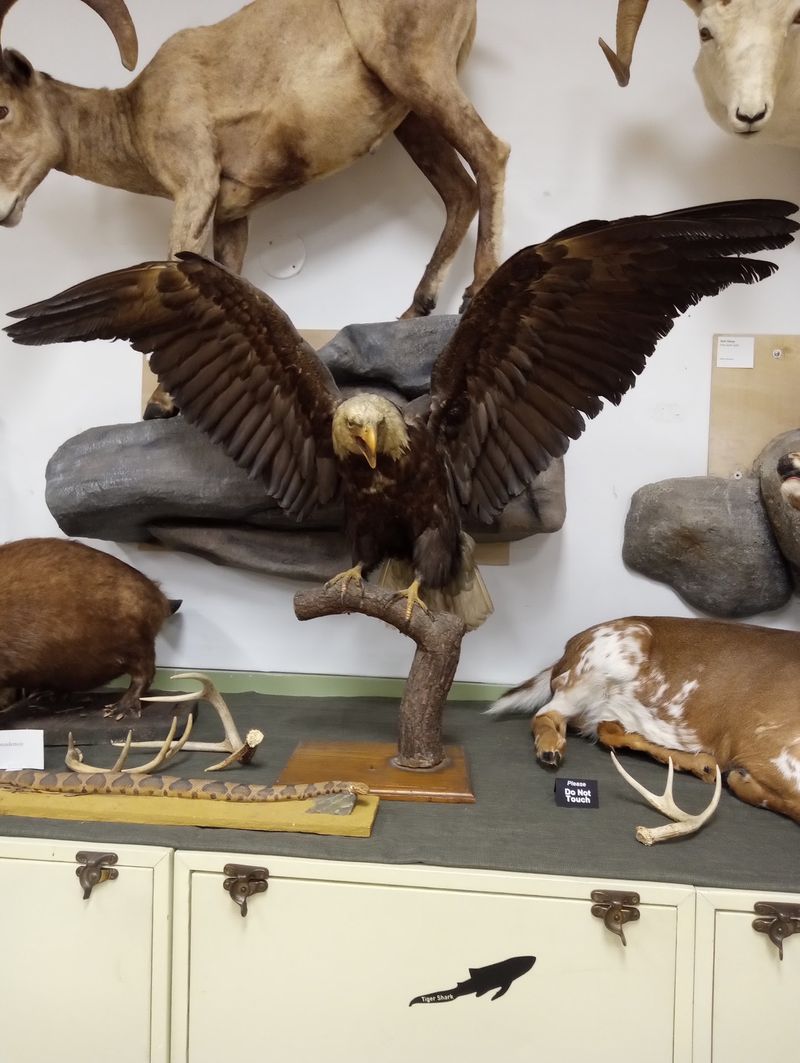
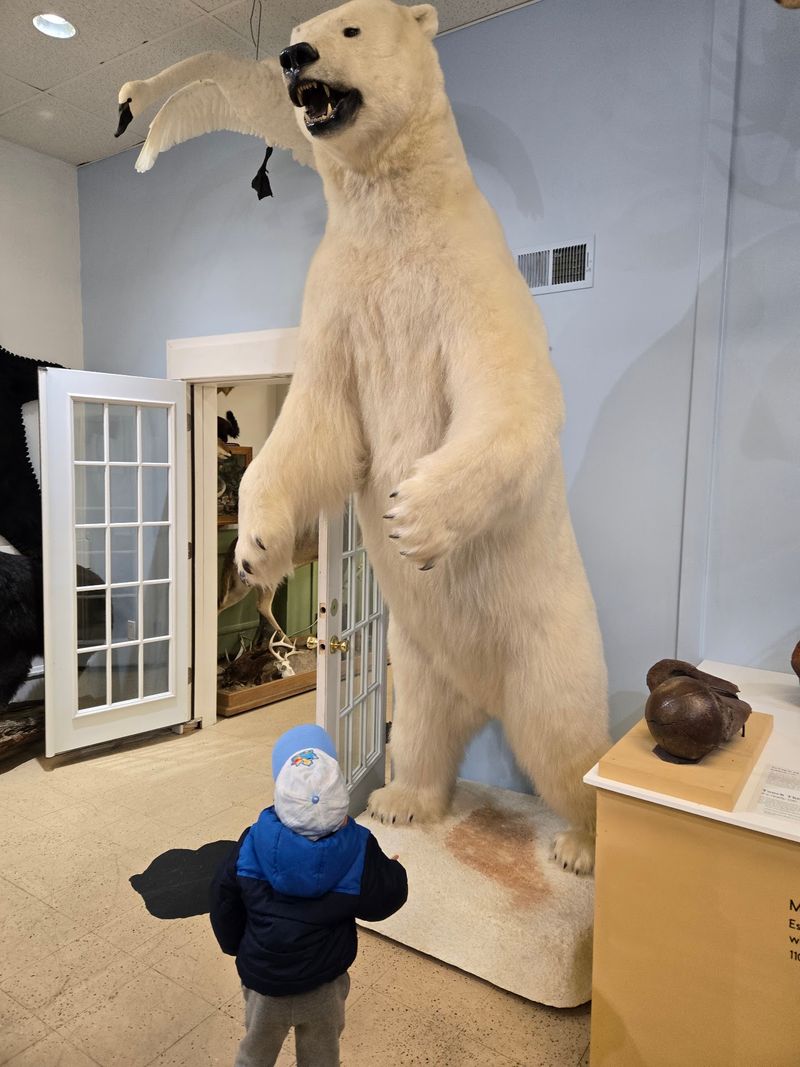
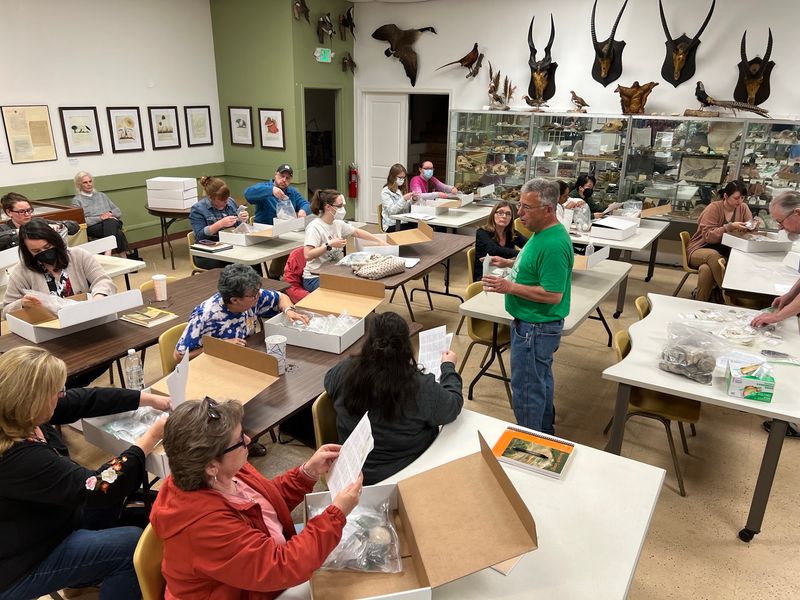
Two rooms should not hold this much wildlife. Yet bears, owls, fish, birds, turtles, shells, butterflies, and moths all share the space.
Mounted specimens let you study details you never catch outdoors. Feather patterns, claw shapes, and beak curves all become obvious.
Ornithology is a listed discipline in the collections. So are mammalogy, herpetology, entomology, and malacology, which covers shells and mollusks.
Snake skins draw a particular kind of reaction. Kids lean in, and most adults lean back slightly before leaning in too.
The arrangement feels cozy rather than sleek. That charm is part of the appeal for many regular visitors.
Butterfly and moth cases reward slow looking. Colors that seem plain from a distance turn intricate up close.
Everything ties back to Maryland and the surrounding region. You are essentially seeing your own backyard, organized and explained.
Take your time in these rooms. Rushing past would mean missing dozens of small, striking details.
Nature Connections Programs For Families
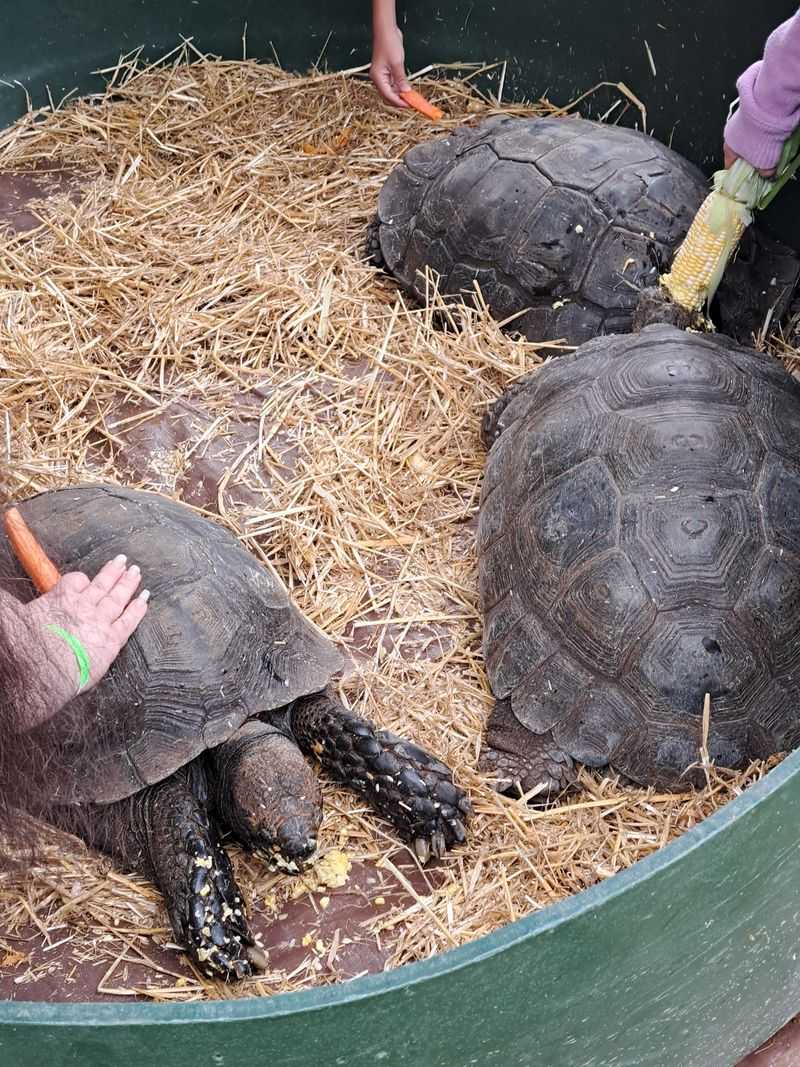
Monthly family programming keeps this place lively. The Nature Connections series runs free and focuses on hands-on learning.
Sessions give kids something to touch, build, or examine. Passive watching is not really the style here.
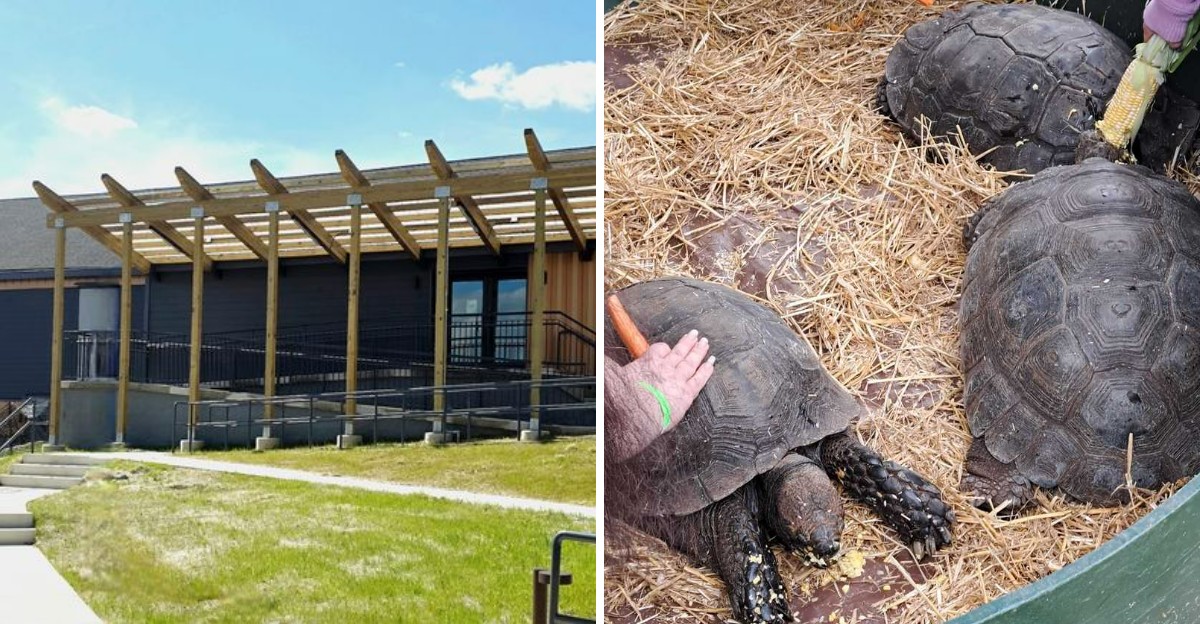
Special event days go even bigger. World Turtle Day has featured live turtles, crafts, and chances to pet the animals.
SharkFest brings shark experts and scientists to talk with visitors. Sand and water play, crafts, and snowballs have been part of the fun.
What makes these events work is the expertise behind them. Real scientists answer real questions in plain language.
Younger children get activities sized for them. Older kids and adults get depth if they want it.
Checking the calendar before you go is smart. Program days feel completely different from a quiet weekday visit.
These events also show the organization’s mission in action. Educating citizens and inspiring future scientists happens right at the craft table.
Community Groups Built Around Nature And Collecting
Finding people who share your specific obsession is not always easy. Clubs here solve that problem neatly.
There are groups focused on fossils, herpetology, butterflies, and archaeology. Mineral enthusiasts have a home too.
Meetings often pair conversation with guided trips. Popular outings can fill quickly, so early signups help.
Membership is not required to join in the fun. Field trips, lectures, and family programs welcome everyone.
The people leading these groups know their subjects deeply. Many are experienced naturalists volunteering their time.
That mix of expertise and friendliness is rare. Beginners are not made to feel out of place.
Costs stay low by design. Affordability is clearly part of the philosophy here.
Joining a club changes a museum visit into an ongoing hobby. That progression seems to be exactly the point.
Learning Opportunities Both In Person And Online
Learning does not stop at the front door. Field trips take participants fossil hunting, bird watching, and out on canoe paddles.
Getting outside with a knowledgeable guide changes everything. You start noticing things you walked past for years.
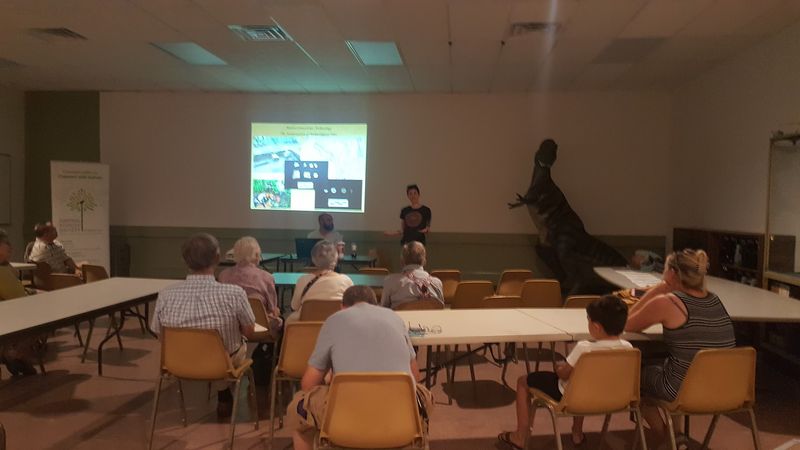
Indoor options run alongside the outdoor ones. Lectures, workshops, and continuing education courses fill the calendar.
Online sessions widen the reach considerably. Zoom lectures let people join without driving anywhere.
Topics stretch across the disciplines in the collections. Archaeology presentations have drawn especially engaged crowds.
Presenters tend to explain things clearly for non-experts. Questions get answered rather than brushed aside.
Day trips and overnight trips both appear in the schedule. That range suits casual learners and serious hobbyists alike.
The website calendar is the place to check availability. Popular trips do not stay open long.
Planning Your Visit And The Little Gift Shop
A good visit starts with checking the clock. Public hours run Wednesday from noon to 5 PM, then Thursday through Saturday from 10 AM to 3 PM.
Sunday, Monday, and Tuesday are closed. Planning around that schedule saves a wasted drive.
The gift shop sits right near the entrance. Books, toys, keepsakes, and learning tools line the shelves.
Proceeds from the shop support the organization. Buying a book here does double duty.
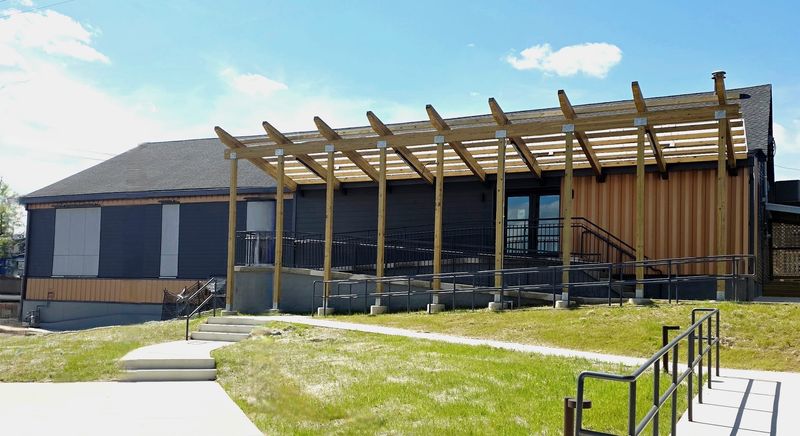
Outside, the property got a thoughtful redesign in 2015. Rainwater runoff capture and native plantings were added.
That landscaping quietly demonstrates the conservation message. The grounds practice what the exhibits preach.
Give yourself an hour at minimum. Most people end up staying longer than they planned, and that is a good sign.