This Funky California Art Neighborhood Feels Straight Out Of A Dream
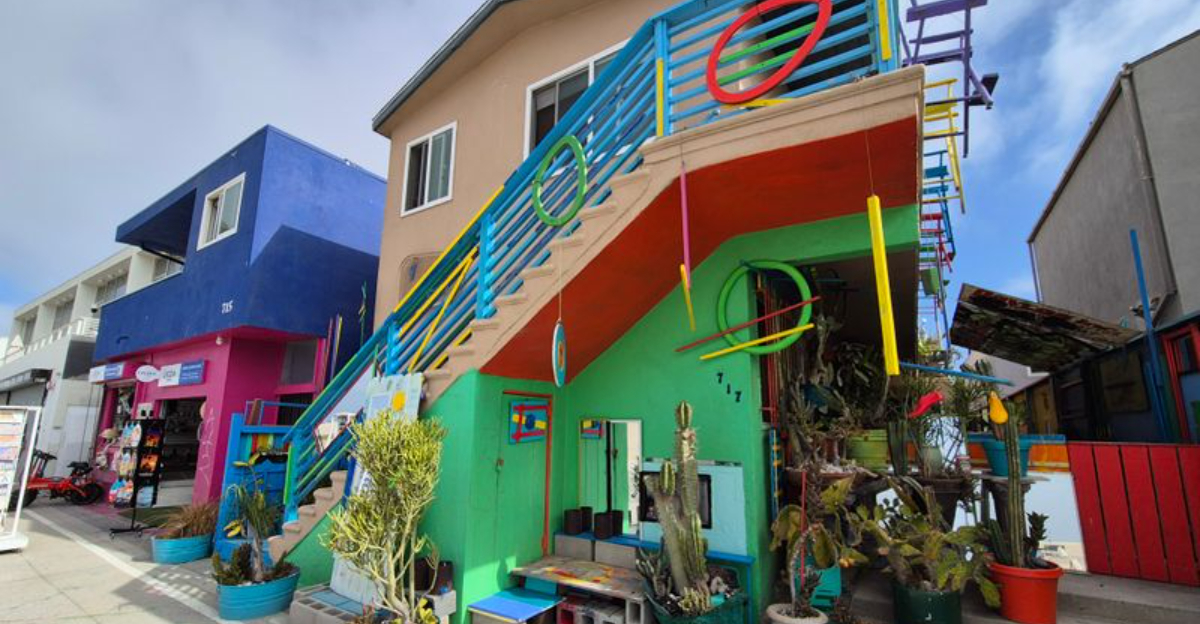
Few places manage to blend raw creativity with coastal charm quite like one particular stretch of Southern California shoreline.
Venice Beach stands as a living canvas where street performers share sidewalks with world-class murals and bodybuilders pump iron under open skies.
The neighborhood pulses with an energy that feels both laid-back and electric at once.
Founded over a century ago with grand visions of Renaissance-inspired architecture and winding waterways, this coastal community has evolved into something far more eclectic than its creator could have imagined.
Today it draws millions of visitors who come to witness the collision of skateboarding culture, graffiti art, bohemian spirit, and beach-town vibes.
The boardwalk alone hosts enough characters and creativity to fill a dozen documentaries. From its historic canals to its activist roots, Venice Beach refuses to fit into any single category.
It remains a place where counterculture thrives alongside boutique shopping, where gritty meets polished, and where every corner offers something unexpected.
This neighborhood proves that California dreaming is very much alive and painted in the brightest colors imaginable.
1. Abbot Kinney’s Renaissance Dream Lives On
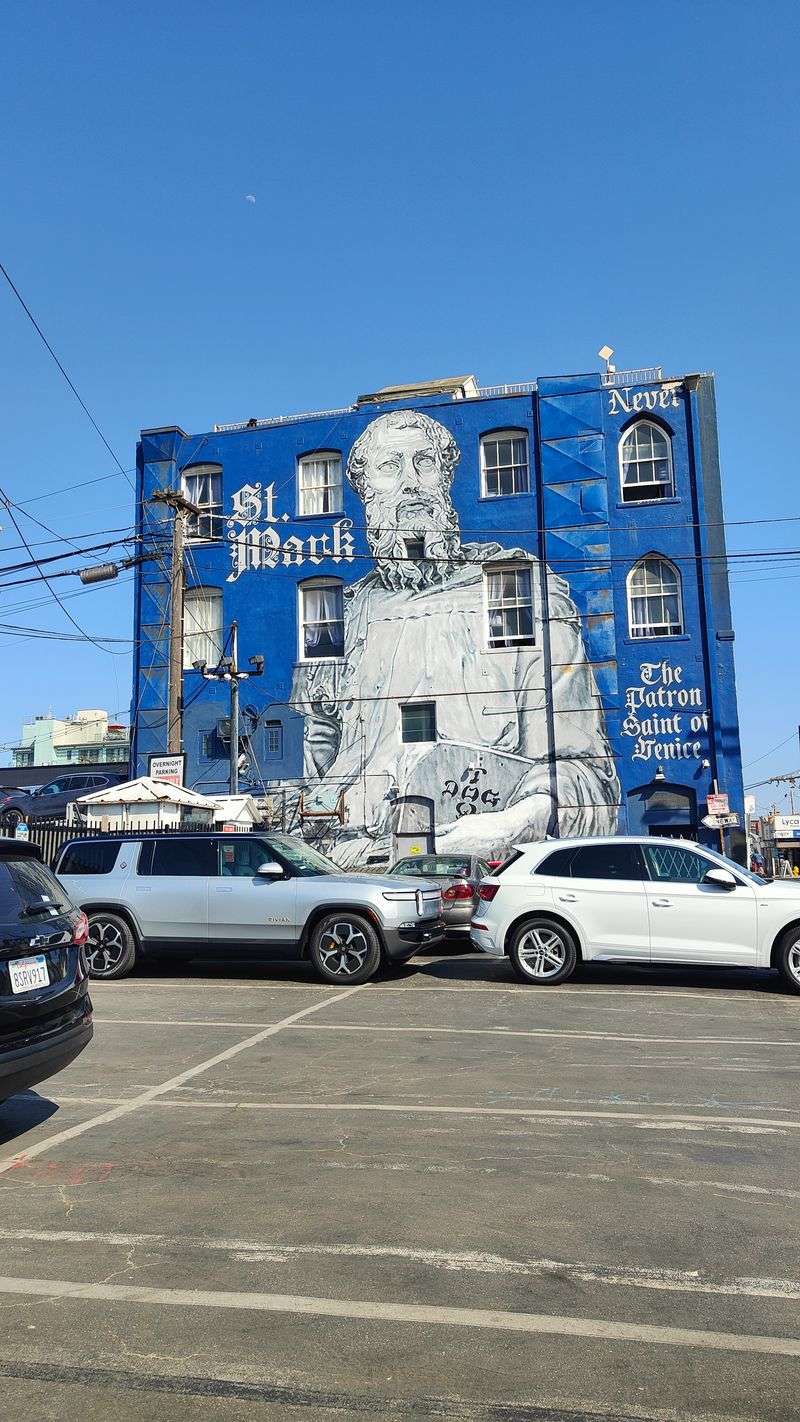
Abbot Kinney arrived in 1905 with a vision that seemed almost absurd for a California beach town.
He wanted to recreate the romantic waterways of Venice, Italy, complete with gondolas gliding through man-made canals.
The tobacco millionaire poured his fortune into constructing an elaborate network of waterways bordered by colonnades and arched bridges.
Many locals thought the project would fail spectacularly. Instead, Kinney’s Venice of America became an instant sensation that drew curious visitors from across the country.
The original design included an auditorium, a ship-themed hotel, and even a miniature railway connecting different attractions.
Over the decades, many canals were filled in to make room for roads and parking lots. What remains today offers a quieter contrast to the bustling boardwalk just blocks away.
Walking along the remaining Venice Canals feels like stepping into a secret garden where ducks paddle past charming homes and footbridges connect narrow pathways.
Kinney’s influence extends far beyond the waterways themselves. His commitment to creating a cultural destination set the tone for generations of artists and free spirits who followed.
The neighborhood still carries his entrepreneurial spirit mixed with an appreciation for beauty and public space.
2. Muscle Beach Pumps Iron Under Open Skies
Arnold Schwarzenegger built his legendary physique here during the 1970s, following a tradition that began decades earlier.
Muscle Beach started in the 1930s as a simple outdoor workout area where athletes trained under the California sun.
The original location was actually in Santa Monica before moving to its current Venice Beach home. What makes this gym remarkable is its complete openness to public view.
Chain-link fencing allows passersby to watch serious bodybuilders and casual fitness enthusiasts share the same equipment.
The setup includes pull-up bars, parallel bars, weight benches, and platforms for Olympic lifts. Photographers constantly snap pictures of the muscular athletes who treat their training like performance art.
The gym charges a small daily fee for those who want to work out, though watching remains free. Early morning brings the most dedicated lifters while afternoons attract a mix of tourists and locals.
The culture here celebrates physical strength without pretension or expensive memberships.
Bodybuilders offer tips to beginners, and the atmosphere stays surprisingly welcoming despite the intimidating physiques on display.
Muscle Beach proves that fitness culture can exist as community gathering space rather than exclusive club behind closed doors.
3. Legal Graffiti Transforms At The Art Walls
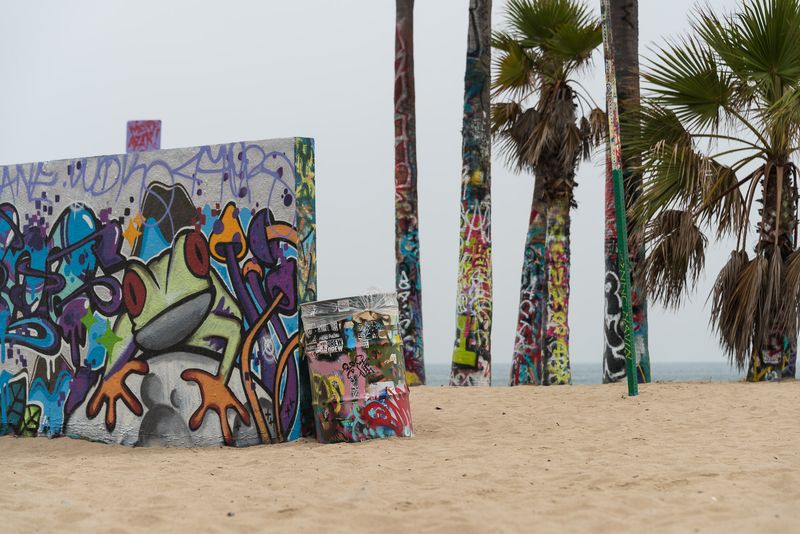
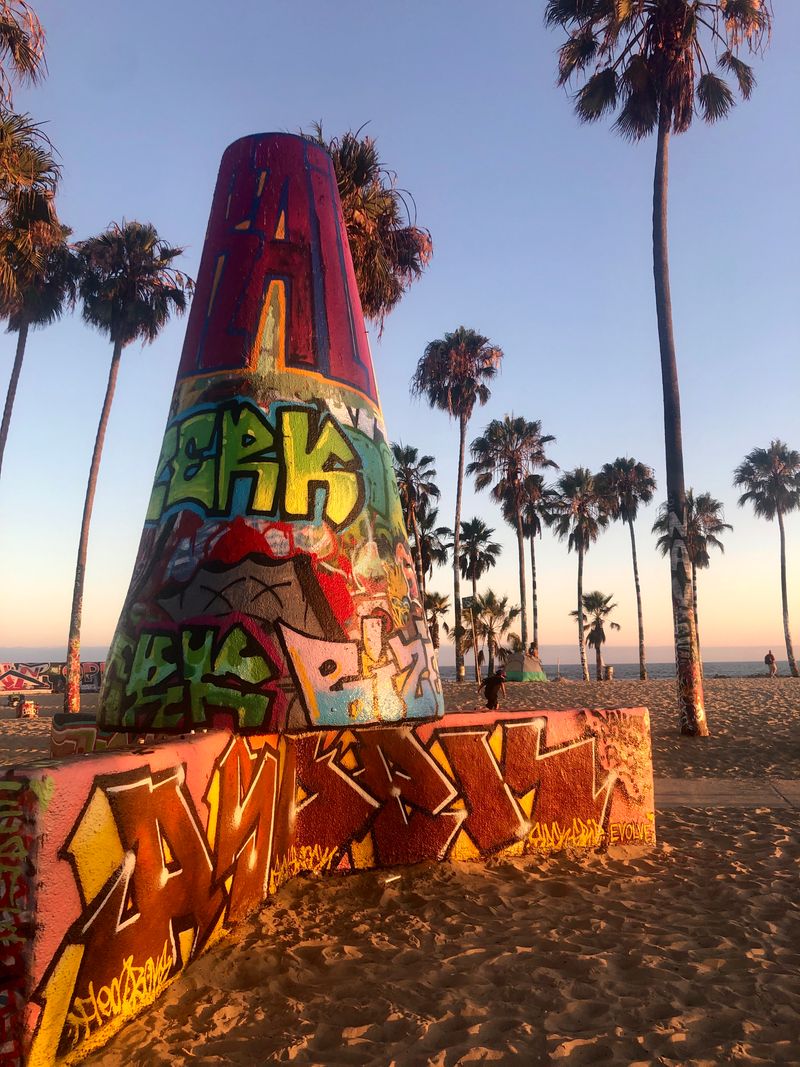
Most cities spend resources removing graffiti, but Venice Beach designated specific walls where spray paint is not only allowed but celebrated.
The Venice Art Walls sit adjacent to the skate park, creating a zone where visual and physical expression merge.
Artists must follow a permit process, though the barriers to entry remain relatively low compared to traditional gallery spaces.
The murals change constantly as new artists cover previous work with fresh designs. Walking past the walls on different days reveals completely different artwork, making each visit unique.
Styles range from intricate photorealistic portraits to abstract color explosions to political statements rendered in bold letters.
Watching artists work offers insight into the technical skill required for large-scale spray paint projects.
They balance on ladders, blend colors mid-air, and transform blank concrete into detailed images within hours.
The temporary nature of the work adds poignancy since even masterpieces will eventually be painted over.
This designated legal space helps preserve the neighborhood’s reputation as an arts haven while managing the tension between property rights and creative expression.
The walls demonstrate that graffiti can be recognized as legitimate art form when given proper context and community support.
4. Skateboarding Was Born In Empty Pools
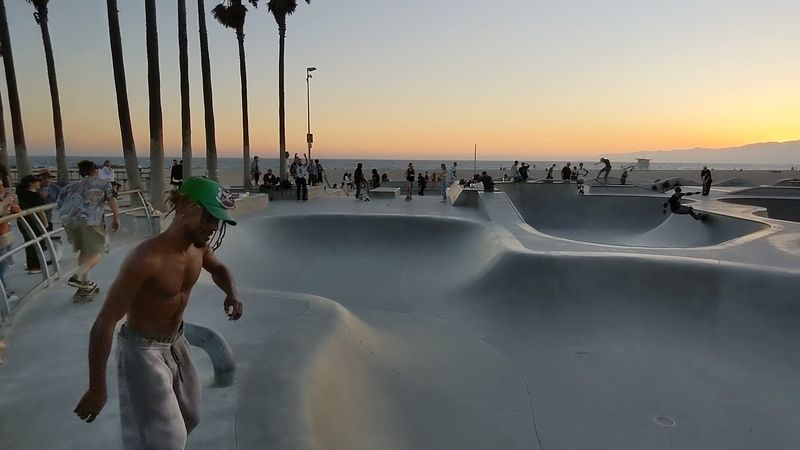
During a severe drought in the 1970s, a group of local surfers noticed something interesting about empty swimming pools.
The curved concrete surfaces mimicked ocean waves and allowed for radical new skateboarding techniques.
These teenagers, known as the Z-Boys, revolutionized skateboarding by adapting surf moves to vertical skateboarding.
Their aggressive style and fearless approach transformed skateboarding from a casual hobby into an extreme sport. Documentary films and books have chronicled their influence on modern skate culture.
The Venice skate park now features bowls and ramps that pay homage to those early pool-skating pioneers.
Watching skaters carve through the concrete bowls reveals the poetry in what might seem like reckless behavior. The sound of wheels hitting coping and boards smacking pavement creates its own rhythm.
Younger skaters learn from veterans who pass down tricks and techniques through demonstration rather than formal instruction.
The skate park attracts international visitors who make pilgrimages to the birthplace of modern skateboarding. Some come just to watch while others bring their boards to test their skills on legendary terrain.
Venice Beach remains deeply connected to skateboarding identity even as the sport has spread worldwide and become mainstream.
5. Abbot Kinney Boulevard Blends Bohemia With Boutiques
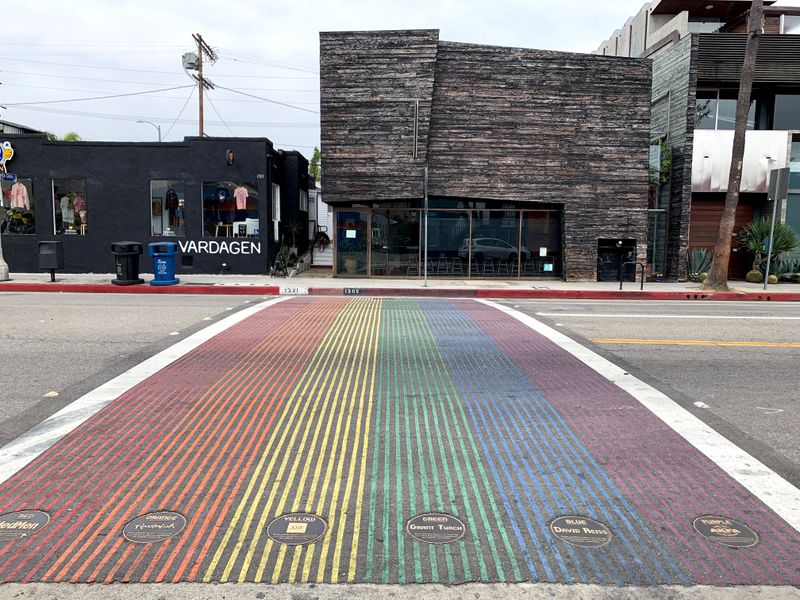
Named after the neighborhood’s eccentric founder, this mile-long street has become one of the most desirable shopping destinations in Los Angeles.
Abbot Kinney Boulevard manages to feel both exclusive and accessible, mixing high-end boutiques with vintage stores and local artist galleries.
The transformation from rundown strip to trendy destination happened gradually over several decades.
Small independent businesses dominate the street rather than chain stores, giving the area a curated feel. Shoppers can find everything from handmade ceramics to designer clothing to rare books.
The architectural variety adds visual interest with converted bungalows housing modern retail concepts. Weekend afternoons bring crowds that make parking challenging and sidewalks congested.
Weekday mornings offer a more relaxed browsing experience when shop owners have time for actual conversations.
Many stores display local artwork on their walls, blurring the line between commercial space and gallery. The boulevard represents Venice Beach’s ongoing tension between preservation and gentrification.
Long-time residents worry about rising rents pushing out the artists and eccentrics who gave the neighborhood its character.
Others argue that economic vitality helps maintain the area’s cultural relevance. Walking Abbot Kinney Boulevard means witnessing this evolution in real time.
6. The Canals Offer Tranquil Escape From Chaos
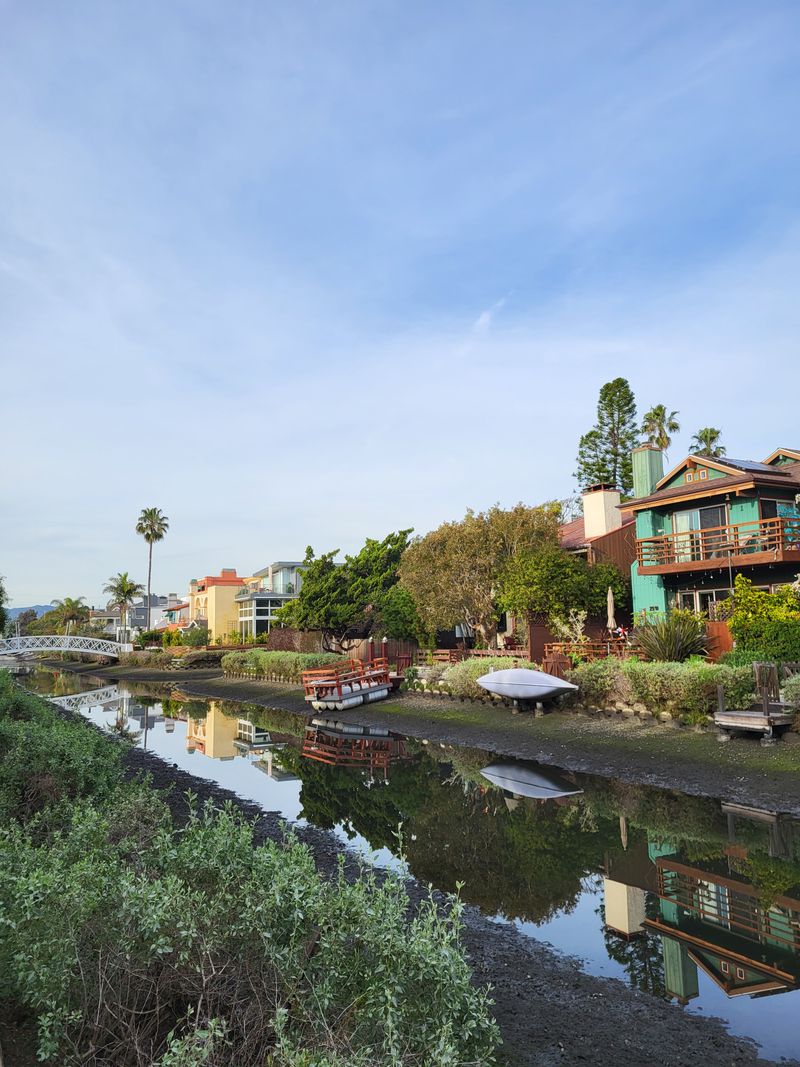
Just a few blocks from the boardwalk’s intensity, the remaining Venice Canals provide an almost surreal contrast.
Six canals survive from Kinney’s original grand plan, winding through a residential neighborhood where homes face the water instead of streets. The area feels more like a storybook village than part of a major California city.
Walking the narrow paths that border the canals requires slowing down to appreciate the carefully maintained gardens and architectural details. Ducks and occasional herons make their homes in the calm water.
Small arched bridges connect the walking paths, creating picture-perfect scenes that attract photographers and couples looking for romantic backdrops.
The neighborhood association works hard to preserve the area’s unique character and maintain the water quality.
Residents deal with tourists who wander through daily, though the foot traffic remains manageable compared to the boardwalk.
The canals become especially magical during the annual holiday boat parade when homes are decorated with lights.
Visiting the canals provides necessary breathing room after the sensory overload of the beach scene. The quietness feels intentional, like the neighborhood is protecting something precious.
This pocket of serenity proves that Venice Beach contains multitudes beyond its famous carnival atmosphere.
7. Street Performers Create Nonstop Entertainment
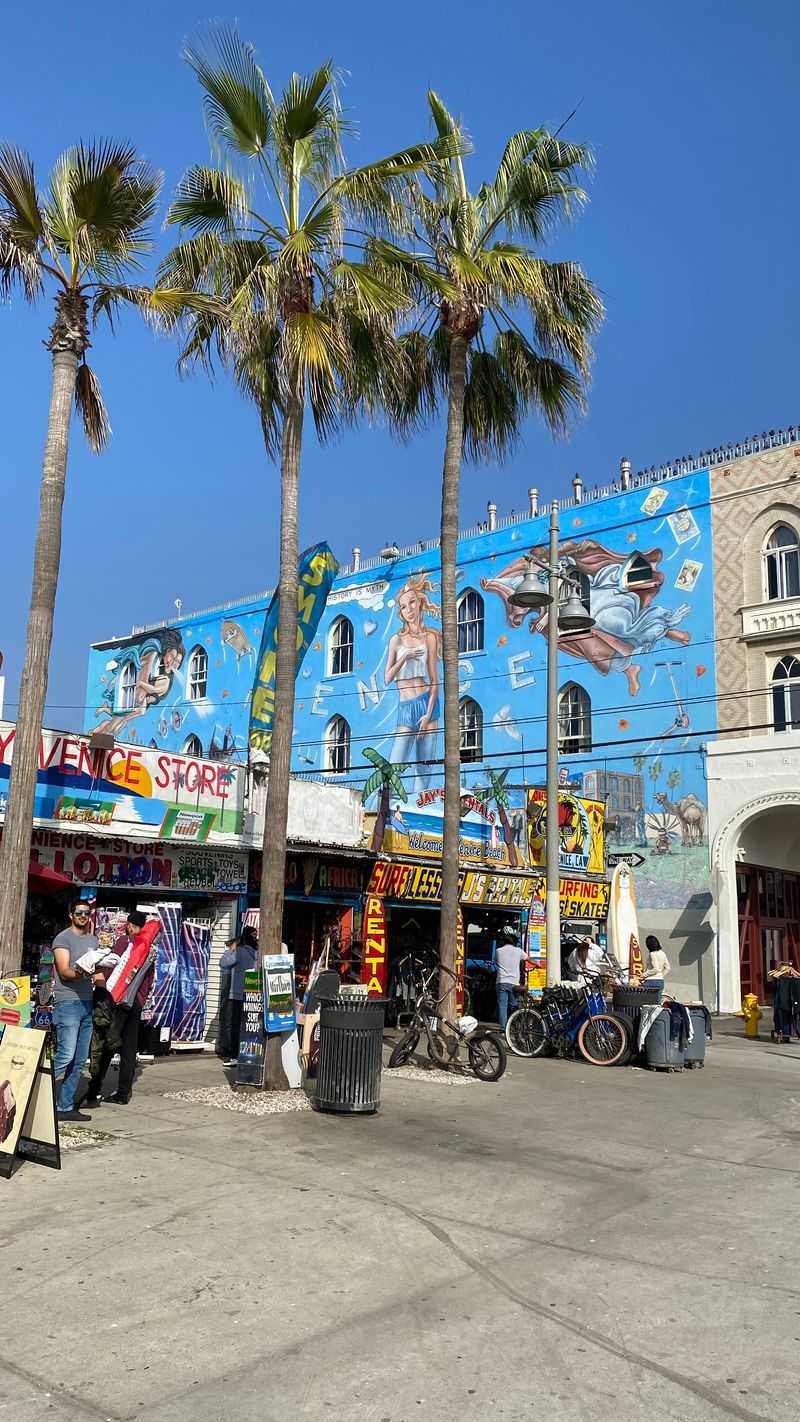
No two visits to Venice Beach offer the same lineup of performers since the cast changes daily. Musicians might include a jazz saxophonist, a punk rock band, a classical violinist, and a beatboxer all within a hundred yards of each other.
Dancers range from breakdancers spinning on cardboard to interpretive performers in elaborate costumes.
The talent level varies wildly from polished professionals to enthusiastic amateurs trying out new material.
Some performers have been working the same spots for decades, building loyal followings among regular visitors. Others appear once and never return, treating the boardwalk as an experimental stage.
Tipping remains the primary income source for these artists, making their survival dependent on capturing attention in an environment full of distractions.
The most successful performers understand crowd psychology and know how to draw people in. They create small communities around their performances with regulars who return to watch and contribute.
Street performance represents pure meritocracy where audience response determines success rather than industry gatekeepers or marketing budgets.
The boardwalk functions as a democratic stage where anyone can claim space and test their art against public reaction.
This openness has helped launch careers while also providing a living for artists who prefer independence over traditional employment.
8. The Boardwalk That Draws Ten Million Dreamers
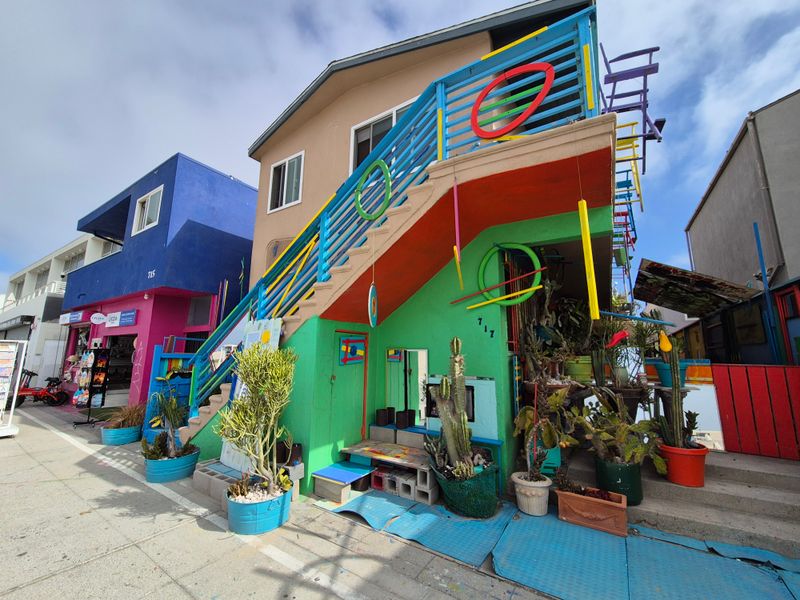
Stretching two miles along the Pacific coastline, the Venice Beach Boardwalk operates as an open-air theater without a script.
Around ten million people visit annually, making it the second most popular attraction in Southern California after Disneyland. Unlike a theme park, nothing here follows corporate planning or carefully managed experiences.
Street performers claim their spots early, setting up drum circles, magic shows, and acrobatic displays. Vendors sell everything from handmade jewelry to airbrushed t-shirts bearing names in wild fonts.
The sensory overload hits immediately with music blending from multiple sources, the salt air mixing with incense and food aromas, and visual stimulation from every direction.
Weekends bring the heaviest crowds when navigating the boardwalk requires patience and awareness.
Weekday mornings offer a calmer version where joggers and dog walkers outnumber tourists. The atmosphere shifts dramatically depending on the time of day and season.
Some visitors find the scene overwhelming while others consider it the purest expression of Venice Beach culture.
The boardwalk makes no apologies for its chaotic energy or its refusal to be tamed into something more conventional. It remains gloriously unpolished and impossible to replicate anywhere else.
9. The Electric Light Parade Glows Every Sunset
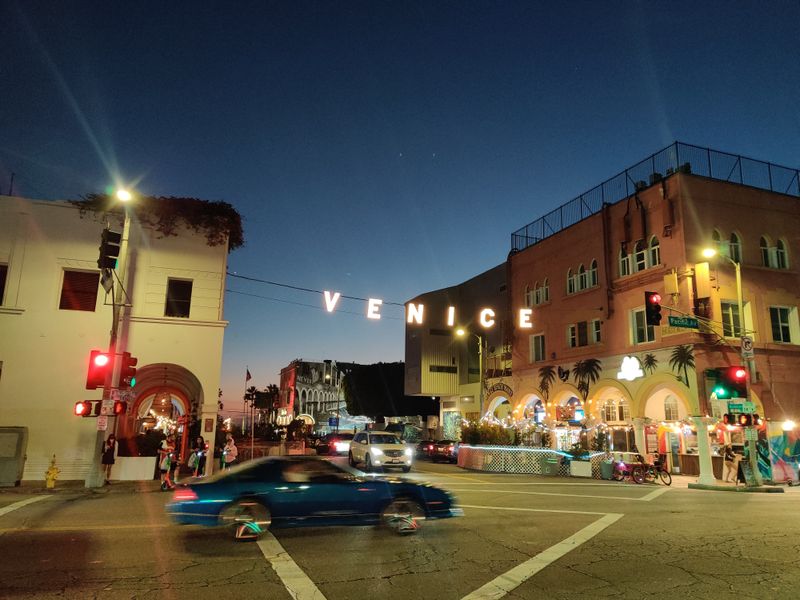
Every Sunday as the sun approaches the horizon, something magical begins near the Venice Beach drum circle.
The Electric Light Parade started as a small gathering of friends with battery-powered lights and has grown into a beloved community ritual.
Participants decorate bicycles, skateboards, wagons, and themselves with LED lights, glow sticks, and illuminated costumes.
The parade has no official organizers or permits, operating instead on collective understanding and shared enthusiasm. Anyone can join simply by showing up with lights as the sky darkens.
The procession moves along the beach path in a loose formation that feels more like a celebration than a formal parade.
Music comes from portable speakers, drums, and live instruments carried by participants. Children ride in glowing wagons while adults dance alongside on roller skates or bikes.
The atmosphere stays family-friendly and inclusive, welcoming tourists and locals equally. This weekly gathering represents Venice Beach’s DIY spirit and commitment to public joy.
Nobody makes money from the event, and no corporation sponsors it. The parade exists purely because people want to create beauty and community together.
As darkness settles and the lights grow brighter, the beach transforms into a moving art installation that costs nothing to experience.
10. Housing Activism Fights To Preserve Community Character
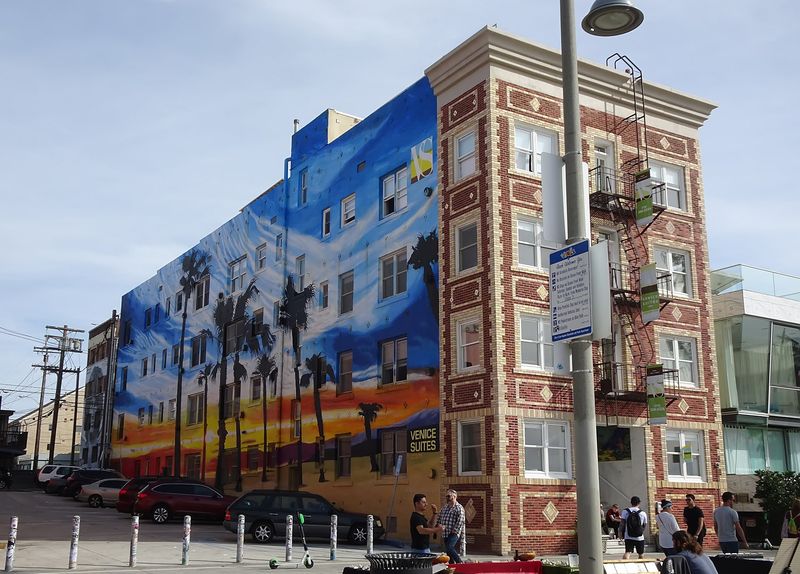
Rising property values have created a crisis that threatens the very diversity that made Venice Beach culturally significant.
Artists, musicians, and long-time residents find themselves priced out as luxury developments replace modest housing.
The “Where Has All The Affordable Housing Gone?” exhibit brought attention to this displacement through visual storytelling and community testimony.
Local activists organize against developments they see as destroying neighborhood character while developers argue that growth and improvement are inevitable.
The tension plays out in city council meetings, community forums, and occasional protests.
Some residents who bought property decades ago for modest sums now sit on million-dollar real estate, complicating simple narratives about gentrification.
The homeless population has grown significantly, creating visible reminders of the housing crisis.
Encampments along the boardwalk and in public spaces spark heated debates about compassion, public safety, and municipal responsibility.
Solutions remain elusive as different groups advocate for conflicting priorities.
This struggle over Venice Beach’s future reflects broader California challenges around housing affordability and urban development.
The neighborhood’s identity has always included economic diversity and creative communities that need affordable space to survive.
Whether Venice Beach can maintain its funky character while property values soar remains an open question that will shape its next chapter.