This Georgia Fire Museum Houses An Incredible Collection Of Vintage Fire Engines
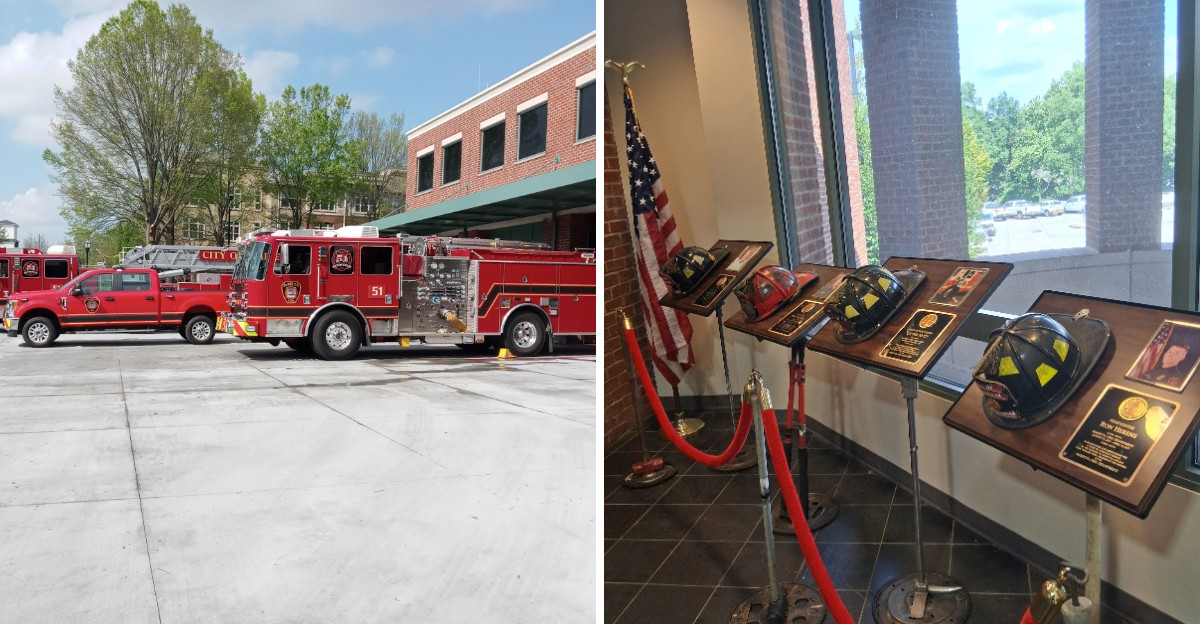
The engine dates back to 1879, and it’s one of only a handful of its kind left anywhere. It shares its home with vintage pumpers, a towering ladder truck, and a retro chief’s car.
I like how this collection sits inside a real, working fire station in Georgia. A modern engine might roll out on a call while you’re admiring one from the 1920s.
I can’t think of many museums where history and the present day share a garage. Admission costs nothing, either.
So why haven’t more people heard about this place?
Horses Got Replaced By One Of North Georgia’s First Motorized Trucks
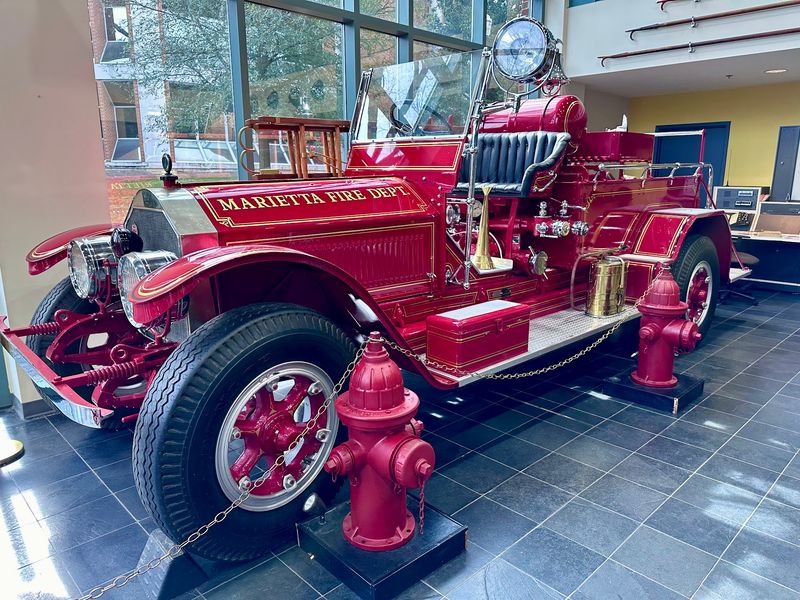
In 1921, Marietta said goodbye to hooves and hello to horsepower. The city brought in an American LaFrance Pumper to replace The Aurora.
That truck counts as one of the first motorized fire trucks in North Georgia. For its time, it was cutting-edge technology on wheels.
You can see it today at the Marietta Fire Museum. Parking it near the old steamer makes the leap in technology easy to understand.
One machine needed horses and a boiler. The other just needed fuel and a driver with steady hands.
I love how this pairing tells a story without many words. Kids can spot the difference right away, and adults usually start asking questions too.
How did firefighters adjust to such a big change? What did people in town think when a gas-powered truck first roared past?
The museum’s displays help fill in those blanks. Exhibits trace how the department grew and changed over the years.
Spend a moment comparing the two machines up close. It’s like seeing a flip phone sitting next to a rotary phone, only much redder and far more fun.
Engine Number One And A Ladder That Reached Higher Than Most
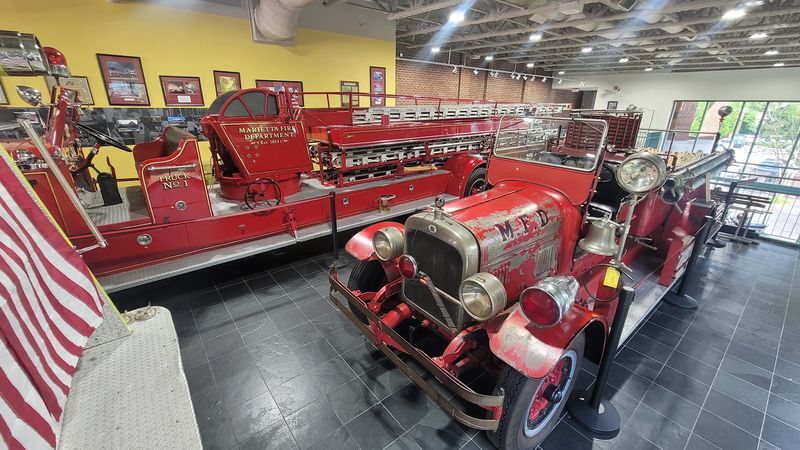
Engine Number One sounds like a big title, and the 1929 Seagrave Pumper wore it proudly. It stayed on duty until its retirement in 1959.
Thirty years of service is a long run for any vehicle. Most family cars today would be thrilled to last half that long.
Nearby sits another heavy hitter, the 1949 Pirsch Ladder Truck. It carried the name Ladder Number One and served until 1984.
This truck was known for having one of the highest-reaching ladders in North Georgia. In its day, that kind of reach could make all the difference.
Its final call came during the United Plastics fire in 1981. That detail gives the truck a real place in local history.
Standing near these two feels a bit like meeting retired athletes. They’re polished and calm now, but you can tell they worked hard.
Look closely at the shapes, tools, and design choices on each truck. You’ll notice how firefighting gear changed between the 1920s and late 1940s.
Fire truck fans will want extra time here. Bring a camera, because these two are very photogenic.
A Panel Truck And A Chief’s Car Add Some Retro Charm
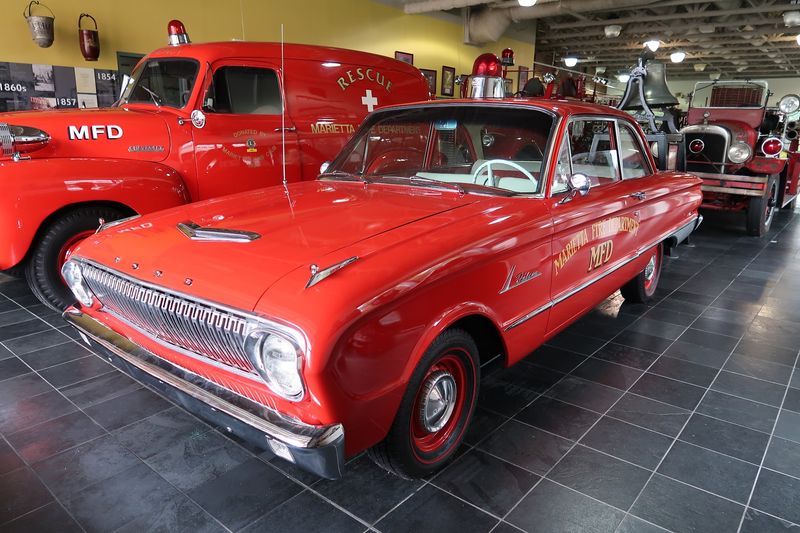
Not every fire vehicle needs a giant ladder to be interesting. The 1952 Chevrolet Panel Truck proves that nicely.
It was donated by the Marietta Lions Club and became the city’s first rescue truck. That’s a pretty big job for a vehicle that looks so friendly.
Its boxy shape feels straight out of an old movie. You can almost picture it rolling through downtown Marietta decades ago.
Then there’s the chief’s car, a restored 1962 Ford Falcon. It adds a dose of classic-car style to the lineup.
I think these two vehicles round out the collection in a clever way. They show that firefighting involved more than pumpers and ladders.
Rescue work and leadership needed their own rides. The chief had to get to scenes quickly, and rescue crews needed room for gear.
Car lovers who aren’t big fire buffs will still find plenty to enjoy here. The vintage designs are fun to study from every angle.
Point out the details to younger visitors. Asking them to guess each vehicle’s job makes the visit feel like a game.
Helmets, Hoses, And A Communications Desk Worth Studying
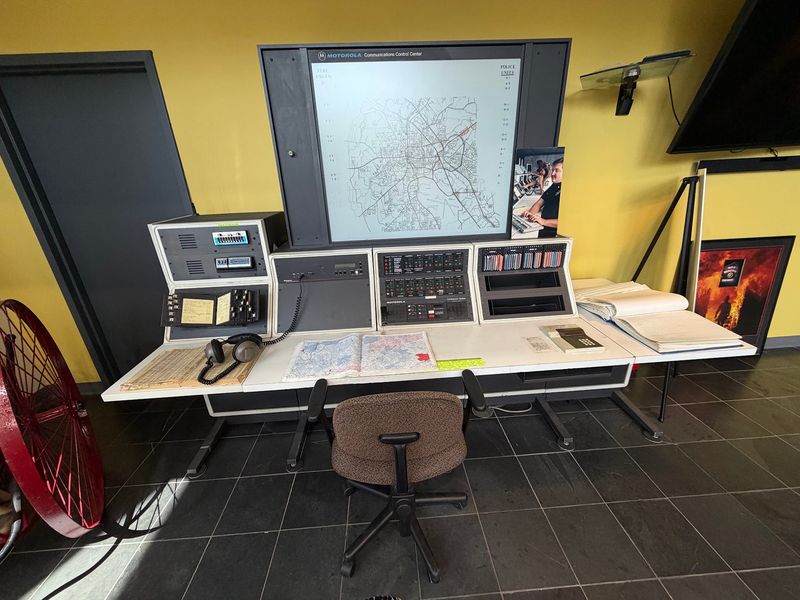
Old helmets from around the world sit in the display cases here. Each one shows how different places protected their firefighters.
The Marietta Fire Museum also packs in vintage protective gear, nozzles, gauges, hoses, and bells. It’s small, but it doesn’t waste an inch.
One standout is the vintage communications desk. Its knobs and switches look wonderfully complicated by today’s standards.
Before smartphones and computers, calls came through setups like this. Someone had to keep track of emergencies and send crews in the right direction.
Historic uniforms are on display as well. You’ll find a turn-of-the-century uniform and a 20th-century dress uniform.
Seeing them close together shows how style and safety changed over time. Early gear looks heavy, and later outfits look sharper and more formal.
A display case of scale model fire trucks is another treat. Little ones may press their noses close, so the glass is doing important work.
Give yourself time to read the signs. The small objects often tell bigger stories than you’d expect.
A Massive 1854 Fire Sparked Everything You See Here
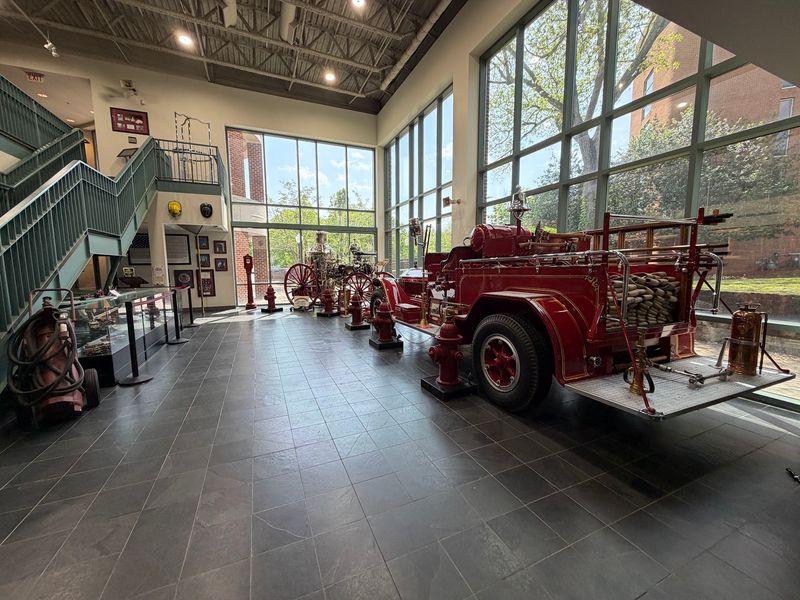
Back in 1854, a huge fire tore through much of Marietta Square. Before that, the town counted on volunteer bucket brigades.
That disaster pushed the city to officially create the Marietta Fire Department the same year. The museum’s collection traces the department’s story from that moment forward.
Newspaper articles here recount famous fires from the city’s past. Reading them makes the old trucks feel even more real.
Photos from ceremonies and parades share the lighter side of fire department life. Firefighters weren’t only battling flames, they were part of the community too.
The museum also displays historical photographs documenting Marietta’s firefighting history.
I find that stretch of history surprisingly moving. It shows how Georgia communities kept protecting what mattered through tough times.
Museum displays explain how the department grew from buckets to motorized engines. It’s a clear, easy story to follow, even for younger readers.
Take a few minutes with these walls before heading back to the trucks. The vehicles make more sense once you know where it all started.
Quiet Moments Of Honor Live Inside These Walls
A steel I-beam cut from World Trade Center rubble stands among the exhibits. The FDNY donated it to honor the first responders of 9/11.
It’s a powerful piece to see in person. Plain steel somehow says more than a long speech ever could.
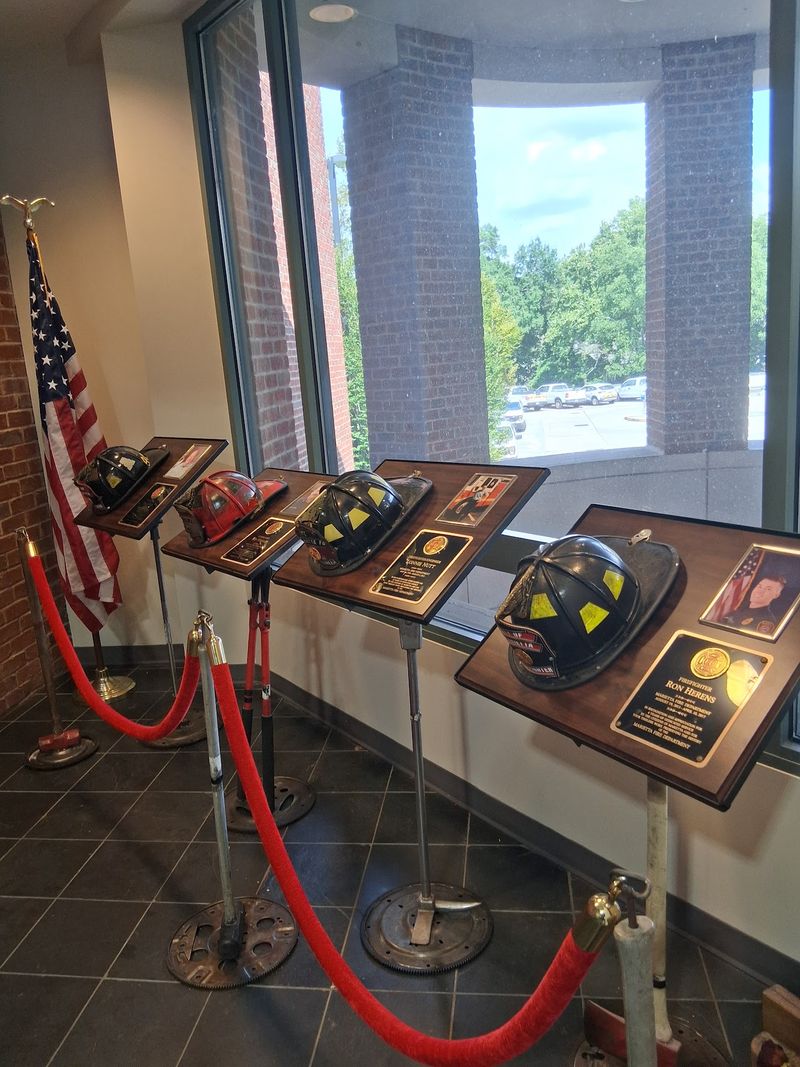
The building also houses a memorial for fallen firefighters. An eternal flame burns there as a lasting tribute.
Each October, a candlelight vigil takes place to honor firefighters lost in the line of duty. It’s a meaningful tradition tied to this station.
This part of the visit calls for a slower pace. Kids may have questions, and it’s a good chance to talk about bravery and service.
I appreciate how the museum balances fun with respect. One room shows shiny trucks, and another reminds you why the job matters so much.
Keep voices low and give others space here. Everyone moves through memorials a little differently.
Afterward, you might look at the vintage engines with fresh eyes. Every piece of equipment once carried real people heading toward danger.
Free Admission Meets A Working Fire Station
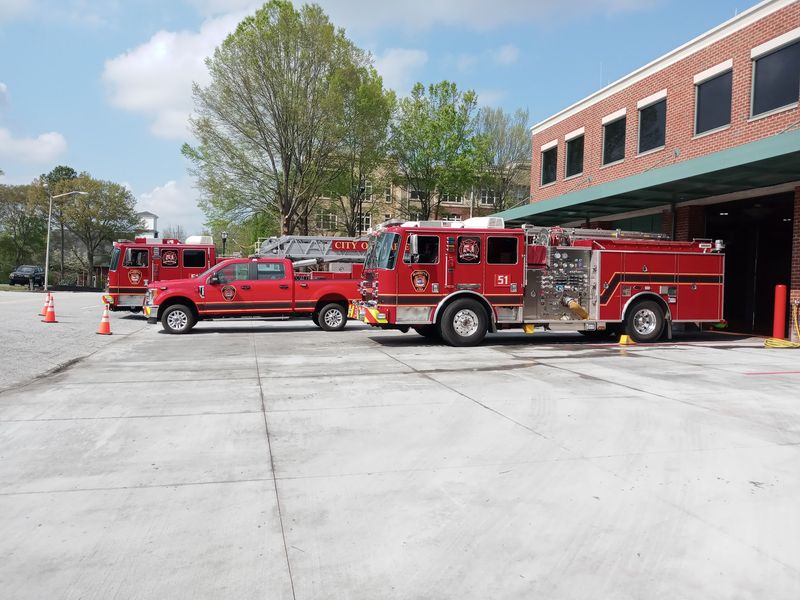
Here’s a museum that charges nothing at the door. Admission to the Marietta Fire Museum is free, though donations are welcome.
You’ll find it at 112 Haynes St #51, Marietta, GA 30060. It sits inside Fire Station No. 1, an active station that still answers calls.
That setup gives the visit an extra layer of excitement. A modern engine could head out while you’re studying a century-old pumper.
Hours run from 9 AM to 5 PM daily. The museum closes on December 24, December 25, and January 1.
Tours are self-guided, and the exhibits stretch across two floors. Plan for anywhere from 30 minutes to two hours.
Groups of 10 or more can request a guided tour. Book it at least one week ahead, and don’t expect slots after 3 PM.
Weekend guided tours need special approval. Occasional closures can happen, so checking the city’s museum page first is smart.
Before leaving, stop by the gift shop. T-shirts and mugs make fun souvenirs for the fire truck fan in your life.
Two Blocks From The Square Means Your Day Is Just Getting Started
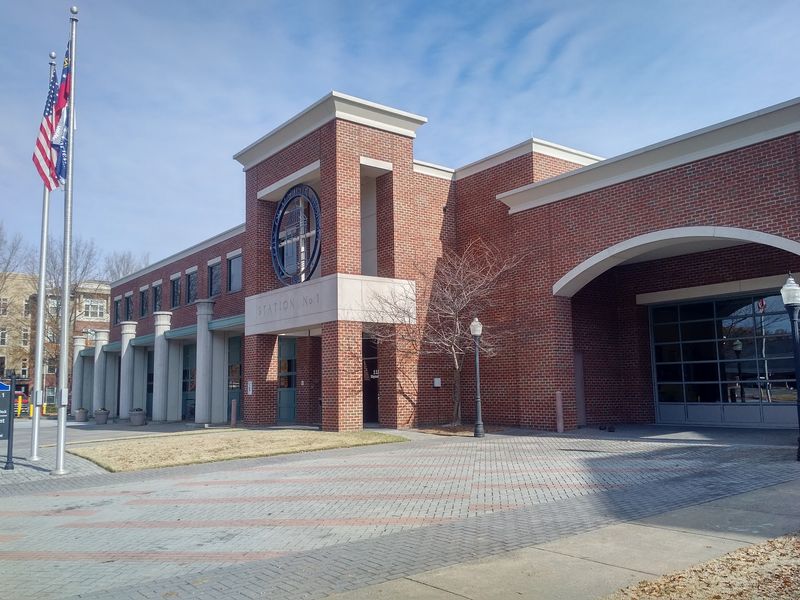
Parking won’t cost you a dime either. Free spots wait in the Marietta City Hall deck on Lawrence Street.
Bring your parking ticket inside the museum for validation. It’s an easy step that keeps the whole outing budget-friendly.
The museum sits about two blocks from the historic Marietta Square. That short stroll opens up plenty of ways to stretch your Georgia day.
Marietta Square Market, a local food hall, is a handy spot for lunch. Hungry kids tend to march faster once food is mentioned.
History lovers can keep going at the Marietta History Museum or the Gone With the Wind Museum. Both are nearby options worth adding to the list.
Want fresh air? Kennesaw Mountain and the Smith Gilbert Botanical Gardens are in the area, along with the Marietta Bike and Walking Path.
The museum is also close to Interstate 75. That makes it simple to reach from around metro Atlanta.
Start with the fire engines, then wander. Few free museums set up a full day this nicely.