This Georgia Outdoor Museum Feels Like It Belongs To A Completely Different Time And That Is The Whole Point

If you have ever wanted to feel the weight of history rather than just read about it, this Georgia outdoor museum is built for exactly that.
The past here is not behind glass. It is spread across an open landscape at the scale it actually existed, in the weather and the light it always lived under.
Standing inside it does something a wall label and a display case simply cannot.
The distance between now and then collapses in a way that is felt before it is understood.
Georgia built something here that most museums only dream of achieving. Visit it and see what that means.
A Cemetery Born From History

Who would’ve thought that this cemetery has survived the Civil War, urban expansion, and decades of change, yet it remains remarkably intact? That resilience is rare, and it is a big part of what makes this place so compelling to visit.
Oakland Cemetery is one of the oldest surviving public cemeteries in the state of Georgia. What started as six acres of land on the edge of Atlanta quickly grew into a 48-acre landmark that is now in Atlanta.
The grounds were established just as the city itself was beginning to take shape, making this place as old as Atlanta’s own identity.
Back in the Victorian era, cemeteries were not just resting places. They were designed as public parks where families could gather, reflect, and spend time outdoors.
Oakland Cemetery was built with that same philosophy in mind, which is why the grounds feel so intentional and carefully arranged even today.
As soon as you visit, you immediately sense that something important happened here. The iron gates at 374 M.L.K.Jr Dr SE, the towering oak trees, and the stone pathways all carry a weight that feels deeply rooted in Georgia’s past.
The Landscape And Gardens

Few outdoor spaces in Georgia manage to balance natural beauty with historical weight the way this place does.
The grounds are filled with carefully curated plantings, including dogwood trees, flowering cherry blossoms, azaleas, and lotus flowers that bloom across different seasons.
Spring is especially spectacular, when the entire cemetery transforms into a burst of color that feels almost theatrical.
The garden design is not accidental. Horticulture has always been a key part of the cemetery’s identity, and a dedicated team of volunteers works year-round to maintain the plantings.
Butterflies are a common sight here, and visitors often report seeing species they have never spotted anywhere else in Atlanta.
Benches are placed throughout the grounds, giving you natural pause points to sit and take everything in. The combination of sculpted stone memorials and living plants creates a layered visual experience that shifts with the light and the seasons.
Even in winter, the bare branches and evergreen shrubs give the landscape a quiet, dignified beauty.
Notable Figures Buried Here

One of the most talked-about aspects of Oakland Cemetery is the remarkable collection of notable individuals resting within its grounds. Margaret Mitchell, the author of Gone With the Wind, is perhaps the most recognized name here.
Her grave is a popular stop on any self-guided tour, and it draws visitors from across the country and beyond.
Beyond Mitchell, the cemetery holds the remains of six Georgia governors, numerous Atlanta mayors, and a wide range of figures who shaped the city and the state of Georgia over more than 170 years.
Each marker tells a different story, and taken together, they form a kind of biographical map of Atlanta’s social and political history.
Golfer Bobby Jones, one of the greatest players in the history of the sport, is also buried here. His presence adds yet another layer to a site that already carries enormous cultural significance.
Spending time reading the epitaphs and tracing the dates on the headstones gives you a sense of just how many lives intersected with this one patch of Georgia soil.
Architecture Worth Admiring
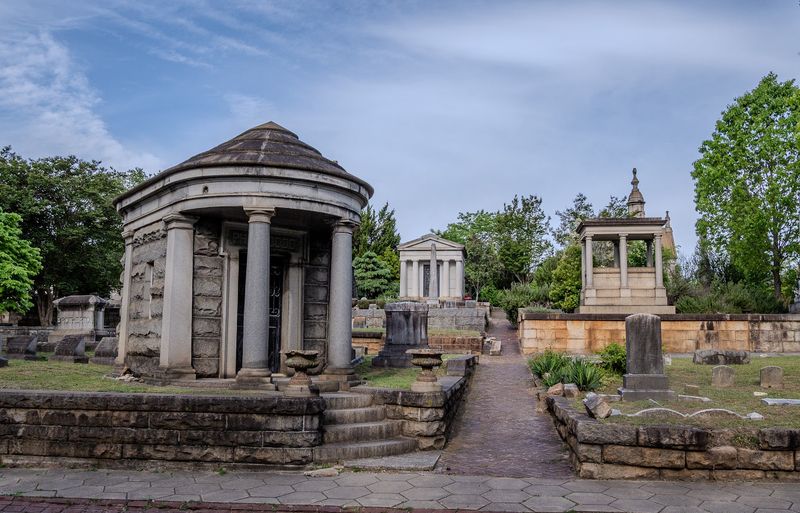
If you have any appreciation for craftsmanship, the architecture here will genuinely impress you.
The mausoleums and family crypts scattered throughout Oakland Cemetery represent some of the finest examples of Victorian funerary design in the American South.
Stone angels, intricate carvings, and elaborate iron fencing surround many of the older structures, each one a miniature monument to the family it honors.
Some of the crypts feature stained glass windows that cast colored light across the stone interiors when the sun hits them just right.
It is the kind of detail you might miss if you are walking too fast, which is a good reason to slow down and look closely at everything around you.
The craftsmanship in these structures reflects the skills of artisans who worked in Georgia during the 19th and early 20th centuries.
The variety of styles is also worth noting. Some markers are simple and understated, while others are towering and dramatic.
There are obelisks, draped urns, and weeping figures carved in remarkable detail.
Even the lamp posts scattered throughout the grounds carry history, with some still bearing faint marks from long-ago conflicts.
Diverse Sections And Stories

Oakland Cemetery is not a single, uniform space. It is divided into several distinct sections, each one reflecting a different chapter of Atlanta’s history.
There is a Jewish section, a Confederate section, an African American burial ground, and areas dedicated to different eras and social groups. The layout itself tells a story about how Georgia society was organized, and sometimes divided, across centuries.
The African American section is particularly significant. Their stories are often less documented than those of more prominent figures, but the cemetery’s programming and tours work to bring those histories into focus.
The Confederate section contains the graves of soldiers and a large lion sculpture that has become one of the most photographed monuments on the grounds.
Walking between these different sections invites reflection on how memory, power, and community intersect in physical space.
It is not a simple or comfortable history, but it is an honest one. Engaging with all of these sections rather than just the famous graves gives you a much richer understanding of what this place in Georgia truly represents.
Events And Programming

One of the things that sets Oakland Cemetery apart from most historic sites is its active calendar of events.
The cemetery hosts everything from guided tours and 5K runs to elaborate seasonal celebrations that draw large crowds.
The Illumine event, held at night, transforms the grounds with light installations and music in a way that feels completely unexpected for a historic cemetery.
Dia de los Muertos is another major annual event that brings altars, live performances, and community gatherings to the grounds.
The combination of the historic setting and the colorful celebration can be described as something genuinely moving and unlike anything else in Georgia.
The Capturing the Spirit of Oakland event uses costumed performers to bring historical figures to life in a theatrical walking tour format.
Vendor popups, garden walks, and educational lectures round out the programming calendar throughout the year. Most regular daytime visits are free of charge, though ticketed events require advance booking.
Visitor Center And Gift Shop

Right across from the cemetery entrance, the visitor center and gift shop offer a welcoming first stop before you head into the grounds.
The welcome center provides maps, information about self-guided tours, and helpful context about what you are about to explore.
Staff and volunteers are typically on hand to answer questions and point you toward highlights you might otherwise miss.
The gift shop has earned its own reputation among visitors. Far from the typical tourist trap, it stocks a thoughtful selection of books, local art, garden items, and cemetery-specific souvenirs that reflect the history and character of the site.
The center is open during regular cemetery hours, which run from 10 AM to 5 PM Monday through Sunday. The visitor center makes the whole experience feel more organized and accessible, especially for first-time visitors.
Tips For Your Visit

Planning ahead makes a real difference when visiting Oakland Cemetery. Comfortable walking shoes are a must, since the grounds cover nearly 48 acres and the pathways vary between smooth pavement and older, uneven stone surfaces.
Bringing a water bottle is equally important, especially during Atlanta’s famously warm summers when the Georgia heat can sneak up on you quickly.
Parking is available near the main entrance on M.L.K. Jr Dr SE, and street parking is typically available nearby when the lot fills up.
Some visitors choose to walk from downtown Atlanta or nearby hotels, though the route passes through areas that may feel unfamiliar, so planning your walking path in advance is a good idea. Rideshare services are a convenient alternative.
The cemetery is stroller-friendly and welcoming to families with young children, who tend to enjoy the open paths, squirrels, and interesting sculptures. Dogs are permitted on leash, though visitors are asked to be respectful of the grounds.
Self-guided audio tours are available by phone, with signs throughout the cemetery listing numbers to call for recorded information about specific sites.