This Giant North Carolina Coffee Pot Has Stood For Nearly 170 Years, And Its History Is Stranger Than You Think
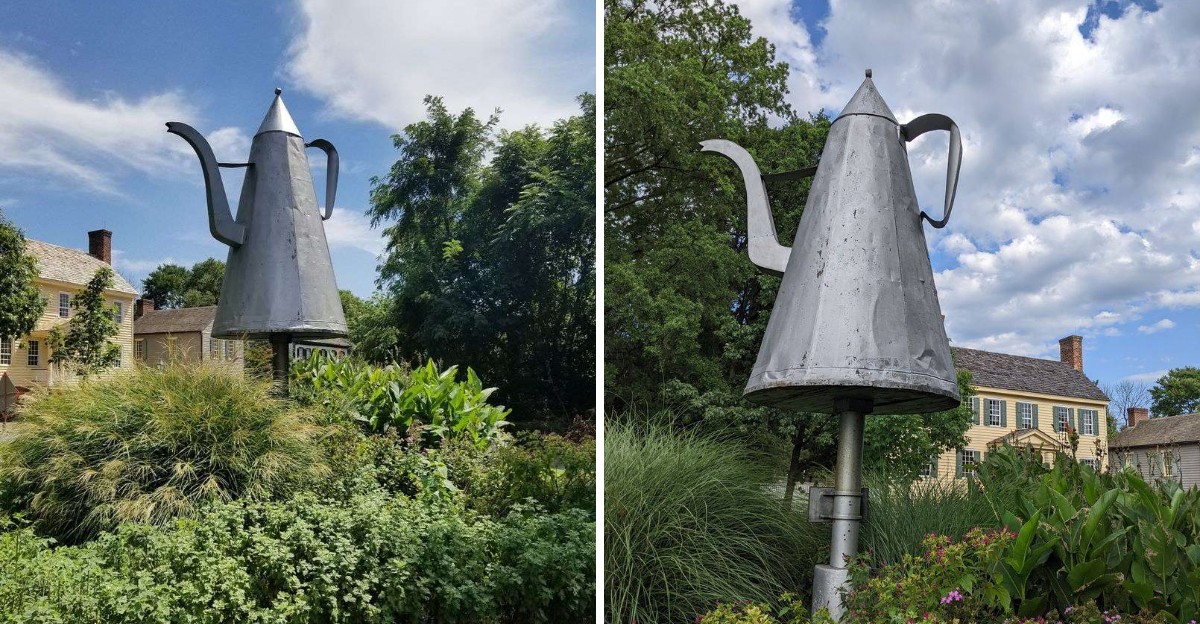
North Carolina has a coffee pot that has been standing around since 1858, and somehow nobody has managed to brew anything in it.
The oversized landmark started life as an advertisement, but it long ago outlived the business it was meant to promote.
Since then, it has survived generations of change while collecting the kind of legends only a truly strange local icon can inspire.
People still stop for photos, partly because it is historic and partly because, well, it is a giant coffee pot on a post. That is difficult to ignore.
The deeper story gets even better.
For something that cannot pour a single cup, this old pot has managed to keep North Carolina buzzing for more than a century.
Two Tinsmith Brothers Built This Giant Coffee Pot As An Advertisement In 1858
Long before glowing billboards and flashy websites, shop owners needed clever ways to catch the eye of passing travelers.
Julius and Samuel Mickey, two tinsmith brothers, found a brilliant answer in 1858.
They hammered and shaped sheets of tin into an enormous coffee pot and set it outside their shop on South Main Street.
Anyone riding a horse or wagon through town could spot it instantly, and the message was simple: if these fellows could build something this big, they could surely make your kitchen pails and cups. The idea worked because it was fun.
People remembered the giant pot, talked about it, and gave directions using it as a guidepost.
In a busy Moravian town known for skilled crafts, standing out mattered.
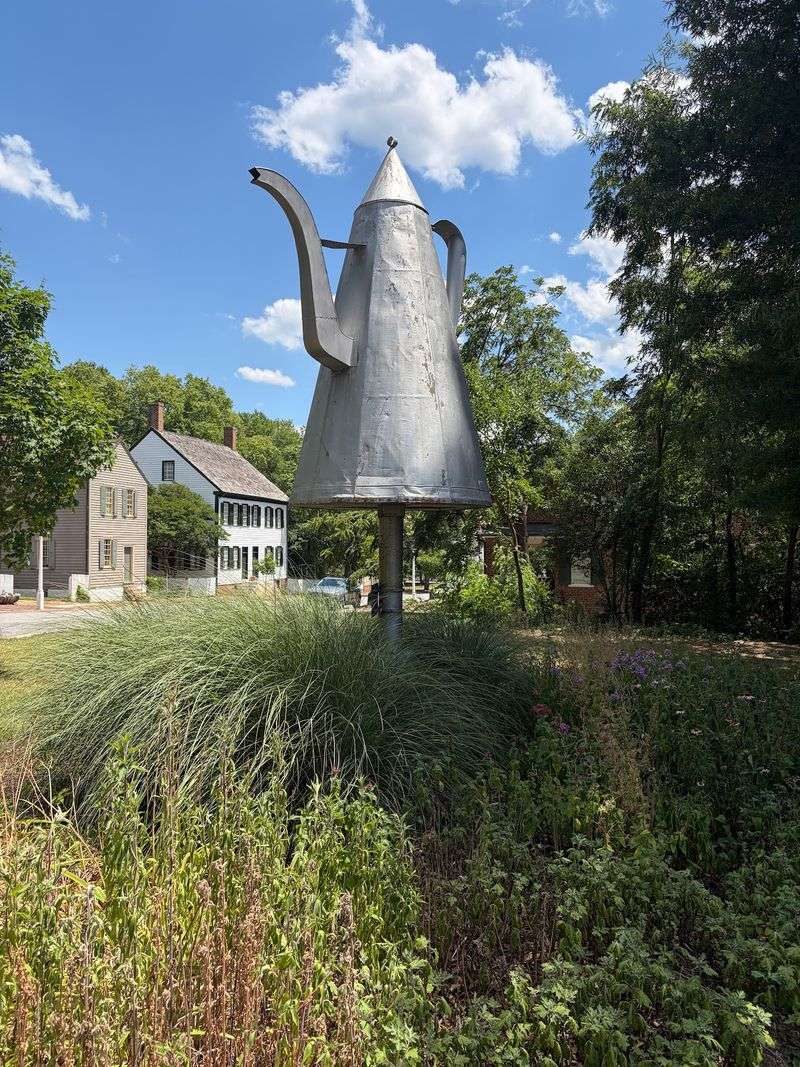
Look closely when you visit and you will notice the classic shape of a 19th-century kettle, with a curved spout, sturdy handle, and domed lid. Every seam hints at hours of patient handwork.
Think of it as one of the earliest pieces of roadside marketing in the South, still doing its job nearly 170 years later.
Today the old advertisement still gleams in Winston-Salem, and you can find The Mickey Coffee Pot at 401 Old Salem Road.
At More Than Seven Feet Tall, It Could Theoretically Hold 740 Gallons Of Coffee
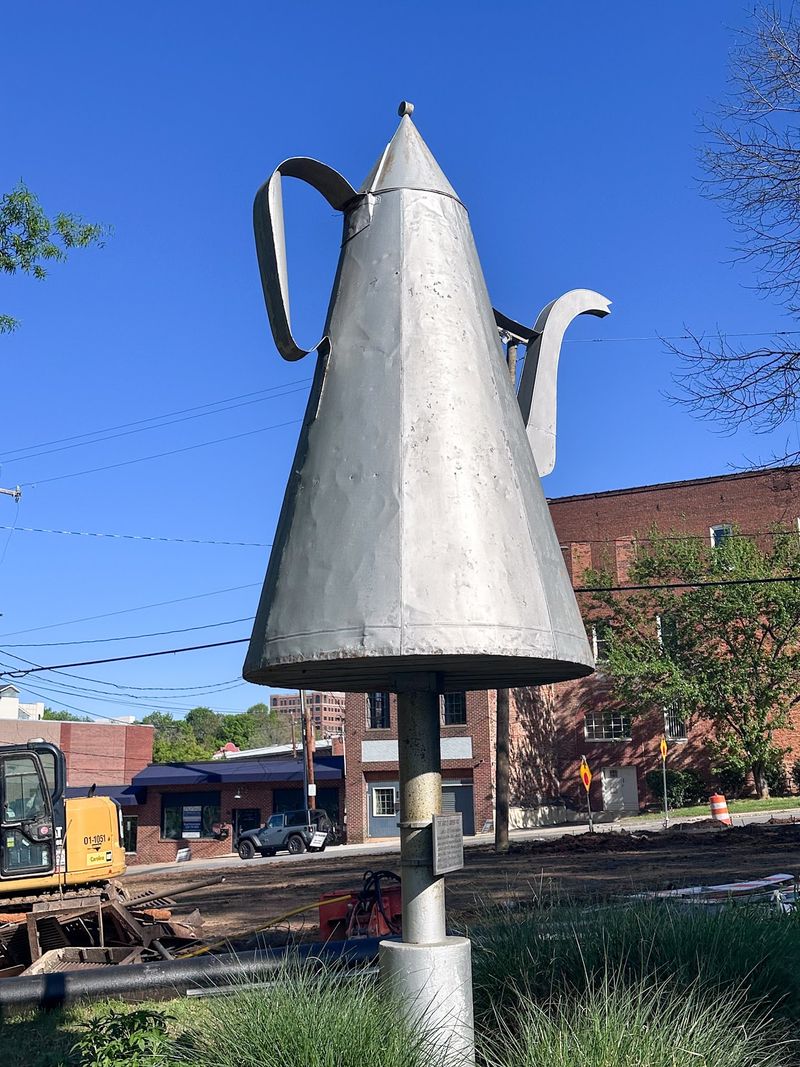
Stand next to it and you will feel a little like a mouse in a giant’s kitchen.
The pot measures 7 feet 3 inches tall, which means even a professional basketball player would have to look up at its lid.
Raised on its post above the flower beds, it seems even grander. Now for the fun math.
If someone sealed every seam and started pouring, the container could hold about 740 gallons, with some sources listing the figure at 740.5.
That is roughly the amount of water in a small backyard hot tub, or enough to fill more than a dozen bathtubs. Of course, nobody is lining up to test that number.
The figure comes from measuring its round body and calculating the space inside.
Still, it gives you a sense of scale that photos rarely capture.
Bring a friend when you visit and snap a side-by-side picture.
Morning light makes the tin glow softly, while late afternoon sun brightens the spout.
Young travelers usually love guessing how many juice boxes would fit inside, which turns a quick stop into a lively little game.
Highway Construction Forced The Landmark To Move After A Century In One Spot
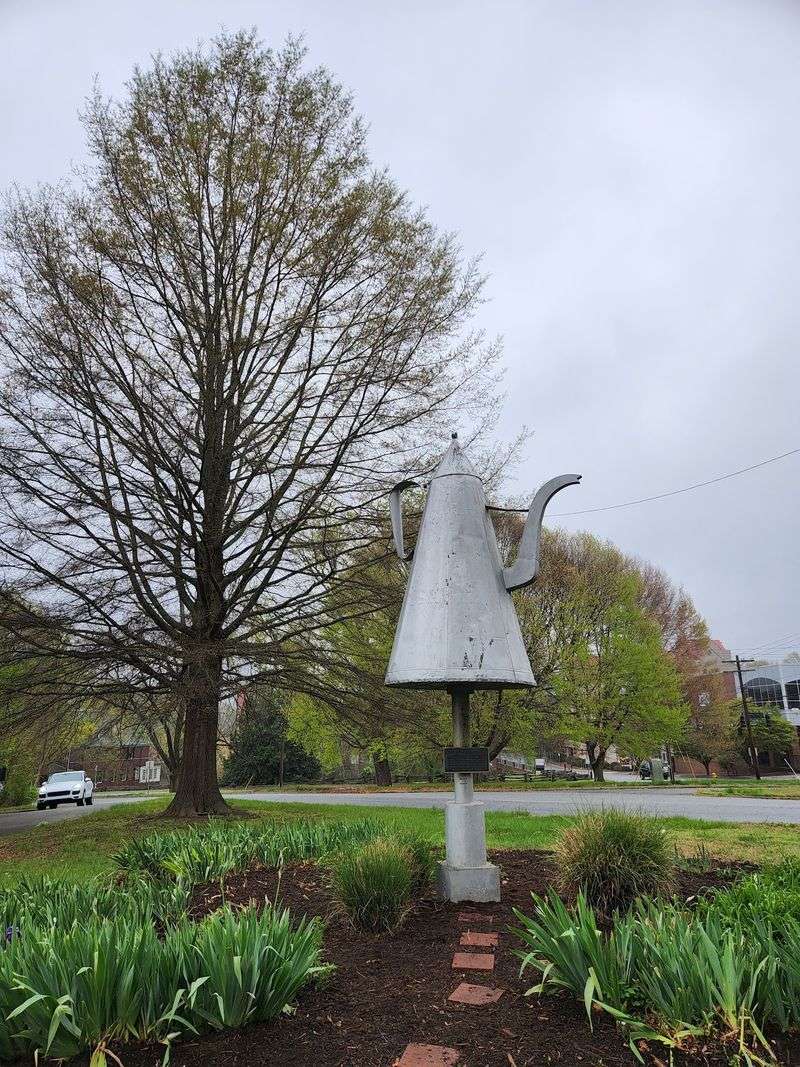
For about 100 years, the old pot barely budged.
Its home was a curb near the Mickey brothers’ tin shop, at the corner of South Main Street and Belews Street, where generations passed by on foot, then on bicycles, and finally in automobiles. Change arrived in 1959.
Crews building Interstate 40 carved a path straight through the neighborhood, and the treasured kettle had to be relocated.
That stretch of road is now known as US 421, also called the Salem Parkway.
The pot was moved to its present traffic-island location in 1959 as highway construction erased its original setting.
The island had been created as part of the nearby bypass project built in the late 1950s.
Each shift required care, since a tin figure from the 1850s cannot be tossed onto a truck like a crate of apples. Here is the part that feels surprising.
Many old signs vanish forever when highways roll in, yet residents of North Carolina clearly wanted this one saved.
Its survival shows how deeply the community valued it.
As you stand beside it now, listen for the faint hum of nearby traffic, a gentle reminder of the very roads that once pushed it aside.
A Strange Civil War Legend Claims A Union Soldier Once Hid Inside
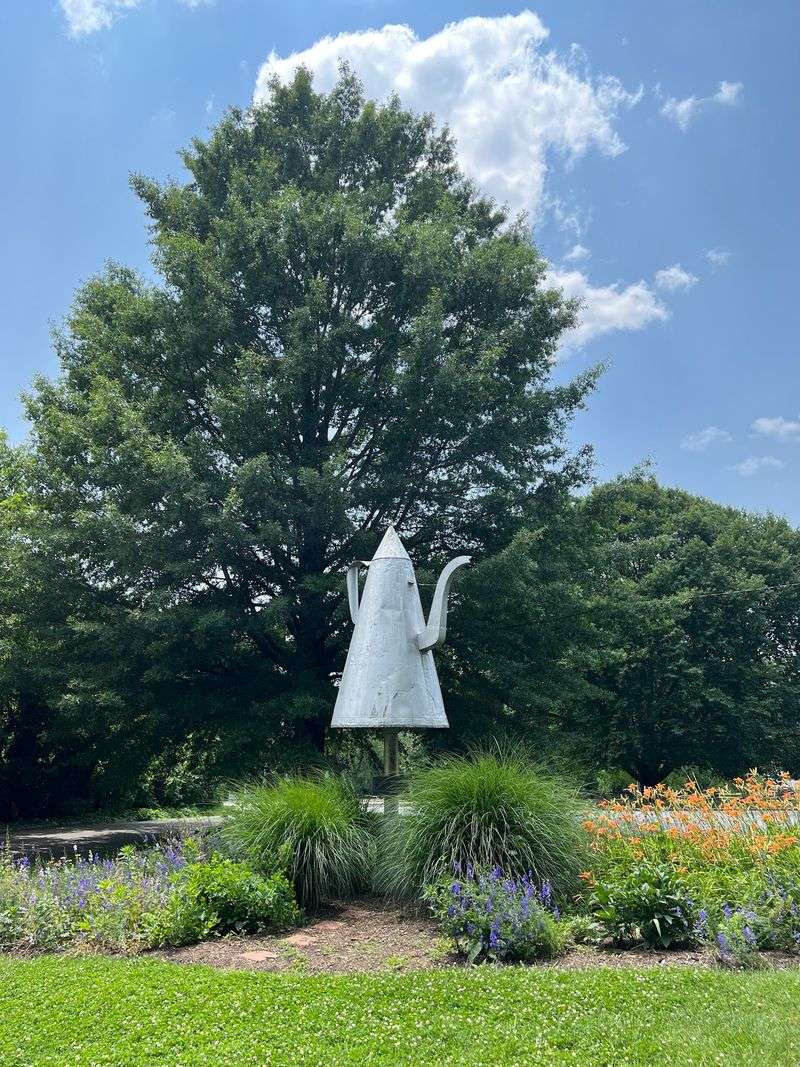
Spring of 1865 brought nervous days to Salem. In April, troops under General W. J. Palmer rode through the quiet Moravian town near the end of the Civil War.
From those tense weeks sprang one of the oddest tales in local lore. According to the story, a soldier squeezed inside the giant coffee pot to stay out of sight.
Some versions say he was a Union man, while others insist he wore Confederate gray.
Either way, the image of someone crouched in a tin kettle, holding his breath as footsteps passed, is hard to forget. So could it really have happened?
Historians point out that there is no evidence proving the hideout was possible, let alone safe.
Cramped, dark, and likely stuffy, it would have made a miserable shelter.
Legends like this still matter, though.
They reveal how people turned a familiar object into a character in their own history.
Grandparents shared the tale on porches, and children peeked at the pot wondering about secret doors.
When you visit, glance up at the lid and imagine that April evening.
Whether fact or fiction, the story adds a delicious bit of mystery.
Nobody Has Proven The Landmark Ever Held A Single Drop Of Actual Coffee
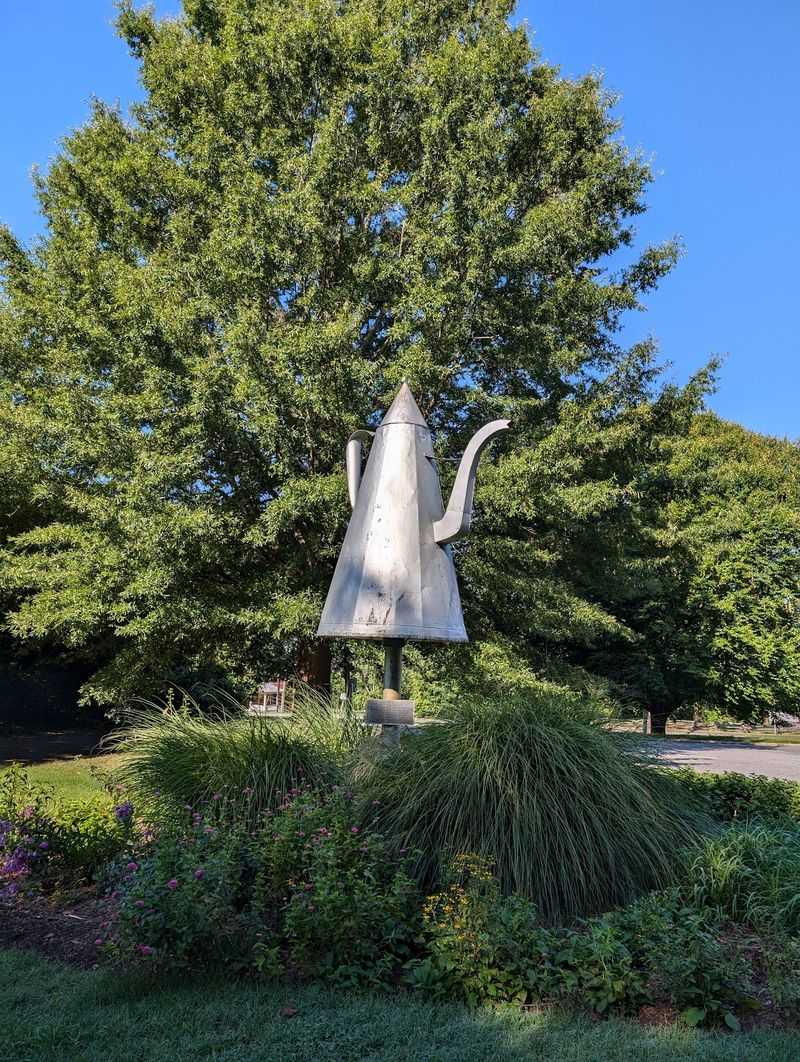
Here is a twist that makes coffee lovers chuckle.
For all its fame, the giant kettle probably never brewed one cup.
Most experts consider it unlikely that anyone ever filled it with real coffee.
That has not stopped people from telling wonderful stories.
One claims that in the 1800s a small boy climbed through a trap door, lit a fire inside, and boiled water so steam would puff from the spout like a real kettle.
Imagine the delight of townsfolk watching white clouds drift into the air! Another tale says residents poured hot coffee from the pot for soldiers passing through in 1865.
It is a warm picture, but it belongs to folklore rather than written proof.
Coffee does carry special meaning in this part of town, however.
Moravian lovefeasts, a cherished church tradition, feature simple sweet buns served with mugs of coffee shared among the community. That connection helps explain why a coffee pot fits Salem so perfectly.
After your photo, consider wandering into the historic district for a fresh-baked Moravian treat.
Soft sugar cake, thin spiced cookies, and a warm drink make a fine tribute to a kettle that only pretends to pour.
Nearly 12,000 Cups Would Fit Inside If Someone Really Tried To Fill It
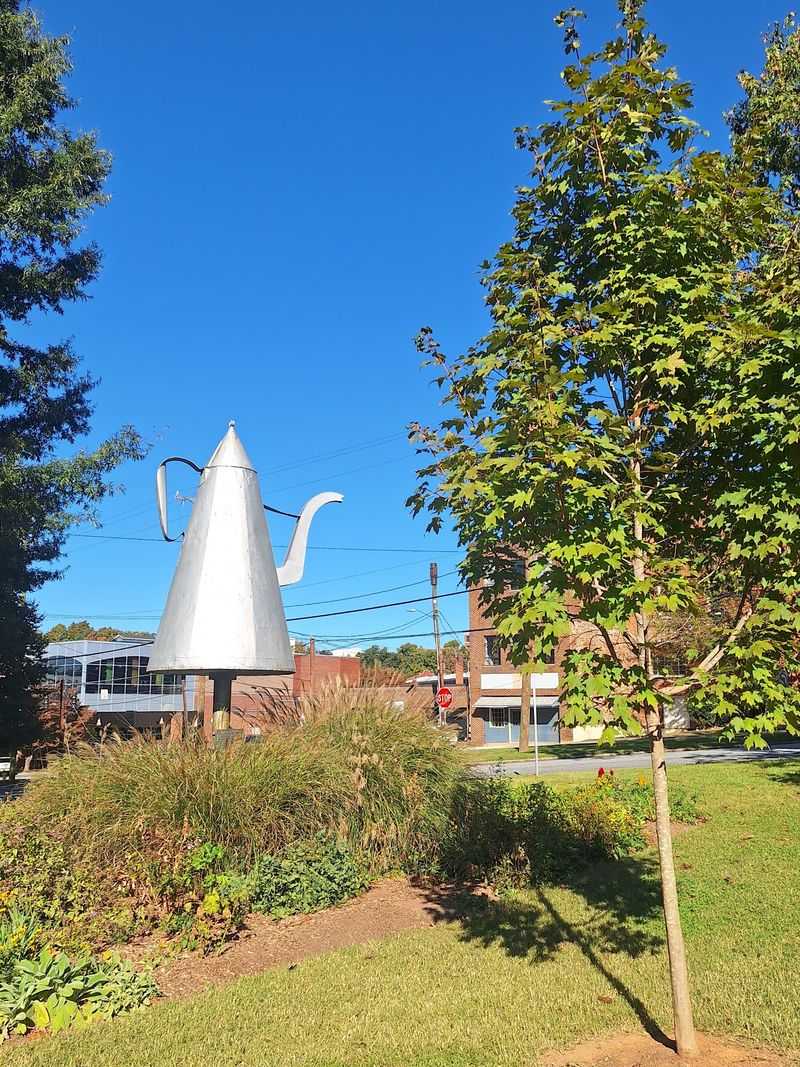
Grab a calculator, because the numbers get wild.
Experts estimate the pot could hold roughly 11,840 cups of brew.
That is the kind of figure that makes even the busiest café look tiny. Let’s put it into everyday terms.
If one person drank three cups every single day, that supply would last more than ten years.
A large school cafeteria could hand a cup to every student for weeks and still have plenty left.
Picture a whole town lined up with mugs, and you get closer to the scale. Of course, the math works only in theory.
Tin seams, a trap door, and old age mean the kettle would leak long before anyone finished pouring. Still, the estimate turns a simple sign into a puzzle that sparks curiosity.
Families often make a game of it during a visit.
Ask kids to guess the number before revealing the answer, or count how many cups their own household uses in a week.
Teachers sometimes use landmarks like this to make measurement lessons stick.
Whichever way you crunch it, nearly 12,000 servings is a lot of morning cheer packed into one shiny shape.
The Giant Pot Became A Local Landmark Long After The Tin Shop Disappeared
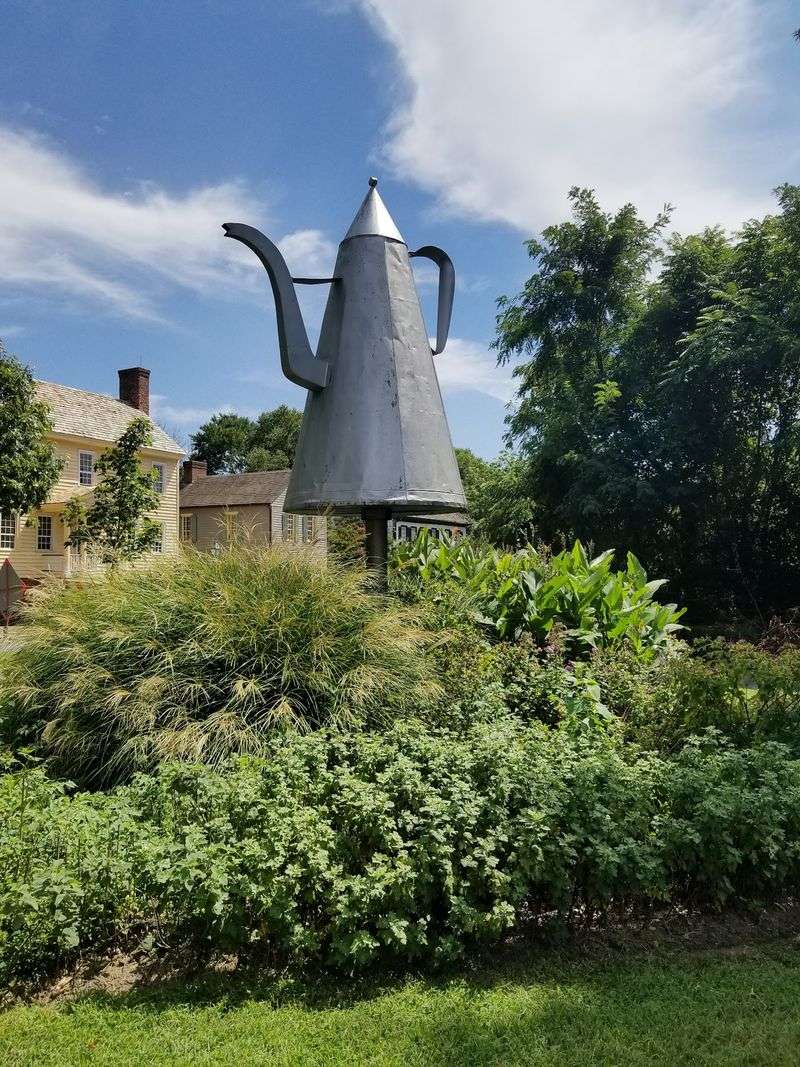
Shops come and go, but some symbols refuse to fade.
The Mickey brothers’ business at South Main and Belews Streets eventually changed hands, passing to L. B. Brickenstein and later to members of the Vogler family.
Through every new owner, the big kettle stayed put.
Over time, something interesting happened. People stopped seeing the pot as an advertisement and began treating it as a town treasure.
It now serves as an unofficial symbol of Winston-Salem, showing up on souvenirs, in local artwork, and in countless family photos.
Why did it win so many hearts?
Part of the charm comes from its humble roots.
It reflects the hands-on craftsmanship that defined early Salem, where tinsmiths, potters, and bakers shaped daily life. Few small towns in North Carolina can point to a single object that has watched so much history unfold.
The setting adds to the appeal.
A tidy little garden often blooms around the post, with seasonal flowers adding pops of red, gold, and violet beneath the tin.
A small plaque on the pole shares background details, though leafy plants sometimes hide it, so peek carefully before you leave.
You Can Still Spot The 1858 Curiosity Beside The Historic District Today
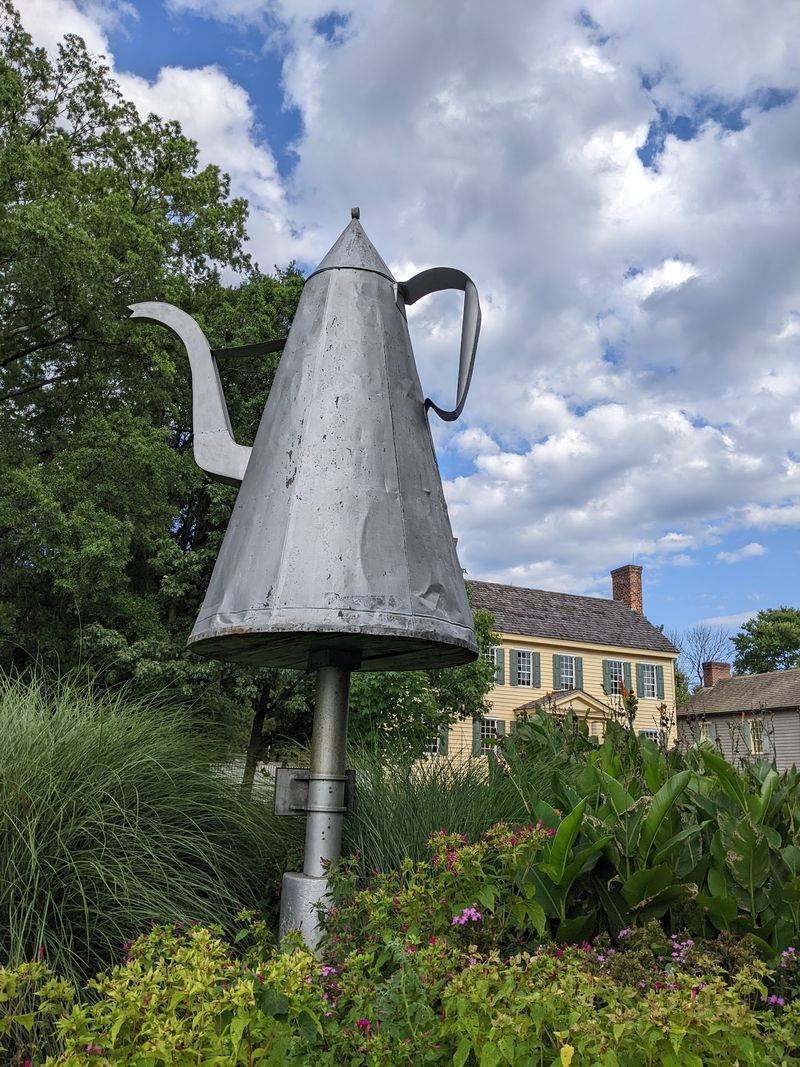
Plan for a short stop and a long stroll.
The kettle rises from a landscaped traffic island at the north end of Old Salem, right where Old Salem Road and South Main Street come together.
Its address is 401 Old Salem Road, Winston-Salem, North Carolina, making it easy to plug into a map app. Road work in the area can sometimes confuse GPS directions, so keep an eye out for the gleaming spout as you approach.
Free parking is often available nearby, and the walk from the historic district takes only a few minutes along brick sidewalks.
Most visitors spend about ten minutes snapping photos and reading the plaque.
The real treat comes afterward.
Old Salem stretches south with restored buildings, costumed interpreters, heritage gardens, and the sweet scent of wood-fired ovens drifting from historic bakeries.
Spring and fall bring especially pleasant weather for exploring, with blooming dogwoods or crisp, golden leaves framing the scenery.
Early mornings stay quiet and peaceful, perfect for unhurried pictures.
Wear comfy shoes, bring curiosity, and let this tin giant serve as your welcome sign to one of the most charming corners of the South.