This Gloomy North Carolina Church Has A Dark Legend Lurking Beyond Its Doors
Mountain churches usually invite quiet, but this one comes with a story that makes the silence feel a little more complicated.
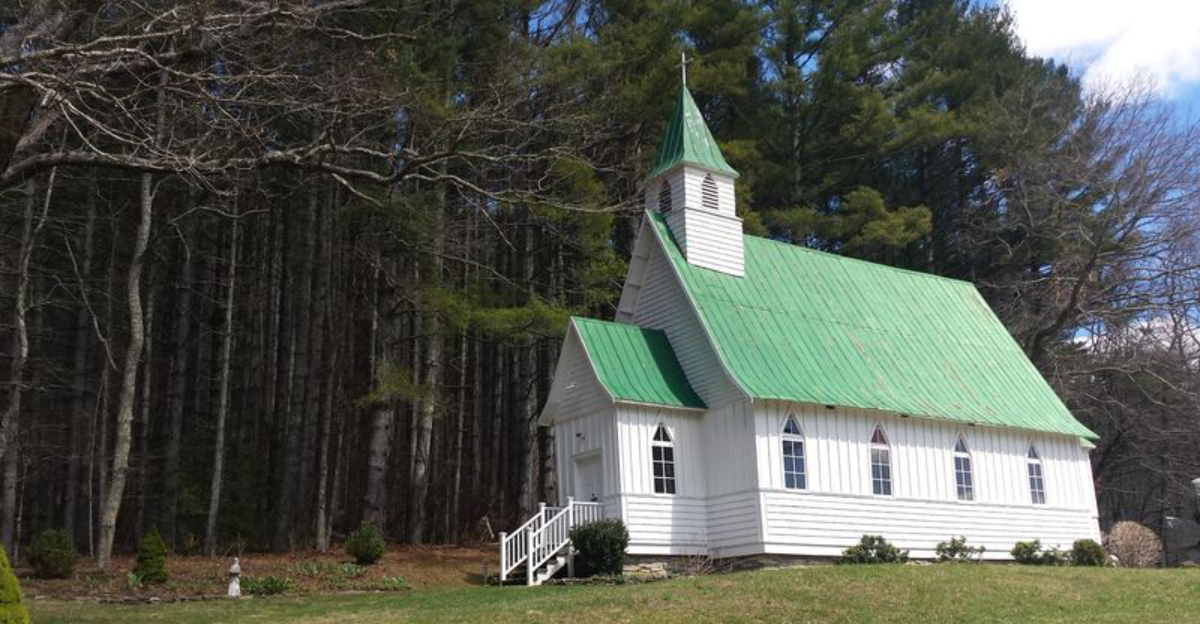
Near Valle Crucis, a small stone church still carries the calm of its 1860s beginnings, when William West Skiles helped shape a place meant for worship, reflection, and mountain community.
That history would be interesting enough on its own.
Then the legend steps into the churchyard.
For generations, locals have repeated strange stories about a dark doglike figure said to appear near the grounds before vanishing toward the water.
No one needs to treat the tale as fact for it to do its work.
Folklore has a way of making an old place feel even older, especially when the setting already feels quiet enough to hold a secret.
The real pull is not just the rumor.
It is the way history, mountain stillness, and one eerie valley legend all seem to meet in one North Carolina place.
Let The Stone Church Set The Mountain-Gothic Mood
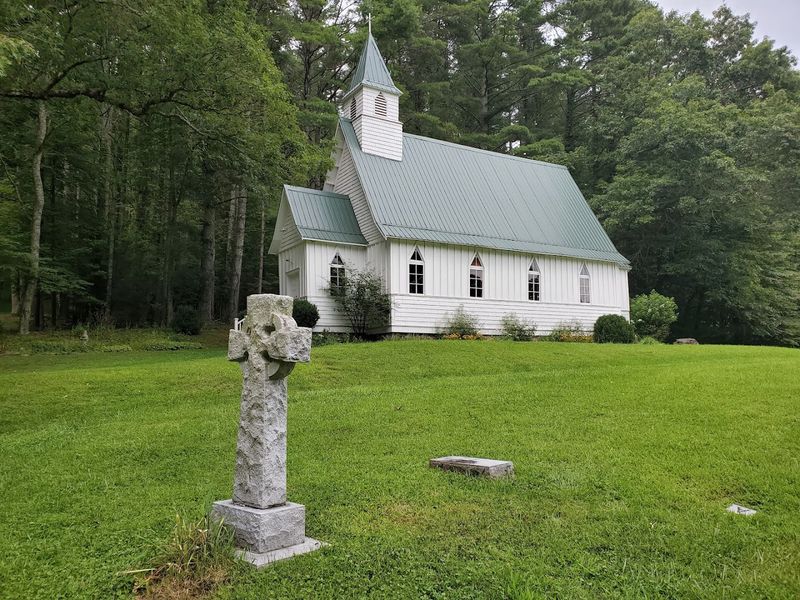
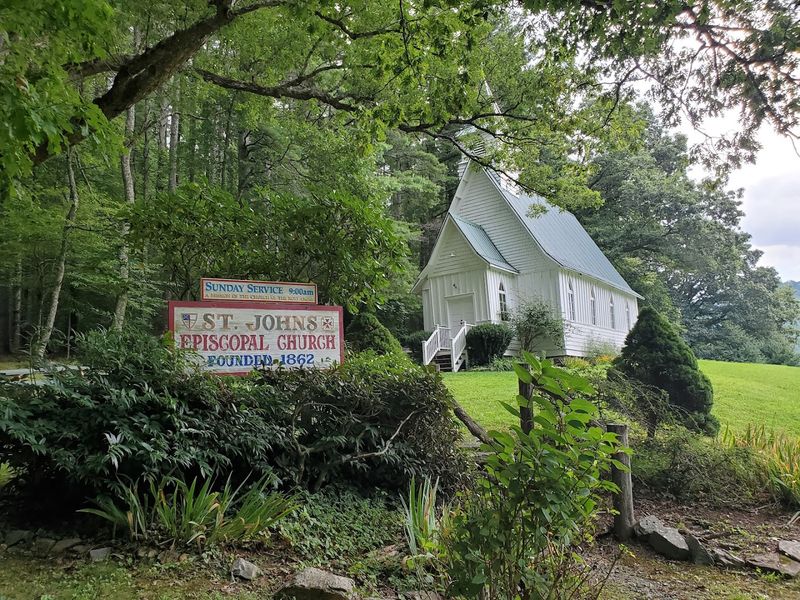
Weathered simplicity gives St. John’s its strongest atmosphere, not theatrical decoration or anything trying too hard to look haunted. The building sits down a mountain road near Valle Crucis, where trees, cemetery stones, old wood, and Blue Ridge quiet do more than enough to shape the mood.
St. John’s is described in local church history as a small wooded church near Valle Crucis, built in 1862 through the dedication of William West Skiles. He served the mountain region from 1847 until his passing that same year.
That history gives the place a melancholy weight before the folklore even enters the picture.
Summer services and concerts have also been part of the church’s modern life, which keeps the building from feeling abandoned or merely spooky.
High Country Press has described St. John’s as a mission of Holy Cross Episcopal Church of Valle Crucis, on Herb Thomas Road off Mast Gap Road, with wooden walls known for their acoustics.
That detail matters because the church is not just a prop for a legend. It is a real sacred place with a real community history.
The eerie feeling comes from the setting, the age, the quiet cemetery, and the way mountain weather can make even ordinary silence feel loaded.
Follow The Demon Dog Legend Beyond The Churchyard
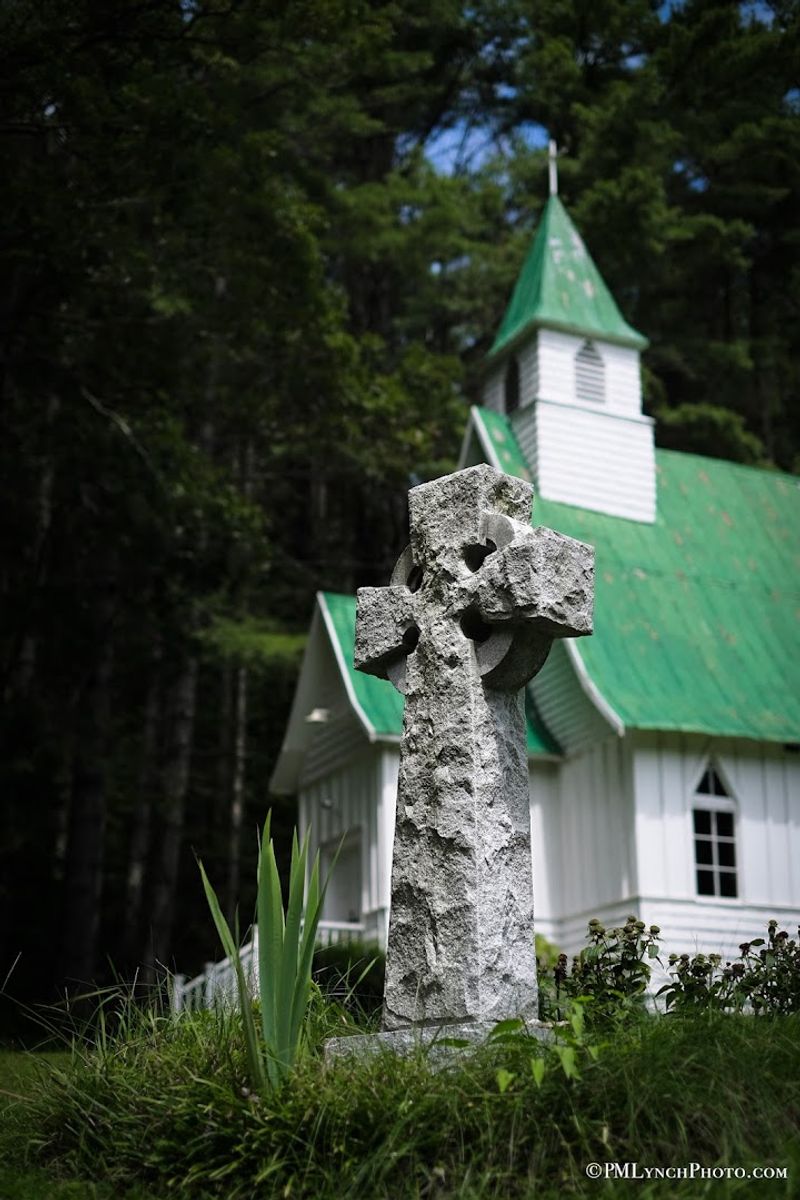
Folklore gets darker once the story leaves the church door and moves toward the surrounding road, cemetery, and woods.
The Demon Dog of Valle Crucis remains a local mountain legend tied to St. John’s, with stories describing a massive black doglike creature with glowing eyes appearing near the churchyard before disappearing near water.
Older retellings place the tale in the 1800s, adding dramatic details about warnings, attacks, and the mystery surrounding the valley’s streams.
Those pieces should stay in the realm of lore, not fact. That actually makes the story stronger.
A proven monster would turn the place into fantasy. An old rumor tied to a real church, a real cemetery, and a real mountain road feels more believable because it never fully explains itself.
Visitors do not need to believe every version to feel the effect. Once the churchyard is quiet and the woods start looking back, the legend has already done its job.
Keep The Haunting Angle Rooted In Local Lore
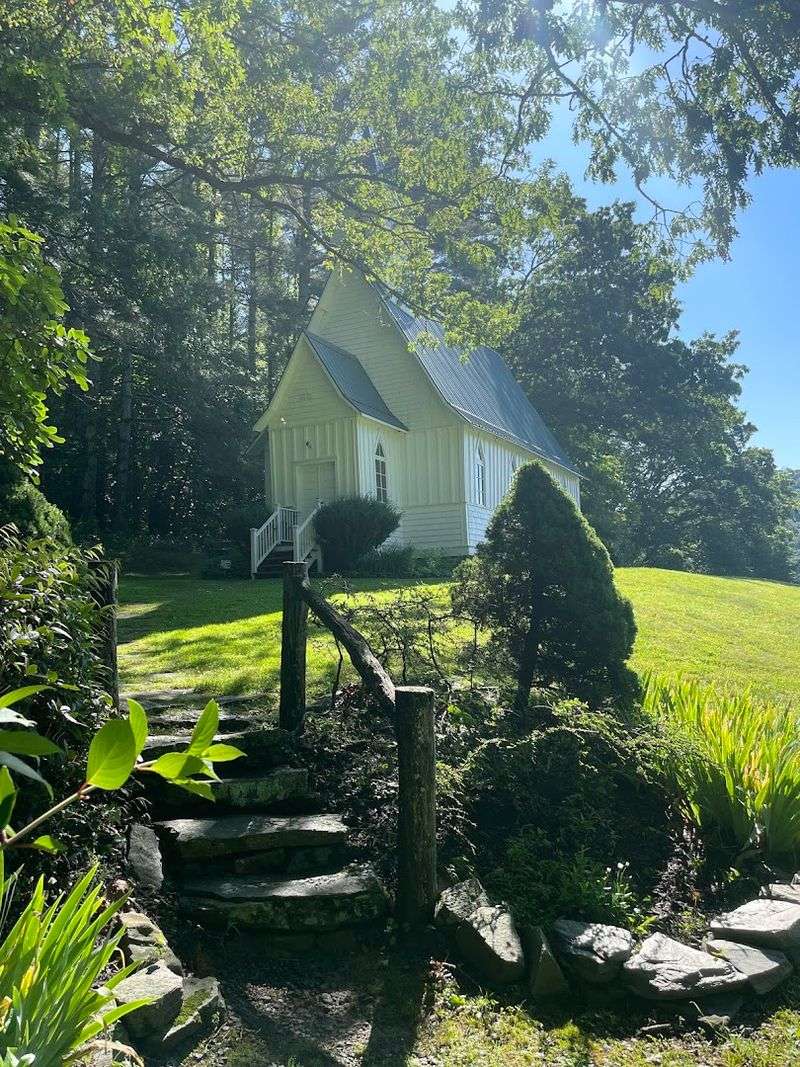
Stories like this survive because they attach themselves to a place people already understand as meaningful.
Valle Crucis carries deep Episcopal mission history, with the Blue Ridge National Heritage Area explaining that Bishop Levi Ives named the area after three creeks intersecting in the shape of a cross. The name Valle Crucis translates to “Vale of the Cross.”
That cross-shaped landscape gives the Demon Dog legend a setting that feels almost designed for folklore, especially when later versions claim the creature cannot cross water. The story does not need to be pushed into certainty to feel unsettling.
In Appalachian communities, frightening tales often carried practical purposes: keeping children close to home after dark, warning people about woods and water, and giving shape to dangers that could not always be explained plainly. The legend around St. John’s works in that older way.
It gives the valley’s shadows a character, the streams a boundary, and the churchyard a reputation that goes beyond its historic role.
Blue Ridge Heritage also notes that the entire Valle Crucis community is listed on the National Register of Historic Places as a historic rural community, which reinforces how strongly the area preserves memory and place.
Keeping the haunting rooted in local lore respects both sides of the stop. The church remains historic and sacred, while the legend stays strange enough to follow visitors back down the road.
You Feel The Story Change Once The Road Gets Quiet
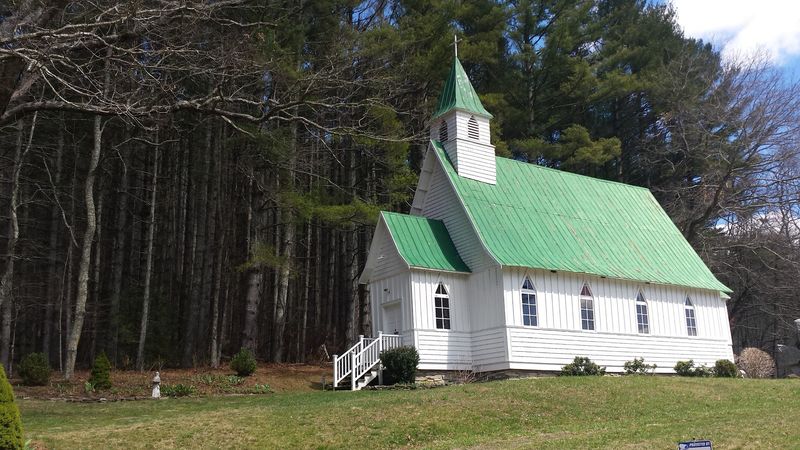
By the time the busier roads fall away, the legend starts feeling less like something read online and more like something the landscape has been waiting to tell.
Rich in mountain character, Valle Crucis sits between Boone and Banner Elk in the Blue Ridge Mountains, with fewer than 1,000 full-time residents and a deep cultural heritage.
The community received its name in the early 1840s after Bishop Levi Ives noticed three creeks forming the shape of a cross.
That kind of quiet valley geography matters. The Demon Dog story needs stillness, trees, water, and isolation to work properly, and this corner of Watauga County gives it all four.
A drive toward St. John’s does not feel like pulling into a polished roadside attraction. It feels like moving deeper into a valley where the ordinary world has lowered its voice.
Gravel, curves, old farms, cemetery views, and mountain air give the church a sense of removal without making it feel impossible to reach. That balance is exactly why the folklore lands.
Close enough for a day trip, remote enough to make the imagination wake up. Even skeptical visitors may notice how quickly the mood changes once traffic fades, trees tighten along the road, and the church begins to feel less like a destination than a story waiting at the end.
Notice How The 1860s History Deepens The Atmosphere
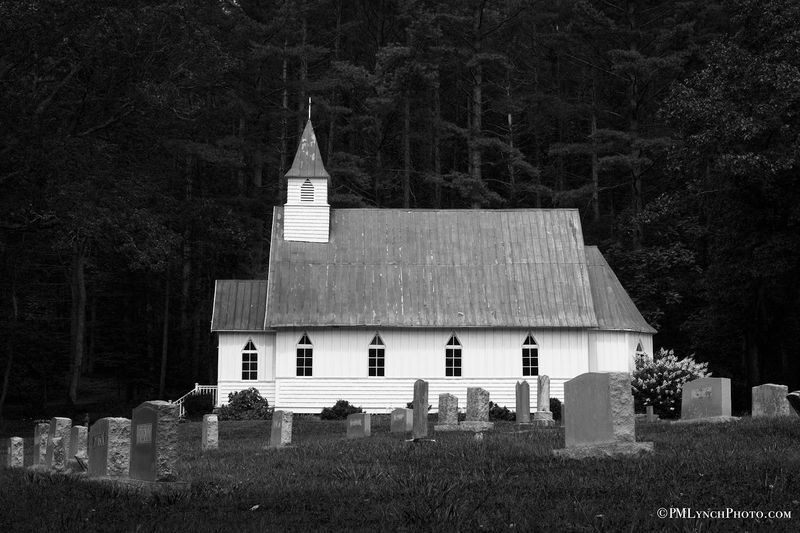
Civil War-era history gives St. John’s a weight no legend could create by itself.
William West Skiles served Valle Crucis as a minister, doctor, and legal adviser, traveling mountain roads on a mule named Henry. Our State notes that he helped lead efforts to build St. John’s Episcopal Church, which was consecrated in 1862.
The Valle Crucis Conference Center also notes that Brother Skiles built St. John’s Church and died on December 8, 1862, only months after its dedication. That timing gives the site a genuine sense of sadness, even without adding a single supernatural detail.
One man spent years serving an isolated mountain community, helped bring a church into being, and then died shortly after seeing it completed.
St. John’s is described as a wooden Gothic-style church featuring stained glass windows and a dedication by Bishop Thomas Atkinson in 1862. The historical essay also notes that Skiles was buried in the churchyard after his death a few months later.
Later local history sources say the church was moved in sections in 1882 to higher ground, with Skiles’s remains moved to the new cemetery in 1889. Those facts deepen the atmosphere because they show how much care, relocation, memory, and loss have always surrounded this little church.
Use Valle Crucis As The Day Trip Anchor
A better visit starts by treating Valle Crucis as more than a spooky footnote.
Valle Crucis has been recognized as a historic rural community on the National Register of Historic Places since 2004, according to the Blue Ridge National Heritage Area. The Mast Farm Inn and Valle Crucis Conference Center are also listed separately on the register.
That gives travelers a fuller reason to spend time in the valley before or after seeing St. John’s.
The Original Mast General Store is the obvious anchor for many visitors, and Mast’s own history says the store’s “Middle Room” was built in 1883 as Henry Taylor expanded the business.
Add the Valle Crucis Community Park, old farm views, country roads, and nearby Boone or Banner Elk, and the church becomes part of a richer mountain day instead of a single eerie stop. Valle Crucis works because its charm is not loud.
It is old buildings, creeks, pastures, general-store shelves, community gathering places, and scenery that seems to prefer a slower visitor. That pace helps the legend too.
A rushed stop at the church might feel like checking off a haunted-site box. A day spent around Valle Crucis lets the place build context first.
By the time St. John’s enters the route, the Demon Dog story feels attached to a living valley, not just a creepy headline.
Pair The Stop With Old Mountain Roads And Foggy Views
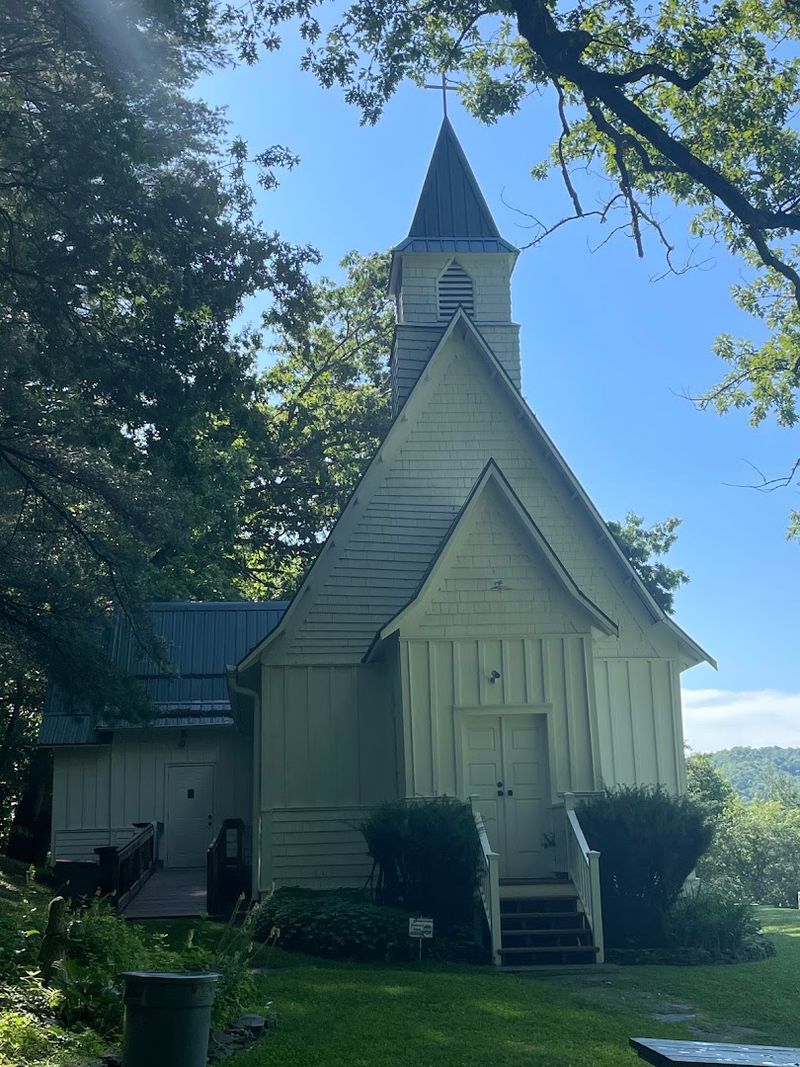
Curving roads give the church visit a slow-burn quality that a simple parking-lot stop never could. A 2019 travel write-up describes finding St. John’s by taking Mast Gap Road from NC 194 through Valle Crucis, then turning onto Herb Thomas Road for about a half mile.
That kind of route matters because the drive becomes part of the mood. Pastures, trees, ridgelines, narrow pavement, gravel stretches, and sudden valley openings all help the legend settle in before the church appears.
The surrounding High Country also gives travelers plenty of scenic ways to extend the day, especially through Boone, Banner Elk, Sugar Grove, and the rural roads around Valle Crucis. This is not a place where speed improves anything.
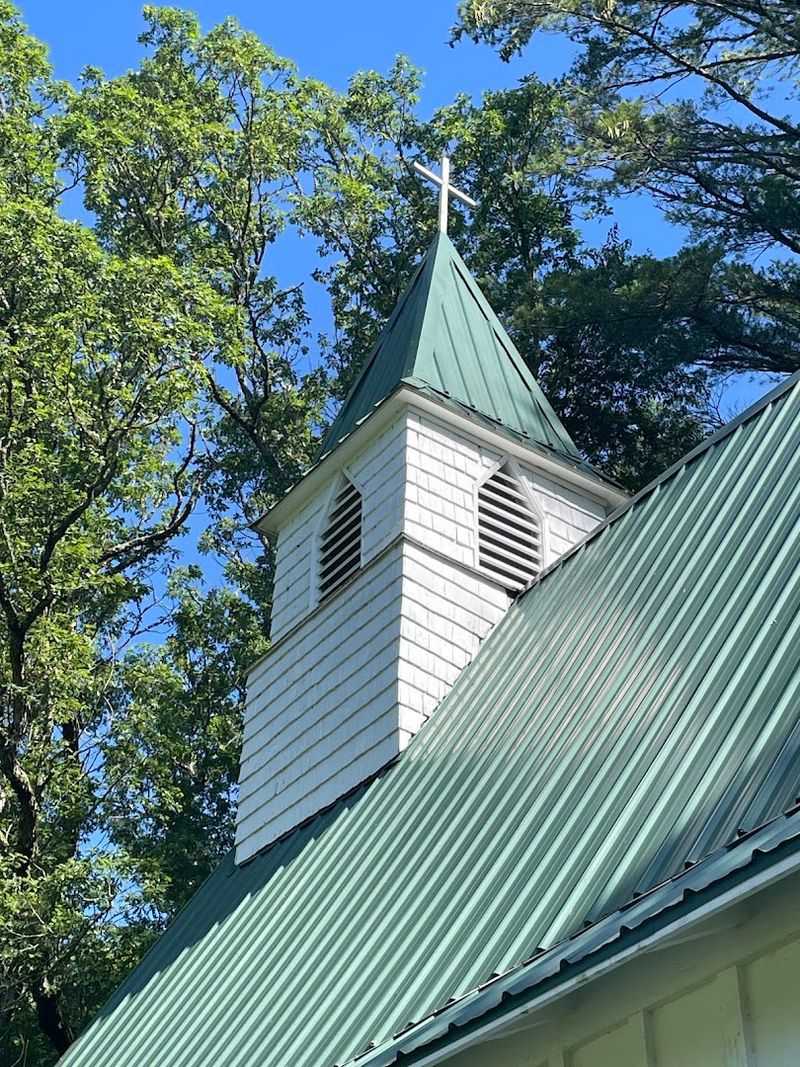
Fog can gather in low hollows, weather can shift quickly in the mountains, and the best views often arrive when a driver slows down enough to notice a fence line, a creek bend, or a church spire behind the trees.
Anyone planning a stop should also remember that St. John’s remains a historic church and cemetery, not a theme attraction.
Respectful visiting matters. Keep to public access, avoid disturbing graves, and let the landscape do its quiet work.
The road, the valley, and the churchyard all add pieces to the same experience.
Leave The Legend Creepy Without Calling It Proven
Skepticism does not ruin this story. It actually helps it last.
The Demon Dog of Valle Crucis works best when treated as folklore tied to a real church, a real valley, and a real mountain community, not as a documented fact that needs to be defended.
Some versions of the legend include attacks, glowing eyes, sermon warnings, and a creature halted by crossed streams. Local history sources separately document Valle Crucis’ Episcopal mission story, William West Skiles, and St. John’s.
Those two layers should stay distinct. The history gives the site age and meaning.
The legend gives it atmosphere. Calling the haunting proven would flatten the mystery, but dismissing it completely would miss why the story keeps circulating.
A good visit leaves room for both doubt and shiver. Stand near the churchyard, look toward the trees, listen to the quiet, and understand why a black dog tale could cling to this valley for generations.
Recent Holy Cross Episcopal Church announcements list St. John’s Episcopal Church for its 2026 summer season at 554 Herb Thomas Road in Sugar Grove, North Carolina, near Valle Crucis.
Older event and cemetery listings have sometimes used 678 Herb Thomas Road, so checking current church directions before visiting is wise.