This Half-A-Mile California Hike Feels Almost Too Beautiful To Be Real
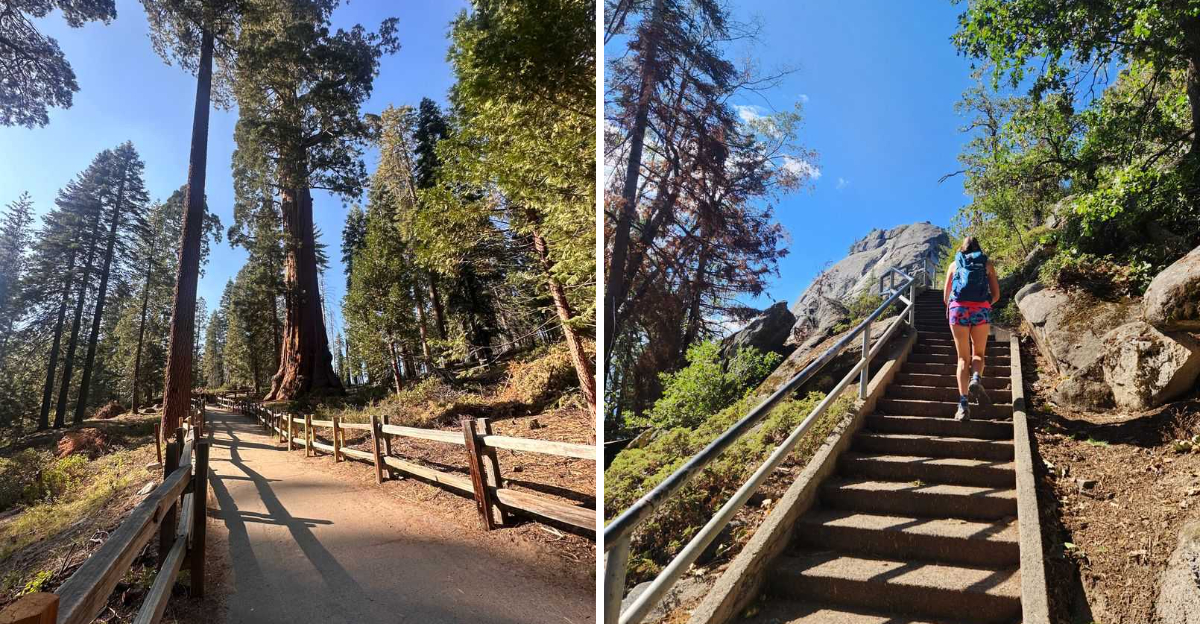
The climb begins with a choice. Keep walking or turn back and wonder what waited above the trees.
Stone steps rise quickly, the air thins, and the forest starts to fall away with every turn. Few trails deliver so much anticipation in such a short distance.
Moro Rock Trail rewards commitment almost immediately, yet still asks for focus and steady footing.
Inside Sequoia National Park, the landscape carries a sense of scale that humbles even experienced hikers.
Granite walls feel ancient, the wind feels sharper, and the views grow wider with each landing. The stairway carved into the rock keeps the journey approachable while never feeling ordinary.
Families pause for breath, photographers slow their pace, and first time visitors realize the payoff will be unforgettable.
There are hikes across California that demand hours of effort for a single view. Moro Rock Trail offers something rarer.
A brief ascent delivers sweeping valleys, distant peaks, and a feeling of standing above the world. The final steps make hearts race, then the silence takes over.
Who wouldn’t climb a little higher for that kind of reward?
1. A Short But Mighty Ascent
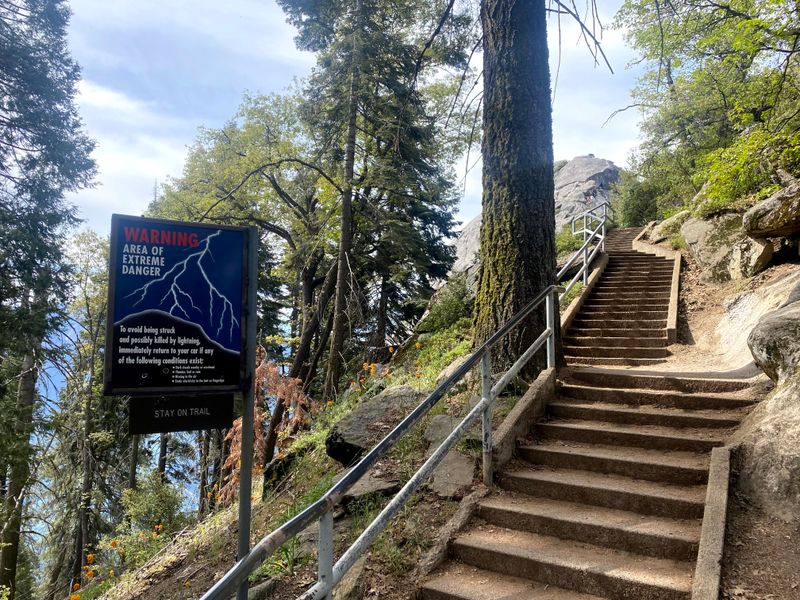
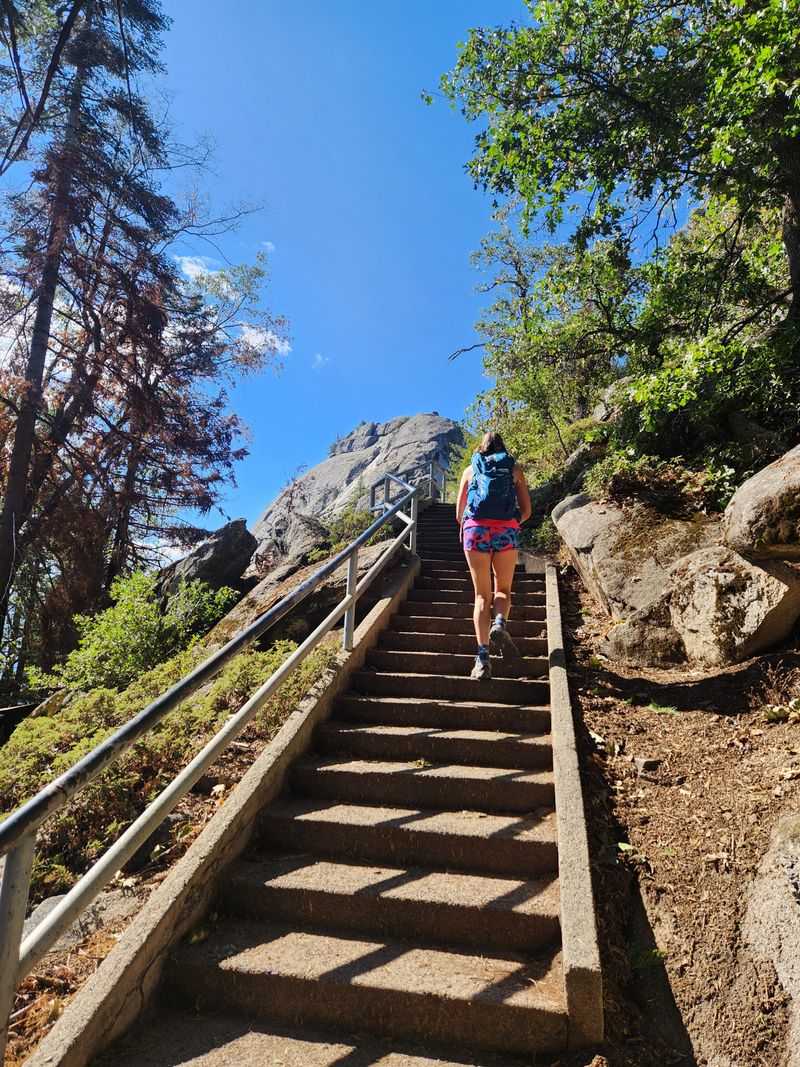
Moro Rock Trail covers just 0.25 miles from base to summit, but the journey packs a serious punch with a 350-step stairway carved directly into the granite dome.
The climb gains approximately 300 feet in elevation, creating a workout that feels much longer than the distance suggests.
Each step winds upward along the natural contours of the rock, with the path hugging the granite face as it spirals toward the top.
The stairway was constructed in 1931 by the Civilian Conservation Corps, a Depression-era work program that left a lasting legacy throughout national parks.
Workers carved steps into the living rock and installed metal railings that still guide hikers today.
The craftsmanship remains impressive nearly a century later, with the trail listed on the National Register of Historic Places for its historical and engineering significance.
Visitors should expect the climb to take about 20 to 30 minutes at a steady pace, though many people pause frequently to catch their breath and admire the changing views.
The higher elevation at 6,725 feet can make breathing more challenging for those coming from sea level.
Taking breaks along the way is not just acceptable but recommended, allowing the body to adjust while soaking in the scenery that unfolds with each turn.
2. Panoramic Views That Stretch For Miles
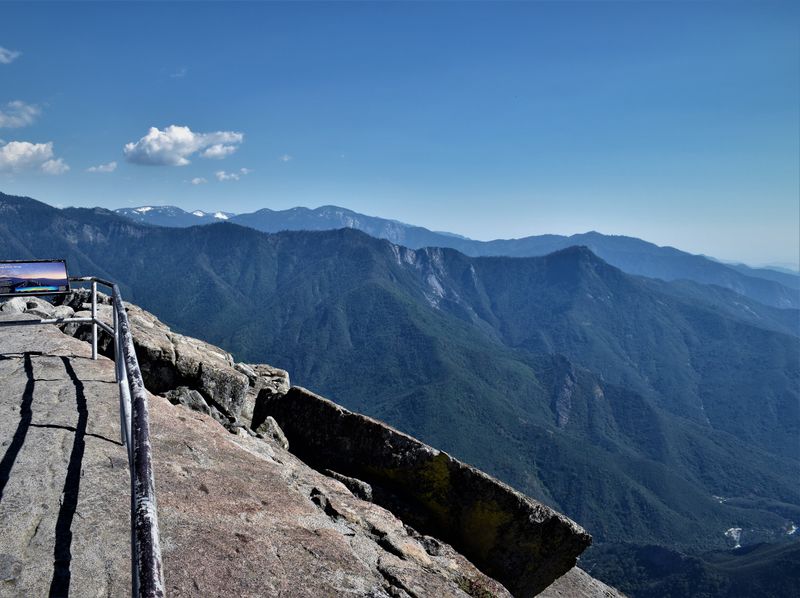
Reaching the summit of Moro Rock rewards hikers with 360-degree views that span multiple mountain ranges, valleys, and forests in a single sweeping glance.
The Great Western Divide rises to the east, its jagged peaks creating a dramatic skyline that changes character with the light throughout the day.
To the west, the San Joaquin Valley spreads out like a patchwork quilt, its agricultural fields and towns visible on clear days.
The vantage point sits at 6,725 feet, high enough to see over the surrounding forest canopy and take in the full scope of the Sierra Nevada landscape.
On exceptionally clear days, visibility can extend more than 100 miles, revealing layers of ridgelines fading into the distance.
The views shift with the seasons, from snow-capped peaks in winter to golden hillsides in late summer.
Photographers often time their visits for early morning or late afternoon, when angled sunlight adds depth and drama to the mountain terrain.
The summit offers plenty of space to move around and find different perspectives, though the edges are protected by railings for safety.
Bringing binoculars can enhance the experience, allowing closer looks at distant peaks and valleys that might otherwise blend into the horizon.
3. Historic Craftsmanship On Display
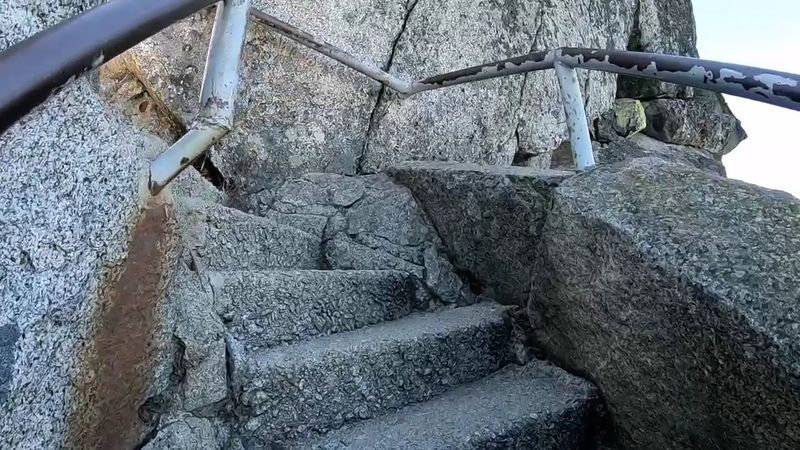
Walking the Moro Rock Trail means following in the footsteps of the Civilian Conservation Corps workers who built this remarkable path during the Great Depression.
The stairway they created in 1931 showcases impressive engineering and craftsmanship, with steps carved to follow the natural grain and contours of the granite dome.
Metal railings were carefully installed to provide security without overwhelming the natural beauty of the rock formation.
The construction required workers to hand-carve steps into solid granite, a labor-intensive process that took months to complete.
They worked without modern power tools, relying on hand drills, chisels, and sheer determination to shape the stone.
The result is a trail that feels like a natural extension of the rock itself, blending human engineering with the landscape rather than dominating it.
The trail’s listing on the National Register of Historic Places recognizes both its architectural merit and its significance as an example of Depression-era public works projects.
Small plaques along the route provide context about the construction and the young men who built it.
Understanding this history adds another layer of appreciation to the climb, transforming it from a simple hike into a walk through both natural and human heritage.
4. Seasonal Access And Weather Considerations
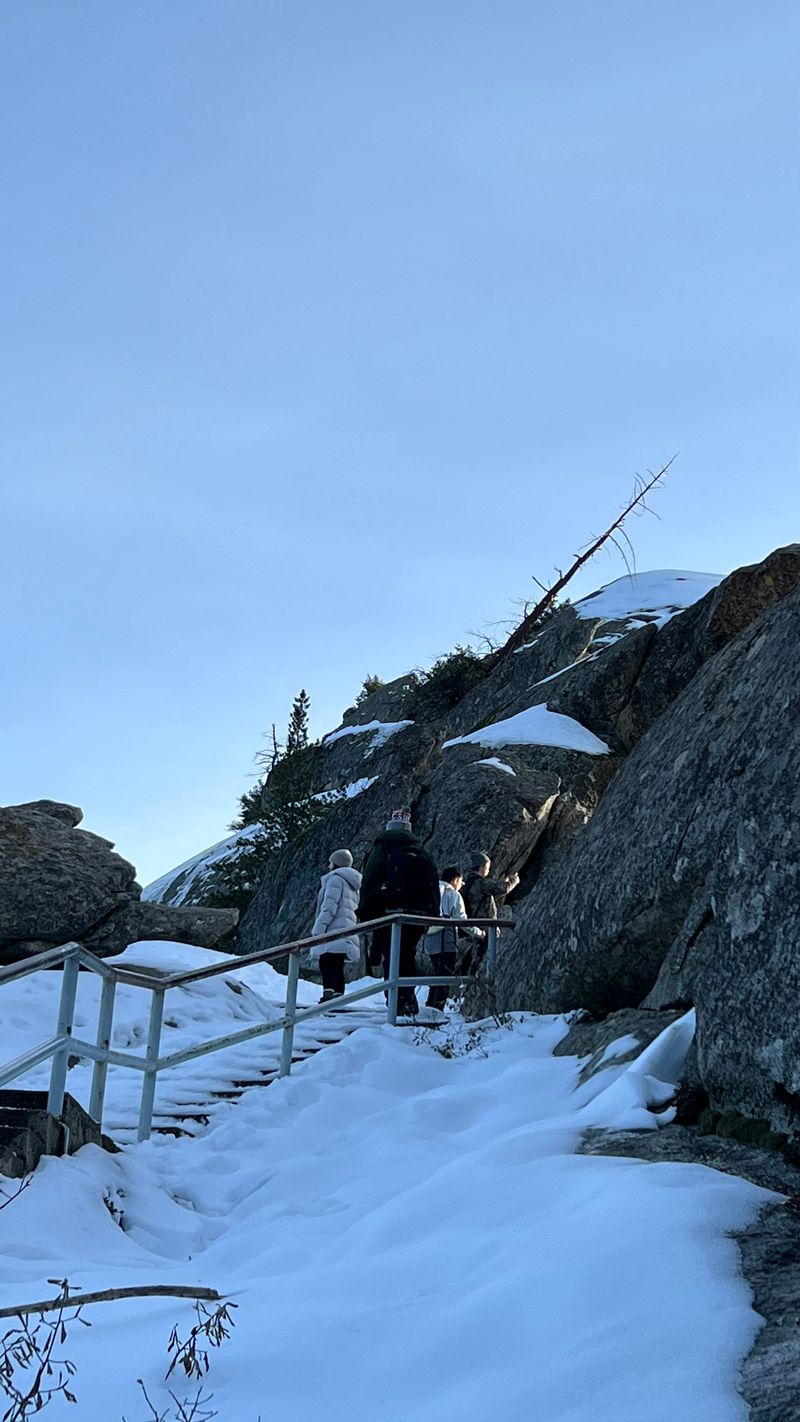
Moro Rock Trail experiences dramatic seasonal variations that affect both access and the hiking experience throughout the year.
Winter typically brings snow and ice to the stairway, creating hazardous conditions that lead to trail closures from roughly December through April.
The National Park Service closes the trail during these months to protect visitor safety, as icy metal railings and snow-covered steps become treacherous.
Spring and fall emerge as ideal seasons for the climb, offering moderate temperatures and fewer crowds than the busy summer months.
Spring visitors may encounter lingering snow patches at higher elevations, but the trail itself usually reopens by May.
Fall brings cooler air and changing colors in the surrounding forest, with September and October often providing the most comfortable hiking conditions.
Summer sees the highest visitor numbers, with parking lots filling early in the day and the stairway becoming crowded during peak afternoon hours.
Morning visits offer cooler temperatures and softer light for photography, along with better chances of securing parking near the trailhead.
Afternoon thunderstorms can develop during summer months, making morning climbs safer and more pleasant overall.
5. Wildlife And Natural Features Along The Route
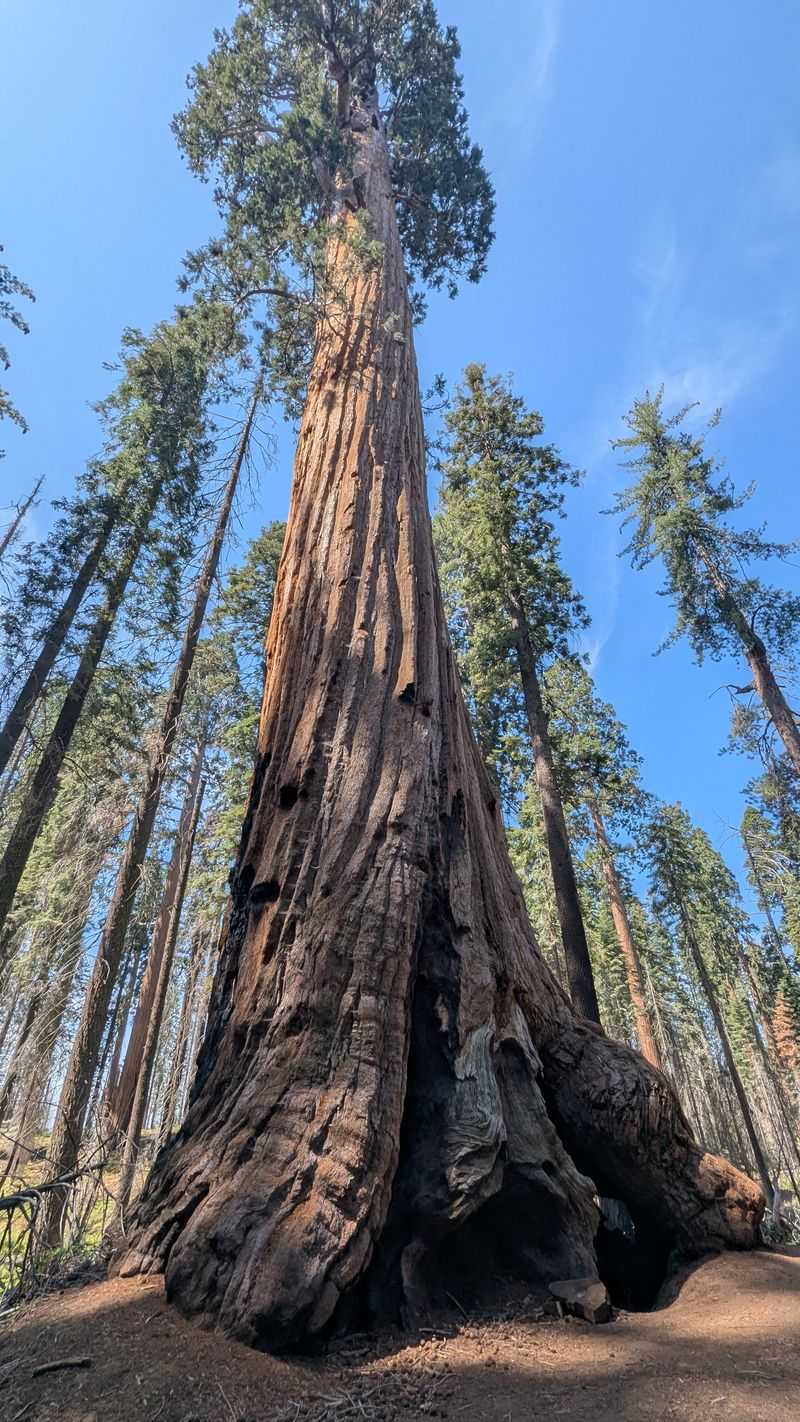
Peregrine falcons have made Moro Rock their seasonal home, nesting on the granite cliffs during summer months and adding another dimension to the hiking experience.
These magnificent birds of prey choose the rock’s steep faces for their nest sites, where they can survey the surrounding territory and protect their young.
The National Park Service occasionally closes certain climbing routes on the rock to protect active nests during breeding season.
Watching these falcons hunt from the summit provides an unforgettable wildlife viewing opportunity, as they dive at incredible speeds to catch prey in midair.
Their presence serves as a reminder that the park is home to diverse wildlife beyond the famous giant sequoias.
Other bird species frequent the area as well, including ravens, jays, and various raptors that ride thermal currents above the dome.
The granite dome itself represents millions of years of geological history, formed deep underground and gradually exposed through erosion of softer surrounding rock.
Its smooth, rounded shape resulted from exfoliation, a process where outer layers of rock peel away like an onion skin.
Lichens add subtle colors to the granite surface, creating natural patterns that change with moisture and light conditions throughout the day.
6. Parking And Access Logistics
A small parking lot at the base of Moro Rock provides direct access to the trailhead, but its limited capacity means early arrival is essential during peak visiting seasons.
The lot typically fills by mid-morning during summer weekends and holidays, leaving latecomers to search for alternative parking along the nearby road.
Arriving before 9 a.m. generally ensures a parking spot and allows for a more peaceful hiking experience before crowds arrive.
The parking area sits along the Crescent Meadow Road, which branches off from the Generals Highway within Sequoia National Park.
This scenic drive passes through groves of giant sequoias and offers several other attractions along the way.
During summer, a free shuttle bus service operates between the Giant Forest Museum and various trailheads, including Moro Rock, providing an alternative to driving and parking.
Restroom facilities are available near the parking area, making this a convenient last stop before beginning the climb.
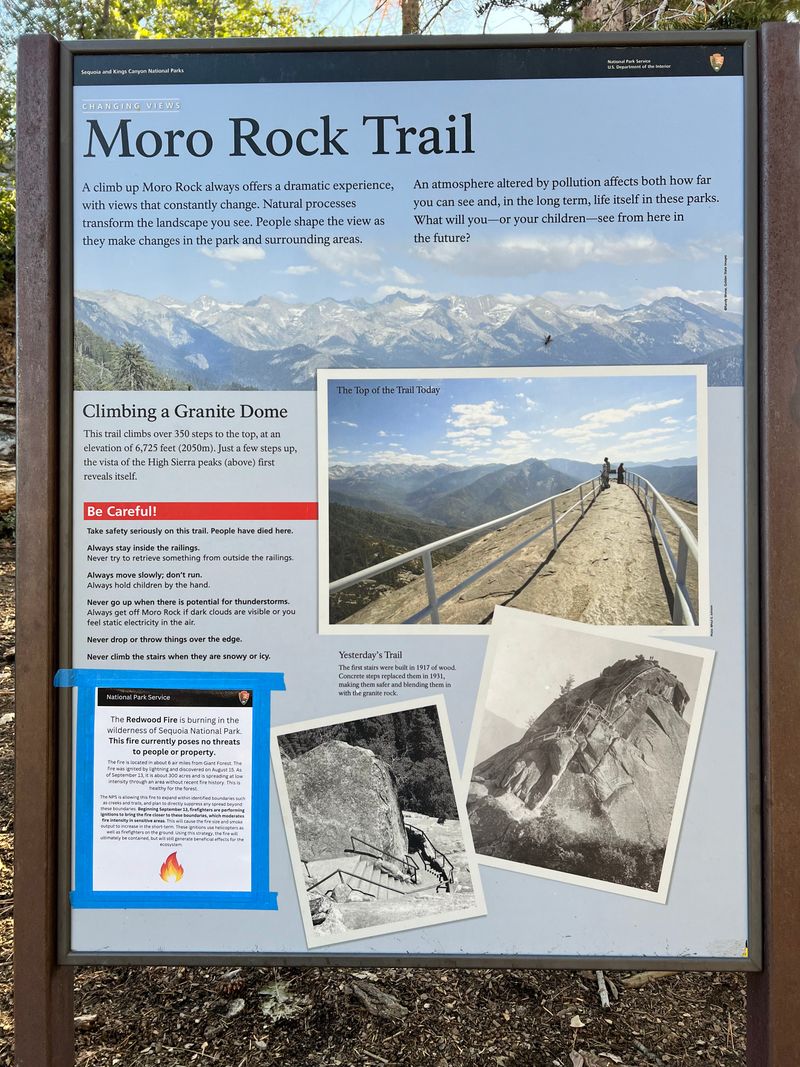
The trailhead is clearly marked with informational signs explaining the trail’s difficulty, length, and safety considerations.
Visitors should plan to spend at least an hour for the round-trip hike, including time at the summit to enjoy the views and catch their breath before descending the same stairway back to the parking lot.
7. Safety Considerations And Precautions
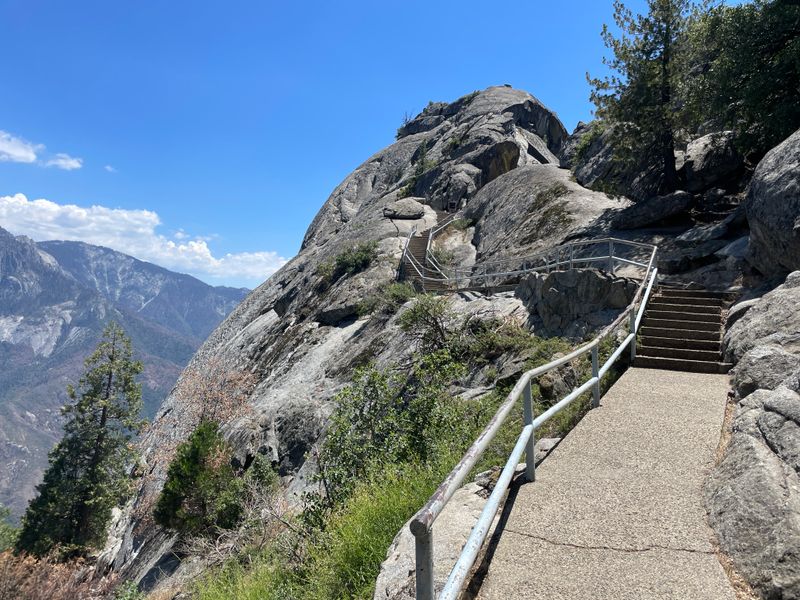
Steep drop-offs along the Moro Rock Trail demand constant attention and respect for the safety railings that line the most exposed sections.
The stairway hugs the side of the granite dome, with some areas offering sheer drops of hundreds of feet beyond the protective barriers.
Parents with young children should maintain close supervision throughout the climb, as curious kids may be tempted to lean over railings or venture too close to unprotected edges.
The elevation at 6,725 feet can cause altitude-related symptoms in visitors coming from lower elevations, including shortness of breath, dizziness, and fatigue. Taking the climb slowly and pausing frequently helps the body adjust to the thinner air.
Bringing plenty of water is essential, as dehydration compounds altitude effects and the physical exertion of climbing 350 steps.
Weather conditions can change rapidly in the mountains, with afternoon thunderstorms common during summer months.
Lightning poses a serious risk on the exposed granite dome, making it crucial to start early and descend before storms develop.
The metal railings conduct electricity, adding to the danger during electrical storms.
Wearing appropriate footwear with good traction helps prevent slips on the stone steps, which can become slick when wet or dusty.
8. Physical Demands And Fitness Requirements
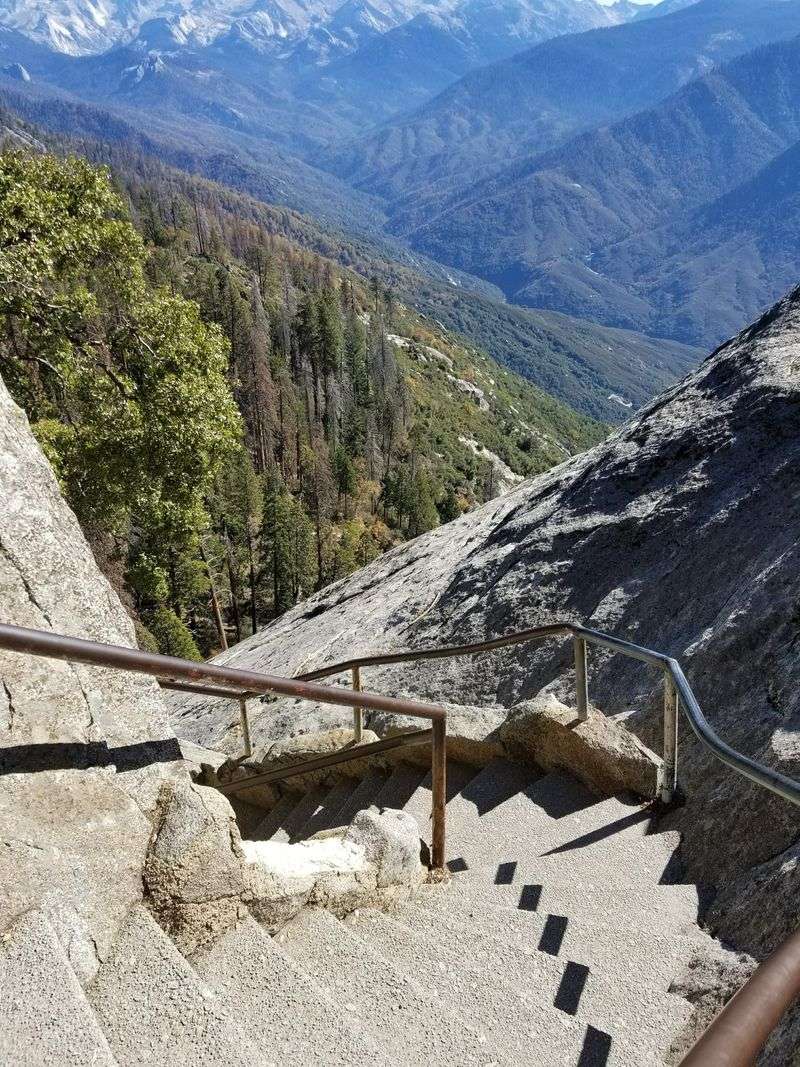
The steep nature of the Moro Rock climb challenges cardiovascular fitness more than the short distance might suggest, with the constant upward progression testing leg muscles and aerobic capacity.
The 350 steps come in quick succession without long level breaks, creating a sustained workout that leaves many visitors breathing hard.
People with knee issues may find the descent particularly challenging, as the downward steps place significant stress on joints.
Altitude plays a significant role in the physical demands, with the thinner air at 6,725 feet making breathing more labored than a similar climb at sea level.
Visitors from lower elevations often underestimate this effect, expecting an easy walk based solely on the short distance.
The combination of elevation and steepness means that even fit individuals may need to pause several times during the ascent.
The trail is not wheelchair accessible due to its steep stairs and narrow passages along the granite face. Visitors with mobility limitations should consider this before attempting the hike.
However, the short distance means that people with moderate fitness levels can usually complete the climb if they pace themselves appropriately.
Taking rest breaks is common and expected, with natural stopping points along the stairway where the views already begin to open up impressively.
9. Best Times For Photography
Golden hour light transforms the Moro Rock summit into a photographer’s dream, with early morning and late afternoon sun casting long shadows across the mountain ridges and valleys below.
Sunrise visits offer the added benefit of fewer crowds and cooler temperatures, along with the possibility of catching fog layers in the valleys that create a sea-of-clouds effect.
The eastern-facing views of the Great Western Divide glow with warm light as the sun rises behind the peaks.
Late afternoon brings different but equally stunning conditions, with the western sun illuminating the San Joaquin Valley and creating dramatic contrasts between sunlit and shadowed terrain.
The angle of light adds depth and dimension to the landscape that midday sun cannot match.
Sunset visitors should bring headlamps or flashlights for the descent, as darkness falls quickly once the sun drops below the horizon.
Midday light tends to be harsh and flat, washing out details and creating strong contrasts that challenge camera sensors.
However, this timing works well for capturing the immediate surroundings and the texture of the granite dome itself.
Wide-angle lenses help capture the expansive views, while telephoto lenses allow for detailed shots of distant peaks and valleys. A polarizing filter can enhance sky colors and reduce haze on clear days.
10. Nearby Attractions And Trail Connections
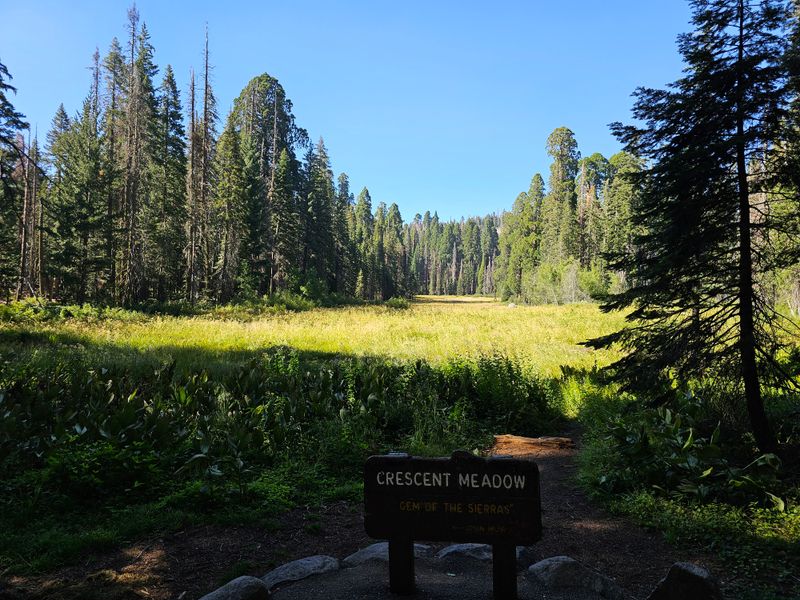
Crescent Meadow sits just a short drive from the Moro Rock trailhead, offering a peaceful contrast to the dramatic granite climb with its level, wheelchair-accessible loop trail through a lush mountain meadow.
The meadow’s wildflowers peak in early summer, creating colorful displays that attract butterflies and other pollinators.
John Muir called this spot “the gem of the Sierra,” and the serene setting makes it clear why he held it in such high regard.
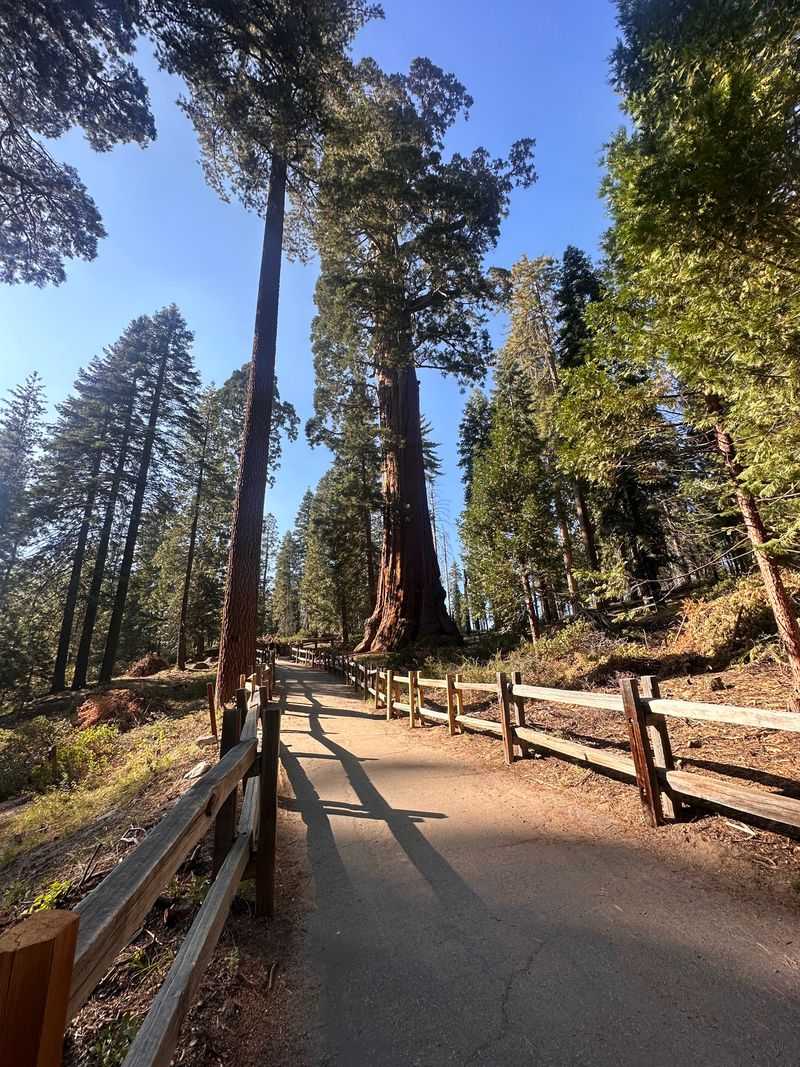
The Giant Forest area encompasses numerous trails that wind among some of the largest trees on Earth, with the General Sherman Tree standing as the world’s largest living tree by volume.
These groves provide shade and a sense of timeless majesty that complements the open vistas from Moro Rock.
Visitors can easily spend a full day exploring this region, combining the dramatic views with the intimate experience of walking among ancient giants.
The Congress Trail offers 2.7 miles round trip through dense sequoia groves, with interpretive signs explaining the ecology and history of these remarkable trees.
Other nearby options include the Tunnel Log, where visitors can drive through a fallen sequoia, and the Auto Log, where cars once drove on top of a massive fallen tree.
Combining Moro Rock with these attractions creates a diverse park experience within a compact area.
11. Planning Your Visit For Maximum Enjoyment
Entering Sequoia National Park requires paying an entrance fee, with options for single-visit passes or annual passes that cover multiple national parks throughout the country.
The fee supports park maintenance, trail upkeep, and visitor services that keep this natural wonder accessible to the public.
Purchasing an annual pass makes financial sense for anyone planning multiple visits or trips to other national parks within a year.
Checking current conditions before visiting helps avoid disappointment, as trail closures can occur due to weather, wildlife protection, or maintenance needs.
The National Park Service website provides up-to-date information about road conditions, trail status, and any temporary closures.
Weather in the Sierra Nevada can be unpredictable, with summer thunderstorms developing quickly and winter snow arriving earlier or lasting longer than expected.
Bringing layers of clothing accommodates temperature changes between the parking area and the exposed summit, where wind can make conditions feel significantly cooler.
Sunscreen and sun protection are essential, as the high elevation and reflected light from granite intensify UV exposure.
Snacks and plenty of water help maintain energy levels, though the short distance means heavy packs are unnecessary.
Starting the visit early in the day allows time to explore other nearby attractions if energy and daylight permit after completing the Moro Rock climb.