This Hidden 5-Acre Idaho Garden Has 5 Different Biomes And Seniors Visit Completely Free
At my age, “free admission” gets my attention faster than almost anything.
Then I found out this Idaho garden spreads across five acres, and suddenly the afternoon looked very well planned.
What I like most is that the place gives you plenty to see without making the visit feel exhausting. The paths invite a slower pace, which suits me just fine.
I have spent enough years rushing around.
The five different biomes keep the walk interesting, and the mountain setting gives the whole place a peaceful backdrop that never feels forced.
And yes, visitors 65 and older get in free. Now that is what I call good manners.
I would happily take my time here, stop when I feel like it, and let everyone else speed past if they want. Retirement has its perks. Apparently, this garden is one of them.
Wander Five Acres Filled With High-Elevation Plants And Quiet Paths
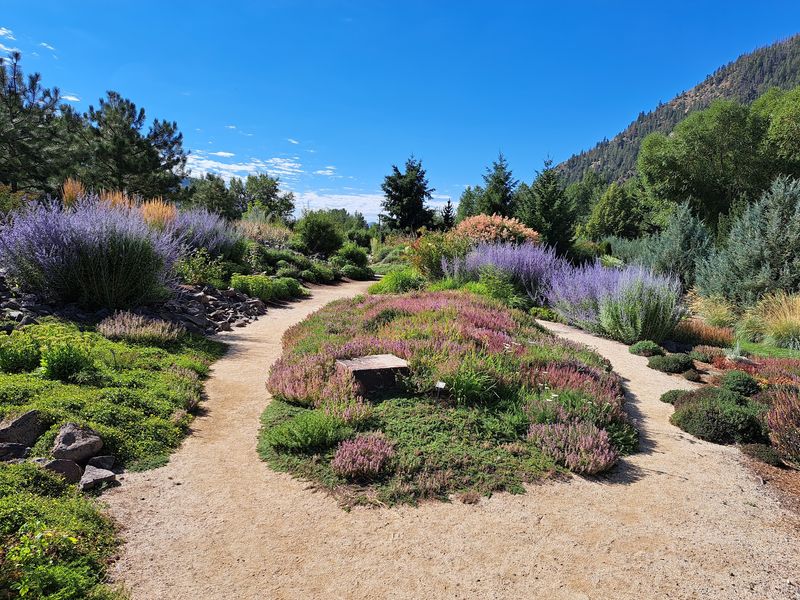
A slow lap around the grounds reveals just how much has been fitted into this relatively compact property.
Sawtooth Botanical Garden spans five acres filled with native and cultivated plants suited to high-elevation conditions. Paths connect formal beds, biome displays, educational gardens, water features, art, and quiet places to sit.
Mountain scenery rises beyond the property, giving even carefully arranged plantings a connection to the larger Wood River Valley landscape. The garden is at 11 Gimlet Road in Ketchum and remains accessible from dawn until dusk every day of the year.
During the main summer season, from Memorial Day weekend through the first Sunday in October, the Visitor Center operates Monday through Saturday from 9 a.m. to 5 p.m. Sunday visitors can still walk through the grounds even though the Visitor Center is closed.
That makes the garden more flexible than the original business-style hours might suggest. Benches and sitting areas appear throughout the property, while the compact acreage allows visitors to explore without committing to a long hike.
You can move slowly, double back toward a favorite planting, or simply find a seat and let the surrounding flowers and mountains provide the afternoon’s scenery.
Explore Displays Inspired By South-Central Idaho’s Five Distinct Biomes
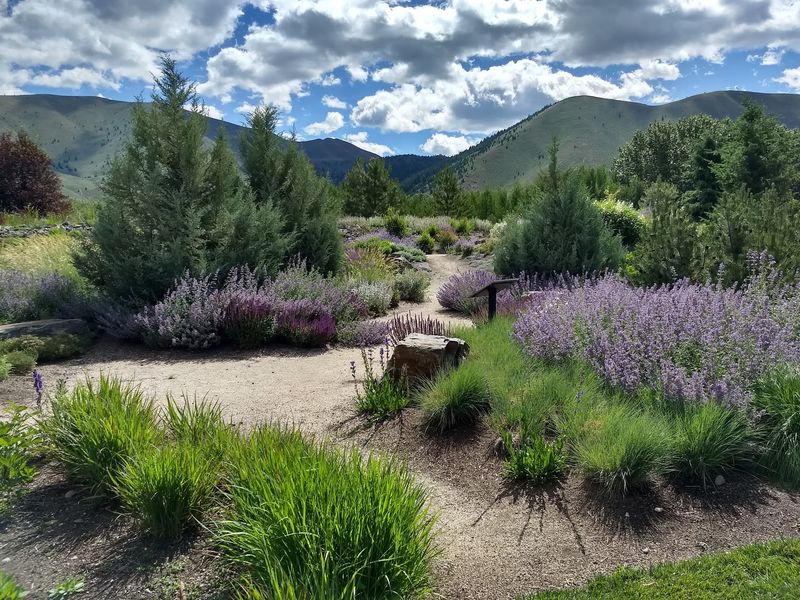
Five landscapes form the backbone of the garden, and each one represents a biome found across south-central Idaho. The Sagebrush Steppe Garden introduces the dry, open ecosystem familiar across much of the region.
Lava Rock Garden shifts toward the volcanic landscapes associated with the Snake River Plain, where basalt and rhyolite shape an environment that can look harsh while supporting a surprisingly broad range of plant life.
Montane displays represent the mountain zone below tree line, where elevation, slope, soil, and temperature create varied habitats.
Alpine plantings draw inspiration from conditions above tree line, where plants must cope with a much shorter growing season and more extreme weather. Riparian Garden brings water into the picture, reflecting the greener ecosystems beside rivers and streams.
Walking between these displays turns five acres into a compact lesson in how dramatically Idaho can change over relatively short distances. The garden does not limit itself to native species, either.
Its purpose includes showcasing both native and cultivated plants that perform well at high elevation. Instead of reading about the five ecosystems separately, visitors get to compare their plant forms and growing conditions within one connected garden.
Find A Peaceful Pause Inside The Garden Of Infinite Compassion
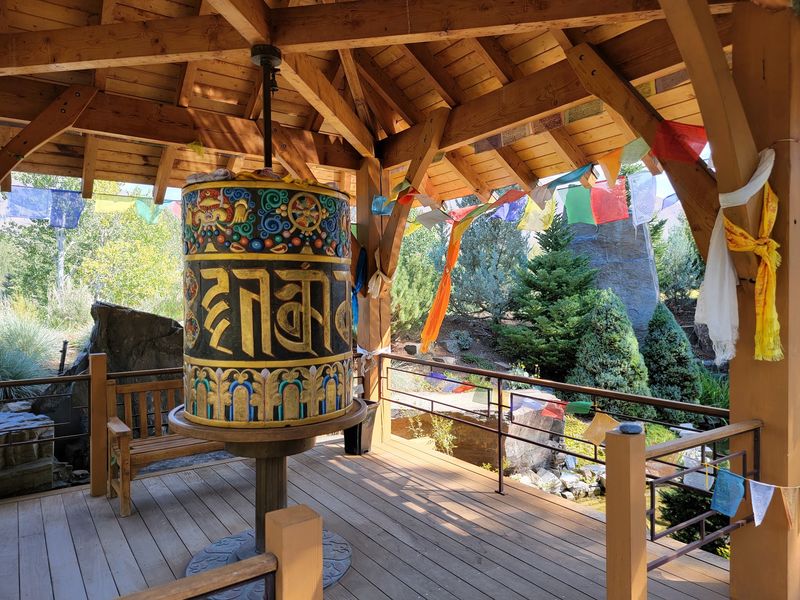
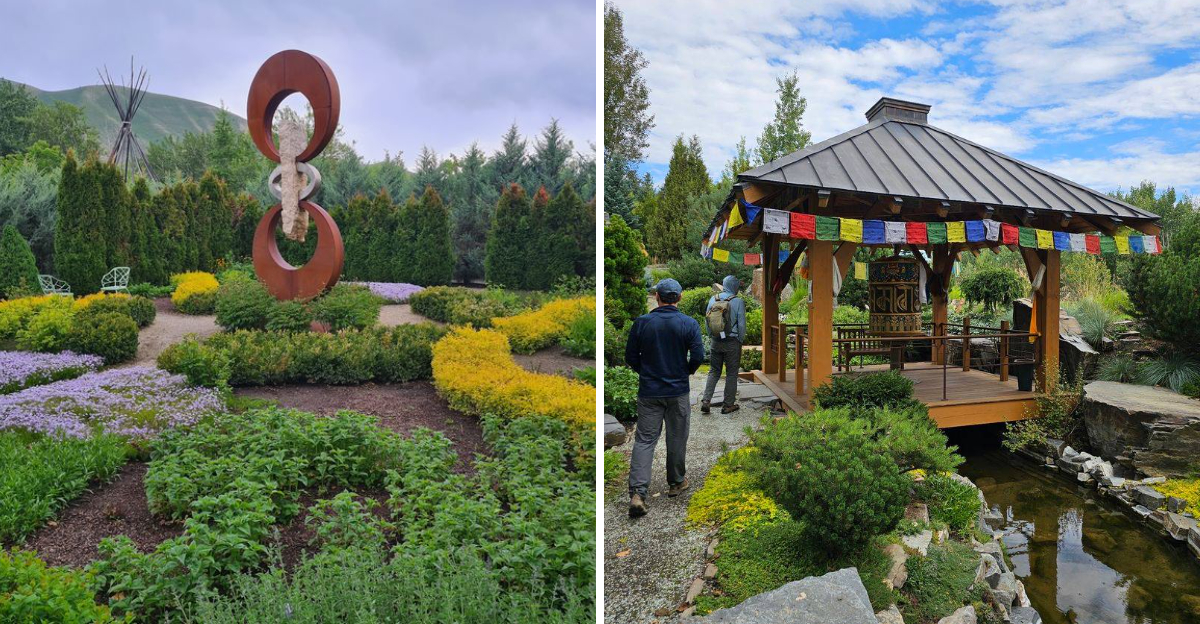
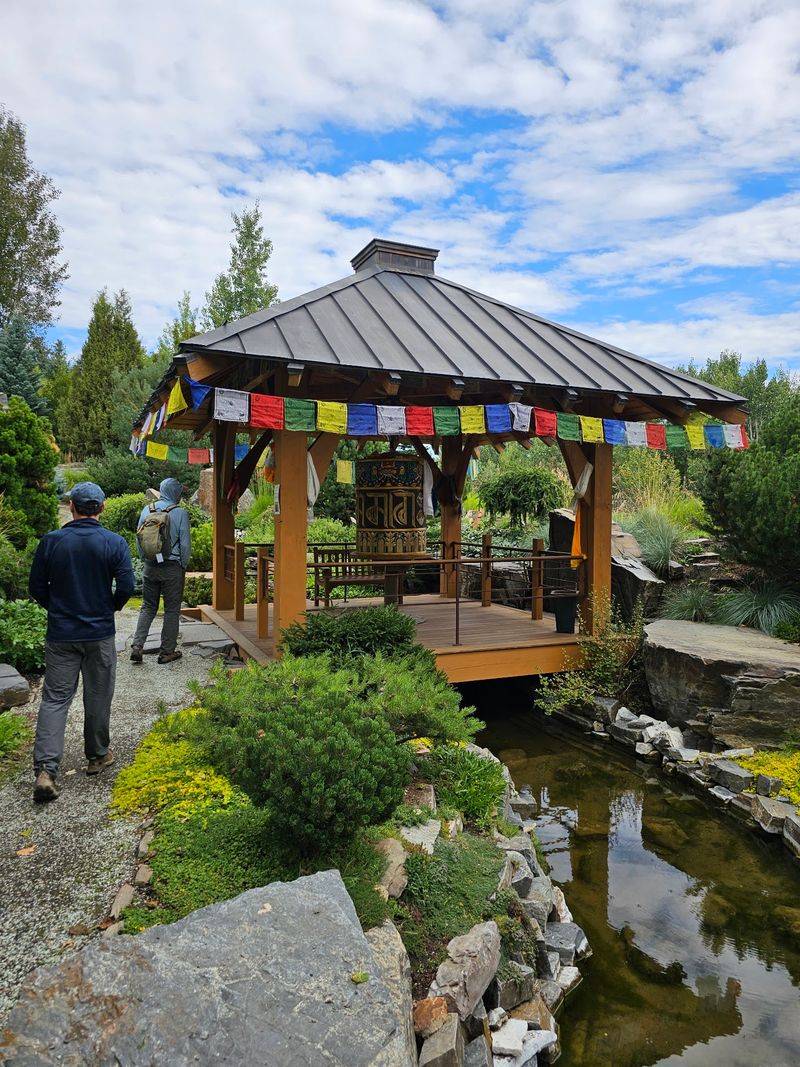
Quiet takes on a more intentional form inside the Garden of Infinite Compassion. Created in September 2005 after the Dalai Lama visited the Wood River Valley, this section was designed as a contemplative space within the larger botanical garden.
Its best-known feature is a Tibetan prayer wheel gifted to the community by the 14th Dalai Lama. Sawtooth Botanical Garden describes it as the only Dalai Lama-blessed prayer wheel in the United States, making it an unusual feature even among American public gardens.
Sixteen large rocks appear throughout the landscape, representing the sixteen Arhats while also serving the practical purpose of retaining soil along a six-foot change in elevation.
Paths connect several smaller areas, including the Serenity Garden, Pet Memory Garden, Serenity Pond, and surrounding plantings.
Guided Garden of Infinite Compassion tours also run on selected Saturdays during summer 2026, with docents explaining the history and design of the space. Visitors do not need to participate in a tour to appreciate the setting.
Water, stone, vegetation, and places to sit make this section naturally suited to a slower pace, especially after spending time comparing the more educational biome displays elsewhere on the property.
Follow Streams Ponds And Alpine Plantings Through The Grounds
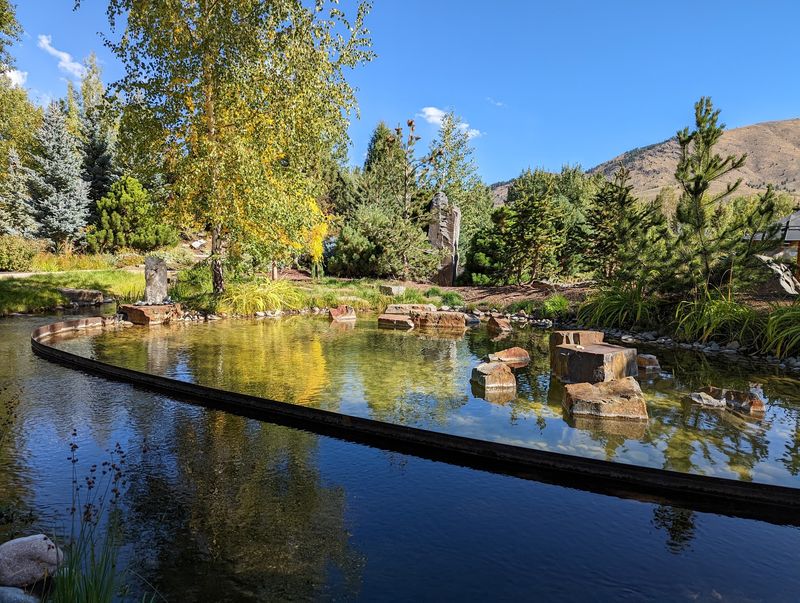
Water quietly links several of the garden’s most relaxing spaces. Riparian plantings demonstrate the kinds of vegetation associated with streams and wetter soils across an otherwise arid region, while a flowing creek passes beside areas such as the Pet Memory Garden and children’s Sawtooth Sandbox.
The Serenity Pond adds still water to the landscape inside the Garden of Infinite Compassion. Riparian plants surround the pond, an aspen grove provides a nearby shaded sitting spot, and a large quartz crystal from Minas Gerais, Brazil, rests at its center.
The stone developed an unusual re-formed tip after breaking naturally while it was still forming, giving visitors another small detail to inspect during the walk.
Elsewhere, the Ellen Long Garden Pavilion sits between formal gardens, perennial beds, and a riparian pond with mountain views to the north.
Those different water features keep the five-acre property from feeling like a sequence of dry flower beds. They also fit naturally with the biome theme, showing why water changes plant communities so dramatically in south-central Idaho.
Follow the paths without rushing and the experience moves back and forth between cultivated displays, flowing water, shaded corners, and wider views toward the surrounding mountains.
Look For Native Species That Thrive In Idaho’s Challenging Mountain Climate
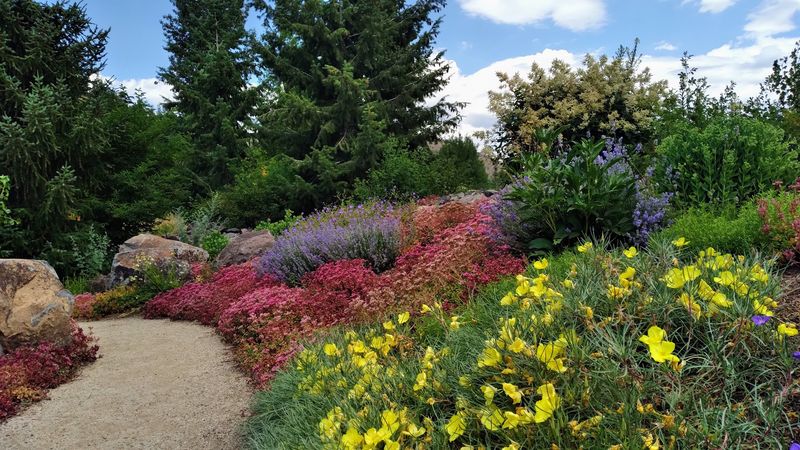
Carol’s Wildflower Garden is a good place to see what happens when regional plants receive the spotlight. Named for horticulturist Carol Blackburn, the bed uses native wildflower species arranged to recall the experience of encountering scattered blooms along an Idaho trail.
Scarlet gilia, many-leaved lupine, pinleaf penstemon, and native grasses are among the plants identified by the garden.
They sit within a much larger collection devoted to species capable of handling high-elevation growing conditions.
Those conditions matter here. The botanical garden exists partly to help visitors understand what thrives amid short growing seasons, dry air, strong sun, cold winters, and major temperature changes.
Educational beds expand the lesson into food plants, with fruits, vegetables, herbs, root crops, and composting demonstrations appearing during the growing season.
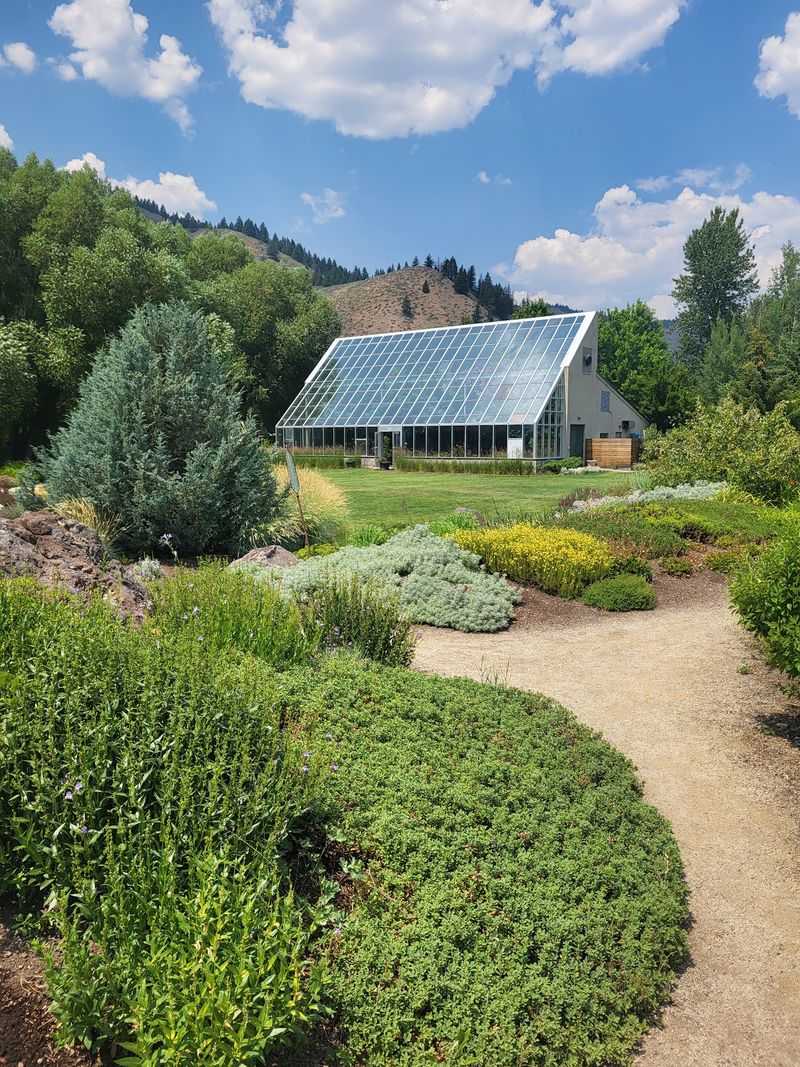
The greenhouse adds still more variety through a citrus grove and demonstration beds used for classes and events throughout the year.
Plant labels are limited in some parts of the property, so the garden recommends using a plant-identification app or asking staff when something unfamiliar catches your attention. That turns a casual flower walk into an easy opportunity to learn what actually succeeds in this part of Idaho.
Take Your Time Around The Art Installations And Reflective Garden Spaces
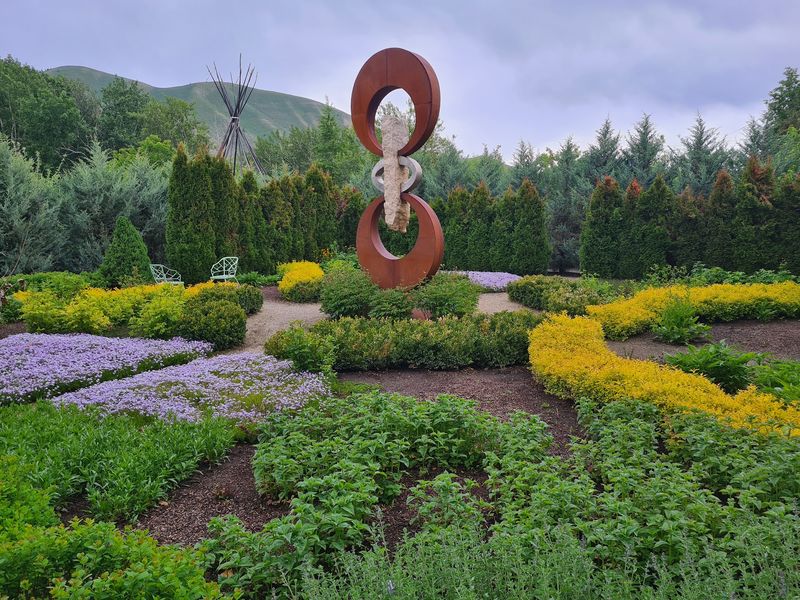
Plants do not get every bit of attention here. Sawtooth Botanical Garden incorporates art throughout the grounds and even provides a dedicated printable guide for visitors who want to seek out individual installations.
Sculptural pieces appear among perennial beds, trees, grasses, and open spaces rather than being separated into an indoor gallery.
That arrangement changes the way each piece looks as flowers bloom, foliage develops, and seasonal light shifts around it.
Reflective spaces offer a quieter counterpoint. The Garden of Infinite Compassion includes ponds, rocks, seating, and several smaller garden “rooms,” while the Ellen Long Garden Pavilion opens toward the surrounding mountains.
Elsewhere, the Sawtooth Sandbox gives families a shaded place to pause, with picnic tables, toys, nets, buckets, and a nearby stream for children to explore.
The greenhouse adds another indoor-outdoor transition, combining a citrus grove, educational plantings, classes, and gathering space beneath one roof.
None of these areas requires visitors to follow a strict route. The five-acre layout works well for wandering, especially when a sculpture, bench, flower bed, or mountain view gives you a reason to stop unexpectedly.
A short visit can easily stretch once you stop treating the garden like something that needs to be completed.
Visit After 65 And Skip The Regular Admission Fee Completely
Turning 65 comes with a particularly useful perk at Sawtooth Botanical Garden. Current 2026 admission information gives visitors age 65 and older free entry during the regular admission season.
Children under 12, garden members, American Horticultural Society reciprocal-admission members, Native American tribal members, and military veterans also qualify for complimentary admission. Everyone else pays $7 per person during the main season.
The grounds themselves are accessible from dawn until dusk every day throughout the year, even when the Visitor Center is not operating. From Memorial Day weekend through the first Sunday in October, the Visitor Center is open Monday through Saturday from 9 a.m. to 5 p.m.
Sunday remains available for self-guided garden walks. Winter Visitor Center hours shift to Monday through Friday from 10 a.m. to 4 p.m. and can vary with snow removal, so calling ahead is sensible during colder months.
The combination of compact acreage, sitting areas, botanical displays, and free admission for older visitors makes the garden especially easy to work into a relaxed Wood River Valley day. There is no need to squeeze every biome and garden room into one hurried circuit.
Turn A Ketchum Afternoon Into A Slow Walk Through Idaho’s Plant Life
Save an afternoon for this stop and the five biome gardens can provide the basic route while everything else fills in the spaces between them.
Wander through Sagebrush Steppe and Lava displays, compare the Montane and Alpine sections, then follow greener Riparian plantings toward ponds and shaded areas.
Carol’s Wildflower Garden adds native blooms, educational beds show what can be grown and composted, and the greenhouse currently holds a citrus grove alongside demonstration plantings.
Art installations appear throughout the property, so even returning along the same path can reveal something missed on the first pass.
The garden’s address is 11 Gimlet Road, Ketchum, ID 83340, and the grounds remain open from dawn until dusk year-round.
Summer visitors can also join free guided garden walks on selected Wednesdays, while Garden of Infinite Compassion tours are offered on selected Saturdays through late August 2026.
More than three decades after local gardeners founded the organization in 1994, the property still centers on the same basic idea: showing what can grow, survive, and flourish in a high-elevation Idaho landscape.
Five acres turns out to be plenty of room for that story.