This Hidden California Mansion Lets You Wander Through An Elegant Victorian-Era Escape
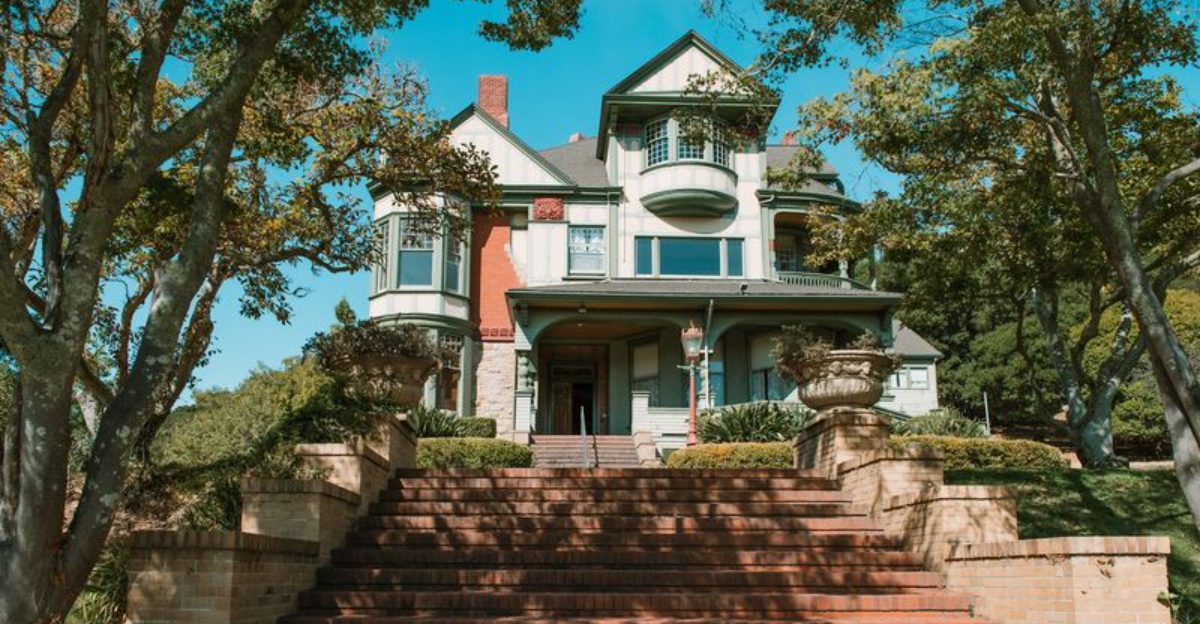
You do not expect to find something like this tucked behind a line of trees. Then it appears, and everything slows down.
A Victorian mansion rises from the hillside, detailed and elegant without feeling distant. It draws you in quietly, one glance at a time.
Stepping inside feels easy. No rush. No pressure. Just space to look around and take it in.
Moments like this feel rare in California. The noise fades. The pace softens. You stay longer than planned without noticing.
The craftsmanship stands out immediately. Intricate woodwork, tall windows, and rooms filled with natural light create a sense of depth that builds as you move through the house.
Outside, the gardens stretch gently around the property. Paths invite slow wandering, giving the entire visit a calm, unforced rhythm.
Nothing about the experience feels overwhelming. It unfolds naturally, detail by detail, until the whole place starts to feel familiar in a quiet, unexpected way.
What To Know Before You Go
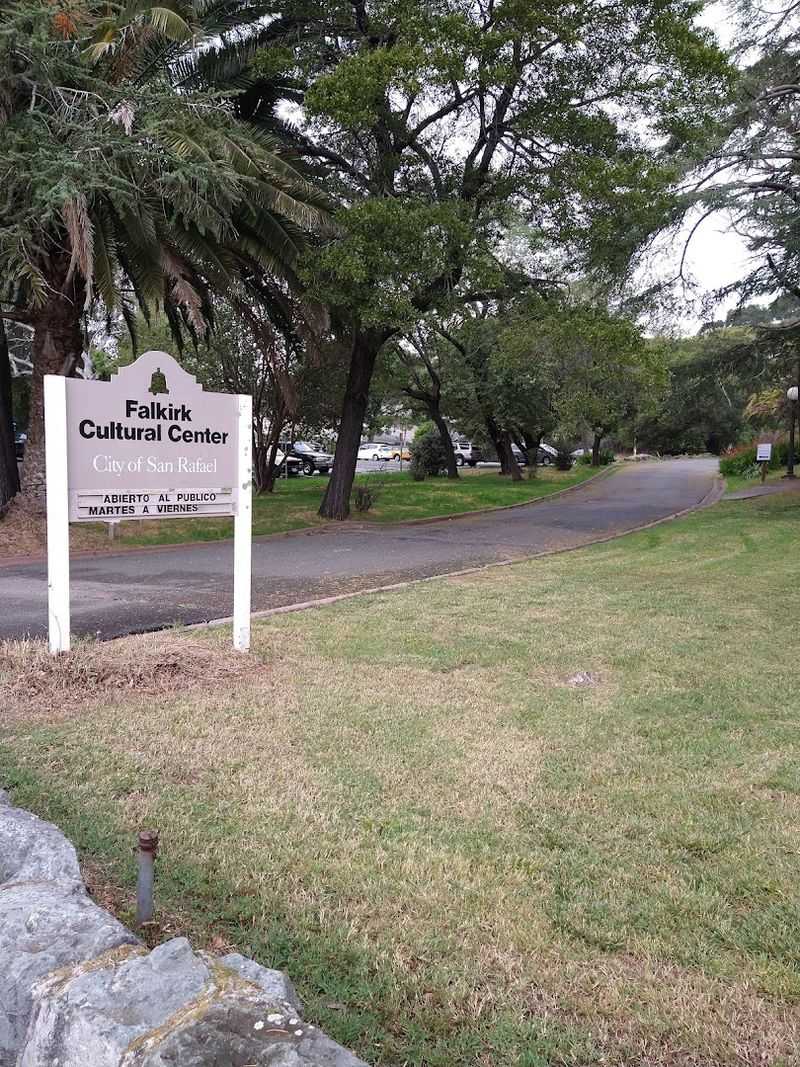
Planning a visit to Falkirk takes a small amount of preparation to get the most out of the trip.
The cultural center at 1408 Mission Ave, San Rafael, CA 94901, is currently open Tuesday through Friday from 1:00 PM to 4:30 PM and on Saturdays from 10:00 AM to 2:00 PM.
The center is closed on Sundays and Mondays, and hours can shift when private events are scheduled, so calling ahead at 415-485-3328 or checking falkirkculturalcenter.org is always a smart move before making the trip.
Parking is available on site, but reading the posted signs carefully is important since ticketing does occur in certain spots.
Weekday visits tend to be quieter and allow for a more relaxed exploration of both the interior and the gardens.
The grounds have some incline, so visitors with mobility considerations may want to plan their route accordingly and allow extra time for moving between sections.
Bringing a camera is worthwhile since the light through the stained glass, the garden plantings, and the exterior architecture all offer strong visual material throughout the day.
The overall pace of a visit tends to be slow and exploratory rather than structured, which suits the nature of the estate well.
Falkirk rewards patience and curiosity in equal measure.
The Queen Anne Architecture That Started It All
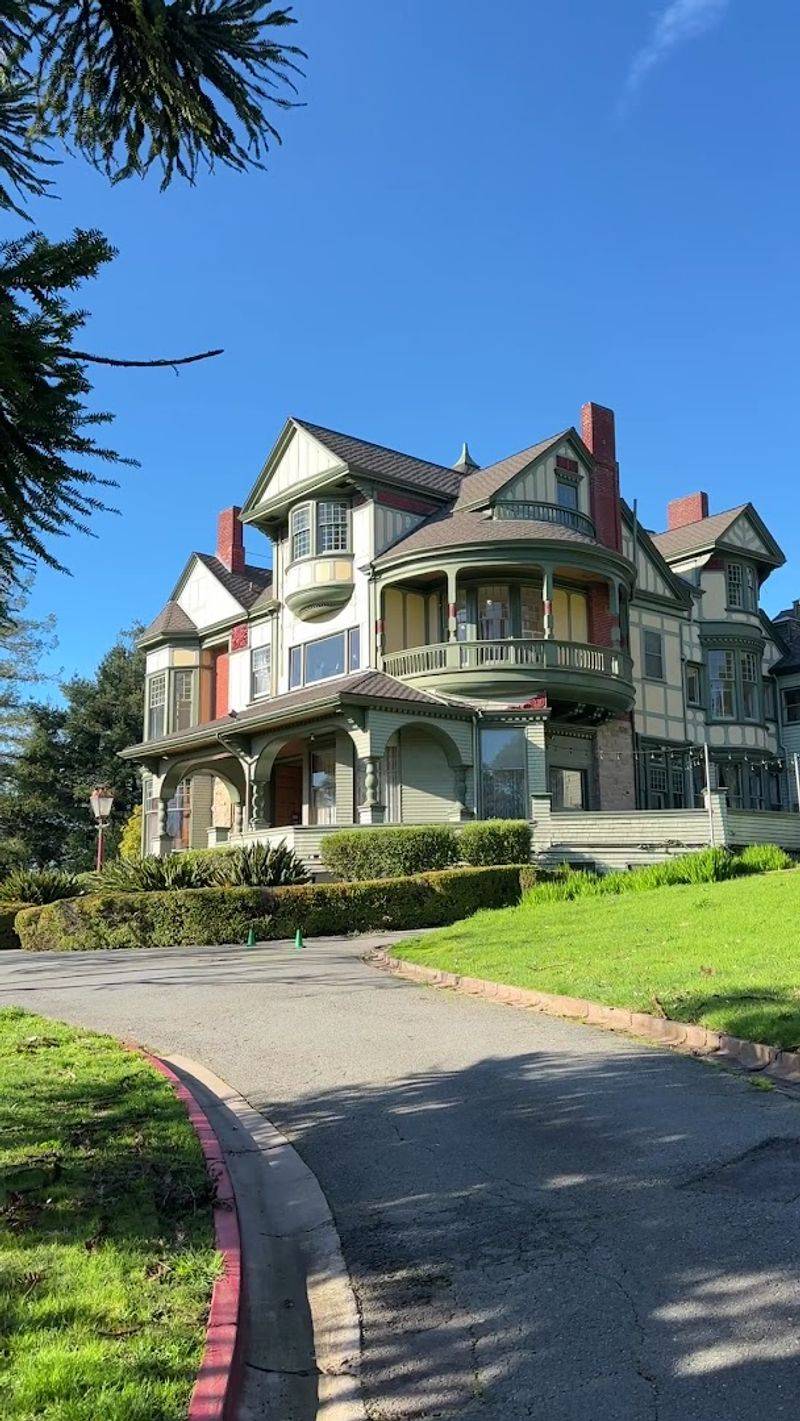
Few buildings manage to stop people in their tracks the way Falkirk does on a clear afternoon.
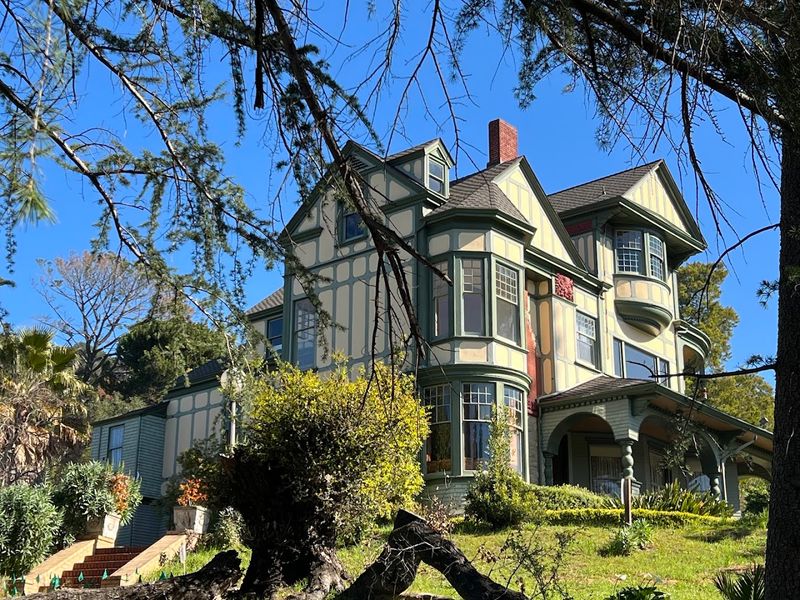
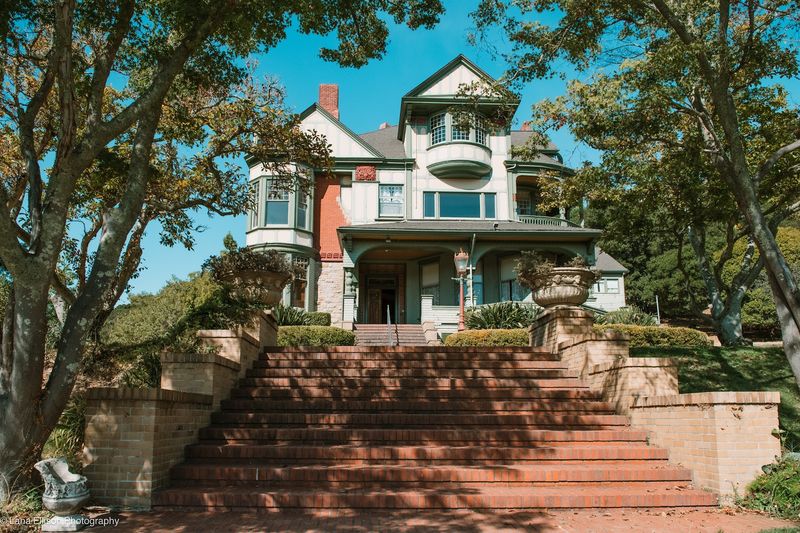
The mansion was constructed in 1888 and stands as a well-preserved example of Queen Anne architecture, a style known for its elaborate ornamentation and asymmetrical design.
From the street, the roofline alone tells a story, with multiple gables, tall chimneys, and decorative trim that required skilled craftsmen to complete.
Queen Anne homes were considered a symbol of prosperity and refined taste during the late 19th century.
The design at Falkirk includes variously shaped bays, layered siding textures, and a wraparound porch that gives the home a sense of grandeur without feeling cold or intimidating.
Walking up to the entrance feels like stepping through the pages of an architecture textbook.
The building has been maintained carefully over the decades, and many of its original exterior details remain intact.
Visitors who appreciate craftsmanship tend to spend a good amount of time just examining the facade before ever going inside.
The attention to detail built into every corner of this structure reflects the ambition of the era in which it was created.
Why This Listing Matters
Not every old building earns a place on the National Register of Historic Places, and Falkirk’s inclusion is a formal acknowledgment of its architectural and historical value.
The designation recognizes properties that hold significance in American history, architecture, archaeology, engineering, or culture.
For Falkirk, the recognition centers on its architectural integrity and its role in the story of San Rafael’s development.
Being listed on the National Register does not automatically guarantee preservation funding, but it does signal that the building meets a high standard of historical importance.
The listing also tends to increase public awareness and can make a property eligible for certain tax incentives related to preservation work.
For a community-owned site like Falkirk, that kind of recognition carries real practical value. Visitors who care about preservation history will find the designation worth pausing over.
The mansion has retained much of its original character, which is part of what qualified it for the listing in the first place.
Seeing a building that has survived more than 130 years while keeping its architectural soul largely intact is a reminder of what thoughtful stewardship can accomplish over time.
The National Register status makes Falkirk not just a local treasure but a recognized piece of the broader American built environment.
The Visionary Woman Behind The Estate
Behind every grand estate is usually a bold decision, and at Falkirk, that decision belonged to Ella Nichols Park.
She was a wealthy widow who commissioned the mansion as her private dream home on an 11-acre property in what was then a quieter stretch of Marin County.
Her vision shaped the scale and elegance of the estate from the very beginning. Choosing to build on that particular hillside was no small undertaking in the 1880s.
The land required careful planning to develop, and the home Ella envisioned was not modest by any standard.
She wanted large, light-filled rooms, refined finishes, and grounds that matched the beauty of the structure itself.
The result was a home that stood apart from anything else in the area at the time. Understanding who built Falkirk adds a meaningful layer to the visit.
The mansion was not simply a contractor’s project; it was a personal statement made by a woman who had the resources and the will to create something lasting.
That sense of personal investment still lingers in the rooms and hallways today, giving the space a warmth that pure architectural history alone cannot fully explain.
The Scottish Shipping Magnate Who Named The Estate
In 1906, the estate changed hands and gained the name it still carries today.
Captain Robert Dollar, a Scottish-born shipping magnate who had built one of the most successful maritime businesses on the Pacific Coast, purchased the property and renamed it Falkirk after the town in Scotland where he was born.
That simple act of naming turned a private home into a piece of living cultural history.
Captain Dollar was already a well-known figure in Northern California business circles by the time he acquired the estate.
His company, the Dollar Steamship Line, operated routes across the Pacific and made him one of the most influential shipping figures of his era.
Owning a grand Victorian estate in Marin County fit naturally with the lifestyle of a man of his standing.
The Scottish connection adds a quietly international dimension to the property.
Falkirk, Scotland, is a real town with its own long history, and the name carries that weight even in a California context.
Visitors who know the backstory often find the name more meaningful once they understand why it was chosen, turning what might seem like a random label into a genuine piece of personal heritage expressed in wood, stone, and landscape.
How The Community Rescued Falkirk In 1974
There was a real possibility that Falkirk would not exist today.
By the early 1970s, the estate faced the threat of demolition as development pressure increased in the area.
A group of community members in San Rafael recognized what would be lost and organized efforts to purchase and preserve the property.
In 1974, the community successfully acquired the estate, and the mansion was spared. The story of that rescue is worth knowing before a visit because it reframes what the place represents.
Falkirk is not just a well-maintained old building; it is a place that exists because people chose to fight for it.
That kind of collective decision-making on behalf of shared history is not as common as it should be, and the outcome here was genuinely fortunate.
Today the property is owned by the City of San Rafael and operates as a public cultural center, meaning the community that saved it also continues to benefit from it.
Admission to the grounds is generally free, which makes the estate accessible to a wide range of visitors.
The 1974 acquisition turned a private estate into a community resource, and that transformation is central to understanding what Falkirk has become in the decades since.
Rotating Art Exhibitions
One of the more surprising things about Falkirk is the combination of old and new that happens inside its walls.
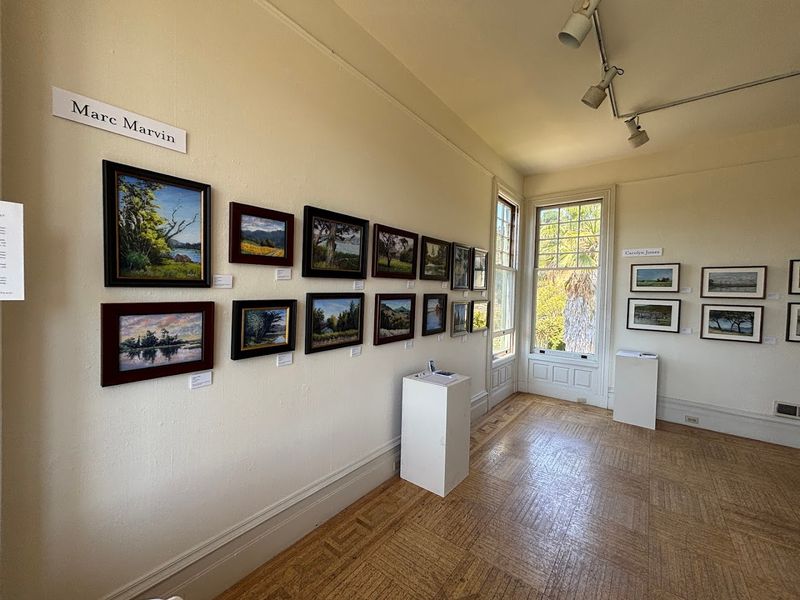
The upstairs galleries host rotating art exhibitions that showcase contemporary works, creating an unusual dialogue between the ornate Victorian interior and modern artistic expression.
The contrast is not jarring; if anything, it makes both the architecture and the art feel more interesting in each other’s presence.
The exhibitions change throughout the year, so repeat visitors are likely to find something different on each trip.
Local and regional artists tend to be featured, giving the space a connection to the current creative community in Marin County and the broader Bay Area.
The gallery setting inside a historic mansion gives the work an atmospheric backdrop that a standard white-cube gallery simply cannot replicate.
Checking the Falkirk Cultural Center website at falkirkculturalcenter.org before visiting is a good idea for anyone specifically interested in the exhibitions, since show schedules and opening times can vary.
The center is located at 1408 Mission Ave, San Rafael, CA 94901, and the galleries are generally accessible during regular public hours.
Combining a walk through the grounds with a look at the current exhibition makes for a well-rounded afternoon visit.
Architectural Interior Details
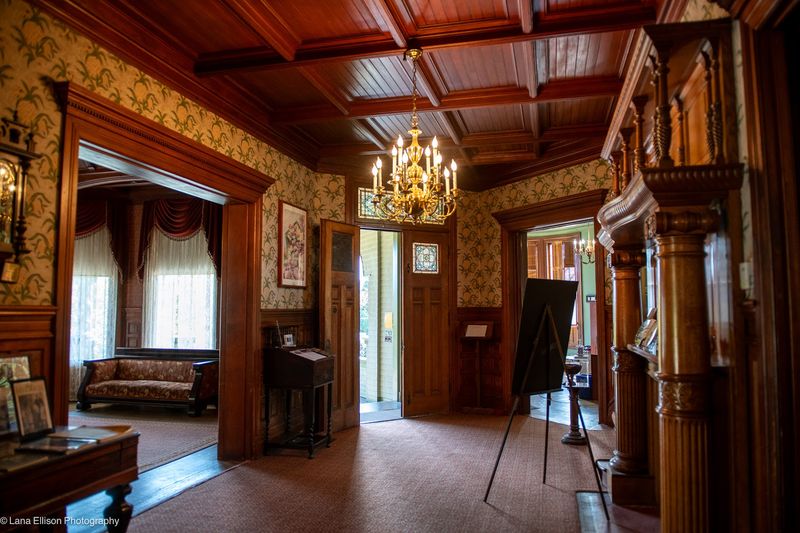
Stepping inside Falkirk is a sensory shift that happens quickly.
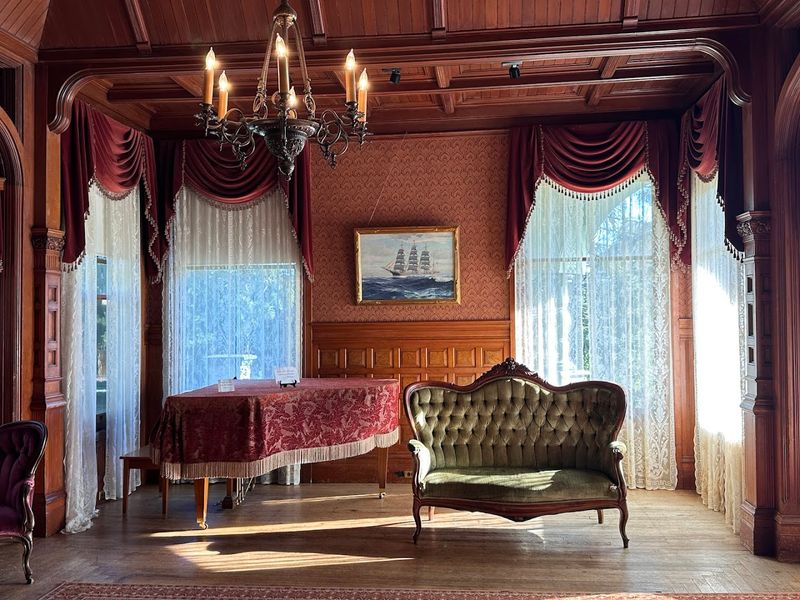
The interior features coffered ceilings, rich wood paneling, decorative fireplaces, and floor-to-ceiling stained glass windows that cast colored light across the floors during certain times of day.
Each room has a different character, but all of them share a sense of careful craftsmanship that reflects the standards of late 19th-century residential design.
The stained glass is particularly striking.
Large panels filter the California light into warm hues of amber, green, and red, creating a quality of illumination that changes depending on the time of day and the season.
The carved woodwork throughout the home shows the level of skill that craftsmen of the era brought to high-end residential projects.
Visitors who slow down and look closely tend to notice details that a quick walkthrough would miss entirely.
The decorative fireplaces, for instance, feature tilework and mantel carvings that reward close inspection. The coffered ceilings add depth and formality to rooms that might otherwise feel simply large.
For anyone who appreciates interior design or architectural history, the inside of Falkirk offers more to study than a single visit can fully absorb. It is the kind of space that gets richer the more attention it receives.
The Demonstration Gardens
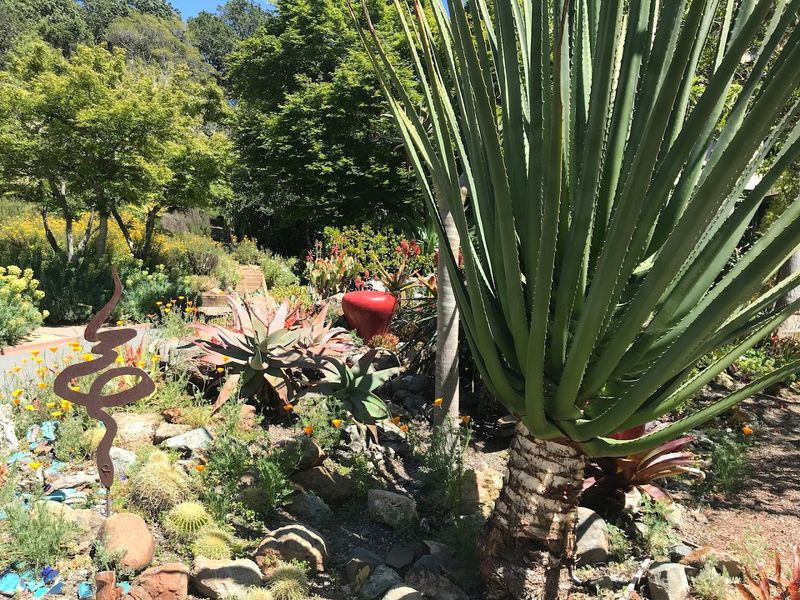
The gardens at Falkirk are not just decorative; they were designed with education in mind.
The demonstration gardens were created by Master Gardeners in collaboration with the University of California, and each section focuses on a different theme or planting approach.
Visitors can explore a Moon Garden, a pollinator-friendly habitat designed to attract bees and butterflies, and a Mediterranean Climate Garden featuring plants from Australia, South Africa, and other regions with similar coastal climates.
The Succulent Garden alone are worth the walk.
Some of the agave and aloe plants on the grounds have developed dramatic spire-like blooms that can reach impressive heights, making them hard to miss even for visitors who are not particularly interested in botany.
Serenity Garden is another breathtaker. It is filled with pollinators that buzz with life.
There’s also a Xeriscape Garden with no irrigation, featuring plants that can exist on rainfall alone.
And there are Habitat Gardens: Under Oaks Garden, Beneficial Habitat Garden, California Diversity Garden, and California Native Garden.
The grounds are largely open to the public and provide a calm, unhurried environment for walking.
Wildlife is a natural part of the experience here, and deer and wild turkeys have been spotted moving through the property.
The combination of curated garden spaces and wilder wooded hillsides gives the 11-acre estate a range of textures that makes it feel larger and more varied than its size might suggest.
Comfortable footwear is recommended since parts of the terrain have a noticeable incline.
The Restored Greenhouse And Sculpture Garden
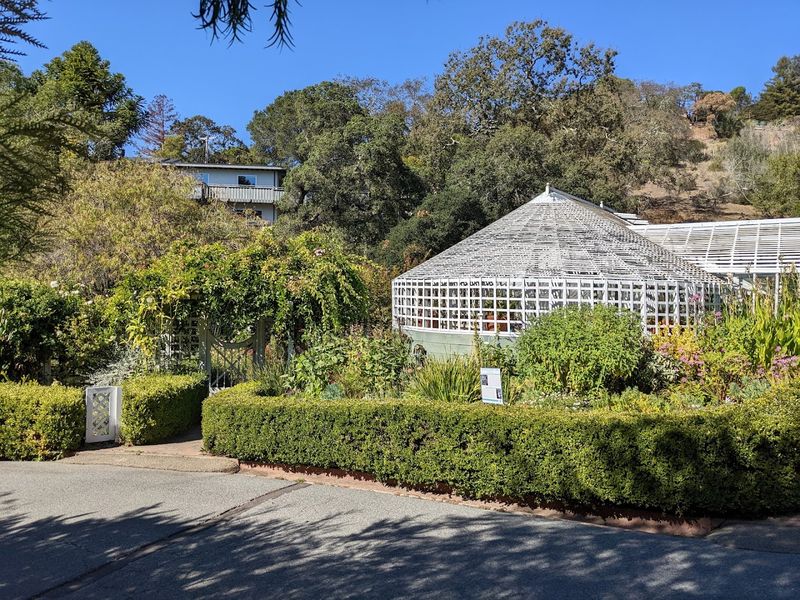
Beyond the main mansion and the demonstration gardens, two smaller features of the Falkirk grounds tend to reward visitors who take the time to explore fully.
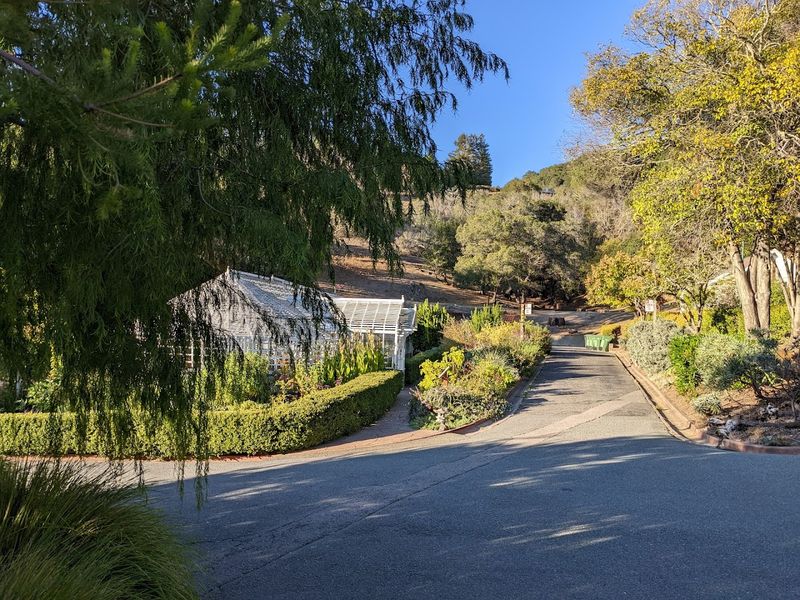
The restored greenhouse is a structure with its own quiet charm, offering a glimpse into how the original estate managed plants and produce in an era before modern garden centers made such things effortless.
The glass and wood construction has been carefully maintained and fits naturally into the overall aesthetic of the property.
The sculpture garden provides a different kind of experience from the horticultural sections of the grounds.
Outdoor sculpture changes the way a visitor moves through a space, encouraging slower movement and closer attention to the surrounding environment.
The combination of art and landscape in an open-air setting makes the sculpture garden a pleasant detour from the main walking paths.
Together, the greenhouse and sculpture garden reflect the layered character of Falkirk as a whole.
The estate is not a single-note attraction; it offers multiple reasons to linger and multiple directions in which to wander.
Visitors who arrive expecting only a mansion tour often leave surprised by how much ground there is to cover and how varied the experience becomes once they move beyond the front steps of the main house.