This Hidden Idaho Canyon Twists Through 800,000-Year-Old Lava Rock In Shades Of Black, Gray And Rust
The highway gives absolutely no warning.
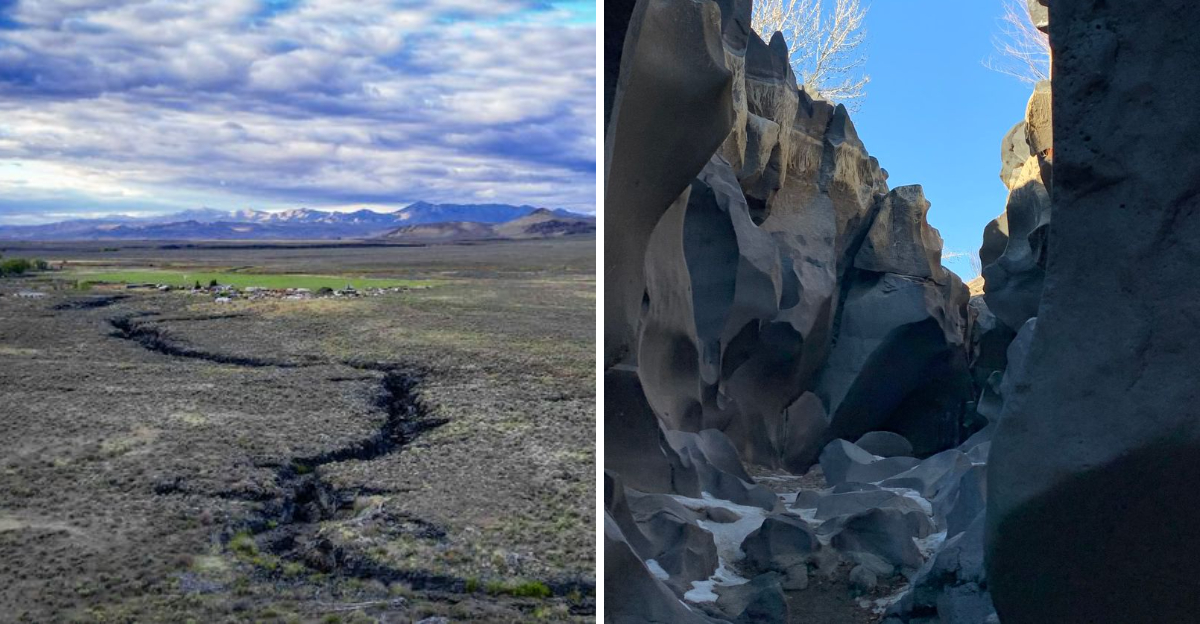
One minute, the landscape looks ordinary. A few steps later, the ground splits open into a dark maze of volcanic rock that seems far too dramatic to have been hiding this close to passing cars.
Water did the sculpting.
For thousands of years, the river worked through lava nearly 800,000 years old, smoothing hard edges and twisting the canyon into passages that look almost hand-cut. In places, the walls narrow enough to make the route feel more like sneaking through a crack in the planet than taking a hike.
Even the colors refuse to stay put. Black rock catches flashes of gray and rusty red as the light shifts overhead.
No giant entrance sign announces the surprise. No long trek builds suspense. You simply step down and suddenly Idaho looks like it has opened a trapdoor into another world.
Try driving past after knowing that.
Black Lava Walls Make The Canyon Feel Almost Otherworldly
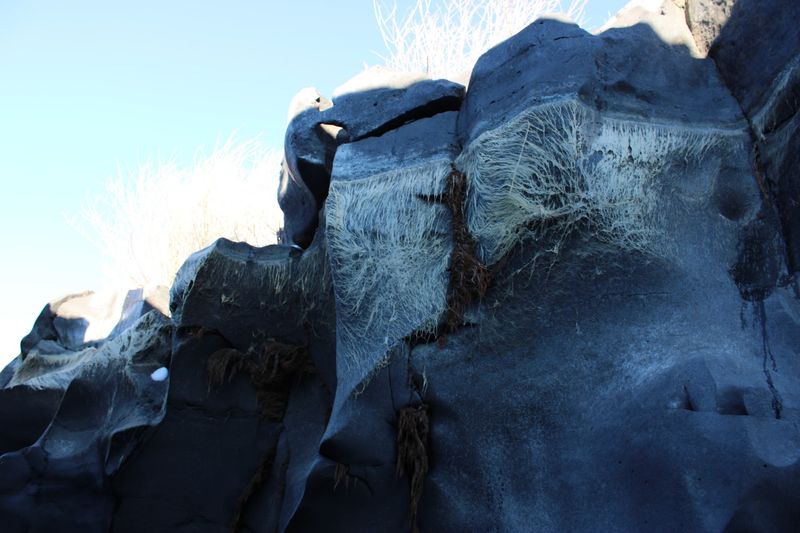
Walking down the short path from the parking lot, the ground opens up and suddenly you are standing between walls of near-black basalt. The stone looks polished, almost wet, even on dry days.
The Big Wood River did all this work, slicing through lava flows that hardened roughly 800,000 years ago. Over the past 10,000 years or so, moving water wore the rock into smooth curves, rounded bowls, and shadowy alcoves that many visitors compare to the slot canyons of Utah.
Sound behaves oddly here. Voices bounce off the tight walls, and the temperature drops a few degrees once you step below the rim, which feels wonderful in late summer heat.
Light does the rest of the magic. Midday sun drops narrow beams onto the dark floor, while lower-angle light in the afternoon brings out every ripple and groove.
Bring a camera with a wide lens if you have one. Photos rarely capture the scale, but the textures come through beautifully.
Rust-Colored Streaks Break Up The Dark Basalt In Surprising Patterns
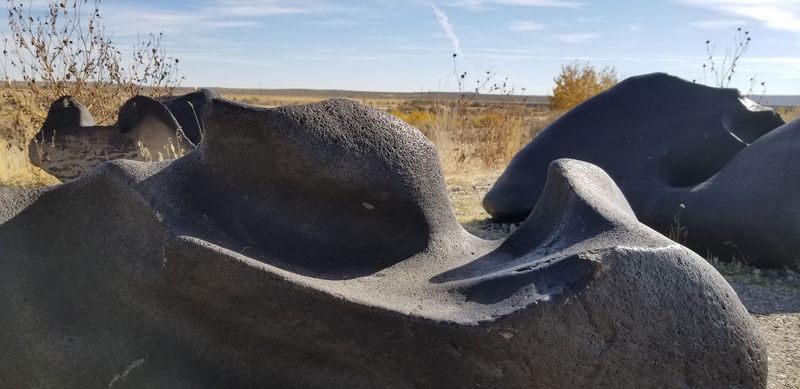
Look closely at the walls and the color story gets complicated fast. What seems solid black from a distance turns out to hold warm rust-orange stains, chalky gray patches, and bands that shift as clouds pass overhead.
Those tones come from minerals inside the lava reacting to water and air over long stretches of time. Iron in the basalt rusts, much like an old nail left outside, leaving copper and cinnamon-colored streaks across the stone.
The gray shows up where the rock has been scoured hardest. Glacial melt once carried chunks of granite and quartz down the Big Wood River, and those tougher stones acted like sandpaper against the softer basalt.
Cloudy days actually work in your favor for spotting these details, since flat light keeps the colors from washing out.
Run a hand along a rusty seam and you will feel the difference right away, rougher and grittier than the glassy black surfaces around it. Small details like this reward slow walkers more than fast ones.
Narrow Passages Twist Between Rock Sculpted By Water Over Time
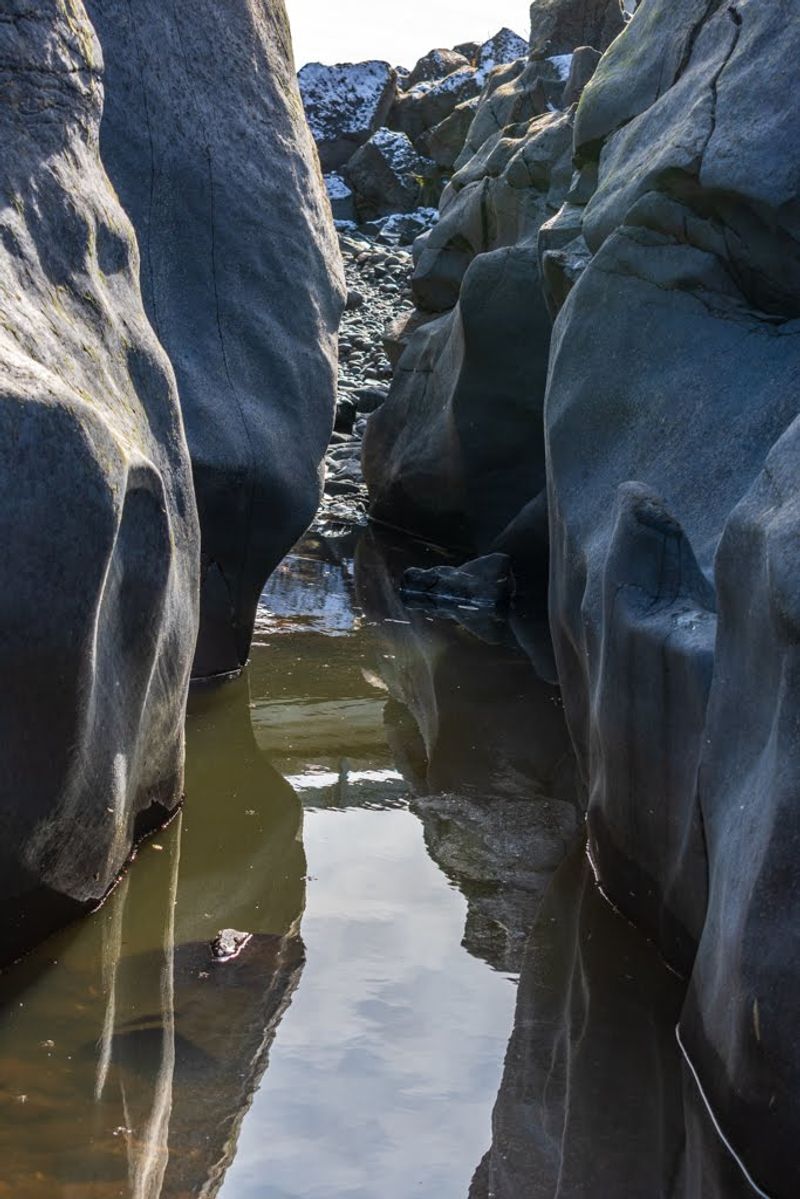
Think of a hallway built by water instead of carpenters. The route through the canyon bends, pinches, and opens again, with swirling potholes, keyholes, and scooped bowls carved into the Shoshone Lava Flow.
Some passages are wide enough for two people side by side. Others narrow to a squeeze, and a few spots ask you to boost yourself up over a boulder or lower down a short step.
Families with kids manage it regularly, though younger hikers may need a hand at the trickier ledges. Gloves help when you are gripping rough edges.
Many visitors report that heading left from the bottom of the access path leads to the most dramatic sculpting, while going right toward the bridge feels tamer.
Plan on going slowly. The fun here comes from poking into side pockets, peering through natural windows in the stone, and noticing how each curve echoes the direction water once spun.
Pack water and a snack, since there is no shade guarantee and no services below the rim.
Dry Conditions Reveal The Canyon Best When River Flow Is Low
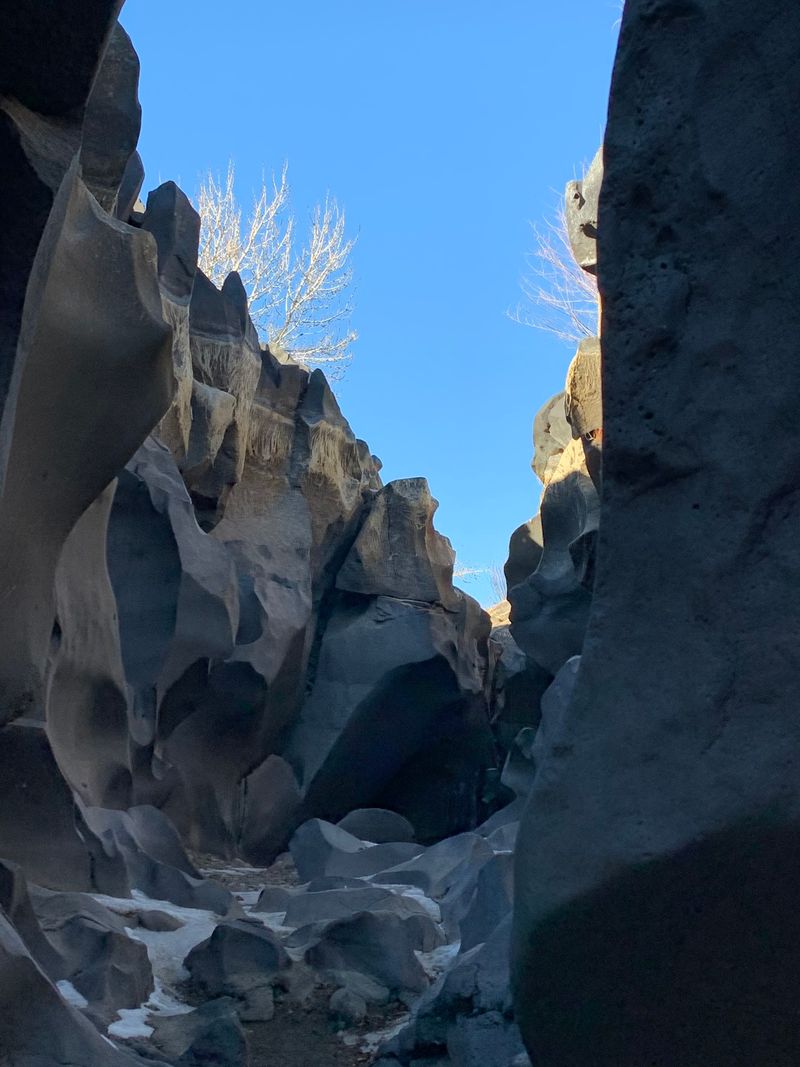
Timing matters more here than at almost any other scenic stop in southern Idaho. The channel doubles as an irrigation canal, so the canyon is only walkable when the water is off.
Late summer and early fall, once the irrigation season winds down, tend to offer the best window. Many visitors also explore through the winter months, roughly November into March, when flows stay low.
Show up in July and you may find the river running fast, which means no hiking below the rim. The viewpoint, storyboards, and picnic table still make for a decent leg stretch.
Call the Big Wood Canal Company before you drive out. Water can be released without warning, and a dry channel can fill quickly, so checking ahead is the single smartest thing you can do.
Snow and ice add another wrinkle in winter, both on the rock and on the access road. Traction devices for your shoes are worth stashing in the car during colder months.
Every Bend Brings A Different Mix Of Shadow, Texture, And Color
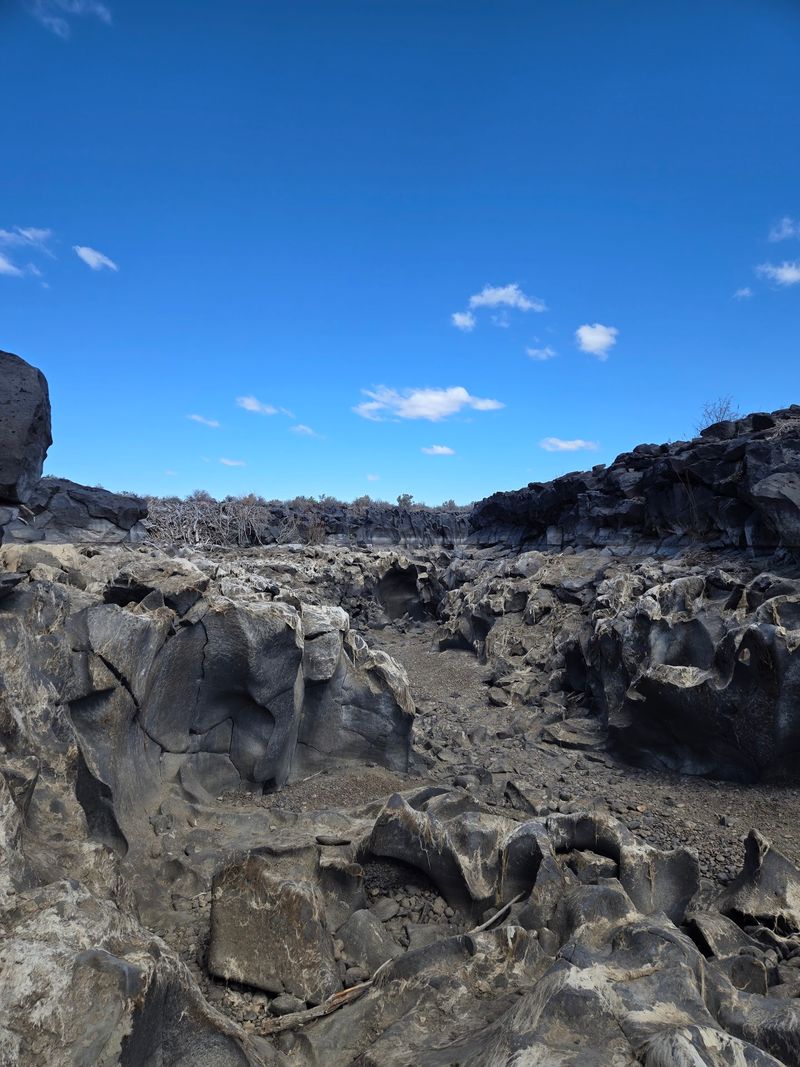
No two sections of this canyon look alike, which is exactly why people linger longer than they planned. Round one corner and the walls close in tight and gloomy.
Round the next and sunlight pours across a wide, glassy shelf.
Texture changes just as often. Rough, pitted lava gives way to surfaces buffed smooth enough to reflect the sky, and patches of green moss cling to damp shaded seams.
Color follows the light. Deep charcoal in shadow, silvery gray in full sun, warm rust where minerals have bled across the stone.
Footing shifts too, so watch your step while your eyes wander. Smooth basalt can be surprisingly slick, especially near lingering puddles.
Small pleasures add up along the way: the crunch of gravel, the hush between the walls, a breeze funneling through a narrow gap.
Give yourself an afternoon rather than a quick pass. The canyon rewards patience with details you will miss at a brisk pace.
The Rough Lava Underfoot Makes Sturdy Shoes A Smart Choice
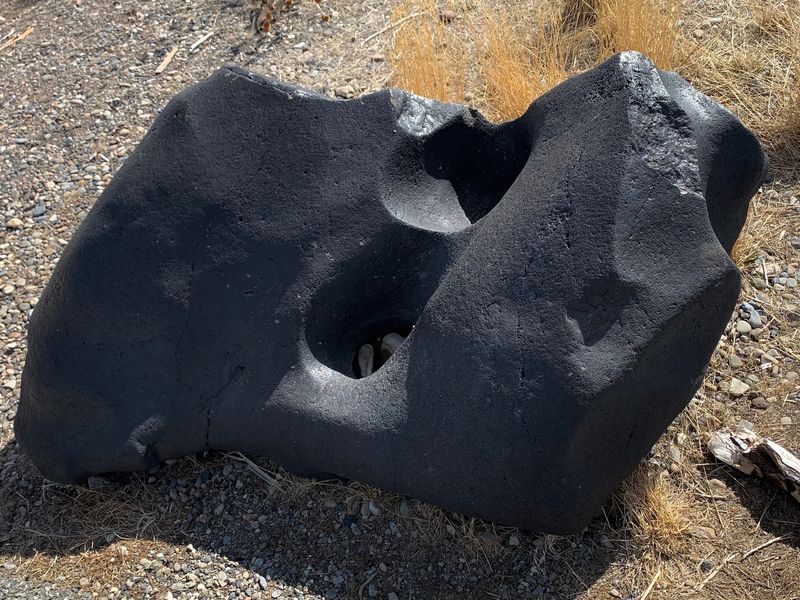
Sandals belong back in the car. The floor of this canyon mixes jagged lava, loose cobbles, and polished stone that turns slippery wherever moisture collects.
Hiking shoes with grippy tread handle it best. Sturdy sneakers can work for the easier stretches, but anything with a slick sole will keep you nervous the whole way.
A collapsible hiking stick earns its space in the pack. Uneven steps and short drops become much easier with a third point of contact.
Thin gloves are another quiet win, since parts of the route involve pulling yourself up over rock edges that can scrape bare palms.
Long pants protect your shins on the scrambly bits. Watch where you place hands and feet in warmer weather, as snakes occasionally sun themselves on the rocks.
Amenities are minimal at the trailhead: a gravel lot, a picnic table, interpretive signs, and nothing else. Carry your own water, sun protection, and a small first aid kit, then enjoy the freedom of a truly quiet spot.
A Short Detour From The Highway Leads Into One Of Southern Idaho’s Strangest Landscapes
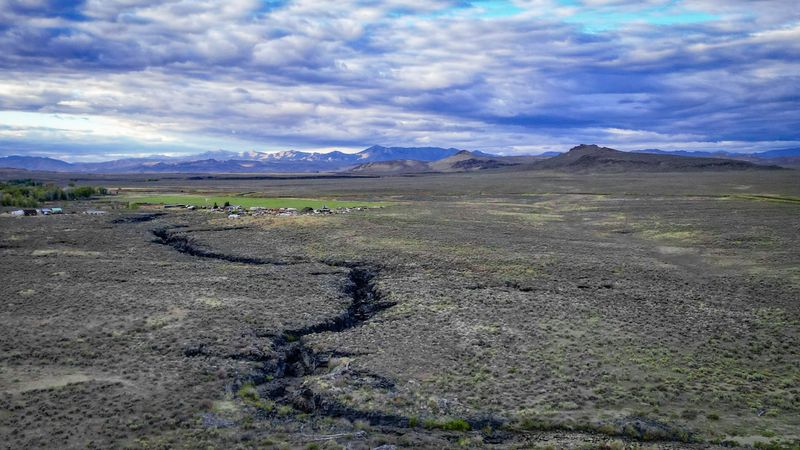
Getting here takes almost no effort, which makes the payoff feel a little unfair. Drive north from Shoshone on Idaho State Highway 75, and the mapped address reads simply ID-75, Shoshone, ID 83352.
You will pass the Shoshone Ice Caves along the way, a decent second stop if you have time.
Turn left onto West Magic Road and the gravel parking lot appears right away. Space is generous, with room for larger rigs and RVs, and parking costs nothing.
From the lot, a short paved path leads toward the canyon, passing storyboards that explain the geology in plain language. A bench along the way looks out toward Dinosaur Ridge and Wedge Butte.
Cell coverage is spotty but usually workable, and the site shows up reliably in phone map apps.
Some regulars prefer a second access point near the old dam, reached by a few miles of dirt road. Either way, the sagebrush plains give no hint of what waits below.
Ancient Volcanic Rock Gives The Entire Canyon A Much Older Story Than It First Appears
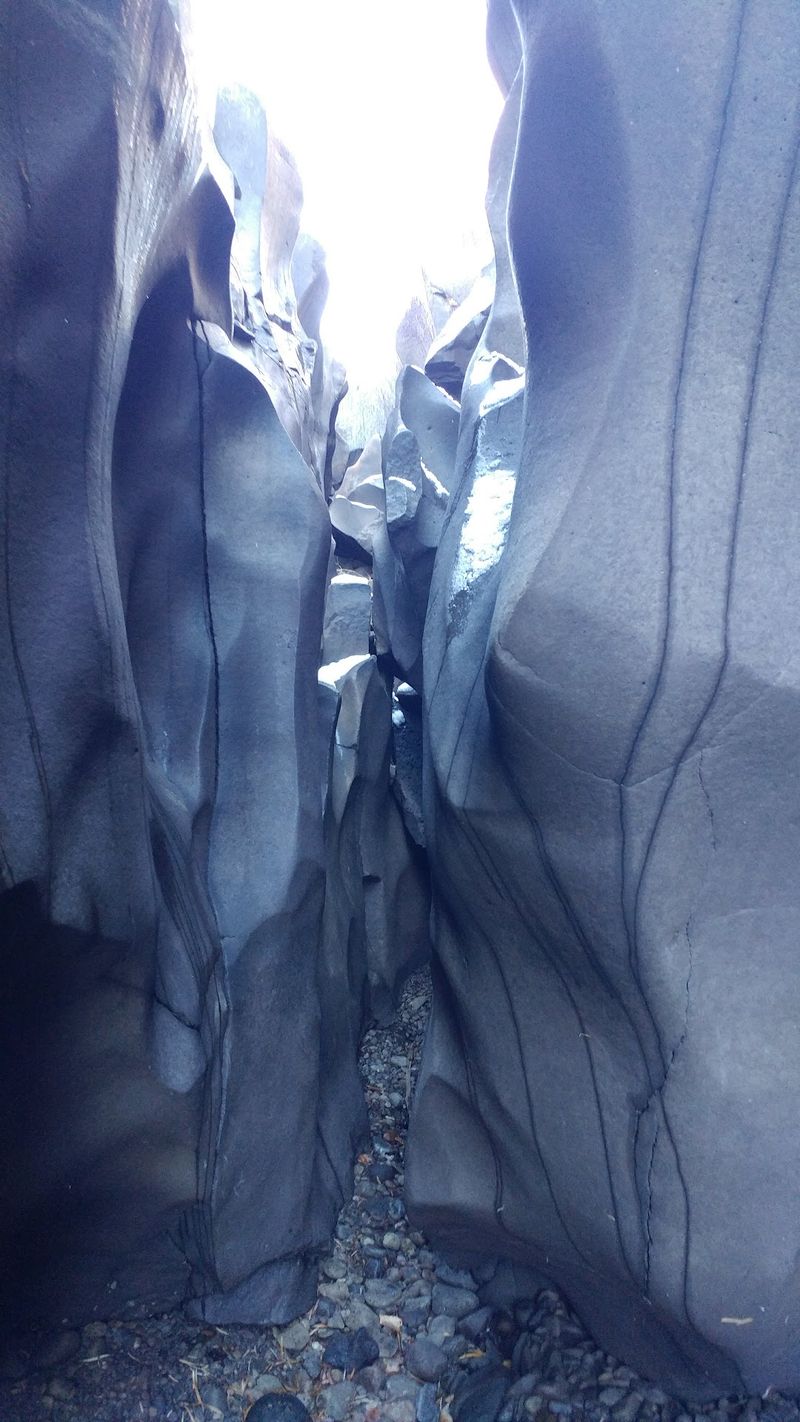
Here is the twist that surprises most first-time visitors: the canyon and the rock have wildly different ages. Water carved these passages over roughly the last 10,000 years, but the basalt it cut through hardened about 800,000 years ago.
Volcanic activity built the foundation long before any river arrived. Later eruptions, including one from nearby Black Butte around 10,000 years ago, spread fresh lava across a wide area and pushed the Big Wood River off its original course.
That rerouting set everything in motion. Forced into a new path, the river began grinding away at older stone, using glacial gravel as its cutting tool.
Standing in the channel, you are essentially inside a record of two very different chapters of Idaho’s past, one fiery and one patient.
Interpretive signs near the trailhead lay out the sequence clearly, and reading them before you descend makes the shapes below far more meaningful. Few places let you touch geology this dramatic with so little walking involved.