This Hike In California Is So Stunning, You’ll Be Dreaming About It For Days
Some trails stay with you long after the walk is over, and one California hike has exactly that kind of effect.
Every turn seems to reveal another view worth slowing down for, with scenery that feels vivid enough to stick in your mind well past the drive home.
Fresh air helps, of course, but the real magic comes from the way the landscape keeps building on itself until the whole outing starts to feel almost unreal.
Natural beauty can be easy to take for granted in a state packed with famous outdoor spots, yet certain hikes still manage to feel genuinely unforgettable.
One path in particular delivers the kind of experience that lingers. Days later, chances are high those views will still be replaying in your head.
The Trailhead at Tuolumne Meadows: Where the Adventure Begins
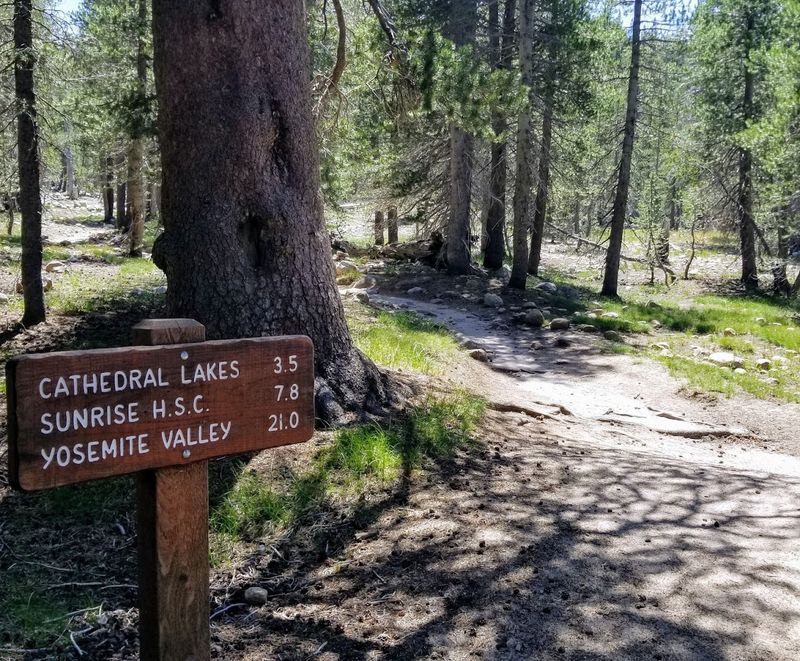
Starting a hike at over 8,500 feet above sea level means the scenery gets interesting fast, and the Cathedral Lakes trailhead along Tioga Road in Tuolumne Meadows sets that tone right away.
Parking is available along the road rather than in a dedicated lot, so arriving early on weekends and peak summer days is genuinely useful advice rather than just a suggestion.
The area fills up quickly, especially between July and September when Tioga Road is fully open.
Tioga Road typically opens in late May or early June and closes after the first major snowfall of the season, usually sometime in October or November.
That window shapes the entire hiking calendar for anyone hoping to visit, so checking current road conditions on the National Park Service website before making plans is a practical first step.
The trailhead itself connects directly to the John Muir Trail heading southwest, which means route-finding is straightforward from the start.
A trail map or downloaded offline route is still worth having, especially for first-time visitors unfamiliar with the Tuolumne Meadows area.
No permit is required for day hikes, which keeps the logistics simple compared to many other popular Sierra trails.
Walking the John Muir Trail: A Path With a Famous Pedigree
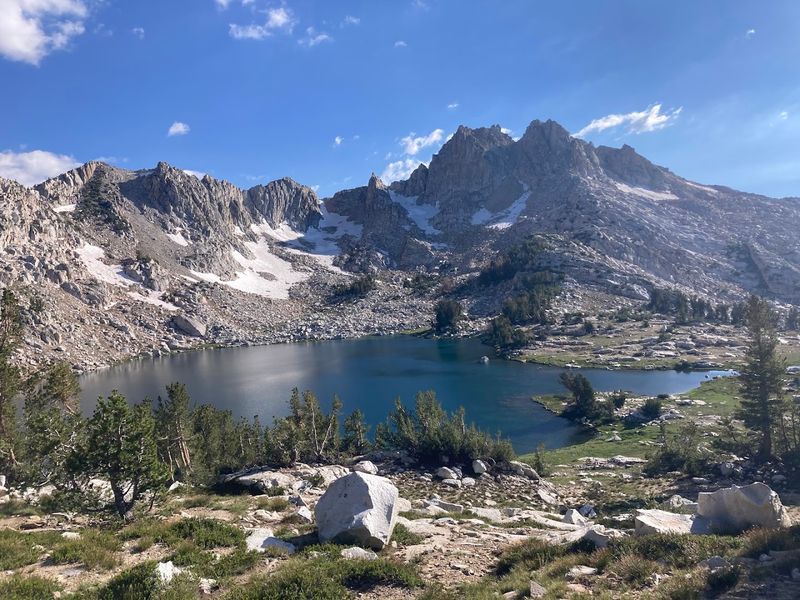
Not every day hike doubles as a stretch of one of California’s most iconic long-distance routes, but the Cathedral Lakes Trail does exactly that.
The route follows the John Muir Trail for much of its length, covering roughly 3.7 miles from the trailhead to Upper Cathedral Lake while steadily gaining elevation through a classic high-country landscape of lodgepole pine forest and open granite slabs.
The forest section at the beginning of the hike has a calm, almost meditative quality to it.
Sunlight filters through the pines in a way that makes the trail feel shaded and cool even on warm summer days, and the sound of wind through the trees tends to replace any trail noise within the first half mile.
That gradual transition from forested trail to open granite terrain is one of the more satisfying parts of the overall experience.
Elevation gain on this stretch totals around 1,663 feet across the full round-trip, which qualifies the trail as moderate rather than strenuous for most reasonably fit hikers.
The climb is steady but not punishing, with enough visual variety along the way to keep the effort from feeling like a slog. It is the kind of trail that rewards a comfortable, unhurried pace.
Lower Cathedral Lake: The First Reward on the Route
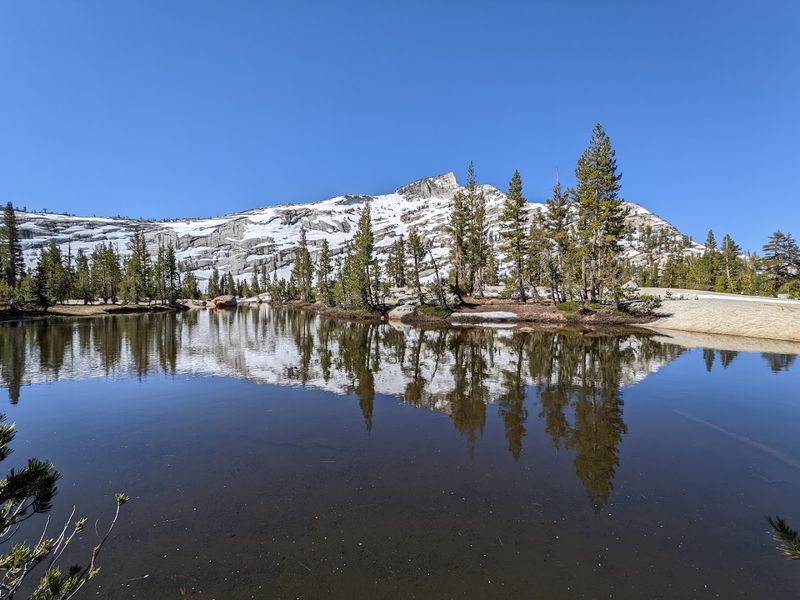
About 3 miles from the trailhead, a spur trail branches off the John Muir Trail and leads down to Lower Cathedral Lake, and the view on arrival tends to catch people off guard in the best possible way.
The lake sits inside a glacial cirque, meaning ancient glaciers carved out that bowl-shaped granite basin over thousands of years, leaving behind a setting that looks almost too clean and precise to be natural.
The water itself has that deep blue-green color that high-elevation Sierra lakes tend to carry, and on calm mornings the surface can act like a mirror, reflecting Cathedral Peak and the surrounding ridgeline with remarkable clarity.
That reflection quality is a big part of why this particular lake shows up so often in trail photography from the Tuolumne Meadows area.
Lower Cathedral Lake sits at roughly 9,290 feet, and the open granite terrain around the shoreline makes it easy to find a comfortable spot to rest, eat a snack, or simply sit and take in the surroundings.
The spur trail adds a small detour to the overall distance, but skipping it would mean missing one of the most photogenic stops on the entire route. Most hikers consider it a non-negotiable part of the experience.
Upper Cathedral Lake: Higher, Quieter, and Equally Breathtaking
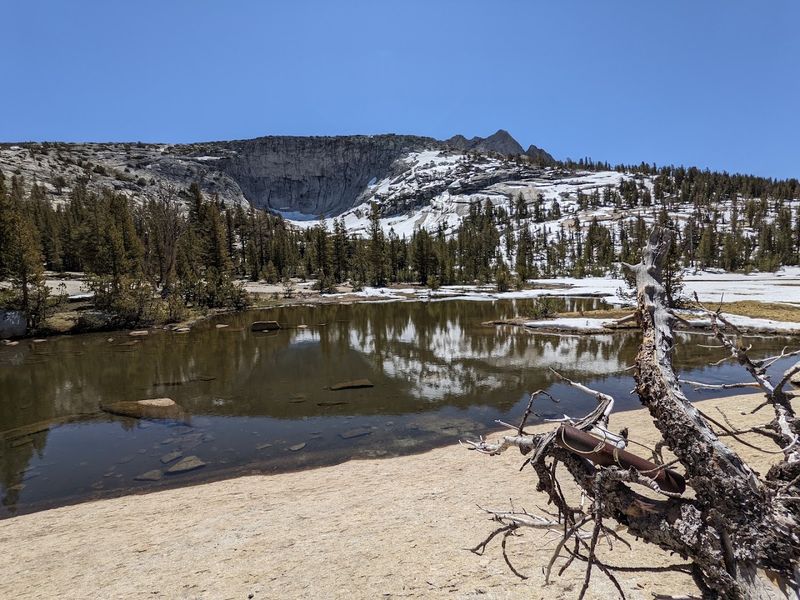
Continuing past the Lower Cathedral Lake spur for another 0.7 miles along the John Muir Trail brings hikers to Upper Cathedral Lake, which sits at around 9,600 feet and offers an equally compelling version of the alpine lake experience.
The setting here feels more exposed and open, with Cathedral Peak looming more directly overhead and the surrounding terrain taking on a starker, more dramatic quality.
Upper Cathedral Lake tends to draw fewer lingering visitors than the lower lake simply because it requires a bit more effort to reach.
That extra distance filters out some of the casual foot traffic, which can translate into a noticeably quieter atmosphere, especially on weekday mornings.
The granite shoreline here is broad and flat in places, making it a natural spot for a longer break before turning back.
The lake’s position below the craggy southern face of Cathedral Peak gives it a distinct visual character that feels different from the lower lake despite the relatively short distance between them.
Having both lakes on the same route is a genuine bonus, essentially delivering two separate alpine lake experiences within a single hike.
That layered reward structure is a big part of why this trail consistently earns a spot on standout Yosemite hike lists.
Cathedral Peak: The Granite Spire That Defines the Skyline
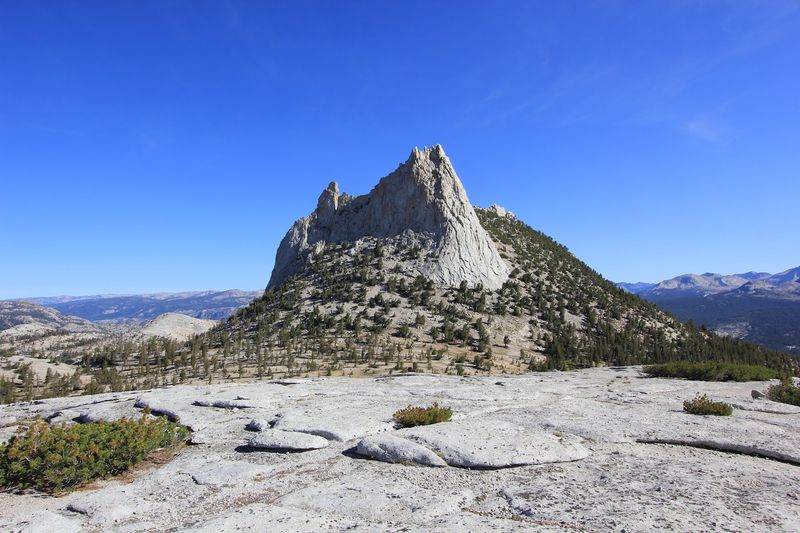
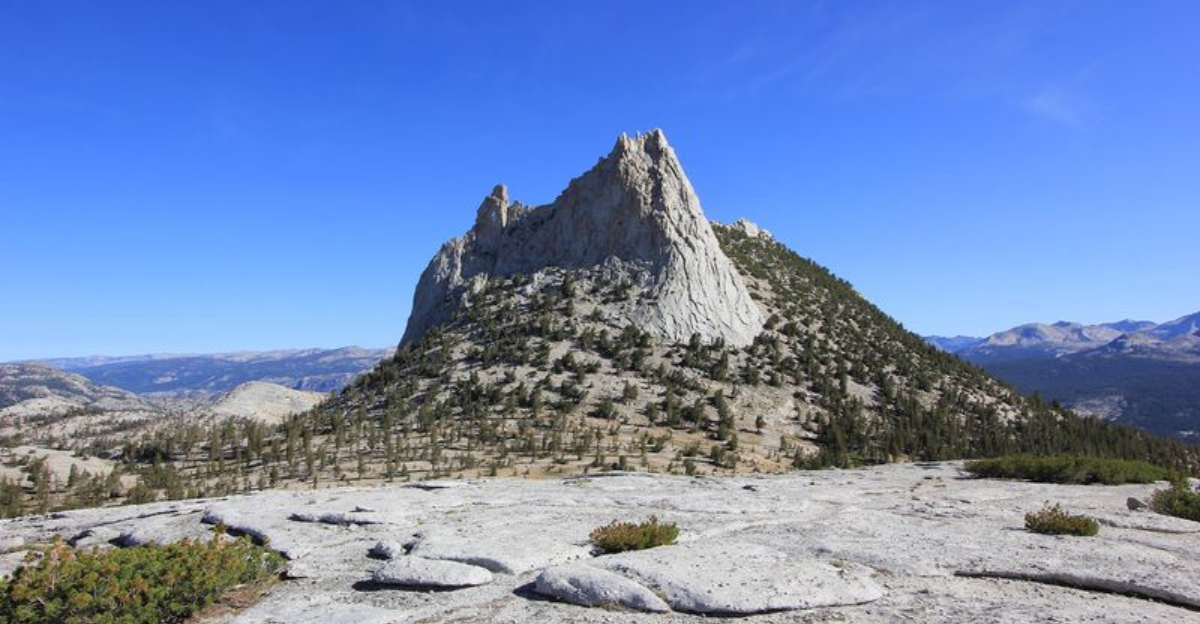
Few natural landmarks in Yosemite’s high country are as immediately recognizable as Cathedral Peak, and the Cathedral Lakes Trail puts hikers directly in front of it for much of the upper section of the route.
That sharp, angular granite spire has a presence that feels almost architectural, rising cleanly above the surrounding ridgeline in a way that draws the eye no matter where you are on the trail.
Cathedral Peak reaches an elevation of approximately 10,911 feet and is a well-known technical climbing destination in Yosemite, though the Cathedral Lakes Trail itself does not involve any climbing.
Hikers on the standard trail get the full visual experience of the peak from below without any technical gear required, which makes it accessible to a wide range of fitness levels and experience backgrounds.
The peak’s presence changes as the trail progresses, appearing first as a distant point through the trees and gradually growing more defined as elevation increases.
By the time Upper Cathedral Lake comes into view, the spire dominates the skyline in a way that makes the surrounding landscape feel genuinely grand.
That slow reveal across the length of the hike adds a narrative quality to the experience that many trails simply do not have.
Cathedral Pass: The Optional Extension With Panoramic Payoff
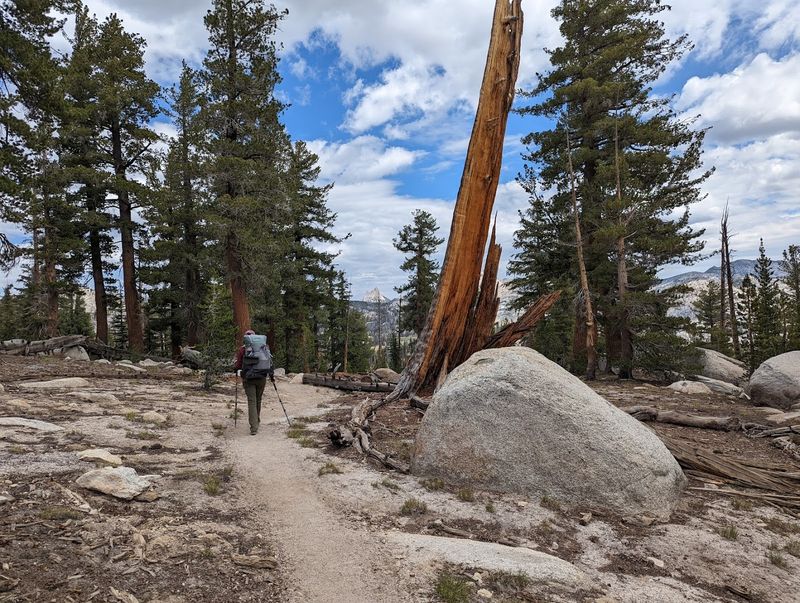
For hikers who arrive at Upper Cathedral Lake and still feel energized, an additional 0.5-mile ascent from the lake leads to Cathedral Pass.
It sits at roughly 9,700 feet and opens up sweeping panoramic views of the Cathedral Range and the broader Sierra Nevada landscape.
The pass is not part of the standard out-and-back route but functions as a natural extension for those wanting to push a little further.
Standing at Cathedral Pass on a clear day offers a perspective that is hard to replicate anywhere else in the Tuolumne Meadows area.
The Cathedral Range stretches across the horizon, and the sense of scale that comes with being above the treeline at that elevation tends to make the effort feel very much worthwhile.
It is the kind of view that reframes the entire hike in a single moment.
The terrain between the upper lake and the pass is mostly open granite, which means the footing is straightforward and the visual reward begins well before reaching the actual pass.
Weather at this elevation can shift quickly, so keeping an eye on cloud development during the ascent is a sensible habit.
Starting the hike early in the morning generally provides the clearest conditions and the best chance of reaching the pass before afternoon storms develop.
Planning Your Visit: Practical Tips for Getting the Most Out of the Trail
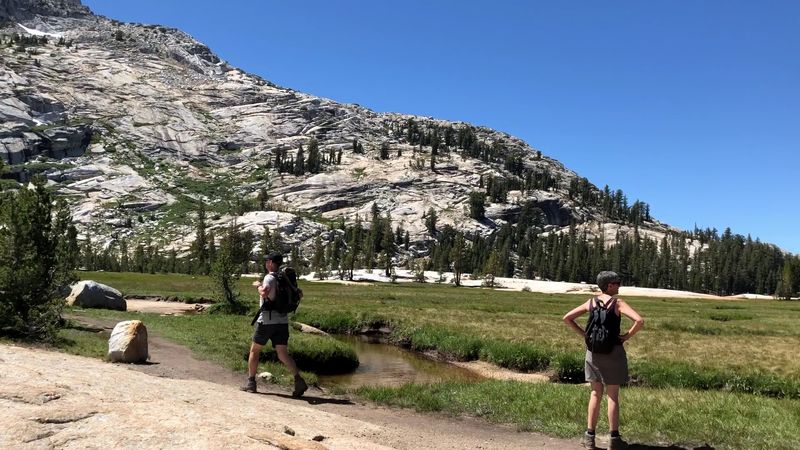
Getting the most out of a visit to Cathedral Lakes comes down to a handful of practical choices that can significantly shape the experience.
Arriving at the Tuolumne Meadows trailhead early, ideally before 8 a.m. on summer weekends, makes a real difference in terms of parking availability and trail congestion.
The trail is one of the busier routes in the Tuolumne Meadows area, so an early start also tends to mean quieter stretches of trail during the most scenic sections.
No permit is required for day hikes, but overnight camping in the backcountry requires a wilderness permit, which can be reserved up to 24 weeks in advance through the National Park Service reservation system.
The altitude throughout the hike ranges from about 8,500 feet at the trailhead to over 9,600 feet at Upper Cathedral Lake, so taking time to acclimate before attempting the full route is genuinely helpful, especially for visitors coming from lower elevations.
Carrying enough water, a light layer for wind or sudden temperature drops, and sun protection is standard advice for any Sierra hike but especially relevant here given the exposed terrain near the lakes.
Weather in the high country can change quickly, and afternoon thunderstorms are a real possibility during summer months.
Checking the forecast through the National Park Service before heading out keeps the planning grounded in current conditions rather than assumptions.