This Historic Bridge In Georgia Has Been Standing Since 1895 And The Legends Will Give You Chills
I almost did not stop. My GPS was already rerouting me around the old road, insisting there was a faster way.
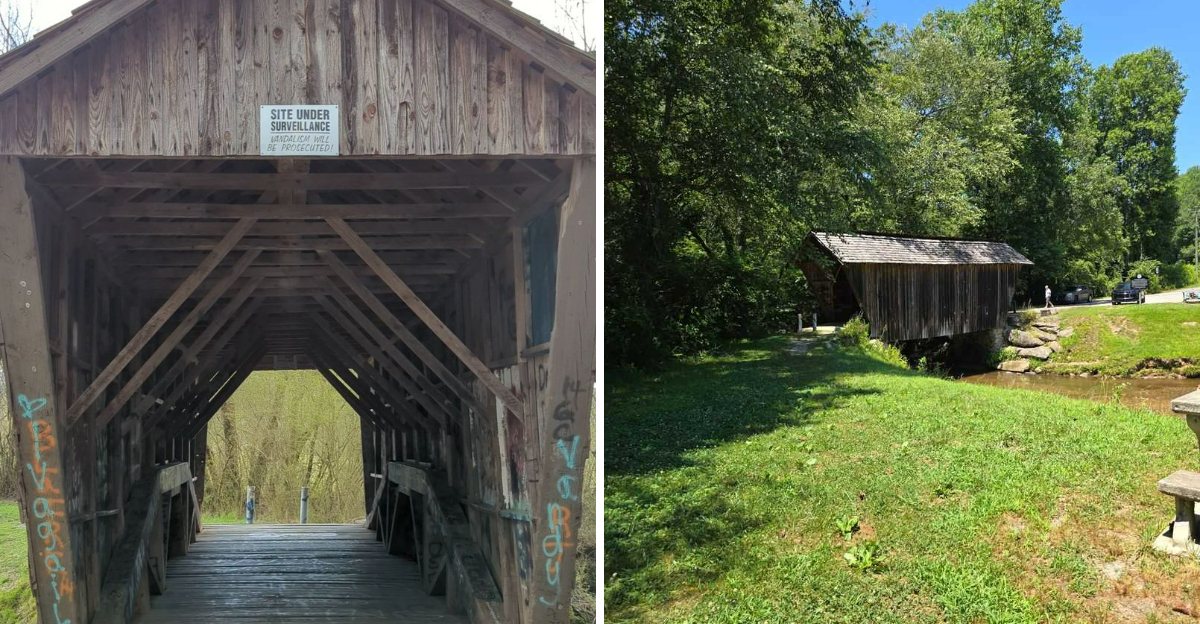
Something made me pull over anyway. The bridge sat quiet against the trees, wooden beams worn smooth by more than a century of weather and footsteps.
I got out of my car and immediately felt the temperature drop, or maybe I just wanted to feel that. A local I met nearby told me stories that made my arms go cold, tales passed down through generations, the kind people swear are true even when they cannot explain why.
Georgia holds onto its history in strange ways, and this bridge carries more of it than most. I stood there longer than I planned, unable to walk away without knowing more.
Some stories refuse to stay buried.
A Bridge Built To Last Over 130 Years
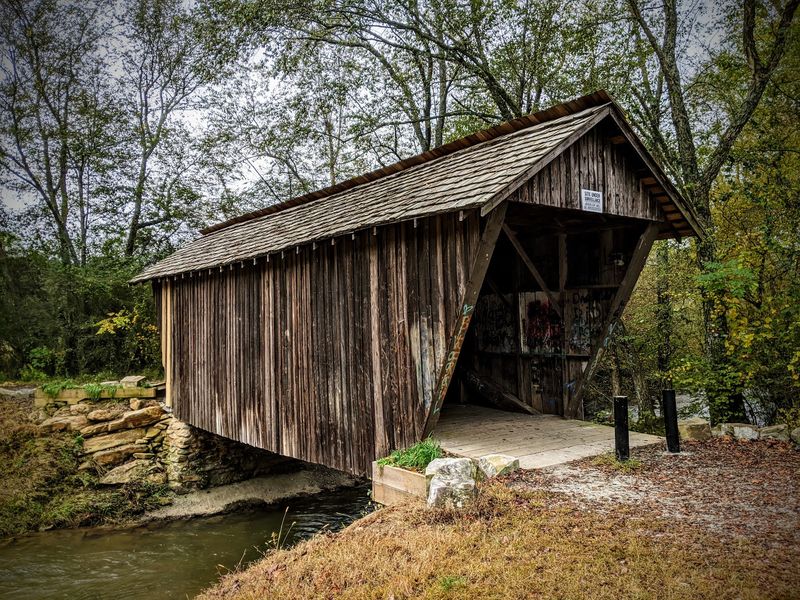
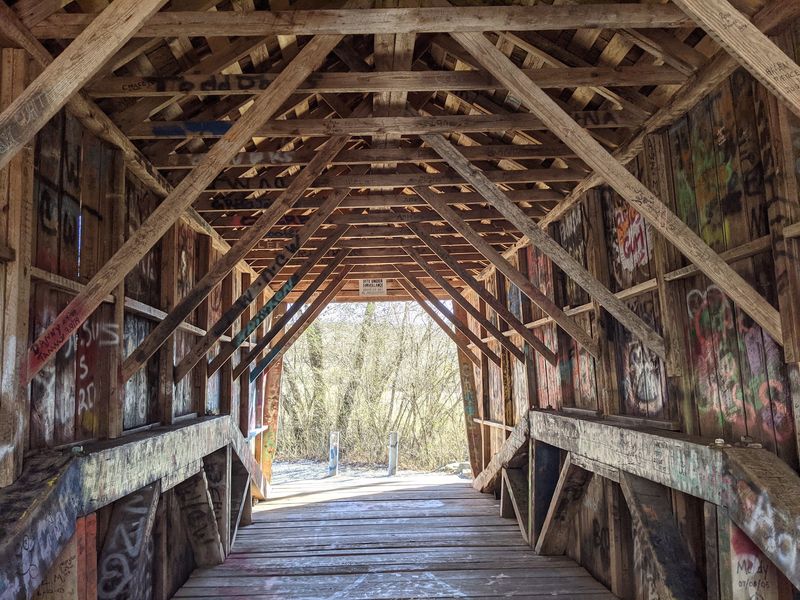
Not many structures built in 1895 are still standing today, but this one is. Carpenter Will Pardue constructed this wooden covered bridge using a queen post truss design, a method chosen for its strength rather than its looks.
That design is part of why it has survived so long, outlasting storms, floods, and more than a century of Georgia weather.
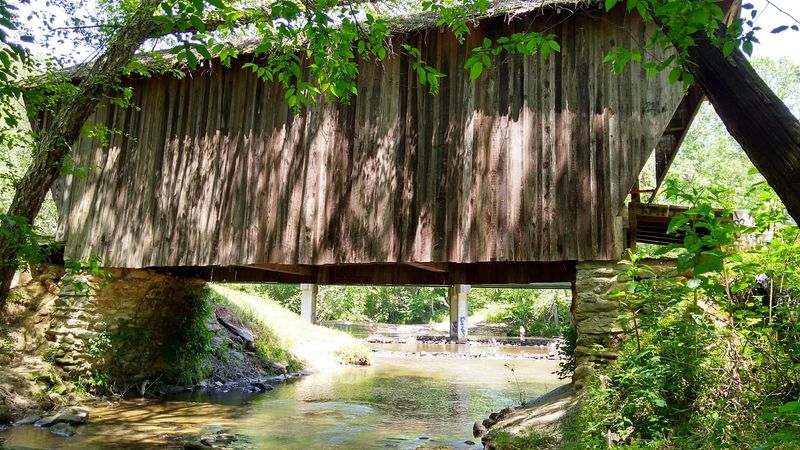
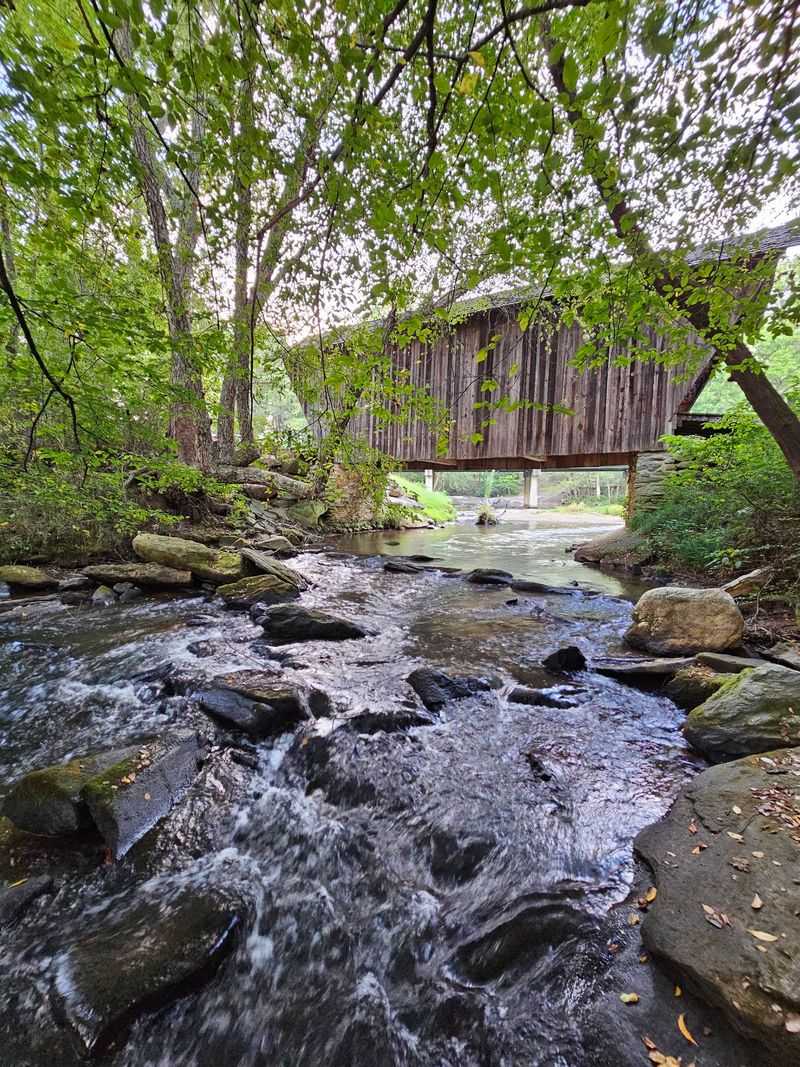
The bridge stretches between 33 and 38 feet across Chickamauga Creek. It is one lane wide, made entirely of wood, and still solid enough to walk across today.
Standing on it, you can feel the craftsmanship in every plank, each board fitted by hand long before power tools existed.
White County, Georgia owns a rare piece of American history right here, something most visitors do not expect to find along a quiet country road. The White County Historical Society now owns and preserves this structure.
That is a big responsibility for such a small bridge, one that continues to draw curious travelers year after year.
The Historic Stovall Mill Covered Bridge at 2617 GA-255, Sautee Nacoochee, GA 30571 carries over a century of stories in its timber. Many sources officially call it the smallest covered bridge in Georgia.
Small in size, massive in significance.
The Original Bridge Was Claimed By A Flood
Before this bridge existed, there was another one. Fred Dover built the first bridge over Chickamauga Creek in the late 1800s.
He also built a complex of grist, saw, and shingle mills nearby.
A powerful flood in the early 1890s wiped that original bridge completely off the map. The creek rose, and the original bridge was swept away.
That flood is central to the legends that haunt this spot today.
Will Pardue then constructed the current bridge in 1895 to replace what the flood destroyed. The new design was stronger and more intentional.
It was built to outlast whatever nature threw at it next.
Dover eventually sold the mill operation to Fred Stovall, Sr. in 1917. That name stuck, and the bridge carries it to this day.
The mill and dam that once stood nearby were later washed away again in 1963 or 1964, leaving only remnants of the old dam visible in the creek.
The Mill That Powered A Community
Fred Dover did not just build a bridge. He built an entire operation that powered a rural community.
His complex included a gristmill, a sawmill, and a shingle mill, all running on water turbine power.
That was genuinely impressive engineering for the late 1800s. Farmers and families relied on these mills to grind grain, cut lumber, and produce shingles for their homes.
The bridge connected them to all of it.
When Fred Stovall, Sr. took over in 1917, the operation continued under new ownership. The mills kept serving the area for decades.
The community that depended on this spot shaped the entire region around it.
By the early 1960s, the mill and dam were gone, claimed by another flood. Only the stone remains of the old dam are still visible in the creek today.
Standing at the water’s edge and spotting those stones is a quiet, powerful moment that connects you directly to what once stood there.
How This Bridge Went From Road To Relic
This bridge once served a serious purpose. It was a key link on the road connecting Cleveland to Clayton, Georgia.
Wagons, horses, and travelers all crossed it regularly for decades.
By 1959, the main road was rerouted away from the bridge entirely. Officials made that decision specifically to protect the aging structure from heavy traffic.
That rerouting may have saved it from being demolished or worn down.
Stepping back from a busy road and into preservation is not something every historic structure gets. This one was lucky.
The decision to reroute traffic gave the bridge a second life as a landmark rather than a forgotten casualty of progress.
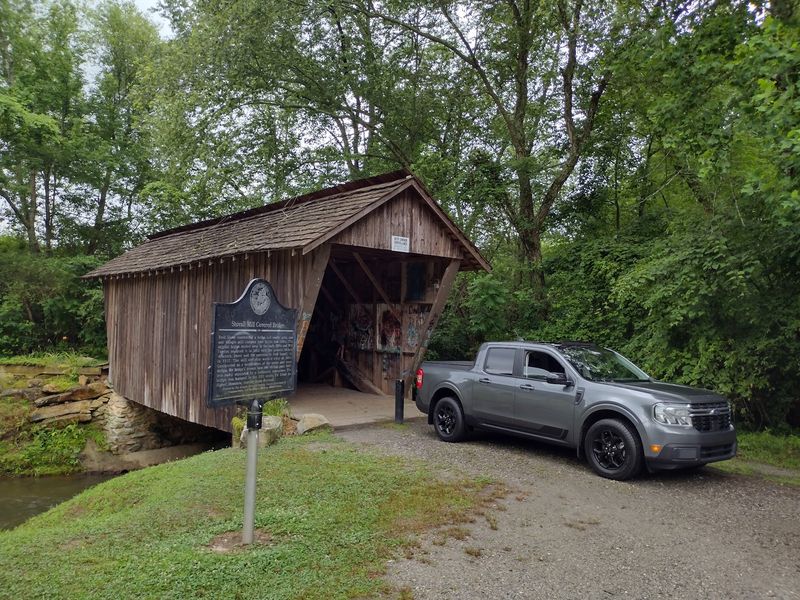
Today, gravel parking lots sit on both sides of the bridge. An informational sign on the west side explains the bridge’s history clearly.
Stone picnic tables and bear-proof trash cans make this spot surprisingly well-organized for a free roadside stop open 24 hours a day.
The Movie Star Bridge Of North Georgia
Here is a fun fact that genuinely surprised me. This bridge appeared in a 1951 Hollywood film called “I’d Climb the Highest Mountain,” starring Susan Hayward.
A real movie was filmed right here in the Georgia mountains.
Seeing the bridge in that film and then visiting it in person is a surreal experience. The landscape around it has changed over the decades.
But the bridge itself looks remarkably similar to how it appeared on screen.
Some visitors actually watch the movie before or after their visit to compare the scenes. That kind of time-traveling comparison is something most roadside stops cannot offer.
This place earns its historic landmark status in more ways than one.
The bridge has gone by several names over the years, including Sautee-Nacoochee Bridge, Helen Bridge, and Chickamauga Bridge. Each name reflects a different era or community connection.
A place with that many names clearly meant something to a lot of different people across a lot of different times.
Cherokee History Surrounds Every Step
The bridge does not stand alone in a historical vacuum. The entire area of White County surrounding this spot is rich with Cherokee history and legend.
The land itself carries generations of memory.
Sautee Nacoochee is a valley with deep roots in Cherokee culture. The name itself comes from a Cherokee legend involving two young people from rival tribes.
That story has been passed down for centuries in this region.
Walking across the bridge and looking out at the hills, it is easy to feel the weight of that history. The creek, the mountains, and the old wooden structure all exist within a landscape that has meant something to people for a very long time.
That layered significance makes every visit feel more meaningful.
The blend of Cherokee legend, 19th-century industry, and paranormal folklore creates something rare. Few places in Georgia carry that many layers of story in such a compact space.
This area rewards curious visitors who take time to look beyond the obvious.
What To Expect When You Visit Today
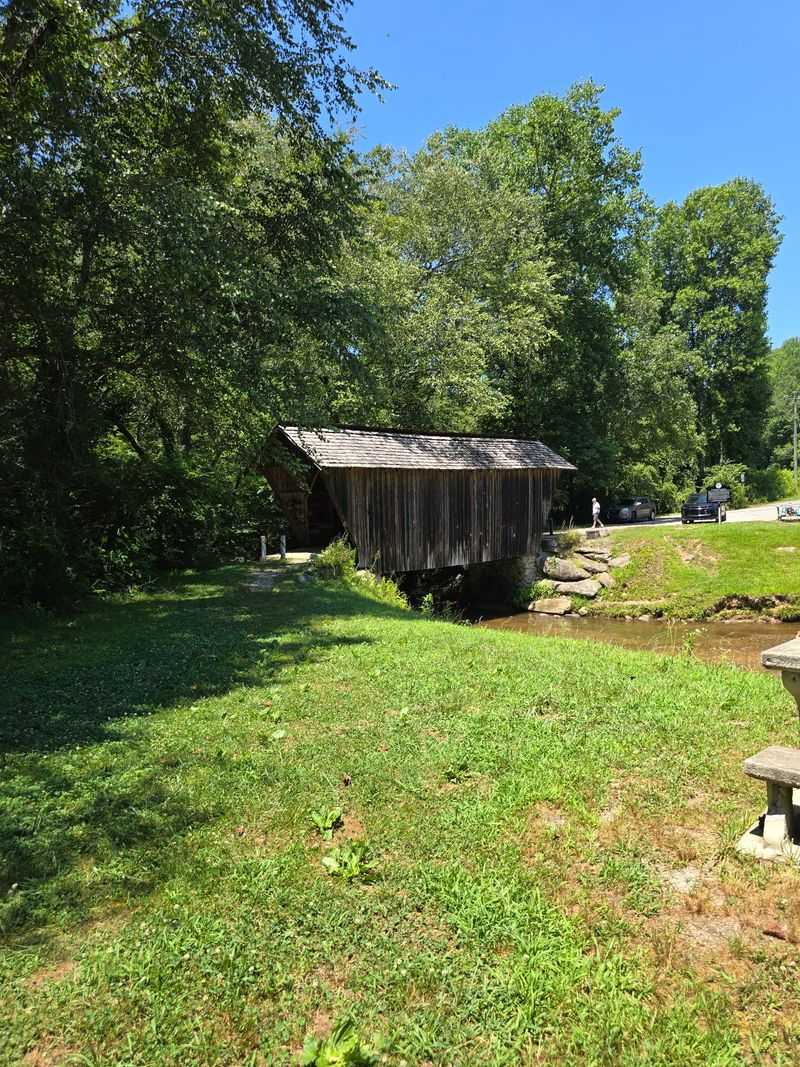
Planning a visit here is refreshingly simple. Admission is completely free, and the site is open 24 hours a day, seven days a week.
There is no ticket booth, no reservation, and no fee.
Gravel parking lots on both sides of the bridge make arrival easy. Stone picnic tables and charcoal grills are available if you want to make a proper outing of it.
Bear-proof trash cans keep the area reasonably clean.
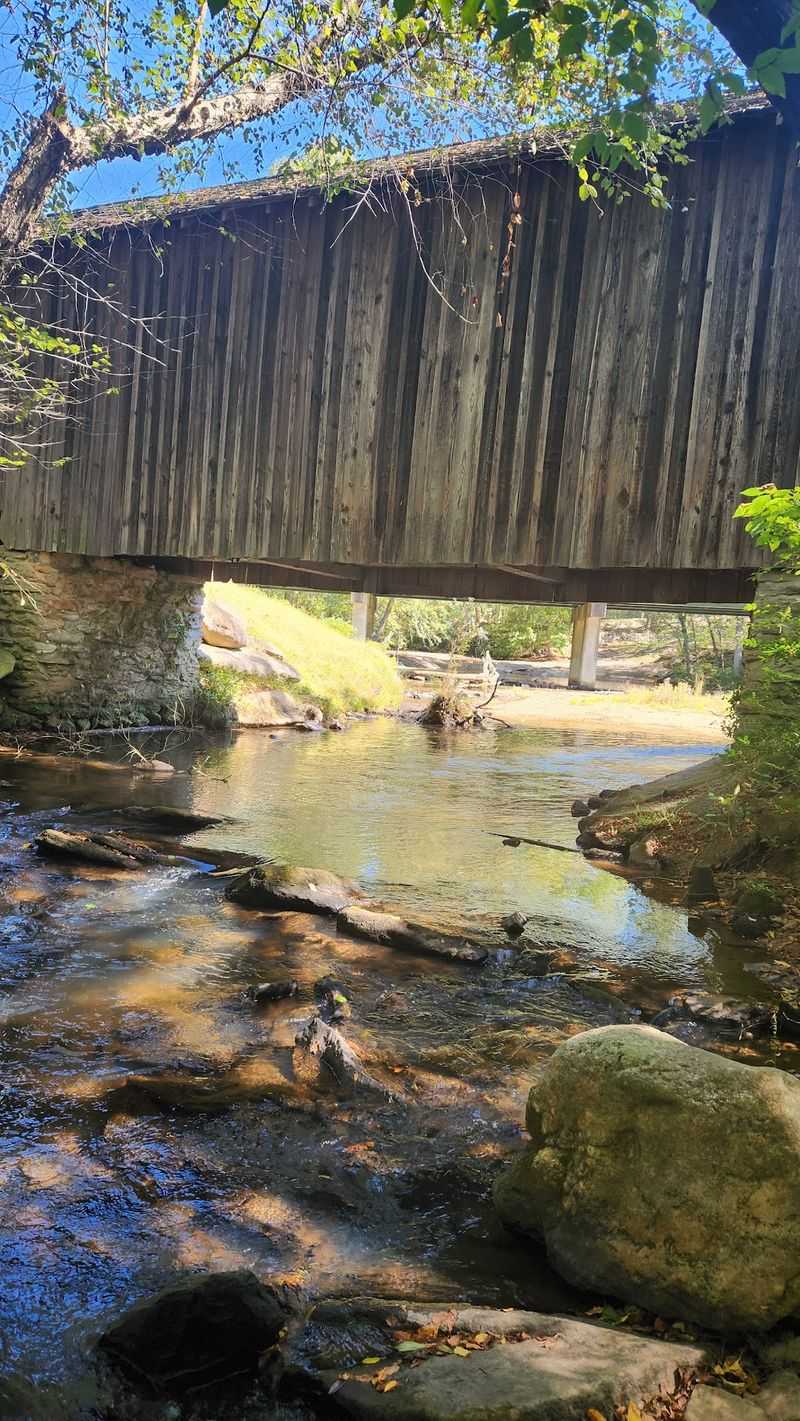
The creek below is a genuine draw. People wade in the water, swim, and even use rope swings on warmer days.
The rushing water is cold and clear, and on a hot Georgia afternoon, it is a welcome relief.
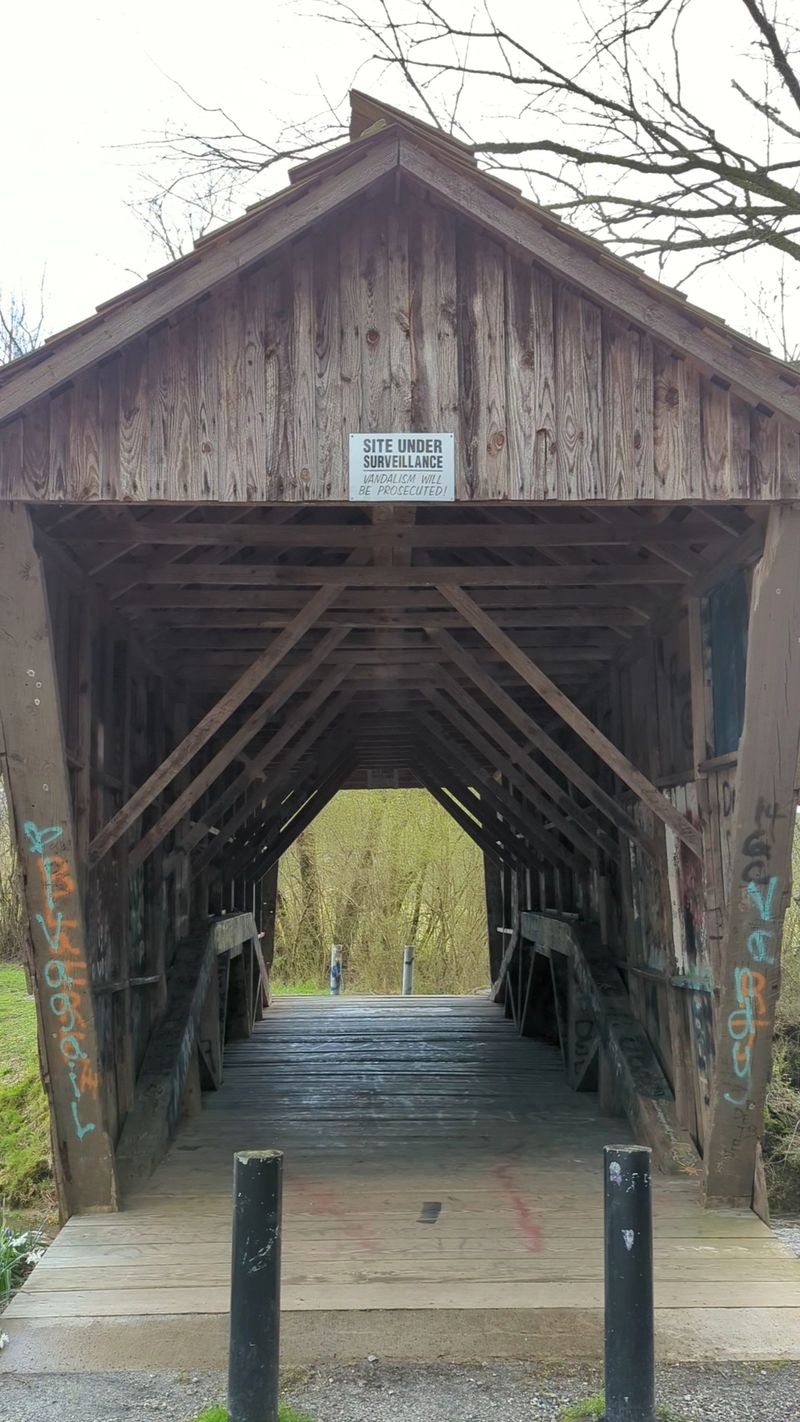
One honest heads-up: the inside of the bridge has unfortunately been covered with graffiti over the years. The historic bridge remains open to pedestrians.
Bring your curiosity, wear comfortable shoes, and plan to spend at least 30 to 45 minutes exploring the bridge, the creek bank, and the dam remains below.
Why This Bridge Deserves A Spot On Your Georgia Road Trip
Road trips through North Georgia are already packed with beautiful stops. Adding this bridge to your route costs nothing and takes very little time.
But the impression it leaves lasts considerably longer than the visit itself.
The combination of genuine history, accessible location, and eerie folklore makes this stop genuinely unique. You can read about it, stand on it, and feel the creek breeze all in the same afternoon.
That kind of layered experience is hard to find for free.
The bridge sits right off GA-255, making it easy to spot from the road. If you blink, you might actually miss it.
Slow down, pull over, and give yourself permission to linger.
Whether you are a history enthusiast, a folklore fan, or just someone who appreciates old craftsmanship, this place delivers something real. It is not a theme park version of history.
It is the actual thing, still standing after 130 years, still sparking curiosity in everyone who crosses it.
That is worth a detour on any Georgia road trip.