This Historic California Gold Rush Town Is Surrounded By Miles Of Wild Mountain Biking Trails
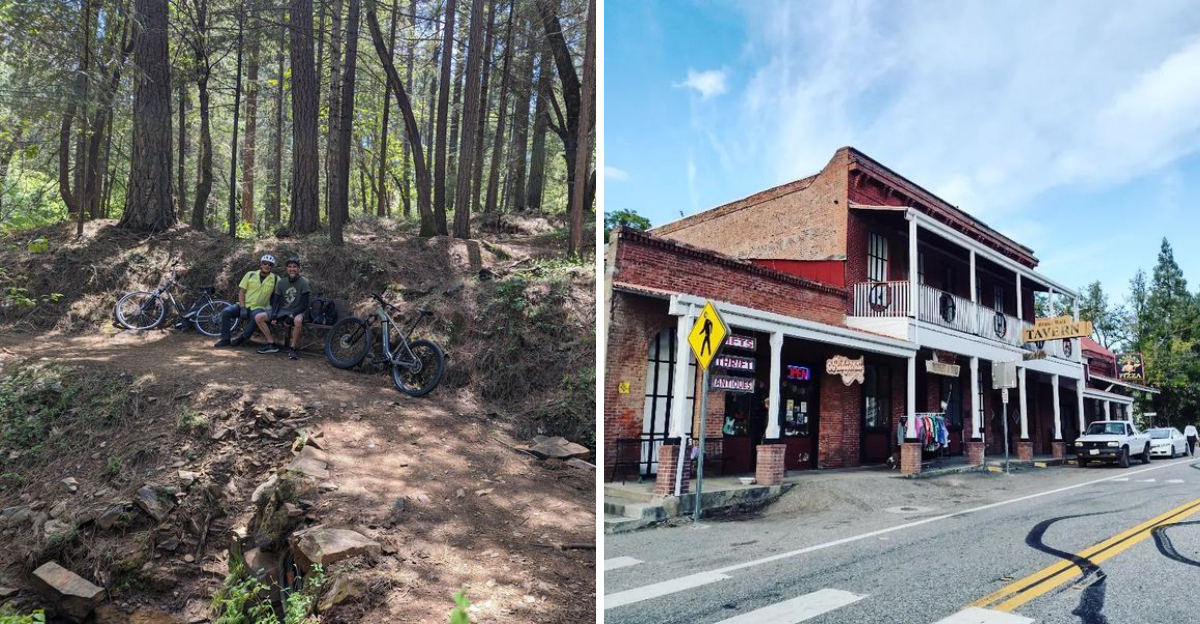
Bring the bike, but do not rush straight for the trailhead.
Give yourself a little time to wander first. Old buildings and Gold Rush history make the town feel like a story you can walk through before the real adventure begins.
Then the pavement gives way to dirt, the trees close in, and the whole day changes gears.
Mountain bikers can find some of California’s most rewarding riding in the hills surrounding this historic town.
Choose your level of trouble carefully.
You can keep things mellow, chase long forest miles, or point the front wheel toward something steep enough to make you question your confidence halfway down.
Stop at the overlook. Catch your breath. Pretend you meant to dismount there. The best part is the contrast.
Spend the morning surrounded by history, disappear into the trails for hours, then roll back into town hungry and already debating which route deserves another run tomorrow.
Nevada City’s Gold Rush History Is Still Part Of The Scenery
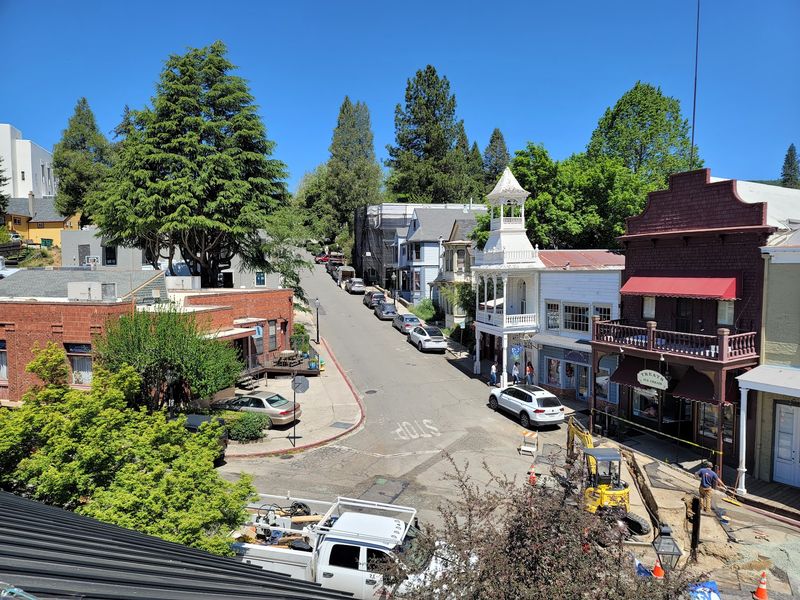
Nevada City feels a bit like stepping onto a film set where someone forgot to remove the real history.
The town’s origins reach directly back to 1849, when fortune seekers flooded the Deer Creek area during the California Gold Rush, and what started as Deer Creek Dry Diggings grew rapidly into one of the most significant settlements.
That layered past gives a biking weekend here an unusually rich backdrop.
Mornings can be spent rolling beneath towering ponderosa pines on rugged forest trails, and afternoons can unfold on streets still lined with buildings that reflect a completely different chapter of California’s story.
The downtown district holds a listing on the National Register of Historic Places and contains one of the most complete collections of surviving Gold Rush-era commercial architecture anywhere in the state.
Brick facades, ornate Victorian details, and narrow sidewalks all contribute to an atmosphere that feels genuinely earned rather than manufactured for tourism.
History here is not tucked behind museum glass; it surrounds every turn of the handlebar.
Pioneer Trail Can Keep You Riding For More Than 20 Miles
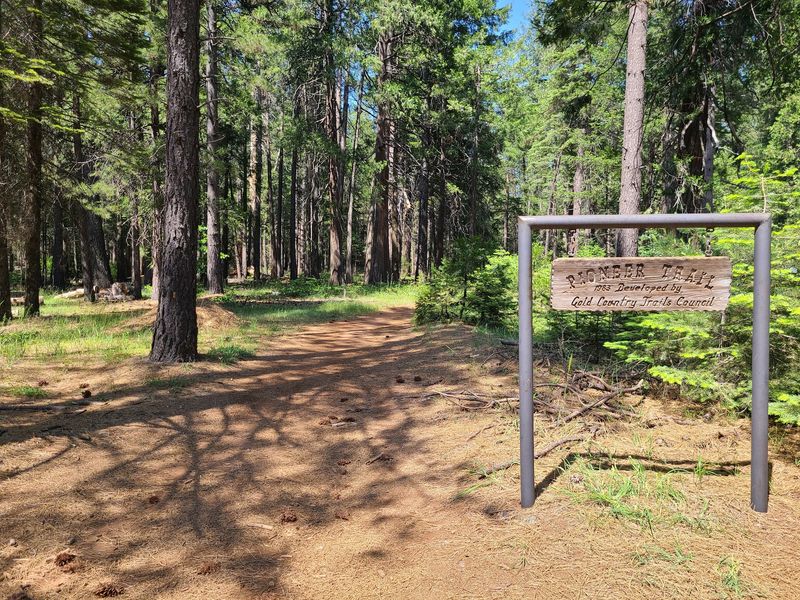
Some trails earn their reputation through sheer scale, and the Pioneer Trail around Nevada City is a prime example of that.
Stretching over 20 miles and designated as a National Recreation Trail, this route traces one of the original Gold Rush pathways through forested Sierra terrain, giving riders both mileage and historical resonance in a single outing.
The trail is open to non-motorized users, meaning hikers and equestrians share the corridor alongside cyclists.
That multiuse character keeps the atmosphere social and varied, though riders should stay alert and courteous at trail intersections.
Tackling the entire route in one go is not a requirement. Picking a section that matches current fitness and ability is a perfectly reasonable approach, and turning around when legs start lobbying is always an option.
Some mapped sections reach elevations exceeding 5,000 feet, meaning the scenery shifts from oak woodland to dense conifer forest as elevation climbs.
The trail passes through substantial changes in landscape character, ensuring the view beneath a front tire rarely stays the same for long.
Hoot Trail Delivers The Fast, Flowy Fun
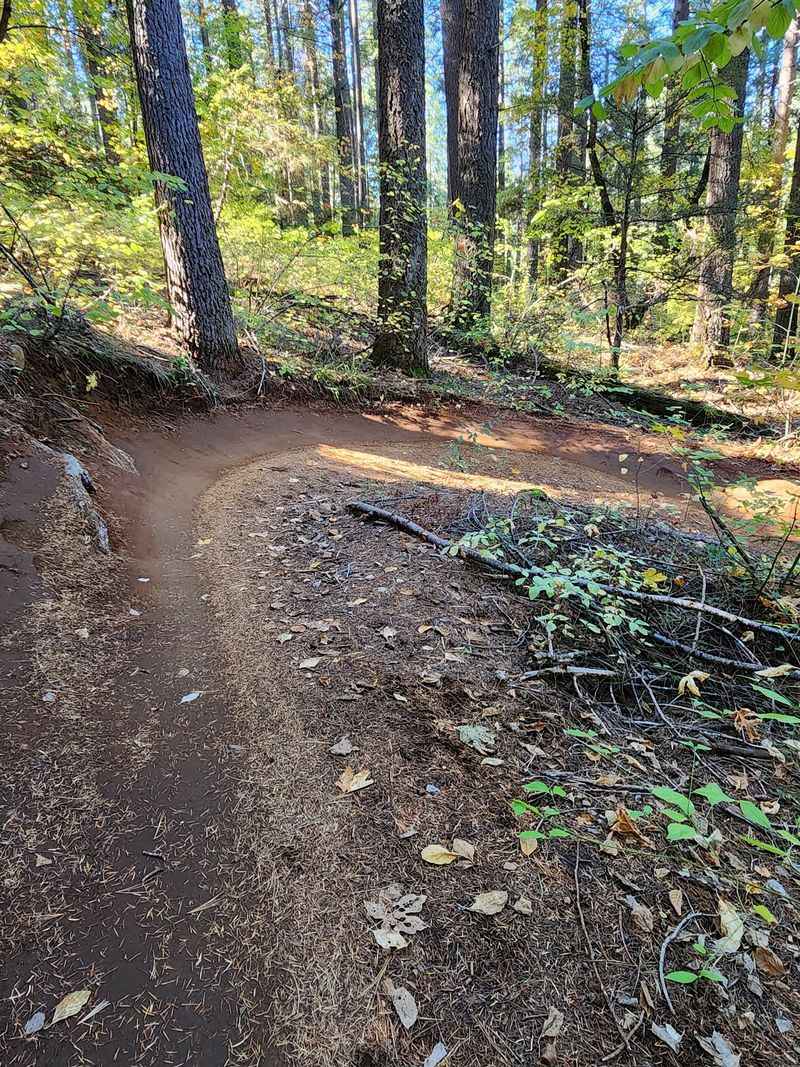
Built specifically for the kind of riding that makes people grin through their helmets, Hoot Trail has become a go-to route for riders who prefer flowing descents over technical puzzles.
The trail runs approximately 1.5 miles and features berms, rollers, and rhythm sections designed to carry speed naturally rather than scrub it.
Bicyclists of Nevada County constructed Hoot Trail in 2016 in collaboration with the US Forest Service Tahoe National Forest office, and ongoing maintenance keeps the surface in rideable condition.
The Gold Country Trails Council also plays a role in supporting trail activity in the broader area.
Riders who have spent a morning grinding through elevation on the Pioneer Trail often find Hoot Trail to be a satisfying reward on the way back down.
The design prioritizes flow over raw speed, which means the trail suits a fairly wide range of intermediate and advanced riders rather than catering exclusively to gravity-focused experts.
Reaching the bottom and immediately calculating how quickly a second lap could begin is a common response, which says something meaningful about how well the trail delivers on its promise of fast, fun, and connected riding.
Scotts Flat Adds A Lake To The Adventure
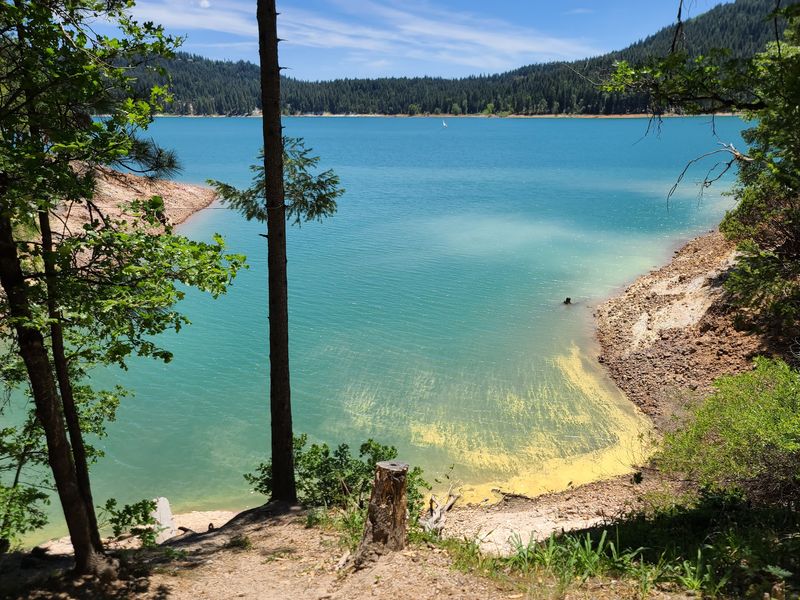
It’s not a need for a trail to have a dramatic viewpoint to feel memorable, but when a route happens to wind near a reservoir, the combination tends to stick in the memory a little longer.
Scotts Flat Trail can be incorporated into rides through the Harmony Ridge network, adding the visual payoff of Scotts Flat Reservoir to an already varied day of mountain biking.
The trail itself is a downhill route known for good flow, switchbacks, rollers, and banked corners that reward committed riding.
It was completed as a collaborative project between the Foothills Trails Alliance and Bicyclists of Nevada County, with the partnership producing a trail that rides well and connects meaningfully to the surrounding network.
Trail reports from July 2026 continued to show active rider use and generally positive conditions on the route, suggesting it remains a reliable option within the broader Harmony Ridge system.
Warmer riding days make this trail particularly appealing, since finishing a descent near the cool water of the reservoir offers a natural and satisfying endpoint to the effort.
Packing a light snack and spending a few quiet minutes at the water’s edge before the return ride is a simple pleasure that tends to make the whole outing feel more complete.
The Terrain Changes Enough To Keep Things Interesting
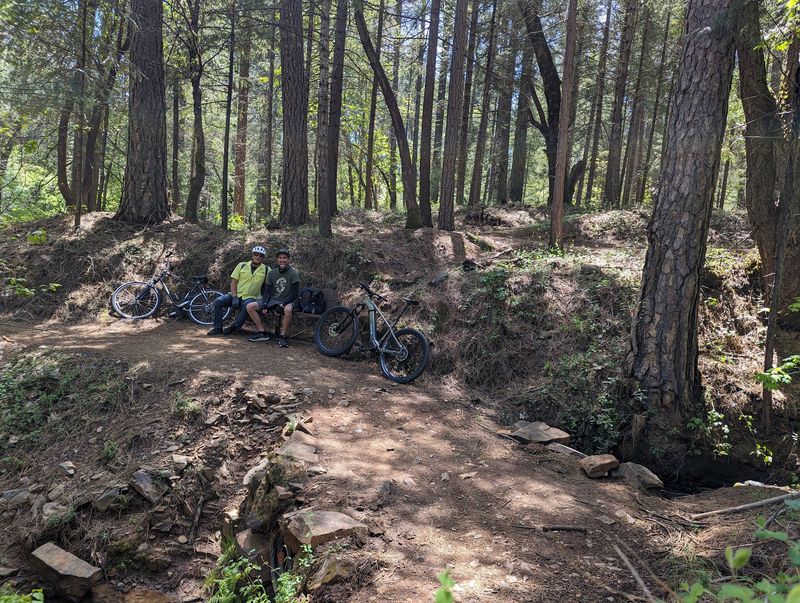
Variety is one of the more underappreciated qualities in a trail system, and the riding around Nevada City tends to deliver it in steady doses.
The Pioneer Trail alone cycles through several distinct terrain types depending on which section a rider is traveling through on a given day.
Lower stretches offer relatively approachable conditions with moderate grades and manageable surfaces. Moving farther into the high country, the trail becomes rockier, narrower, and noticeably more technical in character.
Roots, rollers, loose rock sections, flowing turns, and long canopy-covered forest stretches all appear at different points along the route.
That diversity matters practically because it keeps focus sharp throughout a ride. When the surface and gradient shift regularly, there is less opportunity for attention to drift or for the experience to feel repetitive.
Riders who prefer to stay alert and engaged rather than simply spinning through identical terrain tend to find the Nevada City trail network genuinely stimulating.
The transitions between terrain types also serve as natural pacing markers, giving riders informal checkpoints to assess energy levels and decide whether to push farther or begin working back.
The Forest Setting Makes The Riding Feel Farther From Town Than It Is
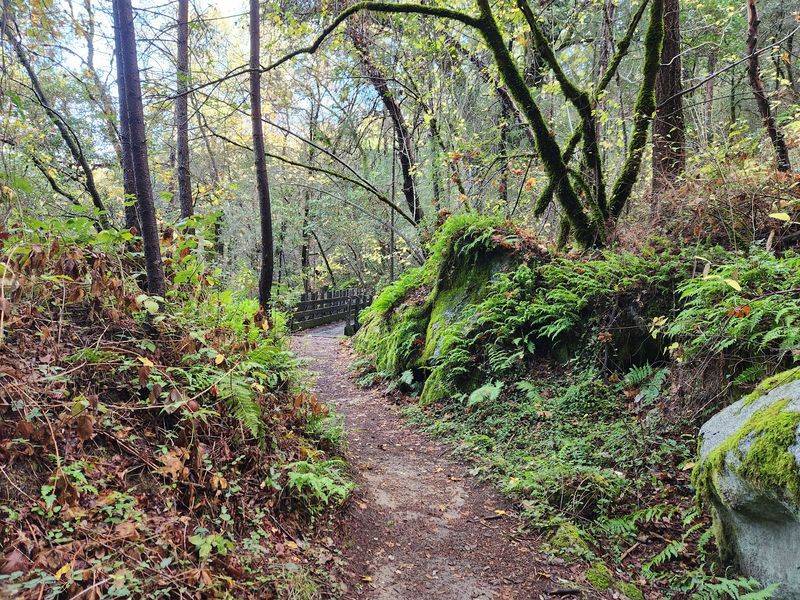
There is something almost surprising about how quickly the urban context drops away once a rider heads into the forest around Nevada City.
Parking near the historic commercial district and transitioning within minutes into thick Sierra Nevada woodland creates a contrast that feels sharper than the actual distance between the two environments would suggest.
Pioneer Trail sections reach elevations above 5,000 feet on mapped portions, guiding riders through substantial changes in landscape character.
Dense timber stands, mixed conifer forest, and oak woodland all make appearances depending on elevation and aspect, and the soundscape shifts accordingly as town sounds fade and forest sounds take over.
That sense of immersion tends to make the riding feel more adventurous than the logistics actually require.
There is no need for a long drive to a remote trailhead or an overnight camping commitment to access genuine backcountry-feeling terrain.
The proximity of the forest to the town is one of Nevada City’s more quietly impressive qualities.
Riders who appreciate being able to move between a historic downtown and a mountain terrain within a short span will find the arrangement genuinely convenient and repeatedly satisfying across multiple visits.
Local Riders Help Keep The Trail Scene Alive
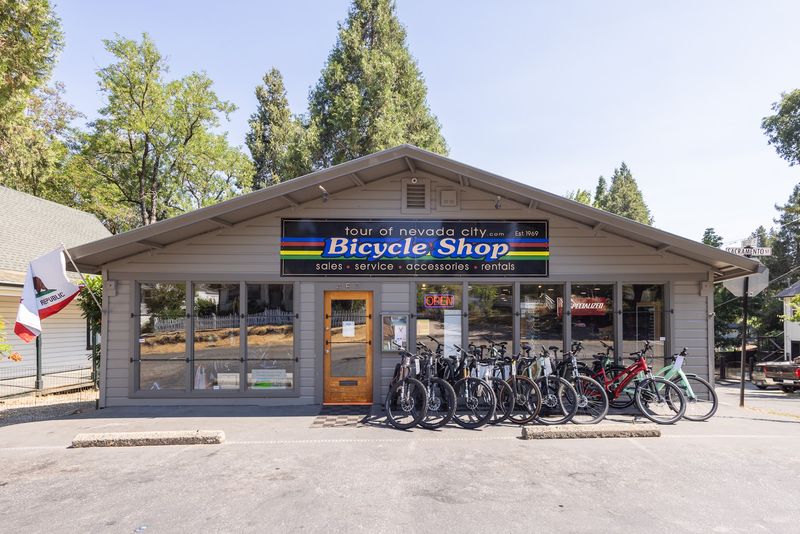
Behind every well-maintained trail system, there is usually a group of people who show up consistently to do the unglamorous work of keeping it rideable.
Around Nevada City, Bicyclists of Nevada County plays a central role in that effort, handling trail development, maintenance coordination, and advocacy work throughout the area.
In March 2026, BONC reported that sections of the Pioneer Trail damaged during Highway 20 construction work were still being rebuilt in cooperation with the Tahoe National Forest and other contributing partners.
That kind of long-term repair and restoration work rarely happens quickly, and it underscores the importance of checking current trail conditions before planning a specific route.
The Gold Country Trails Council, formed in 1981, also contributes meaningfully to the regional trail network, focusing on developing and maintaining non-motorized trails including the Pioneer Trail corridor.
Mountain trails are dynamic environments where fallen trees, weather events, construction activity, and seasonal maintenance can change what is rideable from one visit to the next.
Riders who check current conditions through BONC or trail reporting platforms before heading out tend to have smoother experiences and avoid the frustration of arriving at a trailhead only to find a key section closed.
You Can Finish The Ride In A Real Downtown
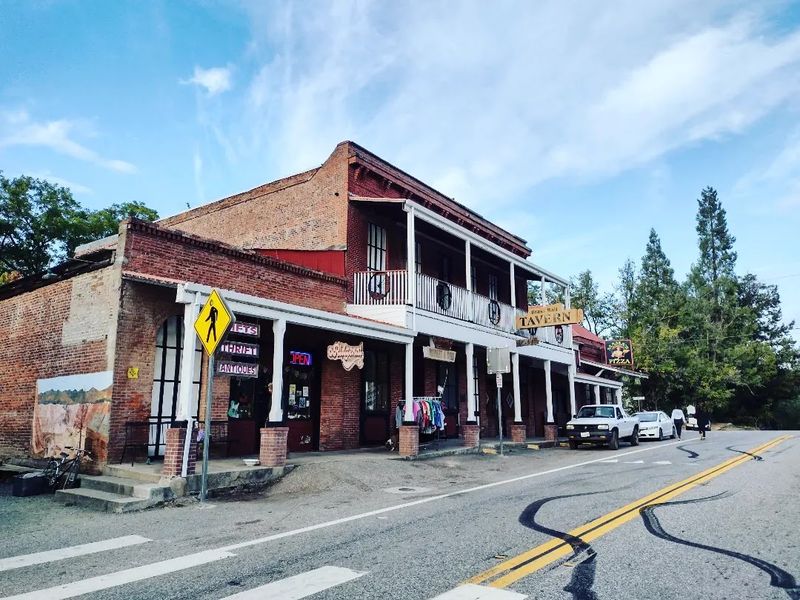
Returning from a long trail ride to find a genuine historic downtown waiting just minutes away is one of those small logistical pleasures that makes a destination feel well-rounded rather than one-dimensional.
After several hours on dusty singletrack, having restaurants, shops, and shaded sidewalks within easy reach changes the tone of the afternoon considerably.
Nevada City’s downtown district is listed on the National Register of Historic Places and holds a reputation as one of the most intact Gold Rush-era commercial districts remaining in California.
The concentration of surviving architecture from the Northern Mines period gives the streets a sense of continuity that most small towns have long since lost to renovation or redevelopment.
Strolling through the downtown after a ride offers a natural decompression that a trailhead parking lot simply cannot provide.
Shops, cafes, and restaurants give tired legs a reason to keep moving at a slower pace, and the visual character of the streets rewards unhurried attention.
For riders who want their post-trail hours to feel as worthwhile as the hours spent on the bike, the downtown district delivers a satisfying second act to a day that already had plenty going for it.