This Historic California Seafood Restaurant Has Served San Francisco From The Same Location Since 1861
A bowl of clam chowder carries a little more weight when the dining room has watched San Francisco change for more than 160 years.
Opened in 1861, this waterfront-era restaurant still serves guests from its original location, a distinction that separates it from older city institutions that moved along the way.
Plenty has changed outside. The address has not.
Inside, seafood remains the natural order of business, with clams, chowder, crab, cioppino, and other familiar coastal dishes keeping the menu tied to the restaurant’s past.
How many meals have crossed these tables since Abraham Lincoln was president? Far too many to count.
Yet sitting down here still feels remarkably simple: order something from the sea and enjoy dinner in a place that refused to move while California grew up around it.
It Has Remained At The Same Address Since 1861
Staying put for over 160 years is no small feat in a city that never stops reinventing itself.
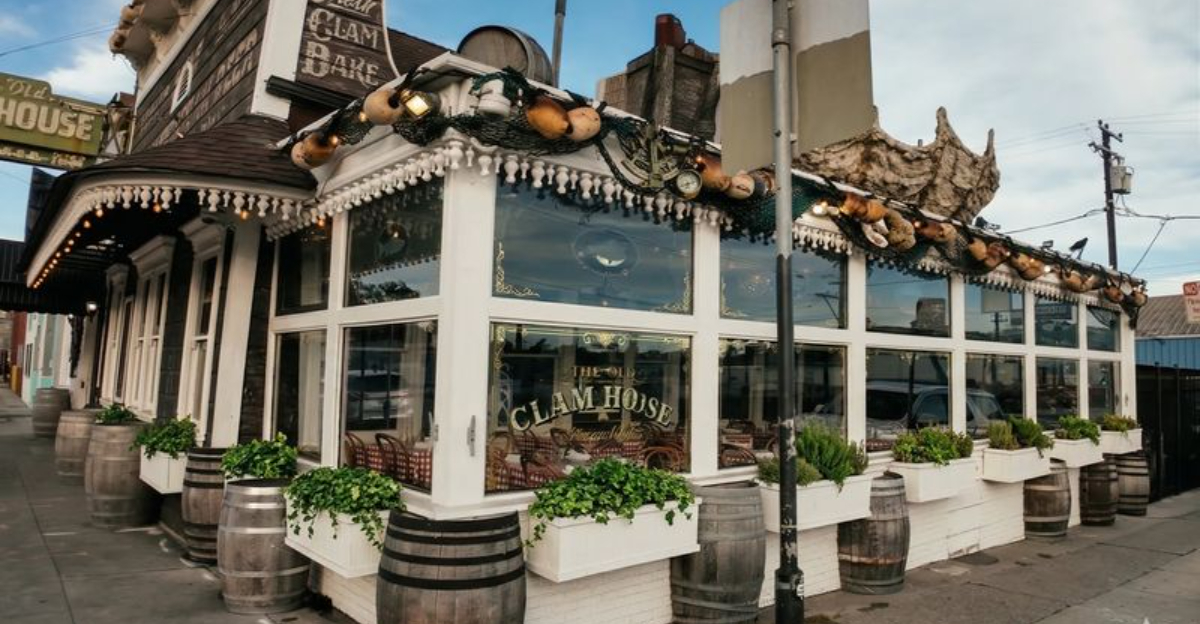
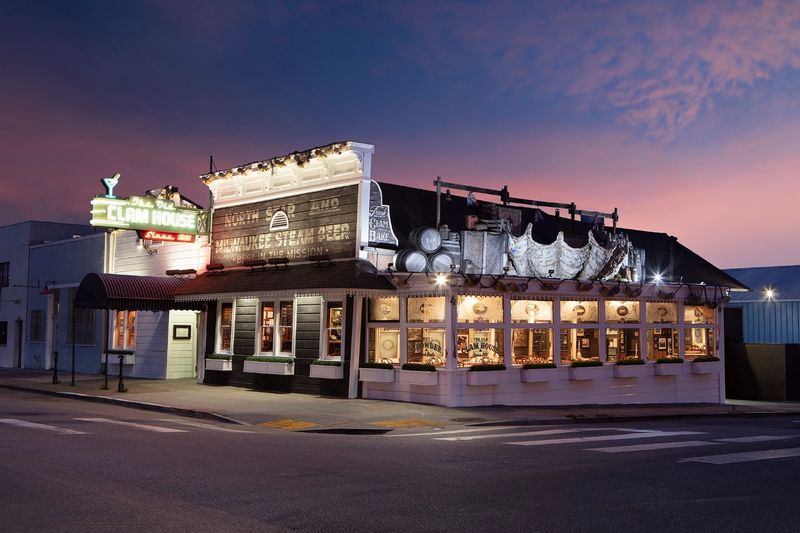
The Old Clam House opened at 299 Bayshore Blvd, San Francisco, CA 94124 in 1861 and has never once moved to a different address, a distinction that sets it apart from virtually every other restaurant in California.
That kind of geographic loyalty is almost unheard of in the restaurant industry, where closures and relocations happen constantly.
Most businesses that survive long enough eventually outgrow their original space or get pushed out by rising rents and changing neighborhoods.
Somehow, this particular address has held on through all of it. The building itself carries the weight of every decade it has witnessed, and visitors can feel that the moment they pull up to the curb.
For anyone who cares about history, the address alone is worth the trip.
Knowing that sailors, longshoremen, and generations of San Francisco families have all passed through the same front door makes the experience feel genuinely significant.
The Restaurant Originally Fed Waterfront Workers
Back when the restaurant first opened, Bayshore Boulevard as it exists today was nothing like the city corridor it has become.
The area was a working waterfront, edged by a saltwater slough and marshland, and the people who came through the door were laborers, sailors, and longshoremen who needed a solid meal after hard physical work.
The original name of the establishment was the Oakdale Bar and Clam House, which fit the rough-and-ready character of its early clientele perfectly.
Clams were plentiful in the bay during that era, and serving them to workers made practical and economic sense.
The food did not need to be fancy to be satisfying, and the restaurant built its early reputation on being a dependable place where people could eat well without fuss.
That no-frills approach to fresh seafood has remained a thread running through the restaurant’s identity across many decades.
Understanding those origins helps explain why the menu has always leaned toward straightforward, honest seafood preparations rather than elaborate or overly refined dishes.
The roots of the place are deeply connected to working people and practical eating, and that spirit still shows up in the way the kitchen approaches its cooking today.
Its Story Began During The Civil War Era
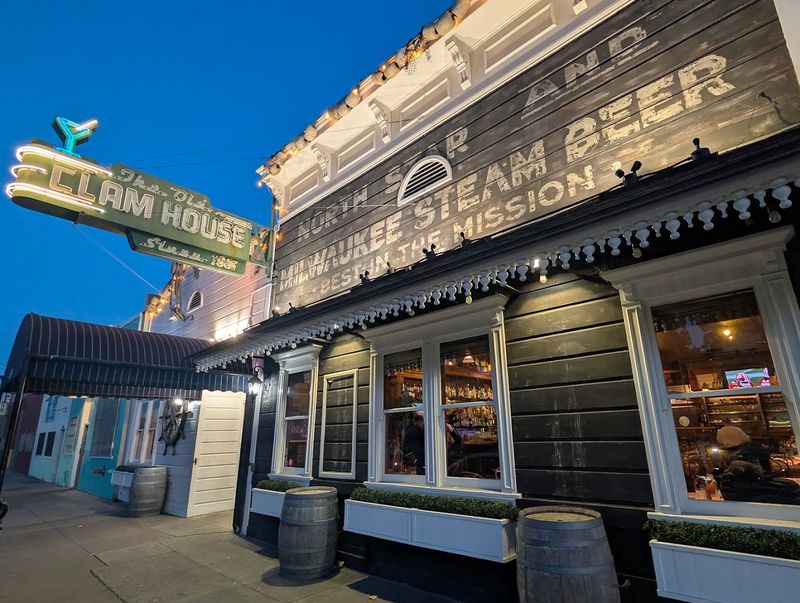
Opening a restaurant in 1861 means the very first bowl of chowder served at this address went out during the same year the American Civil War began.
Abraham Lincoln had just taken office, the transcontinental railroad had not yet been completed, and San Francisco was still a relatively young city finding its footing as a major port on the Pacific Coast.
The Old Clam House was born into that turbulent and transformative moment in American history.
Thinking about the timeline puts the restaurant’s age into sharp perspective.
Customers who dined there in its earliest years were living through one of the most consequential periods in the country’s story.
The fact that the building still stands and still serves food connects the present day to that distant era in a way that feels almost surreal.
Few places anywhere in the United States can claim that kind of historical anchor. The restaurant did not set out to become a landmark, but longevity has a way of turning ordinary businesses into extraordinary ones.
Every visit carries with it the quiet awareness that the same spot has been feeding people through wars, economic booms, technological revolutions, and cultural shifts for well over a century and a half.
The Pandemic Brought A Rare Extended Closure
After operating continuously for well over a century, the restaurant faced one of its most uncertain moments when it closed in March 2020 due to the COVID-19 pandemic.
The closure stretched on for roughly two years, an unusually long dark period for a place that had weathered so much else throughout its history.
During that time, there was genuine uncertainty about whether the extraordinarily long unbroken run had finally come to an end.
For longtime regulars and history enthusiasts, the extended silence was unsettling.
A restaurant that had survived an earthquake, two world wars, and countless economic downturns suddenly seemed vulnerable in a way it never had before.
The neighborhood felt the absence, and the question of what would happen to the building and its contents lingered without a clear answer for an uncomfortable stretch of time.
The closure served as a reminder that even the most enduring institutions are not immune to forces larger than themselves.
It also made the eventual reopening feel far more meaningful than a typical restaurant relaunch would.
The two-year pause became part of the story rather than the end of it, and the community that had quietly counted on the restaurant’s presence exhaled collectively when the lights finally came back on.
New Ownership Revived The Landmark In 2022
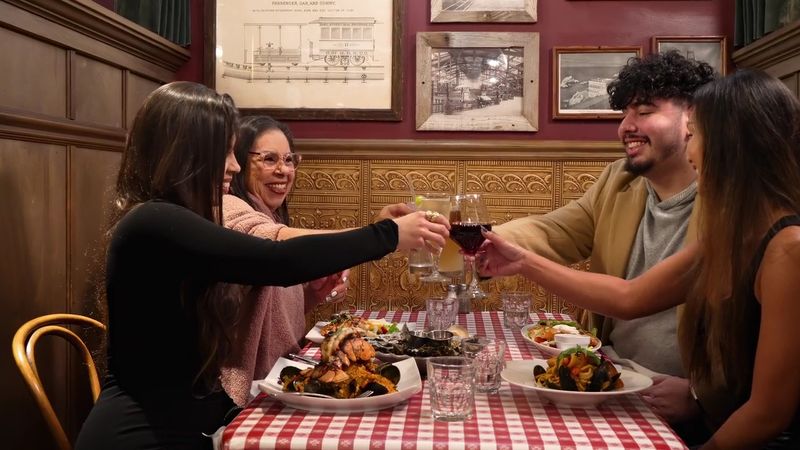
When Filomena Florese purchased the historic property and reopened it in June 2022, the decision came with a clear intention to honor what had been built over 160 years rather than reimagine it as something new.
The seafood-focused identity stayed intact, the name remained unchanged, and the decor that had accumulated across decades was preserved rather than cleared away.
That commitment to continuity sent a strong signal to the community that the spirit of the place would survive the transition.
Reopening a restaurant after a two-year closure is challenging under any circumstances, but doing so with a building this old and a legacy this significant adds layers of responsibility that most operators never face.
The new ownership stepped into a role that was part restaurateur and part steward of a piece of San Francisco history.
Getting the balance right between practical operation and historical preservation required genuine care and attention.
The revival has been well received by diners who returned hoping to find the restaurant they remembered and discovered that the core experience remained recognizable.
Fresh seafood, a room full of character, and that complimentary clam broth greeting at the start of the meal all came back with the reopening.
The landmark had made it through its most uncertain chapter and emerged ready to keep going.
The Dining Room Feels Like A San Francisco Time Capsule
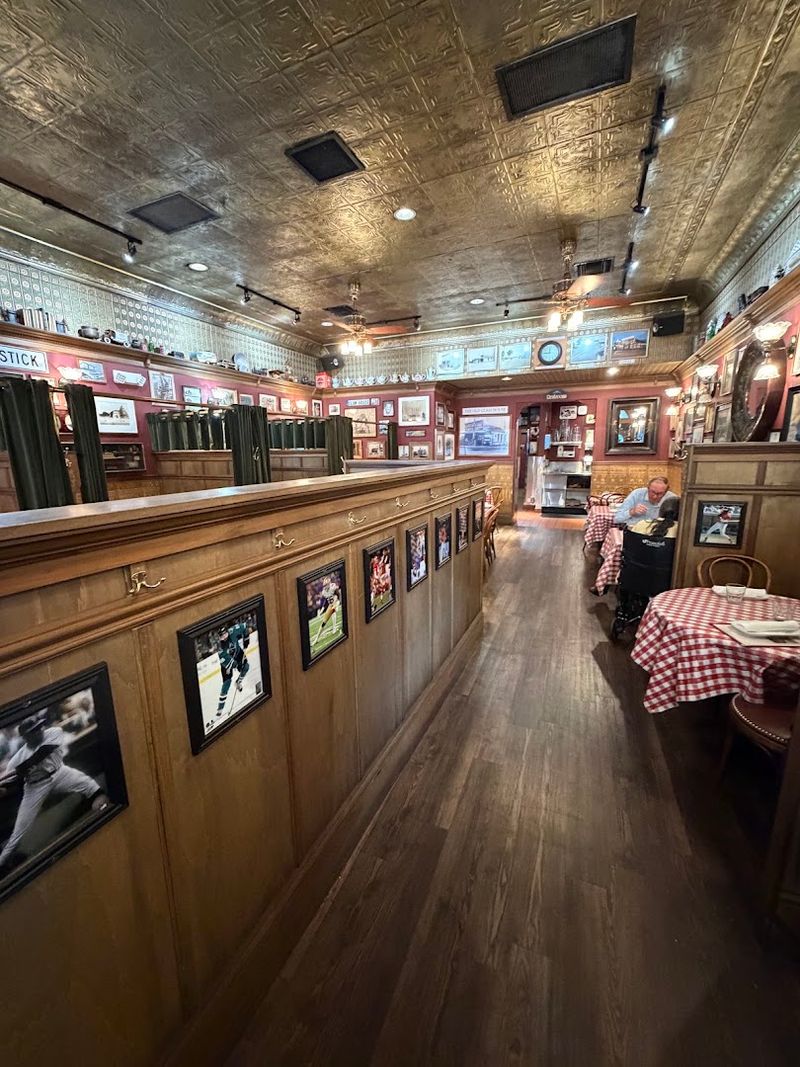
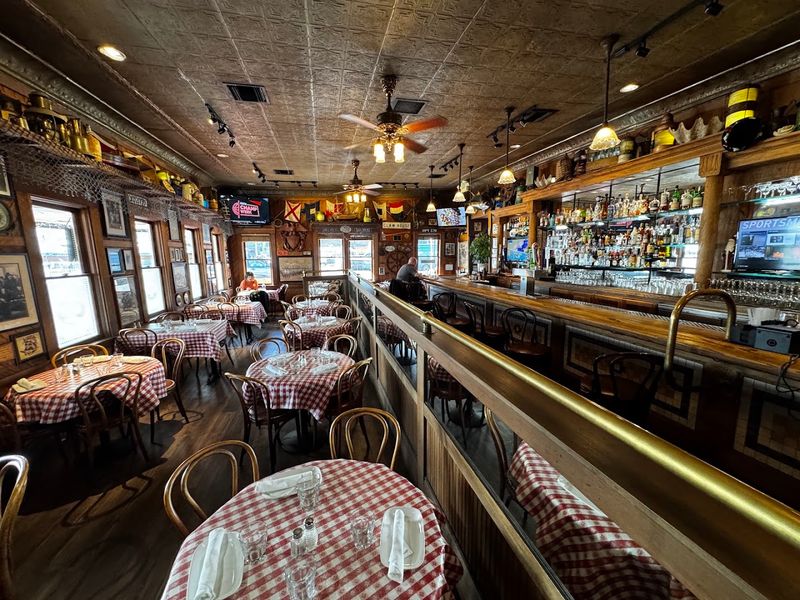
The dining room feels like the city outside has paused for a moment.
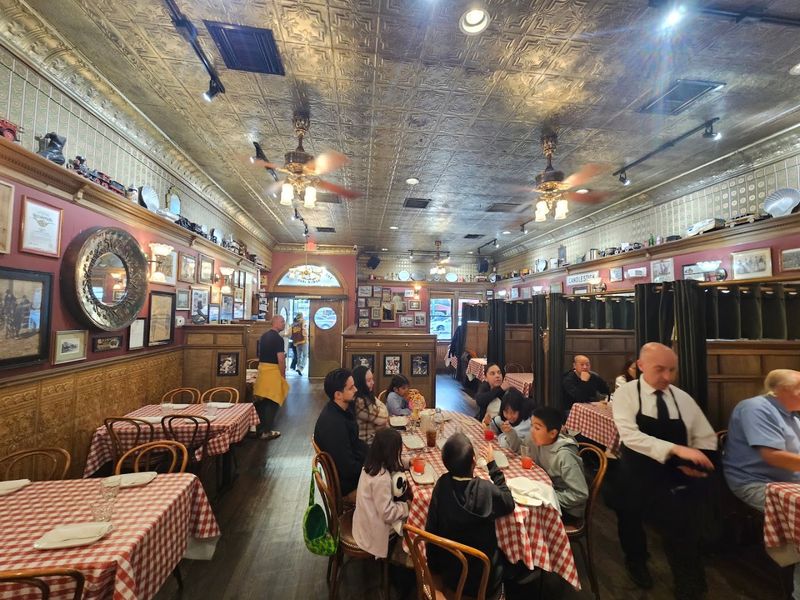
Wood-paneled walls are covered with vintage photographs, nautical details, old newspaper clippings, and San Francisco sports memorabilia that have accumulated over the decades.
Every shelf and corner holds something worth looking at, and the overall effect is less like a themed restaurant and more like a room that has simply lived a long life and shows it honestly.
The barroom features an original hammered tin ceiling that adds texture and age to the space in a way that no renovation could replicate.
The lighting is warm and low-key, creating an atmosphere that feels genuinely unhurried.
Noise levels can pick up when the room fills, especially near the bar area where televisions add to the energy, but the dining areas toward the back tend to feel calmer and more conversational.
Seating is entirely indoors, which suits the room well because the interior is really the experience. There are two distinct dining areas to choose from depending on the kind of atmosphere preferred.
The overall sensory impression is one of comfortable clutter, the kind that comes from decades of accumulation rather than deliberate staging, and that authenticity is something that cannot be manufactured or rushed into existence.
Clam Chowder Remains One Of Its Signature Orders
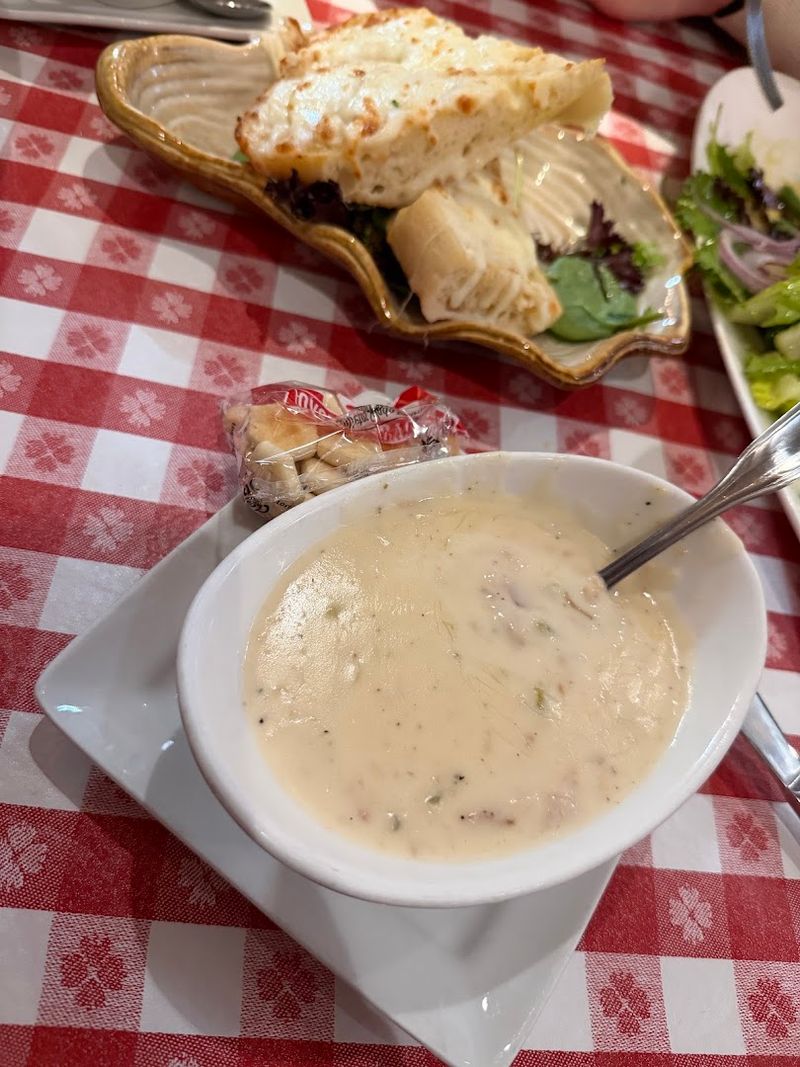
Few dishes carry the weight of a restaurant’s identity quite like the Clam House Chowder does at this address.
Made with clams, bacon, potatoes, onion, celery, and cream, the chowder is the kind of dish that regulars come back for specifically, not as an afterthought but as the main reason for the visit.
Served with oyster crackers and also available in a sourdough bread bowl, it offers exactly the kind of comfort that fits the room and the history behind it.
Before the chowder even arrives, diners are greeted with a complimentary shot of warm clam broth, a tradition that reportedly dates back to the 1800s.
That small ritual sets the tone for the meal in a way that feels genuinely old-fashioned and welcoming.
The broth is lightly salty and briny, a simple thing that connects the current experience to the restaurant’s earliest days of serving waterfront workers.
The chowder itself has earned consistent praise from diners who appreciate its creamy richness and generous portions.
Getting the chowder right matters enormously at a place whose name references clams directly, and the kitchen appears to take that responsibility seriously.
For anyone visiting for the first time, starting with the chowder is the most straightforward way to understand what this restaurant has always been about.
Seafood Still Dominates The Menu
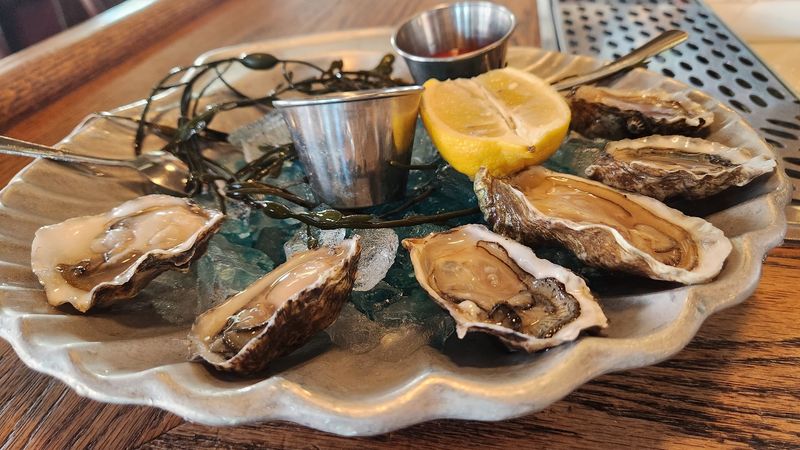
The menu at The Old Clam House reads like a love letter to the California coast.
Oysters, prawns, mussels, calamari, and various crab preparations including whole Dungeness crab and crab cakes all appear alongside fish options like halibut, salmon, and petrale sole.
Sizzling iron-skillet dishes bring theatrical warmth to the table, and seafood pasta options round out a menu that covers a wide range of preparations without straying far from its core identity.
Portions tend toward generous, and the kitchen leans toward letting the quality of the seafood speak for itself rather than burying ingredients under heavy sauces or complex preparations.
That approach suits the restaurant’s character well, though it does mean that diners who prefer bolder, more heavily seasoned dishes may find some offerings more restrained than expected.
The cioppino, a classic San Francisco seafood stew, is a standout that draws repeat visitors specifically for that dish.
The menu also includes non-seafood options for diners who prefer something different, including pasta dishes and other items that round out the selection without overshadowing the seafood focus.
Lobster ravioli has drawn particularly positive attention from diners looking for something a bit more indulgent.
Overall, the range is broad enough to accommodate most preferences while keeping the emphasis firmly on fresh, coastal cooking.
It Sits Away From San Francisco’s Usual Seafood District
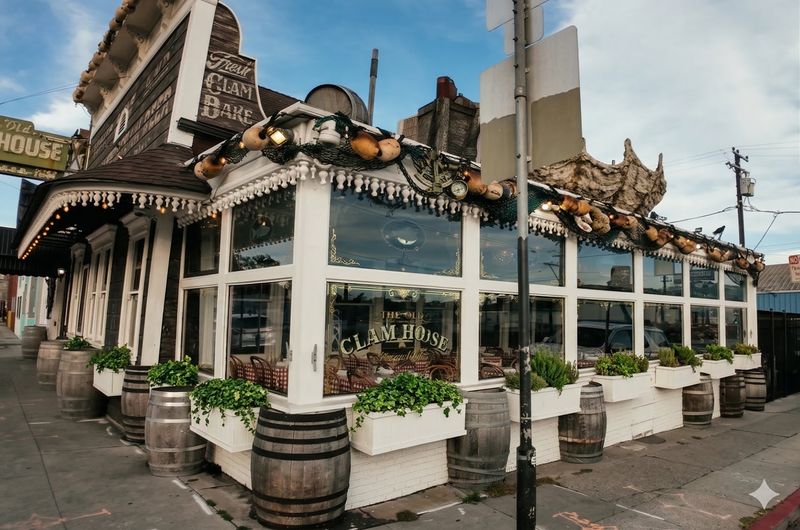
Most visitors to San Francisco who want seafood head instinctively toward Fisherman’s Wharf or the Embarcadero, where restaurants compete loudly for tourist attention along the waterfront.
The Old Clam House occupies a completely different kind of territory, sitting on a stretch of Bayshore Boulevard that runs between the Bayview and Bernal Heights neighborhoods, well away from the polished tourist corridors.
The 299 Bayshore Blvd, San Francisco, CA 94124 location gives the restaurant a genuinely local character that the more famous seafood spots can struggle to maintain.
Getting there requires a bit of intention, which tends to filter the crowd toward people who have sought it out specifically rather than stumbled in from a waterfront stroll.
That dynamic contributes to the atmosphere inside, where the energy feels more neighborhood-oriented than tourist-driven.
The industrial surroundings along Bayshore Boulevard add to the sense of being somewhere off the beaten path, which some diners find refreshing after the more performative energy of the wharf area.
The effort of getting there feels proportionate to the reward of sitting down in a room that has been feeding San Franciscans since before the city fully found its shape.