This Historic Georgia Furnace Helped Turn A Small Town Into An Industrial Powerhouse
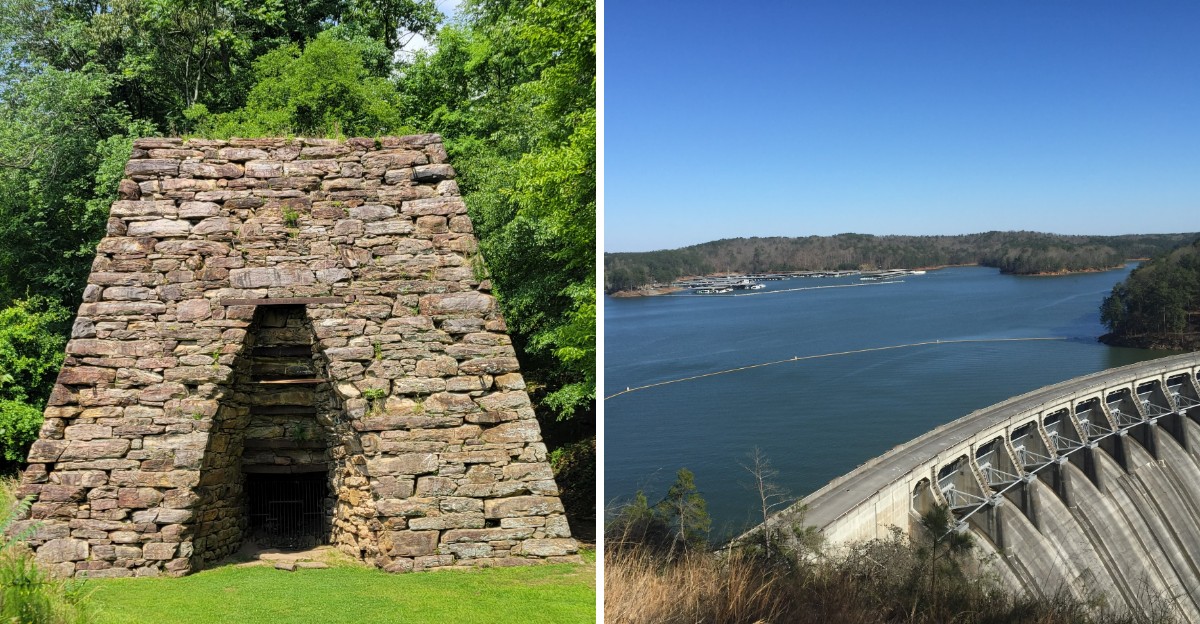
Today, the loudest thing here is the river. Birds chatter in the trees.
Leaves drift across the grass. It is hard to picture this spot any other way.
But long ago, this place roared. A tall stone furnace burned day and night, turning ore into iron and giving a growing community jobs and purpose.
Smoke rose above the treetops. Workers hauled heavy loads by hand.
A small Georgia town found its pulse right here. I have always loved places that tell two stories at once, and this one does it beautifully.
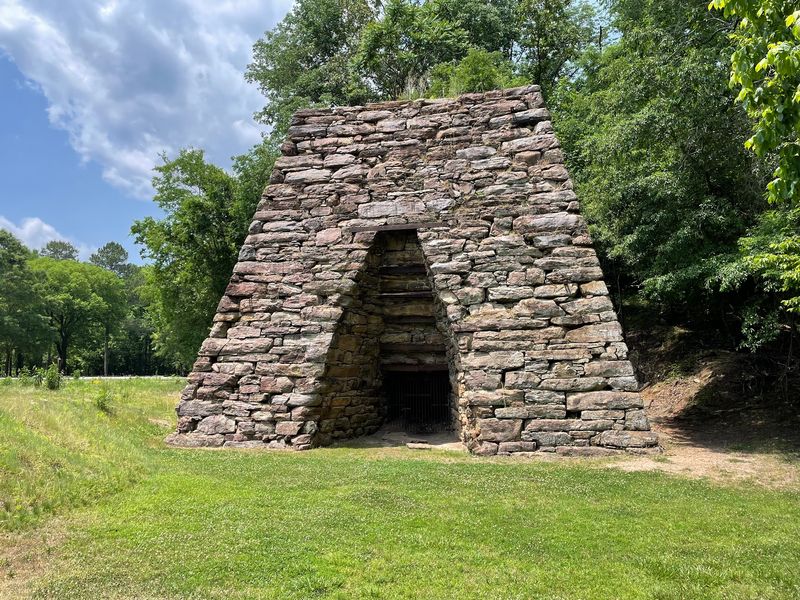
The stone tower still stands strong, rugged and proud beside the water. Its walls hold more history than any plaque could fit.
If you enjoy old ruins, scenic walks, and stories about small beginnings that grew into something big, this piece of Georgia history belongs on your next day trip.
A Stone Giant With Humble Roots
Big things often start small, and this furnace proves it. Back in the 1830s, a man named Moses Stroup built the first iron ore furnace on this ground.
It was a modest setup, nothing like the busy complex it would become. Think of it as the starter home of Georgia iron making.
Then politics stepped in, oddly enough. Mark Anthony Cooper lost a run for governor in 1843 and turned his energy toward business.
He bought an interest in the furnace soon after. By 1847, Cooper and a partner named Leroy M.
Wiley owned the whole operation.
Losing an election can sting, but Cooper made the most of it. He earned the nickname the Iron Man of Georgia, which sounds like a comic book hero.
I stood near the old stones and pictured that first small fire. It felt strange to know so much started right here, beside a peaceful river.
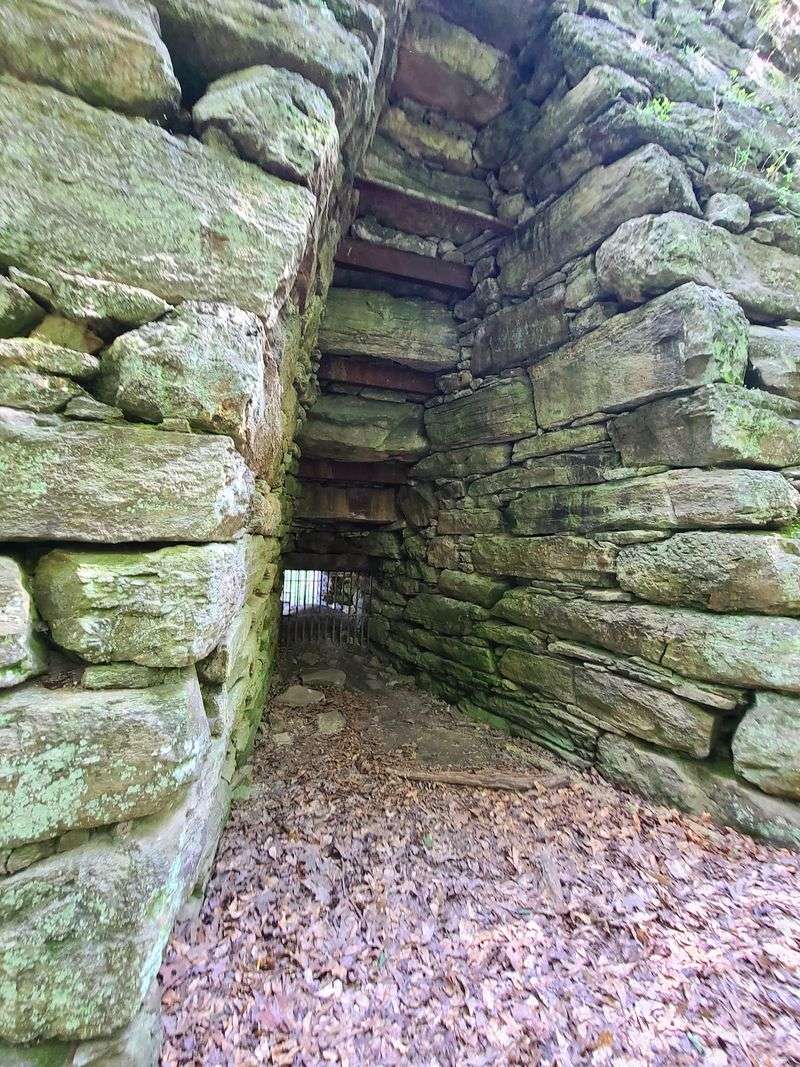
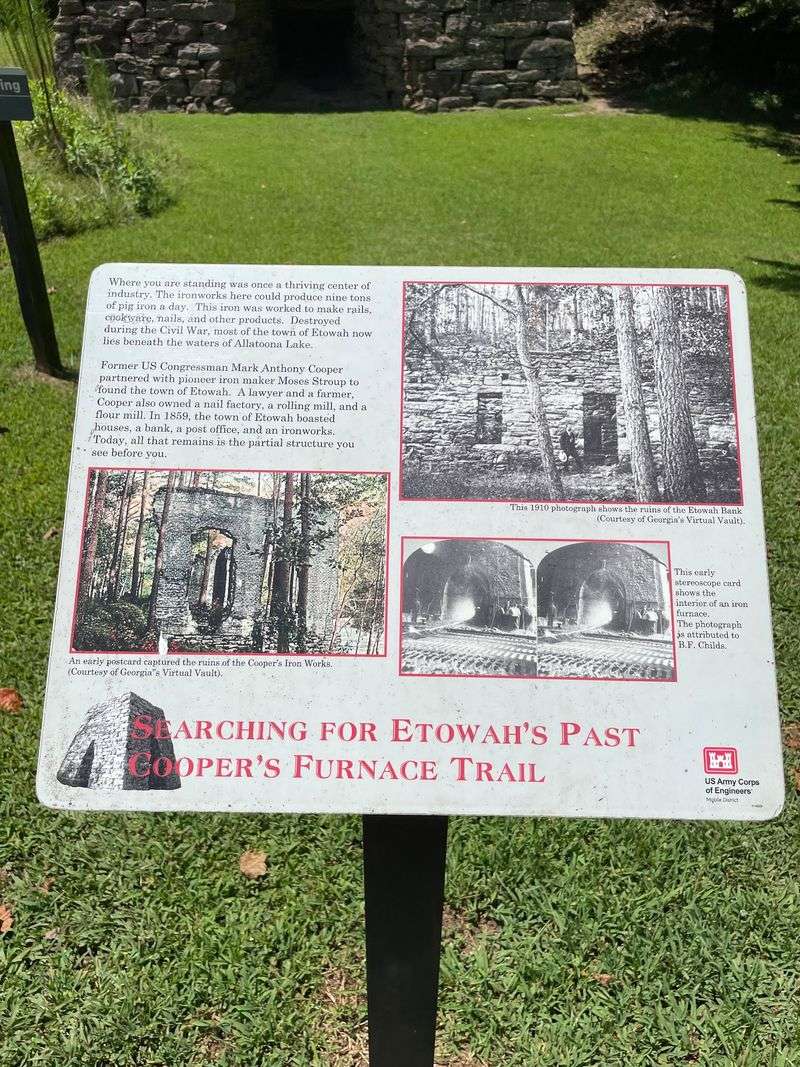
The furnace grew into what people called Cooper’s Iron Works or the Etowah Ironworks. Its tall stone walls are the main thing left today.
Bring your curiosity, because the markers fill in the details nicely. Every visit here begins with the Cooper’s Furnace Day Use Area.
The park is managed by the U.S. Army Corps of Engineers.
You will find it at 1052 Old River Rd SE, Cartersville, GA 30121.
How Rocks Became Pig Iron
Cooking iron is a lot like baking, only hotter and much messier. The recipe here used iron ore, limestone, and charcoal.
Workers loaded all three into the top of the furnace. Then the real heat show began.
A waterwheel powered big bellows that pushed air inside. More oxygen meant a hotter fire, and that fire melted the ore.
For its time, a charcoal-fired blast furnace was advanced technology. It was the high-tech gadget of the 1800s South.
The melted metal flowed into sand molds on the ground. People called it pig iron, which still makes me smile.
The name comes from the molds looking like piglets lined up beside their mother. Iron makers clearly had a sense of humor.
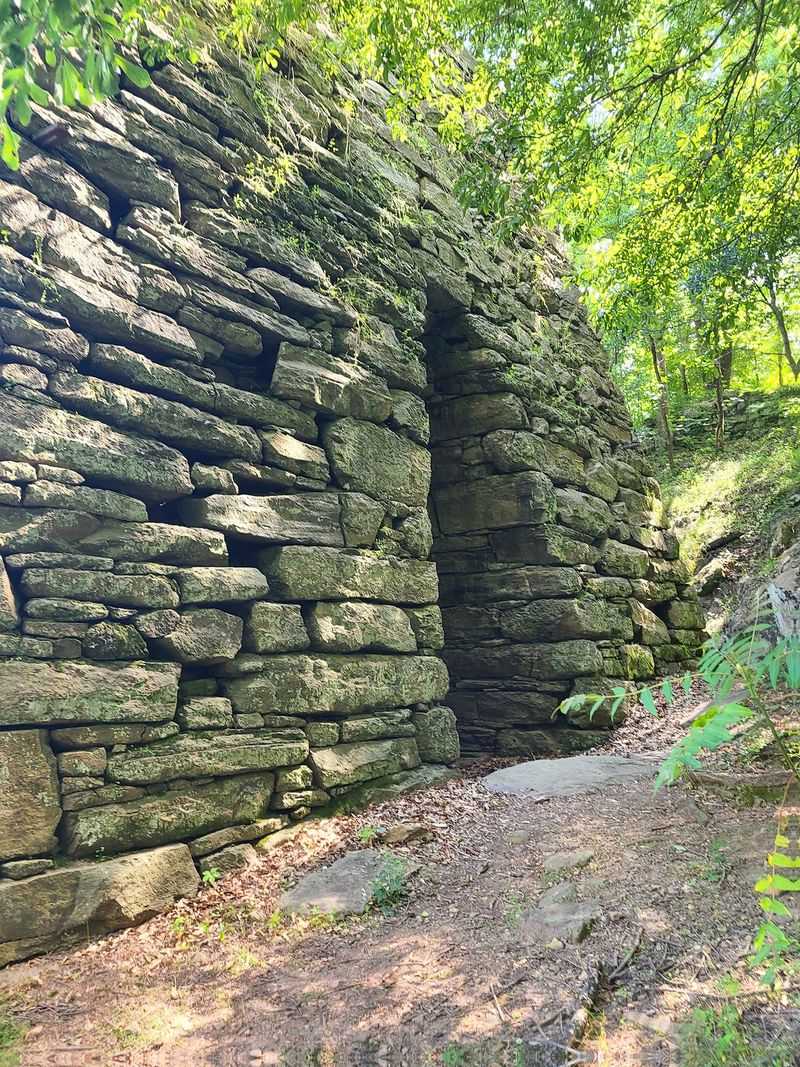
Standing near the stone walls, I noticed how thick they are. They had to hold heat strong enough to turn rock into liquid.
Kids usually love this part of the story. It is science, fire, and farm animals all mixed together.
Read the markers slowly here, and look up at the furnace top. Picturing workers dumping in ore makes the whole process click.
The Everyday Iron That Built A Region
Railroads do not build themselves, and neither do kitchens. The ironworks helped with both.
Railroad rails and spikes came out of this valley. They helped the growing rail network stretch across the South.
Machinery was on the list too. Farms and factories needed sturdy parts, and this place delivered.
Then came the everyday stuff. Nails held houses together, and cookware sat on stoves in many homes.
I own a cast iron skillet, and I thought about it the whole hike. Somewhere, a family once fried cornbread in a pan born near here.
All this output made the complex one of the most productive in the South before the Civil War. That is a big title for a small town.
It even rivaled many Northern iron operations of that era. Not bad for a place that started with one modest furnace.
Thinking about these products gives the ruins real meaning. The stones are not just old, they were useful.
Next time you hammer a nail, give a little nod to places like this. History is often hiding in plain, practical things.
Wartime Weight And A Famous Chase
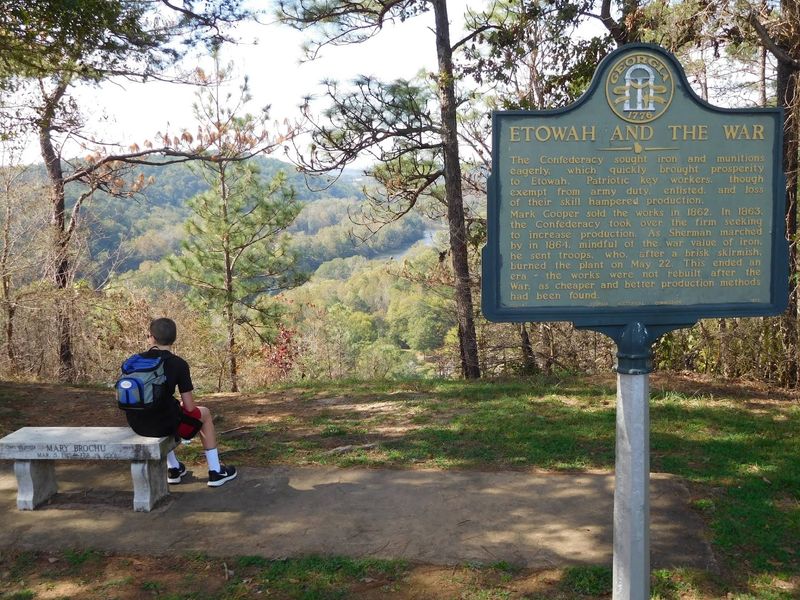
When the Civil War began, this iron suddenly mattered far more. The works became a major supplier for the Confederacy.
Cannons and munitions were made here and known for their quality. The Confederate government bought the ironworks around 1862 or 1863.
Now for my favorite bit of trivia. The town had its own small railroad with a yard engine named Yonah.
Yonah played a part in the Great Locomotive Chase in April 1862. The engine was at the town depot when the chase came through.
That event is one of the most daring stories of the war. It involved a stolen train and a long pursuit on the tracks.
I love that a little yard engine got its moment of fame. It worked quietly every day, then joined a legend.
Fans of train history will enjoy this connection. It turns a peaceful park visit into a mini history lesson.
Try telling the story to kids while walking. Trains plus a chase usually earns full attention.
It is proof that small places can touch big events. This valley was busier than it looks today.
The Furnace That Refused To Fall
Some structures are just stubborn, and I mean that as a compliment. In May 1864, Union forces arrived during the Atlanta Campaign.
They targeted the town’s industry on purpose. Factories, machine shops, warehouses, and rail facilities were destroyed.
Much of the town went up in flames. Yet the massive stone furnace stayed standing.
After the war, nobody rebuilt the ironworks. Cheaper and faster ways to make iron had taken over elsewhere.
Little by little, Etowah faded away. The town simply emptied out over time.
Then came another twist in the late 1940s. Workers built Allatoona Dam between 1946 and 1950.
Rising waters of Allatoona Lake covered the old town ruins. So much of Etowah now rests under the lake.
That makes the furnace the main surviving piece of the town. Standing near it feels like meeting the last guest at a long party.
A fence keeps visitors from touching the stones directly. That is fine, since it helps protect something so rare.
Bring a camera and catch it in good light. Those old stones look best when the sun hits them sideways.
A Thank You Carved In Marble
Most business owners send a thank you card. Cooper went much bigger and used marble.
During the Panic of 1857, money troubles nearly sank his business. Thirty-eight people stepped up and helped him save it.
To show his gratitude, he built a monument with all their names. It was a rare and lasting way to say thanks.
That monument now stands in Friendship Plaza in downtown Cartersville. It makes a sweet side trip after your park visit.
I found this story more touching than I expected. It shows a softer side of the Iron Man.
History often focuses on machines and battles. This is a reminder that people helping people kept things going too.
If you visit both spots, the story feels complete. One holds the furnace, and the other holds the friendship.
Kids might like spotting the names carved in stone. It is a fun way to talk about kindness.
Grab a snack downtown while you are there. Then head back toward the river for more exploring.
Picnic Shelters By The River
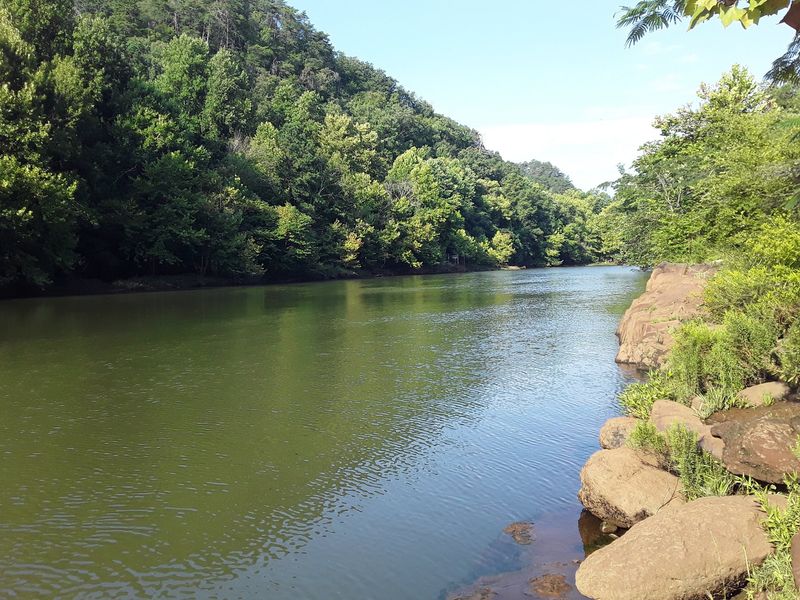
Good history makes me hungry, so lunch comes next. This park handles that part beautifully.
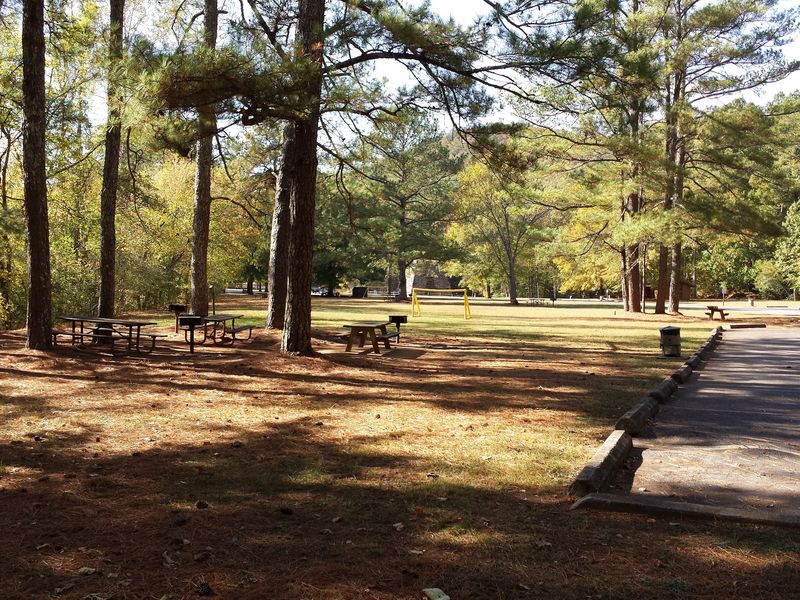
Covered shelters with picnic tables sit right near the river. Grills are ready for anyone bringing burgers or hot dogs.
A playground is close by, which keeps little ones busy. Parents can relax and listen to the water.
Shelters can be reserved, which works well for birthday parties. The cost is reasonable for a group outing.
There is plenty of parking, and public restrooms are on site. That makes a long family day much easier.
You may also spot horseshoe stakes and a volleyball net. Not everyone wants to hike, and that is perfectly okay.
Gates are open daily from 8 am to 7 pm. Arrive early on nice weekends to grab a good shaded table.
I packed simple sandwiches and still felt fancy eating by the river. Bring bug spray too, because gnats sometimes join the party.
A Whole Town Built Around Iron
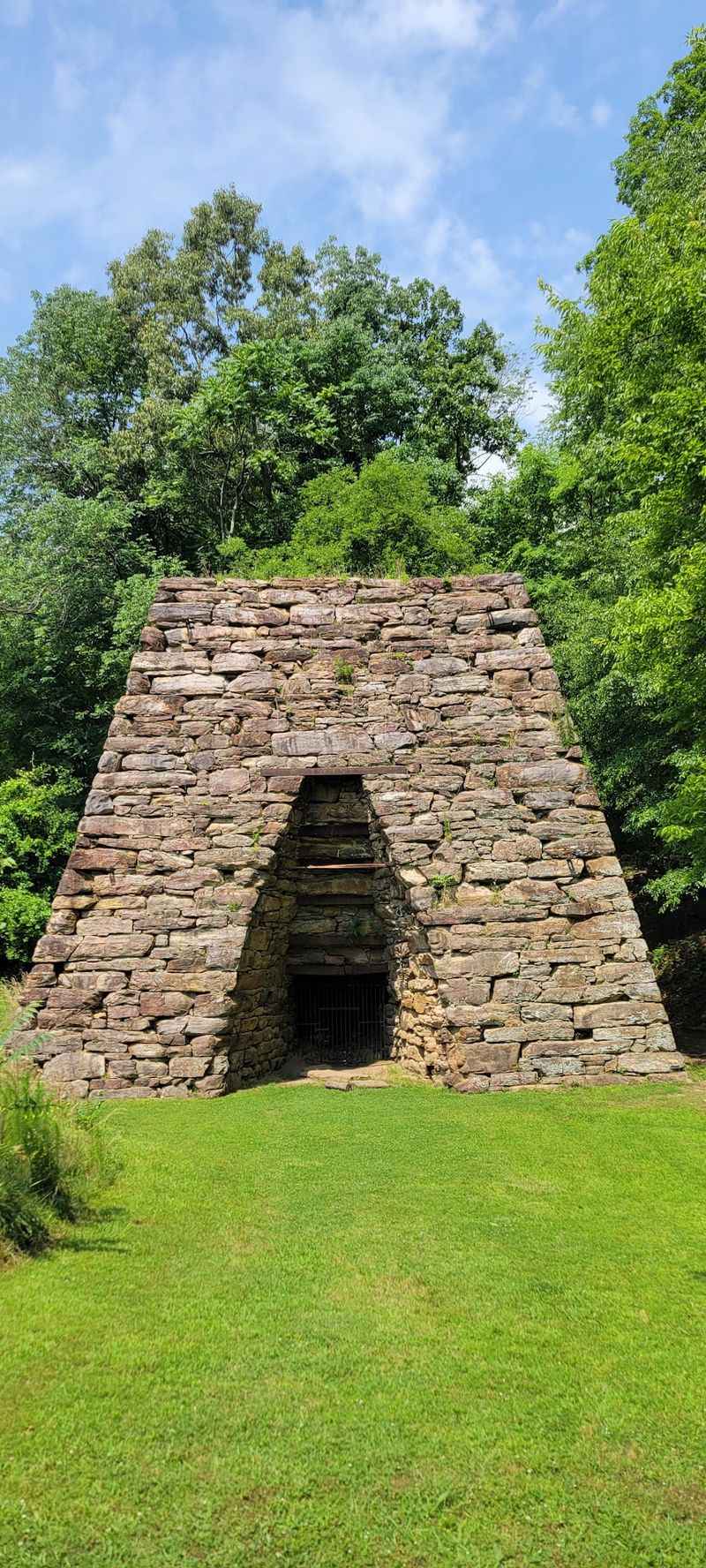
Imagine a town where nearly every job connected to one fire. That was Etowah, the company town that grew up around the ironworks.
At its peak, about 1,200 people lived there. That is a lot of neighbors for a spot that feels so quiet now.
The furnace was only one piece of the puzzle. There were rolling mills, a nail factory, foundries, and machine shops humming with work.
Daily life had its own corner too. Workers had housing, a company store, a post office, a church, and warehouses.
Hungry families relied on a corn mill and a flour mill. So the town did not just make iron, it made breakfast possible.
Location was the secret ingredient. Iron ore, limestone, and timber for charcoal were all close by, like a well-stocked pantry.
The Western and Atlantic Railroad sealed the deal. Goods could roll out quickly to places far beyond the river valley.
I tried counting buildings in my head while walking the trail. Honestly, I lost track somewhere between the nail factory and the flour mill.
Knowing this helps the quiet woods feel alive. You start to hear the old town under the birdsong.
Trails That Climb To Dam Views
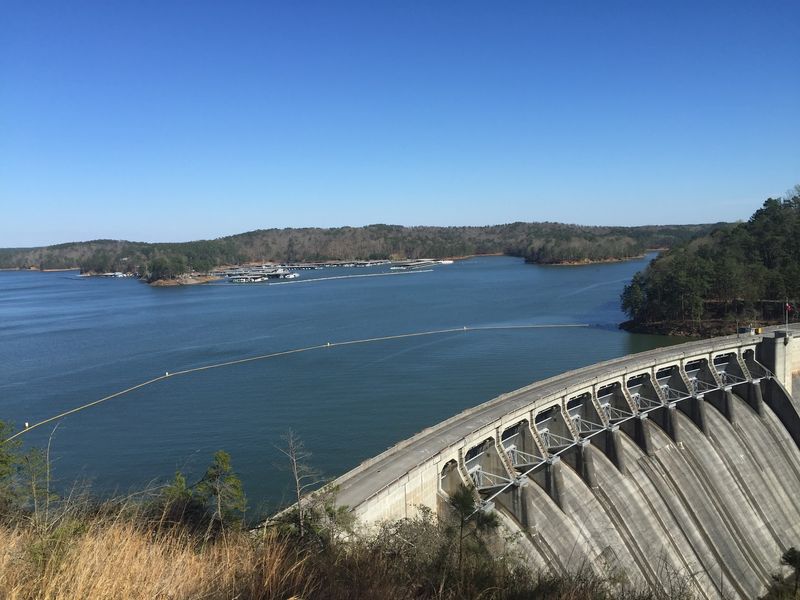
My legs had opinions about this trail, but my eyes were thrilled. The Cooper’s Furnace Trail climbs through woods full of mountain laurel.
Some sections are steep and go uphill for a while. Take breaks if you need them, since nobody is timing you.
The reward is a sweeping view of Allatoona Dam. Watching the river below the dam feels calm and powerful at once.
The trail also connects to Pine Mountain trails. Longer hikes are possible if you have energy left.
Up top sits the Allatoona Lake Visitor Center and Museum. You cannot drive there from this park, so walking is the simple choice.
Wildlife sightings add extra fun. Deer, birds, and even otters near the water have been seen here.
A pollinator area near the furnace attracts many birds and insects. It is a lovely spot for quiet watching.
Some paths are narrow, and bikers use them too. Stay alert and share the trail kindly.
Check water release schedules before you go. Seeing the dam release water makes the view even better.
History, river, and forest all fit into one afternoon here.