This Historic Georgia Hillside Still Holds Traces Of A Forgotten Past And Visitors Can Explore It Today
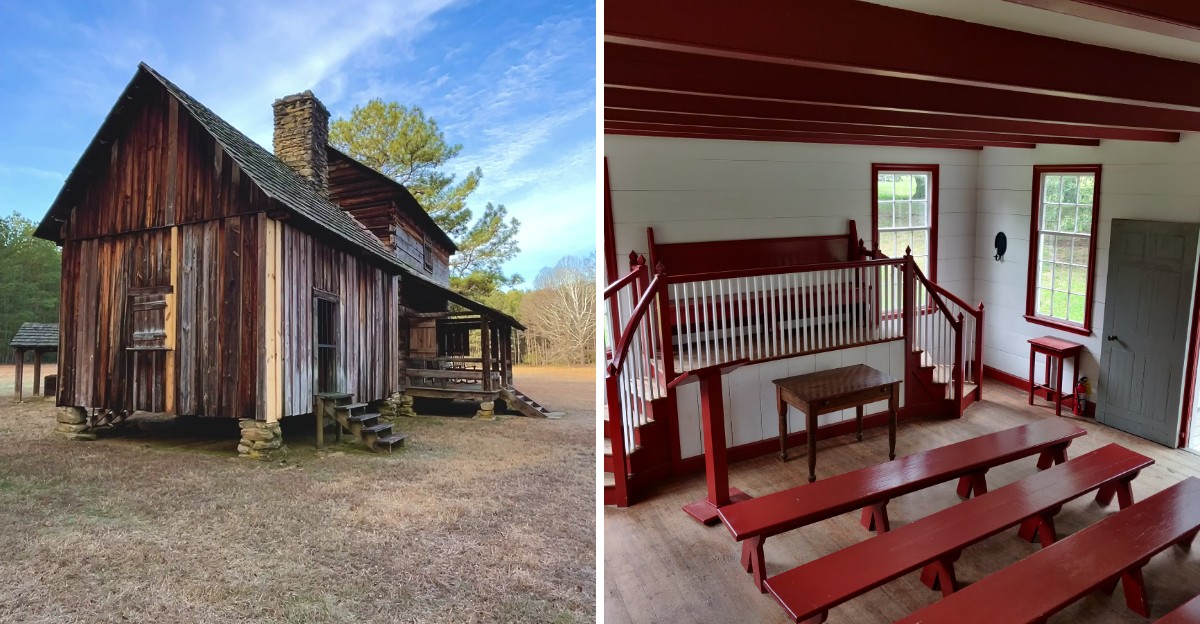
Grass is very good at keeping secrets. Give it enough years, and a busy town can fade into a quiet, grassy field.
That is what makes this hillside in Georgia so fascinating. At first glance, it looks like a peaceful spot for a picnic.
Look again, and the story starts to show.
Wooden buildings stand where a community once gathered, worked, and made plans for the future. Old printed pages hint at voices that once carried far beyond this hill.
Walking paths connect it all, and every stop adds another piece.
I am drawn to places like this. They do not shout for attention.
They wait for someone curious enough to slow down and listen. Best of all, anyone can visit today.
History lovers in Georgia should put this hillside on their list. It stays with you long after the drive home.
A Capital That Once Ran A Nation
Picture a capital city with a legislature, a court, and a newspaper, all built in the 1820s. That was this hillside, and it ran a nation.
From 1825 until the forced removal of the late 1830s, this ground served as the capital of the Cherokee Nation. Streets were laid out, buildings went up, and leaders met to write laws.
The Cherokee had written laws as early as 1808, which surprises a lot of folks.
In 1827, the nation adopted a written constitution. It set up three branches of government, much like the United States system.
I remember standing in the open field and trying to imagine busy roads full of people.
The site was named a National Historic Landmark District in 1973. That honor protects the land and the story it carries.
Today it works like an open-air museum, with twelve structures you can tour.
Some buildings are reconstructions, and some were moved here from other places. One original home still stands from the 1830s.
Each stop adds a new piece to the puzzle of daily life and government.
Before you go any further, know the name of this remarkable place. It is New Echota State Historic Site.
The site sits at 1211 GA-225, Calhoun, GA 30701.
Start Your Visit With The Film
Skipping the movie is like reading a mystery novel starting at chapter ten. The visitor center offers a 17-minute film on Cherokee history, and it sets the stage perfectly.
I watched it first, and every building outside suddenly made more sense. The film explains how the Cherokee built their government and what happened next.
It is short, clear, and easy for kids to follow.
The museum next to the theater is worth a slow lap too. You will find interpretive exhibits and a large artifact collection.
The displays are informative without burying you in dates.
Here is a practical tip. You pay a small entrance fee per person at the visitor center before heading onto the grounds.
Seniors get a discount, and young children under five get in free.
Georgia also sells a yearly historic site pass. If you love history, staff can explain which other sites it covers.
Clean restrooms and a drink vending machine are also nearby.
The center is also the best place to ask questions. Rangers here really know their stuff, and they can help you plan a route.
A little planning turns a quick stop into a full, rich afternoon.
Where Laws Were Debated In The Council House
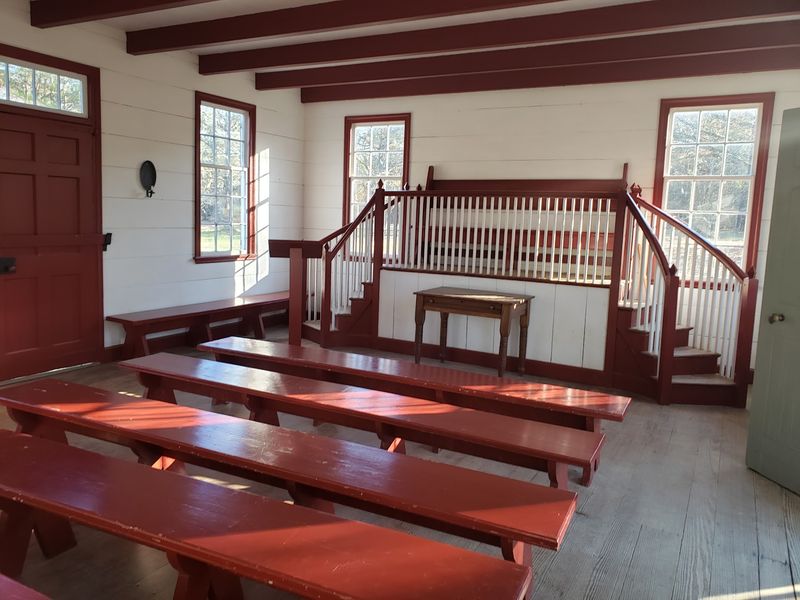
Two stories of timber might not sound like a power center. Yet the Council House was where big decisions for the Cherokee Nation were made.
The reconstructed building stands on the grounds today. It represents the home of the Council, a two-house legislative body.
That setup is called bicameral, which simply means two chambers, like the Senate and House in Washington.
Inside, the space feels plain and practical. There are no fancy decorations, just room for leaders to meet and talk.
I liked that simplicity, because it kept my focus on the ideas.
Think about what happened here. Leaders debated laws, discussed land, and planned for the future of their people.
The Council House reflects the Cherokee Nation’s established system of government during the early 1800s.
Kids often find this stop eye-opening. The reconstructed building offers a closer look at the Cherokee Nation’s established system of government.
That surprise is one of the best lessons the site offers.
Take a few minutes to read the signs outside the building. They explain how the council worked and who served in it.
Then step back and look at how the building fits into the old town layout.
The One Home That Survived
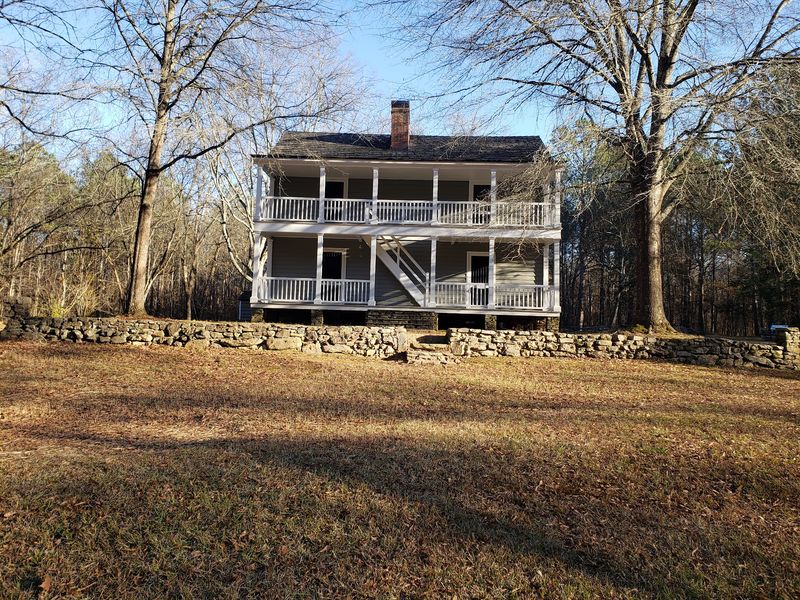
Out of everything on this hillside, only one building is original from the 1830s. It is the Worcester House, and it has quite a story.
Samuel Worcester was a missionary who lived here with his family. He started a mission and a school for the community.
He also worked with the Cherokee on printing in their own language.
His legal battle went all the way to the U.S. Supreme Court.
The ruling affirmed Cherokee sovereignty, meaning the nation had the right to govern itself. Sadly, that ruling did not stop the removal that followed.
The house has been restored to look like it did back then. Walking through it, I noticed how sturdy and lived-in it felt.
The rooms show a mix of daily life and important work.
The stairs can be steep, so take your time. Many buildings here have several levels and tricky steps.
Visitors with mobility needs should plan with staff ahead of time.
Standing in a real 1830s home is a rare treat. It turns textbook pages into something you can touch and see.
Of all the stops, this one feels the most personal.
Farm Life And A Tavern With Miles On It
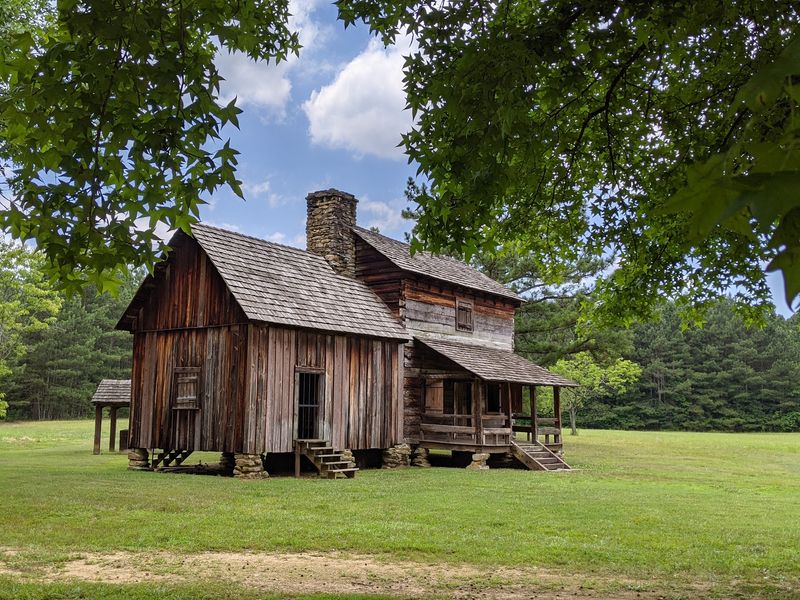
Government buildings tell one story, but farms tell another. The Cherokee farmstead shows how families actually lived day to day.
You will see a home along with outbuildings like smokehouses and corn cribs. Corn cribs stored dried corn, keeping it safe from weather and critters.
Smokehouses helped preserve meat for long winters.
Walking among these buildings felt surprisingly cozy. I could almost hear chores getting done and kids running between cabins.
Every structure had a clear job.
Nearby stands Vann’s Tavern, and this building has traveled. It dates to 1805 and was moved here from Forsyth County.
It once served as an inn, a store, and a place to eat.
Taverns back then were like early rest stops. Travelers grabbed a meal, swapped news, and bought supplies.
The restored tavern gives you a feel for those busy crossroads.
Keep an eye on the park calendar for special events. Cooking demonstrations and other programs sometimes bring these spaces to life.
Seeing old skills in action adds flavor to the visit, sometimes literally.
A Newspaper Born On This Very Hillside
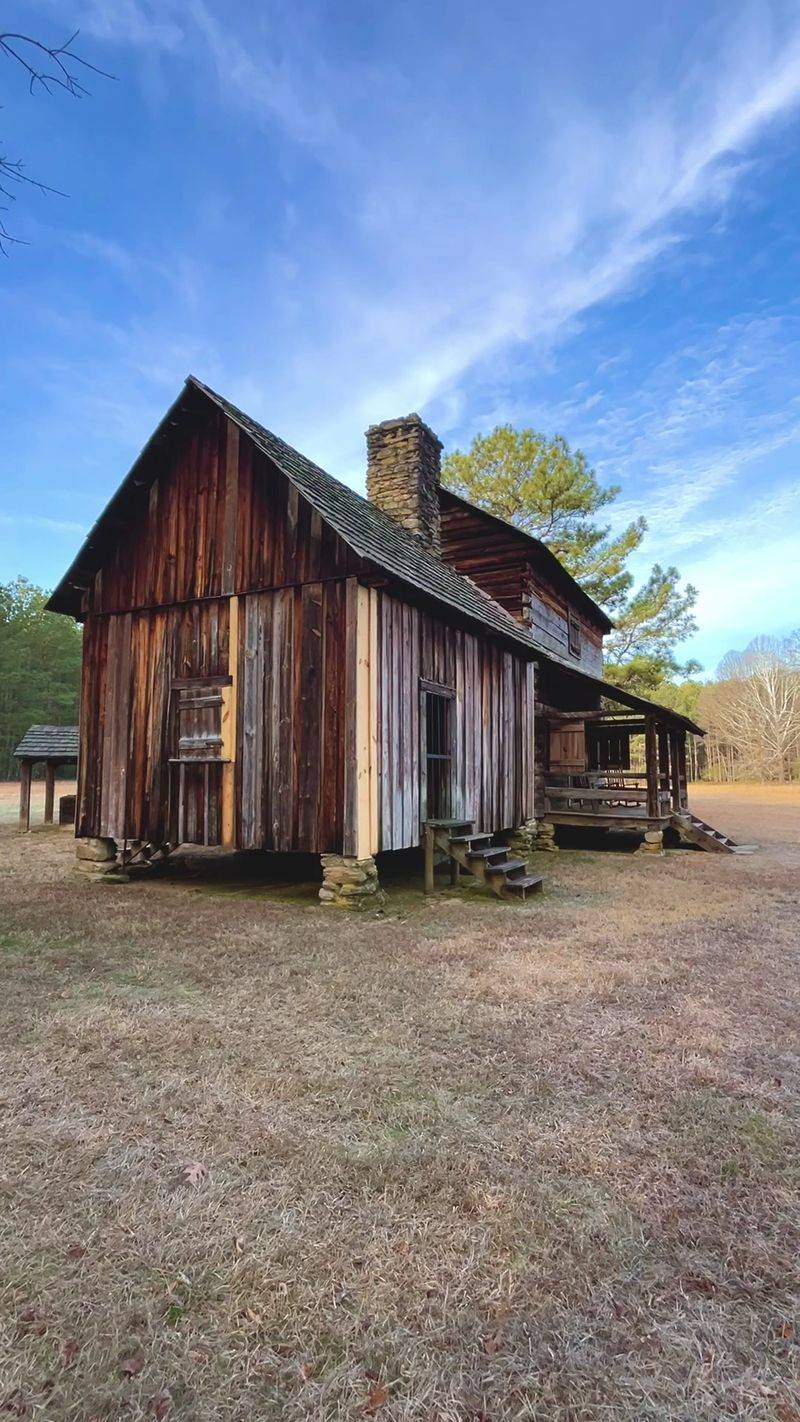
Newspapers usually make headlines, but this one made history. In 1828, the Cherokee Phoenix became the first Native American newspaper.
It was printed in English and in the Cherokee syllabary. Sequoyah created that writing system, giving each sound its own symbol.
Elias Boudinot served as the first editor and used the paper to defend Cherokee rights.
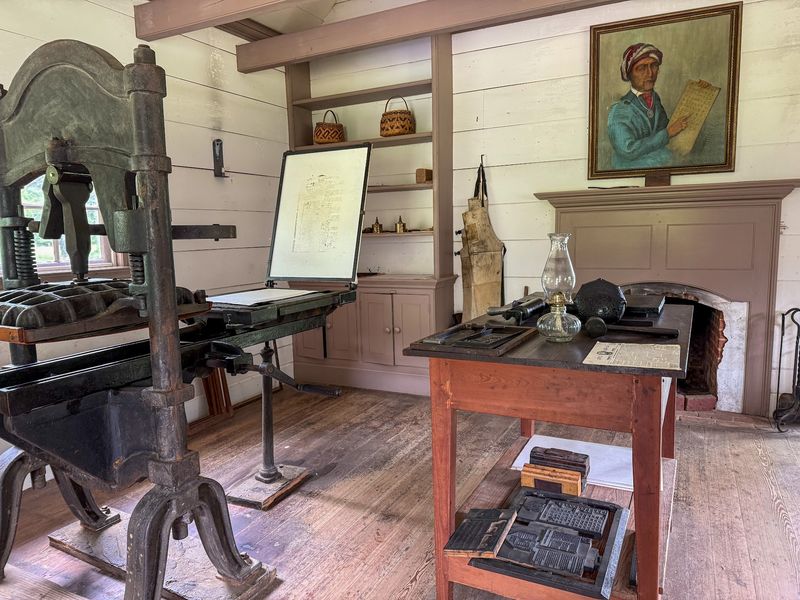
The reconstructed Print Shop holds a working replica of a period printing press. This was my favorite stop, hands down.
Seeing the heavy press and rows of letters made the story feel alive.
During guided tours, staff may show how the printing process worked. You can see how type was set, inked, and pressed onto paper.
Sample pages show the two languages side by side.
Fun fact time. The syllabary helped many Cherokee people learn to read quickly.
That made a newspaper a powerful way to share news across the nation.
Bring your curiosity and maybe a notebook. Kids love copying a few syllabary symbols they spot.
It is a small, hands-on way to connect with a language that is still used today.
Justice On The Hill At The Supreme Court Building
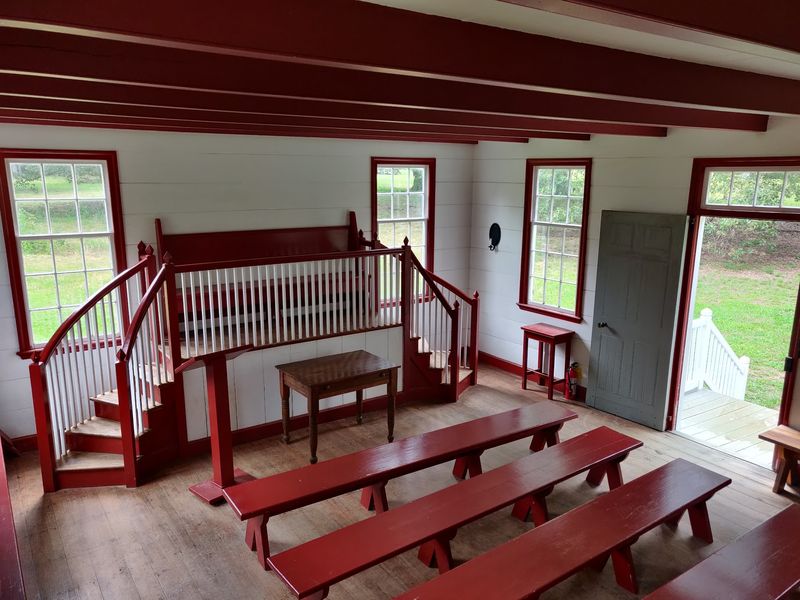
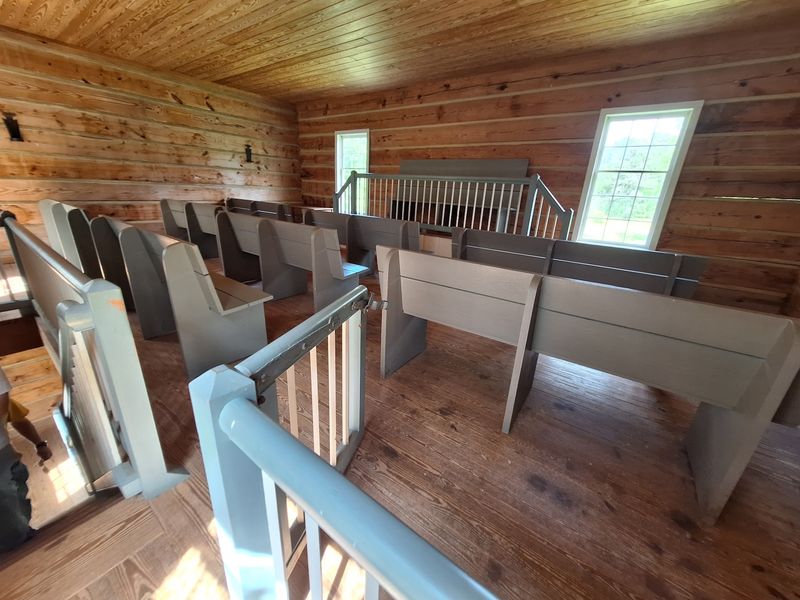
Courtrooms usually come with marble steps and grand columns. The Cherokee Supreme Court building swaps all that for honest wood and big ideas.
The Cherokee created their Supreme Court in 1822. Starting in October 1823, it held yearly sessions to handle legal matters.
The building you see today is a reconstruction of the 1829 courthouse.
The Cherokee Supreme Court handled legal matters under the nation’s judicial system. Neighbors settled disputes, and laws were applied fairly under a written system.
That is impressive for any young nation.
Inside, the room is simple, with space for judges and the people involved. I sat for a moment and tried to picture a hearing in progress.
It felt calm, almost like the walls were still listening.
Families can turn this stop into a fun game. Ask kids what kinds of cases a town court might hear.
Then compare their guesses with the information on display.
Some buildings stay locked unless you join a guided tour. If you want to step inside more of them, plan for that.
Free guided tours have been offered on Saturdays, so checking ahead with the site is smart.
Nature Keeps Its Own Schedule Out Here
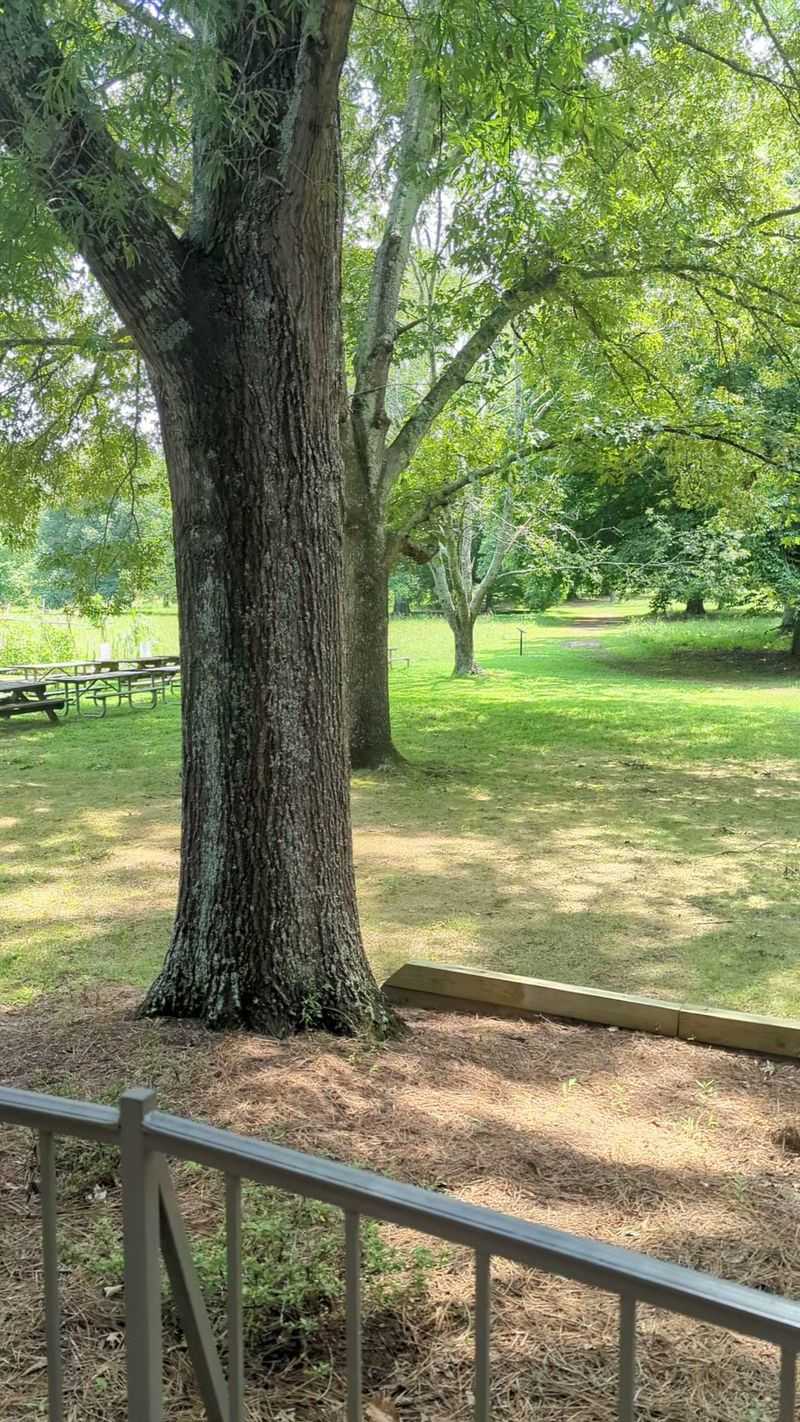
After all that history, your brain may need a stroll. Luckily, nature trails wind away from the buildings toward New Town Creek and a beaver pond.
The walking loop is about 1.5 miles and not very hard. Shady paths, native plants, and big old trees make it pleasant.
Leashed pets are welcome on trails, though not inside buildings.
I spotted signs of beaver work near the water and felt like a detective. Stay on the path, since ticks love tall grass.
Sturdy shoes are a must because the grounds cover more space than expected.
Now for the planning details. Hours run 9 AM to 5 PM Tuesday through Saturday, and 1 PM to 5 PM on Sunday.
It is closed on Mondays and on major holidays. Sunday hours may change in winter, so check the website first.
Plan for about two to three hours to see everything well. Pack a lunch for the shaded picnic area.
Parking is free, which leaves more room in the budget for the gift shop.