This Historic Nebraska Mill Still Tells The Winter Quarters Story Of Water-Powered Flour And Lumber
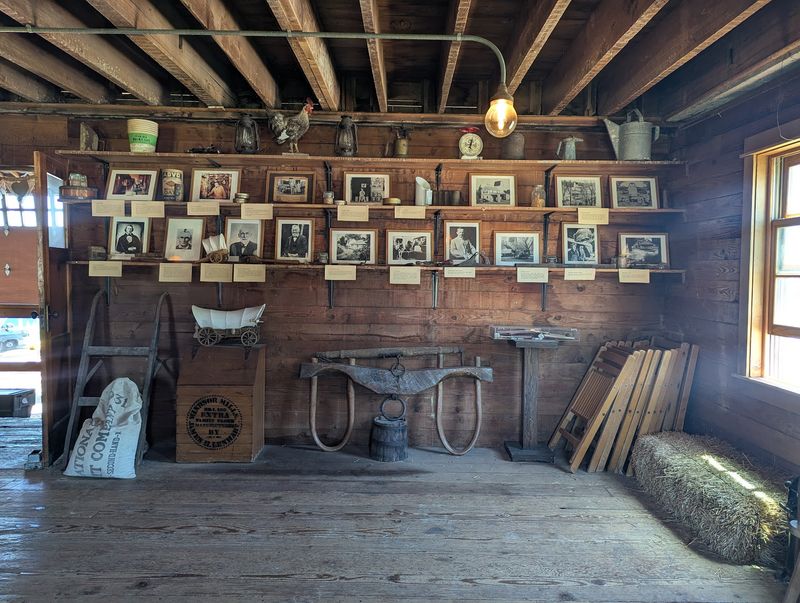
Hand-hewn timbers cut by pioneers in 1846 still hold up an old pink mill in Nebraska. You can see them up close, wooden pegs and all.
Those beams once belonged to a water-powered mill that ground flour and sawed lumber for thousands of pioneers waiting out a brutal Missouri River winter. The building later served one family for more than a century, then sat empty for years.
I like how the story didn’t stop there. A couple bought it in 1998, restored it, and filled it with pioneer photos, farm artifacts, and an upstairs art gallery.
On summer Sundays, the lot outside turns into a small country market with music and sometimes pony rides. So how does a frontier survivor that once fed a pioneer camp end up hosting sourdough tents and bluegrass jams?
A Pink Landmark Hiding In Plain Sight In North Omaha
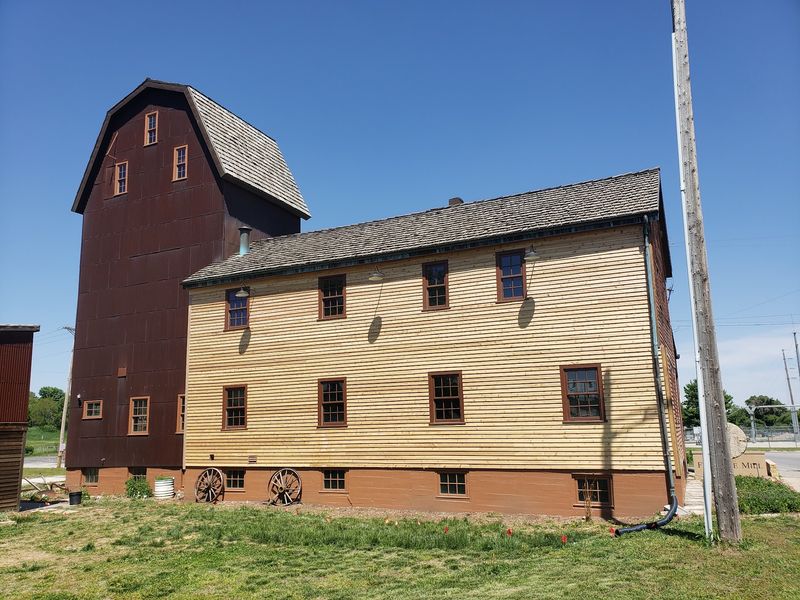
Drive north through Omaha and you’ll eventually reach Florence, one of the city’s oldest neighborhoods. Sitting there is the Florence Mill & Winter Quarters Mill Museum, a building with more nicknames than most people have cousins.
Folks have called it the Weber Mill, the Mormon Mill, the Grist Mill, and the Old Pink Mill. Officially, it’s the Florence Mill, and today it runs as the Winter Quarters Mill Museum and ArtLoft Gallery.
That’s a lot of identity for one structure. Then again, it has had well over a century and a half to collect titles.
The mill is a Nebraska State Historic Site and a Save America’s Treasures Project. It’s also listed on the National Register of Historic Places, which is a pretty impressive trophy shelf for a working farm building.
Here’s the fun part for anyone who loves a good origin story. The place is privately owned, so it isn’t a stiff government exhibit with velvet ropes everywhere.
Instead, it feels like a neighborhood treasure that someone decided to rescue and share. Its history reaches back to 1846, when the Missouri River bluffs nearby held a very different kind of town.
The Winter Camp That Needed A Mill Fast
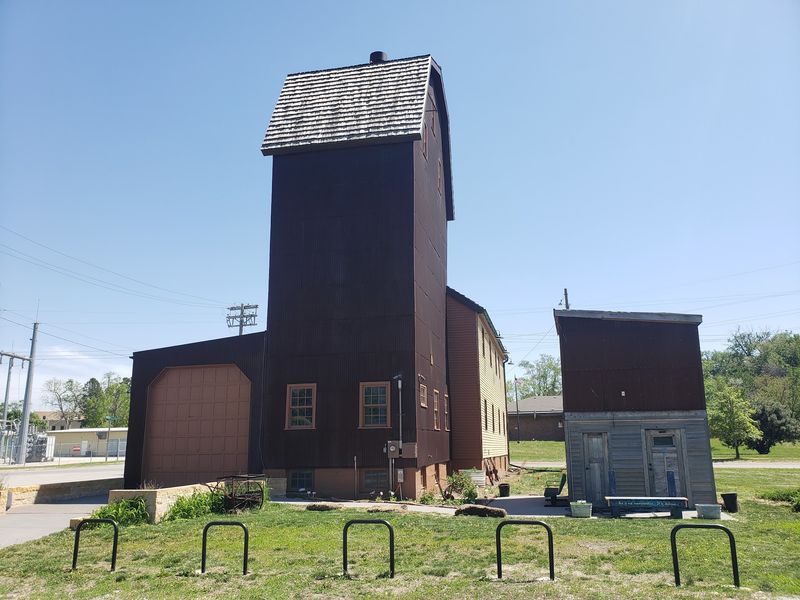
Thousands of pioneers arrived on the west bank of the Missouri River in 1846 with winter coming hard. Members of The Church of Jesus Christ of Latter-day Saints set up a temporary settlement they called Winter Quarters.
Temporary is the key word. They were headed for the Salt Lake Valley, but the journey had to pause until the weather and supplies allowed another push west.
A camp that size needed two things in a hurry. It needed food it could store, and it needed lumber for shelters and wagons.
So the settlers built a mill. Construction ran through 1846 and into 1847, and the project carried real weight for a community stuck on the Nebraska frontier.
By March 1847, the mill was up and running. That timing mattered, because spring meant preparing for the long trail ahead.
The settlement didn’t last long, and the pioneers departed in 1847 and 1848. Yet the mill they left behind kept turning up in the story, again and again, long after the last wagons rolled away from the bluffs.
Not bad for something built under pressure.
Creek Water Did The Heavy Lifting For Flour And Lumber
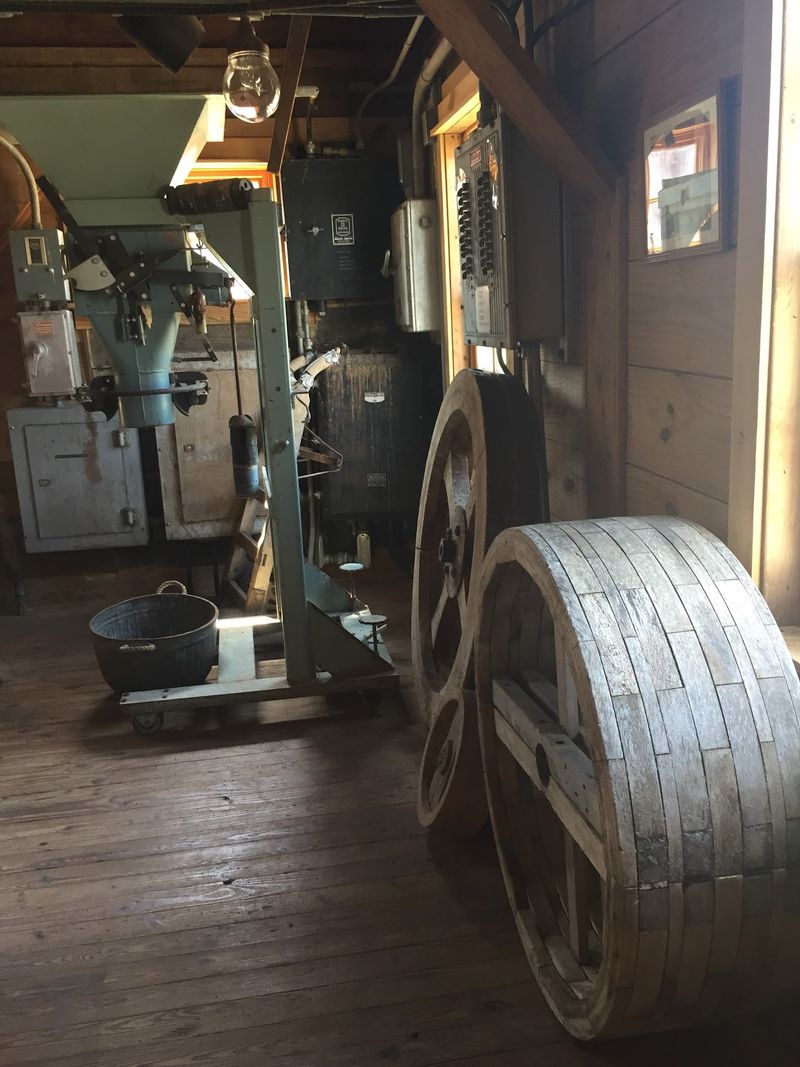
Long before electric switches, a moving stream was the best engine a frontier town could get. The original Winter Quarters mill ran on water power.
Leading the work was Frederic Kesler Jr., a pioneer wheelwright with the skills to make the whole thing spin. Wheelwrights understood gears, shafts, and wheels, which is exactly the toolkit a mill demands.
The setup did double duty. As a grist mill, it ground corn and grain into flour that families could actually cook with.
As a sawmill, it cut lumber for a camp that badly needed sturdy materials. Think cabins, repairs, and the endless woodwork that comes with preparing wagons for a trail.
Flour and boards may sound humble. For people facing a harsh Nebraska winter, they were the difference between scraping by and getting through in decent shape.
I find it impressive how much the whole settlement leaned on one clever machine. A single wheel, a steady current, and some skilled hands turned raw grain and logs into survival supplies.
That legacy is the heart of what the museum shares today. The water-powered chapter is where everything begins.
You Can Still Touch Timbers Pioneers Cut In 1846
Old buildings usually keep their past behind plaster and paint. The Florence Mill does the opposite and puts its oldest pieces right out where you can see them.
The present-day structure includes hand-hewn and pegged timbers dating to 1846. They come from the original Winter Quarters mill, tying the building directly to the Mormon Trail.
Hand-hewn means somebody shaped each beam with tools and muscle. Pegged means wooden pins hold the joints together instead of modern metal hardware.
That’s craftsmanship you can read with your eyes. The marks of the work are part of the charm, and they show just how much effort went into every support.
Here’s a handy tip for anyone passing by when the doors are shut. You can peek through the east side windows and spot some of those original beams of the grist mill.
It’s like a free trailer for the main feature. You’ll probably end up wanting the full showing anyway.
Few places in Omaha let you stand this close to something pioneers handled. Those beams have outlasted floods, a relocation, and several entirely different owners.
Gold Rush Customers And One Family’s Century At The Grindstone
Empty mills don’t stay empty forever when there’s money to be made. In 1856, Alexander Hunter began running a mill on the site and worked in some of the original timbers.
A year later, in 1857, it was re-established to meet fresh demand. The Gold Rush was sending people west, and travelers needed supplies just like the earlier pioneers had.
Then came the name that stuck around longest. Jacob Weber acquired the mill around 1860, and his family took the reins.
They didn’t just dabble in milling for a few seasons. The Weber family operated it for over a century, making it one of the longest-running milling businesses in Nebraska.
A hundred-plus years is a staggering run for any family business. Plenty of companies today struggle to make it through their first decade.
That long stretch explains why so many people still call it the Weber Mill. Ask around Florence and you’ll likely hear more than one nickname.
Through all those decades, the building kept adapting to new needs. The way it was powered, though, was about to change completely.
Steam, Electricity, And A 400-Yard Move Uphill
Water power had a good run, but technology kept marching forward. In the late 1880s, steam replaced the stream as the mill’s main muscle.
Electricity eventually took over after that. By 1913, the mill had shifted to producing feed only, a practical turn for a farming region.
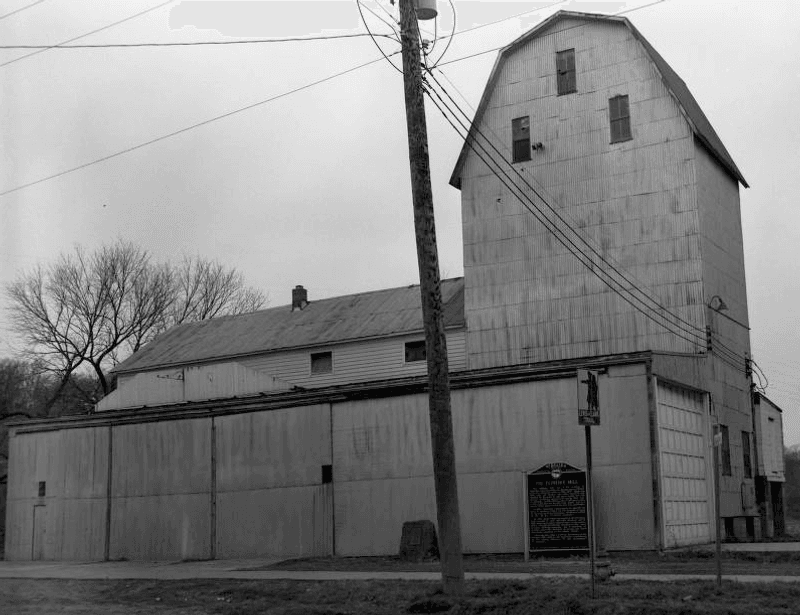
A big addition arrived in 1915. That’s when a 53-foot-tall grain elevator was attached to the mill, giving the building its tall, recognizable profile.
Flooding, however, kept causing headaches at the original spot. Repeated high water is hard on any building, especially one made of wood.
So in 1939, the mill packed up and moved. It traveled about 400 yards northeast to higher ground, which is where it stands today.
Moving an entire mill sounds like a wild weekend project. I can’t imagine the planning it took to shift something that size without losing its historic bones.
The relocation is part of why the building survived. Dry footing gave those 1846 timbers a much better shot at reaching the modern era.
And reach it they did, with one more rescue still ahead.
The Couple Who Refused To Let It Fade
Milling finally stopped in 1990. For the next eight years, the old building sat vacant, waiting for someone with vision and a lot of patience.
That someone turned out to be two people. John and Linda Meigs purchased the mill in 1998 and set about restoring it.
Restoring a structure this old is no weekend paint job. It means cleaning, repairing, and preserving fragile pieces while keeping the history intact.
Linda Meigs is widely recognized for her preservation efforts at the site. Her work turned a quiet, empty landmark into a living place where the community gathers again.
It’s easy to overlook how close many historic buildings come to vanishing. This one had every reason to slip away after decades of floods, moves, and changing industries.
Instead, it got a second life as a museum, gallery, and market hub. That’s the kind of turnaround that makes Nebraskans proud of their own backyard.
Linda has become known around Florence as the mill-lady. The nickname fits someone who has spent years caring for every creaky corner of the place.
Pioneer Photos And 1854 Headlines On The Ground Floor
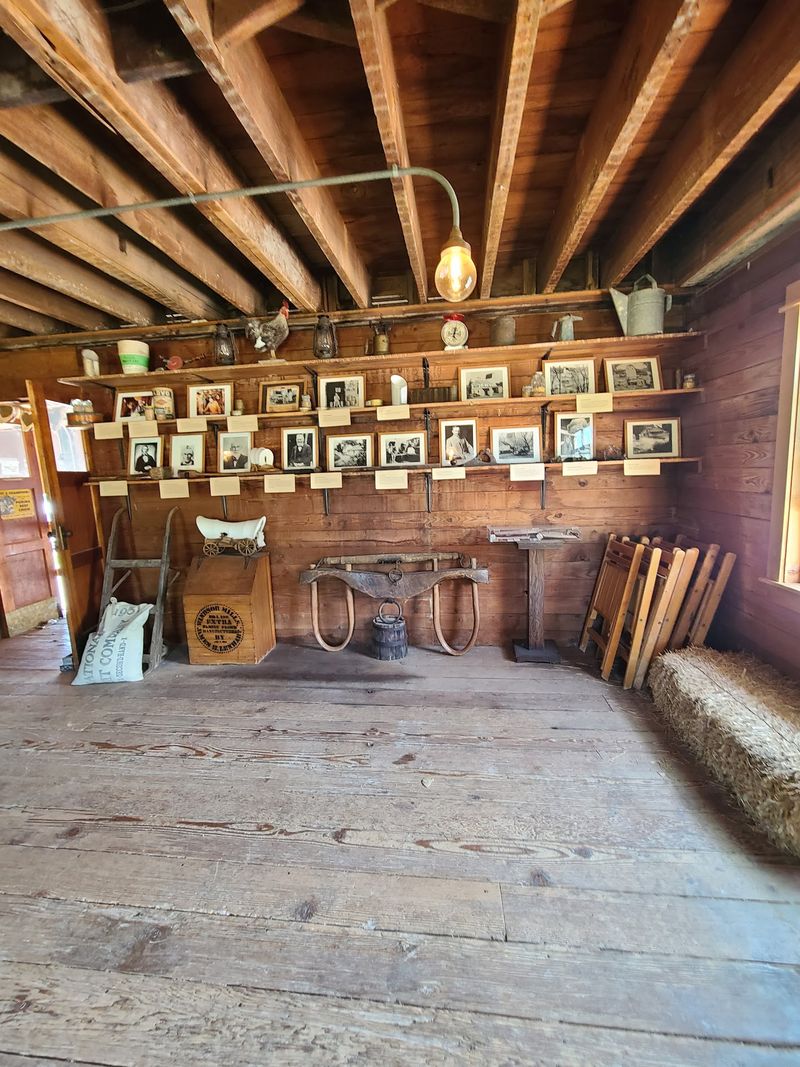
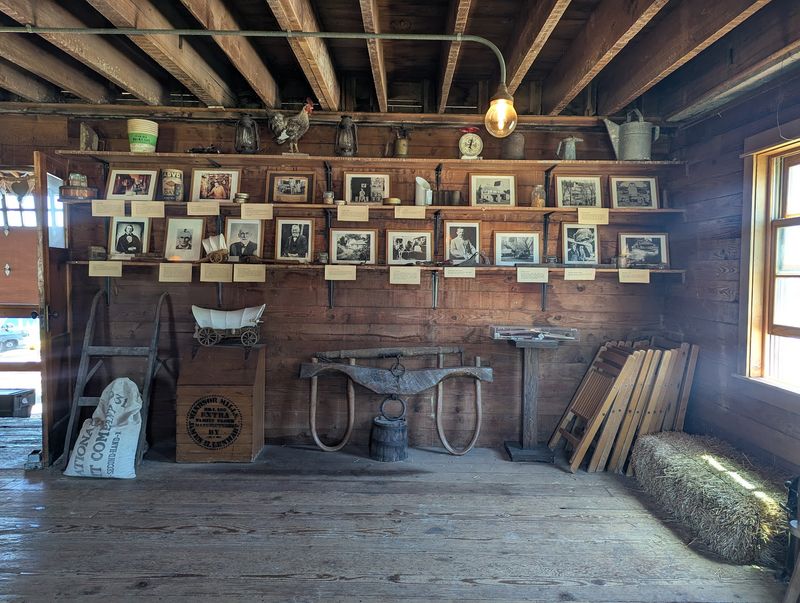
Newspaper clippings from 1854 are not something you stumble across every day. At the Winter Quarters Mill Museum, they’re part of the first-floor collection.
The museum also displays pioneer-era historic photos. Seeing faces and scenes from that period makes the old stories feel a lot less like textbook pages.
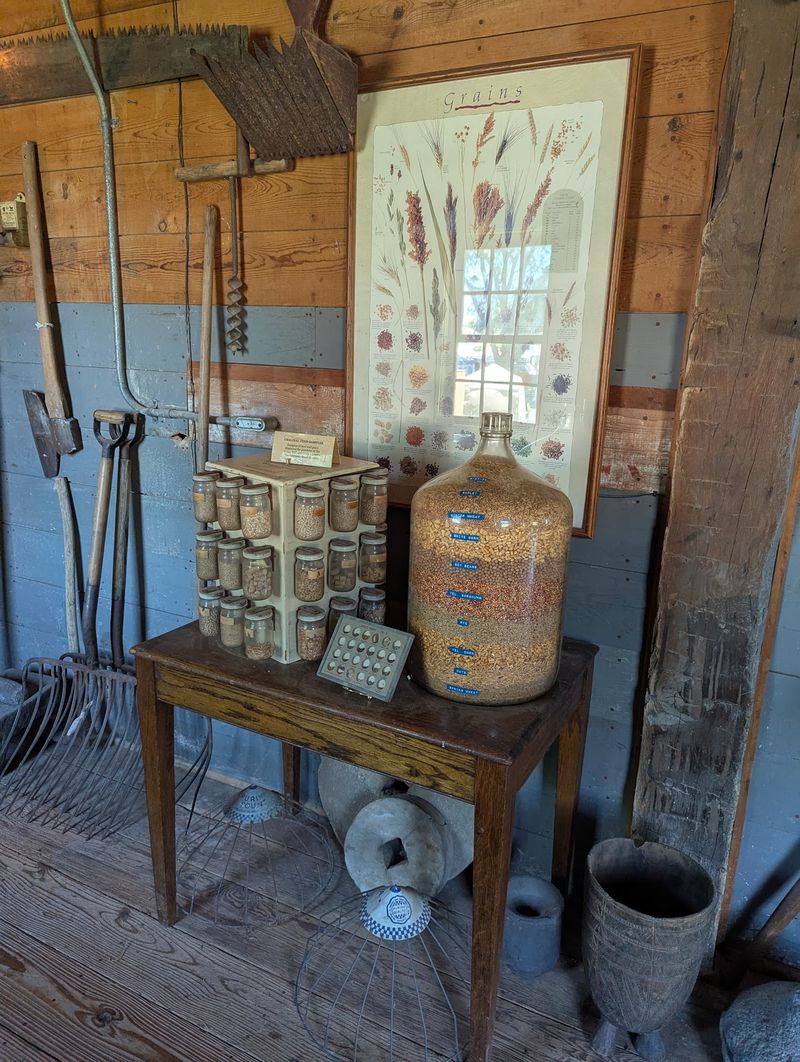
Agricultural artifacts round out the exhibits. These tools and objects show how farming and milling actually worked before modern machines did everything.
All of it sits inside the building it describes. You’re learning about the mill while standing among its own timbers, which is a pretty neat trick.
The exhibits walk through the whole timeline. That includes the water-powered days, the switch to steam, and how flour and lumber kept the area going.
History fans will find plenty to linger over. Curious kids can connect the artifacts to the giant beams overhead and start asking great questions.
Don’t skip the grounds outside, either. Historical markers on site and in the grassy area to the east tell how thousands passed through Florence heading west.
Together, the indoor and outdoor pieces paint a full picture.
Art Lives Up In The Old Loft Now
Climb upstairs and the mood shifts from pioneer history to creative showcase. The upper loft houses the ArtLoft Gallery.
Putting art inside a working mill’s old loft is a clever reuse. Spaces once devoted to grain and machinery now hold pieces made by artists.
Photography has been part of the gallery’s offerings over the years. Rustic wood surroundings give any artwork a frame no fancy downtown space could copy.
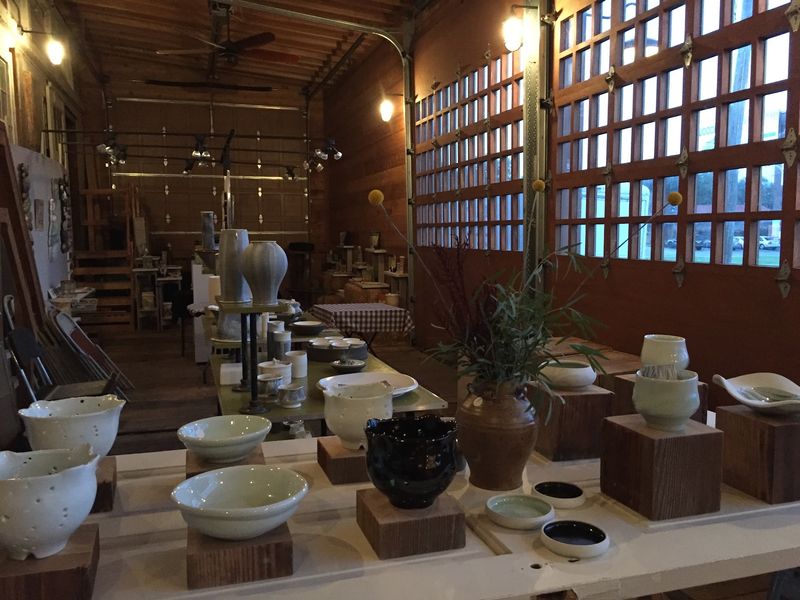
The mill also connects with the local pottery scene. It has hosted stops on the Omaha North Hills Pottery Tour, bringing makers and buyers into the historic building.
That blend is what makes the Florence Mill feel lively rather than frozen in time. The past sits downstairs, and new work fills the rooms above.
If you enjoy repurposed Nebraska buildings, this one checks a lot of boxes. It went from flour and feed to frontier relics and artwork without losing its character.
Plan to spend a few extra minutes up here. Craning your neck at the rafters is half the fun, especially once you remember how old some of that wood is.
Sunday Mornings Belong To The Country Market
Fresh radishes, homemade jam, and a loaf of sourdough make a pretty strong argument for getting up on a Sunday. The Florence Mill Farmers Market delivers all of that and more.
The market runs seasonally on Sundays, usually from June through the end of September. Some seasons stretch to the first weekend of October.
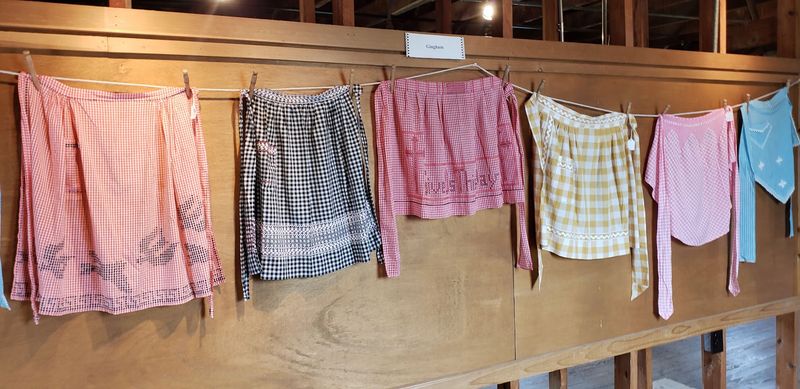
Vendors bring local produce, baked goods, honey, meats, herbs, and crafts. You’ll also find homemade pies, needlework, jewelry, clothing, and plenty of small handmade treasures.
The market is intentionally compact and low-key. It’s easy to browse without hiking a mile, which makes it friendly for little legs and older knees alike.
Here’s a delicious detail. A sourdough tent has earned a loyal following, with bread and bagels the mill-lady herself calls the best around.
The lineup changes from week to week as the growing season moves along. Early summer brings one mix, and later weeks fill in with more homegrown vegetables.
Combine a market stroll with a peek inside the museum. You get groceries, snacks, and a history lesson in one easy Sunday outing.
Pony Rides, Giant Bubbles, And Bluegrass For The Whole Crew
Kids who hear the words pony rides tend to stop listening to anything else. On certain market Sundays, the Florence Mill offers exactly that.
The fun list keeps going. Giant bubbles, craft tables, and live music all show up during the season on various Sundays.
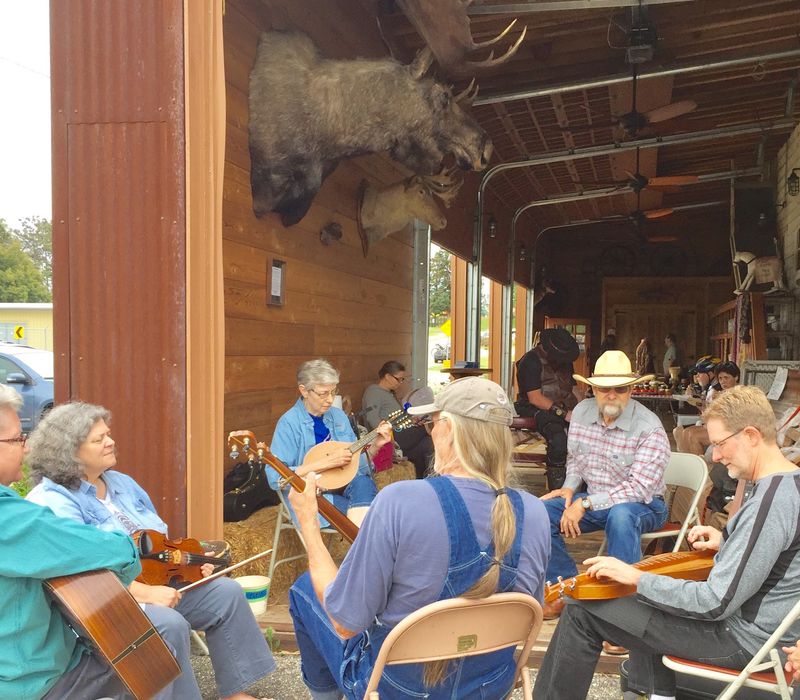
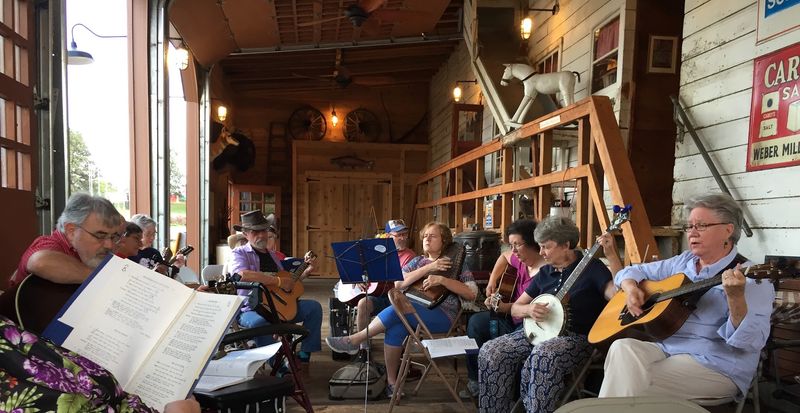
Music lovers get a special treat. Old-fashioned bluegrass circle-jams bring pickers together for that front-porch sound right beside the mill.
There’s a learning side too, served without a single pop quiz. Country-School presentations cover farming, gardening, cooking, and nature in a relaxed setting.
That mix makes the place work for nearly every age. Grandparents can enjoy the history while younger kids chase bubbles and wait their turn on a pony.
The atmosphere stays easygoing and neighborly. Vendors are known for being helpful, and the small scale keeps things calm rather than chaotic.
Families looking for an affordable afternoon will appreciate the simplicity here. Nobody needs a ticket booth or a theme park map to have a good time.
Activities vary by week, so the lineup on any given Sunday can surprise you.
Plan Your Trip Around The Mill’s Summer Season
Timing matters with this one, because the mill keeps a seasonal schedule. It generally opens from around May into early fall, taking a winter break the rest of the year.
During the season, the doors usually open in the afternoons later in the week. Sundays shift earlier to line up with the farmers market.
Hours can be a little flexible at the very start of the season. That’s when the building is waking up from what the owner cheerfully calls winter hibernation.
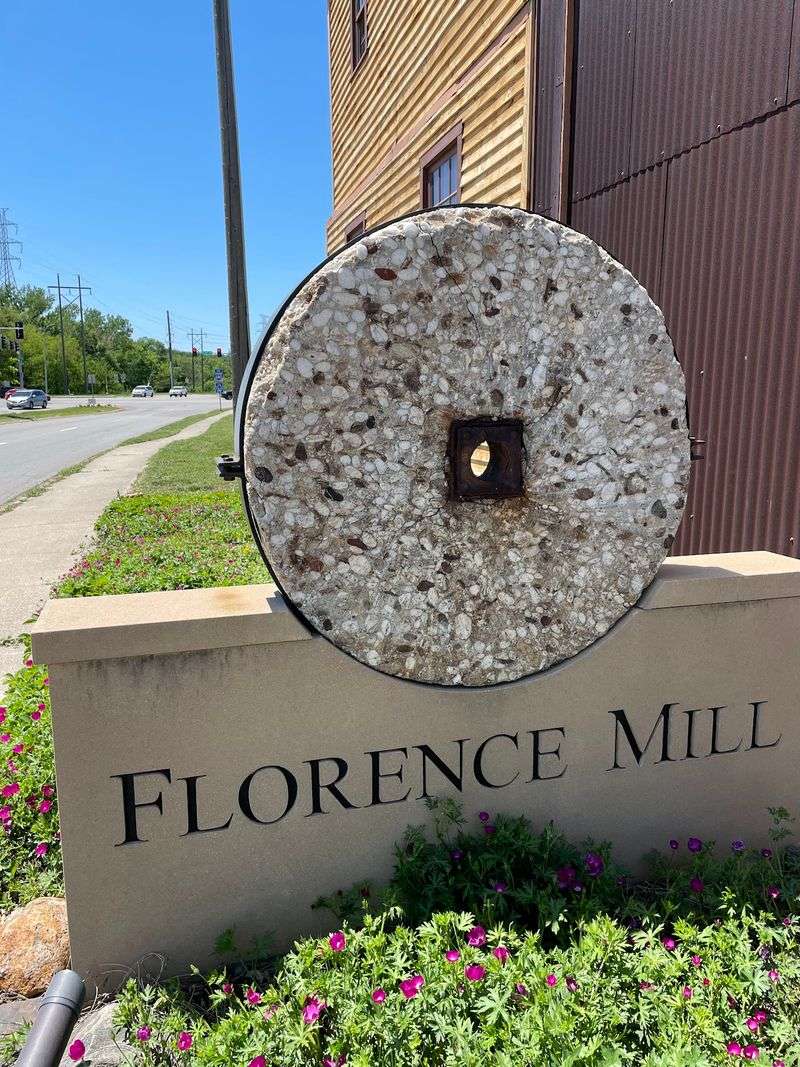
You’ll find the mill at 9102 N 30th St, Omaha, NE 68112. It sits conveniently close to the interstate, so a quick detour from a road trip is very doable.
Group tours are available by appointment for a small fee. Donations help support the ongoing care of this Nebraska landmark.
So is it worth the drive? For anyone who loves frontier stories, rescued buildings, or a Sunday basket of fresh produce, I believe the answer leans strongly toward yes.
Few spots let you stand beside 1846 pioneer beams and leave with homemade jam. That combination is pretty hard to beat.