This Iconic California Theatre In Los Angeles Turns Valentine’s Day Into A Vintage Night Out
Few places capture the romance and elegance of old Hollywood quite like a grand movie palace from the golden age of cinema.
Built during an era when theaters were designed to transport audiences into another world, these venues offered more than just films – they provided an entire experience of glamour and escape.
The Los Angeles Theatre stands as one of the finest examples of this lost art, a stunning architectural masterpiece that opened its doors in 1931 at the height of Hollywood’s most legendary period.
Located in the heart of downtown Los Angeles, this ornate palace continues to enchant visitors with its breathtaking interiors and timeless charm.
For couples seeking a memorable Valentine’s Day experience, this California theater offers something truly special – a chance to step back in time and celebrate romance in surroundings that defined an entire era of American entertainment.
The venue’s combination of architectural beauty, historical significance, and intimate atmosphere makes it an ideal destination for those who appreciate both vintage elegance and the magic of classic cinema.
1. Opening Night Marked The End Of An Era
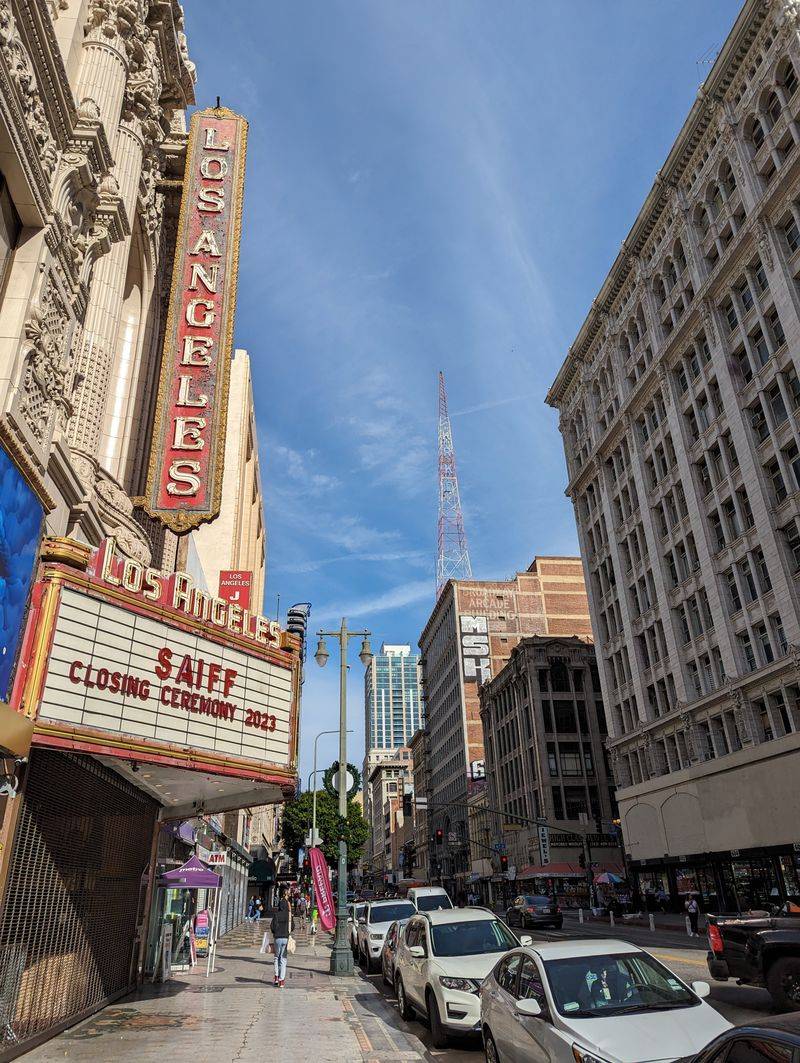
January 30, 1931 marked a significant moment in Los Angeles cultural history when the Los Angeles Theatre at 615 S Broadway, Los Angeles, CA 90014 opened its doors to the public.
The premiere screening featured Charlie Chaplin’s “City Lights,” with the legendary filmmaker himself attending the event alongside a crowd of Hollywood stars and local dignitaries.
This opening represented the final grand movie palace built in downtown Los Angeles before the Great Depression brought an end to such lavish construction projects.
The timing of the opening proved both triumphant and bitterswant.
The theater arrived at the tail end of the golden age of movie palace construction, representing the absolute pinnacle of what these entertainment venues could achieve in terms of luxury and design.
Within months of opening, economic realities would make such extravagant theatrical ventures virtually impossible.
The building cost an estimated two million dollars to construct, an astronomical sum during that period.
Despite opening during challenging economic times, the theater thrived by offering audiences an affordable escape from daily hardships.
The venue became a beloved community gathering place where people could forget their troubles for a few hours while surrounded by unimaginable beauty and watching the latest Hollywood productions on the silver screen.
2. French Baroque Influences Dominate The Interior
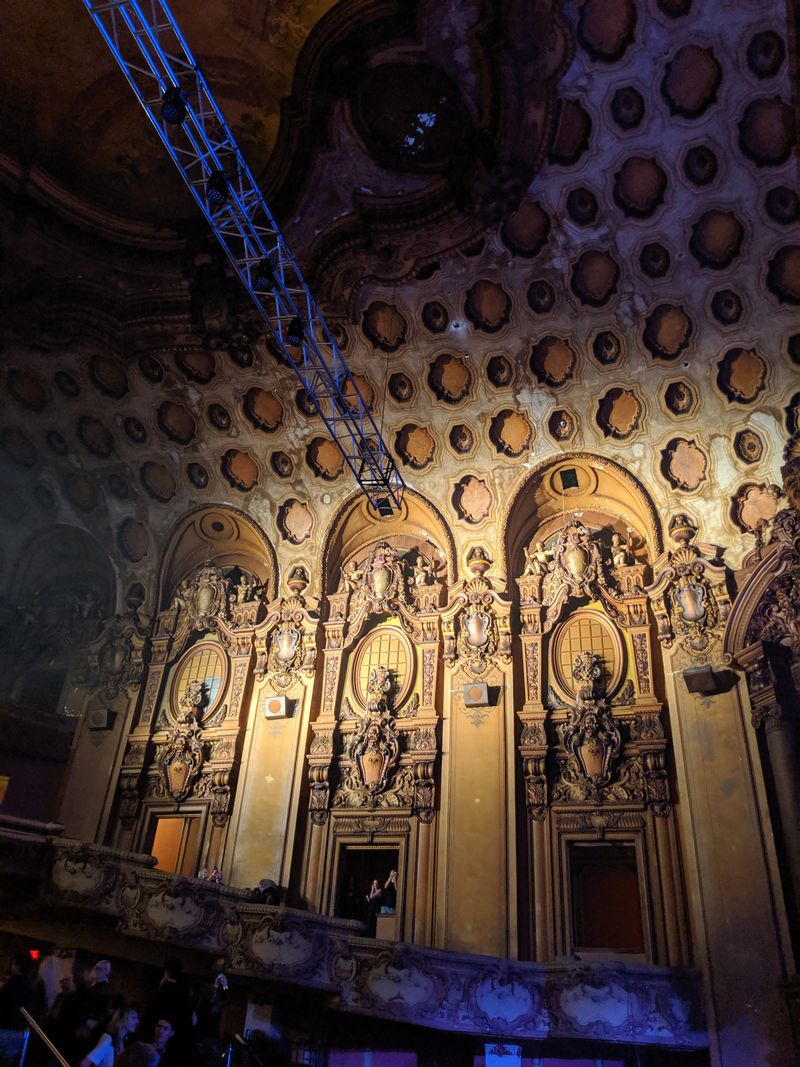
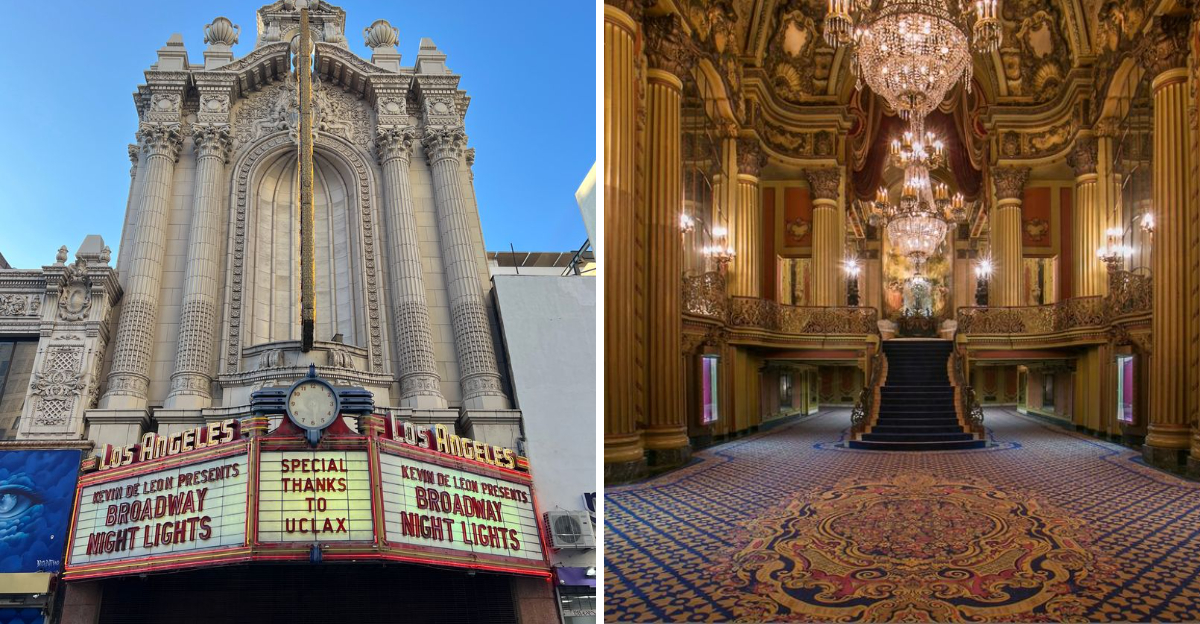
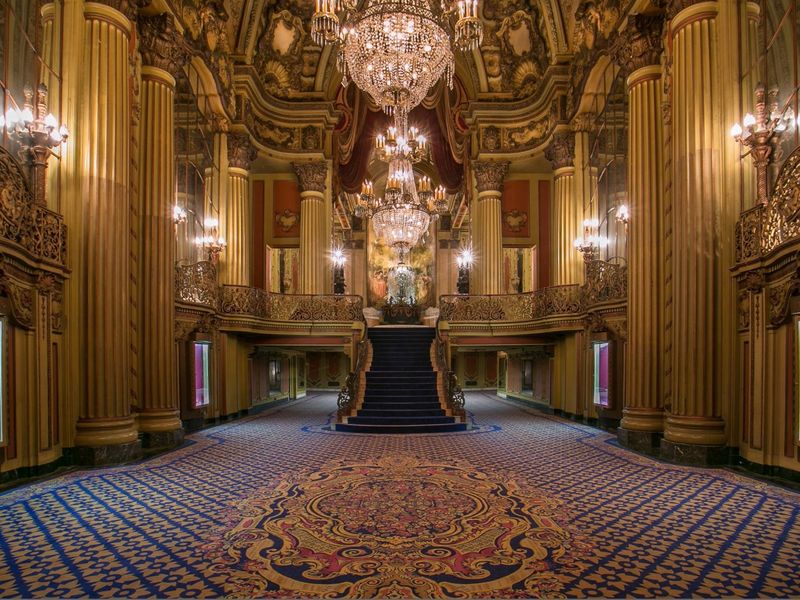
Walking into the Los Angeles Theatre feels like stepping into a French palace from the reign of Louis XIV.
The interior design borrows heavily from French Baroque architecture, featuring elaborate gold leaf ornamentation, crystal chandeliers, and intricate plasterwork that covers nearly every surface.
This stylistic choice created an atmosphere of European royalty that contrasted dramatically with the urban setting outside.
The main lobby showcases towering marble columns, ornate mirrors in gilded frames, and a grand staircase worthy of a royal residence.
Rich red carpeting and velvet draperies add warmth to the space while complementing the gold and cream color palette throughout.
Every architectural element works together to create a sense of opulence that was designed to make moviegoers feel like aristocrats for the duration of their visit.
The auditorium continues this lavish theme with box seats reminiscent of European opera houses and a proscenium arch decorated with cherubs and floral motifs.
The ceiling features an elaborate mural depicting clouds and sky, creating the illusion of an open-air courtyard.
These design choices transformed a simple movie theater into a fantasy environment where audiences could escape everyday reality.
3. The Grand Staircase Serves As A Dramatic Centerpiece
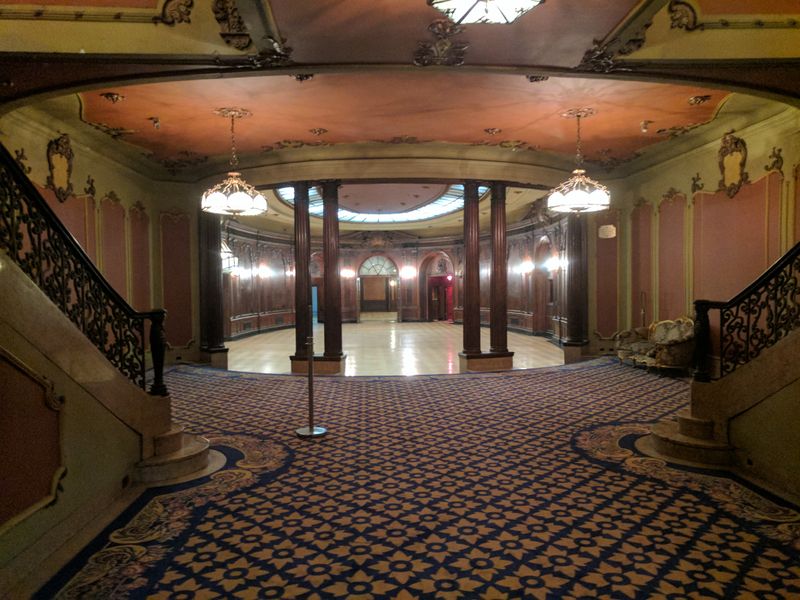
The grand staircase at the Los Angeles Theatre commands attention the moment visitors enter the lobby.
This architectural feature rises majestically from the main floor, splitting into two curved sections that lead to the mezzanine level.
The staircase construction uses imported marble, and the balustrades feature intricate metalwork that demonstrates exceptional craftsmanship.
Crystal chandeliers hang above the staircase, casting a warm glow across the polished marble steps and creating dramatic shadows among the ornamental details.
The positioning of mirrors throughout the space multiplies the visual impact, making the staircase appear even more impressive from multiple angles.
Couples ascending these steps during special events naturally feel transported to a more elegant era. The staircase served a practical purpose beyond its aesthetic appeal.
Theater designers of this period understood that the journey to one’s seat formed an important part of the overall experience.
By creating such a spectacular pathway, the theater elevated the simple act of finding a seat into a memorable moment.
The staircase remains one of the most photographed features of the building and provides a romantic backdrop for Valentine’s Day celebrations.
4. Original Crystal Fountains Still Function Today
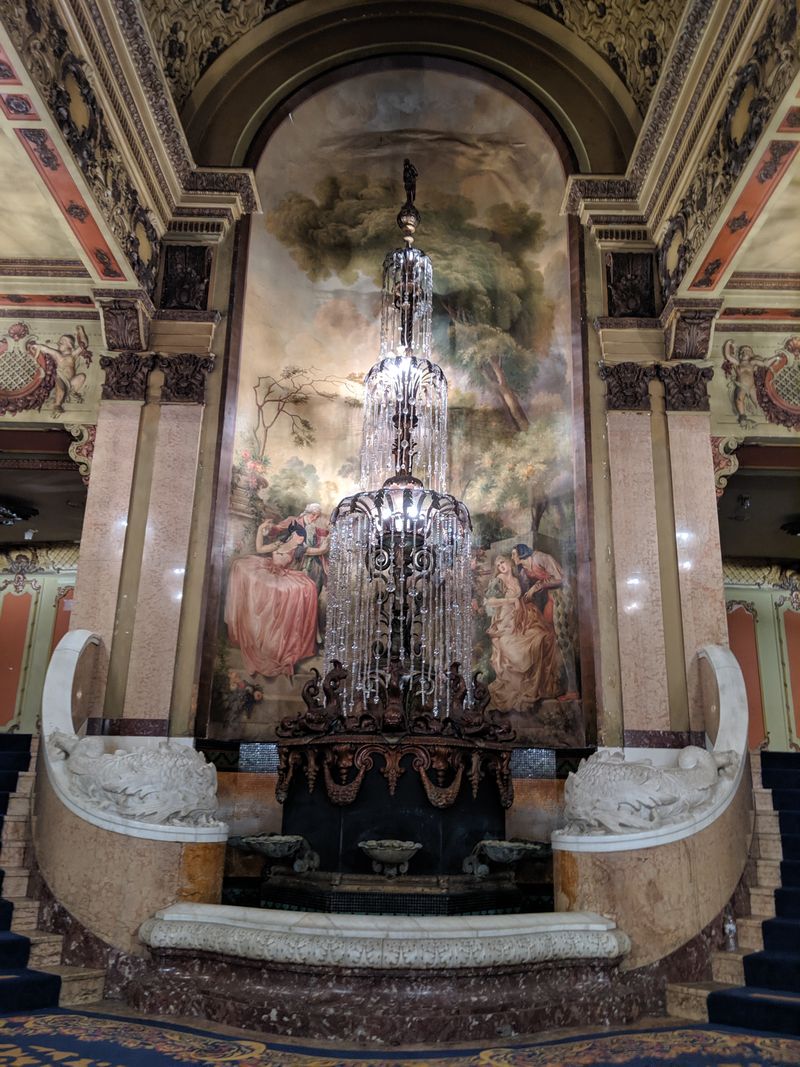
Among the most unusual features of the Los Angeles Theatre are the crystal fountains located in the lower lobby areas.
These decorative water features were installed during the original construction and represent a level of luxury rarely seen in modern theaters.
The fountains combine flowing water with strategic lighting to create a mesmerizing effect that adds both visual interest and soothing sound to the space.
The fountain designs incorporate crystal elements that catch and refract light, creating dancing patterns across nearby walls and ceilings.
Water flows over carefully shaped surfaces, producing a gentle sound that contributes to the overall atmosphere without becoming distracting.
The presence of these fountains in a movie theater lobby might seem extravagant, but they perfectly exemplify the excess that defined the golden age of cinema palaces.
Remarkably, these fountains remain operational nearly a century after installation, a testament to both their quality construction and ongoing maintenance efforts.
Their continued function allows modern visitors to experience the theater exactly as audiences did in 1931.
During special events like Valentine’s Day celebrations, the fountains provide an additional romantic element that enhances the vintage atmosphere.
5. The Auditorium Seats Over Two Thousand Guests
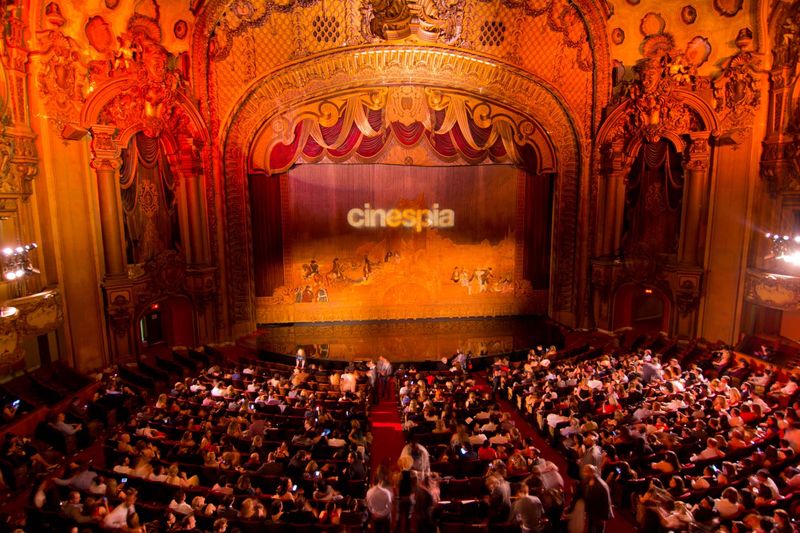
The main auditorium of the Los Angeles Theatre was designed to accommodate 2,200 patrons across multiple seating levels.
This enormous capacity reflected the popularity of movie-going during the early 1930s when theaters served as the primary entertainment venue for most Americans.
The seating arrangement includes orchestra level seats, a spacious mezzanine, and an upper balcony, all positioned to provide excellent sightlines to the screen.
The seats themselves were considered luxurious for their time, featuring plush upholstery and more legroom than typical theater seating.
The wide aisles and thoughtful layout ensured that even with a full house, the space never felt uncomfortably crowded.
Each seating section maintains its own character while contributing to the overall grandeur of the auditorium. The sheer scale of the auditorium creates an impressive atmosphere that smaller venues cannot replicate.
Modern visitors often express amazement at the size and beauty of the space, particularly when experiencing it during a screening or special event.
For Valentine’s Day celebrations, the auditorium’s romantic ambiance intensifies when dimly lit, with the ornate architectural details creating dramatic shadows and the stage serving as a focal point for entertainment.
6. Restoration Projects Preserved Historical Authenticity
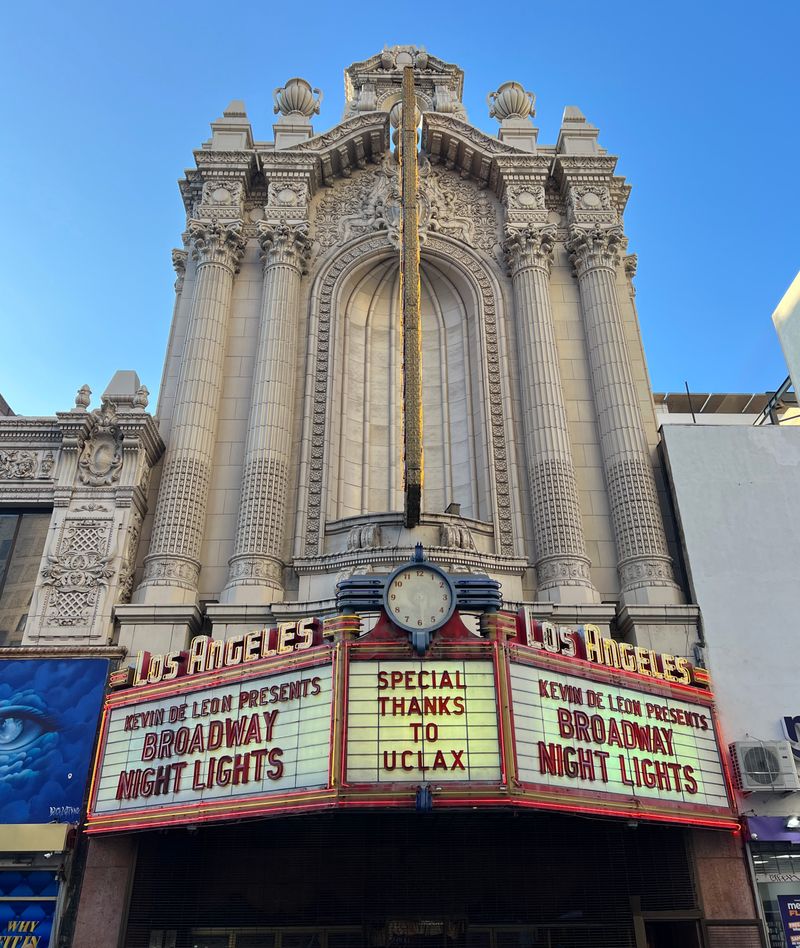
The Los Angeles Theatre has undergone several significant restoration projects since its opening, each aimed at preserving the building’s historical character while ensuring its continued operation.
These efforts have required specialized craftspeople who understand historical building techniques and materials.
The restoration work has focused on repairing water damage, reinforcing structural elements, and carefully cleaning and restoring decorative features. One of the biggest challenges in restoration work involves matching original materials and finishes.
The gold leaf ornamentation, for example, requires artisans trained in traditional gilding techniques that are rarely practiced today.
Plasterwork repairs must match the texture and detail of the original moldings, and paint colors need to be carefully analyzed to ensure accuracy.
These painstaking efforts ensure that the theater maintains its authentic 1931 appearance.
The commitment to historical preservation means that visitors today experience the theater much as audiences did during its opening year.
Unlike many historic buildings that have been modernized beyond recognition, the Los Angeles Theatre retains its original character and charm.
This authenticity makes it an ideal venue for events celebrating vintage elegance, allowing guests to genuinely step back in time rather than visiting a recreation.
7. The Venue Hosts Special Screenings And Live Events
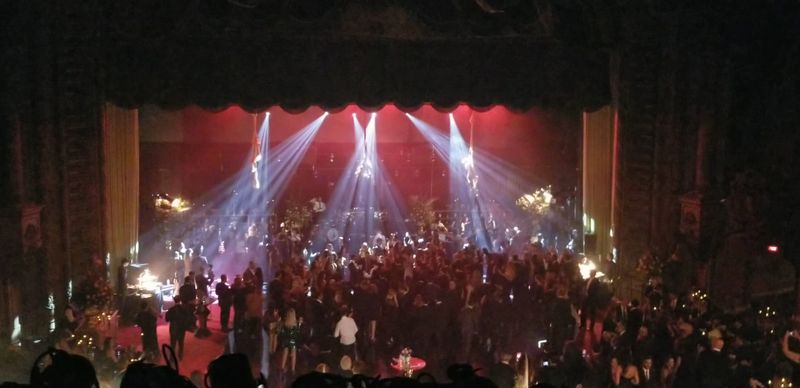
While the Los Angeles Theatre originally functioned solely as a movie house, it has evolved to accommodate various types of events beyond film screenings.
The venue now hosts classic film screenings, live musical performances, theatrical productions, and private events that take advantage of its unique atmosphere.
This versatility has helped ensure the building’s continued relevance and financial viability in an era when many historic theaters have closed.
Special Valentine’s Day events at the theater often combine classic romantic films with live entertainment elements.
These celebrations might include live musical accompaniment to silent films, themed costume events, or pre-show entertainment in the ornate lobby spaces.
The theater’s management understands that modern audiences seek experiences rather than just entertainment, and they curate events that make full use of the building’s spectacular setting.
The acoustics of the auditorium, which were designed for both spoken dialogue and musical accompaniment during the silent film era, prove excellent for live performances.
Musicians performing in this space benefit from the natural resonance and clarity that the room provides.
Audiences attending these events appreciate experiencing the theater as a living venue rather than a museum piece, keeping the building’s original purpose alive.
8. Location Places It Among Other Historic Theaters
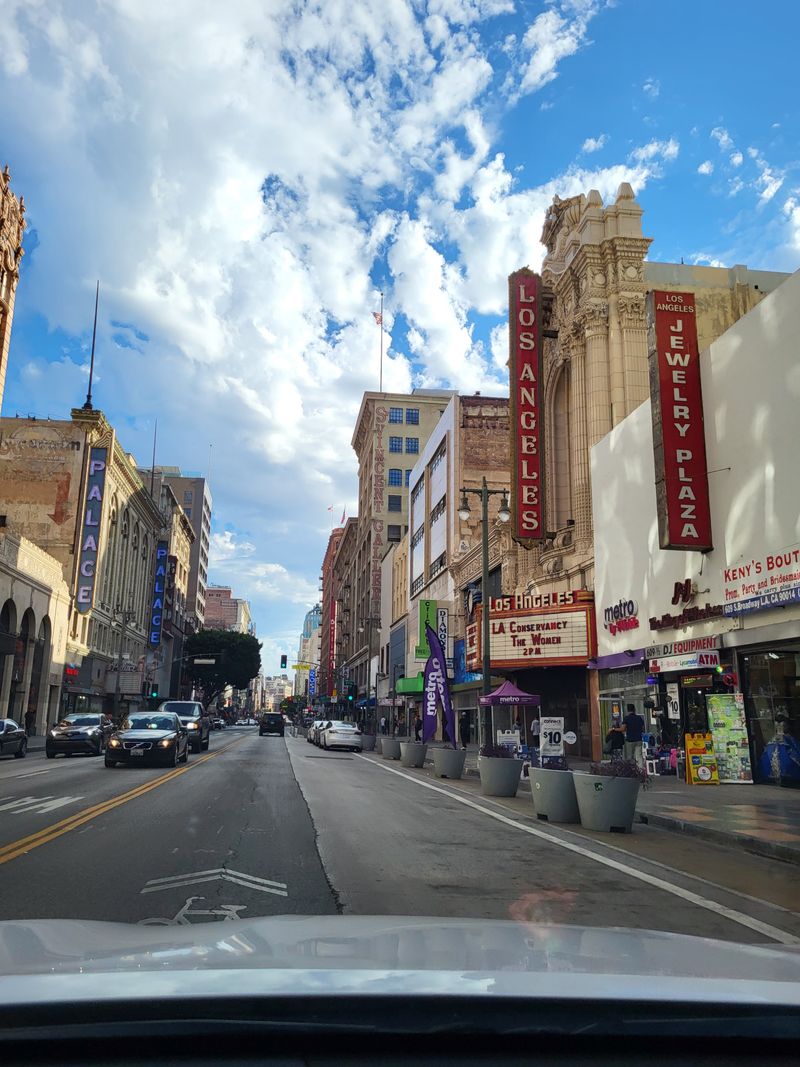
The Los Angeles Theatre stands at 615 S Broadway in the heart of what was once the most concentrated theater district in the United States.
During the 1920s and 1930s, Broadway in downtown Los Angeles boasted more than a dozen grand movie palaces within a few blocks of each other.
This concentration created a vibrant entertainment district where thousands of people gathered nightly to see the latest films in spectacular surroundings.
The theater’s neighbors included other architectural masterpieces such as the Orpheum Theatre, the Palace Theatre, and the Tower Theatre.
Each venue competed to offer the most impressive design and the best entertainment, creating a golden age of theatrical exhibition that has never been matched.
Walking along this stretch of Broadway today allows visitors to see multiple historic theater facades, though not all remain in operation.
The location in downtown Los Angeles provides easy access via public transportation and places the theater within walking distance of other cultural attractions and dining options.
This central position makes it convenient for couples planning a complete evening out, with opportunities to explore the surrounding historic district before or after a theater event.
The neighborhood’s ongoing revitalization has brought renewed energy to the area while respecting its architectural heritage.
9. Art Deco Elements Define The Visual Style
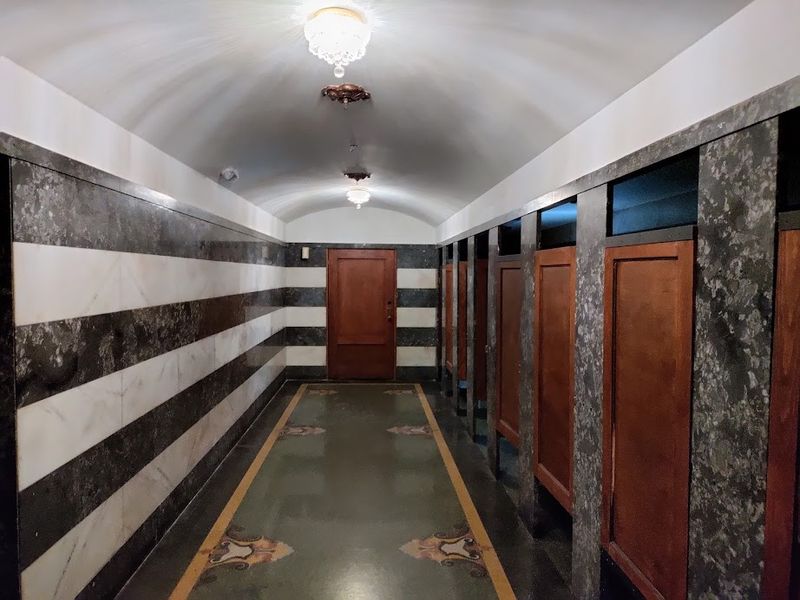
While French Baroque influences dominate much of the Los Angeles Theatre’s design, Art Deco elements provide a distinctly modern counterpoint that reflects the building’s 1931 construction date.
The Art Deco movement emphasized geometric patterns, streamlined forms, and stylized ornamentation that contrasted with the more organic curves of earlier architectural styles.
These design choices appear throughout the theater in light fixtures, metalwork, and decorative panels.
The blend of Art Deco and Baroque styles creates a unique aesthetic that feels both historically rooted and forward-looking.
Geometric patterns in the carpeting and metalwork provide visual interest without competing with the more elaborate Baroque elements.
The lighting fixtures particularly showcase Art Deco sensibilities, with angular forms and frosted glass that diffuse light in ways that enhance the overall ambiance.
This combination of styles reflects the transitional period in which the theater was built, when designers were moving away from purely historical revival styles while still appreciating ornamental richness.
The result feels timeless rather than dated, allowing the theater to appeal to modern audiences who appreciate both vintage charm and sophisticated design.
For Valentine’s Day events, these Art Deco touches add an element of glamour that perfectly suits romantic celebrations.
10. Architect S. Charles Lee Created A Masterpiece
S. Charles Lee designed the Los Angeles Theatre as his crowning achievement among the many movie palaces he created throughout California.
Lee specialized in theater design and understood exactly how to craft spaces that would captivate audiences before the film even began.
His vision for this particular venue combined multiple architectural influences into a cohesive whole that felt both grand and intimate.
The architect drew inspiration from the grand opera houses of Europe while incorporating distinctly American Art Deco elements throughout the design.
Lee paid meticulous attention to every detail, from the sweeping staircases to the ornamental plasterwork adorning the walls and ceilings.
His design philosophy centered on creating an environment that would make every visitor feel transported to a world of elegance and sophistication.
Lee’s work on the Los Angeles Theatre demonstrated his understanding that a movie palace served a purpose beyond simply showing films.
The building itself needed to be part of the entertainment, offering visual splendor that would linger in memory long after the credits rolled.
His success with this project solidified his reputation as one of the premier theater architects of his generation.