This Idaho Art Studio Lets You Turn Pieces Of Colorful Glass Into Your Own Kiln-Fired Masterpiece
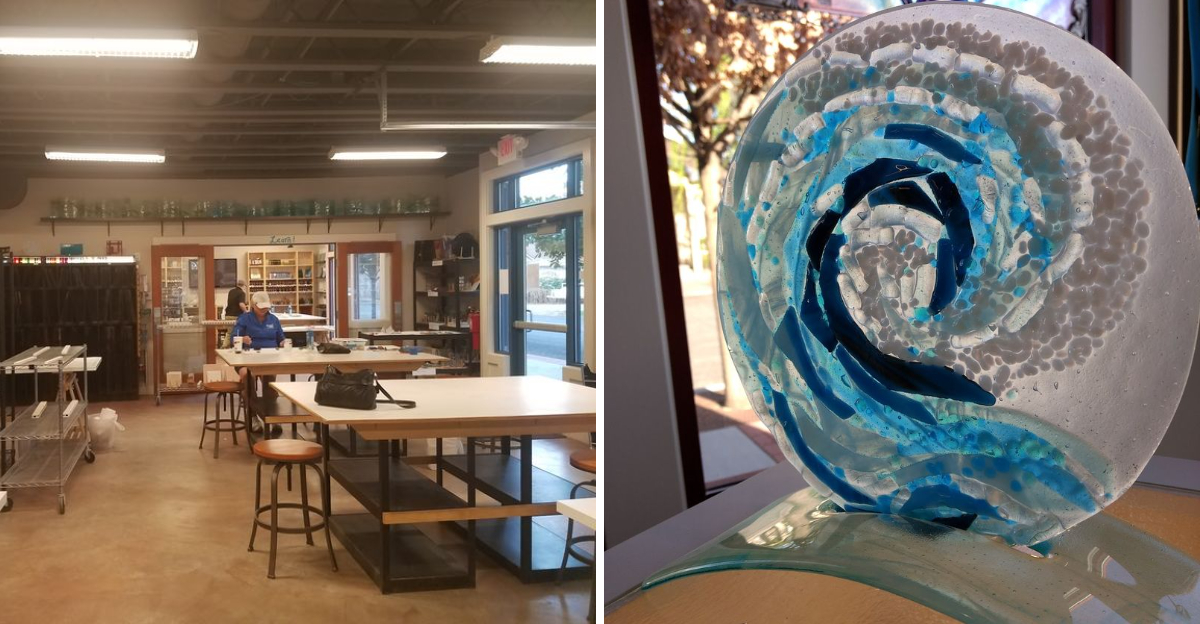
There is something deeply satisfying about making a mess on purpose and calling it art.
At one Idaho studio, beginners can walk in without a class, choose a glass project, and start arranging color until the whole thing begins to look surprisingly intentional. Then the kiln takes over and does the part that feels mildly magical.
You leave with a pile of separate pieces.
A week later, they come back fused into one finished creation.
That delayed reveal is half the fun.
The studio has been part of Idaho’s glass-art scene since 2004, so the process is beginner-friendly without feeling watered down. You can experiment, change your mind, and discover very quickly that glass has a way of making even simple ideas look dramatic.
Basically, this is arts and crafts with a plot twist.
You do the designing. Fire handles the finale.
Pick From More Than 170 Colors And Styles Of Fusible Glass
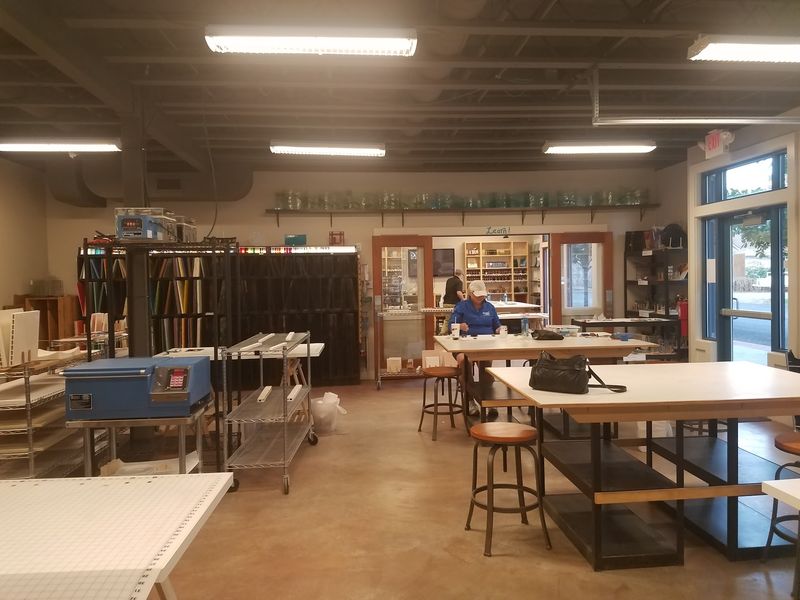
Color is where the choices start multiplying. A 2025 Art Guide of Ada County profile lists more than 170 colors and styles of Bullseye fusible glass at Fusions Glass Studio, along with 13 kilns, a water-jet cutter, and other specialized glass-working equipment.
Bullseye manufactures glass specifically tested for compatibility in kiln-forming applications, which lets artists combine appropriately matched colors and components in the same fused project.
The Eagle studio describes itself as a full-line Bullseye retailer, so visitors are not limited to the small assortment that might appear in a basic craft kit.
Walk-in projects begin with a clear glass base, and colored glass becomes the material used to build the design on top. That setup gives beginners plenty of freedom without requiring them to understand every technical detail behind kiln compatibility.
Someone might keep the palette narrow and work with variations of one color, while another project can use sharply contrasting pieces across the entire surface.
The studio also sells fusible glass and supplies to artists who already know the process, meaning the colorful material around the room serves both first-time visitors and people returning for independent work.
With more than 170 options documented recently, the first decision may be less about what project to make and more about which pieces of glass deserve a place on it.
Turn Loose Glass Pieces Into Something Completely Your Own
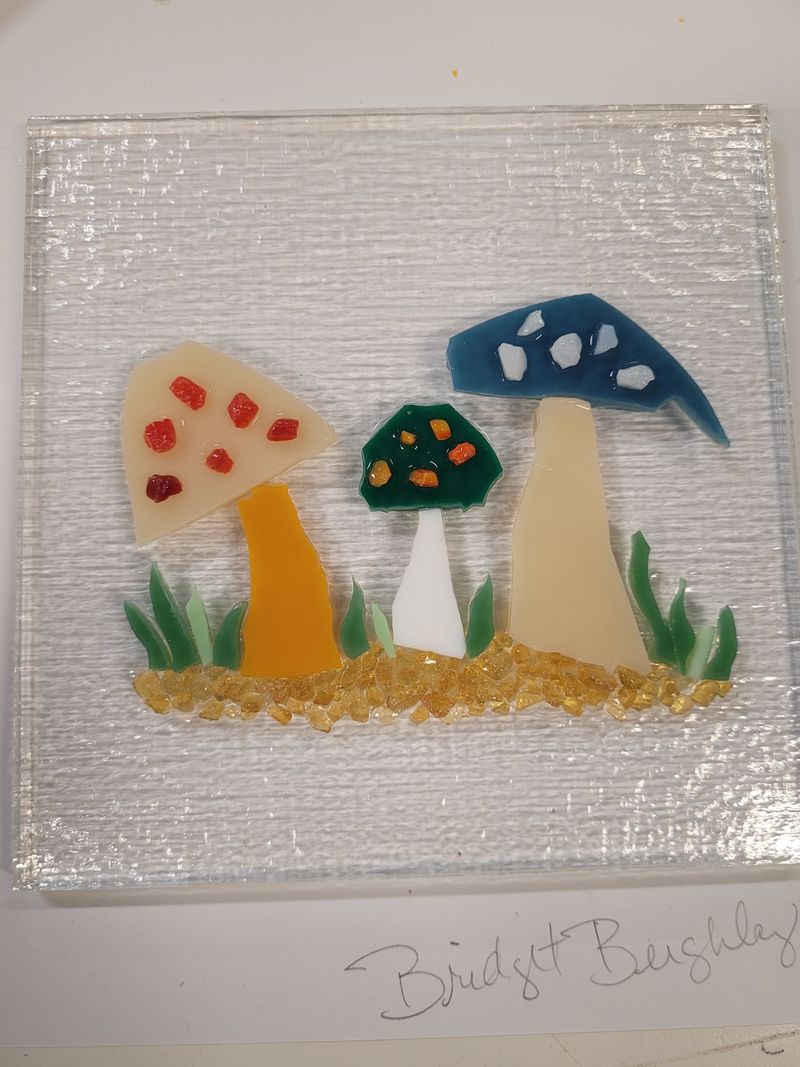
A finished sample can provide inspiration, but walk-in visitors are not required to reproduce somebody else’s design. Fusions Glass Studio explains that customers choose a project shape and then create their own decoration with colored glass arranged over a clear base.
Staff provide the initial instructions and safety information before letting each person develop the piece in whatever direction makes sense.
That freedom is one reason the walk-in gallery on the studio’s website contains such a wide range of finished work rather than rows of identical projects.
A simple geometric arrangement can work just as well as a recognizable scene, lettering, flowers, or an abstract pattern built entirely around color. The process happens at room temperature on a tabletop, not beside an open flame or hot kiln.
The kiln work comes later, after the customer has finished arranging the design. That distinction makes fused glass unusually approachable for people who like hands-on art but have never worked with hot glass.
Fusions also emphasizes that beginners do not need previous training before choosing an ordinary walk-in project. There is room to experiment first and learn the technical side later if the interest sticks.
The basic process stays simple for first-time visitors: choose a project, build a design with colored glass on a clear base, and leave the finished layout with the studio for firing.
Start Small With A Suncatcher, Ornament, Or Night Light
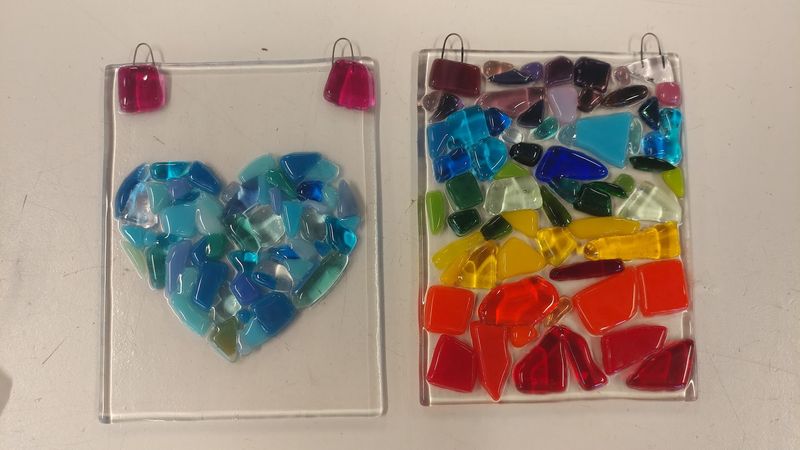
Small projects give newcomers an easy way to understand the process without committing to a large piece on their first visit. Fusions Glass Studio’s current walk-in list begins with tiny one-inch tiles that can become suncatchers, pendants, or magnets, then moves through larger rectangular and square suncatchers, plant stakes, night lights, dishes, votives, and bowls.
Seasonal ornament options are also listed for November and December, including diamond, tree, and circular shapes.
That variety means “beginner project” does not have to mean making the same object as everyone else at the table.
A night light offers a functional choice, while a suncatcher is built around the way colored glass interacts with daylight. Someone interested in something more substantial can move into a small dish or bowl without taking a formal class first.
Current project pricing varies by size and form, and the studio’s walk-in page includes firing in the project setup rather than charging beginners separately afterward.
Fusions says most visitors spend about an hour and a half creating, but it does not impose a fixed time limit.
That makes a small project especially useful for families or first-timers who want room to experiment without turning the visit into a full-day workshop. Children and adults are both welcome, with the studio recommending the activity for ages five and older.
Let The Kiln Transform Your Design Into A Finished Glass Piece
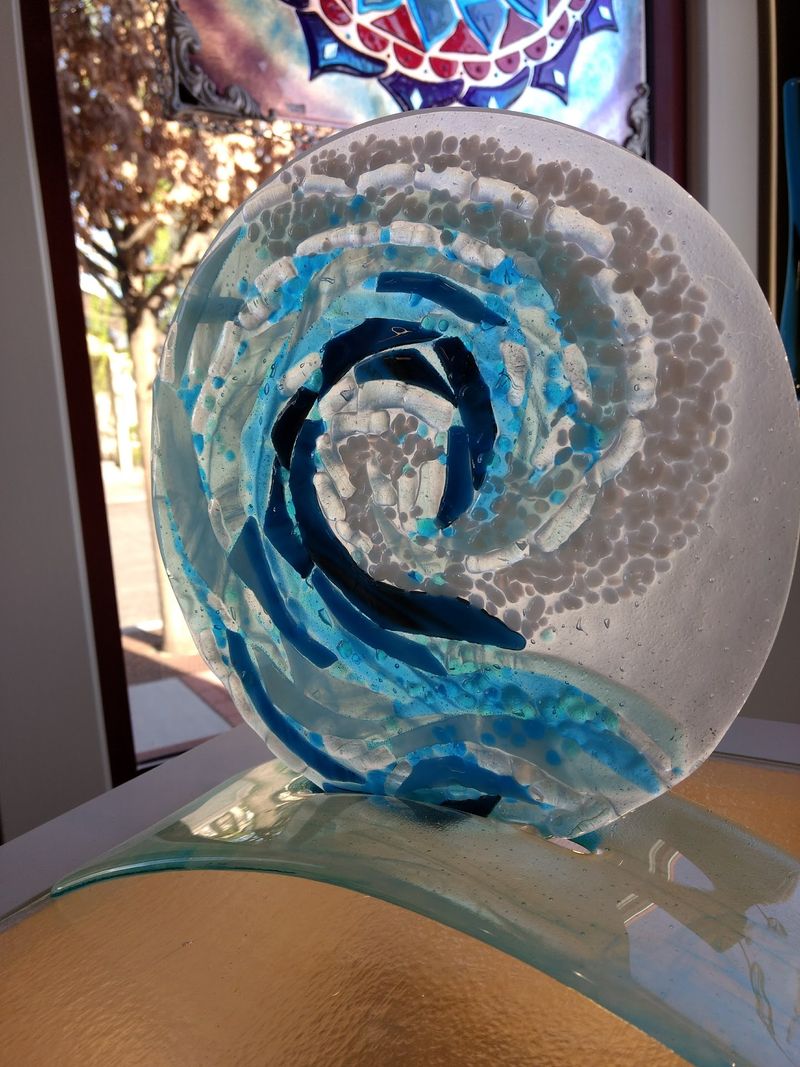
The biggest transformation happens after the visitor has already gone home. Fused-glass projects are constructed cold on a tabletop, then fired in a kiln so the individual glass elements bond permanently together.
Different firing temperatures and schedules can produce different effects, which is one of the subjects students explore later in Fusions Glass Studio’s formal classes. Walk-in customers do not have to manage that technical step themselves.
Once a beginner finishes arranging the design, the studio handles the firing process. Current visitor information says completed walk-in projects are normally ready for pickup in one week.
That turnaround is worth planning around for travelers because a piece cannot simply be carried out the door immediately after it is created.
The studio has substantial equipment behind the scenes too.
The recent Ada County art guide identifies 13 kilns along with a water-jet cutter and additional specialized equipment, reflecting how much of the business extends beyond casual walk-in projects. Fusions also offers kiln-firing services and cold-working equipment for established glass artists.
What can be expected is more fundamental: separate compatible glass elements go into the kiln as a constructed design and return fused into a permanent finished artwork. That delayed reveal is part of what makes the process different from a craft project completed entirely at the table.
No Experience Is Needed To Try A Walk-In Project
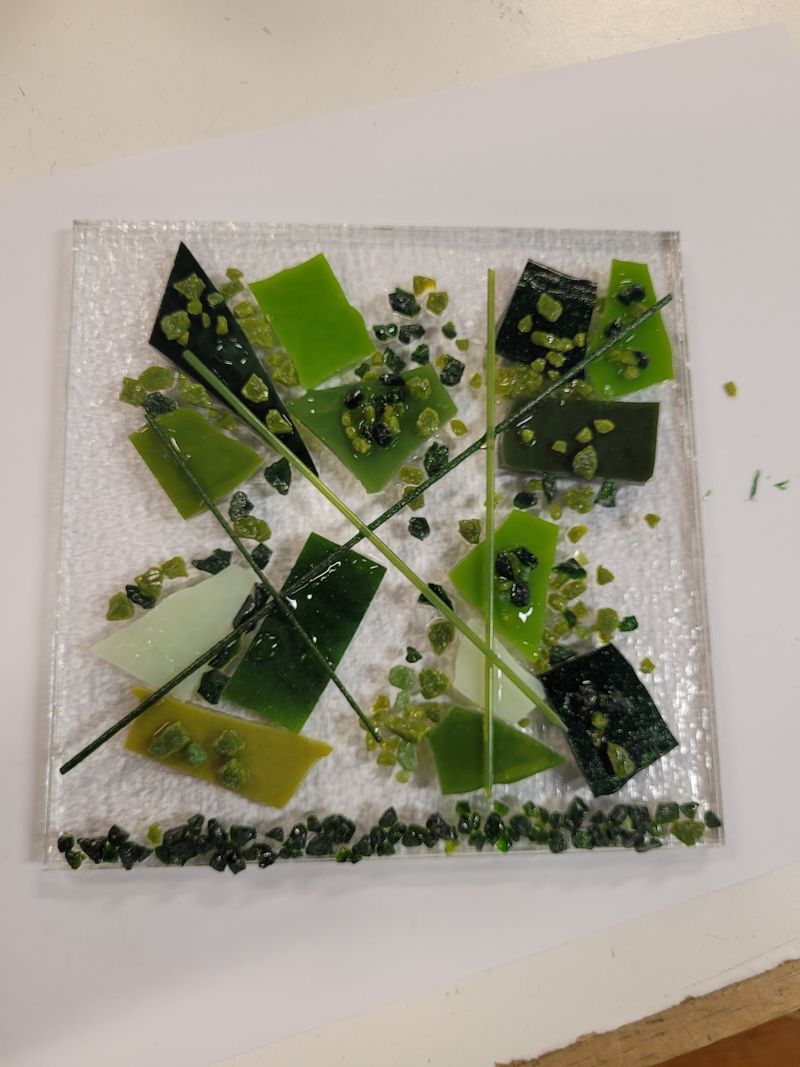
Formal training can wait until after the first project. Fusions Glass Studio specifically advertises its walk-in program as requiring no previous class or glass-fusing experience, with ordinary projects available whenever the studio is open.
Visitors do not need to register in advance either. They can arrive at 135 N. 2nd Street in Eagle, choose a project, receive a short introduction, and begin creating.
Groups of four or more are asked to contact the studio beforehand so a table and tools can be prepared, which is the main planning exception.
The activity is promoted for children and adults, with age five and older recommended on the current walk-in page.
The studio’s FAQ adds a little more detail by asking that children under eight have adult supervision because some broken glass can have sharp edges. It also notes that certain construction options avoid sharp edges entirely.
Staff cover basic safety before projects begin, so beginners are not simply handed glass without instruction. Current business information and the studio’s own site agree on the regular schedule: Tuesday through Saturday from 10 a.m. to 5 p.m., with Sunday and Monday closed.
That makes Fusions Glass Studio particularly easy to use as an unplanned weekday or Saturday activity in downtown Eagle. The key appeal is accessibility.
Someone can arrive with no knowledge of firing schedules or glass cutting and still leave behind a design that will become a finished kiln-formed piece a week later.
Take A Class When You Are Ready To Learn The Tricks Behind Fusing
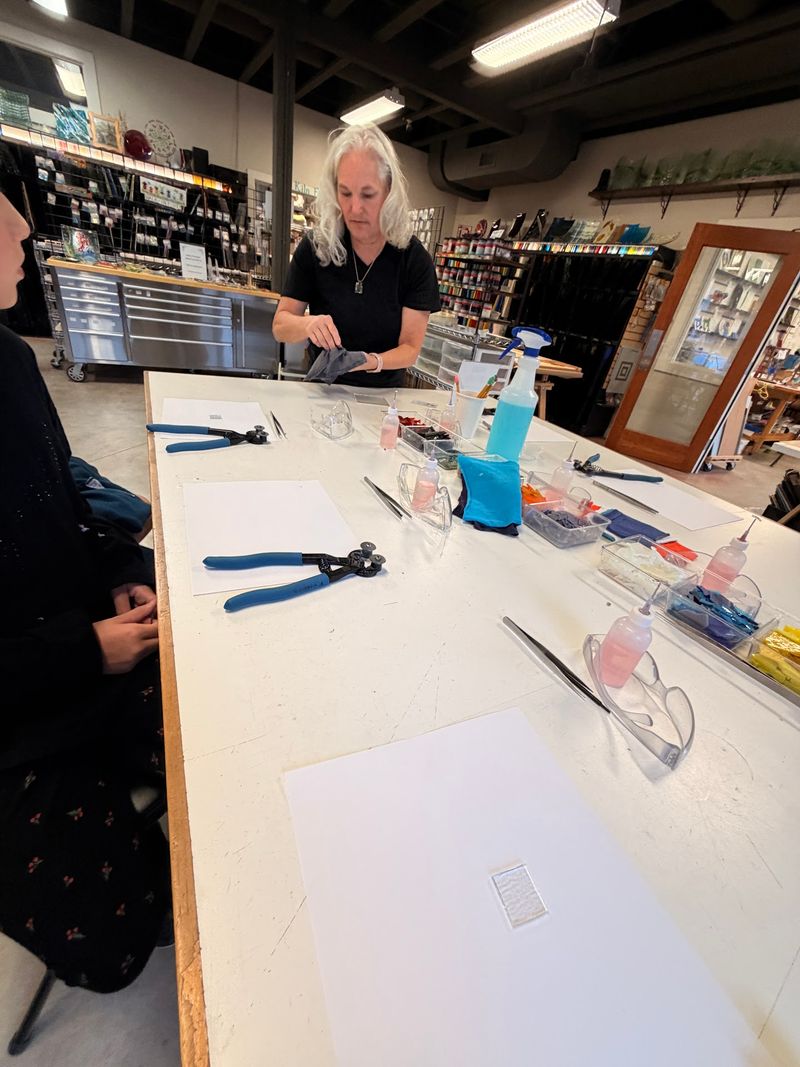
A walk-in project teaches what fused glass can become, while the class program begins explaining why it behaves that way.
Fusions Glass Studio maintains a broad Basics series covering introductory fusing, full-fuse techniques, circle cutting, sandblasting, color reactions, glass powders, textures, metal inclusions, and thicker work.
Current course pages also include pendant making and wire wrapping. Basics 1 is the important starting point for anyone hoping to work independently at the studio.
The course teaches students how to cut and shape glass, lay out a project, understand how heat changes the material, and choose firing schedules for different effects.
Completing Basics 1 also qualifies participants to use Open Studio, where they can return and build projects at their own pace.
The class schedule is flexible rather than fixed around a huge calendar of weekly sessions. Fusions tells customers to contact the studio if a particular class is not currently listed, and it may schedule one when at least two people are interested.
Owner and instructor Melissa Reché teaches a number of the studio’s current courses, while the website continues to identify her as the artist behind the featured Melissa Reché collection.
Exact course prices vary by subject and some studio pages currently display different figures for Basics 1, so anyone booking should use the live registration information.
The larger point remains unchanged: a casual first project can lead naturally into genuinely technical glass-fusing instruction.
Browse Local Glass Art For Inspiration Before You Start Creating
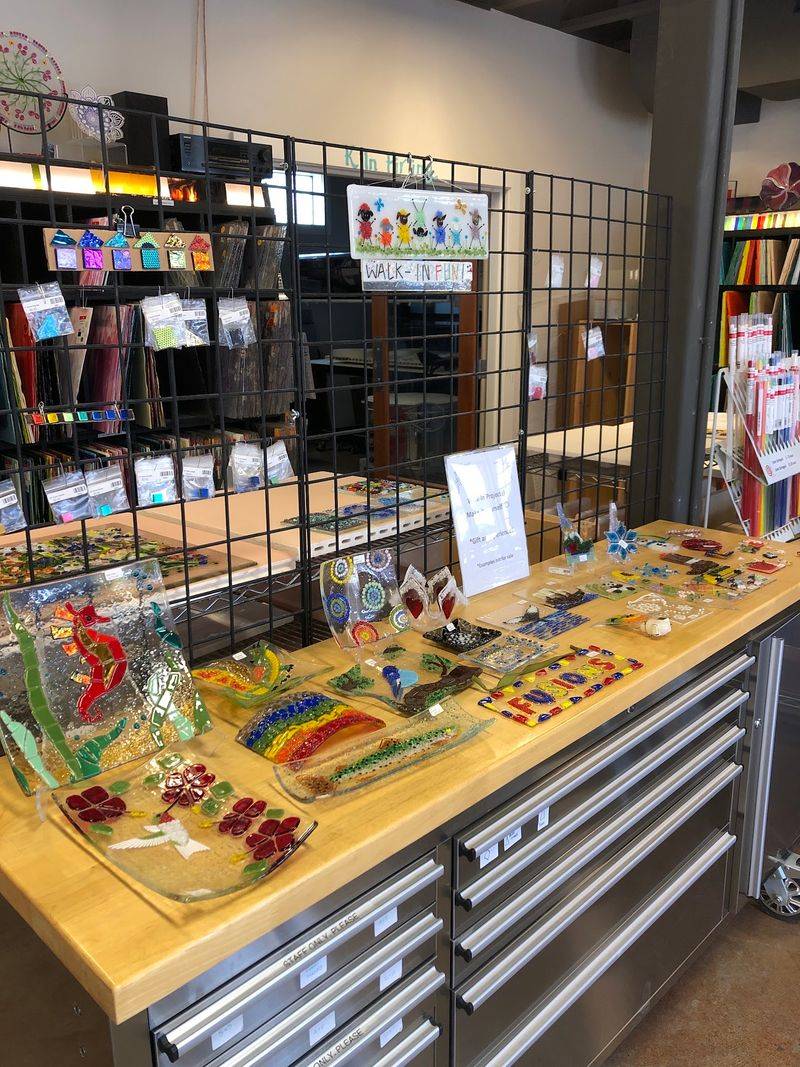
Finished artwork gives newcomers a useful sense of how far the same material can go. Fusions Glass Studio is not only a classroom and project space; it also operates a retail gallery featuring kiln-formed glass art and gifts by local and regional artists.
Its current website separates galleries into several categories, including walk-in pieces, open-studio work, custom residential projects, memorial pieces, special events, and artwork by owner Melissa Reché.
The recent Ada County art guide likewise describes the Eagle location as both a resource center and artist incubator, with glass artwork from local artists available in the gallery.
That means visitors can see projects made at very different skill levels before sitting down with their own clear base and colored glass. The examples also show how fused glass moves beyond simple window decorations.
Fusions creates custom work for homes and businesses, including window or cabinet inserts, lighting, wall art, and other architectural or decorative pieces.
Reché’s own collection explores techniques such as casting, mold making, vitreous painting, and drop-out forms.
A first-time visitor does not need to understand any of those processes to appreciate the results. Browsing the gallery can simply help answer a more basic creative problem: deciding which colors, shapes, or overall style feel appealing.
The broader gallery itself is current, and it provides more than enough inspiration.
Come Back For Open Studio Time Once You Catch The Glass-Fusing Bug
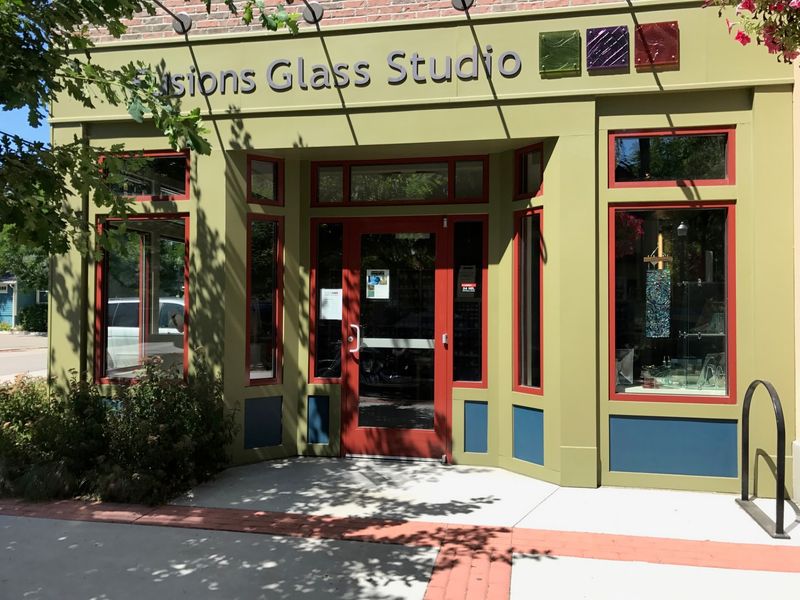
Independent work is the next step for visitors who decide one beginner project is not enough. After completing Basics 1, artists become eligible for Open Studio at Fusions Glass Studio, where they can use the workspace to develop their own fused-glass projects.
There is currently no hourly Open Studio charge. Participants pay for their materials, kiln space, and any applicable mold use instead.
That makes the setup different from another guided class. Staff expect Open Studio artists to work within the techniques they have already learned rather than treating the session as unlimited private instruction.
The studio specifically describes Open Studio as independent work, not an open classroom, and asks artists to take the appropriate courses before attempting unfamiliar techniques.
Experienced participants can still use a substantial collection of studio resources, including firing services and cold-working equipment, while the supply shop keeps Bullseye fusible glass available for projects.
Some Open Studio artists also sell completed pieces through the Fusions gallery, giving the workspace a connection to the retail side of the business.
The studio accommodates groups in other ways too, including birthdays, team-building sessions, field trips, and after-hours events, while kits are available for self-hosted activities away from the shop.
For most people, however, the path is simpler. Start with one no-experience walk-in project, discover whether working with glass clicks, take Basics 1, and suddenly the tables at 135 N. 2nd Street become a place to keep developing ideas instead of a one-time Idaho outing.