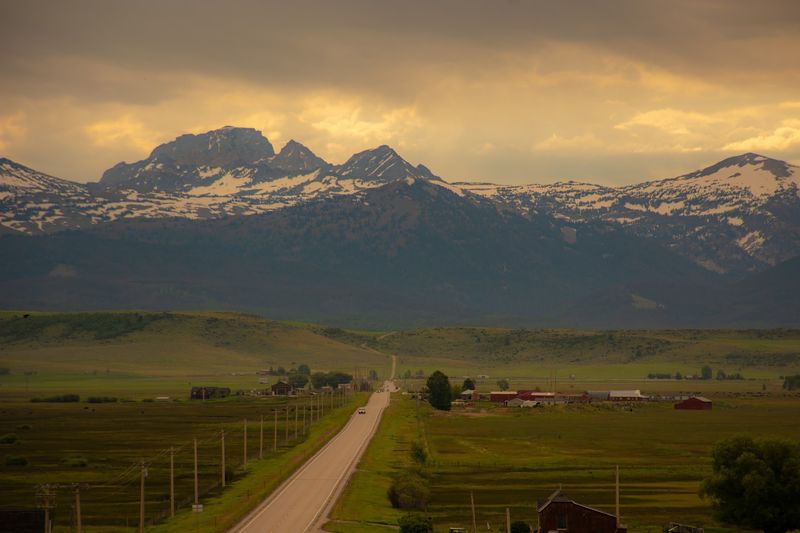
This Idaho Hot Spring Hides One Of The Strangest Soaking Spots In The State
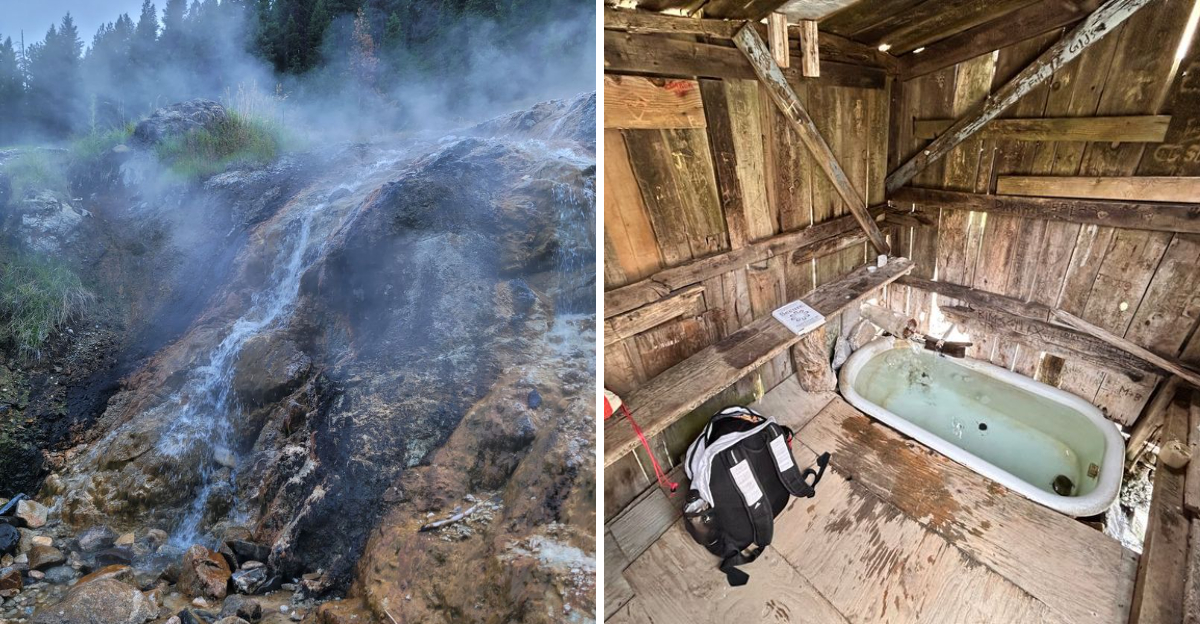
There are places where the phone feels unnecessary almost immediately.
A short trail through an Idaho forest leads away from traffic, schedules, and everything else demanding attention. At the end, warm geothermal water waits beside a creek beneath the trees.
Then the setting gets even stranger.
Just above the pools sits a weathered wooden shack with a cast-iron bathtub inside, supplied by the same natural heat rising from underground.
It feels wonderfully removed from ordinary life.
No polished spa atmosphere. No carefully designed relaxation package.
Just forest, warm water, and enough quiet to make the outside world feel much farther away than a quarter-mile trail should allow.
Conditions here remain natural and can shift with runoff or changing water levels.
That unpredictability is part of the escape.
For a little while, Idaho handles the scenery, the heat, and the silence.
You only have to show up.
A Rustic Wooden Shack Hides The Soaking Spot Everyone Remembers
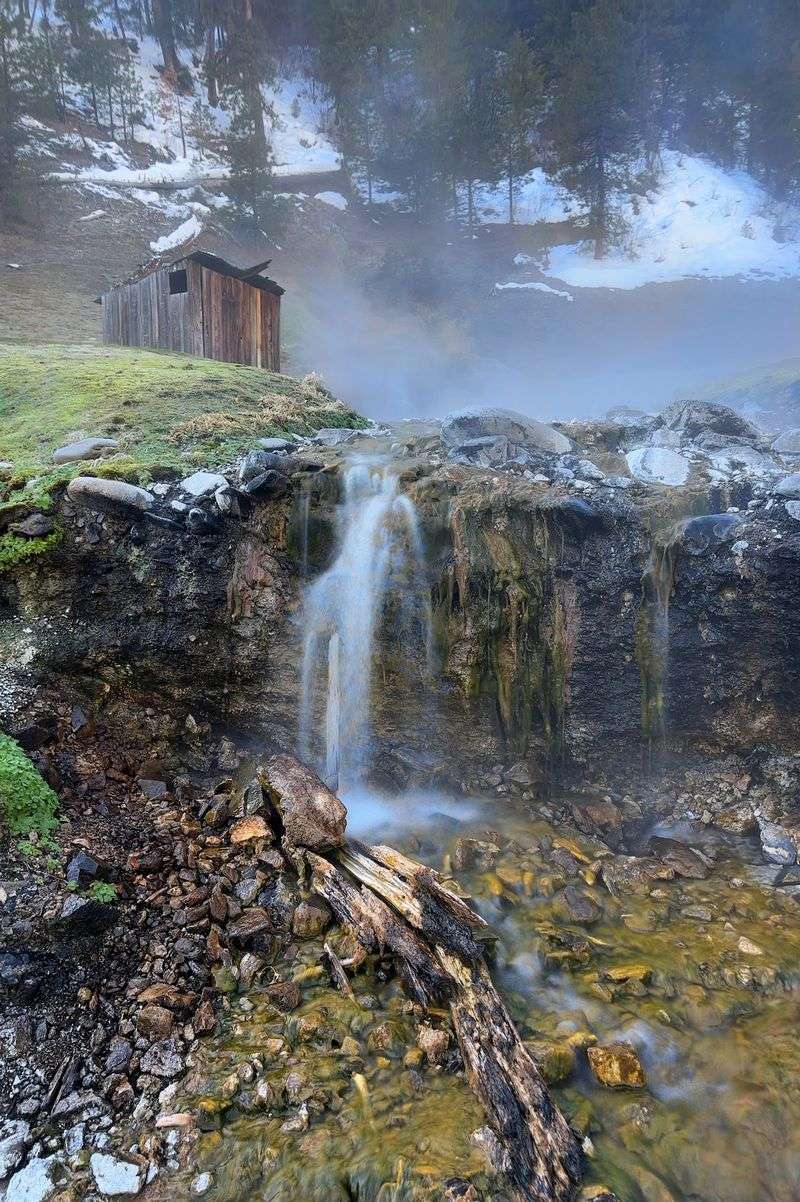
Weathered boards rising above a steaming hillside provide the first clue that this is not an ordinary creekside soak. The rustic structure at Bonneville Hot Springs sits on a small bluff above the lower pools and has become the feature most likely to stick in a visitor’s memory.
It is not an official bathhouse with changing rooms or attendants. Instead, the simple wooden shelter surrounds a single tub and remains part of a shared public hot-springs area within Boise National Forest.
That distinction matters because the shack can already be occupied when you arrive, particularly during the busier campground season. The surrounding setting keeps everything appropriately rugged.
Ponderosa pine and Douglas fir cover the campground area, while Warm Springs Creek runs below the trail and provides a constant reminder that this is still a natural recreation site.
The structure itself is old and fragile enough that visitors should treat it carefully rather than climbing on walls or treating it as playground equipment.
Its appeal comes from precisely what it lacks: polished finishes, elaborate facilities and anything remotely resembling a commercial spa.
Inside, An Old Cast-Iron Bathtub Fills With Naturally Hot Geothermal Water
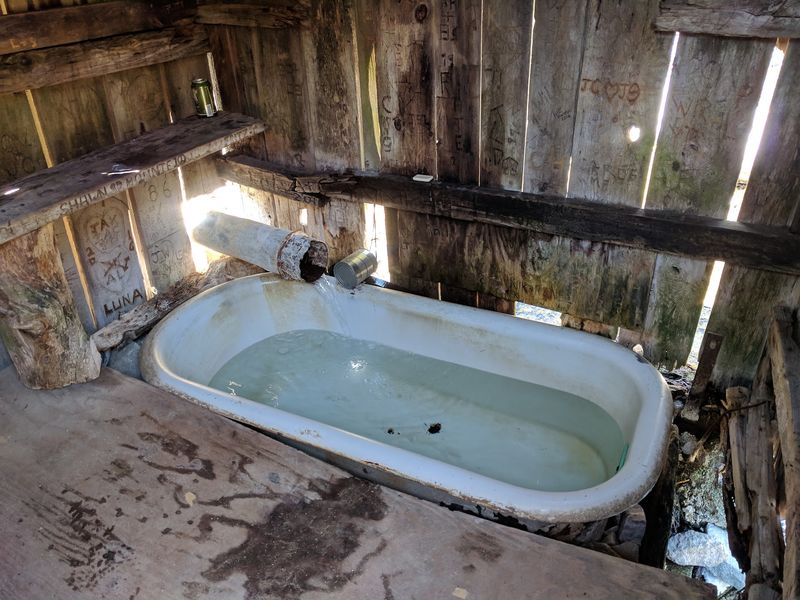
Opening the shack reveals the detail that makes the entire place so unusual: one old cast-iron bathtub connected to the geothermal spring by a simple pipe.
Water flows directly toward the tub rather than arriving through a conventional plumbing system, and a wooden stopper has traditionally been used to control filling and draining.
The setup is wonderfully strange, but the lack of modern controls also means water temperature should never be assumed. Natural geothermal flow can vary, and current guides specifically caution that parts of Bonneville Hot Springs can become extremely hot.
Testing the water carefully before entering is much more important than chasing a particular temperature quoted in an older review.
The tub is also a shared public feature rather than a reserved private soaking room, so courtesy matters when other visitors are waiting.
Current guidance for the site requires swimwear and prohibits soap use, helping protect the creek and geothermal water from unnecessary contamination. Bonneville Hot Springs does not need embellishment here.
A solitary iron bathtub inside a rough wooden shack, filled by naturally heated water in the middle of a national forest, is already unusual enough.
Rock-Walled Pools Along Warm Springs Creek Offer A Completely Different Soak
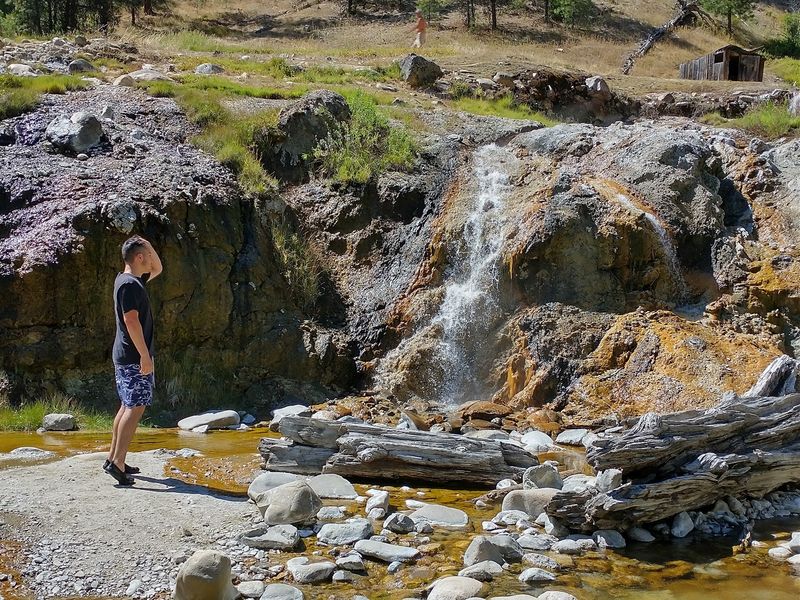
Down near Warm Springs Creek, the experience opens up considerably. Informal rock-walled pools collect geothermal water where it reaches the creek, creating several potential soaking areas rather than one enclosed tub.
These pools are user-built rather than permanent engineered structures, which means their shape, depth and temperature can change as runoff rearranges stones or alters the amount of cold creek water mixing with the spring. That variability is part of the landscape rather than a flaw in the attraction.
Recreation.gov officially identifies Bonneville Hot Springs as a soaking destination reached from the campground, while long-running regional guides document the creekside pools with sandy or silty bottoms.
Spring runoff can reduce or reshape them, while lower-water periods can leave some spots considerably hotter.
Visitors therefore should not rely on an old photograph to tell them exactly what will be waiting beside the creek on a particular day. Move carefully around wet rocks and avoid rebuilding dams or redirecting the natural flow.
The creek pools provide the wide-open counterpart to the little soak shack above, giving one compact site two dramatically different ways to experience the geothermal water.
The Water Temperature Changes Depending On Which Pool You Choose
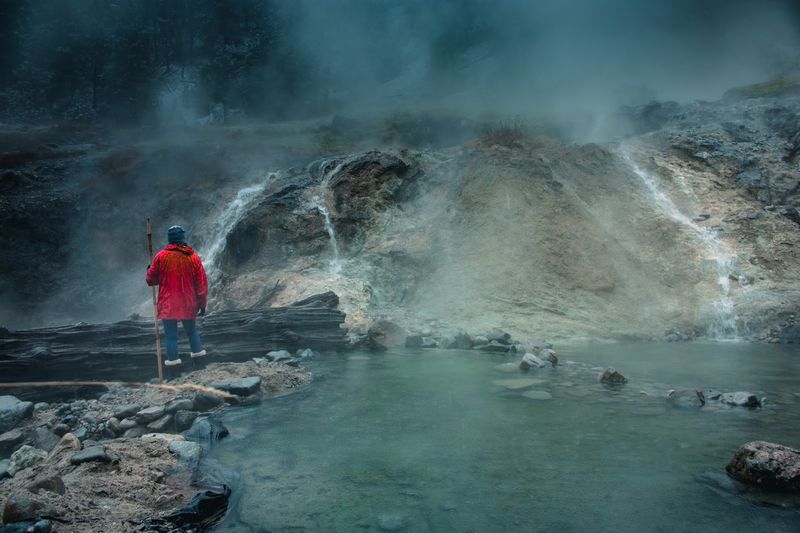
Temperature is one feature here that should never be treated as predictable. Hot geothermal water descends toward the colder creek, so conditions depend on exactly where a pool sits, how much spring water is entering it and how much creek water is mixing in at the time.
Pools nearer the hot runoff can become uncomfortable or unsafe, while areas with more creek influence may be considerably cooler.
Current visitor guidance warns that some portions can be extremely hot, especially when creek levels are low, making a careful temperature check essential before anyone gets in.
There is no need to quote dramatic source temperatures or promise that one particular pool always settles at an ideal soaking level.
Bonneville Hot Springs changes with natural conditions, and that is one of the clearest differences between it and a maintained swimming facility.
Children need especially close supervision around both hot water and slippery creek rocks. The safest choice is simply to skip any pool that feels questionable rather than trying to alter it extensively.
Finding a comfortable spot can still be part of the experience, but the geothermal water deserves the same caution as any other uncontrolled natural feature in the forest.
A Short Forest Trail Makes The Springs Feel More Secluded Than They Really Are
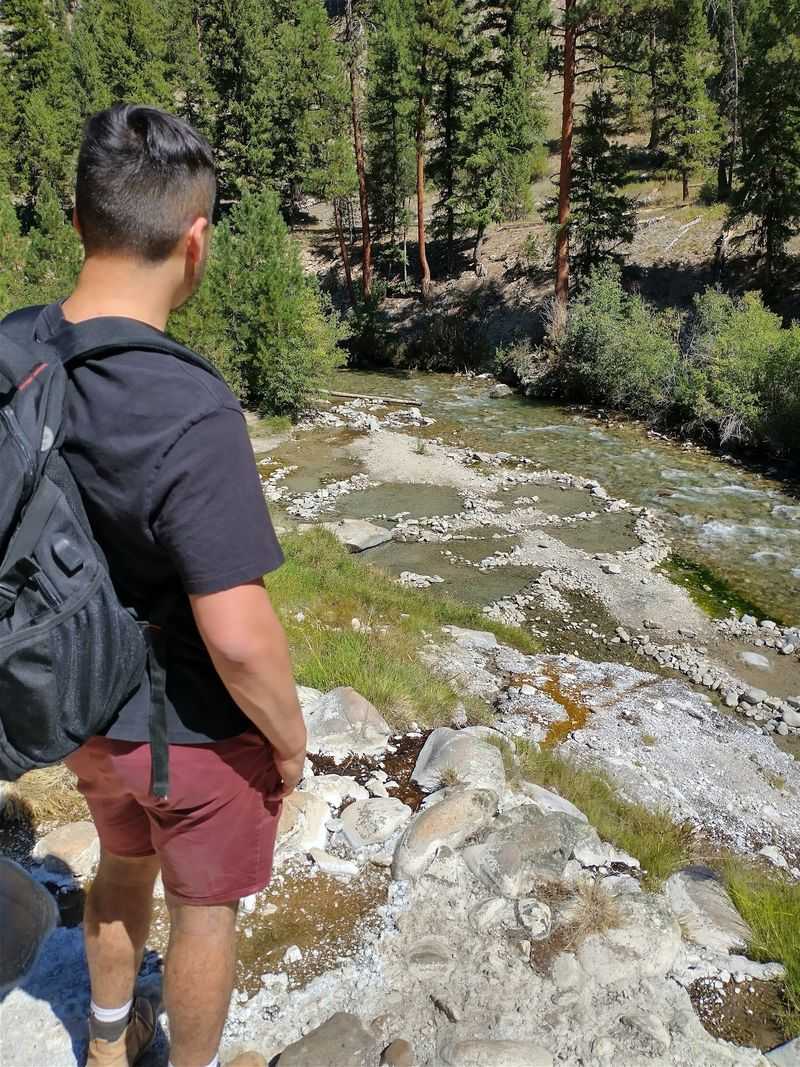
Reaching the springs during the campground season requires only a short walk, but the trees quickly make the highway feel farther away.
Recreation.gov lists a quarter-mile hiking trail from Bonneville Campground to the soaking area, with the trail beginning near the campground and following the Warm Springs Creek setting.
Bonneville Campground itself sits at roughly 4,700 feet and about 19 miles east of Lowman along Highway 21.
Ponderosa pine and Douglas fir provide much of the forest cover, creating the shaded mountain atmosphere that gives the walk its secluded character.
The easiest access corresponds with the campground’s operating season, while off-season conditions can be very different once the campground gate closes and snow affects surrounding roads and trails.
That makes current Forest Service conditions more useful than assuming the same short approach works identically in every month.
During the regular season, non-campers currently pay a $5 day-use vehicle fee. Shoes with solid traction make sense because dirt, roots and damp ground are part of the route, especially closer to the springs.
For such an unusual destination, the hike itself remains surprisingly modest.
Steam Drifting Through The Trees Gives The Whole Area An Almost Surreal Look
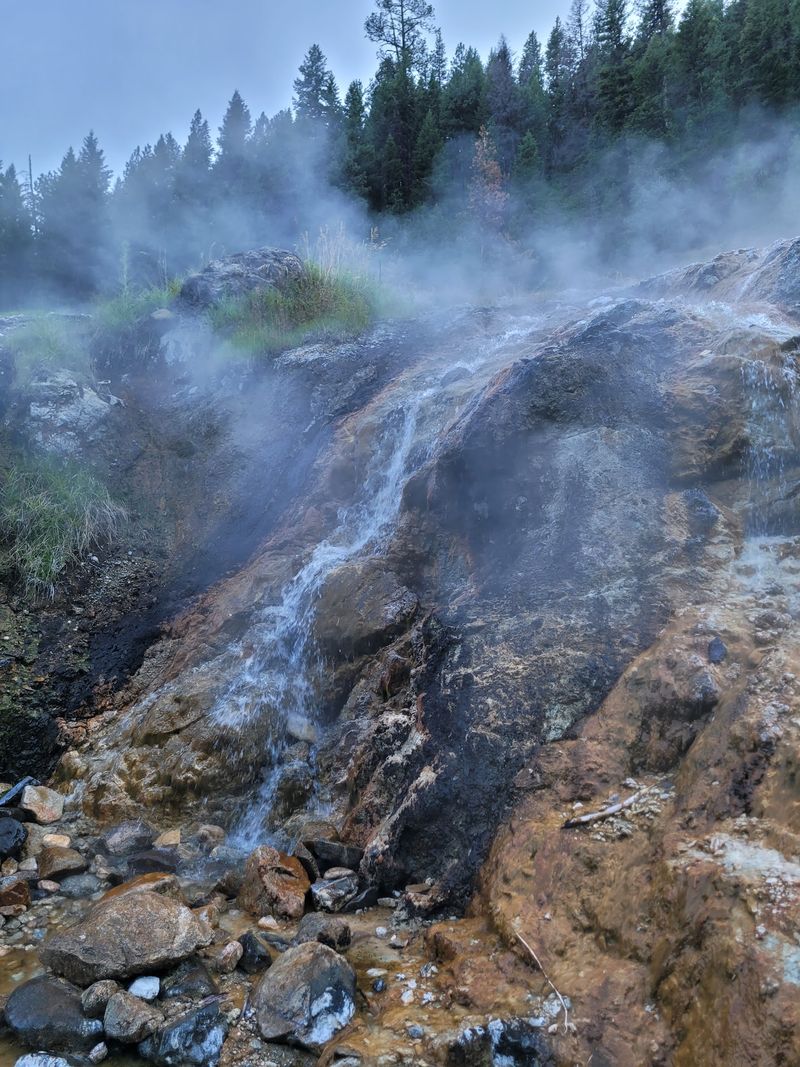
Cool mountain air makes the geothermal side of the landscape much easier to see. Steam rises where heated water meets colder conditions, drifting around the rocky hillside and weathered soak shack before disappearing among the trees.
The effect can be especially noticeable on cooler mornings, although there is no need to recommend a winter expedition just to find heavier steam.
Seasonal access around Bonneville Hot Springs changes once campground services end, and Highway 21 weather can make travel more complicated well before the springs themselves stop flowing.
During the easier warm-season access period, the contrast still shows clearly enough whenever air temperatures fall. Warm Springs Creek adds movement below, while the ponderosa and Douglas fir forest gives the steam a darker background that makes it stand out.
The surrounding campground is heavily shaded in places and sits on a bluff above the creek, fitting the scene better than an exposed roadside pullout would. This is also where keeping the environment clean matters most.
Soap is prohibited at the springs, and anything carried down the trail should leave with you. The dreamy look comes from natural water meeting a forested setting, not from facilities added around it.
The One-Person Tub Makes This Feel More Like A Backcountry Oddity Than A Spa
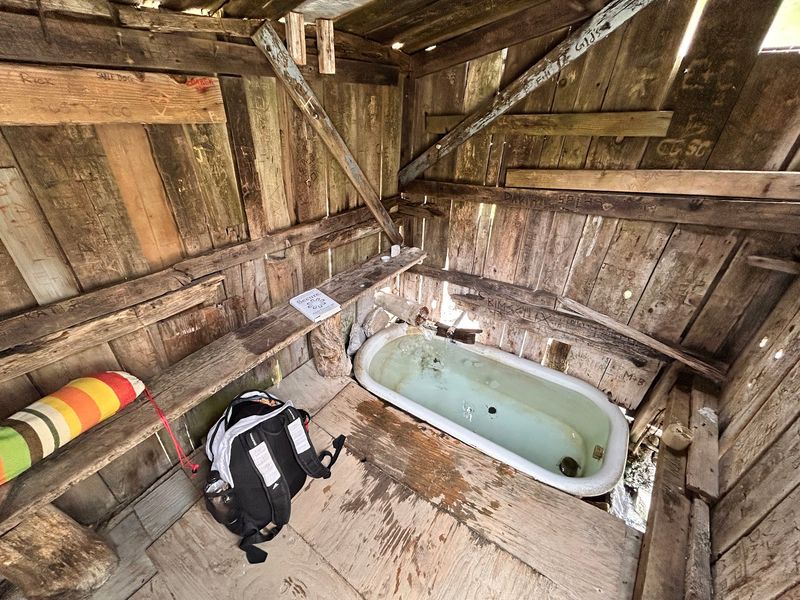
Nothing about the little tub suggests a conventional wellness retreat. There are no attendants organizing turns, no temperature controls mounted on the wall and no reservation guaranteeing that the shack will be empty when you arrive.
The single cast-iron bathtub is simply one shared feature within a public Forest Service recreation area, which gives the experience a much more improvised character.
Visitors have long treated the surrounding creek pools as an alternative whenever the tub is occupied, and that remains the easiest way for a group to avoid crowding the tiny structure.
The setup also depends heavily on basic courtesy. Keeping visits reasonable when others are waiting and leaving the space clean preserve something that has survived largely because people choose to take care of it.
Bonneville Hot Springs is popular enough that genuine solitude should never be promised, particularly during summer.
Regional hot-springs guides describe usage as heavy during the main season, and the campground can fill quickly.
That does not make the tub any less strange. If anything, watching a line of modern travelers patiently wait for a turn in an old bathtub tucked into a wooden forest shack makes the whole place even more memorable.
Few Idaho Hot Springs Combine Wild Creek Pools With A Bathtub In A Shack
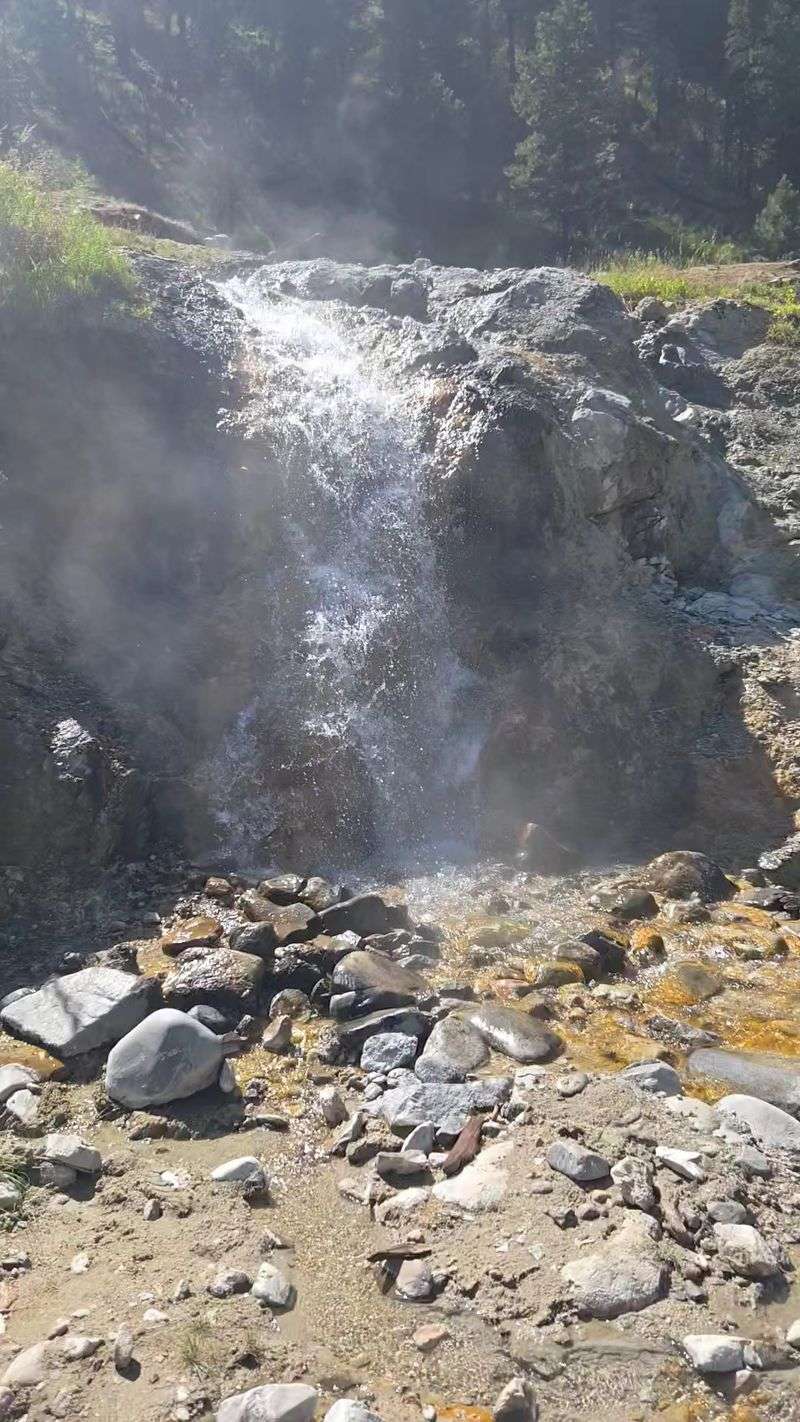
Two completely different soaking settings within a few minutes of each other give Bonneville Hot Springs its personality. The creekside section offers informal rock-lined pools whose conditions shift with water levels, while the bluff above holds the small wooden shack and its cast-iron tub.
Together they create the unusual combination promised in the title without needing to make the place sound wilder than it really is.
The hot springs are in Boise National Forest about 19 miles east of Lowman, reached most easily from Bonneville Campground at milepost 91.5 on Highway 21.
Recreation.gov continues to list the springs as a primary recreation feature of the campground in 2026, along with the quarter-mile trail used to reach them.
Day visitors currently pay a $5 vehicle fee during the operating season, and the Lowman Ranger District remains the best source for changing access or forest conditions.
Bring drinking water and appropriate footwear, leave soaps behind and treat temperatures cautiously rather than assuming every pool is ready for soaking. The practical details are simple.
What waits at the end is not: wild geothermal water, a forest creek and a bathtub sitting inside one of Idaho’s strangest little wooden rooms.