This Idaho Scenic Byway Leads To A Waterfall That Looks Especially Impressive In Summer
Some drives earn their reputation before the first overlook even appears. This one waits until the road begins curling through the forest.
Deep in Idaho, the route trades traffic noise for tall trees and cool mountain air. Each bend pulls travelers farther from the ordinary, while the scenery keeps building toward a much louder finale.
Then the waterfall comes into view.
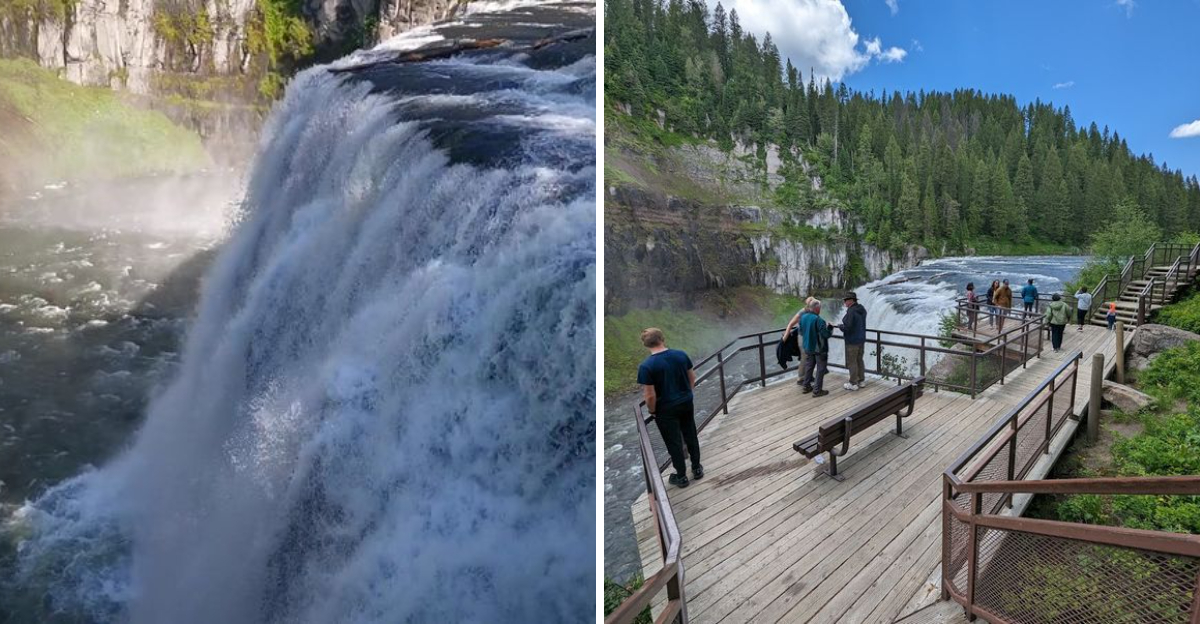
Summer gives it extra force, sending huge sheets of water over the volcanic cliffs with enough power to drown out nearly every conversation nearby.
Standing at the overlook feels less like sightseeing and more like watching the landscape show off.
The drive itself never becomes an afterthought. Forest roads, river views, and quiet pullouts make the journey feel just as rewarding as the final stop.
Bring a camera, but do not spend the whole visit staring through it. Idaho has a way of making even the best photo feel smaller than the real thing.
Follow A 30-Mile Forest Route Beyond Ashton
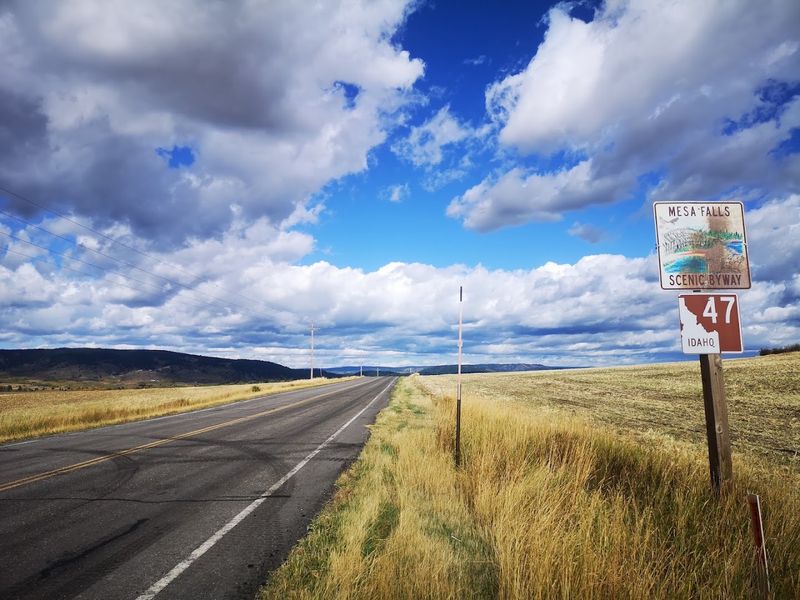
Your road trip starts feeling better almost as soon as Ashton drops behind you. Mesa Falls Scenic Byway runs northeast from the Ashton area toward the Island Park region, covering nearly 30 miles through Caribou-Targhee National Forest country.
The drive follows Idaho Highway 47 and connects with the wider eastern Idaho scenic-route network, making it easy to pair with the Teton Scenic Byway, Yellowstone-area travel, or a slower day exploring waterfalls and forest roads.
What makes this route satisfying is how quickly it feels removed from busier highways.
Trees tighten around the road. The air feels cooler.
The drive becomes less about getting somewhere fast and more about letting the forest set the pace.
You do not need a rugged vehicle for the main paved route during the normal travel season, but you should still check road conditions before going, especially outside summer.
Winter access changes significantly, and some sections become snowmobile territory rather than a standard drive.
Late spring through early fall gives you the easiest version of the trip, with open roads, green forest, and better access to viewpoints.
The byway works beautifully for families, road-trippers, waterfall chasers, and anyone who wants a scenic detour without committing to an all-day backcountry adventure. Keep the stops flexible because the route rewards curiosity.
Watch The Henrys Fork Plunge Over Ancient Volcanic Rock
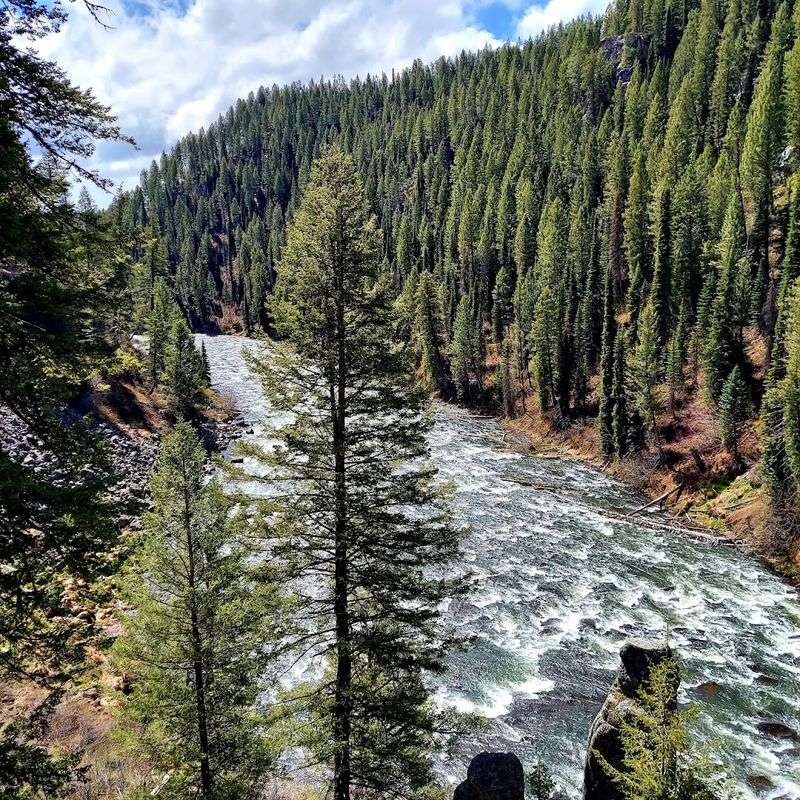
The first full look at Upper Mesa Falls can make you forget every waterfall you thought was “pretty good.” The Henrys Fork drops roughly 110 to 114 feet over a dramatic volcanic ledge, sending a wide wall of whitewater into the canyon below.
Visit Idaho compares the height to a 10-story building, which feels accurate once you are standing near the overlook and hearing the force of the water.
The geology makes the scene even more interesting. The falls pour over remnants of ancient volcanic activity, and interpretive materials in the area explain how eruptions, ash, lava, and the river’s long cutting work shaped the canyon.
This is not only a scenic stop where you snap a photo and leave. It is a place where the landscape tells you eastern Idaho has been through some extremely dramatic chapters.
Recreation.gov notes that Upper and Lower Mesa Falls are among the last major falls in Idaho not used for irrigation or hydroelectric projects, which adds to the sense that you are seeing something unusually intact.
The water still does what it has always done: fall, pound, spray, and carve.
You feel that natural power immediately. It is loud, physical, and wonderfully difficult to reduce to a quick picture.
Summer Water Flow Makes The Main View Especially Powerful
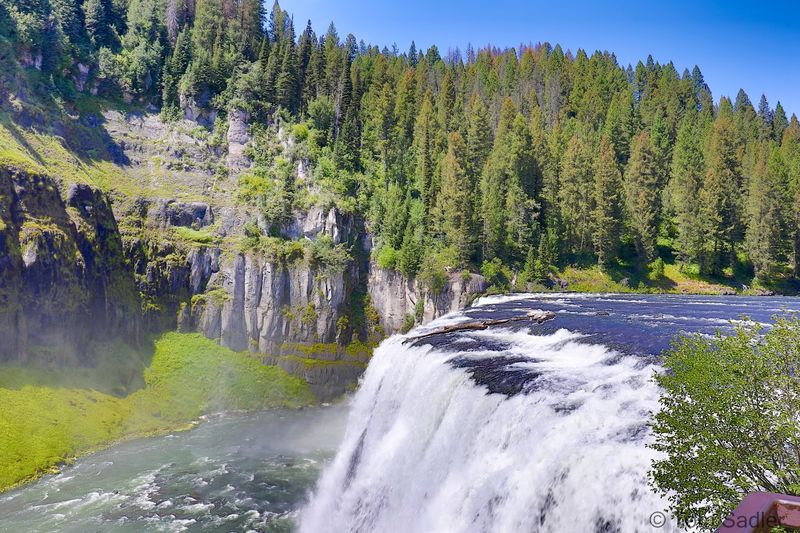
Warm weather brings the byway into its easiest and most dramatic visiting season.
Spring runoff generally boosts the Henrys Fork earlier in the year, and late spring into summer can still make Upper Mesa Falls feel especially forceful compared with quieter seasonal windows.
That is when the overlook experience really comes alive. You hear the waterfall before you fully see it.
Mist rises from the canyon. Sunlight can catch the spray and throw color across the view when conditions line up.
The surrounding forest is green, the boardwalks are easier to navigate, and the visitor center typically operates daily in summer, according to Visit Idaho. That makes the whole outing more complete than a quick winter glimpse.
You can take your time, read the signs, move between platforms, and actually enjoy the setting instead of bracing against ice or closed-road logistics.
Summer also makes the byway more practical for travelers coming from Yellowstone, Island Park, Rexburg, or the Teton Valley area.
The waterfall may be the main draw, but the season adds comfort and color to the whole drive. Go earlier in the day if you want fewer people and better light.
Stay long enough to watch the mist shift. Upper Mesa Falls rewards people who give it more than one glance.
Several Platforms Bring You Close To The Mist
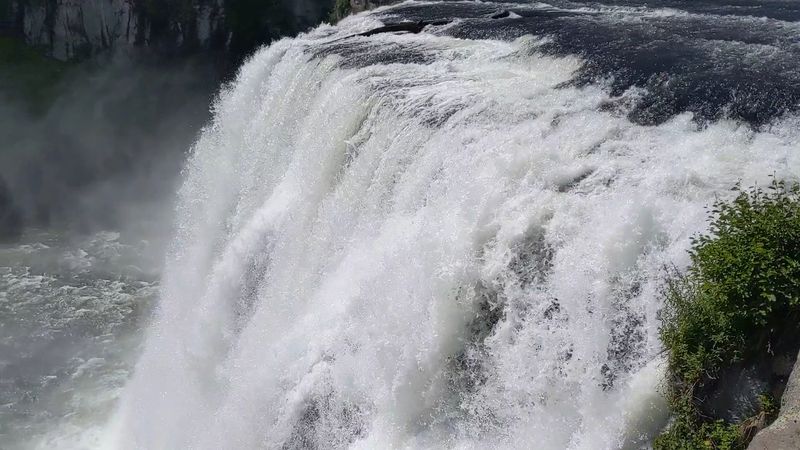
You do not have to scramble down unsafe rock to feel the waterfall’s power. One of the best things about Upper Mesa Falls is how thoughtfully the viewing area is set up.
From the Mesa Falls Visitor Center area, an accessible trail and boardwalk lead toward excellent views, according to Visit Idaho. That means a wide range of visitors can experience the falls without needing a difficult hike.
The platforms give you different angles, and each one changes the sound, the spray, and the sense of scale. One view may show the full drop.
Another may pull your attention toward the water’s edge. Another may make the canyon feel deeper than expected.
The closer you get, the more the waterfall becomes something you feel in your chest rather than simply see.
Families especially benefit from the structure here because the viewing areas make it easier to enjoy a huge waterfall without turning the visit into a stress test.
You should still watch kids closely and follow posted rules because powerful water and canyon edges deserve respect. The beauty of the setup is that it balances excitement with safety.
You get the mist, the roar, the photo opportunities, and the thrill of being near a major waterfall, all from a developed viewing system designed for regular travelers.
Boardwalks Reveal New Angles Around The Upper Falls
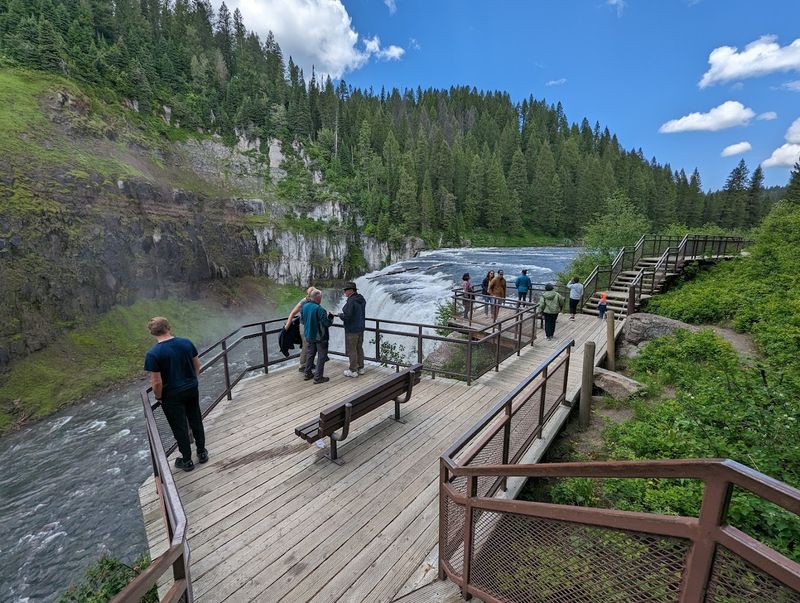
The best view may not be the first one you reach. Upper Mesa Falls has a boardwalk and overlook system that lets you move through the scene instead of treating the waterfall as one fixed photo stop.
That movement makes the visit feel richer. You descend, turn, pause, read, listen, and notice how the falls change from each angle.
The water looks different when you see more of the brink. The canyon feels different when the boardwalk frames the drop through trees and railings.
The mist changes direction with the wind, sometimes cooling your face before you even realize you are close enough to feel it. Interpretive signs add another layer, explaining the natural and cultural history of the area in a way that helps the landscape make more sense.
This is especially useful for curious visitors who want more than “wow, big waterfall,” though that reaction is completely valid too.
The walk is short enough to stay approachable, but it gives you a satisfying sense of exploration.
You are not just stepping out of the car, taking one picture, and leaving. You are collecting views.
You are letting the waterfall build. By the time you return to the parking area, Upper Mesa Falls feels less like a scenic overlook and more like a full experience.
The Historic Visitor Center Explains The Landscape
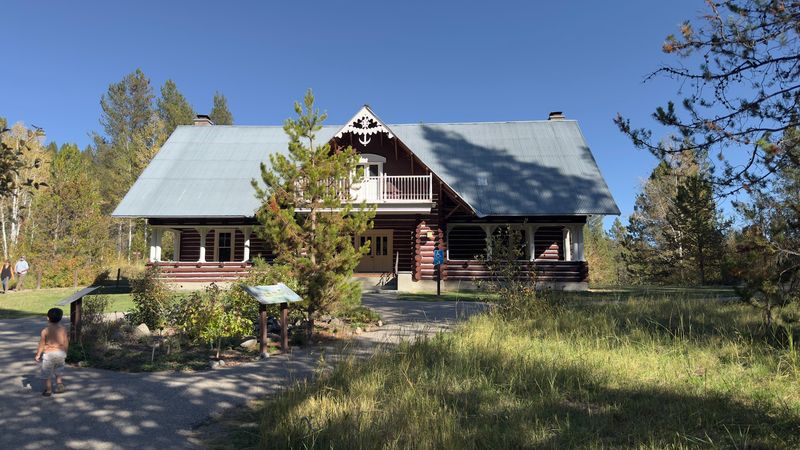
Context makes the waterfall even better. The Mesa Falls Visitor Center occupies the historic Big Falls Inn, a log-style building constructed around 1915 by the Snake River Electric Light and Power Company.
The Forest Service notes that the building now serves as the visitor center, giving travelers a chance to learn about the area before or after seeing the falls. That setting matters because the building has its own story.
It was part of an earlier era of travel through this scenic corridor, and its preserved character adds warmth to the stop. Inside, exhibits help explain the geology, wildlife, history, and natural setting around Mesa Falls.
You can learn why the rocks look the way they do, how the Henrys Fork shaped the canyon, and why this landscape has remained such a standout part of eastern Idaho.
Visit Idaho notes that the center is open daily in summer, with limited winter weekend hours, so checking current hours before driving is smart.
A day-use fee may apply in the Upper Mesa Falls recreation area, though interagency passes can affect that. Spending even a short time at the visitor center turns the stop from a pretty view into a better-understood place.
You see the water, then you understand more of what made it possible.
Lower Mesa Falls Adds A Second Waterfall Stop
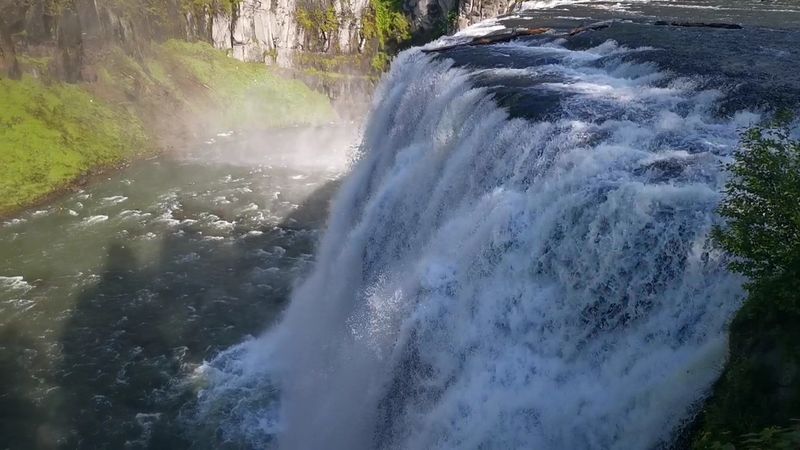
Stopping at only one waterfall feels slightly rude when another one is so close. Lower Mesa Falls sits downstream from Upper Mesa Falls and gives the byway a second major scenic payoff.
Recreation.gov lists Upper Mesa Falls at 110 feet and Lower Mesa Falls at 85 feet, while other visitor sources sometimes describe the lower drop differently depending on measurement and viewpoint.
Either way, Lower Mesa Falls is worth seeing because it offers a broader, more distant perspective on the same river system.
The Grandview Overlook along the byway gives you a safe place to look down toward the lower falls and canyon, making it an easy add-on for travelers who do not want a demanding hike. The view feels different from Upper Mesa Falls because you are not right in the mist.
Instead, you get more of the canyon setting and a wider sense of how the river keeps working its way through the landscape. That contrast is exactly why both stops belong in the same trip.
Upper Falls overwhelms you up close. Lower Falls lets you step back and see the scene with more distance.
Together, they make the byway feel like a proper waterfall route, not a one-stop detour. Give yourself time for both.
Warm River Creates An Easy Break Along The Drive
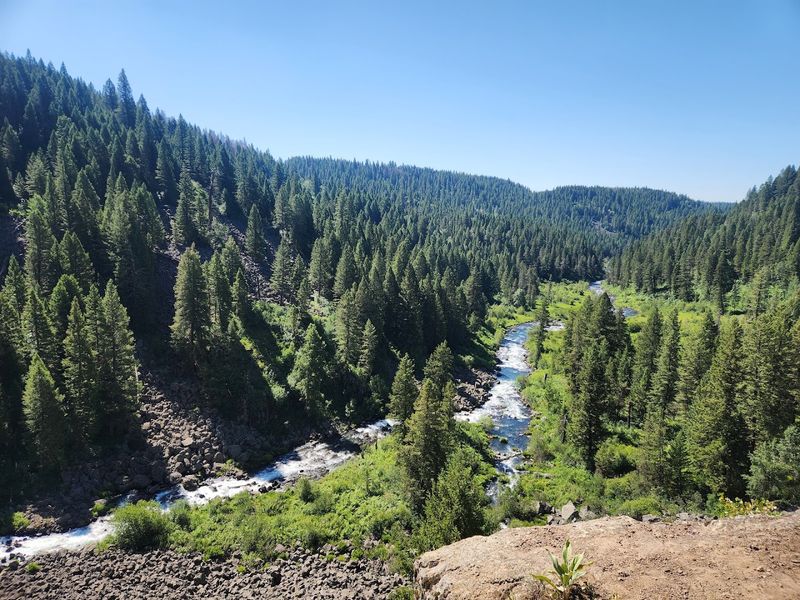
Some road-trip stops earn their place by being calm after all that roar. Warm River sits along the broader Mesa Falls Scenic Byway area and gives travelers a gentler pause between forest driving and waterfall viewing.
The Warm River Campground area is known for fishing, picnicking, camping, clear water, and easy access to a pretty stretch of eastern Idaho scenery. After the heavy sound and mist of Mesa Falls, a riverside break feels almost necessary.
You can stretch your legs, eat a snack, watch the water, and let kids reset before the next stop. The Warm River area is also tied into local fishing culture, with trout in the clear water drawing plenty of attention from visitors.
Feeding fish is sometimes mentioned by travelers around the area, but you should always follow posted rules and current Forest Service guidance rather than assuming it is allowed everywhere. The main appeal is simple: shade, water, quiet, and a softer side of the byway.
It turns the drive into a fuller day instead of a quick waterfall dash. Pack a picnic if you like slow travel.
Let Warm River be the breather between the big scenic moments. Mesa Falls may steal the headlines, but this stop helps the whole route feel complete.